

The Grand Budapest Hotel
 |
Description
Book Introduction
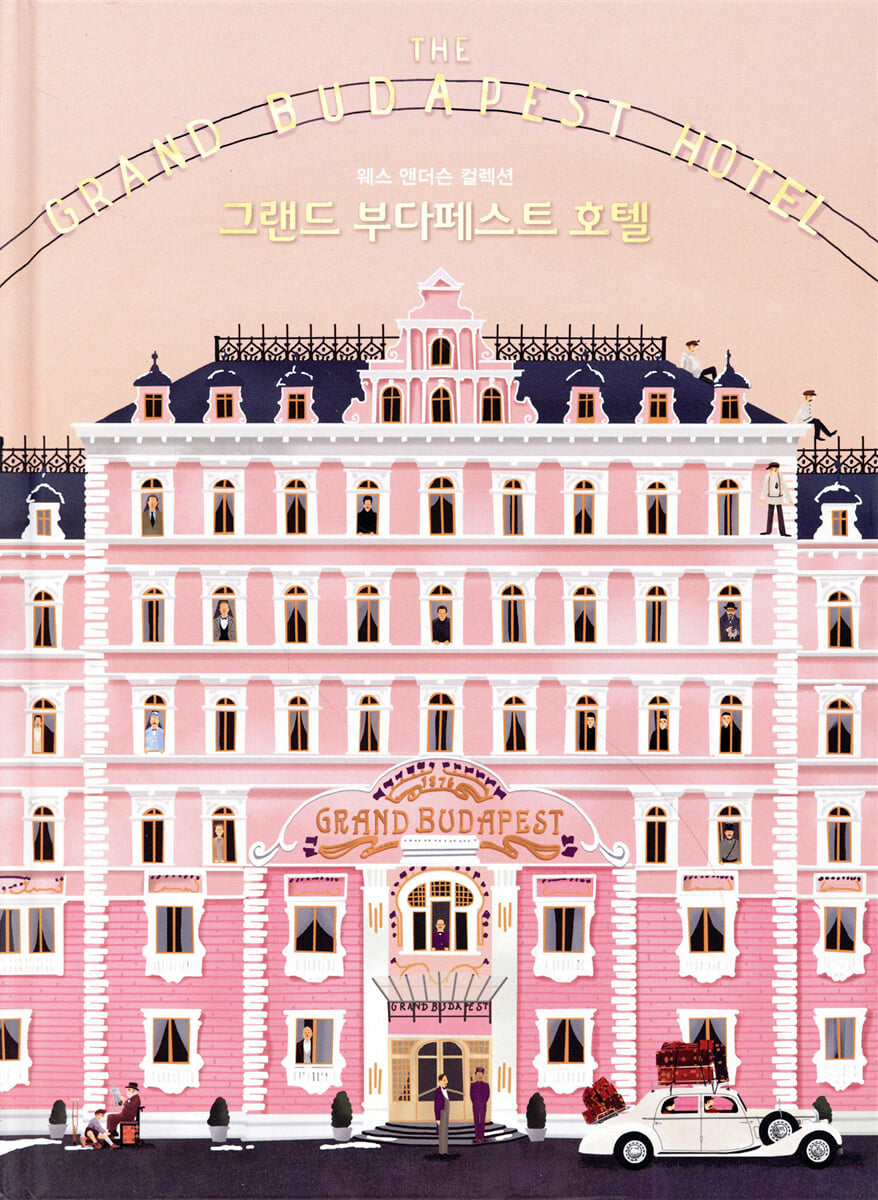
An original art book by Wes Anderson, creator of the world of the modern-day fairy tale and fantastical artbuster, The Grand Budapest Hotel. This book, which shares the same name as the film, is the only art book he directly participated in creating, and it captures the essence of his artistic world intact, making it an essential book for anyone who wants to get ideas from a sensitive genius and be inspired by his unique and sensuous worldview. This art book, which has been praised for perfectly embodying the new term 'Anderson Touch', which refers to director Anderson's visual beauty, begins with a drawing by illustrator Max Dalton. This book is packed with never-before-seen sights, including on-set photos from various locations, cute character illustrations, drawings, models, stamp-style filmography, reference film cards, and various artworks, spanning over 250 pages, ensuring that your eyes are captivated on every page. This book, a masterpiece that perfectly embodies the visual beauty of the film in book form, is so meticulously crafted and rich that you'll be tempted to read it in one sitting and then put it down. |
- You can preview some of the book's contents.
Preview
index
INTRODUCTION by Anne Washburn
PREFACE by Matt Zoller Seitz
CRITICAL ESSAY by Matt Zoller Seitz
The idea of Europe
Wes Anderson: The First Interview
A Proper Inquiry: An Interview with Ralph Fiennes
Clothes Are the Man: The Grand Budapest Hotel and Film Costumes by Christopher Laverty
Wes Anderson Style: An Interview with Milena Canonero
Snowglobe World
Wes Anderson: The Second Interview
Places, People, and Stories: The Music of The Grand Budapest Hotel by Olivia Collette
Intimate Sounds: An Interview with Alexandre Desplat
Wide Stage: Production Design for "The Grand Budapest Hotel" by Stephen Boone
Keeping the Train Running: An Interview with Adam Stockhausen
At the Algonquin Hotel
Wes Anderson: The Third Interview
Worlds of Yesterday by Ali Arikan
Stefan Zweig: Excerpts
A completely different element: Robert D.
Yemen Interview
Wes Anderson's 4:3 Challenge by David Bordwell
Cross Pen Association
Translator's Note
Acknowledgements
PREFACE by Matt Zoller Seitz
CRITICAL ESSAY by Matt Zoller Seitz
The idea of Europe
Wes Anderson: The First Interview
A Proper Inquiry: An Interview with Ralph Fiennes
Clothes Are the Man: The Grand Budapest Hotel and Film Costumes by Christopher Laverty
Wes Anderson Style: An Interview with Milena Canonero
Snowglobe World
Wes Anderson: The Second Interview
Places, People, and Stories: The Music of The Grand Budapest Hotel by Olivia Collette
Intimate Sounds: An Interview with Alexandre Desplat
Wide Stage: Production Design for "The Grand Budapest Hotel" by Stephen Boone
Keeping the Train Running: An Interview with Adam Stockhausen
At the Algonquin Hotel
Wes Anderson: The Third Interview
Worlds of Yesterday by Ali Arikan
Stefan Zweig: Excerpts
A completely different element: Robert D.
Yemen Interview
Wes Anderson's 4:3 Challenge by David Bordwell
Cross Pen Association
Translator's Note
Acknowledgements
Detailed image

Into the book
We tend to think of civilization as solid and strong.
But civilization is like soft bread.
It is made with butter, cream, flour, as well as color, air, and cotton candy.
A civilization, built half on coercive force and half on natural tradition, becomes more and more honorable and less and less stable as it grows in confidence.
It's not much different from the cortisane au chocolat from the famous Mendl bakery in Wes Anderson's fictional Central European town of Zubrovka Nebelsbad.
---From "INTRODUCTION"
'Our parents' and grandparents' generation had it much better.
They lived a quiet life in a neat, straight line from one end to the other.
So do I envy them? I don't know.
They lived their lives as if dozing off from real suffering, from the power of evil and fate, but we, for whom comfort has become an outdated myth and safety a childish dream, feel the tension in every fiber of our being, and must constantly feel the fear of something new in every nerve.
Every hour of our lives is connected to the fate of the world.
With sorrow and joy, we live in a history and time beyond our own little lives, but they knew nothing beyond themselves.
Therefore, today, all of us, even the youngest of mankind, know a thousand times more about reality than the wisest of our ancestors.
But nothing is given to us for free.
We paid the full price for it.' ---From "INTRODUCTION"
The final shots make the concept of 'story as legacy' convincing.
An old writer sits quietly on the sofa with his grandson.
He is wearing a Norfolk suit similar to the one he wore the night he spoke with Zero, and is in a study decorated similar to the hotel in 1968.
The voice of a young writer changes into that of an old writer.
“It was a charming old ruin, but I never went back.” And then, returning to the girl in the graveyard, she closes the book.
Life is crumbling.
Art remains.
--?From "CRITICAL ESSAY"
Of course, what is a "draft" for Wes Anderson is a finished product for other directors.
Comparing the edited version I saw that day with the movie released in theaters, there was absolutely no noticeable difference.
It seemed like a finished work.
From the multi-layered plot devices to the characters and events that mesh together like clockwork, the film seemed so complex compared to his previous works that I was almost daunted by the thought of interviewing Wes after just one viewing.
---From "The Idea of Europe"
Q: You once said in an interview that you wanted to make a science fiction film set in space. Was that just a joke?
A: No, I would like to do that.
Q: Okay, now the big question remains.
Does God exist in your film world? If so, does he watch from above, or does he intervene directly?
A: [long silence] God intervenes.
---From "Wes Anderson: The Third Interview"
There is a clear connection between Zweig's Alpine villa and the Grand Budapest Hotel.
This connection declares a tail-biting association.
Zweig, who is obsessed with praising Europe's lost past and telling his own past; Gustave, who is trying to prevent the possibility that his beloved hotel will fall into the hands of "that fucking filthy, slobbery fascist son of a bitch" or be reduced to ashes by bombing; old Zero, who is trying to tell Gustave's story at the right time; and the "writer", who interrupts the prologue and then tries to tell the story again to future generations, represented by his grandson standing next to him.
All this effort is put into a pink box from Mendl Bakery and tied with a ribbon in the graveyard sequence.
The movie is a book, the book is Zero's story, Zero's story is Gustave's story, Gustave's story is Grand Budapest, and Grand Budapest is Zweig's Alpine villa, Austria, Europe, everything.
And then it disappeared, and disappeared, and disappeared.
All of them.
Only the story remains.
But civilization is like soft bread.
It is made with butter, cream, flour, as well as color, air, and cotton candy.
A civilization, built half on coercive force and half on natural tradition, becomes more and more honorable and less and less stable as it grows in confidence.
It's not much different from the cortisane au chocolat from the famous Mendl bakery in Wes Anderson's fictional Central European town of Zubrovka Nebelsbad.
---From "INTRODUCTION"
'Our parents' and grandparents' generation had it much better.
They lived a quiet life in a neat, straight line from one end to the other.
So do I envy them? I don't know.
They lived their lives as if dozing off from real suffering, from the power of evil and fate, but we, for whom comfort has become an outdated myth and safety a childish dream, feel the tension in every fiber of our being, and must constantly feel the fear of something new in every nerve.
Every hour of our lives is connected to the fate of the world.
With sorrow and joy, we live in a history and time beyond our own little lives, but they knew nothing beyond themselves.
Therefore, today, all of us, even the youngest of mankind, know a thousand times more about reality than the wisest of our ancestors.
But nothing is given to us for free.
We paid the full price for it.' ---From "INTRODUCTION"
The final shots make the concept of 'story as legacy' convincing.
An old writer sits quietly on the sofa with his grandson.
He is wearing a Norfolk suit similar to the one he wore the night he spoke with Zero, and is in a study decorated similar to the hotel in 1968.
The voice of a young writer changes into that of an old writer.
“It was a charming old ruin, but I never went back.” And then, returning to the girl in the graveyard, she closes the book.
Life is crumbling.
Art remains.
--?From "CRITICAL ESSAY"
Of course, what is a "draft" for Wes Anderson is a finished product for other directors.
Comparing the edited version I saw that day with the movie released in theaters, there was absolutely no noticeable difference.
It seemed like a finished work.
From the multi-layered plot devices to the characters and events that mesh together like clockwork, the film seemed so complex compared to his previous works that I was almost daunted by the thought of interviewing Wes after just one viewing.
---From "The Idea of Europe"
Q: You once said in an interview that you wanted to make a science fiction film set in space. Was that just a joke?
A: No, I would like to do that.
Q: Okay, now the big question remains.
Does God exist in your film world? If so, does he watch from above, or does he intervene directly?
A: [long silence] God intervenes.
---From "Wes Anderson: The Third Interview"
There is a clear connection between Zweig's Alpine villa and the Grand Budapest Hotel.
This connection declares a tail-biting association.
Zweig, who is obsessed with praising Europe's lost past and telling his own past; Gustave, who is trying to prevent the possibility that his beloved hotel will fall into the hands of "that fucking filthy, slobbery fascist son of a bitch" or be reduced to ashes by bombing; old Zero, who is trying to tell Gustave's story at the right time; and the "writer", who interrupts the prologue and then tries to tell the story again to future generations, represented by his grandson standing next to him.
All this effort is put into a pink box from Mendl Bakery and tied with a ribbon in the graveyard sequence.
The movie is a book, the book is Zero's story, Zero's story is Gustave's story, Gustave's story is Grand Budapest, and Grand Budapest is Zweig's Alpine villa, Austria, Europe, everything.
And then it disappeared, and disappeared, and disappeared.
All of them.
Only the story remains.
---From "Yesterday's Worlds by Ali Arikan"
Publisher's Review
The art book 『The Grand Budapest Hotel』, based on the artbuster film 『The Grand Budapest Hotel』, has been published.
This is the only original art book created with the direct participation of director Wes Anderson, who regularly holds exhibitions of fan art by inspired artists in New York, San Francisco, and other locations, and has been receiving a hot response even before its release.
It swept the top spot in the art section of all bookstores with just pre-orders, and was listed as a general bestseller as soon as it was published.
This is a very unusual event that cannot be explained simply by the popularity of the film or the director.
What kind of charm has created this phenomenon?
Wes Anderson: The Birth of a Slightly Odd Genius
Wes Anderson is not a director, but rather a creator of a new world.
The backdrops of his films are familiar places, such as homes (The Royal Tenenbaums (2001)), ships (The Life Aquatic with Steve Zissou (2004)), and campsites (Moonrise Kingdom (2012)), but his touch creates a new, unfamiliar world.
His films are often disparaged as fashion films because their visual impact is so powerful that a new term, 'Anderson Touch', has been coined.
But what makes his films more than just pretty pictures for Instagram and establish themselves as his signature is that they have more than just flashy visuals.
He is a storyteller whose stories always evoke nostalgia for forgotten worlds and loss.
Director Wes Anderson, who has only released eight films so far, is already considered a director who will be remembered in film history even if he dies right now.
There is no doubt that he is one of the most original American filmmakers since Hal Hartley and Quentin Tarantino.
But Wes Anderson, who is over 180cm tall, has a skinny body, and wears a loose shirt half-tucked into his pants, looks like a sloppy, chubby boy on the outside.
In fact, actress Anjelica Huston, who worked with Wes Anderson on The Royal Tenenbaums, recalls that when they first met, she mistook him for a man in his late teens (Wes Anderson was born in 1969).
For Wes Anderson, films are also part of his personal memories.
When his parents divorced when he was 10, he ruined his school life with lies and violent outbursts.
However, a school teacher (assistant) who learned of his situation helped him, who was a movie buff, write plays in various genres and stage them so that he could focus on them. Anderson even took on the lead role and forced his friends who didn't want to sign autographs, leading to a satisfying school life.
Wes Anderson, who later expanded his interests to theater and literature, met his fateful partner Owen Wilson at university.
(Owen Wilson co-wrote and acted in all of Anderson's films.)
The two, who had never spoken to each other because they thought of each other as 'a brat who lives for his own good looks', soon realized that they had similar thoughts and hit it off.
The two made their first film with a few hundred dollars and some 16mm film they had gotten from Anderson's brother.
Although it was only a 14-minute short, filmmakers who saw it approached Anderson and Wilson, and eventually the feature-length film Bottle Rocket was born.
Although it was not a popular success, the film was enough to showcase his brilliant worldview and became the starting point for his future activities.
Master director Martin Scorsese said he became a fan of Wes Anderson after seeing Bottle Rocket, and called him "the next Martin Scorsese" (though Wes Anderson's favorite film is Roman Polanski's Rosemary's Baby).
The eighth world he created, "The Grand Budapest Hotel"
The film "The Grand Budapest Hotel" is set in 1927, during the height of World War II, in the luxurious Grand Budapest Hotel, a place far removed from the war atmosphere. The story centers around lobby boy Zero and his mentor Gustave, who uncover the secret behind the death of Gustave's lover and tycoon Madame D (Tilda Swinton), clearing themselves of false accusations and protecting a masterpiece they inherited.
If you just look at the plot, you might be surprised to find that it feels like a cliché and sloppy mystery chase movie, but the images that his aesthetics interfere with are neither cliché nor sloppy.
Continuing with the theme of Wes Anderson's world of trying to build his own utopia by distancing himself from reality, his signature features are fully displayed, from the overlapping story structure (The Grand Budapest Hotel has a three-layered structure of 'a story within a story within a story'), to the visuals that highlight the beauty of fairytale colors and symmetry, to the elaborately drawn dollhouse-like backgrounds and unique and quirky costumes, to the props that make you want to have even a piece of ribbon thrown away on the street.
In particular, 'The Grand Budapest Hotel' is considered to be the work that best showcases his unique aesthetic.
Matt Zoller Seitz, known as the critic with the deepest understanding of Wes Anderson's work, took note of this and set out to translate a single film into a book, resulting in the perfect art book, The Grand Budapest Hotel.
Matt Zoller Seitz has already worked on the first art book of Wes Anderson's seven previous films, titled The Wes Anderson Collection.
The reason why we have compiled only 『The Grand Budapest Hotel』 into one volume is because there is so much to read and see.
This guide to exploring the inside and outside of The Grand Budapest Hotel features director Wes Anderson, lead actor Ralph Fiennes, cinematographer Robert D.
Featuring intimate and captivating interviews you won't find anywhere else, featuring Yemen, production designer Adam Stockhausen, costume designer Milena Canonero, and composer Alexandre Desplat, all speaking in their own voices.
It also offers a chance to rediscover Stefan Zweig, the writer who inspired Wes Anderson.
Had he not mentioned it, this brilliant, jewel-like writer with a sparkling intellect would still be asleep, trapped in the 'world of yesterday' for an indefinite period of time.
Director Wes Anderson is known as an artist who inspires other artists.
The music video for the song "Wes Anderson" by Italian band I Cani is an homage to him.
Novelist Joyce Carol Oates says:
“A candy-like work within a story of courage and sacrifice, love and loyalty.
“A meeting of the Marx Brothers and Tarantino.” This art book, “The Grand Budapest Hotel,” in which he candidly reveals the sources of inspiration he draws from while making films and tenaciously compiles the references he has accumulated, is a precious invitation to take a close look at the sharp and sensitive mind of a person who develops fleeting inspirations and creates a world that is nearly perfect.
From the various B-cuts from the set to Max Dalton's witty illustrations and production designer Annie Atkins' sketches, there's nothing to waste, not even a single shot.
Also, if you're curious about the taste of the cake from Mendel Bakery in the movie, check out the recipe below.
http://youtu.be/Fx5lZkpDxnc
Now, welcome to the Grand Budapest Hotel.
I hope you have a relaxing time while reading this book.
Reviews & Recommendations
Hands down the best book of the year.
The moment a lifetime's work is born - The Guardian
The Book That Will Make Designers Creative Again - The Huffington Post
Just two words.
Intense and hilarious - The Telegraph
An Invitation to Journey Through Wes Anderson's Microcosm - The New York Times
A captivating sight that you can't take your eyes off of - The Independent
The pinnacle of delight, only he can create - IndieWire
So beautiful! Perfect! And fun! - Screen International
This is the only original art book created with the direct participation of director Wes Anderson, who regularly holds exhibitions of fan art by inspired artists in New York, San Francisco, and other locations, and has been receiving a hot response even before its release.
It swept the top spot in the art section of all bookstores with just pre-orders, and was listed as a general bestseller as soon as it was published.
This is a very unusual event that cannot be explained simply by the popularity of the film or the director.
What kind of charm has created this phenomenon?
Wes Anderson: The Birth of a Slightly Odd Genius
Wes Anderson is not a director, but rather a creator of a new world.
The backdrops of his films are familiar places, such as homes (The Royal Tenenbaums (2001)), ships (The Life Aquatic with Steve Zissou (2004)), and campsites (Moonrise Kingdom (2012)), but his touch creates a new, unfamiliar world.
His films are often disparaged as fashion films because their visual impact is so powerful that a new term, 'Anderson Touch', has been coined.
But what makes his films more than just pretty pictures for Instagram and establish themselves as his signature is that they have more than just flashy visuals.
He is a storyteller whose stories always evoke nostalgia for forgotten worlds and loss.
Director Wes Anderson, who has only released eight films so far, is already considered a director who will be remembered in film history even if he dies right now.
There is no doubt that he is one of the most original American filmmakers since Hal Hartley and Quentin Tarantino.
But Wes Anderson, who is over 180cm tall, has a skinny body, and wears a loose shirt half-tucked into his pants, looks like a sloppy, chubby boy on the outside.
In fact, actress Anjelica Huston, who worked with Wes Anderson on The Royal Tenenbaums, recalls that when they first met, she mistook him for a man in his late teens (Wes Anderson was born in 1969).
For Wes Anderson, films are also part of his personal memories.
When his parents divorced when he was 10, he ruined his school life with lies and violent outbursts.
However, a school teacher (assistant) who learned of his situation helped him, who was a movie buff, write plays in various genres and stage them so that he could focus on them. Anderson even took on the lead role and forced his friends who didn't want to sign autographs, leading to a satisfying school life.
Wes Anderson, who later expanded his interests to theater and literature, met his fateful partner Owen Wilson at university.
(Owen Wilson co-wrote and acted in all of Anderson's films.)
The two, who had never spoken to each other because they thought of each other as 'a brat who lives for his own good looks', soon realized that they had similar thoughts and hit it off.
The two made their first film with a few hundred dollars and some 16mm film they had gotten from Anderson's brother.
Although it was only a 14-minute short, filmmakers who saw it approached Anderson and Wilson, and eventually the feature-length film Bottle Rocket was born.
Although it was not a popular success, the film was enough to showcase his brilliant worldview and became the starting point for his future activities.
Master director Martin Scorsese said he became a fan of Wes Anderson after seeing Bottle Rocket, and called him "the next Martin Scorsese" (though Wes Anderson's favorite film is Roman Polanski's Rosemary's Baby).
The eighth world he created, "The Grand Budapest Hotel"
The film "The Grand Budapest Hotel" is set in 1927, during the height of World War II, in the luxurious Grand Budapest Hotel, a place far removed from the war atmosphere. The story centers around lobby boy Zero and his mentor Gustave, who uncover the secret behind the death of Gustave's lover and tycoon Madame D (Tilda Swinton), clearing themselves of false accusations and protecting a masterpiece they inherited.
If you just look at the plot, you might be surprised to find that it feels like a cliché and sloppy mystery chase movie, but the images that his aesthetics interfere with are neither cliché nor sloppy.
Continuing with the theme of Wes Anderson's world of trying to build his own utopia by distancing himself from reality, his signature features are fully displayed, from the overlapping story structure (The Grand Budapest Hotel has a three-layered structure of 'a story within a story within a story'), to the visuals that highlight the beauty of fairytale colors and symmetry, to the elaborately drawn dollhouse-like backgrounds and unique and quirky costumes, to the props that make you want to have even a piece of ribbon thrown away on the street.
In particular, 'The Grand Budapest Hotel' is considered to be the work that best showcases his unique aesthetic.
Matt Zoller Seitz, known as the critic with the deepest understanding of Wes Anderson's work, took note of this and set out to translate a single film into a book, resulting in the perfect art book, The Grand Budapest Hotel.
Matt Zoller Seitz has already worked on the first art book of Wes Anderson's seven previous films, titled The Wes Anderson Collection.
The reason why we have compiled only 『The Grand Budapest Hotel』 into one volume is because there is so much to read and see.
This guide to exploring the inside and outside of The Grand Budapest Hotel features director Wes Anderson, lead actor Ralph Fiennes, cinematographer Robert D.
Featuring intimate and captivating interviews you won't find anywhere else, featuring Yemen, production designer Adam Stockhausen, costume designer Milena Canonero, and composer Alexandre Desplat, all speaking in their own voices.
It also offers a chance to rediscover Stefan Zweig, the writer who inspired Wes Anderson.
Had he not mentioned it, this brilliant, jewel-like writer with a sparkling intellect would still be asleep, trapped in the 'world of yesterday' for an indefinite period of time.
Director Wes Anderson is known as an artist who inspires other artists.
The music video for the song "Wes Anderson" by Italian band I Cani is an homage to him.
Novelist Joyce Carol Oates says:
“A candy-like work within a story of courage and sacrifice, love and loyalty.
“A meeting of the Marx Brothers and Tarantino.” This art book, “The Grand Budapest Hotel,” in which he candidly reveals the sources of inspiration he draws from while making films and tenaciously compiles the references he has accumulated, is a precious invitation to take a close look at the sharp and sensitive mind of a person who develops fleeting inspirations and creates a world that is nearly perfect.
From the various B-cuts from the set to Max Dalton's witty illustrations and production designer Annie Atkins' sketches, there's nothing to waste, not even a single shot.
Also, if you're curious about the taste of the cake from Mendel Bakery in the movie, check out the recipe below.
http://youtu.be/Fx5lZkpDxnc
Now, welcome to the Grand Budapest Hotel.
I hope you have a relaxing time while reading this book.
Reviews & Recommendations
Hands down the best book of the year.
The moment a lifetime's work is born - The Guardian
The Book That Will Make Designers Creative Again - The Huffington Post
Just two words.
Intense and hilarious - The Telegraph
An Invitation to Journey Through Wes Anderson's Microcosm - The New York Times
A captivating sight that you can't take your eyes off of - The Independent
The pinnacle of delight, only he can create - IndieWire
So beautiful! Perfect! And fun! - Screen International
GOODS SPECIFICS
- Date of issue: February 15, 2016
- Format: Hardcover book binding method guide
- Page count, weight, size: 256 pages | 980g | 200*265*20mm
- ISBN13: 9791155810767
- ISBN10: 1155810767
You may also like
카테고리
korean


korean

![GQ KOREA Mark (Monthly): December [2025]](http://librairie.coreenne.fr/cdn/shop/files/8ef265dbbfbf186523ed75ba7319009d.jpg?v=1765340328&width=3840)


