

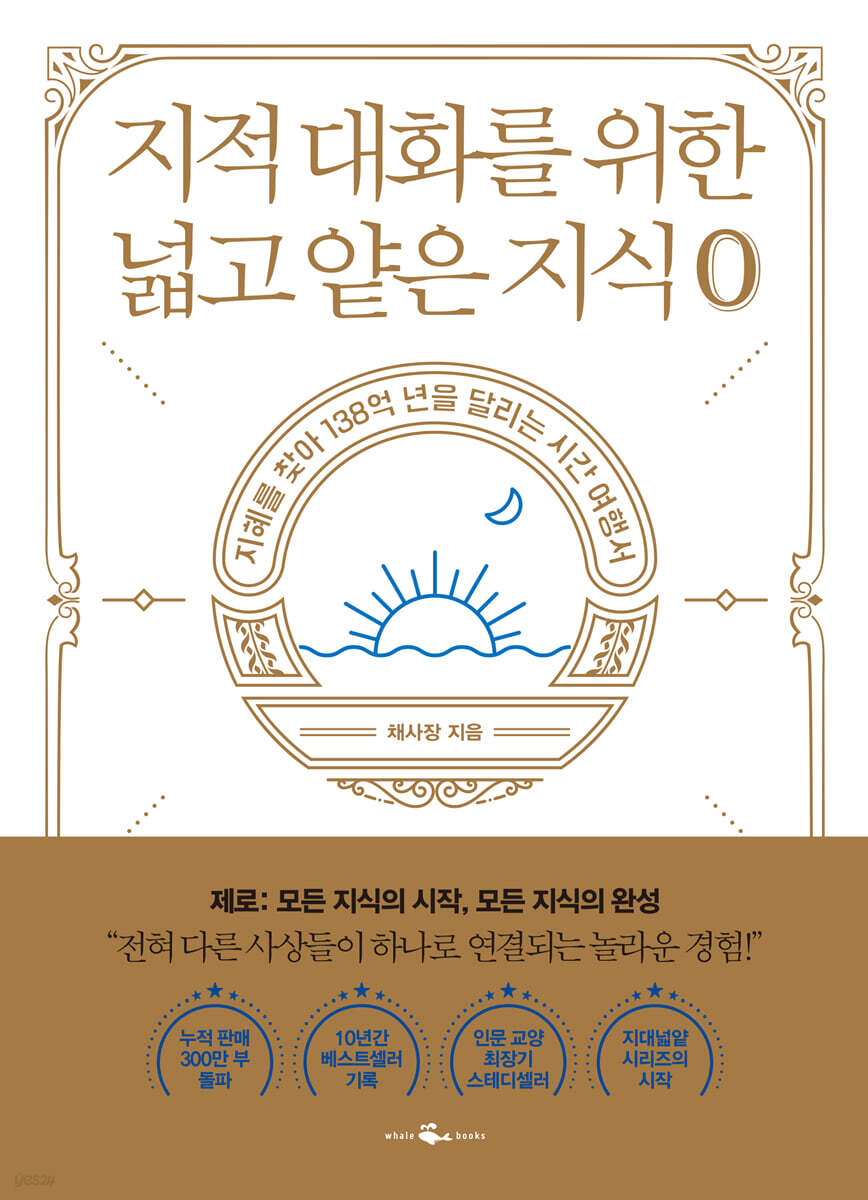
Zero broad and shallow knowledge for intellectual conversation
 |
Description
Book Introduction
“This book should be at the forefront of your life. This book is the table of contents for all knowledge.” If you want to know knowledge, you need prior knowledge! For all the knowledge that we have gained so far and will continue to gain in the future, The knowledge you need to build at your very foundation A rare Korean author in the humanities who has achieved double million-selling status with two million copies; a writer who creates buzz and becomes a bestseller with every book she publishes; a writer whose lectures are packed with audiences and whose podcasts, two years after their conclusion, still rank highly, awaiting the attention of many. After five years, President Chae has returned with a new work, “Broad and Shallow Knowledge for Intellectual Conversation.” The author's unique humor and writing skills still hold true, allowing him to explain difficult things in an easy-to-understand way and organize boring things in an entertaining way. However, while his sense of reality shone through in the previous series, this book fully displays his long-term thinking and insight. Modern people are exposed to a great deal of knowledge every day through various black mirrors. However, most of this fragmented knowledge quickly evaporates and does not take root in life. Why? Because the background knowledge needed to understand this knowledge is weak. There may be many types of knowledge, but to know any type of knowledge, there is prior knowledge that is absolutely necessary. It helps us understand ourselves and the world, shapes our personal perspectives and worldviews, and allows us to subjectively understand the knowledge derived from our daily lives. This book [Zero] contains the most fundamental knowledge you must first encounter if you want to have a truly intellectual conversation. This book will help you achieve the ultimate goal of knowledge. The very goal that makes me and my life 'better'. |
- You can preview some of the book's contents.
Preview
index
1.
Universe: The Birth of the World
The Birth of the Universe - Why Do Humans Seek to Understand the Universe?
Time Before Time - Multiverse and Parallel Universes
The Universe Beyond the Universe - Some Models of Multiple Universes
On Dimensions - Imagining Dimension 0
The Problem Solved by Multiverse Theory: Why the Universe Is the Way It Is
The Anthropocentric Principle - The Reason for the Existence of the Universe and Humans
2.
Humanity: Humans and Civilization
The Beginning of Our Universe: How We Proved the Big Bang Theory
History since the Big Bang - from 0 seconds to 13.8 billion years
The size of our universe - such a small being in such a vast space
The Birth of Earth - Collisions, Companions, and Geologic Eras
The Birth of Life - How Did Life Begin?
About Evolution - Misconceptions and Truths about Evolution
The Birth of Humanity - Modern Humans Spreading Out
The Birth of Civilization: The World's Four Great Civilizations and Human Life
The Epic of Gilgamesh - The Oldest Report on Humanity
3.
Vedas: The Universe and the Self
The Great Teachers - Why They Appeared in the Axial Age
Historical Background - The Half of the World We Don't Know
Vedic Mythology - Three Categories of Gods
The Beginning of Monism - The Ultimate Wisdom Discovered by Ancient Indians
The Modern Meaning of Pan-Alia-Ilyeo - Self, World, and Relationships
Social Influence - The Age of the Inner Seekers
The Problem of the Upanishads - A Concern for All Religions
Bhagavad Gita - Reconciliation between the secular and the unsecular
The Hindu Worldview - A Synthesis of the Indian Spirit
4.
Taoism: Doctrine and Virtue
Historical Background - Where is the Line Between Myth and History?
The Life and Thought of Lao Tzu - A Philosopher of Transcendence
The Contents of the Tao Te Ching - The Order of the Universe and the Order of the Inner Self
The Encounter of Lao-tzu and Confucius: Two Attitudes to Life
The Life and Thought of Confucius - A Secular Philosopher
The Analects - Virtues to be Practiced Among Humans
After Confucius - The Development of Confucianism
The Difference Between Confucius and Lao-tzu: How to Stop the Confusion
The introduction of foreign religions - the emergence of Buddhism
The Neo-Confucian Worldview: Conclusion to Monism
5.
Buddhism: The Reality of the Self
Historical Background - How Buddhism Influenced Asia
Siddhartha's Life and Thought - Leaving Home and Enlightenment
The Buddha's Teachings - The Cause and Solution of Suffering
Differences Between Buddhism and the Vedas: Is There a Fixed Self or Not?
Buddhism after Buddha - Succession and Division
The Expansion of Buddhism - Theravada Buddhism and Mahayana Buddhism
Two Schools of Mahayana Buddhism: The Middle Way and Consciousness
Two Views of the Self - Self and No-Self
6.
Philosophy: A Divided World
The World of Dualism: Why Western Philosophy Has Reached Its Limits
Historical Background - The Spirit of Europe, Greece
Athens and Sparta: Cooperation and Confrontation, Two Wars
The Life and Thought of Socrates - The Thinking Man
Plato and the Theory of Forms - The Beginning of Dualism
Eastern and Western worldviews - the right and left brains of the giant known as humanity
The Meaning of Idealism - Is the World Before Our Eyes Real?
Kant's life and thought - the external world into the internal world
Background of Philosophy: Epistemological Concerns and Kant's Responses
Phenomenology after Kant - From Dualism to Monism
The Reality of the World - A World Difficult to Imagine
7.
Christianity: Doctrine and Mystery
The Two Foundations of Western Thought: How Different Ideas Coexisted
Historical Background - The Greeks Reappear
The Roman Empire - the most influential nation in history
Judea on the Frontiers of the Roman Empire - The Eventful History of the Jews
The Life and Thought of Jesus - His Leaving Home, Death, and Resurrection
The Two Meanings of Jesus: Jesus as History, Jesus as Transcendence
The Birth of Christianity - Why It Became a World Religion
The Fusion of Greek Philosophy and Christianity - A Shared Worldview
Meister Eckhart - The Possibility of Monism
Universe: The Birth of the World
The Birth of the Universe - Why Do Humans Seek to Understand the Universe?
Time Before Time - Multiverse and Parallel Universes
The Universe Beyond the Universe - Some Models of Multiple Universes
On Dimensions - Imagining Dimension 0
The Problem Solved by Multiverse Theory: Why the Universe Is the Way It Is
The Anthropocentric Principle - The Reason for the Existence of the Universe and Humans
2.
Humanity: Humans and Civilization
The Beginning of Our Universe: How We Proved the Big Bang Theory
History since the Big Bang - from 0 seconds to 13.8 billion years
The size of our universe - such a small being in such a vast space
The Birth of Earth - Collisions, Companions, and Geologic Eras
The Birth of Life - How Did Life Begin?
About Evolution - Misconceptions and Truths about Evolution
The Birth of Humanity - Modern Humans Spreading Out
The Birth of Civilization: The World's Four Great Civilizations and Human Life
The Epic of Gilgamesh - The Oldest Report on Humanity
3.
Vedas: The Universe and the Self
The Great Teachers - Why They Appeared in the Axial Age
Historical Background - The Half of the World We Don't Know
Vedic Mythology - Three Categories of Gods
The Beginning of Monism - The Ultimate Wisdom Discovered by Ancient Indians
The Modern Meaning of Pan-Alia-Ilyeo - Self, World, and Relationships
Social Influence - The Age of the Inner Seekers
The Problem of the Upanishads - A Concern for All Religions
Bhagavad Gita - Reconciliation between the secular and the unsecular
The Hindu Worldview - A Synthesis of the Indian Spirit
4.
Taoism: Doctrine and Virtue
Historical Background - Where is the Line Between Myth and History?
The Life and Thought of Lao Tzu - A Philosopher of Transcendence
The Contents of the Tao Te Ching - The Order of the Universe and the Order of the Inner Self
The Encounter of Lao-tzu and Confucius: Two Attitudes to Life
The Life and Thought of Confucius - A Secular Philosopher
The Analects - Virtues to be Practiced Among Humans
After Confucius - The Development of Confucianism
The Difference Between Confucius and Lao-tzu: How to Stop the Confusion
The introduction of foreign religions - the emergence of Buddhism
The Neo-Confucian Worldview: Conclusion to Monism
5.
Buddhism: The Reality of the Self
Historical Background - How Buddhism Influenced Asia
Siddhartha's Life and Thought - Leaving Home and Enlightenment
The Buddha's Teachings - The Cause and Solution of Suffering
Differences Between Buddhism and the Vedas: Is There a Fixed Self or Not?
Buddhism after Buddha - Succession and Division
The Expansion of Buddhism - Theravada Buddhism and Mahayana Buddhism
Two Schools of Mahayana Buddhism: The Middle Way and Consciousness
Two Views of the Self - Self and No-Self
6.
Philosophy: A Divided World
The World of Dualism: Why Western Philosophy Has Reached Its Limits
Historical Background - The Spirit of Europe, Greece
Athens and Sparta: Cooperation and Confrontation, Two Wars
The Life and Thought of Socrates - The Thinking Man
Plato and the Theory of Forms - The Beginning of Dualism
Eastern and Western worldviews - the right and left brains of the giant known as humanity
The Meaning of Idealism - Is the World Before Our Eyes Real?
Kant's life and thought - the external world into the internal world
Background of Philosophy: Epistemological Concerns and Kant's Responses
Phenomenology after Kant - From Dualism to Monism
The Reality of the World - A World Difficult to Imagine
7.
Christianity: Doctrine and Mystery
The Two Foundations of Western Thought: How Different Ideas Coexisted
Historical Background - The Greeks Reappear
The Roman Empire - the most influential nation in history
Judea on the Frontiers of the Roman Empire - The Eventful History of the Jews
The Life and Thought of Jesus - His Leaving Home, Death, and Resurrection
The Two Meanings of Jesus: Jesus as History, Jesus as Transcendence
The Birth of Christianity - Why It Became a World Religion
The Fusion of Greek Philosophy and Christianity - A Shared Worldview
Meister Eckhart - The Possibility of Monism
Detailed image
Into the book
Phajān is a ritual to destroy the elephant's soul.
A ritual in which a baby elephant captured in the wild is tied up and starved and beaten for several days until it completely loses resistance.
Half of the elephants cannot endure this and die, but the strong ones survive and become a means of making money by carrying tourists on their backs.
Elephants may not be able to think, but their souls are shattered and, from the depths of their instincts, they have come to understand the harsh world dimly.
That I must not look for my mother anymore, and that the pain of the club cannot be overcome.
The way elephants survive is simple.
It's about pretending not to hear the voice within you that cries out for freedom, and pretending that the world isn't in chaos.
We are led to think about evil.
Anger flares up at the poor men wielding clubs performing the Pajan ritual.
But if we don't stop at anger and look into their lives, we see that, as with all issues, this goes beyond a simple question of good and evil.
Perhaps those who perform the Pajan ritual are also victims.
Their souls may have already been shattered.
When they first hesitated to beat the baby elephant, his family and society would have spoken kindly to him.
Stop asking questions.
It doesn't help you make a living.
Act like an adult for the survival of your loved ones whom you must protect.
In the end, he would have pretended not to hear the voice inside him, and that the world was not in chaos.
This story is your story.
What about you? In some places you've been a beaten elephant, in others you've been a club-wielder.
What we need to worry about is not whether we were victims or perpetrators, but whether our souls have already been destroyed.
---From the "Prologue"
Whenever we look into the vastness of the universe, we cannot help but think about our status as human beings.
The triviality of my daily life feels so insignificant in the face of transcendent grandeur.
What is the philosophical reason why, even in modern times, humanity cannot let go of "God"? It is because of human values.
The idea that the god who created this vast world might be the origin of humanity relieves my ontological insignificance.
But this comfort easily crumbles when we consider the size of the universe.
If all existence actually originated from the creation of God, if He created the multiverse of hyperspace and watched the birth and death of countless mini-universes flickering through eternity and infinite space, and if He watched the birth and death of hundreds of billions of galaxies in one of those mini-universes, and after witnessing the birth of countless life forms on the third planet of a solar system, a speck of dust on the outskirts of one of those tiny galaxies, why should He interfere so much with the brief existence and disappearance of human life on that Earth? Is there even a reason for Him to do so?
---From "The Size of Our Universe"
The programming of C. elegans easily extends to the idea of human programming.
Of course, human neurons are much more numerous and complex, with approximately 10 billion neurons, compared to the 302 neurons of the C. elegans worm.
But this is a quantitative difference, not a qualitative one.
If in the near future the information about human neurons becomes clear and we can program this information, we will encounter something within the program that reacts and speaks like a human being.
And likewise, to understand what this program human means, we will have to engage in a philosophical debate.
If we are not prepared, we will be confused when the day comes when the program human asks the questions.
He might ask us:
“What is life?”
---From "The Birth of Life"
Great teachers have been born in countless times and places.
Among them, there was one particularly wondrous time.
2500 years ago, the period known as the 'Axial Age' arrived.
According to British religious scholar Karen Armstrong, the Axial Age was a time of great turning point in the history of human thought.
In India, the Upanishads and Siddhartha Gautama emerged, in China, Lao-tzu and Confucius were active, in ancient Greece, Socrates and Plato were born, and in Israel, Elijah, Jeremiah, and Isaiah were born.
The first person to use the term "axial age" was the German existential philosopher Karl Jaspers.
In his 1949 book, The Origin and Goal of History, he presented the concept of the Axial Age as an era that could not be denied as the spiritual origin of all mankind, regardless of East or West.
We do not know specifically why, during this particular period, the great teachers commonly preached grand ideas.
However, it is clear that the period immediately preceding it was a turbulent one, with rapid urbanization and population growth across the globe.
From this point on, mankind, who were born in nature and wandered across vast fields, were born in huge cities and began to live within a system of culture and symbols.
Urban life has narrowed the physical distance between people, exacerbating economic, political, and social conflicts, which have culminated in violence and war.
Perhaps the Axial Age was the inevitable result of humankind's struggle to develop civilization and face the problems it brought.
A ritual in which a baby elephant captured in the wild is tied up and starved and beaten for several days until it completely loses resistance.
Half of the elephants cannot endure this and die, but the strong ones survive and become a means of making money by carrying tourists on their backs.
Elephants may not be able to think, but their souls are shattered and, from the depths of their instincts, they have come to understand the harsh world dimly.
That I must not look for my mother anymore, and that the pain of the club cannot be overcome.
The way elephants survive is simple.
It's about pretending not to hear the voice within you that cries out for freedom, and pretending that the world isn't in chaos.
We are led to think about evil.
Anger flares up at the poor men wielding clubs performing the Pajan ritual.
But if we don't stop at anger and look into their lives, we see that, as with all issues, this goes beyond a simple question of good and evil.
Perhaps those who perform the Pajan ritual are also victims.
Their souls may have already been shattered.
When they first hesitated to beat the baby elephant, his family and society would have spoken kindly to him.
Stop asking questions.
It doesn't help you make a living.
Act like an adult for the survival of your loved ones whom you must protect.
In the end, he would have pretended not to hear the voice inside him, and that the world was not in chaos.
This story is your story.
What about you? In some places you've been a beaten elephant, in others you've been a club-wielder.
What we need to worry about is not whether we were victims or perpetrators, but whether our souls have already been destroyed.
---From the "Prologue"
Whenever we look into the vastness of the universe, we cannot help but think about our status as human beings.
The triviality of my daily life feels so insignificant in the face of transcendent grandeur.
What is the philosophical reason why, even in modern times, humanity cannot let go of "God"? It is because of human values.
The idea that the god who created this vast world might be the origin of humanity relieves my ontological insignificance.
But this comfort easily crumbles when we consider the size of the universe.
If all existence actually originated from the creation of God, if He created the multiverse of hyperspace and watched the birth and death of countless mini-universes flickering through eternity and infinite space, and if He watched the birth and death of hundreds of billions of galaxies in one of those mini-universes, and after witnessing the birth of countless life forms on the third planet of a solar system, a speck of dust on the outskirts of one of those tiny galaxies, why should He interfere so much with the brief existence and disappearance of human life on that Earth? Is there even a reason for Him to do so?
---From "The Size of Our Universe"
The programming of C. elegans easily extends to the idea of human programming.
Of course, human neurons are much more numerous and complex, with approximately 10 billion neurons, compared to the 302 neurons of the C. elegans worm.
But this is a quantitative difference, not a qualitative one.
If in the near future the information about human neurons becomes clear and we can program this information, we will encounter something within the program that reacts and speaks like a human being.
And likewise, to understand what this program human means, we will have to engage in a philosophical debate.
If we are not prepared, we will be confused when the day comes when the program human asks the questions.
He might ask us:
“What is life?”
---From "The Birth of Life"
Great teachers have been born in countless times and places.
Among them, there was one particularly wondrous time.
2500 years ago, the period known as the 'Axial Age' arrived.
According to British religious scholar Karen Armstrong, the Axial Age was a time of great turning point in the history of human thought.
In India, the Upanishads and Siddhartha Gautama emerged, in China, Lao-tzu and Confucius were active, in ancient Greece, Socrates and Plato were born, and in Israel, Elijah, Jeremiah, and Isaiah were born.
The first person to use the term "axial age" was the German existential philosopher Karl Jaspers.
In his 1949 book, The Origin and Goal of History, he presented the concept of the Axial Age as an era that could not be denied as the spiritual origin of all mankind, regardless of East or West.
We do not know specifically why, during this particular period, the great teachers commonly preached grand ideas.
However, it is clear that the period immediately preceding it was a turbulent one, with rapid urbanization and population growth across the globe.
From this point on, mankind, who were born in nature and wandered across vast fields, were born in huge cities and began to live within a system of culture and symbols.
Urban life has narrowed the physical distance between people, exacerbating economic, political, and social conflicts, which have culminated in violence and war.
Perhaps the Axial Age was the inevitable result of humankind's struggle to develop civilization and face the problems it brought.
---From "The Great Teachers"
Publisher's Review
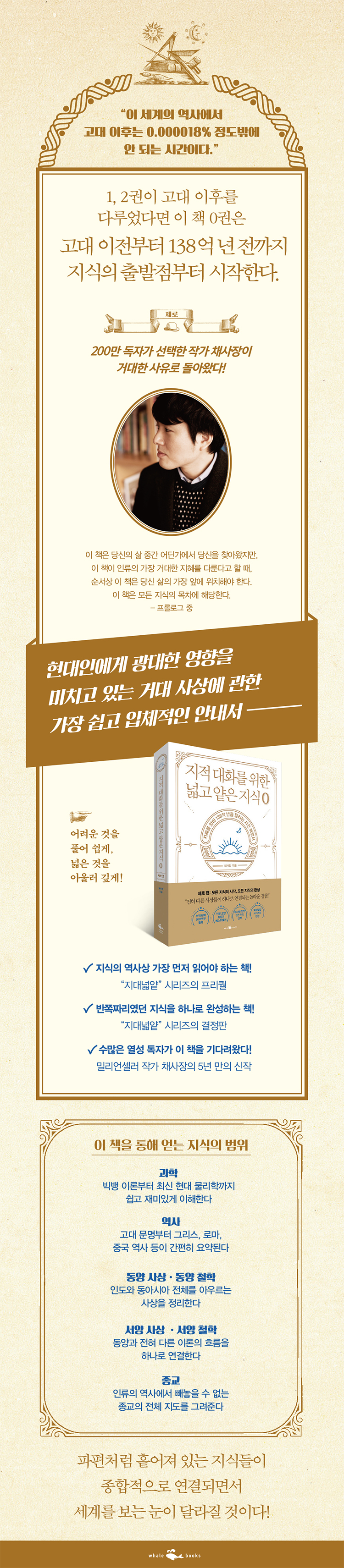
Bestselling author Cha Sa-jang returns with “Wide and Shallow”!
New book in the series, “Broad and Shallow Knowledge for Intellectual Conversation”
Why volume 0 and not volume 3?
[Zero] Chapter: The Beginning of All Knowledge, the Completion of All Knowledge
The first book you must read in the history of knowledge
By going back to the origins of knowledge that created the present world and the human spirit.
A vast body of knowledge that had been scattered in fragments is revealed!
With cumulative sales of over 2 million copies, the legendary series "Broad and Shallow Knowledge for Intellectual Conversation" has become a rare long-running bestseller among humanities books.
If Volume 1 was titled [Reality] and covered history, economics, politics, society, and ethics, Volume 2 was titled [Beyond Reality] and covered philosophy, science, art, religion, and mysticism.
Volume 1 divided the world into a few rulers and a large number of ruled, and Volume 2 divided the world into absolutism and relativism.
Since volumes 1 and 2 were a time dominated by dualism, the structure of the book also followed the structure of dualism.
The new [Zero] edition deals with monism, which dominated for a much longer time before dualism.
This is an exciting introduction to Eastern thought and figures, which are considered the most important knowledge in the history of human thought.
Here, Western ideas and figures are connected, creating a moment of insight where completely different knowledge becomes one.
A huge body of knowledge that was acquired piecemeal in the previous series is revealed.
The reader now realizes the source of his knowledge and finally transforms it into wisdom.
A book that completes half-baked knowledge into one.
By filling in the empty parts of the “Wide and Shallow” series
Complete the map of knowledge that covers vast space and time, from the universe to prehistoric times!
Volumes 1 and 2 of 『Broad and Shallow Knowledge for Intellectual Conversation』, taken together, can be said to cover thought since ancient times.
Looking at the history of this world, it is only about 0.000018% of that time.
So it barely reaches halfway through the history of knowledge.
The recently published Zero volume of 『Broad and Shallow Knowledge for Intellectual Conversation』 covers the pre-ancient period, which was not covered in Volumes 1 and 2.
It begins with the most recent physics, from the birth of the universe 13.8 billion years ago, or even before time itself, and then unfolds the vast history of the Earth, humanity, and civilization in a captivating way.
Afterwards, we will learn the most fundamental knowledge we need to know based on the figures who appeared during the 'Axial Age', the most important period in the history of human thought.
Writer Cha Sa-jang's unique "piercing through everything" style is fully displayed here.
By rearranging the different Eastern and Western thoughts, philosophies, and religions under a single standard, complex knowledge is established in the mind.
Above all, it makes us feel amazed at human intelligence by confronting a subject that humanity has been obsessed with for so long.
In this way, the reader can achieve the 'completion of all knowledge' only after going through this book, which covers the 'beginning of all knowledge'.
New book in the series, “Broad and Shallow Knowledge for Intellectual Conversation”
Why volume 0 and not volume 3?
[Zero] Chapter: The Beginning of All Knowledge, the Completion of All Knowledge
The first book you must read in the history of knowledge
By going back to the origins of knowledge that created the present world and the human spirit.
A vast body of knowledge that had been scattered in fragments is revealed!
With cumulative sales of over 2 million copies, the legendary series "Broad and Shallow Knowledge for Intellectual Conversation" has become a rare long-running bestseller among humanities books.
If Volume 1 was titled [Reality] and covered history, economics, politics, society, and ethics, Volume 2 was titled [Beyond Reality] and covered philosophy, science, art, religion, and mysticism.
Volume 1 divided the world into a few rulers and a large number of ruled, and Volume 2 divided the world into absolutism and relativism.
Since volumes 1 and 2 were a time dominated by dualism, the structure of the book also followed the structure of dualism.
The new [Zero] edition deals with monism, which dominated for a much longer time before dualism.
This is an exciting introduction to Eastern thought and figures, which are considered the most important knowledge in the history of human thought.
Here, Western ideas and figures are connected, creating a moment of insight where completely different knowledge becomes one.
A huge body of knowledge that was acquired piecemeal in the previous series is revealed.
The reader now realizes the source of his knowledge and finally transforms it into wisdom.
A book that completes half-baked knowledge into one.
By filling in the empty parts of the “Wide and Shallow” series
Complete the map of knowledge that covers vast space and time, from the universe to prehistoric times!
Volumes 1 and 2 of 『Broad and Shallow Knowledge for Intellectual Conversation』, taken together, can be said to cover thought since ancient times.
Looking at the history of this world, it is only about 0.000018% of that time.
So it barely reaches halfway through the history of knowledge.
The recently published Zero volume of 『Broad and Shallow Knowledge for Intellectual Conversation』 covers the pre-ancient period, which was not covered in Volumes 1 and 2.
It begins with the most recent physics, from the birth of the universe 13.8 billion years ago, or even before time itself, and then unfolds the vast history of the Earth, humanity, and civilization in a captivating way.
Afterwards, we will learn the most fundamental knowledge we need to know based on the figures who appeared during the 'Axial Age', the most important period in the history of human thought.
Writer Cha Sa-jang's unique "piercing through everything" style is fully displayed here.
By rearranging the different Eastern and Western thoughts, philosophies, and religions under a single standard, complex knowledge is established in the mind.
Above all, it makes us feel amazed at human intelligence by confronting a subject that humanity has been obsessed with for so long.
In this way, the reader can achieve the 'completion of all knowledge' only after going through this book, which covers the 'beginning of all knowledge'.
GOODS SPECIFICS
- Publication date: December 24, 2019
- Page count, weight, size: 556 pages | 770g | 152*210*35mm
- ISBN13: 9791190313131
- ISBN10: 1190313138
You may also like
카테고리
korean


korean

![GQ KOREA Mark (Monthly): December [2025]](http://librairie.coreenne.fr/cdn/shop/files/8ef265dbbfbf186523ed75ba7319009d.jpg?v=1765340328&width=3840)


