

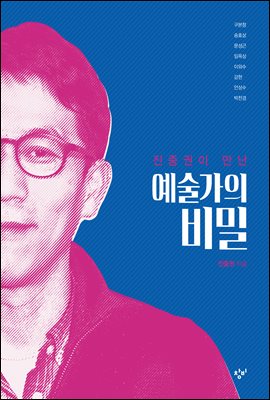
The Secret of the Artist Jin Jung-kwon Met
 |
Description
Book Introduction
Aesthetician Jin Jung-kwon meets the masters of the Korean art world!
Photography, architecture, acting, fine art, literature, music, design, media art
The secrets of creation and art they revealed
Jin Jung-kwon, an aesthetician with sharp wit, met with the masters of the Korean art world.
From photographer Koo Bon-chang to architect Seung Hyo-sang, actor Moon Sung-geun, artist Lim Ok-sang, novelist Lee Oisoo, pop music critic Kang Heon, visual designer Ahn Sang-soo, and media artist Park Chan-kyung, Jin Jung-kwon delves into the lives and works of contemporary cultural and artistic giants with his characteristically sharp eye.
Not only is this remarkable for the fact that aesthetician Jin Jung-kwon, who has focused on introducing aesthetic theory to the public, has entered the creative field, but it also presents a rare opportunity to see masters who are difficult to encounter in other media through the eyes of an aesthetician.
From the brilliant insights that only an artist who has dedicated his life to a single field can possess, to the behind-the-scenes stories of his work and the struggles of creation, the artists' inner stories are fascinating.
This book contains a selection of eight interviewees from the Changbi podcast 'Jin Jung-kwon's Cultural Tea House' that began in 2014.
Not only does it feature a wealth of works by each artist that could not be included in the podcast, but it also includes newly written content based on interviews, making it a valuable resource for glimpses into the landscape of Korean culture and arts as depicted through the eyes of an aesthetician.
Photography, architecture, acting, fine art, literature, music, design, media art
The secrets of creation and art they revealed
Jin Jung-kwon, an aesthetician with sharp wit, met with the masters of the Korean art world.
From photographer Koo Bon-chang to architect Seung Hyo-sang, actor Moon Sung-geun, artist Lim Ok-sang, novelist Lee Oisoo, pop music critic Kang Heon, visual designer Ahn Sang-soo, and media artist Park Chan-kyung, Jin Jung-kwon delves into the lives and works of contemporary cultural and artistic giants with his characteristically sharp eye.
Not only is this remarkable for the fact that aesthetician Jin Jung-kwon, who has focused on introducing aesthetic theory to the public, has entered the creative field, but it also presents a rare opportunity to see masters who are difficult to encounter in other media through the eyes of an aesthetician.
From the brilliant insights that only an artist who has dedicated his life to a single field can possess, to the behind-the-scenes stories of his work and the struggles of creation, the artists' inner stories are fascinating.
This book contains a selection of eight interviewees from the Changbi podcast 'Jin Jung-kwon's Cultural Tea House' that began in 2014.
Not only does it feature a wealth of works by each artist that could not be included in the podcast, but it also includes newly written content based on interviews, making it a valuable resource for glimpses into the landscape of Korean culture and arts as depicted through the eyes of an aesthetician.
- You can preview some of the book's contents.
Preview
index
introduction
Preserving Time / Photographer Koo Bon-chang
Architectural Revolution, Revolutionary Architecture / Architect Seung Hyo-sang
The actor who constantly fights / Actor Moon Sung-geun
Public art that reflects on art and politics / Artist Lim Ok-sang
The Life of a Stranger Becomes a Novel / Novelist Lee Oisoo
Popular Music: Subversion and Reversal / Popular Music Critic Kang Heon
Making the World Cool with Letters / Visual Designer Sangsoo Ahn
Critical Artists and Others / Media Artist Park Chan-kyong
Preserving Time / Photographer Koo Bon-chang
Architectural Revolution, Revolutionary Architecture / Architect Seung Hyo-sang
The actor who constantly fights / Actor Moon Sung-geun
Public art that reflects on art and politics / Artist Lim Ok-sang
The Life of a Stranger Becomes a Novel / Novelist Lee Oisoo
Popular Music: Subversion and Reversal / Popular Music Critic Kang Heon
Making the World Cool with Letters / Visual Designer Sangsoo Ahn
Critical Artists and Others / Media Artist Park Chan-kyong
Detailed image
.jpg)
Publisher's Review
Aesthetician Jin Jung-kwon meets the masters of the Korean art world!
Photography, architecture, acting, fine art, literature, music, design, media art
The secrets of creation and art they revealed
Jin Jung-kwon, an aesthetician with sharp wit, met with the masters of the Korean art world.
From photographer Koo Bon-chang to architect Seung Hyo-sang, actor Moon Sung-geun, artist Lim Ok-sang, novelist Lee Oisoo, pop music critic Kang Heon, visual designer Ahn Sang-soo, and media artist Park Chan-kyung, Jin Jung-kwon delves into the lives and works of contemporary cultural and artistic giants with his characteristically sharp eye.
Not only is this remarkable for the fact that aesthetician Jin Jung-kwon, who has focused on introducing aesthetic theory to the public, has entered the creative field, but it also presents a rare opportunity to see masters who are difficult to encounter in other media through the eyes of an aesthetician.
From the brilliant insights that only an artist who has dedicated his life to a single field can possess, to the behind-the-scenes stories of his work and the struggles of creation, the artists' inner stories are fascinating.
This book contains a selection of eight interviewees from the Changbi podcast 'Jin Jung-kwon's Cultural Tea House' that began in 2014.
Not only does it feature a wealth of works by each artist that could not be included in the podcast, but it also includes newly written content based on interviews, making it a valuable resource for glimpses into the landscape of Korean culture and arts as depicted through the eyes of an aesthetician.
Aesthetician Jin Jung-kwon's New Path
Although he is better known to the public as a political commentator, Jin Jung-kwon is an author who has actively promoted aesthetics and art to the general public through books such as Aesthetic Odyssey.
It is no exaggeration to say that the contribution of aesthetics, a field unfamiliar to the Korean public, is due to the work of aesthetician Jin Jung-kwon.
The author, who has so far focused on introducing rigid aesthetic theories to the general public, suddenly went out into the field to meet artists, and there is a reason for that.
The author says, “Aesthetics as a philosophical theory is gray, but aesthetics as a principle of creation is always green.”
In other words, because aesthetics inevitably follows events that have already occurred in the history of art, the most vivid way to encounter art is to hear directly from people who are active in the art scene at this very moment.
Jin Jung-kwon also argues that if there is such a thing as a “Korean aesthetic,” it cannot be discovered by looking through the magnifying glass of Western art, but must be discovered anew by exploring the Korean art world.
Therefore, conversations with artists are a starting point for aesthetic thinking that goes beyond journalistic needs or exploration of the artist's world, and even extends to theoretical and philosophical implications.
Secrets Revealed by Masters of the Korean Art World
The interviewees in this book are all accomplished writers in various fields.
Photographer Koo Bohnchang, who has pioneered the experimental possibilities of the photographic medium; Seung Hyo-sang, Korea's leading architect who dreams of a revolution through architecture; actor Moon Sung-keun, who has represented the "intellectual" image of our film industry since the early to mid-1990s; artist Lim Ok-sang, who went from being a master of folk art to a pioneer of public art; novelist Lee Oisoo, who has pioneered a unique world of art through travel; pop music critic Kang Heon, who has suggested the direction of Korean pop music and explored its meaning; typographer Ahn Sang-soo, who has uniquely led the design of Korean fonts; and media artist Park Chan-kyong, who has garnered attention for his various installations and video works – these eight people are the most active creators in our cultural and artistic fields.
For readers unfamiliar with them, this will be an opportunity to encounter their outstanding works, while for those familiar with them, it will be an opportunity to gain a new interpretation of their works through Jin Jung-kwon's eyes.
Lim Ok-sang, who became a master of folk art at a young age with his intense colors and masculine expressions, leaves for France and is reborn as a public artist. In this process, we can read about an artist who was confined to a Korean context, gaining a new perspective on the wider world and struggling within the context of his own time.
Meanwhile, in a conversation with Lee Oisoo, who lost his mother at a young age and grew up begging for milk and drinking alcohol, and after going through hardships to create his own literary world, we can see similarities between the current 'power Twitterian' Lee Oisoo and his travels in his younger days.
The special charm of conversations with these artists is the reflections they unconsciously shed as creators.
Jin Jung-kwon describes it this way: “Just as an old farmer casually throws out precious truths about life, so too do outstanding artists casually throw out surprising truths that we had not even thought of.”
When Seung Hyo-sang says, "A good architect must be able to hear the sound of the earth," when Koo Bon-chang says, "Creativity is ultimately the effort to interpret things differently from others," and when Lim Ok-sang asserts, "Artists must remain on the scene until the end and serve as witnesses and recorders," readers will be forced to think anew about what architecture, photography, and art are.
Drawing a map of the Korean cultural and arts world
Interviews shine brighter when a passionate artist and a cool-headed aesthetician meet.
When novelist Lee Oisoo says, “I have experienced an out-of-body experience,” and gives a series of Zen questions and answers that are difficult for the average person to understand, Jin Jung-kwon interprets his absurd-sounding story not as boasting or delusion, but as the product of an attitude that seeks to overlap the virtual and the real.
In front of the works of media artist Park Chan-kyong, who has delved into the themes of the Cold War and division, we read the “politics of the other,” and when visual designer Ahn Sang-soo says, “I hope that when I die, I can say, ‘My life was wonderful,’” we are reminded of the existential aesthetics of the ancient Greeks.
In the conversation with Kang Heon, it is pointed out that popular music, which has accumulated memories and recollections of each era from the 1970s through the 1990s with Shin Hae-chul and Seo Taiji, and up to the present day with K-pop and idols, is an important element of microhistory that reveals the most intimate layers of people's history.
Their interviews are fun to read individually, but the points where they intersect are also particularly interesting.
When Im Ok-sang and Park Chan-kyung each offer different interpretations of the debate between realism and modernism that shook the Korean intellectual world in the 1980s, the interviewer serves as a bridge between these conflicting interpretations.
When Seung Hyo-sang, Lim Ok-sang, and Ahn Sang-soo each offer different interpretations of the Korean verb "jitda," when the folk artist Lim Ok-sang's painting of Reverend Moon Ik-hwan, "For Oneness," is mentioned in Moon Sung-geun's interview, and when readers compare the memories of Park Chan-kyong and Lim Ok-sang, who each reminisce about the art world of the 1970s in different ways, they will inevitably draw a new map of the Korean art world in their minds.
Creation and Art, Their Intimate Secrets
Artists are always objects of curiosity.
From difficult-to-understand media art to architectural structures whose intentions are difficult to decipher, it is not easy for the average person to decipher the meaning behind their works.
So they become objects of envy and also objects of ridicule.
That is why the value of an artist's interview shared by an aesthetician is all the more valuable.
The deep and wide-ranging story, told disarmed by the insight and perspective of aesthetician Jin Jung-kwon, is rich with content never heard before in any media or interview.
Even readers who have encountered the artists' interviews in this book in other media will find new interpretations of their words and actions here.
Jin Jung-kwon says:
“For an aesthetician, peering into the inner world of an artist is as exciting as an archaeologist opening the door of a newly discovered tomb.” This is the calm yet powerful reflection of an aesthetician who has left the world of print and plates to meet living, breathing artists firsthand.
But this excitement is not limited to aestheticians.
For readers who join the new exploration of aesthetician Jin Jung-kwon, this book will provide an experience that brings them one step closer to art and artists.
Photography, architecture, acting, fine art, literature, music, design, media art
The secrets of creation and art they revealed
Jin Jung-kwon, an aesthetician with sharp wit, met with the masters of the Korean art world.
From photographer Koo Bon-chang to architect Seung Hyo-sang, actor Moon Sung-geun, artist Lim Ok-sang, novelist Lee Oisoo, pop music critic Kang Heon, visual designer Ahn Sang-soo, and media artist Park Chan-kyung, Jin Jung-kwon delves into the lives and works of contemporary cultural and artistic giants with his characteristically sharp eye.
Not only is this remarkable for the fact that aesthetician Jin Jung-kwon, who has focused on introducing aesthetic theory to the public, has entered the creative field, but it also presents a rare opportunity to see masters who are difficult to encounter in other media through the eyes of an aesthetician.
From the brilliant insights that only an artist who has dedicated his life to a single field can possess, to the behind-the-scenes stories of his work and the struggles of creation, the artists' inner stories are fascinating.
This book contains a selection of eight interviewees from the Changbi podcast 'Jin Jung-kwon's Cultural Tea House' that began in 2014.
Not only does it feature a wealth of works by each artist that could not be included in the podcast, but it also includes newly written content based on interviews, making it a valuable resource for glimpses into the landscape of Korean culture and arts as depicted through the eyes of an aesthetician.
Aesthetician Jin Jung-kwon's New Path
Although he is better known to the public as a political commentator, Jin Jung-kwon is an author who has actively promoted aesthetics and art to the general public through books such as Aesthetic Odyssey.
It is no exaggeration to say that the contribution of aesthetics, a field unfamiliar to the Korean public, is due to the work of aesthetician Jin Jung-kwon.
The author, who has so far focused on introducing rigid aesthetic theories to the general public, suddenly went out into the field to meet artists, and there is a reason for that.
The author says, “Aesthetics as a philosophical theory is gray, but aesthetics as a principle of creation is always green.”
In other words, because aesthetics inevitably follows events that have already occurred in the history of art, the most vivid way to encounter art is to hear directly from people who are active in the art scene at this very moment.
Jin Jung-kwon also argues that if there is such a thing as a “Korean aesthetic,” it cannot be discovered by looking through the magnifying glass of Western art, but must be discovered anew by exploring the Korean art world.
Therefore, conversations with artists are a starting point for aesthetic thinking that goes beyond journalistic needs or exploration of the artist's world, and even extends to theoretical and philosophical implications.
Secrets Revealed by Masters of the Korean Art World
The interviewees in this book are all accomplished writers in various fields.
Photographer Koo Bohnchang, who has pioneered the experimental possibilities of the photographic medium; Seung Hyo-sang, Korea's leading architect who dreams of a revolution through architecture; actor Moon Sung-keun, who has represented the "intellectual" image of our film industry since the early to mid-1990s; artist Lim Ok-sang, who went from being a master of folk art to a pioneer of public art; novelist Lee Oisoo, who has pioneered a unique world of art through travel; pop music critic Kang Heon, who has suggested the direction of Korean pop music and explored its meaning; typographer Ahn Sang-soo, who has uniquely led the design of Korean fonts; and media artist Park Chan-kyong, who has garnered attention for his various installations and video works – these eight people are the most active creators in our cultural and artistic fields.
For readers unfamiliar with them, this will be an opportunity to encounter their outstanding works, while for those familiar with them, it will be an opportunity to gain a new interpretation of their works through Jin Jung-kwon's eyes.
Lim Ok-sang, who became a master of folk art at a young age with his intense colors and masculine expressions, leaves for France and is reborn as a public artist. In this process, we can read about an artist who was confined to a Korean context, gaining a new perspective on the wider world and struggling within the context of his own time.
Meanwhile, in a conversation with Lee Oisoo, who lost his mother at a young age and grew up begging for milk and drinking alcohol, and after going through hardships to create his own literary world, we can see similarities between the current 'power Twitterian' Lee Oisoo and his travels in his younger days.
The special charm of conversations with these artists is the reflections they unconsciously shed as creators.
Jin Jung-kwon describes it this way: “Just as an old farmer casually throws out precious truths about life, so too do outstanding artists casually throw out surprising truths that we had not even thought of.”
When Seung Hyo-sang says, "A good architect must be able to hear the sound of the earth," when Koo Bon-chang says, "Creativity is ultimately the effort to interpret things differently from others," and when Lim Ok-sang asserts, "Artists must remain on the scene until the end and serve as witnesses and recorders," readers will be forced to think anew about what architecture, photography, and art are.
Drawing a map of the Korean cultural and arts world
Interviews shine brighter when a passionate artist and a cool-headed aesthetician meet.
When novelist Lee Oisoo says, “I have experienced an out-of-body experience,” and gives a series of Zen questions and answers that are difficult for the average person to understand, Jin Jung-kwon interprets his absurd-sounding story not as boasting or delusion, but as the product of an attitude that seeks to overlap the virtual and the real.
In front of the works of media artist Park Chan-kyong, who has delved into the themes of the Cold War and division, we read the “politics of the other,” and when visual designer Ahn Sang-soo says, “I hope that when I die, I can say, ‘My life was wonderful,’” we are reminded of the existential aesthetics of the ancient Greeks.
In the conversation with Kang Heon, it is pointed out that popular music, which has accumulated memories and recollections of each era from the 1970s through the 1990s with Shin Hae-chul and Seo Taiji, and up to the present day with K-pop and idols, is an important element of microhistory that reveals the most intimate layers of people's history.
Their interviews are fun to read individually, but the points where they intersect are also particularly interesting.
When Im Ok-sang and Park Chan-kyung each offer different interpretations of the debate between realism and modernism that shook the Korean intellectual world in the 1980s, the interviewer serves as a bridge between these conflicting interpretations.
When Seung Hyo-sang, Lim Ok-sang, and Ahn Sang-soo each offer different interpretations of the Korean verb "jitda," when the folk artist Lim Ok-sang's painting of Reverend Moon Ik-hwan, "For Oneness," is mentioned in Moon Sung-geun's interview, and when readers compare the memories of Park Chan-kyong and Lim Ok-sang, who each reminisce about the art world of the 1970s in different ways, they will inevitably draw a new map of the Korean art world in their minds.
Creation and Art, Their Intimate Secrets
Artists are always objects of curiosity.
From difficult-to-understand media art to architectural structures whose intentions are difficult to decipher, it is not easy for the average person to decipher the meaning behind their works.
So they become objects of envy and also objects of ridicule.
That is why the value of an artist's interview shared by an aesthetician is all the more valuable.
The deep and wide-ranging story, told disarmed by the insight and perspective of aesthetician Jin Jung-kwon, is rich with content never heard before in any media or interview.
Even readers who have encountered the artists' interviews in this book in other media will find new interpretations of their words and actions here.
Jin Jung-kwon says:
“For an aesthetician, peering into the inner world of an artist is as exciting as an archaeologist opening the door of a newly discovered tomb.” This is the calm yet powerful reflection of an aesthetician who has left the world of print and plates to meet living, breathing artists firsthand.
But this excitement is not limited to aestheticians.
For readers who join the new exploration of aesthetician Jin Jung-kwon, this book will provide an experience that brings them one step closer to art and artists.
GOODS SPECIFICS
- Date of issue: March 25, 2015
- Page count, weight, size: 388 pages | 666g | 153*215*24mm
- ISBN13: 9788936472610
- ISBN10: 8936472615
You may also like
카테고리
korean


korean

![GQ KOREA Mark (Monthly): December [2025]](http://librairie.coreenne.fr/cdn/shop/files/8ef265dbbfbf186523ed75ba7319009d.jpg?v=1765340328&width=3840)


