

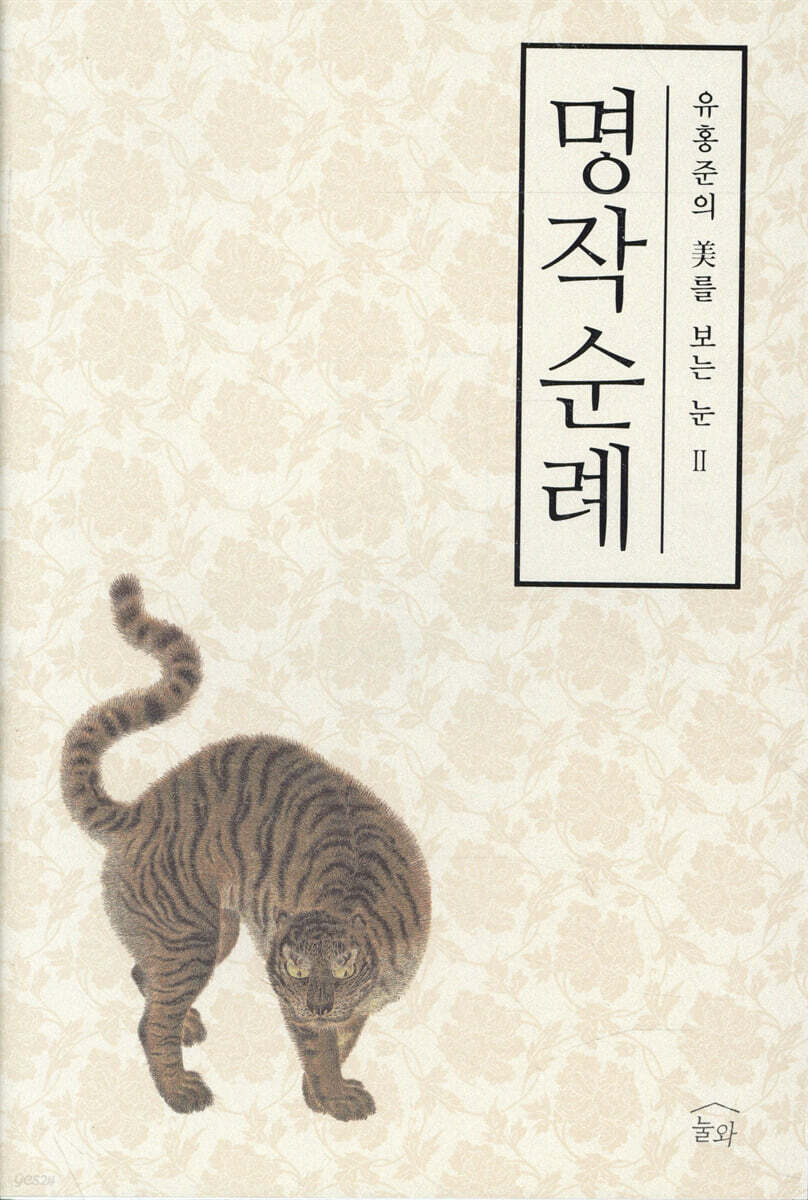
Masterpiece Pilgrimage
 |
Description
Book Introduction
A delightful pilgrimage to masterpieces with Professor Yoo Hong-jun!
If you love a masterpiece, you will know it, and if you know it, you will see it!
This is an 'introductory book to appreciating masterpieces' that explains the history and artistic value of 49 representative calligraphy and paintings from the Joseon Dynasty.
The author uses professional knowledge, extensive experience, and an engaging writing style to explain in an easy and fun way, as if telling a story from the past, the social and artistic background that led to the creation of a masterpiece, what prompted the artist to paint, and how the artist's artistic efforts and characteristics are reflected in the painting.
It features 49 masterpieces from the Joseon Dynasty and modern times, as well as beautiful calligraphy and court art, along with over 100 accompanying works.
It introduces Shin Saimdang's "Cho Insect Painting" and Han Seokbong's "Seokbong Cheonjamun", which are familiar but not well known, and presents previously unpublished masterpieces known only through black-and-white plates with high-quality plates. It also introduces Joseon's erotic paintings as an extension of secular paintings, greatly broadening the scope of our art history.
Also, the story of Kim Myeong-guk, famous for his painting “Dalmado,” crying because of the flood of requests for paintings from Japan, and the heartbreaking story of Jeong Yak-yong, who painted “Plum Blossoms” and sent it to his daughter while in exile, ultimately show that masterpieces are also the work of people, and breathe life into old paintings and calligraphy.
After enjoying a pilgrimage of masterpieces while carefully appreciating the beautiful illustrations with vivid details, you will feel your own discernment have been greatly enhanced, as the saying goes, “If you love, you will know, and if you know, you will see. What you see then will not be the same as before.”
If you love a masterpiece, you will know it, and if you know it, you will see it!
This is an 'introductory book to appreciating masterpieces' that explains the history and artistic value of 49 representative calligraphy and paintings from the Joseon Dynasty.
The author uses professional knowledge, extensive experience, and an engaging writing style to explain in an easy and fun way, as if telling a story from the past, the social and artistic background that led to the creation of a masterpiece, what prompted the artist to paint, and how the artist's artistic efforts and characteristics are reflected in the painting.
It features 49 masterpieces from the Joseon Dynasty and modern times, as well as beautiful calligraphy and court art, along with over 100 accompanying works.
It introduces Shin Saimdang's "Cho Insect Painting" and Han Seokbong's "Seokbong Cheonjamun", which are familiar but not well known, and presents previously unpublished masterpieces known only through black-and-white plates with high-quality plates. It also introduces Joseon's erotic paintings as an extension of secular paintings, greatly broadening the scope of our art history.
Also, the story of Kim Myeong-guk, famous for his painting “Dalmado,” crying because of the flood of requests for paintings from Japan, and the heartbreaking story of Jeong Yak-yong, who painted “Plum Blossoms” and sent it to his daughter while in exile, ultimately show that masterpieces are also the work of people, and breathe life into old paintings and calligraphy.
After enjoying a pilgrimage of masterpieces while carefully appreciating the beautiful illustrations with vivid details, you will feel your own discernment have been greatly enhanced, as the saying goes, “If you love, you will know, and if you know, you will see. What you see then will not be the same as before.”
- You can preview some of the book's contents.
Preview
index
Publishing a Book | For an Eye for Masterpieces
The birth of a masterpiece
1.
Shin Saimdang's "Cactus and Insects"
It is only natural that I gave birth to Master Yulgok.
2.
Heo Ju Lee Jing, "Nanjuk 6-Gokbyeong"
Don't just see me as an egg, don't just see the generation as a whole.
3.
Chungam Kim Jeong, "Sukjodo"
Do you know the precious value of this piece of paper?
4.
Tan Eun Lee Jeong's "Pungjukdo"
It's like looking at his self-portrait.
5.
Hakrimjeong Lee Gyeong-yun, "Prayer for the Four Guardians" and "Collected Landscape and Figure Paintings"
What you say is not in your mouth, but in your fingers.
6.
〈Dokseodang Gyehoedo〉
There was a time when Yulgok, Seoae, and Songgang studied together.
7.
Yeondam Kim Myung-guk's trip to Japan
Yeondam almost cried as the art orders poured in.
8.
Gongjae Yun Du-seo's "Stonework of a Stonemason"
The stonemason finally becomes the main character in the painting.
◈ Nam Tae-eung's "Samhwaga Yupyeong"
Comparing and evaluating the artistic worlds of Yeondam, Heo Ju, and Gong Jae
The brilliant painters of the Renaissance
9.
Gyemjae Jeong Seon's "Yeongangimsulcheop"
The full moon rose over the Imjin River.
Let's meet through poetry and painting
10.
Jeong Seon, Gyemjae, "Gyeonggyo Myeongseungcheop"
Try drawing a picture of the poem I sent you and changing it.
11.
Gwan-a-jae Jo Yeong-seok's "Snow Rainfall Painting"
The figure in the landscape painting is clearly a Joseon scholar.
12.
Neungho-gwan Lee In-sang's "Portrait of a Subordinate"
I'm writing this down in advance to say that I'm drawing this picture for you.
13.
Current judgement on the epitaph
People of the world, do not rake this lonely grave.
14.
Shin Gwang-ha's "Choibukga"
Why are you buried in the Tripitaka Koreana?
15.
Pyoam Kang Se-hwang, Self-Portrait
Even though my appearance was unsightly, my character was there.
16.
Pyoam and Danwon's collaborative work, "Songhodo"
The master drew a pine tree, and the disciple drew a tiger.
17.
Danwon Kim Hong-do's "Seowon Ajipdo"
The peerless genius mastered any material.
18.
Danwon Kim Hong-do's "Giro Seonryeongyedo"
In commemoration of the joint senior citizen celebration for the 60th birthday of the Kaesong senior citizens
19.
Chunhwa story
There is a story in Joseon's Chunhwa.
So it is one of the quick changes
20.
Gosong Lee In-mun's "Gangsanmujindo" and "Danbalryeong Manggeumgang"
The price tells us what perfect formal beauty is.
21.
Chojeon Pentecostal Landscape Painting
I came to see you because I wanted to draw a picture.
◈ Preface to Shin Suk-ju's "Hwagi" and Yoo Han-jun's "Seoknong Hwawon"
If you know, you will love, and if you love, you will collect.
22.
Suwoheon Im Hee-ji's "Chunran"
If you put a dance step on the orchid leaf, it becomes like this.
A flower that bloomed in a dark age
23.
Ubong Jo Hee-ryong's "Plum Blossom"
I turned white while drawing plum blossoms.
24.
Goram Electric <Gyesanpomudo>
Even the most merciless clod of earth cannot rot this man's fingers.
25.
Bukhansan Kim Su-cheol's "Landscape Painting" and "Lotus Flower"
When I look at your paintings, I know that modern times are near.
26.
Ilho Nam Gye-woo's "Butterfly"
He said he lived his whole life in Abang Palace with a butterfly.
27.
Mong-in Jeonghak School "Strange Stone"
Who says abstraction is a modernist invention?
28.
Oh Won Jang Seung-eop's "Sogari"
Let's capture our excitement in writing
29.
Seokpa Lee Ha-eung's "Orchid"
I aroused my will and drew a picture, putting my heart into it.
30.
Simjeon An Jung-sik's "Baekakchunhyo"
Waiting for the spring dawn to come to Baekaksan Mountain
31.
Kim Kwan-ho's "Sunset"
Special, special, you are so great, Mr. Kim Gwan-ho!
32.
Kim Hwan-ki's "Where and in What Form Will We Meet Again"
I marked the ten thousand things I thought of in my home country.
Beautiful writing and the story of a calligrapher
33.
Goryeo Sagyeong (Diagram of Lotus Sutra Pagoda)
When making a decision, always do it like this
◈ Praise for the Portrait of Master Chuisu
If you have a mouth but cannot speak, it is worse than sleeping.
34.
Sungnyemun signboard
People wanted to believe it was Prince Yangnyeong's handwriting.
35.
Bongrae Yang Sa-eon's "Theory of the Visa"
The day the letter 'rain' flew away was the day Yang Bong-rae died.
36.
Hongrang's "Sleepless Poem"
I will break off a willow branch and offer it to you on your way.
37.
Ancestors' love for Han Seok-bong
I am sending you to the countryside, so write comfortably.
38.
Wonkyo Lee Gwang-sa's "Cheongeumcheop"
When I played the melody, the writing seemed to become sad.
39.
Dasan Jeong Yak-yong's "Seonghwasicheop" and "Maejodo"
I see his character in his flawless handwriting.
40.
Chusa Kim Jeong-hui's "Unoe Mongjung Sicheop"
Beyond the distant mountains are clouds beyond clouds, a dream within a dream.
41.
Chusa Kim Jeong-hui, "Portrait of Master Haebung"
The merit that Master Haebong spoke of is Haebong's merit.
royal paintings and calligraphy
42.
Ilwol Obongdo
Be majestic like the mountains, and shine upon the world like the sun and moon.
43.
Ten Symbols of Longevity
Longevity is everywhere, but the ten symbols of longevity exist only in Joseon.
44.
Haehak Peninsula
The peach tree that takes three thousand years to bloom
45.
Palace peony bottle
A symbol of wealth that always appears at festivals
46.
Book street
When I had no free time, I looked at the bookshelf and thought
47.
Changdeokgung Palace's signboard and lotus
Yeongjo's "Movie Theater" is full of colorful colors.
48.
Yeongjo's "Filial Grandson"
The 83-year-old king entrusts the country to his 25-year-old grandson.
49.
Royal Seal and Royal Seal of the Joseon Dynasty
The authority of the state and the dignity of the royal family come from here.
References
List of illustrations and sources
The birth of a masterpiece
1.
Shin Saimdang's "Cactus and Insects"
It is only natural that I gave birth to Master Yulgok.
2.
Heo Ju Lee Jing, "Nanjuk 6-Gokbyeong"
Don't just see me as an egg, don't just see the generation as a whole.
3.
Chungam Kim Jeong, "Sukjodo"
Do you know the precious value of this piece of paper?
4.
Tan Eun Lee Jeong's "Pungjukdo"
It's like looking at his self-portrait.
5.
Hakrimjeong Lee Gyeong-yun, "Prayer for the Four Guardians" and "Collected Landscape and Figure Paintings"
What you say is not in your mouth, but in your fingers.
6.
〈Dokseodang Gyehoedo〉
There was a time when Yulgok, Seoae, and Songgang studied together.
7.
Yeondam Kim Myung-guk's trip to Japan
Yeondam almost cried as the art orders poured in.
8.
Gongjae Yun Du-seo's "Stonework of a Stonemason"
The stonemason finally becomes the main character in the painting.
◈ Nam Tae-eung's "Samhwaga Yupyeong"
Comparing and evaluating the artistic worlds of Yeondam, Heo Ju, and Gong Jae
The brilliant painters of the Renaissance
9.
Gyemjae Jeong Seon's "Yeongangimsulcheop"
The full moon rose over the Imjin River.
Let's meet through poetry and painting
10.
Jeong Seon, Gyemjae, "Gyeonggyo Myeongseungcheop"
Try drawing a picture of the poem I sent you and changing it.
11.
Gwan-a-jae Jo Yeong-seok's "Snow Rainfall Painting"
The figure in the landscape painting is clearly a Joseon scholar.
12.
Neungho-gwan Lee In-sang's "Portrait of a Subordinate"
I'm writing this down in advance to say that I'm drawing this picture for you.
13.
Current judgement on the epitaph
People of the world, do not rake this lonely grave.
14.
Shin Gwang-ha's "Choibukga"
Why are you buried in the Tripitaka Koreana?
15.
Pyoam Kang Se-hwang, Self-Portrait
Even though my appearance was unsightly, my character was there.
16.
Pyoam and Danwon's collaborative work, "Songhodo"
The master drew a pine tree, and the disciple drew a tiger.
17.
Danwon Kim Hong-do's "Seowon Ajipdo"
The peerless genius mastered any material.
18.
Danwon Kim Hong-do's "Giro Seonryeongyedo"
In commemoration of the joint senior citizen celebration for the 60th birthday of the Kaesong senior citizens
19.
Chunhwa story
There is a story in Joseon's Chunhwa.
So it is one of the quick changes
20.
Gosong Lee In-mun's "Gangsanmujindo" and "Danbalryeong Manggeumgang"
The price tells us what perfect formal beauty is.
21.
Chojeon Pentecostal Landscape Painting
I came to see you because I wanted to draw a picture.
◈ Preface to Shin Suk-ju's "Hwagi" and Yoo Han-jun's "Seoknong Hwawon"
If you know, you will love, and if you love, you will collect.
22.
Suwoheon Im Hee-ji's "Chunran"
If you put a dance step on the orchid leaf, it becomes like this.
A flower that bloomed in a dark age
23.
Ubong Jo Hee-ryong's "Plum Blossom"
I turned white while drawing plum blossoms.
24.
Goram Electric <Gyesanpomudo>
Even the most merciless clod of earth cannot rot this man's fingers.
25.
Bukhansan Kim Su-cheol's "Landscape Painting" and "Lotus Flower"
When I look at your paintings, I know that modern times are near.
26.
Ilho Nam Gye-woo's "Butterfly"
He said he lived his whole life in Abang Palace with a butterfly.
27.
Mong-in Jeonghak School "Strange Stone"
Who says abstraction is a modernist invention?
28.
Oh Won Jang Seung-eop's "Sogari"
Let's capture our excitement in writing
29.
Seokpa Lee Ha-eung's "Orchid"
I aroused my will and drew a picture, putting my heart into it.
30.
Simjeon An Jung-sik's "Baekakchunhyo"
Waiting for the spring dawn to come to Baekaksan Mountain
31.
Kim Kwan-ho's "Sunset"
Special, special, you are so great, Mr. Kim Gwan-ho!
32.
Kim Hwan-ki's "Where and in What Form Will We Meet Again"
I marked the ten thousand things I thought of in my home country.
Beautiful writing and the story of a calligrapher
33.
Goryeo Sagyeong (Diagram of Lotus Sutra Pagoda)
When making a decision, always do it like this
◈ Praise for the Portrait of Master Chuisu
If you have a mouth but cannot speak, it is worse than sleeping.
34.
Sungnyemun signboard
People wanted to believe it was Prince Yangnyeong's handwriting.
35.
Bongrae Yang Sa-eon's "Theory of the Visa"
The day the letter 'rain' flew away was the day Yang Bong-rae died.
36.
Hongrang's "Sleepless Poem"
I will break off a willow branch and offer it to you on your way.
37.
Ancestors' love for Han Seok-bong
I am sending you to the countryside, so write comfortably.
38.
Wonkyo Lee Gwang-sa's "Cheongeumcheop"
When I played the melody, the writing seemed to become sad.
39.
Dasan Jeong Yak-yong's "Seonghwasicheop" and "Maejodo"
I see his character in his flawless handwriting.
40.
Chusa Kim Jeong-hui's "Unoe Mongjung Sicheop"
Beyond the distant mountains are clouds beyond clouds, a dream within a dream.
41.
Chusa Kim Jeong-hui, "Portrait of Master Haebung"
The merit that Master Haebong spoke of is Haebong's merit.
royal paintings and calligraphy
42.
Ilwol Obongdo
Be majestic like the mountains, and shine upon the world like the sun and moon.
43.
Ten Symbols of Longevity
Longevity is everywhere, but the ten symbols of longevity exist only in Joseon.
44.
Haehak Peninsula
The peach tree that takes three thousand years to bloom
45.
Palace peony bottle
A symbol of wealth that always appears at festivals
46.
Book street
When I had no free time, I looked at the bookshelf and thought
47.
Changdeokgung Palace's signboard and lotus
Yeongjo's "Movie Theater" is full of colorful colors.
48.
Yeongjo's "Filial Grandson"
The 83-year-old king entrusts the country to his 25-year-old grandson.
49.
Royal Seal and Royal Seal of the Joseon Dynasty
The authority of the state and the dignity of the royal family come from here.
References
List of illustrations and sources
Detailed image
Publisher's Review
A delightful pilgrimage to masterpieces with Professor Yoo Hong-jun
If you love a masterpiece, you will know it, and if you know it, you will see it!
Overview of this book
This is an 'introductory book on appreciating masterpieces' that explains the history and artistic value of 49 masterpieces carefully selected by Professor Yoo Hong-jun and around 100 accompanying works.
Based on his specialized knowledge and extensive experience, he explains in an easy and fun way, as if telling a story of old times, the social and artistic background that led to the creation of a masterpiece, what motivated the artist to paint, and how the artist's life and artistic efforts are reflected in the painting.
You can see famous paintings from the Joseon Dynasty and modern times, as well as beautiful calligraphy and masterpieces of royal court art.
It introduces Shin Saimdang's "Cho Insect Painting" and Han Seokbong's "Seokbong Cheonjamun", which are familiar but not well known, and presents previously unpublished masterpieces known only through black-and-white plates with high-quality plates. It also introduces Joseon's erotic paintings as an extension of secular paintings, greatly broadening the scope of our art history.
Also, the story of Kim Myeong-guk, famous for his painting “Dalmado,” crying because of the flood of requests for paintings from Japan, and the heartbreaking story of Jeong Yak-yong, who painted “Plum Blossoms” and sent it to his daughter while in exile, ultimately show that masterpieces are also the work of people, and breathe life into old paintings and calligraphy.
After enjoying a pilgrimage of masterpieces while carefully appreciating the beautiful illustrations with vivid details, you will feel your own discernment have been greatly enhanced, as the author said, “If you love, you will know, and if you know, you will see. What you see then will not be the same as before.”
Features of this book
A bountiful feast of masterpieces: Appreciate over 150 masterpieces.
This is an introductory book on calligraphy and painting that carefully selects and explains 49 masterpieces of paintings, beautiful calligraphy, and royal paintings and calligraphy from the early, late, and late Joseon Dynasty.
It was said to be 49 points, but it was actually more than that.
When explaining the various forms of bamboo skillfully expressed by Lee Jeong, Tan will add the carefully selected “Bamboo in the Wind” to “Bamboo in the Rain” and “Bamboo in the Whole”, and when explaining “Sogari” filled with the excitement of Owon Jang Seung-eop, he cannot leave out his representative works, the majestic “Eagle” and “Cat” paintings.
As a result, the 49 masterpieces selected as major works have increased to around 150, and a bountiful feast of masterpieces has been held.
The insight of our ancestors in ancient paintings and calligraphy broadens our appreciation of art.
There is no better way to develop your taste than to be exposed to many masterpieces and see how those with discerning tastes perceive their work.
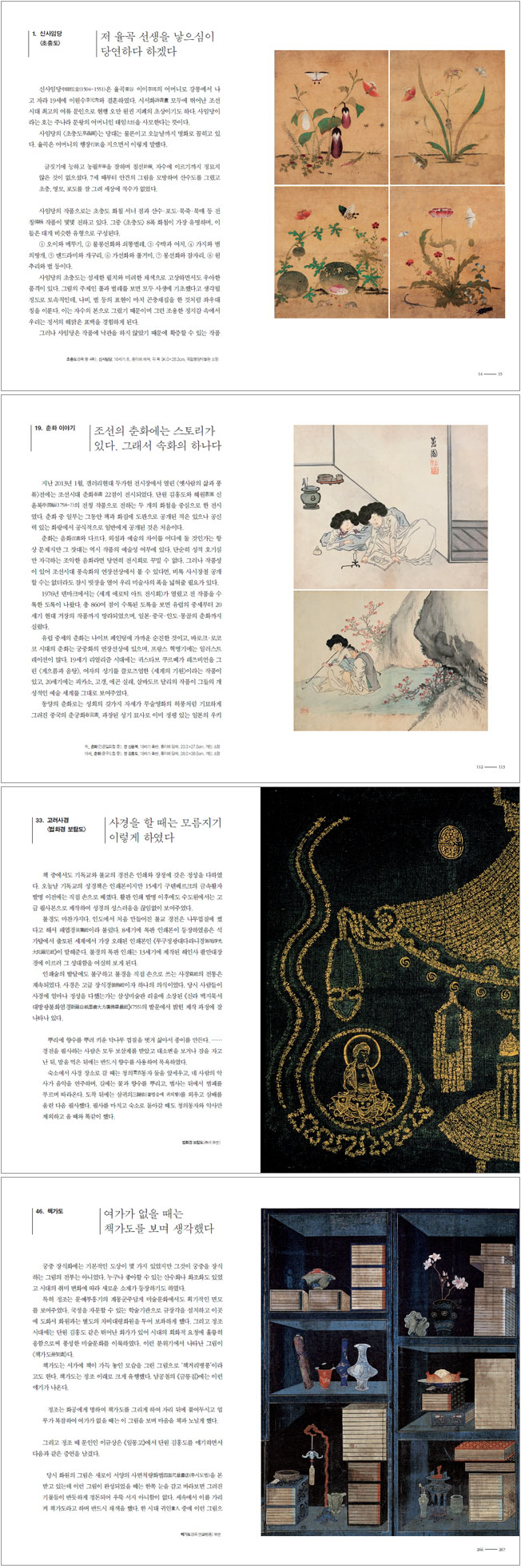
The author talks about the eyes of Uam Song Si-yeol, who drew Shin Saimdang and her son Yulgok Yi I in Shin Saimdang's "Cho Insect Painting" (p. 17), and the insight of Ganidang Choi Rip, who read the content of a painting after seeing Lee Gyeong-yun's painting at Hakrimjeong, saying, "What is being said is not in the mouth, but in the fingers" (p. 37), and tells us how to "read" a painting, not how to "see" it.
It provides a wealth of information about painting, as well as numerous testimonies about life and art, enriching the content of our ancient paintings and calligraphy and broadening our appreciation of art.
Art is ultimately a human endeavor, a fun and vivid tale of the past.
Since art is ultimately a human endeavor, the lives and anecdotes of ancient people cannot be left out on a pilgrimage to masterpieces.
Sometimes, the true beauty of a masterpiece is better explained by the artist's biography than by an analysis of the work itself.
As we hear about the twists and turns of the current Sim Sa-jeong's life, in which he has only painted pictures, cut off from the outside world since his grandfather's exam cheating scandal, we can understand why his paintings are filled with loneliness and sadness (p. 80). The story of Suwolheon Im Hee-ji, who created a pond to see the moon's shadow despite her poverty and danced in the storm, well explains his orchid paintings that seem to dance (p. 134).
As you follow these fascinating old stories, you will find yourself developing a new interest and love for painting.
Hidden Masterpieces Expand the Breadth of Korean Art
This exhibition introduces previously unknown masterpieces, such as previously unpublished masterpieces introduced only through black and white plates (such as Lee Gyeong-yun's "Sahowigido," etc.), recently discovered masterpieces from private collections (such as Hong Rang's "Jeolyusi"), works by lesser-known painters (such as Chojeon Oh-sun), and previously neglected court art (such as the "Gung Moran Daebyeong"), through vivid plates taken by a professional photographer.
In addition, unlike Chinese Chunhwa, which contains the bombast of martial arts films, and Japanese Chunhwa, which contains exaggerated depictions, it introduces Joseon Chunhwa, which contains stories that evoke a sense of romance and elegance, as an extension of secular painting, thereby broadening the scope of Korean art.
If you love a masterpiece, you will know it, and if you know it, you will see it!
Overview of this book
This is an 'introductory book on appreciating masterpieces' that explains the history and artistic value of 49 masterpieces carefully selected by Professor Yoo Hong-jun and around 100 accompanying works.
Based on his specialized knowledge and extensive experience, he explains in an easy and fun way, as if telling a story of old times, the social and artistic background that led to the creation of a masterpiece, what motivated the artist to paint, and how the artist's life and artistic efforts are reflected in the painting.
You can see famous paintings from the Joseon Dynasty and modern times, as well as beautiful calligraphy and masterpieces of royal court art.
It introduces Shin Saimdang's "Cho Insect Painting" and Han Seokbong's "Seokbong Cheonjamun", which are familiar but not well known, and presents previously unpublished masterpieces known only through black-and-white plates with high-quality plates. It also introduces Joseon's erotic paintings as an extension of secular paintings, greatly broadening the scope of our art history.
Also, the story of Kim Myeong-guk, famous for his painting “Dalmado,” crying because of the flood of requests for paintings from Japan, and the heartbreaking story of Jeong Yak-yong, who painted “Plum Blossoms” and sent it to his daughter while in exile, ultimately show that masterpieces are also the work of people, and breathe life into old paintings and calligraphy.
After enjoying a pilgrimage of masterpieces while carefully appreciating the beautiful illustrations with vivid details, you will feel your own discernment have been greatly enhanced, as the author said, “If you love, you will know, and if you know, you will see. What you see then will not be the same as before.”
Features of this book
A bountiful feast of masterpieces: Appreciate over 150 masterpieces.
This is an introductory book on calligraphy and painting that carefully selects and explains 49 masterpieces of paintings, beautiful calligraphy, and royal paintings and calligraphy from the early, late, and late Joseon Dynasty.
It was said to be 49 points, but it was actually more than that.
When explaining the various forms of bamboo skillfully expressed by Lee Jeong, Tan will add the carefully selected “Bamboo in the Wind” to “Bamboo in the Rain” and “Bamboo in the Whole”, and when explaining “Sogari” filled with the excitement of Owon Jang Seung-eop, he cannot leave out his representative works, the majestic “Eagle” and “Cat” paintings.
As a result, the 49 masterpieces selected as major works have increased to around 150, and a bountiful feast of masterpieces has been held.
The insight of our ancestors in ancient paintings and calligraphy broadens our appreciation of art.
There is no better way to develop your taste than to be exposed to many masterpieces and see how those with discerning tastes perceive their work.
The author talks about the eyes of Uam Song Si-yeol, who drew Shin Saimdang and her son Yulgok Yi I in Shin Saimdang's "Cho Insect Painting" (p. 17), and the insight of Ganidang Choi Rip, who read the content of a painting after seeing Lee Gyeong-yun's painting at Hakrimjeong, saying, "What is being said is not in the mouth, but in the fingers" (p. 37), and tells us how to "read" a painting, not how to "see" it.
It provides a wealth of information about painting, as well as numerous testimonies about life and art, enriching the content of our ancient paintings and calligraphy and broadening our appreciation of art.
Art is ultimately a human endeavor, a fun and vivid tale of the past.
Since art is ultimately a human endeavor, the lives and anecdotes of ancient people cannot be left out on a pilgrimage to masterpieces.
Sometimes, the true beauty of a masterpiece is better explained by the artist's biography than by an analysis of the work itself.
As we hear about the twists and turns of the current Sim Sa-jeong's life, in which he has only painted pictures, cut off from the outside world since his grandfather's exam cheating scandal, we can understand why his paintings are filled with loneliness and sadness (p. 80). The story of Suwolheon Im Hee-ji, who created a pond to see the moon's shadow despite her poverty and danced in the storm, well explains his orchid paintings that seem to dance (p. 134).
As you follow these fascinating old stories, you will find yourself developing a new interest and love for painting.
Hidden Masterpieces Expand the Breadth of Korean Art
This exhibition introduces previously unknown masterpieces, such as previously unpublished masterpieces introduced only through black and white plates (such as Lee Gyeong-yun's "Sahowigido," etc.), recently discovered masterpieces from private collections (such as Hong Rang's "Jeolyusi"), works by lesser-known painters (such as Chojeon Oh-sun), and previously neglected court art (such as the "Gung Moran Daebyeong"), through vivid plates taken by a professional photographer.
In addition, unlike Chinese Chunhwa, which contains the bombast of martial arts films, and Japanese Chunhwa, which contains exaggerated depictions, it introduces Joseon Chunhwa, which contains stories that evoke a sense of romance and elegance, as an extension of secular painting, thereby broadening the scope of Korean art.
GOODS SPECIFICS
- Date of publication: November 20, 2013
- Page count, weight, size: 292 pages | 654g | 153*224*20mm
- ISBN13: 9788990620675
- ISBN10: 8990620678
You may also like
카테고리
korean


korean

![GQ KOREA Mark (Monthly): December [2025]](http://librairie.coreenne.fr/cdn/shop/files/8ef265dbbfbf186523ed75ba7319009d.jpg?v=1765340328&width=3840)


