

Alain de Botton's Museum of the Soul
 |
Description
Book Introduction
- A word from MD
- Alain de Botton: Seeking Answers in ArtAlain de Botton's book, written in his signature philosophical style, explores the "healing power of art," which embraces the hardships of our lives and makes them more beautiful.
The exhibition features over 140 exceptional works of art from all eras, carefully selected in conversation with art historian John Armstrong.
Alain de Botton, a writer beloved by Koreans
Speaking of the beauty and fascination of art that embraces the human soul!
This is a unique book written by Alain de Botton in his signature philosophical style about the healing function of art, which embraces our difficult lives and at the same time makes them more beautiful.
This book, which presents over 140 outstanding works of art from all eras, personally selected by Alain de Botton in conversation with art historian John Armstrong, allows Alain de Botton's unique witty and delicate writing style to shine even brighter through the prism of the artwork.
If you feel like your life's steps have lost their destination, why not stop for a moment and ponder the meaning and direction of life with this book?
The more difficult life becomes, the more deeply we are moved by elegant flower paintings.
It's not that beautiful pictures convey sadness.
Rather, when we look at the painting, we are reminded of the hardships and sadness of our lives that contrast with the beauty of the painting.
Alain de Botton says that it would be a great loss if we lumped together elegant and lovely art and condemned it as sentimental and unfair.
In other words, we must not overlook the fact that as we mature through the hardships of life, we can appreciate the beauty of art even more, and that we can richly reflect on the meaning of life through beautiful and optimistic works.
We all strive to live meaningful lives, long to love passionately, and want to help create a better society.
Therefore, through works of art, we can look back on our lives and get hints about the direction we should take going forward.
We must encourage art to re-introduce itself into our lives, making our lives, our love, and our work more beautiful and enriching.
Although life is full of frustrations and pain, we must not forget that we also have the optimistic power to overcome them.
Great works of art remind us of our circumstances and our strengths.
Furthermore, it presents the imagination and ambition that can make our one and only life even more beautiful.
Speaking of the beauty and fascination of art that embraces the human soul!
This is a unique book written by Alain de Botton in his signature philosophical style about the healing function of art, which embraces our difficult lives and at the same time makes them more beautiful.
This book, which presents over 140 outstanding works of art from all eras, personally selected by Alain de Botton in conversation with art historian John Armstrong, allows Alain de Botton's unique witty and delicate writing style to shine even brighter through the prism of the artwork.
If you feel like your life's steps have lost their destination, why not stop for a moment and ponder the meaning and direction of life with this book?
The more difficult life becomes, the more deeply we are moved by elegant flower paintings.
It's not that beautiful pictures convey sadness.
Rather, when we look at the painting, we are reminded of the hardships and sadness of our lives that contrast with the beauty of the painting.
Alain de Botton says that it would be a great loss if we lumped together elegant and lovely art and condemned it as sentimental and unfair.
In other words, we must not overlook the fact that as we mature through the hardships of life, we can appreciate the beauty of art even more, and that we can richly reflect on the meaning of life through beautiful and optimistic works.
We all strive to live meaningful lives, long to love passionately, and want to help create a better society.
Therefore, through works of art, we can look back on our lives and get hints about the direction we should take going forward.
We must encourage art to re-introduce itself into our lives, making our lives, our love, and our work more beautiful and enriching.
Although life is full of frustrations and pain, we must not forget that we also have the optimistic power to overcome them.
Great works of art remind us of our circumstances and our strengths.
Furthermore, it presents the imagination and ambition that can make our one and only life even more beautiful.
- You can preview some of the book's contents.
Preview
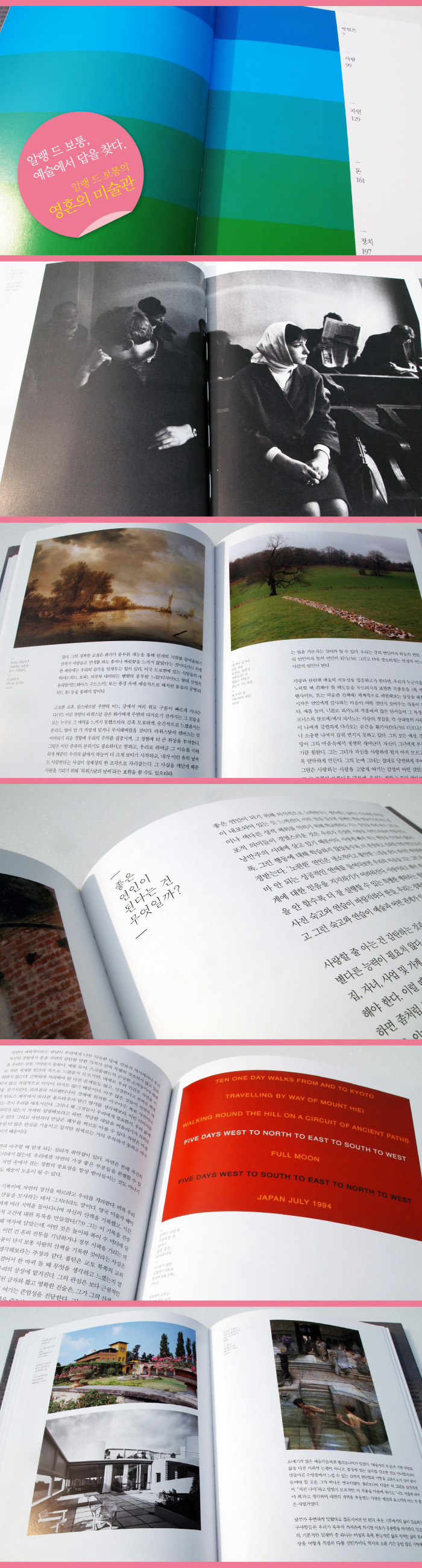
index
methodology
The Seven Functions of Art
1.
memory
2.
hope
3.
sorrow
4.
Restoring balance
5.
self-understanding
6.
growth
7.
appreciation
What is the essence of art?
What do we consider great art?
Technical interpretation
Political interpretation
Historical interpretation
Shock value interpretation
Healing interpretation
What kind of art should I create?
How should art be bought and sold?
How should art be studied?
How should artwork be displayed?
love
Can we love better?
What does it mean to be a good lover?
The ability to pay attention to detail
patience
curiosity
resilience
sensuality
Reason
holistic perspective
Can I get excited?
How to maintain love?
Courage for Travel
nature
Reminiscing about nature
The Importance of the South
Anticipate autumn
sense of beauty
New Nature Artist
money
Art as a guide to capitalist reform
A matter of taste
The Role of Critics in Taste Education
Towards Advanced Capitalism
Advanced Investment
Career Advice from Artists
politics
What should political art aim to achieve?
What to brag about?
What kind of people should we strive to become?
Excuses for censorship
Now… …to change the world
The Seven Functions of Art
1.
memory
2.
hope
3.
sorrow
4.
Restoring balance
5.
self-understanding
6.
growth
7.
appreciation
What is the essence of art?
What do we consider great art?
Technical interpretation
Political interpretation
Historical interpretation
Shock value interpretation
Healing interpretation
What kind of art should I create?
How should art be bought and sold?
How should art be studied?
How should artwork be displayed?
love
Can we love better?
What does it mean to be a good lover?
The ability to pay attention to detail
patience
curiosity
resilience
sensuality
Reason
holistic perspective
Can I get excited?
How to maintain love?
Courage for Travel
nature
Reminiscing about nature
The Importance of the South
Anticipate autumn
sense of beauty
New Nature Artist
money
Art as a guide to capitalist reform
A matter of taste
The Role of Critics in Taste Education
Towards Advanced Capitalism
Advanced Investment
Career Advice from Artists
politics
What should political art aim to achieve?
What to brag about?
What kind of people should we strive to become?
Excuses for censorship
Now… …to change the world
Detailed image
Publisher's Review
Alain de Botton, a writer beloved by Koreans
Speaking of the beauty and fascination of art that embraces the human soul!
Life, love, and art, depicted with delicate brushstrokes by Alain de Botton!
Questions that pop up in my mind from the cracks of life
Alain de Botton: Seeking Answers in Art
There are questions in life that we inevitably face as we go through life.
"Can we love better?" "What does it mean to be a good lover?" "What kind of people should we strive to be?" These are life's questions that we can't avoid no matter how hard we try, but there seem to be no answers, and we just wander around in confusion before such questions.
This book is a unique book written by Alain de Botton in his signature philosophical style, about the healing function of art, which embraces our difficult lives and at the same time makes them more beautiful.
This book, which presents over 140 outstanding works of art from all eras, personally selected by Alain de Botton in conversation with art historian John Armstrong, allows Alain de Botton's unique witty and delicate writing style to shine even brighter through the prism of the artwork.
If you feel like your life's steps have lost their destination, why not stop for a moment and ponder the meaning and direction of life with this book?
Beauty becomes more deeply understood when we realize the hardships of life.
Why do so many people love beautiful paintings like Monet's "Water Lilies" and hang replicas on their apartment walls? When we tell someone we appreciate a beautiful painting, we secretly worry and feel embarrassed, wondering if we're appearing unconcerned with the more pressing and important issues of life and the world.
Because the innocence and simplicity of the painting seem to ignore the problems of life and society.
Moreover, pictures that are merely beautiful seem to paralyze us, preventing us from properly criticizing or warning about the injustice around us.
Moreover, we easily forget serious issues and feel overly optimistic about the world.
But is that really true? Could it be that we're actually suffering from excessive depression?
Rather, isn't cheerfulness a wonderful achievement of our humanity and hope a blessing?
If you look at today's problems, almost none of them are caused by people who see the world too brightly.
And with the world's worries constantly vying for our attention, we need tools to keep our hopeful tendencies in check.
The dancers in Matisse's Dance II do not deny that this planet is full of troubles, but their attitude can be encouraging when we consider that our relationship with reality is imperfect, difficult, and routine.
They remind us of our own cheerful and carefree ability to cope with the rejection and humiliation we inevitably encounter in the world.
Matisse's painting doesn't say that everything is fine, nor does it say that women always derive joy from each other's presence and help each other, maintaining a network of solidarity.
- p.16
The more difficult life becomes, the more deeply we are moved by elegant flower paintings.
It's not that beautiful pictures convey sadness.
Rather, when we look at the painting, we are reminded of the hardships and sadness of our lives that contrast with the beauty of the painting.
Alain de Botton says that it would be a great loss if we lumped together elegant and lovely art and condemned it as sentimental and unfair.
In other words, we must not overlook the fact that as we mature through the hardships of life, we can appreciate the beauty of art even more, and that we can richly reflect on the meaning of life through beautiful and optimistic works.
The pleasure of a beautiful work of art comes from dissatisfaction.
If life were not perceived as hard, beauty would not have the same appeal as it does now.
If we were to conceive of a project to create a robot that could love beauty, we would have to impose such cruel conditions on it that it would hate life, feel confusion and frustration, experience pain, and at the same time wish it didn't have to.
Only then will the background be completed for beautiful art to become not only good but also precious to us.
We don't have to worry.
Given the mounting problems, we can be confident that there is no danger of the beautiful painting losing its appeal in the coming centuries.
- p.20
What does it mean to be a good lover?
The picture is what we give to each other when we first date.
It reminds me of how grateful I feel.
- Niccolò Pisano, Pastoral: Daphnis and Chloe, c. 1500–1
Let's look back on our love life.
Love should naturally be one of life's greatest blessings and joys.
Yet, the person we most easily hurt and get hurt by is none other than our closest lover.
When lovers argue, they blurt out cruel words as if they have met the world's worst enemy, and soon become frustrated.
We want love to be a powerful source of fulfillment, but sometimes love turns into a stage for neglect, empty longing, revenge, and self-abandonment.
What's even more depressing about dating is how quickly you become comfortable with someone you were incredibly grateful for when you first met them.
There comes a time when we become indifferent to the person who initially excited us with just the slightest touch, even when he or she is lying naked in front of us.
What does it mean to be successful in love? Is there a way for long-term lovers to rekindle their love? Alain de Botton suggests that even in these situations, art can be a valuable lesson in love.
As we consider how to reevaluate and re-desire the other, we can learn from observing how artists revisit the familiar.
Lovers and artists face the same human weaknesses.
It is a universal tendency to get bored easily and to declare that once we know a person or thing, it is not worth paying attention to.
The ability to rekindle our passion for things that have become dull is a hallmark of great art.
Such works awaken the hidden charm of experiences that are easy to overlook because we are already familiar with them.
_Page 124 of the text
Another of the biggest dangers that comes when love fails us is when people try to comfort us with encouraging words.
In an effort to soothe our pain, they insist that happiness is near, pain is fleeting, and that the lover who broke up was someone who did not have much to cry about.
But this is not true comfort or advice.
It is necessary to provide realistic equipment for setting out on a voyage of love.
They are the things that give us the courage to move forward toward a new love, while also allowing us to understand the meaning of love more deeply so that we can deal with the love crisis that may come again.
Good art can help us achieve these insights.
Such works tell us, 'Don't expect a worthwhile journey to be easy.'
Going out into the field of love, like many other things, requires practice and strong courage.
Everyone lives and dies with loneliness, pain, and humiliation.
According to Alain de Botton, art offers a vantage point from which to look grandly and seriously at the suffering that is the human condition.
This is especially true of works that possess the sublime in a romantic sense.
These works depict stars, oceans, great mountain ranges or continental faults.
Before it we are seized with a joyful horror, and, feeling how insignificant human misery is compared with the eternal aspects of existence, we realize our own insignificance, and we bow our heads more willingly before the incomprehensible tragedy that permeates all life.
From this point on, the anxieties and worries of everyday life are neutralized.
Rather than trying to compensate for our humiliation by claiming we are being ignored, we can, and eventually do, seek to understand our essential worthlessness as the work leads us.
In everyday life, awareness of the sublime is often fleeting and random.
Like seeing the clouds parting and sunlight shining through the distant mountains on the highway, or glancing out the window of an airplane while watching in-flight TV and catching a glimpse of the Bernese Alps, or gazing at the lights of an oil tanker passing through the Singapore Strait.
But art reduces such randomness and chance.
Art is a tool for eliciting meaningful experiences based on a trustworthy foundation, and so it offers us the opportunity to continually approach the experience of the sublime, even when we are mired in grief, if only we can lift our heads.
So how should we live?
We all strive to live meaningful lives, long to love passionately, and want to help create a better society.
Artists of all ages have had this aspiration, and artists still have this aspiration today.
Therefore, through works of art, we can look back on our lives and get hints about the direction we should take going forward.
There is no need to worry about explaining difficult works.
It's just an academic story and may not be of any help to our lives.
We must encourage art to re-introduce itself into our lives, making our lives, our love, and our work more beautiful and enriching.
Although life is full of frustrations and pain, we must not forget that we also have the optimistic power to overcome them.
Great works of art remind us of our circumstances and our strengths.
Furthermore, it presents the imagination and ambition that can make our one and only life even more beautiful.
The true desire for art must be to reduce its necessity.
This doesn't mean that we should suddenly become indifferent to the values that art encompasses: beauty, depth of meaning, good relationships, appreciation of nature, awareness of the fleetingness of life, empathy, compassion, and so on.
We must absorb the ideals that art represents, and then fight to realize in reality the values that, however elegant and intentional, can only be expressed symbolically.
The ultimate goal of art lovers should be to create a world in which art is less necessary.
- p.232
Speaking of the beauty and fascination of art that embraces the human soul!
Life, love, and art, depicted with delicate brushstrokes by Alain de Botton!
Questions that pop up in my mind from the cracks of life
Alain de Botton: Seeking Answers in Art
There are questions in life that we inevitably face as we go through life.
"Can we love better?" "What does it mean to be a good lover?" "What kind of people should we strive to be?" These are life's questions that we can't avoid no matter how hard we try, but there seem to be no answers, and we just wander around in confusion before such questions.
This book is a unique book written by Alain de Botton in his signature philosophical style, about the healing function of art, which embraces our difficult lives and at the same time makes them more beautiful.
This book, which presents over 140 outstanding works of art from all eras, personally selected by Alain de Botton in conversation with art historian John Armstrong, allows Alain de Botton's unique witty and delicate writing style to shine even brighter through the prism of the artwork.
If you feel like your life's steps have lost their destination, why not stop for a moment and ponder the meaning and direction of life with this book?
Beauty becomes more deeply understood when we realize the hardships of life.
Why do so many people love beautiful paintings like Monet's "Water Lilies" and hang replicas on their apartment walls? When we tell someone we appreciate a beautiful painting, we secretly worry and feel embarrassed, wondering if we're appearing unconcerned with the more pressing and important issues of life and the world.
Because the innocence and simplicity of the painting seem to ignore the problems of life and society.
Moreover, pictures that are merely beautiful seem to paralyze us, preventing us from properly criticizing or warning about the injustice around us.
Moreover, we easily forget serious issues and feel overly optimistic about the world.
But is that really true? Could it be that we're actually suffering from excessive depression?
Rather, isn't cheerfulness a wonderful achievement of our humanity and hope a blessing?
If you look at today's problems, almost none of them are caused by people who see the world too brightly.
And with the world's worries constantly vying for our attention, we need tools to keep our hopeful tendencies in check.
The dancers in Matisse's Dance II do not deny that this planet is full of troubles, but their attitude can be encouraging when we consider that our relationship with reality is imperfect, difficult, and routine.
They remind us of our own cheerful and carefree ability to cope with the rejection and humiliation we inevitably encounter in the world.
Matisse's painting doesn't say that everything is fine, nor does it say that women always derive joy from each other's presence and help each other, maintaining a network of solidarity.
- p.16
The more difficult life becomes, the more deeply we are moved by elegant flower paintings.
It's not that beautiful pictures convey sadness.
Rather, when we look at the painting, we are reminded of the hardships and sadness of our lives that contrast with the beauty of the painting.
Alain de Botton says that it would be a great loss if we lumped together elegant and lovely art and condemned it as sentimental and unfair.
In other words, we must not overlook the fact that as we mature through the hardships of life, we can appreciate the beauty of art even more, and that we can richly reflect on the meaning of life through beautiful and optimistic works.
The pleasure of a beautiful work of art comes from dissatisfaction.
If life were not perceived as hard, beauty would not have the same appeal as it does now.
If we were to conceive of a project to create a robot that could love beauty, we would have to impose such cruel conditions on it that it would hate life, feel confusion and frustration, experience pain, and at the same time wish it didn't have to.
Only then will the background be completed for beautiful art to become not only good but also precious to us.
We don't have to worry.
Given the mounting problems, we can be confident that there is no danger of the beautiful painting losing its appeal in the coming centuries.
- p.20
What does it mean to be a good lover?
The picture is what we give to each other when we first date.
It reminds me of how grateful I feel.
- Niccolò Pisano, Pastoral: Daphnis and Chloe, c. 1500–1
Let's look back on our love life.
Love should naturally be one of life's greatest blessings and joys.
Yet, the person we most easily hurt and get hurt by is none other than our closest lover.
When lovers argue, they blurt out cruel words as if they have met the world's worst enemy, and soon become frustrated.
We want love to be a powerful source of fulfillment, but sometimes love turns into a stage for neglect, empty longing, revenge, and self-abandonment.
What's even more depressing about dating is how quickly you become comfortable with someone you were incredibly grateful for when you first met them.
There comes a time when we become indifferent to the person who initially excited us with just the slightest touch, even when he or she is lying naked in front of us.
What does it mean to be successful in love? Is there a way for long-term lovers to rekindle their love? Alain de Botton suggests that even in these situations, art can be a valuable lesson in love.
As we consider how to reevaluate and re-desire the other, we can learn from observing how artists revisit the familiar.
Lovers and artists face the same human weaknesses.
It is a universal tendency to get bored easily and to declare that once we know a person or thing, it is not worth paying attention to.
The ability to rekindle our passion for things that have become dull is a hallmark of great art.
Such works awaken the hidden charm of experiences that are easy to overlook because we are already familiar with them.
_Page 124 of the text
Another of the biggest dangers that comes when love fails us is when people try to comfort us with encouraging words.
In an effort to soothe our pain, they insist that happiness is near, pain is fleeting, and that the lover who broke up was someone who did not have much to cry about.
But this is not true comfort or advice.
It is necessary to provide realistic equipment for setting out on a voyage of love.
They are the things that give us the courage to move forward toward a new love, while also allowing us to understand the meaning of love more deeply so that we can deal with the love crisis that may come again.
Good art can help us achieve these insights.
Such works tell us, 'Don't expect a worthwhile journey to be easy.'
Going out into the field of love, like many other things, requires practice and strong courage.
Everyone lives and dies with loneliness, pain, and humiliation.
According to Alain de Botton, art offers a vantage point from which to look grandly and seriously at the suffering that is the human condition.
This is especially true of works that possess the sublime in a romantic sense.
These works depict stars, oceans, great mountain ranges or continental faults.
Before it we are seized with a joyful horror, and, feeling how insignificant human misery is compared with the eternal aspects of existence, we realize our own insignificance, and we bow our heads more willingly before the incomprehensible tragedy that permeates all life.
From this point on, the anxieties and worries of everyday life are neutralized.
Rather than trying to compensate for our humiliation by claiming we are being ignored, we can, and eventually do, seek to understand our essential worthlessness as the work leads us.
In everyday life, awareness of the sublime is often fleeting and random.
Like seeing the clouds parting and sunlight shining through the distant mountains on the highway, or glancing out the window of an airplane while watching in-flight TV and catching a glimpse of the Bernese Alps, or gazing at the lights of an oil tanker passing through the Singapore Strait.
But art reduces such randomness and chance.
Art is a tool for eliciting meaningful experiences based on a trustworthy foundation, and so it offers us the opportunity to continually approach the experience of the sublime, even when we are mired in grief, if only we can lift our heads.
So how should we live?
We all strive to live meaningful lives, long to love passionately, and want to help create a better society.
Artists of all ages have had this aspiration, and artists still have this aspiration today.
Therefore, through works of art, we can look back on our lives and get hints about the direction we should take going forward.
There is no need to worry about explaining difficult works.
It's just an academic story and may not be of any help to our lives.
We must encourage art to re-introduce itself into our lives, making our lives, our love, and our work more beautiful and enriching.
Although life is full of frustrations and pain, we must not forget that we also have the optimistic power to overcome them.
Great works of art remind us of our circumstances and our strengths.
Furthermore, it presents the imagination and ambition that can make our one and only life even more beautiful.
The true desire for art must be to reduce its necessity.
This doesn't mean that we should suddenly become indifferent to the values that art encompasses: beauty, depth of meaning, good relationships, appreciation of nature, awareness of the fleetingness of life, empathy, compassion, and so on.
We must absorb the ideals that art represents, and then fight to realize in reality the values that, however elegant and intentional, can only be expressed symbolically.
The ultimate goal of art lovers should be to create a world in which art is less necessary.
- p.232
GOODS SPECIFICS
- Date of publication: September 23, 2013
- Format: Hardcover book binding method guide
- Page count, weight, size: 240 pages | 1,388g | 205*270*20mm
- ISBN13: 9788954621984
- ISBN10: 8954621988
You may also like
카테고리
korean


korean

![GQ KOREA Mark (Monthly): December [2025]](http://librairie.coreenne.fr/cdn/shop/files/8ef265dbbfbf186523ed75ba7319009d.jpg?v=1765340328&width=3840)


