

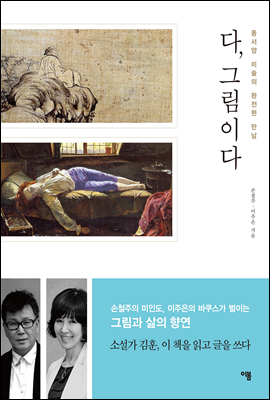
It's all a picture
 |
Description
Book Introduction
A first in Korea, a meeting of Eastern and Western art.
This book was written by author Son Cheol-ju, who always thought of the Western art historian Lee Ju-eun.
That is why his writings are full of curiosity about “how my writings and the pictures I have chosen will be perceived from a Western perspective.”
This is also a question for “readers who like Western art,” represented by author Lee Ju-eun.
Accordingly, author Lee Ju-eun looked at the writing and drawings sent by author Son Cheol-ju, selected her own drawings, and wrote the writing.
This also contains curiosity for “readers who like oriental art.”
So, in the writings they shared, there are no specific questions like, "How do people talk about life in the West or the East?"
However, by selecting Western paintings that are conscious of the Eastern perspective and Eastern paintings that are conscious of the Western perspective, Eastern paintings communicate with Western paintings, and Western paintings permeate Eastern paintings.
This was the first attempt in Korea to fully combine Eastern and Western art.
This book was written by author Son Cheol-ju, who always thought of the Western art historian Lee Ju-eun.
That is why his writings are full of curiosity about “how my writings and the pictures I have chosen will be perceived from a Western perspective.”
This is also a question for “readers who like Western art,” represented by author Lee Ju-eun.
Accordingly, author Lee Ju-eun looked at the writing and drawings sent by author Son Cheol-ju, selected her own drawings, and wrote the writing.
This also contains curiosity for “readers who like oriental art.”
So, in the writings they shared, there are no specific questions like, "How do people talk about life in the West or the East?"
However, by selecting Western paintings that are conscious of the Eastern perspective and Eastern paintings that are conscious of the Western perspective, Eastern paintings communicate with Western paintings, and Western paintings permeate Eastern paintings.
This was the first attempt in Korea to fully combine Eastern and Western art.
- You can preview some of the book's contents.
Preview
index
Preface: Lamenting the Dead Birds - Kim Hoon
Beginning: Drawing Life - Son Cheol-ju, Lee Ju-eun
Prologue: Life, Painting...
1.
First, longing
What is longing?
Is it a longing for things that have passed?
2.
Second, temptation
Fatal, yet generous and sad
The apples of Eden and the wine of Bacchus
3.
Third, success and frustration
How to live without frustration?
Frustration is also a stepping stone to success.
4.
Fourth, who am I?
A clear and unwavering wick
Discrepancy between reality and ideals
5.
Fifth, age
Imagine old age ahead
Affirming death as much as life
6.
Sixth, happiness
Without any lack or excess
Just that one moment
7.
Seventh, deviation
The deviations of the old people
The freedom of helplessness
8.
Eighth, hobbies and tastes
Hobbies, secretive and good, annoying and special
Taste, something a little more like me
9.
Ninth, a man and a woman playing
A playful tale of a man and a woman playing
The unexpected fascination of those who have played
10.
Tenth, Mother, Mom
Holy Heart
A warm meal
Son Cheol-ju, Speaking of Oriental Art
Lee Ju-eun on Western Art
List of pictures
Beginning: Drawing Life - Son Cheol-ju, Lee Ju-eun
Prologue: Life, Painting...
1.
First, longing
What is longing?
Is it a longing for things that have passed?
2.
Second, temptation
Fatal, yet generous and sad
The apples of Eden and the wine of Bacchus
3.
Third, success and frustration
How to live without frustration?
Frustration is also a stepping stone to success.
4.
Fourth, who am I?
A clear and unwavering wick
Discrepancy between reality and ideals
5.
Fifth, age
Imagine old age ahead
Affirming death as much as life
6.
Sixth, happiness
Without any lack or excess
Just that one moment
7.
Seventh, deviation
The deviations of the old people
The freedom of helplessness
8.
Eighth, hobbies and tastes
Hobbies, secretive and good, annoying and special
Taste, something a little more like me
9.
Ninth, a man and a woman playing
A playful tale of a man and a woman playing
The unexpected fascination of those who have played
10.
Tenth, Mother, Mom
Holy Heart
A warm meal
Son Cheol-ju, Speaking of Oriental Art
Lee Ju-eun on Western Art
List of pictures
Detailed image
Publisher's Review
A sense of balance in life, found through Eastern and Western art
Eastern paintings, including our old paintings, are different from Western paintings.
That is why people who like oriental paintings and people who like western paintings have different streams of thought.
However, they share a common sensibility in that they like 'painting' and 'art'.
It's not just a matter of taste.
Some people are naturally drawn to Eastern painting, while others, influenced by 20th-century Western education, say that Western painting is easier to learn than Eastern painting.
This book brings about a gentle awakening to the inertia that Koreans currently have of favoring 'Western painting.'
The values we value in life and the desire to be happy are the same in any era and in any country.
Also, in both the East and the West, people always dream of breaking away from their repetitive daily lives.
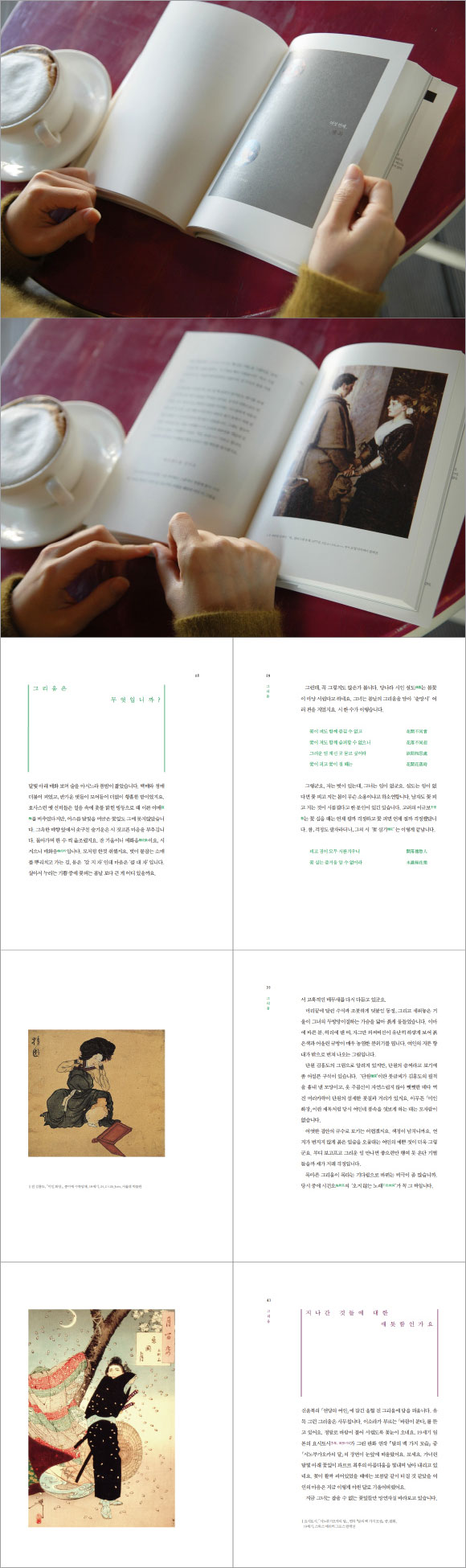
This book selects 10 conditions of life that are 'the most basic aspects of humanity' but have now been forgotten due to the value of money, and examines how the East and the West established and expressed their values, thereby providing wisdom from old paintings and a method of reinterpreting them in a modern way for generations who received a Western education, thereby providing a sense of balance in rediscovering the value of life.
Rediscovering the original purpose of art
This book first talks about ‘longing.’
Author Son Cheol-ju said, “‘Drawing’ means movement and ‘drawing’ means drawing.
It is a word that means 'to describe' and 'to long for'.
The article begins with the sentence, “If you describe it, it becomes a picture, and if you long for it, it becomes a longing.”
Since the painting is about longing, it first talks about ‘longing.’
At the same time, 'Longing' makes us look back on our current state of longing for something in a world where new articles and new products are updated in real time.
Author Lee Ju-eun responds by saying that longing is 'a longing for things that have passed.'
In Van Gogh's Almond Blossoms, Van Gogh's nephew finds the image of Van Gogh that he had longed for.
While some people search for the 'keywords to success' in paintings, these artists find in their paintings the values of life that modern people have lost.
Return the painting to its original place of ‘longing.’
It also revives the inherent value of art.
If one of the functions of art is to show us the delicate values of life, the small miracles, and the realities we must reflect on and move forward in, which we inevitably miss in our busy daily lives, then these two people are truly making a difference with this art.
Author Son Cheol-ju offers insight into life with the 'heart of drawing a beauty that cannot be held in one's arms', and author Lee Ju-eun talks about the other side of oriental life as seen by author Son Cheol-ju, holding 'Bacchus's wine' that helps ordinary people to show off their talents like artists.
A first in Korea, a meeting of Eastern and Western art.
This book was written by author Son Cheol-ju, who always thought of the Western art historian Lee Ju-eun.
That is why his writing is full of curiosity about 'how my writing and the pictures I have selected will be viewed from a Western perspective.'
This is also a question for readers who like Western art, as represented by author Lee Ju-eun.
Accordingly, author Lee Ju-eun looked at the writing and drawings sent by author Son Cheol-ju, selected her own drawings, and wrote the writing.
This also contains curiosity for ‘readers who like oriental art.’
So, in the writings they shared, there are no specific questions like, 'How do people talk about life in the West or the East?'
However, by selecting Western paintings that are conscious of the Eastern perspective and Eastern paintings that are conscious of the Western perspective, Eastern paintings communicate with Western paintings, and Western paintings permeate Eastern paintings.
This was the first attempt in Korea to fully harmonize Eastern and Western art.
What does novelist Kim Hoon say about paintings?
Accordingly, novelist Kim Hoon, who had been watching the letters exchanged between the two authors, Son Cheol-ju and Lee Ju-eun, added another text to this book.
Kim Hoon added value to this book by saying, “We can speak to the invisible paintings of Solgeo and also to the painted paintings,” through the legendary anecdote of Solgeo.
This book is a valuable text that reveals how novelist Kim Hoon views the 'world of pictures.'
Eastern paintings, including our old paintings, are different from Western paintings.
That is why people who like oriental paintings and people who like western paintings have different streams of thought.
However, they share a common sensibility in that they like 'painting' and 'art'.
It's not just a matter of taste.
Some people are naturally drawn to Eastern painting, while others, influenced by 20th-century Western education, say that Western painting is easier to learn than Eastern painting.
This book brings about a gentle awakening to the inertia that Koreans currently have of favoring 'Western painting.'
The values we value in life and the desire to be happy are the same in any era and in any country.
Also, in both the East and the West, people always dream of breaking away from their repetitive daily lives.
This book selects 10 conditions of life that are 'the most basic aspects of humanity' but have now been forgotten due to the value of money, and examines how the East and the West established and expressed their values, thereby providing wisdom from old paintings and a method of reinterpreting them in a modern way for generations who received a Western education, thereby providing a sense of balance in rediscovering the value of life.
Rediscovering the original purpose of art
This book first talks about ‘longing.’
Author Son Cheol-ju said, “‘Drawing’ means movement and ‘drawing’ means drawing.
It is a word that means 'to describe' and 'to long for'.
The article begins with the sentence, “If you describe it, it becomes a picture, and if you long for it, it becomes a longing.”
Since the painting is about longing, it first talks about ‘longing.’
At the same time, 'Longing' makes us look back on our current state of longing for something in a world where new articles and new products are updated in real time.
Author Lee Ju-eun responds by saying that longing is 'a longing for things that have passed.'
In Van Gogh's Almond Blossoms, Van Gogh's nephew finds the image of Van Gogh that he had longed for.
While some people search for the 'keywords to success' in paintings, these artists find in their paintings the values of life that modern people have lost.
Return the painting to its original place of ‘longing.’
It also revives the inherent value of art.
If one of the functions of art is to show us the delicate values of life, the small miracles, and the realities we must reflect on and move forward in, which we inevitably miss in our busy daily lives, then these two people are truly making a difference with this art.
Author Son Cheol-ju offers insight into life with the 'heart of drawing a beauty that cannot be held in one's arms', and author Lee Ju-eun talks about the other side of oriental life as seen by author Son Cheol-ju, holding 'Bacchus's wine' that helps ordinary people to show off their talents like artists.
A first in Korea, a meeting of Eastern and Western art.
This book was written by author Son Cheol-ju, who always thought of the Western art historian Lee Ju-eun.
That is why his writing is full of curiosity about 'how my writing and the pictures I have selected will be viewed from a Western perspective.'
This is also a question for readers who like Western art, as represented by author Lee Ju-eun.
Accordingly, author Lee Ju-eun looked at the writing and drawings sent by author Son Cheol-ju, selected her own drawings, and wrote the writing.
This also contains curiosity for ‘readers who like oriental art.’
So, in the writings they shared, there are no specific questions like, 'How do people talk about life in the West or the East?'
However, by selecting Western paintings that are conscious of the Eastern perspective and Eastern paintings that are conscious of the Western perspective, Eastern paintings communicate with Western paintings, and Western paintings permeate Eastern paintings.
This was the first attempt in Korea to fully harmonize Eastern and Western art.
What does novelist Kim Hoon say about paintings?
Accordingly, novelist Kim Hoon, who had been watching the letters exchanged between the two authors, Son Cheol-ju and Lee Ju-eun, added another text to this book.
Kim Hoon added value to this book by saying, “We can speak to the invisible paintings of Solgeo and also to the painted paintings,” through the legendary anecdote of Solgeo.
This book is a valuable text that reveals how novelist Kim Hoon views the 'world of pictures.'
GOODS SPECIFICS
- Date of issue: November 7, 2011
- Page count, weight, size: 292 pages | 558g | 160*210*20mm
- ISBN13: 9788954616478
- ISBN10: 895461647X
You may also like
카테고리
korean


korean

![GQ KOREA Mark (Monthly): December [2025]](http://librairie.coreenne.fr/cdn/shop/files/8ef265dbbfbf186523ed75ba7319009d.jpg?v=1765340328&width=3840)


