

The C'est Si Bon era
 |
Description
Book Introduction
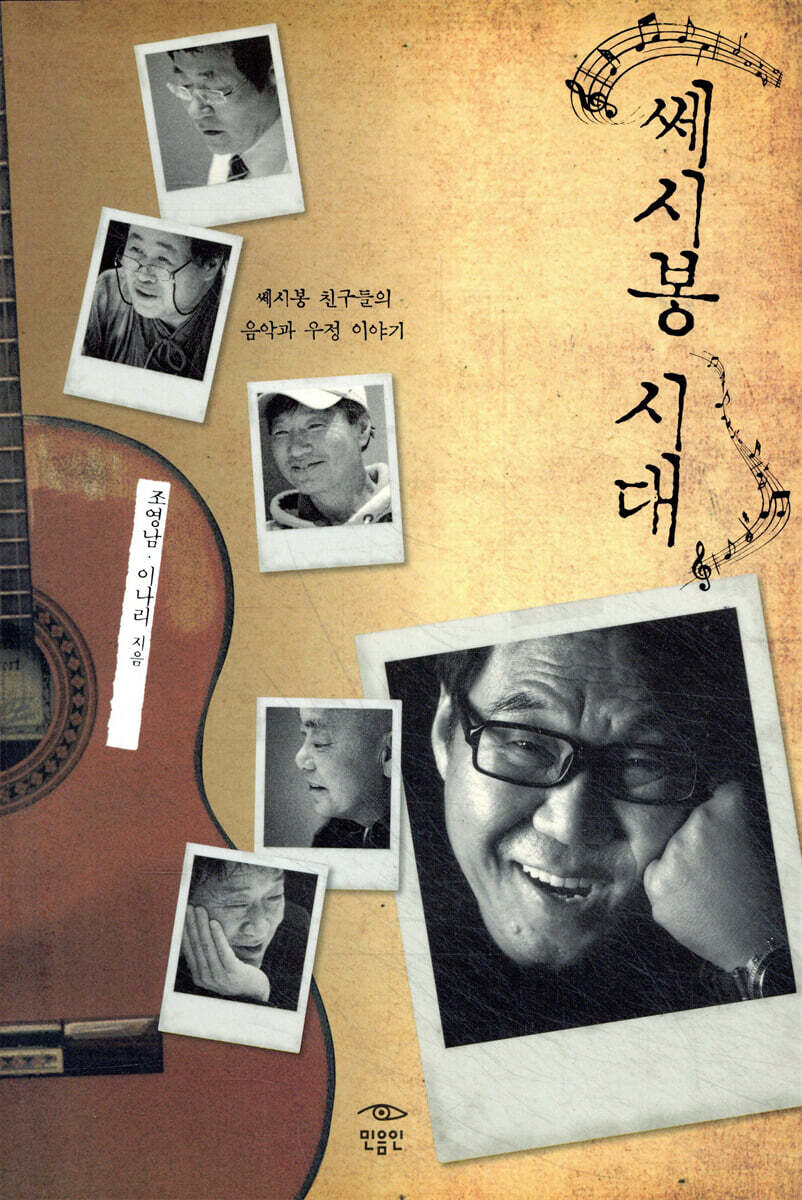
C'est Si Bon, written by Jo Young-nam himself, the romance of that era and us!
Singer Jo Young-nam, an early member of the group S'Essibong, used his unique wit to explain the culture of the music cafe S'Essibong, which was a symbol of popular culture in the 1960s and 1970s.
In a time when new words like "bachelor singer," "jeans culture," and "acoustic guitar unit" were emerging, this book contains friendship, music, and romance with friends who opened a new chapter in culture when spending time together in their twenties.
It starts with how he got there and humorously depicts the process of meeting his friends at Sessibong and building a 40-year friendship while singing, eating, and drinking together.
Co-author Inari Lee entered the world of Sse Si Bon about 10 years ago through interviews with Jo Young-nam and Lee Jang-hee.
Based on research on the era and interviews conducted during that time, he restores the era of Sessibong, which remains in the memories of the middle-aged and older generation, and sheds new light on its main characters.
Each chapter of the book consists of Jo Young-nam's memories of Sse Si-bong and Inari's exploration of the Sse Si-bong era based on objective facts.
C'est Si Bon, considered the birthplace of the first generation of acoustic guitarists, was not just a music appreciation room; it was also a playground for young people and a performance hall for professionals and amateurs.
There were various programs that encouraged the participation of young people, such as 'University Student Night', 'New Singer Selection Contest', 'Long Live the Poet', and 'Meet the Star'.
The opportunity provided to amateurs to perform on stage attracted talented young people, and as a result, the S'Essibong star corps was born.
The twin folios of Jo Young-nam, Song Chang-sik and Yoon Hyung-joo, and folk legends such as Kim Se-hwan and Lee Jang-hee are stars born from the 'University Student's Night' held every Friday, and the person who hosted it was MC Lee Sang-byeok.
At the center of the young people who were recognized for their talent and skills at Sse Si Bong was Jo Young Nam.
He started coming and going in the latter half of 1965, so he is not only an early member along with Lee Sang-byeok, but he also has a strange connection with those who appeared later.
At that time, Lee Jang-hee was the nephew of Jo Young-nam's high school classmate.
Lee Jang-hee, who entered Yonsei University, meets Yoon Hyeong-ju, a medical student at the same school, who is Jo Young-nam's friend from high school.
The person Yoon Hyung-joo met after he transferred to Kyunghee University School of Medicine was Kim Se-hwan.
While hanging out with Hongik University art student Lee Sang-byeok, Song Chang-sik is mistaken for a Hongik University student, and Kim Min-ki, Jo Young-nam's junior at Seoul National University.
They meet at a party and, despite their two or three year age difference, form a strong friendship.
They have been performing duets, exchanging songs, eating and drinking together, holding joint recitals, and sometimes bickering, and have continued to do so for over 40 years.
This book tells the story of a time when something flourished in a rustic yet romantic way, and where individual values were respected.
Singer Jo Young-nam, an early member of the group S'Essibong, used his unique wit to explain the culture of the music cafe S'Essibong, which was a symbol of popular culture in the 1960s and 1970s.
In a time when new words like "bachelor singer," "jeans culture," and "acoustic guitar unit" were emerging, this book contains friendship, music, and romance with friends who opened a new chapter in culture when spending time together in their twenties.
It starts with how he got there and humorously depicts the process of meeting his friends at Sessibong and building a 40-year friendship while singing, eating, and drinking together.
Co-author Inari Lee entered the world of Sse Si Bon about 10 years ago through interviews with Jo Young-nam and Lee Jang-hee.
Based on research on the era and interviews conducted during that time, he restores the era of Sessibong, which remains in the memories of the middle-aged and older generation, and sheds new light on its main characters.
Each chapter of the book consists of Jo Young-nam's memories of Sse Si-bong and Inari's exploration of the Sse Si-bong era based on objective facts.
C'est Si Bon, considered the birthplace of the first generation of acoustic guitarists, was not just a music appreciation room; it was also a playground for young people and a performance hall for professionals and amateurs.
There were various programs that encouraged the participation of young people, such as 'University Student Night', 'New Singer Selection Contest', 'Long Live the Poet', and 'Meet the Star'.
The opportunity provided to amateurs to perform on stage attracted talented young people, and as a result, the S'Essibong star corps was born.
The twin folios of Jo Young-nam, Song Chang-sik and Yoon Hyung-joo, and folk legends such as Kim Se-hwan and Lee Jang-hee are stars born from the 'University Student's Night' held every Friday, and the person who hosted it was MC Lee Sang-byeok.
At the center of the young people who were recognized for their talent and skills at Sse Si Bong was Jo Young Nam.
He started coming and going in the latter half of 1965, so he is not only an early member along with Lee Sang-byeok, but he also has a strange connection with those who appeared later.
At that time, Lee Jang-hee was the nephew of Jo Young-nam's high school classmate.
Lee Jang-hee, who entered Yonsei University, meets Yoon Hyeong-ju, a medical student at the same school, who is Jo Young-nam's friend from high school.
The person Yoon Hyung-joo met after he transferred to Kyunghee University School of Medicine was Kim Se-hwan.
While hanging out with Hongik University art student Lee Sang-byeok, Song Chang-sik is mistaken for a Hongik University student, and Kim Min-ki, Jo Young-nam's junior at Seoul National University.
They meet at a party and, despite their two or three year age difference, form a strong friendship.
They have been performing duets, exchanging songs, eating and drinking together, holding joint recitals, and sometimes bickering, and have continued to do so for over 40 years.
This book tells the story of a time when something flourished in a rustic yet romantic way, and where individual values were respected.
- You can preview some of the book's contents.
Preview
index
prolog
Chapter 1: Opening Story
Lee Jang-hee's Love Letter to Kim Se-hwan, Jo Young-nam, Yoon Hyung-joo, and Song Chang-sik
Chapter 2: The First Day of Sessibong
Chapter 3 Who did you meet there?
Chapter 4: So, who among the Sse Si Bong family members can hold their liquor the best?
Chapter 5: The 8th US Army Stage: An Indispensable Part of Popular Music History
Chapter 6: Jo Young-nam, a Music Student Who Becomes a Star
Chapter 7: Lee Jang-hee, the boss of the male world, who leaves wherever his feet lead him.
Chapter 8: Yoon Hyung-joo, the 60-70 generation's son, rises to become a high-teen star.
Chapter 9: Song Chang-sik, the eternal pure musician who dominated the 70s
Chapter 10: Kim Se-hwan, a handsome folk singer who is happy because he is a singer
Chapter 11: Kim Min-ki, a man like morning dew, "Maeng-gal"
Chapter 12: Meeting Youn Yuh-jung at C'est Si Bon
Chapter 13: Kim Seong-su: A Person Like Jesus
The musical significance of C'est Si Bon
"C'est Si Bon is Back": The Summoning of a Legend - Music Critic Lim Jin-mo
Epilogue
Chapter 1: Opening Story
Lee Jang-hee's Love Letter to Kim Se-hwan, Jo Young-nam, Yoon Hyung-joo, and Song Chang-sik
Chapter 2: The First Day of Sessibong
Chapter 3 Who did you meet there?
Chapter 4: So, who among the Sse Si Bong family members can hold their liquor the best?
Chapter 5: The 8th US Army Stage: An Indispensable Part of Popular Music History
Chapter 6: Jo Young-nam, a Music Student Who Becomes a Star
Chapter 7: Lee Jang-hee, the boss of the male world, who leaves wherever his feet lead him.
Chapter 8: Yoon Hyung-joo, the 60-70 generation's son, rises to become a high-teen star.
Chapter 9: Song Chang-sik, the eternal pure musician who dominated the 70s
Chapter 10: Kim Se-hwan, a handsome folk singer who is happy because he is a singer
Chapter 11: Kim Min-ki, a man like morning dew, "Maeng-gal"
Chapter 12: Meeting Youn Yuh-jung at C'est Si Bon
Chapter 13: Kim Seong-su: A Person Like Jesus
The musical significance of C'est Si Bon
"C'est Si Bon is Back": The Summoning of a Legend - Music Critic Lim Jin-mo
Epilogue
Into the book
Unlike other teahouses, there was a ticket booth at the entrance of Sessibong.
After purchasing a ticket and presenting it to the gatekeeper, the guide will assign you a seat, take your ticket, and offer you a cup of tea.
From then on, it was free. All I had to do was sit there and kill myself until they closed at midnight.
At the time, male quartets like 'Brothers Four' and 'Ames Brothers' were gaining worldwide popularity, and Choi Hee-jun, Yoo Ju-yong, Park Hyung-jun, and Wikiri formed the project group 'Four Clover' and often performed together on stage.
These bachelor singers had an excellent understanding of pop song lyrics and were also very talented, which played a significant role in making C'est Si Bon famous as a famous spot in Jang-an.
In addition to these, bands and performers from the US 8th Army who did not have a proper stage, such as 'Key Boys', guitarist Shin Jung-hyun, and pop violinist Kim Dong-seok, often graced the stage.
In the mid-1960s, the regular host of Sse Si Bon was 'Fry Boy' Kwak Gyu-seok.
The 'Gil Ok-yoon Band' led by composer and jazz saxophonist Gil Ok-yoon often played the accompaniment.
Afterwards, he became a popular music composer, releasing numerous hit songs through singers Patty Kim and Hye Eun-i.
“Even these days, when we get together, we ask each other:
"Guys! How did we manage to gather so constantly back then, without cell phones?" The friends we met at Sse Si Bong shared a common destiny, positively influencing each other and growing up with a slightly progressive bent.
These days, I often find myself shocked when I see younger singers treating each other as competitors.
I've often wondered if I should waste my time obsessing over vain and fleeting popularity rankings when I barely have time to celebrate youth and youthfulness.
I swear there was no such thing in our time.
No one showed off that they were singers or entertainers, and no one knew how to display exaggerated humility or arrogance.
At least our Song Chang-sik, Yoon Hyung-joo, Kim Se-hwan, Ko Young-soo, Lee Jang-hee, Jo Dong-jin, Seo Yu-seok, Yang Hee-eun, and Kim Min-ki all looked awkward, as if they had somehow become celebrities.
If you were to ask me to name two people who directly served as vitamins for you in your youth, I would not hesitate to name Oh Tae-seok and Lee Baek-cheon.
Theater director Oh Tae-seok was the decisive person who sparked my intellect, and music critic Lee Baek-cheon was my first teacher who taught me the essentials of effective life management and sensibility.
The event 'University Student's Night' of SseSibong, started by Baekcheon Lee, is a project that transformed SseSibong into the birthplace of the first generation of Korean acoustic guitar singers.
A piano and simple lighting were provided to create a college student singing space.
Former KBS orchestra leader Kim Kang-seop and TBC arranger and pianist Kim Yong-seon took turns playing the piano accompaniment, and Lee Sang-byeok, who was a Hongik University art student in 1967, often served as the MC.
As the excitement surrounding 'College Student Night' grew, new programs were created one after another, with different plans for each day of the week.
These include ‘Seongjeom Appreciation Room’, ‘(Saturday) Improvisation Stage’, ‘Celebrity Invitation Lecture’, and ‘Long Live the Poet’.
Among these, the Sungjeom Appreciation Room was very popular, and it was a collaboration between Baekcheon Lee and Hongtaek Jeong, a former TBC TV reporter, in which young people from Sse Si Bong took the lead in rating new songs.
Songs by top stars such as Patty Kim, Yoon Bok-hee, and Choi Hee-jun were also evaluated without exception.
The Baekcheon Lee-Hongtaek Jeong duo also held a 'New Song Review' on the stage of Sse Si Bon.
It was a program to find out the reactions of young people before recording an album.
Baekcheon Lee remembers Sesibong only as a ‘university student square.’
Even 'Long Live the Poet' is not a topic that can be easily chosen in the so-called business world.
Literary giants such as Seo Jeong-ju, Park Mok-wol, and Park Jae-sam attended the event, recited their own poems, and engaged in conversation with the audience.
It also opened its doors to amateur poets.
Speakers who were invited to give lectures included the late former President Kim Dae-jung, who was a member of the National Assembly at the time, and Jeong Gwang-mo, president of the Korea Consumer Agency.
Even in the free-spirited atmosphere of Sessibong, there were some taboos.
Jeong Hong-taek wrote this.
“Drinking alcohol was absolutely prohibited, coming in drunk was prohibited, and anyone who used fists was prohibited from entering.
Also, order was maintained very well without anyone telling us to do so.
“It was the principle of the owner of this house, Mr. Lee Heung-won, that youth should be radiated and romance expressed within order, and this principle was thoroughly maintained.”
After purchasing a ticket and presenting it to the gatekeeper, the guide will assign you a seat, take your ticket, and offer you a cup of tea.
From then on, it was free. All I had to do was sit there and kill myself until they closed at midnight.
At the time, male quartets like 'Brothers Four' and 'Ames Brothers' were gaining worldwide popularity, and Choi Hee-jun, Yoo Ju-yong, Park Hyung-jun, and Wikiri formed the project group 'Four Clover' and often performed together on stage.
These bachelor singers had an excellent understanding of pop song lyrics and were also very talented, which played a significant role in making C'est Si Bon famous as a famous spot in Jang-an.
In addition to these, bands and performers from the US 8th Army who did not have a proper stage, such as 'Key Boys', guitarist Shin Jung-hyun, and pop violinist Kim Dong-seok, often graced the stage.
In the mid-1960s, the regular host of Sse Si Bon was 'Fry Boy' Kwak Gyu-seok.
The 'Gil Ok-yoon Band' led by composer and jazz saxophonist Gil Ok-yoon often played the accompaniment.
Afterwards, he became a popular music composer, releasing numerous hit songs through singers Patty Kim and Hye Eun-i.
“Even these days, when we get together, we ask each other:
"Guys! How did we manage to gather so constantly back then, without cell phones?" The friends we met at Sse Si Bong shared a common destiny, positively influencing each other and growing up with a slightly progressive bent.
These days, I often find myself shocked when I see younger singers treating each other as competitors.
I've often wondered if I should waste my time obsessing over vain and fleeting popularity rankings when I barely have time to celebrate youth and youthfulness.
I swear there was no such thing in our time.
No one showed off that they were singers or entertainers, and no one knew how to display exaggerated humility or arrogance.
At least our Song Chang-sik, Yoon Hyung-joo, Kim Se-hwan, Ko Young-soo, Lee Jang-hee, Jo Dong-jin, Seo Yu-seok, Yang Hee-eun, and Kim Min-ki all looked awkward, as if they had somehow become celebrities.
If you were to ask me to name two people who directly served as vitamins for you in your youth, I would not hesitate to name Oh Tae-seok and Lee Baek-cheon.
Theater director Oh Tae-seok was the decisive person who sparked my intellect, and music critic Lee Baek-cheon was my first teacher who taught me the essentials of effective life management and sensibility.
The event 'University Student's Night' of SseSibong, started by Baekcheon Lee, is a project that transformed SseSibong into the birthplace of the first generation of Korean acoustic guitar singers.
A piano and simple lighting were provided to create a college student singing space.
Former KBS orchestra leader Kim Kang-seop and TBC arranger and pianist Kim Yong-seon took turns playing the piano accompaniment, and Lee Sang-byeok, who was a Hongik University art student in 1967, often served as the MC.
As the excitement surrounding 'College Student Night' grew, new programs were created one after another, with different plans for each day of the week.
These include ‘Seongjeom Appreciation Room’, ‘(Saturday) Improvisation Stage’, ‘Celebrity Invitation Lecture’, and ‘Long Live the Poet’.
Among these, the Sungjeom Appreciation Room was very popular, and it was a collaboration between Baekcheon Lee and Hongtaek Jeong, a former TBC TV reporter, in which young people from Sse Si Bong took the lead in rating new songs.
Songs by top stars such as Patty Kim, Yoon Bok-hee, and Choi Hee-jun were also evaluated without exception.
The Baekcheon Lee-Hongtaek Jeong duo also held a 'New Song Review' on the stage of Sse Si Bon.
It was a program to find out the reactions of young people before recording an album.
Baekcheon Lee remembers Sesibong only as a ‘university student square.’
Even 'Long Live the Poet' is not a topic that can be easily chosen in the so-called business world.
Literary giants such as Seo Jeong-ju, Park Mok-wol, and Park Jae-sam attended the event, recited their own poems, and engaged in conversation with the audience.
It also opened its doors to amateur poets.
Speakers who were invited to give lectures included the late former President Kim Dae-jung, who was a member of the National Assembly at the time, and Jeong Gwang-mo, president of the Korea Consumer Agency.
Even in the free-spirited atmosphere of Sessibong, there were some taboos.
Jeong Hong-taek wrote this.
“Drinking alcohol was absolutely prohibited, coming in drunk was prohibited, and anyone who used fists was prohibited from entering.
Also, order was maintained very well without anyone telling us to do so.
“It was the principle of the owner of this house, Mr. Lee Heung-won, that youth should be radiated and romance expressed within order, and this principle was thoroughly maintained.”
---From the text
Publisher's Review
The stars of 'Summoning the Legend' are back!
"C'est Si Bon" is a condensed version of "jeans," "acoustic guitar," "draft beer," "folk songs," and "youth."
The book 『Sse Si Bon Era』, a collection of stories about memories, music, and friends from the Sse Si Bon era written by Jo Young-nam and Lee Na-ri, the eldest of the main characters of the Sse Si Bon craze that began in Chuseok of 2010, has been published by Minumsa.
Lee Jang-hee, Song Chang-sik, Yoon Hyung-joo, Kim Se-hwan, and Kim Min-ki talk about friendship, music, romance, and memories with friends from the 1960s at the music cafe C'est Si Bong in Mugyo-dong.
This is the first Sessibong book written by a star who came from Sessibong.
As we simulate the second installment of Seshbong, we meet frequently and rapidly.
My heart was racing even before I met Hyung-ju, Chang-sik, and Se-hwan, and when I met them, I felt like I was going back to the old days and was incredibly happy.
Even as adults grow older, they look at each other and say, “You haven’t aged at all.
“It’s the same as when I was in school,” he says, and that’s true.
No one has changed.
This is because Chang-sik always had a Bodhisattva-like smile, as if he were a Taoist monk who had lived through many lives, Hyung-ju always made meticulous plans, and Se-hwan always observed the mood of his brothers and told them humorous stories. - From the opening story
Singer Jo Young-nam, an early member of the group S'Essibong, used his unique wit to explain the culture of the music cafe S'Essibong, which was a symbol of popular culture in the 1960s and 1970s.
In a time when new words like "bachelor singer," "jeans culture," and "acoustic guitar unit" were emerging, this book contains friendship, music, and romance with friends who opened a new chapter in culture when spending time together in their twenties.
It starts with how he got there and humorously depicts the process of meeting his friends at Sessibong and building a 40-year friendship while singing, eating, and drinking together.
Co-author Inari Lee entered the world of Sse Si Bon about 10 years ago through interviews with Jo Young-nam and Lee Jang-hee.
Based on research on the era and interviews conducted during that time, he restores the era of Sessibong, which remains in the memories of the middle-aged and older generation, and sheds new light on its main characters.
Each chapter of the book consists of Jo Young-nam's memories of Sse Si-bong and Inari's exploration of the Sse Si-bong era based on objective facts.
From countless LP records, popular DJs, and music cafes filled with events that brought amateurs to the stage, to the birth of the first generation of acoustic guitarists, to the story of the 8th US Army show troupe—a time of freedom and romance that contrasts starkly with the oppressive political climate—this book unfolds the history of popular music and culture.
The flow of Korean popular music, which is in the memories of the youth of the 6070s and unknown to the youth of today, is naturally included.
The era of youth and romance, the birthplace of 6070s pop culture.
C'est Si Bon, considered the birthplace of the first generation of acoustic guitarists, was not just a music appreciation room; it was also a playground for young people and a performance hall for professionals and amateurs.
There were various programs that encouraged the participation of young people, such as 'University Student Night', 'New Singer Selection Contest', 'Long Live the Poet', and 'Meet the Star'.
The opportunity provided to amateurs to perform on stage attracted talented young people, and as a result, the S'Essibong star corps was born.
The twin folios of Jo Young-nam, Song Chang-sik and Yoon Hyung-joo, and folk legends such as Kim Se-hwan and Lee Jang-hee are stars born from the 'University Student's Night' held every Friday, and the person who hosted it was MC Lee Sang-byeok.
At the center of the young people who were recognized for their talent and skills at Sse Si Bong was Jo Young Nam.
He started coming and going in the latter half of 1965, so he is not only an early member along with Lee Sang-byeok, but he also has a strange connection with those who appeared later.
At that time, Lee Jang-hee was the nephew of Jo Young-nam's high school classmate.
Lee Jang-hee, who entered Yonsei University, meets Yoon Hyeong-ju, a medical student at the same school, who is Jo Young-nam's friend from high school.
The person Yoon Hyung-joo met after he transferred to Kyunghee University School of Medicine was Kim Se-hwan.
While hanging out with Hongik University art student Lee Sang-byeok, Song Chang-sik is mistaken for a Hongik University student, and Kim Min-ki, Jo Young-nam's junior at Seoul National University.
They meet at a party and, despite their two or three year age difference, form a strong friendship.
They have been performing duets, exchanging songs, eating and drinking together, holding joint recitals, and sometimes bickering, and have continued to do so for over 40 years.
This book tells the story of a time when something flourished amidst a sense of rusticity, romance, and respect for individual values.
The Sessibong craze and the second generation of communication
“The younger generation, far from laughing at these brilliant and uncool lyrics in music they had never heard before, were moved.” - Popular music critic Lim Jin-mo
At the end of the book, popular music critic Lim Jin-mo interprets the musical value of the C'est Si Bon era and the meaning of the current craze.
Meanwhile, some of the photos of the characters in the book are the work of famous photographer Kim Jung-man, one of the friends of Sse Si Bong and considered by author Jo Young-nam to be the youngest member of Sse Si Bong.
Lim Jin-mo likens the current Sessibong craze to the 'summoning of a legend.'
Just as the Beatles, ABBA, John Lennon, and Queen were resurrected in the new millennium and connected with a new generation, our legends are being summoned one after another.
Something amazing happened.
The music of these people, who were in their mid-60s, shocked the young people who had no idea they existed.
This shock began after the 'C'est Si Bon Concert' organized by an MBC entertainment program during the last Chuseok holiday caused an unusual stir.
It's understandable that the Seshbong concert appealed to the older generation.
It is only natural that they are happy to see it, as it brings back memories and nostalgia for the past.
But things are different for young people.
The Sesame Street craze is considered the trend that goes back the furthest among the younger generation.
This is because, while a restoration is usually done by going back at most one generation, it skipped back 1.5 to 2 generations.
People in their 20s these days say, “At first, I thought it was music from my father’s and grandfather’s generation, so I was indifferent, but when I happened to see it on TV, I had a strange feeling.
Even though it was music I had never heard before, it touched my heart.
“It was so pure.” “I was surprised at myself for being moved by the music of the Sessibong uncles.”
Even though I'm currently immersed in music aimed at consumption, I happened to see a Sessibong concert and realized that even though it was something from the past, it was pure and honest, and had a certain weight and class that touched something deep in my heart.
The music of the Sessibong generation, the music of that era defined as folk, was mostly 'personal music' that expressed the singer's own thoughts and feelings.
Even if the song or lyrics were written by someone else, the singer of that time knew how to transfer them into his own story and confession, ultimately making them his own.
Delilah seemed to be talking about Jo Young-nam's love at the time, and Lee Jang-hee was pouring out his heart while in love with her in I Give You Everything.
The lyrics of the new generation are often far removed from the thoughts of the singers who sing them.
"C'est Si Bon" is a condensed version of "jeans," "acoustic guitar," "draft beer," "folk songs," and "youth."
The book 『Sse Si Bon Era』, a collection of stories about memories, music, and friends from the Sse Si Bon era written by Jo Young-nam and Lee Na-ri, the eldest of the main characters of the Sse Si Bon craze that began in Chuseok of 2010, has been published by Minumsa.
Lee Jang-hee, Song Chang-sik, Yoon Hyung-joo, Kim Se-hwan, and Kim Min-ki talk about friendship, music, romance, and memories with friends from the 1960s at the music cafe C'est Si Bong in Mugyo-dong.
This is the first Sessibong book written by a star who came from Sessibong.
As we simulate the second installment of Seshbong, we meet frequently and rapidly.
My heart was racing even before I met Hyung-ju, Chang-sik, and Se-hwan, and when I met them, I felt like I was going back to the old days and was incredibly happy.
Even as adults grow older, they look at each other and say, “You haven’t aged at all.
“It’s the same as when I was in school,” he says, and that’s true.
No one has changed.
This is because Chang-sik always had a Bodhisattva-like smile, as if he were a Taoist monk who had lived through many lives, Hyung-ju always made meticulous plans, and Se-hwan always observed the mood of his brothers and told them humorous stories. - From the opening story
Singer Jo Young-nam, an early member of the group S'Essibong, used his unique wit to explain the culture of the music cafe S'Essibong, which was a symbol of popular culture in the 1960s and 1970s.
In a time when new words like "bachelor singer," "jeans culture," and "acoustic guitar unit" were emerging, this book contains friendship, music, and romance with friends who opened a new chapter in culture when spending time together in their twenties.
It starts with how he got there and humorously depicts the process of meeting his friends at Sessibong and building a 40-year friendship while singing, eating, and drinking together.
Co-author Inari Lee entered the world of Sse Si Bon about 10 years ago through interviews with Jo Young-nam and Lee Jang-hee.
Based on research on the era and interviews conducted during that time, he restores the era of Sessibong, which remains in the memories of the middle-aged and older generation, and sheds new light on its main characters.
Each chapter of the book consists of Jo Young-nam's memories of Sse Si-bong and Inari's exploration of the Sse Si-bong era based on objective facts.
From countless LP records, popular DJs, and music cafes filled with events that brought amateurs to the stage, to the birth of the first generation of acoustic guitarists, to the story of the 8th US Army show troupe—a time of freedom and romance that contrasts starkly with the oppressive political climate—this book unfolds the history of popular music and culture.
The flow of Korean popular music, which is in the memories of the youth of the 6070s and unknown to the youth of today, is naturally included.
The era of youth and romance, the birthplace of 6070s pop culture.
C'est Si Bon, considered the birthplace of the first generation of acoustic guitarists, was not just a music appreciation room; it was also a playground for young people and a performance hall for professionals and amateurs.
There were various programs that encouraged the participation of young people, such as 'University Student Night', 'New Singer Selection Contest', 'Long Live the Poet', and 'Meet the Star'.
The opportunity provided to amateurs to perform on stage attracted talented young people, and as a result, the S'Essibong star corps was born.
The twin folios of Jo Young-nam, Song Chang-sik and Yoon Hyung-joo, and folk legends such as Kim Se-hwan and Lee Jang-hee are stars born from the 'University Student's Night' held every Friday, and the person who hosted it was MC Lee Sang-byeok.
At the center of the young people who were recognized for their talent and skills at Sse Si Bong was Jo Young Nam.
He started coming and going in the latter half of 1965, so he is not only an early member along with Lee Sang-byeok, but he also has a strange connection with those who appeared later.
At that time, Lee Jang-hee was the nephew of Jo Young-nam's high school classmate.
Lee Jang-hee, who entered Yonsei University, meets Yoon Hyeong-ju, a medical student at the same school, who is Jo Young-nam's friend from high school.
The person Yoon Hyung-joo met after he transferred to Kyunghee University School of Medicine was Kim Se-hwan.
While hanging out with Hongik University art student Lee Sang-byeok, Song Chang-sik is mistaken for a Hongik University student, and Kim Min-ki, Jo Young-nam's junior at Seoul National University.
They meet at a party and, despite their two or three year age difference, form a strong friendship.
They have been performing duets, exchanging songs, eating and drinking together, holding joint recitals, and sometimes bickering, and have continued to do so for over 40 years.
This book tells the story of a time when something flourished amidst a sense of rusticity, romance, and respect for individual values.
The Sessibong craze and the second generation of communication
“The younger generation, far from laughing at these brilliant and uncool lyrics in music they had never heard before, were moved.” - Popular music critic Lim Jin-mo
At the end of the book, popular music critic Lim Jin-mo interprets the musical value of the C'est Si Bon era and the meaning of the current craze.
Meanwhile, some of the photos of the characters in the book are the work of famous photographer Kim Jung-man, one of the friends of Sse Si Bong and considered by author Jo Young-nam to be the youngest member of Sse Si Bong.
Lim Jin-mo likens the current Sessibong craze to the 'summoning of a legend.'
Just as the Beatles, ABBA, John Lennon, and Queen were resurrected in the new millennium and connected with a new generation, our legends are being summoned one after another.
Something amazing happened.
The music of these people, who were in their mid-60s, shocked the young people who had no idea they existed.
This shock began after the 'C'est Si Bon Concert' organized by an MBC entertainment program during the last Chuseok holiday caused an unusual stir.
It's understandable that the Seshbong concert appealed to the older generation.
It is only natural that they are happy to see it, as it brings back memories and nostalgia for the past.
But things are different for young people.
The Sesame Street craze is considered the trend that goes back the furthest among the younger generation.
This is because, while a restoration is usually done by going back at most one generation, it skipped back 1.5 to 2 generations.
People in their 20s these days say, “At first, I thought it was music from my father’s and grandfather’s generation, so I was indifferent, but when I happened to see it on TV, I had a strange feeling.
Even though it was music I had never heard before, it touched my heart.
“It was so pure.” “I was surprised at myself for being moved by the music of the Sessibong uncles.”
Even though I'm currently immersed in music aimed at consumption, I happened to see a Sessibong concert and realized that even though it was something from the past, it was pure and honest, and had a certain weight and class that touched something deep in my heart.
The music of the Sessibong generation, the music of that era defined as folk, was mostly 'personal music' that expressed the singer's own thoughts and feelings.
Even if the song or lyrics were written by someone else, the singer of that time knew how to transfer them into his own story and confession, ultimately making them his own.
Delilah seemed to be talking about Jo Young-nam's love at the time, and Lee Jang-hee was pouring out his heart while in love with her in I Give You Everything.
The lyrics of the new generation are often far removed from the thoughts of the singers who sing them.
GOODS SPECIFICS
- Date of issue: June 2, 2011
- Page count, weight, size: 287 pages | 523g | 160*220*20mm
- ISBN13: 9788994210834
- ISBN10: 8994210830
You may also like
카테고리
korean


korean

![GQ KOREA Mark (Monthly): December [2025]](http://librairie.coreenne.fr/cdn/shop/files/8ef265dbbfbf186523ed75ba7319009d.jpg?v=1765340328&width=3840)


