

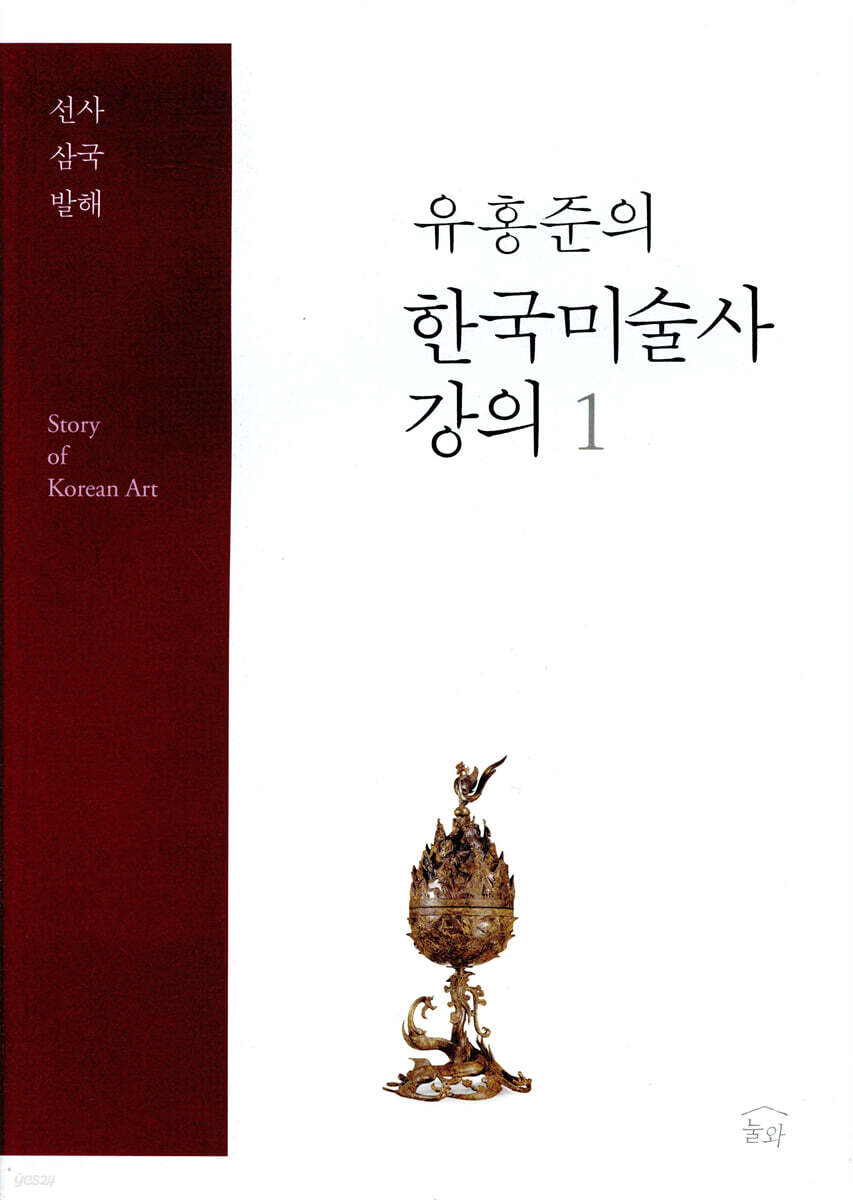
Yoo Hong-jun's Korean Art History Lecture 1
 |
Description
Book Introduction
The history of Korean art told by Yoo Hong-jun, author of "My Cultural Heritage Tour"!
Yoo Hong-jun, who has been increasing public understanding of lesser-known Korean historical sites through his book “My Cultural Heritage Tour,” has now published a book on art history.
『Yoo Hong-jun's Lectures on Korean Art History 1』 is a book that covers the period from the 'Ancient Times', the starting point of Korean art history, to the 'Three Kingdoms Period'. Rather than using difficult terminology, it helps people understand art history, which can be perceived as difficult, through easy and fun explanations.
This book is a 'Story of Korean Art' based on the author's experience gained through the open lecture "Korean Art History for Young People" held annually since 1985 and his experience accumulated through decades of field trips.
The story unfolds in a structure that is easy to read and fits Korean art, so that readers can lean back on the sofa and read it easily. At the same time, the works mentioned in the text are provided with photos, so that even readers without knowledge of art can easily read and understand them.
During this time, unlike Western art history, there were almost no books that organized Korean art history.
As time passed, the art and fine arts market expanded and various books were published accordingly, but these were limited to a single field, subject, or artist in art history, and thus were insufficient to provide a comprehensive view of art history.
Starting with Volume 1, Yoo Hong-jun plans to publish Volume 2, which covers the Unified Silla and Goryeo periods, and Volume 3, which covers the Joseon Dynasty. Through this series, readers will encounter the development of Korean art history from an integrated perspective and major works that follow.
Yoo Hong-jun, who has been increasing public understanding of lesser-known Korean historical sites through his book “My Cultural Heritage Tour,” has now published a book on art history.
『Yoo Hong-jun's Lectures on Korean Art History 1』 is a book that covers the period from the 'Ancient Times', the starting point of Korean art history, to the 'Three Kingdoms Period'. Rather than using difficult terminology, it helps people understand art history, which can be perceived as difficult, through easy and fun explanations.
This book is a 'Story of Korean Art' based on the author's experience gained through the open lecture "Korean Art History for Young People" held annually since 1985 and his experience accumulated through decades of field trips.
The story unfolds in a structure that is easy to read and fits Korean art, so that readers can lean back on the sofa and read it easily. At the same time, the works mentioned in the text are provided with photos, so that even readers without knowledge of art can easily read and understand them.
During this time, unlike Western art history, there were almost no books that organized Korean art history.
As time passed, the art and fine arts market expanded and various books were published accordingly, but these were limited to a single field, subject, or artist in art history, and thus were insufficient to provide a comprehensive view of art history.
Starting with Volume 1, Yoo Hong-jun plans to publish Volume 2, which covers the Unified Silla and Goryeo periods, and Volume 3, which covers the Joseon Dynasty. Through this series, readers will encounter the development of Korean art history from an integrated perspective and major works that follow.
- You can preview some of the book's contents.
Preview
index
In publishing the book
Chapter 1: Prehistory on the Korean Peninsula - The Dawn of Art History and the Roots of the Korean People
Chapter 2: Gojoseon or the Bronze Age - Dolmens and Shamanic Ritual Traditions
Chapter 3: Pottery of the Proto-Three Kingdoms Period and the Three Kingdoms Period - The Pottery Revolution Achieved by the Kiln and the Potter's Wheel
Chapter 4: Goguryeo Tomb Art - Magnificent Paintings for the Rest of the Soul
Chapter 5: Baekje Tomb Art - The Aesthetics of Geomibulru and Hwaibulchi
Chapter 6: Silla's Tomb Art - Metalwork: "The Land of Dazzling Gold and Silver"
Chapter 7: Gaya's Tomb Art - The Legacy of an Unfinished Kingdom
Chapter 8: Architecture, Mountain Fortresses, and Epigraphic Inscriptions of the Three Kingdoms Period - Traces Remaining from Vanished Palaces and Mountain Fortresses
Chapter 9: Temple Layout and Stone Pagodas of the Three Kingdoms Period - The Path to the Land of Stone Pagodas
Chapter 10: Sarira Cases and Incense Burners of the Three Kingdoms Period - Tribute to Baekje Beauty
Chapter 11: Buddhist Sculpture of the Three Kingdoms Period - The Origins of Korean Buddhist Sculpture
Chapter 12: The Art of Balhae - In Search of the Legacy of a Lost Empire
supplement
-Basic principles of Buddhist art
-Methodology of art history
References
List of illustrations
Chapter 1: Prehistory on the Korean Peninsula - The Dawn of Art History and the Roots of the Korean People
Chapter 2: Gojoseon or the Bronze Age - Dolmens and Shamanic Ritual Traditions
Chapter 3: Pottery of the Proto-Three Kingdoms Period and the Three Kingdoms Period - The Pottery Revolution Achieved by the Kiln and the Potter's Wheel
Chapter 4: Goguryeo Tomb Art - Magnificent Paintings for the Rest of the Soul
Chapter 5: Baekje Tomb Art - The Aesthetics of Geomibulru and Hwaibulchi
Chapter 6: Silla's Tomb Art - Metalwork: "The Land of Dazzling Gold and Silver"
Chapter 7: Gaya's Tomb Art - The Legacy of an Unfinished Kingdom
Chapter 8: Architecture, Mountain Fortresses, and Epigraphic Inscriptions of the Three Kingdoms Period - Traces Remaining from Vanished Palaces and Mountain Fortresses
Chapter 9: Temple Layout and Stone Pagodas of the Three Kingdoms Period - The Path to the Land of Stone Pagodas
Chapter 10: Sarira Cases and Incense Burners of the Three Kingdoms Period - Tribute to Baekje Beauty
Chapter 11: Buddhist Sculpture of the Three Kingdoms Period - The Origins of Korean Buddhist Sculpture
Chapter 12: The Art of Balhae - In Search of the Legacy of a Lost Empire
supplement
-Basic principles of Buddhist art
-Methodology of art history
References
List of illustrations
Detailed image

Into the book
Korean Art History as a Liberal Arts Subject
This book was written as an introductory text for the general public and art history students who wish to understand Korean art history through general knowledge and common sense.
In English, it is not 'History' of Korean Art, but 'Story' of Korean Art.
The value of this book, I have in mind, is not that of Korean art history that can be studied by sitting at a desk and underlining, but rather that of Korean art history that can be read comfortably while leaning back on a sofa.
In the belief that an introductory book on art history should serve as a guide for museum visits and field trips, we devoted considerable space to archaeology, mountain fortresses, and epigraphic inscriptions on steles, areas not well covered in existing art histories.
The only thing that has been included in the prehistoric period is the complex contents of the museum's Paleolithic Room, starting with Australopithecus, which are briefly explained in connection with the history of art.
The principle of art history is to describe works of art directly.
However, if the nature of the work is clearly revealed through the background of its production or an anecdote related to the relic, it was not omitted even if it was a story outside of art history.
I have included lengthy discussions on the history of the excavation of Silla tombs, the controversy over the burial site of Anak Tomb No. 3, and the founding of Mireuksa Temple in Baekje and Hwangnyongsa Temple in Silla, which I found very beneficial to students during lectures, and have incorporated them into the book.
“Korean Art History as Seen by Yoo Hong-jun”
Although this book is an introductory text, it is a comprehensive history of Korean art history, so my perspective on art history cannot be left out.
One of the things I emphasized while writing this book is understanding Korean art history within the context of the overall flow of East Asian art history.
Existing Korean art history books usually begin by mentioning the characteristics of Korean art.
However, this problem becomes clear not only when trying to reveal the intrinsic value of Korean art itself, but also when compared with that of China and Japan.
Korean art was greatly influenced by Chinese culture from the formation of ancient nations to the 19th century.
Because of this, the identity of our culture is sometimes questioned, and sometimes it appears as a sense of cultural inferiority.
However, cultural influence is not a phenomenon that occurs spontaneously, but is the result of active choices made by recipients.
It wasn't China that gave it to us, we accepted it and made it our own.
A country's cultural identity is not determined by its sources.
No one says that the Christian culture of the European Middle Ages was a derivative of Jewish culture.
There is no disparagement of Chinese Buddhist art as having come from India.
Korean Buddhist art is Korean culture.
This book was written as an introductory text for the general public and art history students who wish to understand Korean art history through general knowledge and common sense.
In English, it is not 'History' of Korean Art, but 'Story' of Korean Art.
The value of this book, I have in mind, is not that of Korean art history that can be studied by sitting at a desk and underlining, but rather that of Korean art history that can be read comfortably while leaning back on a sofa.
In the belief that an introductory book on art history should serve as a guide for museum visits and field trips, we devoted considerable space to archaeology, mountain fortresses, and epigraphic inscriptions on steles, areas not well covered in existing art histories.
The only thing that has been included in the prehistoric period is the complex contents of the museum's Paleolithic Room, starting with Australopithecus, which are briefly explained in connection with the history of art.
The principle of art history is to describe works of art directly.
However, if the nature of the work is clearly revealed through the background of its production or an anecdote related to the relic, it was not omitted even if it was a story outside of art history.
I have included lengthy discussions on the history of the excavation of Silla tombs, the controversy over the burial site of Anak Tomb No. 3, and the founding of Mireuksa Temple in Baekje and Hwangnyongsa Temple in Silla, which I found very beneficial to students during lectures, and have incorporated them into the book.
“Korean Art History as Seen by Yoo Hong-jun”
Although this book is an introductory text, it is a comprehensive history of Korean art history, so my perspective on art history cannot be left out.
One of the things I emphasized while writing this book is understanding Korean art history within the context of the overall flow of East Asian art history.
Existing Korean art history books usually begin by mentioning the characteristics of Korean art.
However, this problem becomes clear not only when trying to reveal the intrinsic value of Korean art itself, but also when compared with that of China and Japan.
Korean art was greatly influenced by Chinese culture from the formation of ancient nations to the 19th century.
Because of this, the identity of our culture is sometimes questioned, and sometimes it appears as a sense of cultural inferiority.
However, cultural influence is not a phenomenon that occurs spontaneously, but is the result of active choices made by recipients.
It wasn't China that gave it to us, we accepted it and made it our own.
A country's cultural identity is not determined by its sources.
No one says that the Christian culture of the European Middle Ages was a derivative of Jewish culture.
There is no disparagement of Chinese Buddhist art as having come from India.
Korean Buddhist art is Korean culture.
--- From the Author's Preface
Publisher's Review
Meanwhile, research results on Korean art history have accumulated and become more profound.
Additionally, a collection of beautifully edited books on Korean art has been accumulated.
As museums and field trips became more popular, public interest in and appreciation for Korean art increased.
It has become necessary to compile the research results of each field and organize them into a consistent view of art history, and there is also an urgent need for popular books that meet the needs and expectations of the public.
It has been exactly 40 years since Kim Won-yong's History of Korean Art, and this is the first comprehensive history of Korean art that responds to the contemporary and social demands.
This book is an introductory text for the general public who wish to understand Korean art history through general knowledge and common sense, as well as for students studying art history.
It is not 'History' of Korean Art, but 'Story' of Korean Art.
I wrote it so that you can read it easily while leaning on the sofa.
Therefore, the system is different and the method of development is also different.
It is easy to read and is categorized in a way that suits the characteristics of Korean art, and each artifact is described so that it can be understood within the larger framework of art history.
By including as many photos as possible in the text and editing them beautifully to take into account the weight of the artifacts, you can understand the flow of Korean art history just by looking at the photos.
Readers will enjoy this book while leaning back on the sofa, deepening their understanding and pride in Korean art history.
You will be amazed as you look around at Korean art.
The first dangerous high-altitude flight in 40 years
The history of Korean art, which began with the Japanese invasion, suffered under the colonial perspective and was mainly organized by outsiders.
With the liberation, research was conducted mainly in museums amidst the enthusiasm to regain independence.
As related departments were established and the number of researchers gradually increased, Kim Won-yong's "Korean Art History" was published in 1969 as a full-fledged introductory book on Korean art history.
Since then, I have devoted myself to each field of study, deepening my knowledge of Korean art history and securing expertise in each genre.
Syntax also appeared in a form in which experts in each field wrote it separately.
However, a comprehensive history of Korean art that broadly encompasses the achievements of field research and is based on a consistent view of art history has not been produced.
This is because they were only focused on the familiar 'low-altitude flight' of researching the history of their respective fields, and did not attempt the dangerous 'high-altitude flight' of a comprehensive study of Korean art history.
The author, called to meet the demands of the times and society, made his first turn in a dangerous high-altitude flight in 40 years.
For the popularization of Korean art 'again'
As we delve deeper into the history of Korean art, research achievements accumulate, but opportunities for the general public to encounter the greatness of Korean art are decreasing.
The difficult Chinese characters, the uncomfortable illustrations, and the narrative style that analyzed rather than conveyed beauty were far from the public's interest.
There was a need for an introductory book that could be easily read as a general guide, describing the results of professional research in language that the general public could understand.
Accordingly, the author, who created a wind of popularization of Korean art history, attempted to communicate Korean art history with the public as a professional scholar.
'Story' of Korean Art
This is an introductory book to Korean art history for the general public and art history students who want to understand Korean art history through general knowledge and common sense.
In English, it is not 'History' of Korean Art, but 'Story' of Korean Art.
It is not a chronology of art history, but rather a description that allows readers to understand the flow and characteristics of Korean art.
In other words, this book was written so that you can read it comfortably while leaning back on the sofa, rather than studying while sitting at a desk and underlining.
A system and narrative befitting 'Story'
Art history is basically written in the order of architecture, sculpture, painting, and crafts.
This is a general system that fits the characteristics of Western art history, and it does not fit the circumstances of Korean art, and it is not suitable for comfortable reading.
Therefore, in line with the characteristics of Korean art, the period from prehistoric times to Balhae was first grouped into twelve themes, the Three Kingdoms period was divided into tomb art and Buddhist art, and sarira boxes and incense burners were arranged in separate chapters.
We also placed emphasis on archaeology, mountain fortresses, steles, and epigraphy, which were not covered in existing art history.
If the conventional method of describing art history was to list each artifact, the author used his unique writing style to describe each artifact's position in the larger flow of art history as well as its individual characteristics.
The author's explanations are clear and refreshing, as if each bead was strung together with a thread to create a necklace.
This is the so-called 'Story'.
Korean art in the flow of East Asian art history
Korean art not only reveals its inherent value, but also clearly reveals its value when compared to neighboring countries such as China and Japan.
Therefore, the exchange relationship was highlighted by taking into account the circumstances of China and Japan at the same time.
The identity and originality of Korean art are further revealed by examining the styles of Chinese Buddhist statues, Japanese pottery culture and the arrival of the Japanese, and the Baekje-style Buddhist statues of Japan.
Thus, our country is a cultural shareholder with a proud share as one of the axes that formed the East Asian cultural sphere.
Korean art history becomes clearer with background knowledge
Art history primarily focuses on explaining the artwork itself, but background knowledge such as related history and anecdotes can help clarify the nature of the artwork and deepen your understanding of Korean art.
It describes the history of each country in connection with the changes in the types of tombs, or examines the process of transmission of Buddhism, and describes the historical background or history of the times in connection with the history of art.
Also, there is a reason why I insisted on telling anecdotes such as the history of the excavation of Silla tombs and the controversy over the buried person of An-ak Tomb No. 3.
Additionally, the appendices “Basic Principles of Buddhist Art” and “Methodology of Art History” were included to enhance the basic knowledge of beginners in Korean art history.
The reference list is organized with the concept of 'for further reading', that is, introducing books worth reading further.
This book is organized by era and field, so that it can serve as a guide for beginners to Korean art history or the general public who want to learn more about a particular field.
Korean art history that can be understood just by looking at the photos
Entering the 2000s, catalog editing and design technology has advanced remarkably.
The perception of publications has also changed, and now even reports containing research results are trying to follow the beautiful editorial design of catalogs.
Accordingly, many high-quality illustrations were introduced.
There is now an implicit demand that introductory books on Korean art history, which had focused solely on content while neglecting illustrations, should also pay attention to the quality of illustrations.
This book mainly includes the most beautiful illustrations from recently published catalogs.
All artifacts mentioned in the text have been included as much as possible.
Additionally, the author edited the book to maximize the importance of the artifacts and the features that should be shown.
In this way, you can understand the characteristics and flow of Korean art at a glance by just looking at the pictures without reading the content.
Meanwhile, photos that capture the realism of the relics, photos that clearly show their original appearance, and photos taken at the time of excavation were included to help understand the content.
Starting from lecture to lecture
The origins of this book date back to the 1980s.
The author held a public lecture series called “Korean Art History for Young People” outside of school, which continued until the 1990s.
At that time, the content of the lecture was recorded in students' notes, but many people were waiting for it to be published publicly.
And now, I wrote a manuscript in preparation for a department lecture, responding to the 'resentment' of undergraduate and graduate students at school, and after completing the manuscript, I once again had it verified by students as readers in a department lecture.
The author's strength and passion, demonstrated in his lectures on Korean art history in the 1980s and 1990s, have matured and become a comprehensive history of Korean art history.
Generous encouragement and advice from experts in each field
The author's fellow scholars, who are experts in various fields of art history, provided generous encouragement and advice.
Everyone sent me their corrections in red and their comments in blue.
While respecting the author's art historical views, such as chronology and nationality, errors in factual relationships or facts that have been corrected through recent research were clearly pointed out.
Kim Gwang-eon (Anthropology and Folklore, Chairman of the Cultural Heritage Committee's Folklore Subcommittee): Chapters 1 and 2
Lee Cheong-gyu (Archaeology, Professor, Yeungnam University): Chapters 1 and 2
Kim Yong-seong (Archaeology, former director of the Jungwon Cultural Heritage Research Institute): Chapter 3
Yun Yong-i (Art History [Ceramic History], Professor, Myongji University): Chapter 3
Lee Tae-ho (Art History [Painting History], Professor, Myongji University): Chapter 4
Song Ui-jeong (Archaeology, Director of the National Gimhae Museum): Chapters 5, 6, and 7
Lee Gwi-yeong (Art History [Metal Crafts], Director of the Arts and Crafts Department, National Research Institute of Cultural Heritage): Chapters 5, 6, 7, and 10
So Jae-gu (Art History [Architecture], Director of the National Research Institute of Cultural Heritage, Gyeongju): Chapters 8 and 9
Kang Hee-jeong (Buddhist Art, Professor, Sogang University): Chapter 11 and Appendix (Basic Principles of Buddhist Art)
Song Ki-ho (Historical Studies [Balhae History], Director of Seoul National University Museum): Chapter 12
Lee Gwang-ho (Professor of Oriental Philosophy and Chinese Literature, Yonsei University): Chinese translation
Shin Jun-hyung (Western Art History): Appendix (Methodology of Art History)
Mok Su-hyeon (Art History, Professor at Kyujanggak): All edited text
Additionally, a collection of beautifully edited books on Korean art has been accumulated.
As museums and field trips became more popular, public interest in and appreciation for Korean art increased.
It has become necessary to compile the research results of each field and organize them into a consistent view of art history, and there is also an urgent need for popular books that meet the needs and expectations of the public.
It has been exactly 40 years since Kim Won-yong's History of Korean Art, and this is the first comprehensive history of Korean art that responds to the contemporary and social demands.
This book is an introductory text for the general public who wish to understand Korean art history through general knowledge and common sense, as well as for students studying art history.
It is not 'History' of Korean Art, but 'Story' of Korean Art.
I wrote it so that you can read it easily while leaning on the sofa.
Therefore, the system is different and the method of development is also different.
It is easy to read and is categorized in a way that suits the characteristics of Korean art, and each artifact is described so that it can be understood within the larger framework of art history.
By including as many photos as possible in the text and editing them beautifully to take into account the weight of the artifacts, you can understand the flow of Korean art history just by looking at the photos.
Readers will enjoy this book while leaning back on the sofa, deepening their understanding and pride in Korean art history.
You will be amazed as you look around at Korean art.
The first dangerous high-altitude flight in 40 years
The history of Korean art, which began with the Japanese invasion, suffered under the colonial perspective and was mainly organized by outsiders.
With the liberation, research was conducted mainly in museums amidst the enthusiasm to regain independence.
As related departments were established and the number of researchers gradually increased, Kim Won-yong's "Korean Art History" was published in 1969 as a full-fledged introductory book on Korean art history.
Since then, I have devoted myself to each field of study, deepening my knowledge of Korean art history and securing expertise in each genre.
Syntax also appeared in a form in which experts in each field wrote it separately.
However, a comprehensive history of Korean art that broadly encompasses the achievements of field research and is based on a consistent view of art history has not been produced.
This is because they were only focused on the familiar 'low-altitude flight' of researching the history of their respective fields, and did not attempt the dangerous 'high-altitude flight' of a comprehensive study of Korean art history.
The author, called to meet the demands of the times and society, made his first turn in a dangerous high-altitude flight in 40 years.
For the popularization of Korean art 'again'
As we delve deeper into the history of Korean art, research achievements accumulate, but opportunities for the general public to encounter the greatness of Korean art are decreasing.
The difficult Chinese characters, the uncomfortable illustrations, and the narrative style that analyzed rather than conveyed beauty were far from the public's interest.
There was a need for an introductory book that could be easily read as a general guide, describing the results of professional research in language that the general public could understand.
Accordingly, the author, who created a wind of popularization of Korean art history, attempted to communicate Korean art history with the public as a professional scholar.
'Story' of Korean Art
This is an introductory book to Korean art history for the general public and art history students who want to understand Korean art history through general knowledge and common sense.
In English, it is not 'History' of Korean Art, but 'Story' of Korean Art.
It is not a chronology of art history, but rather a description that allows readers to understand the flow and characteristics of Korean art.
In other words, this book was written so that you can read it comfortably while leaning back on the sofa, rather than studying while sitting at a desk and underlining.
A system and narrative befitting 'Story'
Art history is basically written in the order of architecture, sculpture, painting, and crafts.
This is a general system that fits the characteristics of Western art history, and it does not fit the circumstances of Korean art, and it is not suitable for comfortable reading.
Therefore, in line with the characteristics of Korean art, the period from prehistoric times to Balhae was first grouped into twelve themes, the Three Kingdoms period was divided into tomb art and Buddhist art, and sarira boxes and incense burners were arranged in separate chapters.
We also placed emphasis on archaeology, mountain fortresses, steles, and epigraphy, which were not covered in existing art history.
If the conventional method of describing art history was to list each artifact, the author used his unique writing style to describe each artifact's position in the larger flow of art history as well as its individual characteristics.
The author's explanations are clear and refreshing, as if each bead was strung together with a thread to create a necklace.
This is the so-called 'Story'.
Korean art in the flow of East Asian art history
Korean art not only reveals its inherent value, but also clearly reveals its value when compared to neighboring countries such as China and Japan.
Therefore, the exchange relationship was highlighted by taking into account the circumstances of China and Japan at the same time.
The identity and originality of Korean art are further revealed by examining the styles of Chinese Buddhist statues, Japanese pottery culture and the arrival of the Japanese, and the Baekje-style Buddhist statues of Japan.
Thus, our country is a cultural shareholder with a proud share as one of the axes that formed the East Asian cultural sphere.
Korean art history becomes clearer with background knowledge
Art history primarily focuses on explaining the artwork itself, but background knowledge such as related history and anecdotes can help clarify the nature of the artwork and deepen your understanding of Korean art.
It describes the history of each country in connection with the changes in the types of tombs, or examines the process of transmission of Buddhism, and describes the historical background or history of the times in connection with the history of art.
Also, there is a reason why I insisted on telling anecdotes such as the history of the excavation of Silla tombs and the controversy over the buried person of An-ak Tomb No. 3.
Additionally, the appendices “Basic Principles of Buddhist Art” and “Methodology of Art History” were included to enhance the basic knowledge of beginners in Korean art history.
The reference list is organized with the concept of 'for further reading', that is, introducing books worth reading further.
This book is organized by era and field, so that it can serve as a guide for beginners to Korean art history or the general public who want to learn more about a particular field.
Korean art history that can be understood just by looking at the photos
Entering the 2000s, catalog editing and design technology has advanced remarkably.
The perception of publications has also changed, and now even reports containing research results are trying to follow the beautiful editorial design of catalogs.
Accordingly, many high-quality illustrations were introduced.
There is now an implicit demand that introductory books on Korean art history, which had focused solely on content while neglecting illustrations, should also pay attention to the quality of illustrations.
This book mainly includes the most beautiful illustrations from recently published catalogs.
All artifacts mentioned in the text have been included as much as possible.
Additionally, the author edited the book to maximize the importance of the artifacts and the features that should be shown.
In this way, you can understand the characteristics and flow of Korean art at a glance by just looking at the pictures without reading the content.
Meanwhile, photos that capture the realism of the relics, photos that clearly show their original appearance, and photos taken at the time of excavation were included to help understand the content.
Starting from lecture to lecture
The origins of this book date back to the 1980s.
The author held a public lecture series called “Korean Art History for Young People” outside of school, which continued until the 1990s.
At that time, the content of the lecture was recorded in students' notes, but many people were waiting for it to be published publicly.
And now, I wrote a manuscript in preparation for a department lecture, responding to the 'resentment' of undergraduate and graduate students at school, and after completing the manuscript, I once again had it verified by students as readers in a department lecture.
The author's strength and passion, demonstrated in his lectures on Korean art history in the 1980s and 1990s, have matured and become a comprehensive history of Korean art history.
Generous encouragement and advice from experts in each field
The author's fellow scholars, who are experts in various fields of art history, provided generous encouragement and advice.
Everyone sent me their corrections in red and their comments in blue.
While respecting the author's art historical views, such as chronology and nationality, errors in factual relationships or facts that have been corrected through recent research were clearly pointed out.
Kim Gwang-eon (Anthropology and Folklore, Chairman of the Cultural Heritage Committee's Folklore Subcommittee): Chapters 1 and 2
Lee Cheong-gyu (Archaeology, Professor, Yeungnam University): Chapters 1 and 2
Kim Yong-seong (Archaeology, former director of the Jungwon Cultural Heritage Research Institute): Chapter 3
Yun Yong-i (Art History [Ceramic History], Professor, Myongji University): Chapter 3
Lee Tae-ho (Art History [Painting History], Professor, Myongji University): Chapter 4
Song Ui-jeong (Archaeology, Director of the National Gimhae Museum): Chapters 5, 6, and 7
Lee Gwi-yeong (Art History [Metal Crafts], Director of the Arts and Crafts Department, National Research Institute of Cultural Heritage): Chapters 5, 6, 7, and 10
So Jae-gu (Art History [Architecture], Director of the National Research Institute of Cultural Heritage, Gyeongju): Chapters 8 and 9
Kang Hee-jeong (Buddhist Art, Professor, Sogang University): Chapter 11 and Appendix (Basic Principles of Buddhist Art)
Song Ki-ho (Historical Studies [Balhae History], Director of Seoul National University Museum): Chapter 12
Lee Gwang-ho (Professor of Oriental Philosophy and Chinese Literature, Yonsei University): Chinese translation
Shin Jun-hyung (Western Art History): Appendix (Methodology of Art History)
Mok Su-hyeon (Art History, Professor at Kyujanggak): All edited text
GOODS SPECIFICS
- Date of issue: September 15, 2010
- Page count, weight, size: 420 pages | 970g | 174*275*30mm
- ISBN13: 9788990620446
- ISBN10: 8990620449
You may also like
카테고리
korean


korean

![GQ KOREA Mark (Monthly): December [2025]](http://librairie.coreenne.fr/cdn/shop/files/8ef265dbbfbf186523ed75ba7319009d.jpg?v=1765340328&width=3840)


