

45 of the World's Greatest Paintings
 |
Description
Book Introduction
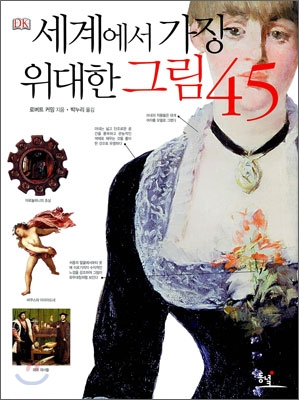
A picture book that selects 45 world-famous paintings and briefly summarizes only the key points, making it easy to understand at a glance.
Masterpieces representing each era from the 14th to the 20th century show the development of painting.
It is structured in a way that all the elements necessary for appreciation are neatly organized within two pages and study the parts you are curious about by marking them here and there, helping you approach the painting step by step, starting from the basics.
Masterpieces representing each era from the 14th to the 20th century show the development of painting.
It is structured in a way that all the elements necessary for appreciation are neatly organized within two pages and study the parts you are curious about by marking them here and there, helping you approach the painting step by step, starting from the basics.
- You can preview some of the book's contents.
Preview
index
How to view a picture
What Makes a Masterpiece
Adoration of the Magi, Giotto di Bondone
The Annunciation, Fra Angelico
[Portrait of Arnolfini], Jan van Eyck
[The Descent from the Cross], Rogier van der Weyden
The Baptism of Christ, Piero della Francesca
The Battle of San Romano, Paolo Uccello
The Birth of Venus, Sandro Botticelli
[The Garden of Earthly Delights], Hieronymus Bosch
[Mona Lisa], Leonardo da Vinci
The Tempest, Giorgione Barbarelli
[Sistine Chapel Ceiling], Michelangelo Buonarroti
The School of Athens, Raphael Sanzio
[Isenheim Altarpiece], Matisse Grünewald
Bacchus and Ariadne, Titian Vecellio
[Foreign Ambassadors], Hans Holbein
[Dutch Proverb], Pieter Bruegel
The Burial of the Count of Orgaz, El Greco
[The Supper at Emmaus], Michelangelo Merisi da Caravaggio
Samson and Delilah, Peter Paul Rubens
[King Belshazzar's Feast], Rembrandt van Rijn
[Dance to the Music of Time], Nicolas Poussin
[Still Life, Vanitas of Life], Harmen Stenbeek
The Marriage of Isaac and Rebekah, Claude Lorrain
[Las Meninas], Diego Velázquez
[The Painter's Studio], Jan Vermeer
[Journey to the Island of Cythera], Jean-Antoine Watteau
Arrival of the French Ambassador, Antonio da Canal
The Tutor, Jean-Baptiste Simeon Chardin
The Andrews, Thomas Gainesborough
[Vacuum Pump Experiment], Joseph Wright
[Oath of the Horatii], Jacques-Louis David
Hannibal Crossing the Alps, Joseph Mallord William Turner
[May 3, 1808], Francisco de Goya
The Raft of the Medusa, Théodore Géricault
The Hay Cart, John Constable
The Awakening Conscience, William Holman Hunt
[The Painter's Studio], Gustave Courbet
Autumn at Argenteuil, Claude Monet
[Dance Lesson], Edgar Degas
Luncheon on a Boat Trip, Pierre-Auguste Renoir
[A Bar at the Folies-Bergère], Édouard Manet
[A Sunday Afternoon on the Island of La Grande Jatte], Georges Seurat
Vincent's Room, Vincent van Gogh
Still Life with Plaster Statue, Paul Cézanne
[Guernica], Pablo Picasso
Glossary
Search
List of pictures
What Makes a Masterpiece
Adoration of the Magi, Giotto di Bondone
The Annunciation, Fra Angelico
[Portrait of Arnolfini], Jan van Eyck
[The Descent from the Cross], Rogier van der Weyden
The Baptism of Christ, Piero della Francesca
The Battle of San Romano, Paolo Uccello
The Birth of Venus, Sandro Botticelli
[The Garden of Earthly Delights], Hieronymus Bosch
[Mona Lisa], Leonardo da Vinci
The Tempest, Giorgione Barbarelli
[Sistine Chapel Ceiling], Michelangelo Buonarroti
The School of Athens, Raphael Sanzio
[Isenheim Altarpiece], Matisse Grünewald
Bacchus and Ariadne, Titian Vecellio
[Foreign Ambassadors], Hans Holbein
[Dutch Proverb], Pieter Bruegel
The Burial of the Count of Orgaz, El Greco
[The Supper at Emmaus], Michelangelo Merisi da Caravaggio
Samson and Delilah, Peter Paul Rubens
[King Belshazzar's Feast], Rembrandt van Rijn
[Dance to the Music of Time], Nicolas Poussin
[Still Life, Vanitas of Life], Harmen Stenbeek
The Marriage of Isaac and Rebekah, Claude Lorrain
[Las Meninas], Diego Velázquez
[The Painter's Studio], Jan Vermeer
[Journey to the Island of Cythera], Jean-Antoine Watteau
Arrival of the French Ambassador, Antonio da Canal
The Tutor, Jean-Baptiste Simeon Chardin
The Andrews, Thomas Gainesborough
[Vacuum Pump Experiment], Joseph Wright
[Oath of the Horatii], Jacques-Louis David
Hannibal Crossing the Alps, Joseph Mallord William Turner
[May 3, 1808], Francisco de Goya
The Raft of the Medusa, Théodore Géricault
The Hay Cart, John Constable
The Awakening Conscience, William Holman Hunt
[The Painter's Studio], Gustave Courbet
Autumn at Argenteuil, Claude Monet
[Dance Lesson], Edgar Degas
Luncheon on a Boat Trip, Pierre-Auguste Renoir
[A Bar at the Folies-Bergère], Édouard Manet
[A Sunday Afternoon on the Island of La Grande Jatte], Georges Seurat
Vincent's Room, Vincent van Gogh
Still Life with Plaster Statue, Paul Cézanne
[Guernica], Pablo Picasso
Glossary
Search
List of pictures
Publisher's Review
The definitive guidebook that organizes all the information you were curious about in an easy-to-read format.
- What is this part of the building called? Why does it look like this?
- Why did you title this painting like this?
Just as you explore the parts you are curious about with curiosity, these books point out and explain only the points you want to know.
The interesting knowledge we can discover through architecture can be summarized from several perspectives.
“The structural method of building the building, the intention of the architect who designed it, the symbolic decorations carved here and there, the people who live in the building
People's lives and history... ... .” Also, in the case of paintings, if you look at them from a specific perspective of “theme and technique, symbol, light and space, art trends, personal appreciation and interpretation,” you will discover many things to enjoy.
This book provides a thorough explanation of architecture and painting based on the most basic perspectives.
This is why you should not miss even a single detail written in small letters, indicated by directional lines throughout the book.
If you look closely at the key explanations spread around the work, you will see that they have been edited with differences even in thickness and font.
From historical explanations of architectural and art movements organized within square boxes, to detailed descriptions of the artworks clearly indicated by lines, to detailed explanations that highlight key structural and painting techniques, each section is individually highlighted and enlarged to reveal key details. These are essential, core explanations that should not be missed.
- Explain the structure of the building and its meaning by indicating it with a guide line.
“The form of the forked concrete pillars is reminiscent of the cruciform rafters of traditional Shinto shrines (see page 16).
“While referencing motifs from traditional architecture is inherently inherent in the structure, it is not lacking in creating a unique cultural heritage distinct from them.”
-『50 Greatest Buildings in the World』, p. 94, Tokyo Olympic Stadium.
- Enlarge the small parts of the entire picture to interpret their symbolic meaning.
“Top decoration: The vibrant surfaces of the façade continue into the colors and decoration of the upper bell tower, which is inlaid with ceramic tiles and sculptures.
“The ‘bell-shaped ornament’ at the top of the west transept symbolizes the bishop’s mitre, ring, and staff.”
Sagrada Familia, 50 Greatest Buildings in the World, p. 72.
- Enlarge a portion of the entire picture and explain the painting technique in bold font.
“The clothes worn by King Belshazzar were painted so thickly that they resembled the actual texture of luxurious fabrics and jewels.
This technique is called 'impasto'.
Brocade is made of umber (a natural mineral brown pigment) that is visible here and there.
“It is painted by applying several layers of (it turns dark brown when burned).”
『The World's Greatest Paintings 45』, page 49, [King Belshazzar's Feast].
- The art historical background that led to the title of the painting is explained separately in a box.
“The title of the work comes from a not-so-provocative story in the Old Testament.
Where are the protagonists? And why is the setting Italy, not Canaan? Even the subject matter of painting had a hierarchy, with historical paintings, including scenes from the Bible, occupying the highest position, and landscapes not being recognized as a formal subject until the late 19th century.
By drawing on biblical themes, even if they were unrealistic, Lorrain was able to gain recognition as a legitimate painter.”
『45 Greatest Paintings in the World』, page 55, [Isaac and Rebekah].
- Why did you title this painting like this?
Just as you explore the parts you are curious about with curiosity, these books point out and explain only the points you want to know.
The interesting knowledge we can discover through architecture can be summarized from several perspectives.
“The structural method of building the building, the intention of the architect who designed it, the symbolic decorations carved here and there, the people who live in the building
People's lives and history... ... .” Also, in the case of paintings, if you look at them from a specific perspective of “theme and technique, symbol, light and space, art trends, personal appreciation and interpretation,” you will discover many things to enjoy.
This book provides a thorough explanation of architecture and painting based on the most basic perspectives.
This is why you should not miss even a single detail written in small letters, indicated by directional lines throughout the book.
If you look closely at the key explanations spread around the work, you will see that they have been edited with differences even in thickness and font.
From historical explanations of architectural and art movements organized within square boxes, to detailed descriptions of the artworks clearly indicated by lines, to detailed explanations that highlight key structural and painting techniques, each section is individually highlighted and enlarged to reveal key details. These are essential, core explanations that should not be missed.
- Explain the structure of the building and its meaning by indicating it with a guide line.
“The form of the forked concrete pillars is reminiscent of the cruciform rafters of traditional Shinto shrines (see page 16).
“While referencing motifs from traditional architecture is inherently inherent in the structure, it is not lacking in creating a unique cultural heritage distinct from them.”
-『50 Greatest Buildings in the World』, p. 94, Tokyo Olympic Stadium.
- Enlarge the small parts of the entire picture to interpret their symbolic meaning.
“Top decoration: The vibrant surfaces of the façade continue into the colors and decoration of the upper bell tower, which is inlaid with ceramic tiles and sculptures.
“The ‘bell-shaped ornament’ at the top of the west transept symbolizes the bishop’s mitre, ring, and staff.”
Sagrada Familia, 50 Greatest Buildings in the World, p. 72.
- Enlarge a portion of the entire picture and explain the painting technique in bold font.
“The clothes worn by King Belshazzar were painted so thickly that they resembled the actual texture of luxurious fabrics and jewels.
This technique is called 'impasto'.
Brocade is made of umber (a natural mineral brown pigment) that is visible here and there.
“It is painted by applying several layers of (it turns dark brown when burned).”
『The World's Greatest Paintings 45』, page 49, [King Belshazzar's Feast].
- The art historical background that led to the title of the painting is explained separately in a box.
“The title of the work comes from a not-so-provocative story in the Old Testament.
Where are the protagonists? And why is the setting Italy, not Canaan? Even the subject matter of painting had a hierarchy, with historical paintings, including scenes from the Bible, occupying the highest position, and landscapes not being recognized as a formal subject until the late 19th century.
By drawing on biblical themes, even if they were unrealistic, Lorrain was able to gain recognition as a legitimate painter.”
『45 Greatest Paintings in the World』, page 55, [Isaac and Rebekah].
GOODS SPECIFICS
- Date of issue: November 25, 2008
- Format: Hardcover book binding method guide
- Page count, weight, size: 104 pages | 738g | 220*288*20mm
- ISBN13: 9788972975717
- ISBN10: 8972975710
You may also like
카테고리
korean


korean

![GQ KOREA Mark (Monthly): December [2025]](http://librairie.coreenne.fr/cdn/shop/files/8ef265dbbfbf186523ed75ba7319009d.jpg?v=1765340328&width=3840)


