

The picture is to her
 |
Description
Book Introduction
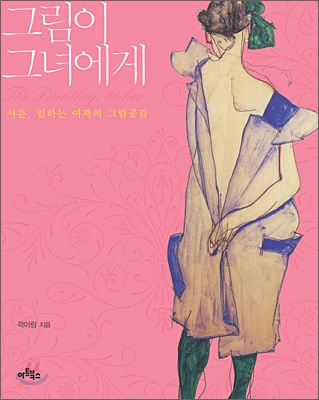
A book containing the honest stories of a thirty-year-old working woman who encountered paintings with laughter and tears from her twenties until she turned thirty.
Andy Warhol, the hurricane of the 21st century art world; Hopper, the master of urban and sophisticated loneliness; Munch, the unfortunate painter who inherited mental illness and tuberculosis; Magritte, the painter of thought who painted what was difficult to express in words; Van Gogh, the passionate painter who could not love himself as much as he loved painting; Wyeth, the American hyperrealist painter; Lempicka, the painter of self-esteem who was proud and beautiful in his own right…
Through their works, the author speaks about existential shopping, the loneliness of solo travel, the recurring adolescence at thirty, the illusion of blind love, the inner emptiness that cannot be filled even by reading books, and the still-ambiguous nature of women's self-esteem.
Andy Warhol, the hurricane of the 21st century art world; Hopper, the master of urban and sophisticated loneliness; Munch, the unfortunate painter who inherited mental illness and tuberculosis; Magritte, the painter of thought who painted what was difficult to express in words; Van Gogh, the passionate painter who could not love himself as much as he loved painting; Wyeth, the American hyperrealist painter; Lempicka, the painter of self-esteem who was proud and beautiful in his own right…
Through their works, the author speaks about existential shopping, the loneliness of solo travel, the recurring adolescence at thirty, the illusion of blind love, the inner emptiness that cannot be filled even by reading books, and the still-ambiguous nature of women's self-esteem.
- You can preview some of the book's contents.
Preview
index
Empathy: I am in her
A world that recommends 'frilled blouses'
A spring night in Tokyo with cherry blossoms fluttering
A woman reading a book is lonely
Self-portrait in a green Bugatti
3 a.m., a night of insomnia and loneliness
We are in our thirties, worn out and tired
A woman's loneliness is a drama.
Longing: A day I miss, looking at a painting
I loved you before I met you
That's what women's friendship is like
That rare, firm and determined seagull
She never had a business card
A father's love, sharpened and buried deep in the heart
What is the main emotion in your heart?
Childhood landscape in a gentle ink painting
My older sister is the sunset in the field where flowers bloom in my heart
Comfort: The heart that wants to be comforted, stay here
Depression, the consolation of a painting
Love is a tragedy
Dark green sadness
The center of the world, I am not there
Days of beastly training
Why do I want to get married?
I know the pain in your feet very well.
Rest: Take a break from painting
I shop, therefore I am.
Matisse's Blue Vacation
Encountering other people's lives and changing
Stop, newspaper, you are so beautiful.
A master of love, seemingly invincible
A wandering youth seeks out a fortune teller.
Happy people don't dream of paradise.
I wish I had a house too
A world that recommends 'frilled blouses'
A spring night in Tokyo with cherry blossoms fluttering
A woman reading a book is lonely
Self-portrait in a green Bugatti
3 a.m., a night of insomnia and loneliness
We are in our thirties, worn out and tired
A woman's loneliness is a drama.
Longing: A day I miss, looking at a painting
I loved you before I met you
That's what women's friendship is like
That rare, firm and determined seagull
She never had a business card
A father's love, sharpened and buried deep in the heart
What is the main emotion in your heart?
Childhood landscape in a gentle ink painting
My older sister is the sunset in the field where flowers bloom in my heart
Comfort: The heart that wants to be comforted, stay here
Depression, the consolation of a painting
Love is a tragedy
Dark green sadness
The center of the world, I am not there
Days of beastly training
Why do I want to get married?
I know the pain in your feet very well.
Rest: Take a break from painting
I shop, therefore I am.
Matisse's Blue Vacation
Encountering other people's lives and changing
Stop, newspaper, you are so beautiful.
A master of love, seemingly invincible
A wandering youth seeks out a fortune teller.
Happy people don't dream of paradise.
I wish I had a house too
Into the book
I had no one to share what I saw, heard, and felt while walking around all day long until my feet were sore.
The cherry blossoms were already at their peak.
The dirty pink at the tips of the cherry blossom branches, where the flowers had fallen, reminded me of the color of the lips of the dead.
The hotel room was small and dreary.
The overly neatly made bed reminded me that this was a place for people to 'stay' rather than 'live'.
I thought of Hopper again.
This time, I was reminded not of works depicting urban and sophisticated melancholy, but of the 1931 work 'Hotel Room', which depicts a woman sitting alone in her underwear on a hotel room bed.
The sense of isolation that the woman in the painting must have felt came back to me as if it were my own.
Suddenly, I remembered what my friend had said: "Ryokan," a traditional Japanese inn, never accepts guests who are alone."
They say it's because there are so many people who come alone and commit suicide.
Suddenly, fear surged through me as I thought that no one would notice if I died in this hotel room in a big city where every room had the same layout.
I really missed my messy room in Seoul.
The cherry blossoms were already at their peak.
The dirty pink at the tips of the cherry blossom branches, where the flowers had fallen, reminded me of the color of the lips of the dead.
The hotel room was small and dreary.
The overly neatly made bed reminded me that this was a place for people to 'stay' rather than 'live'.
I thought of Hopper again.
This time, I was reminded not of works depicting urban and sophisticated melancholy, but of the 1931 work 'Hotel Room', which depicts a woman sitting alone in her underwear on a hotel room bed.
The sense of isolation that the woman in the painting must have felt came back to me as if it were my own.
Suddenly, I remembered what my friend had said: "Ryokan," a traditional Japanese inn, never accepts guests who are alone."
They say it's because there are so many people who come alone and commit suicide.
Suddenly, fear surged through me as I thought that no one would notice if I died in this hotel room in a big city where every room had the same layout.
I really missed my messy room in Seoul.
--- From the text
Some people who saw the painting said that Christina's back looked like my real back.
Perhaps it was the tied-up hairstyle and the one-piece dress with a string tied around the waist.
I felt that the inner self of the main character in the painting resembled me, not just in appearance.
I thought the world she was seeing would be a lonely and sad landscape.
I believed that the world I read about in books would resemble her world.
Like others who saw the painting, I didn't realize that Christina was disabled, but I knew it intuitively.
That the woman in the painting is lacking something.
That their hearts, like the two legs of that little woman facing the wind, facing the horizon, are crippled by loneliness, solitude, or desolation.
There is no emotion that brings about more identification with others than empathy for suffering.
Some people who saw the painting said that Christina's back looked like my real back.
Perhaps it was the tied-up hairstyle and the one-piece dress with a string tied around the waist.
I felt that the inner self of the main character in the painting resembled me, not just in appearance.
I thought the world she was seeing would be a lonely and sad landscape.
I believed that the world I read about in books would resemble her world.
Like others who saw the painting, I didn't realize that Christina was disabled, but I knew it intuitively.
That the woman in the painting is lacking something.
That their hearts, like the two legs of that little woman facing the wind, facing the horizon, are crippled by loneliness, solitude, or desolation.
There is no emotion that brings about more identification with others than empathy for suffering.
Perhaps it was the tied-up hairstyle and the one-piece dress with a string tied around the waist.
I felt that the inner self of the main character in the painting resembled me, not just in appearance.
I thought the world she was seeing would be a lonely and sad landscape.
I believed that the world I read about in books would resemble her world.
Like others who saw the painting, I didn't realize that Christina was disabled, but I knew it intuitively.
That the woman in the painting is lacking something.
That their hearts, like the two legs of that little woman facing the wind, facing the horizon, are crippled by loneliness, solitude, or desolation.
There is no emotion that brings about more identification with others than empathy for suffering.
Some people who saw the painting said that Christina's back looked like my real back.
Perhaps it was the tied-up hairstyle and the one-piece dress with a string tied around the waist.
I felt that the inner self of the main character in the painting resembled me, not just in appearance.
I thought the world she was seeing would be a lonely and sad landscape.
I believed that the world I read about in books would resemble her world.
Like others who saw the painting, I didn't realize that Christina was disabled, but I knew it intuitively.
That the woman in the painting is lacking something.
That their hearts, like the two legs of that little woman facing the wind, facing the horizon, are crippled by loneliness, solitude, or desolation.
There is no emotion that brings about more identification with others than empathy for suffering.
--- From the text
When I thought about the sad present where I had no friends despite coming to Seoul with dreams of becoming a great man, the foolish and shameful past where I had rejected my father's advice to just go to a university in my hometown and become a teacher and insisted on coming to Seoul, and the uncertain future where I had no idea how I would navigate the university life that lay ahead, I would reach a state where 'my chest would feel tight, something hot would appear in my eyes, I would feel ashamed to the point of blushing, and I would be crushed to death by my sadness and foolishness.'
During those confusing, complicated, and utterly lonely times, I often sat on the bed with my knees wrapped around me to calm my wavering mind and tried to think of 'that rare, firm, and determined tree called the seagull.'
To me, 'Seagull Tree' was sometimes a poem my father taught me, sometimes an image of my family that I missed, and sometimes a landscape of my hometown that I left behind.
I tried to conjure up a more concrete image of the 'seagull'.
I thought it would be easier to bear loneliness.
When I thought about the sad present where I had no friends despite coming to Seoul with dreams of becoming a great man, the foolish and shameful past where I had rejected my father's advice to just go to a university in my hometown and become a teacher and insisted on coming to Seoul, and the uncertain future where I had no idea how I would navigate the university life that lay ahead, I would reach a state where 'my chest would feel tight, something hot would appear in my eyes, I would feel ashamed to the point of blushing, and I would be crushed to death by my sadness and foolishness.'
During those confusing, complicated, and utterly lonely times, I often sat on the bed with my knees wrapped around me to calm my wavering mind and tried to think of 'that rare, firm, and determined tree called the seagull.'
To me, 'Seagull Tree' was sometimes a poem my father taught me, sometimes an image of my family that I longed for, and sometimes a landscape of my hometown that I left behind.
I tried to conjure up a more concrete image of the 'seagull'.
I thought it would be easier to bear loneliness.
During those confusing, complicated, and utterly lonely times, I often sat on the bed with my knees wrapped around me to calm my wavering mind and tried to think of 'that rare, firm, and determined tree called the seagull.'
To me, 'Seagull Tree' was sometimes a poem my father taught me, sometimes an image of my family that I missed, and sometimes a landscape of my hometown that I left behind.
I tried to conjure up a more concrete image of the 'seagull'.
I thought it would be easier to bear loneliness.
When I thought about the sad present where I had no friends despite coming to Seoul with dreams of becoming a great man, the foolish and shameful past where I had rejected my father's advice to just go to a university in my hometown and become a teacher and insisted on coming to Seoul, and the uncertain future where I had no idea how I would navigate the university life that lay ahead, I would reach a state where 'my chest would feel tight, something hot would appear in my eyes, I would feel ashamed to the point of blushing, and I would be crushed to death by my sadness and foolishness.'
During those confusing, complicated, and utterly lonely times, I often sat on the bed with my knees wrapped around me to calm my wavering mind and tried to think of 'that rare, firm, and determined tree called the seagull.'
To me, 'Seagull Tree' was sometimes a poem my father taught me, sometimes an image of my family that I longed for, and sometimes a landscape of my hometown that I left behind.
I tried to conjure up a more concrete image of the 'seagull'.
I thought it would be easier to bear loneliness.
--- From the text
GOODS SPECIFICS
- Date of issue: November 11, 2008
- Page count, weight, size: 259 pages | 418g | 148*210*20mm
- ISBN13: 9788961960243
- ISBN10: 8961960245
You may also like
카테고리
korean


korean

![GQ KOREA Mark (Monthly): December [2025]](http://librairie.coreenne.fr/cdn/shop/files/8ef265dbbfbf186523ed75ba7319009d.jpg?v=1765340328&width=3840)


