

100 of the World's Most Beautiful Art Museums
 |
Description
Book Introduction
When it comes to looking into the culture, politics, and thoughts of an era, few places offer as comprehensive a collection of materials and attractions as an art museum.
For this reason, most major cities today establish art museums to exhibit the works of their native artists, collect world-renowned works, and record their own history of folk art, sculpture, and painting, all as a way of expressing their pride in the city.
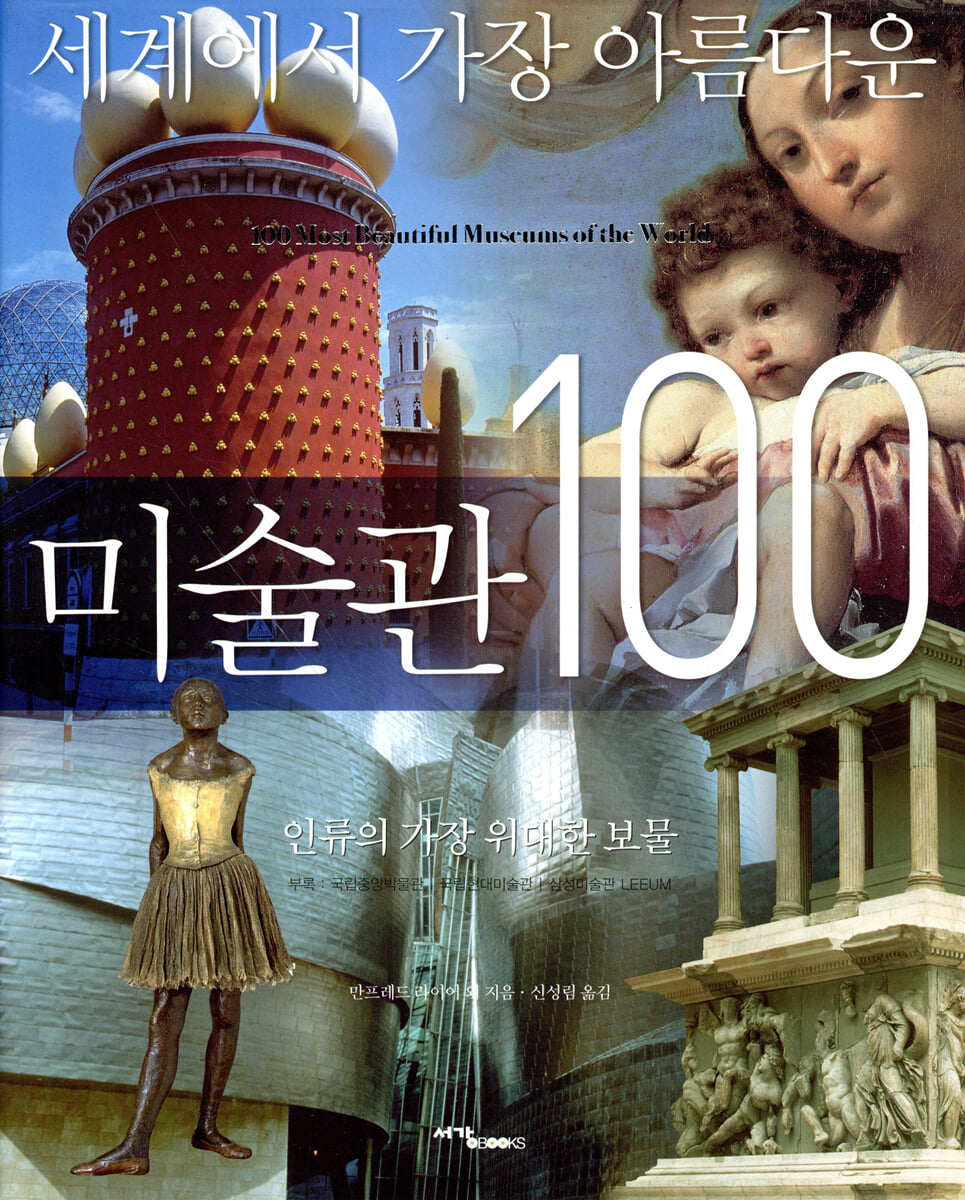
This book introduces the '100 Art Museums of the World,' which are considered the most representative cultural institutions today.
What makes the museums featured here among the world's most important cultural institutions is their collections.
From UNESCO-designated art museums to private galleries steeped in the lives of art enthusiasts, the museums featured in this book transcend time and scale, capturing the full history of humanity from its birth to the present.
You can also glimpse rare works of art spanning from ancient times to the present, the history of museums that fully embody the aura of their time, and the innovative ideas and diverse efforts of museums that connect the past to the future.
Any art museum offers its own unique perspective on the culture of that place.
The museum's collection, building, and surroundings are as unique as the smells emanating from the city's back alleys.
Each space reflects history and culture, unique traditions and aspirations, past and present, unfolding a panorama of art that has grown across the diverse cultures of five continents.
For this reason, most major cities today establish art museums to exhibit the works of their native artists, collect world-renowned works, and record their own history of folk art, sculpture, and painting, all as a way of expressing their pride in the city.
This book introduces the '100 Art Museums of the World,' which are considered the most representative cultural institutions today.
What makes the museums featured here among the world's most important cultural institutions is their collections.
From UNESCO-designated art museums to private galleries steeped in the lives of art enthusiasts, the museums featured in this book transcend time and scale, capturing the full history of humanity from its birth to the present.
You can also glimpse rare works of art spanning from ancient times to the present, the history of museums that fully embody the aura of their time, and the innovative ideas and diverse efforts of museums that connect the past to the future.
Any art museum offers its own unique perspective on the culture of that place.
The museum's collection, building, and surroundings are as unique as the smells emanating from the city's back alleys.
Each space reflects history and culture, unique traditions and aspirations, past and present, unfolding a panorama of art that has grown across the diverse cultures of five continents.
- You can preview some of the book's contents.
Preview
index
Recommendation - The Temple of the Muse (Jin Jung-kwon)
At the beginning of the book
EUROPE
Belgium
Royal Museums of Fine Arts, Antwerp | Groningen Museum of Fine Arts and St. Johannes' Hospital | Royal Museums of Fine Arts, Belgium | Ghent Museum of Fine Arts
Denmark
Louisiana Museum of Art Park | National Gallery of Copenhagen | Skagen Museum of Art
germany
Pergamon Museum | Old National Gallery | Dresden Kunsthalle | Städel Museum | Hamburg Kunsthalle | Wallap-Richartz Museum | Alte Pinakothek | New Pinakothek
Estonia
Estonian National Gallery
Finland
Teneum Art Museum
france
Bordeaux Museum of Fine Arts | Grenoble Museum of Fine Arts | Lyon Museum of Fine Arts | Nice Museum of Modern and Contemporary Art | Centre Pompidou | Louvre | Orsay Museum | Fondation Magde
Greece
National Archaeological Museum of Athens | Delphi Museum | Olympia Archaeological Museum
uk
Scottish National Galleries | National Gallery | British Museum | Tate Britain | Tate Modern
Ireland
National Gallery of Ireland
Italy
Bologna National Gallery | Uffizi Gallery | Brera Gallery | Naples National Archaeological Museum | Vatican Museum | Borghese Gallery | Accademia Gallery
Croatia
Mimara Museum and Museum of Modern Art
Latvia
Latvian National Gallery
Lithuania
Lithuanian Art Museum
Netherlands
Rijksmuseum, Amsterdam | Van Gogh Museum | Mauritshuis | Boijmans van Beuningen Museum
Norway
Munch Museum
Austria
Albertina Museum | Kunsthistorisches Museum, Vienna | Museum Cartier
Poland
Wawel Castle Museum | National Gallery in Warsaw
Portugal
Lisbon National Museum of Antiquities
Romania
National Museum of Fine Arts, Bucharest
russia
Pushkin Museum of Fine Arts | Tretyakov Gallery | Hermitage Museum | State Russian Museum
Sweden
Stockholm National Gallery
Swiss
Basel Kunstmuseum | Beyeler Foundation Museum | Kunstmuseum Zurich
Serbia and Montenegro
Belgrade Art Museum
Slovenian
National Gallery of Slovenia
Slovakia
Slovak National Gallery
Spain
Miró Museum | Guggenheim Museum Bilbao | Salvador Dali Museum | Prado Museum | Thyssen-Bornemisza Museum | Reina Sofia Museum
Czech Republic
Czech National Gallery | Royal Palace Museum of Fine Arts, Prague
Türkiye
Topkapi Palace Museum
Hungary
Hungarian National Gallery
NORTH AMERICA
USA
Museum of Fine Arts, Boston | Art Institute of Chicago | Menil Art Museum | Metropolitan Museum of Art | Guggenheim Museum, New York | Museum of Modern Art, New York | Whitney Museum of American Art | San Francisco Museum of Modern Art | National Museum of Art, Kyoto | National Museum of Modern Art, Tokyo | Tokyo National Museum
SOUTH AMERICA
National Museum of Art, Argentina | Museum of Art, São Paulo (Brazil) | Museum of Anthropology, Mexico | National Museum of Archaeology and Anthropology, Peru |
AFRICA
Egyptian National Museum | National Gallery of South Africa
ASIA
Beijing Palace Museum | Iraq Museum | National Museum of Iran | Taipei National Palace Museum | National Gallery of Australia
Appendix: Art Museums of Our Country
National Museum of Korea | National Museum of Modern and Contemporary Art | Leeum, Samsung Museum of Art
Addresses of art museums around the world
At the beginning of the book
EUROPE
Belgium
Royal Museums of Fine Arts, Antwerp | Groningen Museum of Fine Arts and St. Johannes' Hospital | Royal Museums of Fine Arts, Belgium | Ghent Museum of Fine Arts
Denmark
Louisiana Museum of Art Park | National Gallery of Copenhagen | Skagen Museum of Art
germany
Pergamon Museum | Old National Gallery | Dresden Kunsthalle | Städel Museum | Hamburg Kunsthalle | Wallap-Richartz Museum | Alte Pinakothek | New Pinakothek
Estonia
Estonian National Gallery
Finland
Teneum Art Museum
france
Bordeaux Museum of Fine Arts | Grenoble Museum of Fine Arts | Lyon Museum of Fine Arts | Nice Museum of Modern and Contemporary Art | Centre Pompidou | Louvre | Orsay Museum | Fondation Magde
Greece
National Archaeological Museum of Athens | Delphi Museum | Olympia Archaeological Museum
uk
Scottish National Galleries | National Gallery | British Museum | Tate Britain | Tate Modern
Ireland
National Gallery of Ireland
Italy
Bologna National Gallery | Uffizi Gallery | Brera Gallery | Naples National Archaeological Museum | Vatican Museum | Borghese Gallery | Accademia Gallery
Croatia
Mimara Museum and Museum of Modern Art
Latvia
Latvian National Gallery
Lithuania
Lithuanian Art Museum
Netherlands
Rijksmuseum, Amsterdam | Van Gogh Museum | Mauritshuis | Boijmans van Beuningen Museum
Norway
Munch Museum
Austria
Albertina Museum | Kunsthistorisches Museum, Vienna | Museum Cartier
Poland
Wawel Castle Museum | National Gallery in Warsaw
Portugal
Lisbon National Museum of Antiquities
Romania
National Museum of Fine Arts, Bucharest
russia
Pushkin Museum of Fine Arts | Tretyakov Gallery | Hermitage Museum | State Russian Museum
Sweden
Stockholm National Gallery
Swiss
Basel Kunstmuseum | Beyeler Foundation Museum | Kunstmuseum Zurich
Serbia and Montenegro
Belgrade Art Museum
Slovenian
National Gallery of Slovenia
Slovakia
Slovak National Gallery
Spain
Miró Museum | Guggenheim Museum Bilbao | Salvador Dali Museum | Prado Museum | Thyssen-Bornemisza Museum | Reina Sofia Museum
Czech Republic
Czech National Gallery | Royal Palace Museum of Fine Arts, Prague
Türkiye
Topkapi Palace Museum
Hungary
Hungarian National Gallery
NORTH AMERICA
USA
Museum of Fine Arts, Boston | Art Institute of Chicago | Menil Art Museum | Metropolitan Museum of Art | Guggenheim Museum, New York | Museum of Modern Art, New York | Whitney Museum of American Art | San Francisco Museum of Modern Art | National Museum of Art, Kyoto | National Museum of Modern Art, Tokyo | Tokyo National Museum
SOUTH AMERICA
National Museum of Art, Argentina | Museum of Art, São Paulo (Brazil) | Museum of Anthropology, Mexico | National Museum of Archaeology and Anthropology, Peru |
AFRICA
Egyptian National Museum | National Gallery of South Africa
ASIA
Beijing Palace Museum | Iraq Museum | National Museum of Iran | Taipei National Palace Museum | National Gallery of Australia
Appendix: Art Museums of Our Country
National Museum of Korea | National Museum of Modern and Contemporary Art | Leeum, Samsung Museum of Art
Addresses of art museums around the world
Publisher's Review
A masterpiece of the century unfolds on every page, a story about an art museum that can be read as a form of culture!
― You know the art museum, but you don’t know the inside story?
Many people visit art museums, but few know the background of how famous art museums were established.
This book delves into the history, culture, and people of the time when the museum was established, providing a detailed look at the appearance and cultural activities of that era.
We can see that art museums have changed and developed over time to reach what they are today through the painstaking efforts of art lovers who devoted themselves to collecting art even while starving, the help of businessmen and sponsors who donated vast collections, and various construction projects rushed at the national level.
This book contains interesting stories about the establishment of various art museums.
― Stories of famous paintings, where tragedy and comedy intersect.
Many works of art have suffered various hardships in the whirlwinds of history, including war, plunder, and conflict.
Each piece is filled with various stories surrounding it, including works that were smuggled to other countries to escape the ravages of war and never returned to their homelands, works that maintained their unique characteristics despite suffering cultural persecution, works that had to be taken to underground storage for preservation, and works that have yet to be released from storage due to the museum's size.
― The pleasure of meeting famous architects
Art museums are often buildings that take decades to develop into a single work of art.
At this time, the art museum is a stage where world-renowned architects participate in competitions and test cutting-edge construction methods, and it also serves as a place for dialogue that reflects the cultural codes and people's values of the time.
Today, art museums around the world are recognized as architectural masterpieces and valuable artifacts in their own right.
Therefore, visiting the '100 Art Museums of the World' will soon lead to meaningful encounters with world-renowned architects.
― A vast array of attractions, from ancient artifacts to Third World art
This book offers a vast array of content spanning the East and West, from ancient relics from the Greek and Roman eras to works that stand out for their experimental spirit and contemporary sensibility, such as abstract painting, op art, minimalism, and pop art, as well as the works of artists from the Third World, including those from Asia and South America.
It provides a glimpse into masterpieces from ancient times to modern and contemporary times, as well as representative works of Eastern and Western art movements, making it a useful guide to understanding the history and flow of art.
― A glance at the characteristics, trends, and vision of each art museum
Art museums are sometimes interpreted as symbolic representations of an era and region.
It will soon be used as a measure to understand the times and environment.
Recently, many art museums are constantly seeking change to keep pace with the times.
Based on new exhibitions, we are discovering new artists and striving to become an open space that connects exhibition halls and performance halls, thereby reaching out to the public.
This book fully captures the diverse efforts of these art museums, as well as their determination to continue to adhere to their founding principles, allowing us to glimpse the unique colors each art museum possesses.
― An icon that reads the times
Works of art (paintings) have existed since almost the same time as the birth of mankind.
Paintings, which tell stories of people's lives as well as myths and the Bible, contain history in some form and reflect the spirit and customs of the times.
Through the panorama of new attempts and explorations presented in the hundreds of paintings representing each era, spread out in this book, we will be able to examine the web of relationships between history and art.
― Art from Eastern Europe and Africa, unexplored regions
When we think of art museums, we usually think of famous European art museums with long traditions or modern art museums in the United States.
However, countless art museums of inestimable value remain unknown to the general public due to physical distance or lack of introduction.
While most of the books in this book are large and famous museums boasting enormous collections, there are also some lesser-known museums that are of particular interest because of their location or the nature of their collections.
The works, which grew up in diverse cultural spheres across five continents—Europe, North America, South America, Africa, Asia, and Oceania—reflect and reveal their own history, culture, traditions, aspirations, past and present.
Additionally, three art museums in Korea were introduced, including the National Museum of Korea, the National Museum of Modern and Contemporary Art, and the Samsung Museum of Art LEEUM.
― You know the art museum, but you don’t know the inside story?
Many people visit art museums, but few know the background of how famous art museums were established.
This book delves into the history, culture, and people of the time when the museum was established, providing a detailed look at the appearance and cultural activities of that era.
We can see that art museums have changed and developed over time to reach what they are today through the painstaking efforts of art lovers who devoted themselves to collecting art even while starving, the help of businessmen and sponsors who donated vast collections, and various construction projects rushed at the national level.
This book contains interesting stories about the establishment of various art museums.
― Stories of famous paintings, where tragedy and comedy intersect.
Many works of art have suffered various hardships in the whirlwinds of history, including war, plunder, and conflict.
Each piece is filled with various stories surrounding it, including works that were smuggled to other countries to escape the ravages of war and never returned to their homelands, works that maintained their unique characteristics despite suffering cultural persecution, works that had to be taken to underground storage for preservation, and works that have yet to be released from storage due to the museum's size.
― The pleasure of meeting famous architects
Art museums are often buildings that take decades to develop into a single work of art.
At this time, the art museum is a stage where world-renowned architects participate in competitions and test cutting-edge construction methods, and it also serves as a place for dialogue that reflects the cultural codes and people's values of the time.
Today, art museums around the world are recognized as architectural masterpieces and valuable artifacts in their own right.
Therefore, visiting the '100 Art Museums of the World' will soon lead to meaningful encounters with world-renowned architects.
― A vast array of attractions, from ancient artifacts to Third World art
This book offers a vast array of content spanning the East and West, from ancient relics from the Greek and Roman eras to works that stand out for their experimental spirit and contemporary sensibility, such as abstract painting, op art, minimalism, and pop art, as well as the works of artists from the Third World, including those from Asia and South America.
It provides a glimpse into masterpieces from ancient times to modern and contemporary times, as well as representative works of Eastern and Western art movements, making it a useful guide to understanding the history and flow of art.
― A glance at the characteristics, trends, and vision of each art museum
Art museums are sometimes interpreted as symbolic representations of an era and region.
It will soon be used as a measure to understand the times and environment.
Recently, many art museums are constantly seeking change to keep pace with the times.
Based on new exhibitions, we are discovering new artists and striving to become an open space that connects exhibition halls and performance halls, thereby reaching out to the public.
This book fully captures the diverse efforts of these art museums, as well as their determination to continue to adhere to their founding principles, allowing us to glimpse the unique colors each art museum possesses.
― An icon that reads the times
Works of art (paintings) have existed since almost the same time as the birth of mankind.
Paintings, which tell stories of people's lives as well as myths and the Bible, contain history in some form and reflect the spirit and customs of the times.
Through the panorama of new attempts and explorations presented in the hundreds of paintings representing each era, spread out in this book, we will be able to examine the web of relationships between history and art.
― Art from Eastern Europe and Africa, unexplored regions
When we think of art museums, we usually think of famous European art museums with long traditions or modern art museums in the United States.
However, countless art museums of inestimable value remain unknown to the general public due to physical distance or lack of introduction.
While most of the books in this book are large and famous museums boasting enormous collections, there are also some lesser-known museums that are of particular interest because of their location or the nature of their collections.
The works, which grew up in diverse cultural spheres across five continents—Europe, North America, South America, Africa, Asia, and Oceania—reflect and reveal their own history, culture, traditions, aspirations, past and present.
Additionally, three art museums in Korea were introduced, including the National Museum of Korea, the National Museum of Modern and Contemporary Art, and the Samsung Museum of Art LEEUM.
GOODS SPECIFICS
- Date of issue: January 2, 2007
- Format: Hardcover book binding method guide
- Page count, weight, size: 335 pages | 1,498g | 130*278*30mm
- ISBN13: 9788972192633
- ISBN10: 8972192635
You may also like
카테고리
korean


korean

![GQ KOREA Mark (Monthly): December [2025]](http://librairie.coreenne.fr/cdn/shop/files/8ef265dbbfbf186523ed75ba7319009d.jpg?v=1765340328&width=3840)


