

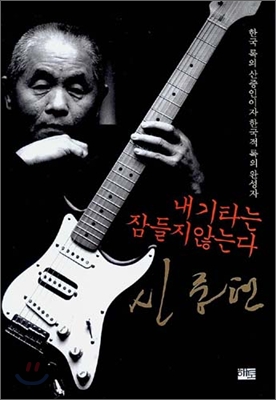
My Guitar Never Sleeps - Shin Jung-hyun
 |
Description
Book Introduction
Shin Jung-hyun, who is about to perform his retirement concert, opened up about his life and his passion for music.
This book contains the entire history of Shin Jung-hyun, a giant of Korean popular music.
From the story of burying his parents who died in the war with his own hands, to the story of his days dreaming of becoming a musician while working hard, to the story of his days dominating the US 8th Army stage, to the story of his suffering due to the marijuana incident, to the story of his challenges in new areas such as computer music and old age rock, you can take a look at Shin Jung-hyun's turbulent life journey.
The anecdotes that Shin Jung-hyun honestly and frankly shares are shocking and interesting to a degree that ordinary people would never dare to imagine.
Shin Jung-hyun's life is not simply an individual life, but has a social character.
Because Shin Jung-hyun's innovative music has always commanded the mainstream, Shin Jung-hyun's life itself provides a starting point for looking into the history of our popular music.
Through the confessions of Shin Jung-hyun, who led Korean popular music while working with singers who dominated the era, including Pearl Sisters, Kim Chu-ja, Kim Jung-mi, Park In-soo, and Kim Wan-sun, we can look back on the footsteps of Korean popular music.
Shin Jung-hyun, who has created songs that will remain in the history of Korean popular music, such as “Nima” and “Beautiful Rivers and Mountains,” is currently busy with his musical life, preparing for his last tour, “Last Concert.”
We are preparing a stage to organize and introduce to the public the music that has been buried underground (Woodstock) for over 20 years.
Through this book, readers will be able to learn about Shin Jung-hyun's extraordinary spirit of challenge, which has always captivated the public with new challenges and experiments, and his burning passion for music, which does not seem to diminish even with age.
This book contains the entire history of Shin Jung-hyun, a giant of Korean popular music.
From the story of burying his parents who died in the war with his own hands, to the story of his days dreaming of becoming a musician while working hard, to the story of his days dominating the US 8th Army stage, to the story of his suffering due to the marijuana incident, to the story of his challenges in new areas such as computer music and old age rock, you can take a look at Shin Jung-hyun's turbulent life journey.
The anecdotes that Shin Jung-hyun honestly and frankly shares are shocking and interesting to a degree that ordinary people would never dare to imagine.
Shin Jung-hyun's life is not simply an individual life, but has a social character.
Because Shin Jung-hyun's innovative music has always commanded the mainstream, Shin Jung-hyun's life itself provides a starting point for looking into the history of our popular music.
Through the confessions of Shin Jung-hyun, who led Korean popular music while working with singers who dominated the era, including Pearl Sisters, Kim Chu-ja, Kim Jung-mi, Park In-soo, and Kim Wan-sun, we can look back on the footsteps of Korean popular music.
Shin Jung-hyun, who has created songs that will remain in the history of Korean popular music, such as “Nima” and “Beautiful Rivers and Mountains,” is currently busy with his musical life, preparing for his last tour, “Last Concert.”
We are preparing a stage to organize and introduce to the public the music that has been buried underground (Woodstock) for over 20 years.
Through this book, readers will be able to learn about Shin Jung-hyun's extraordinary spirit of challenge, which has always captivated the public with new challenges and experiments, and his burning passion for music, which does not seem to diminish even with age.
- You can preview some of the book's contents.
Preview
index
Recommendation
preface
Chapter 1: The Boy Who Dreamed of Being a Musician in the War Zone
1.
From Manchuria to Seoul
2.
Father and the Gramophone
3.
My mother and my first guitar
4.
Become the head of a boy family
5.
outbreak of the Korean War
6.
Losing one's parents during the war
7.
Music, an escape from the hardships of life
8.
Fall in love with the guitar
9.
Watch the audition
Chapter 2: The Eighth US Army Takes the Stage
1.
From factory to musician
2.
US 8th Army Audition
3.
Standing on the stage of the 8th US Army
4.
First guitar solo
5.
successful guitarist
6.
Teacher Lee Kyo-sook, 82
Chapter 3: The Blossoming of Korean Rock
1.
Formation of Adhoo
2.
Donkeys and Lee Jung-hwa
3.
Pearl Sisters
4.
, introduce Shin Jung-hyun
5.
Kim Chu-ja and
6.
Shin Jung-hyeon's Division Attacks the US 8th Army
7.
Kim Jung-mi and Psychedelics
8.
Psychedelics and drugs
Chapter 4 - Crying and laughing among people
1.
Bad relationship with singers
2.
Kim Chu-ja's manager
3.
First relationship
4.
live-in girlfriend
5.
A series of bad luck
6.
A husband with a bakery shop
7.
three sons
8.
'Free' family
Chapter 5: Joy and Frustration
1. 'Hymn' and
2.
marijuana incident
3.
From the mental hospital to the prison cell
4.
Release
5.
Aftermath of the activity ban 3
6.
Return to the music scene
7.
Music Power disbands
Chapter 6 - My Guitar Never Sleeps
1.
Three Travelers
2.
Club 'Live'
3.
Woodstock
4.
university professor
5.
Kim Satgat meets a computer
6.
Film music work
7.
Kim Wan-sun and the movie actress 'Adultery'
8.
Leaving the secular world
Appendix_Shin Joong-hyun's Musical World
preface
Chapter 1: The Boy Who Dreamed of Being a Musician in the War Zone
1.
From Manchuria to Seoul
2.
Father and the Gramophone
3.
My mother and my first guitar
4.
Become the head of a boy family
5.
outbreak of the Korean War
6.
Losing one's parents during the war
7.
Music, an escape from the hardships of life
8.
Fall in love with the guitar
9.
Watch the audition
Chapter 2: The Eighth US Army Takes the Stage
1.
From factory to musician
2.
US 8th Army Audition
3.
Standing on the stage of the 8th US Army
4.
First guitar solo
5.
successful guitarist
6.
Teacher Lee Kyo-sook, 82
Chapter 3: The Blossoming of Korean Rock
1.
Formation of Adhoo
2.
Donkeys and Lee Jung-hwa
3.
Pearl Sisters
4.
, introduce Shin Jung-hyun
5.
Kim Chu-ja and
6.
Shin Jung-hyeon's Division Attacks the US 8th Army
7.
Kim Jung-mi and Psychedelics
8.
Psychedelics and drugs
Chapter 4 - Crying and laughing among people
1.
Bad relationship with singers
2.
Kim Chu-ja's manager
3.
First relationship
4.
live-in girlfriend
5.
A series of bad luck
6.
A husband with a bakery shop
7.
three sons
8.
'Free' family
Chapter 5: Joy and Frustration
1. 'Hymn' and
2.
marijuana incident
3.
From the mental hospital to the prison cell
4.
Release
5.
Aftermath of the activity ban 3
6.
Return to the music scene
7.
Music Power disbands
Chapter 6 - My Guitar Never Sleeps
1.
Three Travelers
2.
Club 'Live'
3.
Woodstock
4.
university professor
5.
Kim Satgat meets a computer
6.
Film music work
7.
Kim Wan-sun and the movie actress 'Adultery'
8.
Leaving the secular world
Appendix_Shin Joong-hyun's Musical World
Into the book
My only pleasure was going up to the back hill in the middle of the night after work and playing the harmonica, which was my mother's heirloom.
By that time, all my fatigue had disappeared.
Even the hard work that lasted all day seemed to exist for the sake of making music.
The best, most comfortable and most beautiful moments were when I was making music.
By that time, all my fatigue had disappeared.
Even the hard work that lasted all day seemed to exist for the sake of making music.
The best, most comfortable and most beautiful moments were when I was making music.
--- p.43 (from 'The Boy Who Dreamed of Being a Musician During the War')
In 1973, he disbanded The Man and formed Korea's first three-member group, 'Shin Joong-hyun and the Yeopjeons'.
The band name 'Yeopjeondeul' was deliberately given to give it a Korean and native flavor.
The coins had many meanings.
When we say things like, “All coins are like that” or “Coins are pathetic,” the coin is a slang term used to belittle our people.
I thought to myself.
'Okay, good.
I am a coin.
Come and taste the coins.'
I decided to create a proper Korean rock song using only Korean melodies.
I wrote the song after thinking about it for six months.
The first album of Yeopjeon was an ambitious work that showed the typical Korean rock music.
In 1973, he disbanded The Man and formed Korea's first three-member group, 'Shin Joong-hyun and the Yeopjeons'.
The band name 'Yeopjeondeul' was deliberately given to give it a Korean and native flavor.
The coins had many meanings.
When we say things like, “All coins are like that” or “Coins are pathetic,” the coin is a slang term used to belittle our people.
I thought to myself.
'Okay, good.
I am a coin.
Come and taste the coins.'
I decided to create a proper Korean rock song using only Korean melodies.
I wrote the song after thinking about it for six months.
The first album of Yeopjeon was an ambitious work that showed the typical Korean rock music.
The band name 'Yeopjeondeul' was deliberately given to give it a Korean and native flavor.
The coins had many meanings.
When we say things like, “All coins are like that” or “Coins are pathetic,” the coin is a slang term used to belittle our people.
I thought to myself.
'Okay, good.
I am a coin.
Come and taste the coins.'
I decided to create a proper Korean rock song using only Korean melodies.
I wrote the song after thinking about it for six months.
The first album of Yeopjeon was an ambitious work that showed the typical Korean rock music.
In 1973, he disbanded The Man and formed Korea's first three-member group, 'Shin Joong-hyun and the Yeopjeons'.
The band name 'Yeopjeondeul' was deliberately given to give it a Korean and native flavor.
The coins had many meanings.
When we say things like, “All coins are like that” or “Coins are pathetic,” the coin is a slang term used to belittle our people.
I thought to myself.
'Okay, good.
I am a coin.
Come and taste the coins.'
I decided to create a proper Korean rock song using only Korean melodies.
I wrote the song after thinking about it for six months.
The first album of Yeopjeon was an ambitious work that showed the typical Korean rock music.
--- p.166 (from 'Joy and Frustration')
GOODS SPECIFICS
- Date of issue: July 1, 2006
- Page count, weight, size: 237 pages | 466g | 153*224*20mm
- ISBN13: 9788990978493
- ISBN10: 8990978491
You may also like
카테고리
korean


korean

![GQ KOREA Mark (Monthly): December [2025]](http://librairie.coreenne.fr/cdn/shop/files/8ef265dbbfbf186523ed75ba7319009d.jpg?v=1765340328&width=3840)


