

Classical fanatics read paintings
 |
Description
Book Introduction
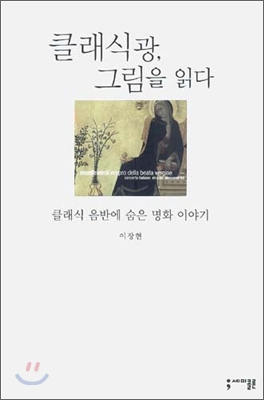
Why are famous paintings so often featured on classical albums? We often overlook these paintings on classical albums.
Klimt, Michelangelo, Picasso...
What connection do these paintings have to the music on the album? The author, a classical music enthusiast and art lover, guides us into a strange world where music and art intertwine.
It tells the story of the fate of medieval stained glass, unravels the story behind the 'Bach Cantata Pilgrimage' series, and reads the gaze of two artists who longed for the tropics in Ravel's album featuring Henri Rousseau's paintings.
The ironic encounter between painting and music also cannot escape his imagination.
The conflicting lives of John the Baptist, who chose death in the face of injustice, and Strauss, who achieved fame by composing an opera about his story; the ill-fated encounter between Delacroix's painting glorifying revolution and the Romantic composer Bruch...
The secrets of masterpieces hidden in classical records begin to come to life.
Klimt, Michelangelo, Picasso...
What connection do these paintings have to the music on the album? The author, a classical music enthusiast and art lover, guides us into a strange world where music and art intertwine.
It tells the story of the fate of medieval stained glass, unravels the story behind the 'Bach Cantata Pilgrimage' series, and reads the gaze of two artists who longed for the tropics in Ravel's album featuring Henri Rousseau's paintings.
The ironic encounter between painting and music also cannot escape his imagination.
The conflicting lives of John the Baptist, who chose death in the face of injustice, and Strauss, who achieved fame by composing an opera about his story; the ill-fated encounter between Delacroix's painting glorifying revolution and the Romantic composer Bruch...
The secrets of masterpieces hidden in classical records begin to come to life.
- You can preview some of the book's contents.
Preview
index
Entering ㅣ Music to Art
Purity as White as a Lily | Martini and Monteverdi
Round and round again, spring again | Botticelli and Vivaldi
The Painter's Mind in an Empty Plate | Dürer, Tallis, and Bach
The shadow of Mt. Suyang stretches 300 miles across Gangdong | Michelangelo and Bachnet's blood relatives
Seven Words from the Cross | Grünewald and Haydn
The Goldberg Crusade | Titian and Bach
The Standard Bearers of the Spanish Renaissance | El Greco and Victoria
Veronica's Handkerchief | Surbaran and Victoria
Portrait of Mozart | Mozart and Forgotten Painters
Self-Portrait of the Revolution | Delacroix, Schiller, and Bruch
Francesca da Rimini | Ari Shaffer and Tchaikovsky
The Piano Advertising Models of the Times | Dan Hauser and Liszt
The Temptation of the Seven Veils, Dancing Salome | Moreau and Strauss
Kisses to the World | Klimt and Beethoven
Dreams of a Sunlit Southern Country | Middle-Aged Rookies Henri Rousseau and Ravel
The Cry of Guernica | Picasso and Balada
Even if the farmer starves to death, he still dies with his seed sack cut down | Luo and Messiaen
The Mystery of the Pied Piper | Arimoto and Haydn
In closing | About the classic recipe
Discography
List of illustrations
Purity as White as a Lily | Martini and Monteverdi
Round and round again, spring again | Botticelli and Vivaldi
The Painter's Mind in an Empty Plate | Dürer, Tallis, and Bach
The shadow of Mt. Suyang stretches 300 miles across Gangdong | Michelangelo and Bachnet's blood relatives
Seven Words from the Cross | Grünewald and Haydn
The Goldberg Crusade | Titian and Bach
The Standard Bearers of the Spanish Renaissance | El Greco and Victoria
Veronica's Handkerchief | Surbaran and Victoria
Portrait of Mozart | Mozart and Forgotten Painters
Self-Portrait of the Revolution | Delacroix, Schiller, and Bruch
Francesca da Rimini | Ari Shaffer and Tchaikovsky
The Piano Advertising Models of the Times | Dan Hauser and Liszt
The Temptation of the Seven Veils, Dancing Salome | Moreau and Strauss
Kisses to the World | Klimt and Beethoven
Dreams of a Sunlit Southern Country | Middle-Aged Rookies Henri Rousseau and Ravel
The Cry of Guernica | Picasso and Balada
Even if the farmer starves to death, he still dies with his seed sack cut down | Luo and Messiaen
The Mystery of the Pied Piper | Arimoto and Haydn
In closing | About the classic recipe
Discography
List of illustrations
Publisher's Review
Why are famous paintings often featured on classical albums?
Pictures of classical albums that I usually pass by without much thought.
Klimt, Michelangelo, Picasso...
What connection do these paintings have to the music on these albums? Semicolon's recently published book, "Classical Music Fanatics: Reading Paintings," explores the interplay between the paintings on classical album covers and the music they contain.
Even albums that seem unrelated at first glance unfold an extraordinary story when they fall into the hands of the author.
It tells the story of the fate of medieval stained glass, unravels the story behind John Eliot Gardiner's "Bach Cantata Pilgrimage" series of recordings, and reads the gaze of two artists who dreamed of a sunny southern land on Ravel's album featuring Henri Rousseau's paintings.
The ironic encounter between painting and music also cannot escape his imagination.
The conflicting lives of John the Baptist, who chose death to protest Herod's injustice, and Strauss, who achieved fame by composing an opera based on his story but later collaborated with the Nazis, the ill-fated encounter between Delacroix's painting glorifying revolution and the Romantic composer Bruch...
The secret combination of music and art that no one could have imagined is revealed!
Does Bach's music match Dürer's paintings?
This article is a revised version of a short article that the author originally posted on 'Go Classic (www.goclassic.co.kr),' Korea's largest classical music fan club.
Thanks to the explosive response from the club members at the time, it was serialized up to 23 times, and a few of them were selected and organized, and interesting topics from the newly released albums were selected and written again.
The author's writing is characterized by its unique and entertaining style, breaking away from the typical framework usually found in books explaining art.
The author has no compulsion to explain works of art, artists, trends and styles, aesthetics, or ideological meaning.
If I see a picture while listening to music, I think about the picture, and if that picture reminds me of another album, I go back to that album and let my imagination run wild.
This stream of consciousness is also well expressed in writing.
By examining Dürer's self-portrait on Thomas Tallis' album "Spam in Allium," which represents English music of the Renaissance era, we find glimpses of the religious reformation that Tallis and Dürer experienced in their respective works. Then, we move on to the story of Bach, who cannot be left out when discussing the religious reformation, and this time, we unravel the relationship between Dürer and Bach.
Then he lists Bach's recordings featuring other Dürer paintings and describes the performance of Herreweghe, the darling of modern original performance.
The fact that the flow of these writings is not awkward at all is thanks to his extensive knowledge of classical music and art.
After explaining his religious views against the Catholic doctrine of embodiment by citing Dürer's work "The Last Supper," he immediately moves on to Bach's album, which uses the controversial "Last Supper" as its cover, drawing readers in.
What do Vivaldi and Botticelli have in common?
Another fun aspect of this book is discovering interesting similarities between the lives of two artists: music and art.
What's the connection between Vivaldi's "The Four Seasons" and Botticelli's "Spring"? Beyond the fact that both are popular images representing the seasons, they share a curious similarity.
Until the success of the 1959 recordings by Imusic and Felix Ayo, using the new stereo technology, Vivaldi's "The Four Seasons" had been gradually forgotten, overshadowed by the works of Romantic composers such as Beethoven and Brahms.
Likewise, Botticelli's "Spring," which once splendidly decorated the Medici mansion, was buried along with the downfall of the Medici family that had supported him, and was not well known to the general public until it was rediscovered in the 19th century.
Despite the 200-year time difference, their 'spring', like the seasons that rotate, retains memories of something once forgotten and then splendidly revived.
Not only the artist's life, but also the stories that serve as the subject matter for his works are elements that stimulate his imagination.
A representative example is the Sibyl painted by Michelangelo in the Sistine Chapel.
The album with this painting on the cover features CPE, a cousin of Johann Sebastian Bach.
Bach and his son JN
It contains Bach's music, and the author unravels Bach's family history by recalling the legend surrounding this Sibyl.
The story of Sibyl, who lived a thousand years in misery in exchange for asking the god Apollo for eternal life, is compared to the Bach family, who left their name forever for posterity and gave birth to great children who contributed to music for over 300 years.
The misadventure between Delacroix and Bruch in the aforementioned 'Self-Portrait of a Revolution' is also an interesting story.
The author confides the strange feelings he feels as he looks at Delacroix's "Liberty Leading the People," which depicts his own weakness in not being able to directly participate in the revolution, and the Romantic composer Bruch's "Song of the Bells," which is a lyric set to Schiller's poem criticizing the French Revolution, and an album filled with paintings praising the revolution and songs criticizing it.
Klimt's "Beethoven Murals," which was used as the cover of the six-disc "Beethoven Symphony Complete" recorded by Claudio Abbado, is also an excellent subject for showing the total art that combines music and art.
You can experience the delightful encounter between music and art through Klimt's genius, who faithfully recreated the theme of Beethoven's Symphony No. 9 on a massive 30-meter canvas, and Abbado, whose recording of all of Beethoven's symphonies is considered the most remarkable achievement of recent times.
'Portraits of Mozart, Mozart and Forgotten Painters' features three Mozart albums.
The covers of these three albums, two of which contain works composed by Mozart during his childhood and youth, and the album of his unfinished Requiem, all feature portraits of Mozart at similar ages (7, 21, and early 30s), telling the story of the ups and downs of Mozart's life.
In particular, the portrait of a man in his early 30s that decorates his last Requiem album, like the Requiem he left behind, remains unfinished, evoking a strange feeling in the viewer.
In addition, if you listen to the stories behind the albums, such as Georges Rouault's "Miserere", which sublimated personal suffering into religious art, Olivier Messiaen's "Quartet for the End of the World", and Ari Schaeffer and Tchaikovsky's "Francesca da Rimini", which were each inspired by Dante's "Divine Comedy", you can read the traces of artists from different countries and eras with similar experiences and anguish.
An album is a gift between music and art!
In addition to the album in question, the book also includes brief mentions and information about other albums inserted throughout the book, adding to its enjoyment.
There seems to be no album free from his keen eye, such as when he criticized the designer's mistake of inadvertently inserting a thief hanging next to Jesus into Haydn's "Seven Imaginary Words" album, which is about the last words of Jesus on the cross, and when he praised the designer's sense of inserting Michelangelo's painting of "Jonah" into Allegri's "Miserere", which Mozart had memorized.
Another virtue of this book is its friendly discography, which allows readers to become interested in classical music without using much jargon.
As the author says, a single album is sometimes evidence of a painter and a composer sharing the same material, and a gift that music and art send to each other.
Put your favorite classical album on the CD player and look at the pictures on the cover.
The music, the paintings, the breath of the two artists will begin to come alive.
Pictures of classical albums that I usually pass by without much thought.
Klimt, Michelangelo, Picasso...
What connection do these paintings have to the music on these albums? Semicolon's recently published book, "Classical Music Fanatics: Reading Paintings," explores the interplay between the paintings on classical album covers and the music they contain.
Even albums that seem unrelated at first glance unfold an extraordinary story when they fall into the hands of the author.
It tells the story of the fate of medieval stained glass, unravels the story behind John Eliot Gardiner's "Bach Cantata Pilgrimage" series of recordings, and reads the gaze of two artists who dreamed of a sunny southern land on Ravel's album featuring Henri Rousseau's paintings.
The ironic encounter between painting and music also cannot escape his imagination.
The conflicting lives of John the Baptist, who chose death to protest Herod's injustice, and Strauss, who achieved fame by composing an opera based on his story but later collaborated with the Nazis, the ill-fated encounter between Delacroix's painting glorifying revolution and the Romantic composer Bruch...
The secret combination of music and art that no one could have imagined is revealed!
Does Bach's music match Dürer's paintings?
This article is a revised version of a short article that the author originally posted on 'Go Classic (www.goclassic.co.kr),' Korea's largest classical music fan club.
Thanks to the explosive response from the club members at the time, it was serialized up to 23 times, and a few of them were selected and organized, and interesting topics from the newly released albums were selected and written again.
The author's writing is characterized by its unique and entertaining style, breaking away from the typical framework usually found in books explaining art.
The author has no compulsion to explain works of art, artists, trends and styles, aesthetics, or ideological meaning.
If I see a picture while listening to music, I think about the picture, and if that picture reminds me of another album, I go back to that album and let my imagination run wild.
This stream of consciousness is also well expressed in writing.
By examining Dürer's self-portrait on Thomas Tallis' album "Spam in Allium," which represents English music of the Renaissance era, we find glimpses of the religious reformation that Tallis and Dürer experienced in their respective works. Then, we move on to the story of Bach, who cannot be left out when discussing the religious reformation, and this time, we unravel the relationship between Dürer and Bach.
Then he lists Bach's recordings featuring other Dürer paintings and describes the performance of Herreweghe, the darling of modern original performance.
The fact that the flow of these writings is not awkward at all is thanks to his extensive knowledge of classical music and art.
After explaining his religious views against the Catholic doctrine of embodiment by citing Dürer's work "The Last Supper," he immediately moves on to Bach's album, which uses the controversial "Last Supper" as its cover, drawing readers in.
What do Vivaldi and Botticelli have in common?
Another fun aspect of this book is discovering interesting similarities between the lives of two artists: music and art.
What's the connection between Vivaldi's "The Four Seasons" and Botticelli's "Spring"? Beyond the fact that both are popular images representing the seasons, they share a curious similarity.
Until the success of the 1959 recordings by Imusic and Felix Ayo, using the new stereo technology, Vivaldi's "The Four Seasons" had been gradually forgotten, overshadowed by the works of Romantic composers such as Beethoven and Brahms.
Likewise, Botticelli's "Spring," which once splendidly decorated the Medici mansion, was buried along with the downfall of the Medici family that had supported him, and was not well known to the general public until it was rediscovered in the 19th century.
Despite the 200-year time difference, their 'spring', like the seasons that rotate, retains memories of something once forgotten and then splendidly revived.
Not only the artist's life, but also the stories that serve as the subject matter for his works are elements that stimulate his imagination.
A representative example is the Sibyl painted by Michelangelo in the Sistine Chapel.
The album with this painting on the cover features CPE, a cousin of Johann Sebastian Bach.
Bach and his son JN
It contains Bach's music, and the author unravels Bach's family history by recalling the legend surrounding this Sibyl.
The story of Sibyl, who lived a thousand years in misery in exchange for asking the god Apollo for eternal life, is compared to the Bach family, who left their name forever for posterity and gave birth to great children who contributed to music for over 300 years.
The misadventure between Delacroix and Bruch in the aforementioned 'Self-Portrait of a Revolution' is also an interesting story.
The author confides the strange feelings he feels as he looks at Delacroix's "Liberty Leading the People," which depicts his own weakness in not being able to directly participate in the revolution, and the Romantic composer Bruch's "Song of the Bells," which is a lyric set to Schiller's poem criticizing the French Revolution, and an album filled with paintings praising the revolution and songs criticizing it.
Klimt's "Beethoven Murals," which was used as the cover of the six-disc "Beethoven Symphony Complete" recorded by Claudio Abbado, is also an excellent subject for showing the total art that combines music and art.
You can experience the delightful encounter between music and art through Klimt's genius, who faithfully recreated the theme of Beethoven's Symphony No. 9 on a massive 30-meter canvas, and Abbado, whose recording of all of Beethoven's symphonies is considered the most remarkable achievement of recent times.
'Portraits of Mozart, Mozart and Forgotten Painters' features three Mozart albums.
The covers of these three albums, two of which contain works composed by Mozart during his childhood and youth, and the album of his unfinished Requiem, all feature portraits of Mozart at similar ages (7, 21, and early 30s), telling the story of the ups and downs of Mozart's life.
In particular, the portrait of a man in his early 30s that decorates his last Requiem album, like the Requiem he left behind, remains unfinished, evoking a strange feeling in the viewer.
In addition, if you listen to the stories behind the albums, such as Georges Rouault's "Miserere", which sublimated personal suffering into religious art, Olivier Messiaen's "Quartet for the End of the World", and Ari Schaeffer and Tchaikovsky's "Francesca da Rimini", which were each inspired by Dante's "Divine Comedy", you can read the traces of artists from different countries and eras with similar experiences and anguish.
An album is a gift between music and art!
In addition to the album in question, the book also includes brief mentions and information about other albums inserted throughout the book, adding to its enjoyment.
There seems to be no album free from his keen eye, such as when he criticized the designer's mistake of inadvertently inserting a thief hanging next to Jesus into Haydn's "Seven Imaginary Words" album, which is about the last words of Jesus on the cross, and when he praised the designer's sense of inserting Michelangelo's painting of "Jonah" into Allegri's "Miserere", which Mozart had memorized.
Another virtue of this book is its friendly discography, which allows readers to become interested in classical music without using much jargon.
As the author says, a single album is sometimes evidence of a painter and a composer sharing the same material, and a gift that music and art send to each other.
Put your favorite classical album on the CD player and look at the pictures on the cover.
The music, the paintings, the breath of the two artists will begin to come alive.
GOODS SPECIFICS
- Date of issue: May 26, 2006
- Page count, weight, size: 195 pages | 457g | 165*245*20mm
- ISBN13: 9788983713216
- ISBN10: 8983713216
You may also like
카테고리
korean


korean

![GQ KOREA Mark (Monthly): December [2025]](http://librairie.coreenne.fr/cdn/shop/files/8ef265dbbfbf186523ed75ba7319009d.jpg?v=1765340328&width=3840)


