

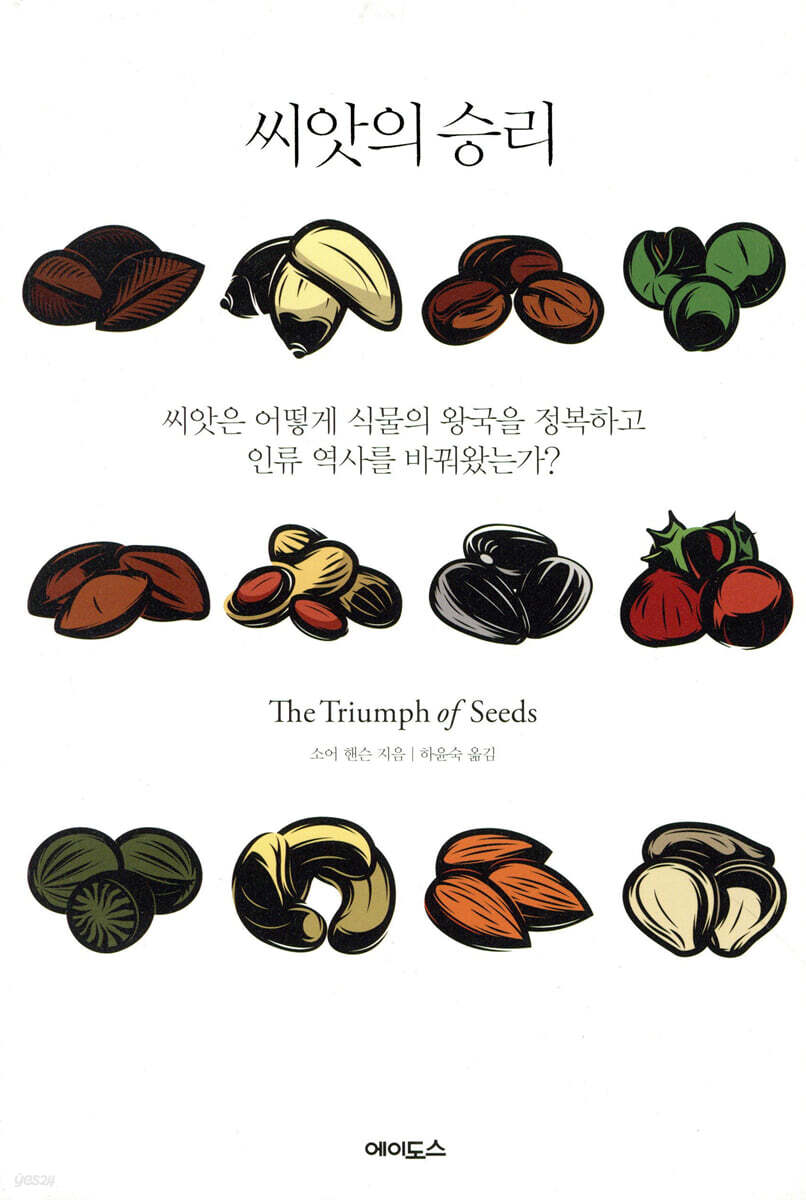
The victory of the seed
 |
Description
Book Introduction
“Who knew seeds could be so fascinating?” The author of Feathers, which was shortlisted for the Samuel Johnson Award, Britain’s top non-fiction award, and won the prestigious John Burroughs Medal for natural history, has now written a beautiful book on the subject of seeds.
Seeds, the insignificant things we throw away when we eat fruit, provide us with a sweet and rich flavor, and although most of our diet is filled with seeds, we rarely think about their importance and meaning. This book fascinatingly unravels the role that seeds have played in the evolution of plants and in human history.
It covers the elegant and wondrous evolutionary journey of seeds, from the birth of seeds, a momentous event in the plant kingdom hundreds of millions of years ago, to their intimate relationship with humanity and their profound influence on human evolution and history.
On this fascinating journey, we will meet paleontologists who search for plant fossils, farmers who are responsible for our diet, researchers at seed banks that store billions of seeds collected from around the world, monks who planted peas in their gardens and discovered their genes after eight years of meticulous study, explorers who crossed oceans to foreign lands to obtain spices, criminals who extracted the world's most powerful poisons and used them for murder, and aviators who took advantage of the flight principles of seeds that even advanced technology cannot imitate.
This book, which 'combines personal anecdotes with rich historical examples to delve into the origins and evolution of seeds', 'deftly illustrates how seeds have played a crucial role in human history' (Science) and 'twists existing views of human-plant interactions' (Nature).
'Seeds are a wonder worthy of our study, our praise, our wonder, and even our admiration.'
Seeds, the insignificant things we throw away when we eat fruit, provide us with a sweet and rich flavor, and although most of our diet is filled with seeds, we rarely think about their importance and meaning. This book fascinatingly unravels the role that seeds have played in the evolution of plants and in human history.
It covers the elegant and wondrous evolutionary journey of seeds, from the birth of seeds, a momentous event in the plant kingdom hundreds of millions of years ago, to their intimate relationship with humanity and their profound influence on human evolution and history.
On this fascinating journey, we will meet paleontologists who search for plant fossils, farmers who are responsible for our diet, researchers at seed banks that store billions of seeds collected from around the world, monks who planted peas in their gardens and discovered their genes after eight years of meticulous study, explorers who crossed oceans to foreign lands to obtain spices, criminals who extracted the world's most powerful poisons and used them for murder, and aviators who took advantage of the flight principles of seeds that even advanced technology cannot imitate.
This book, which 'combines personal anecdotes with rich historical examples to delve into the origins and evolution of seeds', 'deftly illustrates how seeds have played a crucial role in human history' (Science) and 'twists existing views of human-plant interactions' (Nature).
'Seeds are a wonder worthy of our study, our praise, our wonder, and even our admiration.'
- You can preview some of the book's contents.
Preview
index
Author's Note 5
Preface “Look carefully!” 6
Introduction Intense Energy 14
Seeds provide nutrients
Chapter 1: A Seed's Day 25
Chapter 2: The Pillar of Life 49
Chapter 3: Sometimes I Feel Like a Freak 77
The seed bears fruit
Chapter 4: What the Buddha's Hands Know 99
Chapter 5 Mendel's Spores 121
The seed endures
Chapter 6: Methuselah 139
Chapter 7: Put it in the Bank 159
The seed defends
Chapter 8: Biting and Gnawing with Teeth and Beaks 183
Chapter 9: Rich Flavor 205
Chapter 10: The Most Delightful Bean 227
Chapter 11: The Umbrella Used as a Murder Weapon 253
Seeds move
Chapter 12: The Irresistible Sweetness of Fruit 277
Chapter 13: Carried by the Wind, Tossed by the Waves 297
Conclusion: The Future of Seeds 323
Acknowledgments 330
Appendix 332
Americas 337
Reference 363
Search 377
Image source 382
Preface “Look carefully!” 6
Introduction Intense Energy 14
Seeds provide nutrients
Chapter 1: A Seed's Day 25
Chapter 2: The Pillar of Life 49
Chapter 3: Sometimes I Feel Like a Freak 77
The seed bears fruit
Chapter 4: What the Buddha's Hands Know 99
Chapter 5 Mendel's Spores 121
The seed endures
Chapter 6: Methuselah 139
Chapter 7: Put it in the Bank 159
The seed defends
Chapter 8: Biting and Gnawing with Teeth and Beaks 183
Chapter 9: Rich Flavor 205
Chapter 10: The Most Delightful Bean 227
Chapter 11: The Umbrella Used as a Murder Weapon 253
Seeds move
Chapter 12: The Irresistible Sweetness of Fruit 277
Chapter 13: Carried by the Wind, Tossed by the Waves 297
Conclusion: The Future of Seeds 323
Acknowledgments 330
Appendix 332
Americas 337
Reference 363
Search 377
Image source 382
Into the book
Seeds are so commonplace that it's hard to imagine that other forms of plants have dominated the Earth for over 100 million years.
Looking back in time, seeds began their evolution as insignificant players in a flora dominated by spores, and the great forests of that time, which remain with us today in the form of coal, were dominated by tree-like plants such as lycopods, sedges, and ferns.
Starting out in such a humble manner, seed plants steadily gained advantages, initially as conifers, cycads, and ginkgoes, and later spreading into a variety of flowering species.
Finally, the spore plants and algae have been pushed aside and are now left to just watch.
This dramatic victory of the seed raises an obvious question.
How did they achieve such remarkable success? What characteristics and habits do seeds, and the plants that bear them, possess that allowed them to so profoundly transform the Earth? The answers form the core of this book, revealing not only why seeds were able to thrive in nature but also why they held such profound significance for people.
--- p.19
In nature, flowering plants have demonstrated their ability to fertilize, seed, and disperse, not only by promoting their own evolution, but also by stimulating the evolution of the animals and insects with which they are closely intertwined.
In most cases, the dispersers, consumers, parasites, and above all, pollinators have diversified, and as a result, the plants they depend on have also diversified.
However, the evolution of pollination by flowers has also proven to be very important for humans.
It would be difficult to imagine our ancestors' agricultural success without the ability to artificially control moisture and store the results in the form of seeds for long periods of time.
--- p.119
Coffee drinking in Europe began shortly after the Reformation, and its promise of mental clarity and higher productivity aligned well with the emerging philosophies of the time.
As one scholar has put it, coffee “achieved chemically and pharmacologically what rationalism and the Protestant ethic sought to accomplish spiritually and ideologically.” Indeed, coffee prepared the body and mind for the indoor tasks that became commonplace in cities and towns: management, trading, and manufacturing.
It is no coincidence that the modern definitions and spellings of words like “coffee,” “factory,” and “working class” entered English in the 18th century.
Coffee drinks were especially popular with working-class people in urban areas, and London once boasted as many as 3,000 coffee shops, or one for every 200 people.
Looking back in time, seeds began their evolution as insignificant players in a flora dominated by spores, and the great forests of that time, which remain with us today in the form of coal, were dominated by tree-like plants such as lycopods, sedges, and ferns.
Starting out in such a humble manner, seed plants steadily gained advantages, initially as conifers, cycads, and ginkgoes, and later spreading into a variety of flowering species.
Finally, the spore plants and algae have been pushed aside and are now left to just watch.
This dramatic victory of the seed raises an obvious question.
How did they achieve such remarkable success? What characteristics and habits do seeds, and the plants that bear them, possess that allowed them to so profoundly transform the Earth? The answers form the core of this book, revealing not only why seeds were able to thrive in nature but also why they held such profound significance for people.
--- p.19
In nature, flowering plants have demonstrated their ability to fertilize, seed, and disperse, not only by promoting their own evolution, but also by stimulating the evolution of the animals and insects with which they are closely intertwined.
In most cases, the dispersers, consumers, parasites, and above all, pollinators have diversified, and as a result, the plants they depend on have also diversified.
However, the evolution of pollination by flowers has also proven to be very important for humans.
It would be difficult to imagine our ancestors' agricultural success without the ability to artificially control moisture and store the results in the form of seeds for long periods of time.
--- p.119
Coffee drinking in Europe began shortly after the Reformation, and its promise of mental clarity and higher productivity aligned well with the emerging philosophies of the time.
As one scholar has put it, coffee “achieved chemically and pharmacologically what rationalism and the Protestant ethic sought to accomplish spiritually and ideologically.” Indeed, coffee prepared the body and mind for the indoor tasks that became commonplace in cities and towns: management, trading, and manufacturing.
It is no coincidence that the modern definitions and spellings of words like “coffee,” “factory,” and “working class” entered English in the 18th century.
Coffee drinks were especially popular with working-class people in urban areas, and London once boasted as many as 3,000 coffee shops, or one for every 200 people.
--- pp.240-241
Publisher's Review
· The second book by the author of 『Feather』.
A Seattle Times Best Book of 2015.
Winner of the 2016 PNBA Book Award.
It was selected as a finalist for the 2016 AAAS/Subaru SB&F Prize in the Science category.
· It received rave reviews from leading media outlets such as Science, Nature, The New York Times, and The Wall Street Journal, calling it “the pinnacle of popular science writing and a wonderful example of broadening the scope of natural science writing,” and praising its fascinating and exciting portrayal of the interaction between seeds and humans.
· How did seeds conquer the plant kingdom and transform human history? Humans, who eat sweet fruits and savour rich seeds, are simply faithful servants who help plants spread.
· The latest research and fascinating stories related to seeds, such as Methuselah, a date palm seed that sprouted after lying dormant for 2,000 years, the Nazis who attempted to raid the seed bank in Leningrad during the invasion of the Soviet Union in World War II, and a murder using castor seeds containing ricin, the world's most potent poison, add to the fun of reading.
· This book describes the role that seeds, which play a vital role as food and materials for survival for humans, from the human diet to the clothes they wear, have played in human evolution and history.
From nutmeg and pepper, chilies and the Age of Exploration, the Enlightenment and coffee, the Industrial Revolution and cotton, and wheat and the Arab Spring, it fascinatingly combines seeds with major human history.
A tree that gives generously? That's a delusion.
Fruits and seeds that give humans a sweet and rich taste are simply plants' survival strategies that emerged through a long process of evolution.
For those who stop by a coffee shop every morning to drink a cup of coffee and go through the hassle of roasting, grinding, and brewing coffee beans to create a sweet, rich-tasting and aromatic coffee, coffee may not be as much of a "proof that God loves us" (p. 79), as Benjamin Franklin said about beer, but it may be considered a great gift from nature to mankind.
What about fruit? Sometimes quenching a burning thirst, sometimes offering a sweet taste that enriches both body and mind. Aren't fruits also a great gift from nature to humanity? From a human perspective, this is perfectly natural.
So, what about the perspective of the coffee tree that produces the coffee beans? Or the fruit tree that produces the sweet pulp? The humans who line up at coffee shops every morning for a cup of coffee are not much different from the bees that flock to coffee flowers, addicted to caffeine (pp. 236-237).
Just as bees, addicted to the caffeine in coffee flowers, flock to the flowers to complete their mission of 'pollination,' humans who spread coffee trees to enjoy their rich aroma and taste, and cultivate and care for fruit trees around the world to taste their sweet fruit, are completing the mission of spreading seeds, the first survival strategy of plants.
This book presents a ‘new perspective that challenges existing views’ on ‘the interaction between humans and plants’ (Nature).
We are just faithful plant species that work to help plants thrive and grow, and spread their seeds throughout the world.
Of course, this twist of perspective does not end with a bias to one side.
As with all living things in nature, humans and plants have co-evolved.
They influence each other as if they were dancing a square dance (page 187).
The fact that seeds are contained in hard capsules, that they are the most deadly poison in the world, and that the mouth-numbing spiciness of chili peppers all came from this dynamic of coevolution.
The book is a fascinating look at human evolution and how seeds have co-evolved throughout human history.
Seeds, the Conquerors of the Plant Kingdom: Their Elegant and Wondrous Evolutionary History
"Consider the intense energy concentrated within a single acorn! Plant it in the ground, and it expands tremendously, growing into a mighty oak tree! Bury a sheep in the ground.
Nothing happens.
“It just rots.” —Bernard Shaw (p. 14)
The author of Feathers, a book that skillfully weaves together the natural and cultural history of feathers, was shortlisted for the Samuel Johnson Award, Britain's top non-fiction award, and received the John Burroughs Medal, a prestigious award in the natural history category. Through this book, the author emphasizes the evolutionary and anthropological significance and importance of seeds.
Seeds are insignificant things that we throw away when we eat the flesh, things we enjoy for their sweet and rich flavor, and things we fill almost all of our diets with, yet we never think about their importance and meaning. This book fascinatingly unravels the role that seeds have played in the evolution of plants and in human history.
It covers the elegant and wondrous evolutionary journey of seeds, from the birth of seeds, a momentous event in the plant kingdom hundreds of millions of years ago, to their intimate relationship with humanity and their profound influence on human evolution and history.
On this fascinating journey, we meet paleontologists who search for plant fossils, farmers who are responsible for our diet, workers at a seed bank that stores billions of seeds collected from around the world, a monk who planted a pea in his garden and discovered its genes after eight years of meticulous study, explorers who crossed oceans to foreign lands to obtain spices, criminals who extracted the world's most powerful poison and used it for murder, and aviators who exploit the flight principles of seeds that even high-tech technology cannot imitate.
Cotton was the driving force of the Industrial Revolution, and coffee was the spiritual fuel of the Enlightenment.
From Columbus's search for spices to murders using the world's most potent poison, castor bean, this book highlights how seeds have shaped human history in various ways.
During World War II, Hitler invaded the Soviet Union and ordered that the seed bank in Leningrad, created by the great Soviet scientist Vavilov, be attacked and the seeds be brought to Berlin by any means necessary (p. 173).
The foresight of the Soviet scientist Vavilov, who recognized the importance of seeds and traveled throughout the Soviet Union to collect and study various seeds to create a seed bank, is amazing, but so is Hitler, who knew the importance of this seed bank and ordered an attack.
From the rice and bread we eat in the morning to the cotton fabrics we wear, seeds are literally the food and materials of life, the food that sustains life, and they support the economy and civilization of the entire world.
The book explains how seeds have shaped human history through major historical events that we are all familiar with.
Just as the quest for nutmeg and the humble peppercorn fueled the Age of Discovery, so coffee beans fueled the Enlightenment, and cotton seeds helped ignite the Industrial Revolution.
From the fall of Rome to the Arab Spring, it was the Middle Eastern grass seed known as wheat that determined the fate of many nations.
Coffee was the spiritual lubricant of the Enlightenment (“Coffee achieved chemically and pharmacologically what rationalism and the Protestant ethic had sought to achieve spiritually and ideologically” (p. 240)), wheat was the fuel that fueled the Arab Spring (p. 68), and cotton was the seed of the Industrial Revolution (p. 311).
It is difficult for us to know this amazing aspect of seeds when we eat and wear them every day.
Seeds were once considered insignificant, as something cumbersome to be removed when eating fruit, and as a healthy food, but their meaning and role were never thought about. This book places seeds at the center of human evolution and history.
It is a record of evolutionary history and human history centered on seeds, not humans.
"Who knew seeds could be so fascinating?" (2016 PNBA Book Award judges' comments)
Recommendation
“A captivating and engaging piece of science writing…who knew seeds could be so fascinating?”_2016 PNBA Book Award Judges’ Comments
Conservation biologist Thor Hanson combines personal anecdotes with rich historical examples to delve into the origins and evolution of seeds.
… … It also skillfully illustrates how seeds have played a crucial role in human history, through the connections between coffee beans and the Enlightenment, and between wheat shortages and the Arab Spring.”_Science
“It’s a great book.
… … A new perspective on the interplay between humans and plants.”_《Nature》
“It reveals that the most insignificant of natural objects, seeds, have an elegant and wondrous life.
“He is a natural storyteller, but he also captivates us with a passion that draws readers in.” —The New York Times
“It catches the eye.
The author's focus on the interactions between plants and humans using their seeds goes beyond any popular botany book.
“A lively and invigorating book.”_The Wall Street Journal
“In a brisk and engaging style, Hanson shows that the tiny ellipsoidal seeds we throw away are actually exquisite genetic time capsules.
… … After reading this book, orange seeds and sunflower seeds will look completely different.”_New Scientist
“It’s written in an engaging style and flows smoothly.
“The connection between chapters is like flowing water, and once you pick it up, you can never put it down.”_《Choice》
“From seed banks, cutting-edge safety measures for climate change, to stories about guar gum, which is used in everything from ice cream to oil drilling techniques, this delightful celebration of the power of seeds is... and the pinnacle of popular science writing.” —Booklist
“Who knew seeds could be so fascinating and so dangerous? Hanson is a vibrant storyteller, a lyrical writer, and a master of wit.
The Triumph of Seeds is more than just a captivating natural history book.
This book is a captivating and fascinating journey that features scientists, historians, criminals, explorers, aviators, and futurists.
“It will be the greatest journey on earth, full of wonder, poetry, and discovery.” —Amy Stewart, author of The Drunken Botanist
“This book, which weaves together biology, human history, and the 'fun lore of seeds,' is a wonderful example of broadening the scope of natural science writing.” —British Wildlife
“Conservation biologist Hanson’s latest book presents a more approachable style than his previous work, Feathers.
Drawing on personal insights from my backyard garden lab, my dissertation on the Almendro tree in Costa Rica, and lessons learned from time spent with experts around the world, I map how seeds nourish, establish, endure, defend, and move.” —Library Journal
“A delightful account of the origin and physiology of seeds, and of the incredibly diverse uses humans make of the seeds that plants use to propagate more plants.” —Kirkus
A Seattle Times Best Book of 2015.
Winner of the 2016 PNBA Book Award.
It was selected as a finalist for the 2016 AAAS/Subaru SB&F Prize in the Science category.
· It received rave reviews from leading media outlets such as Science, Nature, The New York Times, and The Wall Street Journal, calling it “the pinnacle of popular science writing and a wonderful example of broadening the scope of natural science writing,” and praising its fascinating and exciting portrayal of the interaction between seeds and humans.
· How did seeds conquer the plant kingdom and transform human history? Humans, who eat sweet fruits and savour rich seeds, are simply faithful servants who help plants spread.
· The latest research and fascinating stories related to seeds, such as Methuselah, a date palm seed that sprouted after lying dormant for 2,000 years, the Nazis who attempted to raid the seed bank in Leningrad during the invasion of the Soviet Union in World War II, and a murder using castor seeds containing ricin, the world's most potent poison, add to the fun of reading.
· This book describes the role that seeds, which play a vital role as food and materials for survival for humans, from the human diet to the clothes they wear, have played in human evolution and history.
From nutmeg and pepper, chilies and the Age of Exploration, the Enlightenment and coffee, the Industrial Revolution and cotton, and wheat and the Arab Spring, it fascinatingly combines seeds with major human history.
A tree that gives generously? That's a delusion.
Fruits and seeds that give humans a sweet and rich taste are simply plants' survival strategies that emerged through a long process of evolution.
For those who stop by a coffee shop every morning to drink a cup of coffee and go through the hassle of roasting, grinding, and brewing coffee beans to create a sweet, rich-tasting and aromatic coffee, coffee may not be as much of a "proof that God loves us" (p. 79), as Benjamin Franklin said about beer, but it may be considered a great gift from nature to mankind.
What about fruit? Sometimes quenching a burning thirst, sometimes offering a sweet taste that enriches both body and mind. Aren't fruits also a great gift from nature to humanity? From a human perspective, this is perfectly natural.
So, what about the perspective of the coffee tree that produces the coffee beans? Or the fruit tree that produces the sweet pulp? The humans who line up at coffee shops every morning for a cup of coffee are not much different from the bees that flock to coffee flowers, addicted to caffeine (pp. 236-237).
Just as bees, addicted to the caffeine in coffee flowers, flock to the flowers to complete their mission of 'pollination,' humans who spread coffee trees to enjoy their rich aroma and taste, and cultivate and care for fruit trees around the world to taste their sweet fruit, are completing the mission of spreading seeds, the first survival strategy of plants.
This book presents a ‘new perspective that challenges existing views’ on ‘the interaction between humans and plants’ (Nature).
We are just faithful plant species that work to help plants thrive and grow, and spread their seeds throughout the world.
Of course, this twist of perspective does not end with a bias to one side.
As with all living things in nature, humans and plants have co-evolved.
They influence each other as if they were dancing a square dance (page 187).
The fact that seeds are contained in hard capsules, that they are the most deadly poison in the world, and that the mouth-numbing spiciness of chili peppers all came from this dynamic of coevolution.
The book is a fascinating look at human evolution and how seeds have co-evolved throughout human history.
Seeds, the Conquerors of the Plant Kingdom: Their Elegant and Wondrous Evolutionary History
"Consider the intense energy concentrated within a single acorn! Plant it in the ground, and it expands tremendously, growing into a mighty oak tree! Bury a sheep in the ground.
Nothing happens.
“It just rots.” —Bernard Shaw (p. 14)
The author of Feathers, a book that skillfully weaves together the natural and cultural history of feathers, was shortlisted for the Samuel Johnson Award, Britain's top non-fiction award, and received the John Burroughs Medal, a prestigious award in the natural history category. Through this book, the author emphasizes the evolutionary and anthropological significance and importance of seeds.
Seeds are insignificant things that we throw away when we eat the flesh, things we enjoy for their sweet and rich flavor, and things we fill almost all of our diets with, yet we never think about their importance and meaning. This book fascinatingly unravels the role that seeds have played in the evolution of plants and in human history.
It covers the elegant and wondrous evolutionary journey of seeds, from the birth of seeds, a momentous event in the plant kingdom hundreds of millions of years ago, to their intimate relationship with humanity and their profound influence on human evolution and history.
On this fascinating journey, we meet paleontologists who search for plant fossils, farmers who are responsible for our diet, workers at a seed bank that stores billions of seeds collected from around the world, a monk who planted a pea in his garden and discovered its genes after eight years of meticulous study, explorers who crossed oceans to foreign lands to obtain spices, criminals who extracted the world's most powerful poison and used it for murder, and aviators who exploit the flight principles of seeds that even high-tech technology cannot imitate.
Cotton was the driving force of the Industrial Revolution, and coffee was the spiritual fuel of the Enlightenment.
From Columbus's search for spices to murders using the world's most potent poison, castor bean, this book highlights how seeds have shaped human history in various ways.
During World War II, Hitler invaded the Soviet Union and ordered that the seed bank in Leningrad, created by the great Soviet scientist Vavilov, be attacked and the seeds be brought to Berlin by any means necessary (p. 173).
The foresight of the Soviet scientist Vavilov, who recognized the importance of seeds and traveled throughout the Soviet Union to collect and study various seeds to create a seed bank, is amazing, but so is Hitler, who knew the importance of this seed bank and ordered an attack.
From the rice and bread we eat in the morning to the cotton fabrics we wear, seeds are literally the food and materials of life, the food that sustains life, and they support the economy and civilization of the entire world.
The book explains how seeds have shaped human history through major historical events that we are all familiar with.
Just as the quest for nutmeg and the humble peppercorn fueled the Age of Discovery, so coffee beans fueled the Enlightenment, and cotton seeds helped ignite the Industrial Revolution.
From the fall of Rome to the Arab Spring, it was the Middle Eastern grass seed known as wheat that determined the fate of many nations.
Coffee was the spiritual lubricant of the Enlightenment (“Coffee achieved chemically and pharmacologically what rationalism and the Protestant ethic had sought to achieve spiritually and ideologically” (p. 240)), wheat was the fuel that fueled the Arab Spring (p. 68), and cotton was the seed of the Industrial Revolution (p. 311).
It is difficult for us to know this amazing aspect of seeds when we eat and wear them every day.
Seeds were once considered insignificant, as something cumbersome to be removed when eating fruit, and as a healthy food, but their meaning and role were never thought about. This book places seeds at the center of human evolution and history.
It is a record of evolutionary history and human history centered on seeds, not humans.
"Who knew seeds could be so fascinating?" (2016 PNBA Book Award judges' comments)
Recommendation
“A captivating and engaging piece of science writing…who knew seeds could be so fascinating?”_2016 PNBA Book Award Judges’ Comments
Conservation biologist Thor Hanson combines personal anecdotes with rich historical examples to delve into the origins and evolution of seeds.
… … It also skillfully illustrates how seeds have played a crucial role in human history, through the connections between coffee beans and the Enlightenment, and between wheat shortages and the Arab Spring.”_Science
“It’s a great book.
… … A new perspective on the interplay between humans and plants.”_《Nature》
“It reveals that the most insignificant of natural objects, seeds, have an elegant and wondrous life.
“He is a natural storyteller, but he also captivates us with a passion that draws readers in.” —The New York Times
“It catches the eye.
The author's focus on the interactions between plants and humans using their seeds goes beyond any popular botany book.
“A lively and invigorating book.”_The Wall Street Journal
“In a brisk and engaging style, Hanson shows that the tiny ellipsoidal seeds we throw away are actually exquisite genetic time capsules.
… … After reading this book, orange seeds and sunflower seeds will look completely different.”_New Scientist
“It’s written in an engaging style and flows smoothly.
“The connection between chapters is like flowing water, and once you pick it up, you can never put it down.”_《Choice》
“From seed banks, cutting-edge safety measures for climate change, to stories about guar gum, which is used in everything from ice cream to oil drilling techniques, this delightful celebration of the power of seeds is... and the pinnacle of popular science writing.” —Booklist
“Who knew seeds could be so fascinating and so dangerous? Hanson is a vibrant storyteller, a lyrical writer, and a master of wit.
The Triumph of Seeds is more than just a captivating natural history book.
This book is a captivating and fascinating journey that features scientists, historians, criminals, explorers, aviators, and futurists.
“It will be the greatest journey on earth, full of wonder, poetry, and discovery.” —Amy Stewart, author of The Drunken Botanist
“This book, which weaves together biology, human history, and the 'fun lore of seeds,' is a wonderful example of broadening the scope of natural science writing.” —British Wildlife
“Conservation biologist Hanson’s latest book presents a more approachable style than his previous work, Feathers.
Drawing on personal insights from my backyard garden lab, my dissertation on the Almendro tree in Costa Rica, and lessons learned from time spent with experts around the world, I map how seeds nourish, establish, endure, defend, and move.” —Library Journal
“A delightful account of the origin and physiology of seeds, and of the incredibly diverse uses humans make of the seeds that plants use to propagate more plants.” —Kirkus
GOODS SPECIFICS
- Date of issue: September 9, 2016
- Page count, weight, size: 384 pages | 525g | 146*215*23mm
- ISBN13: 9791185415116
- ISBN10: 1185415114
You may also like
카테고리
korean


korean

![ELLE 엘르 스페셜 에디션 A형 : 12월 [2025]](http://librairie.coreenne.fr/cdn/shop/files/b8e27a3de6c9538896439686c6b0e8fb.jpg?v=1766436872&width=3840)


