

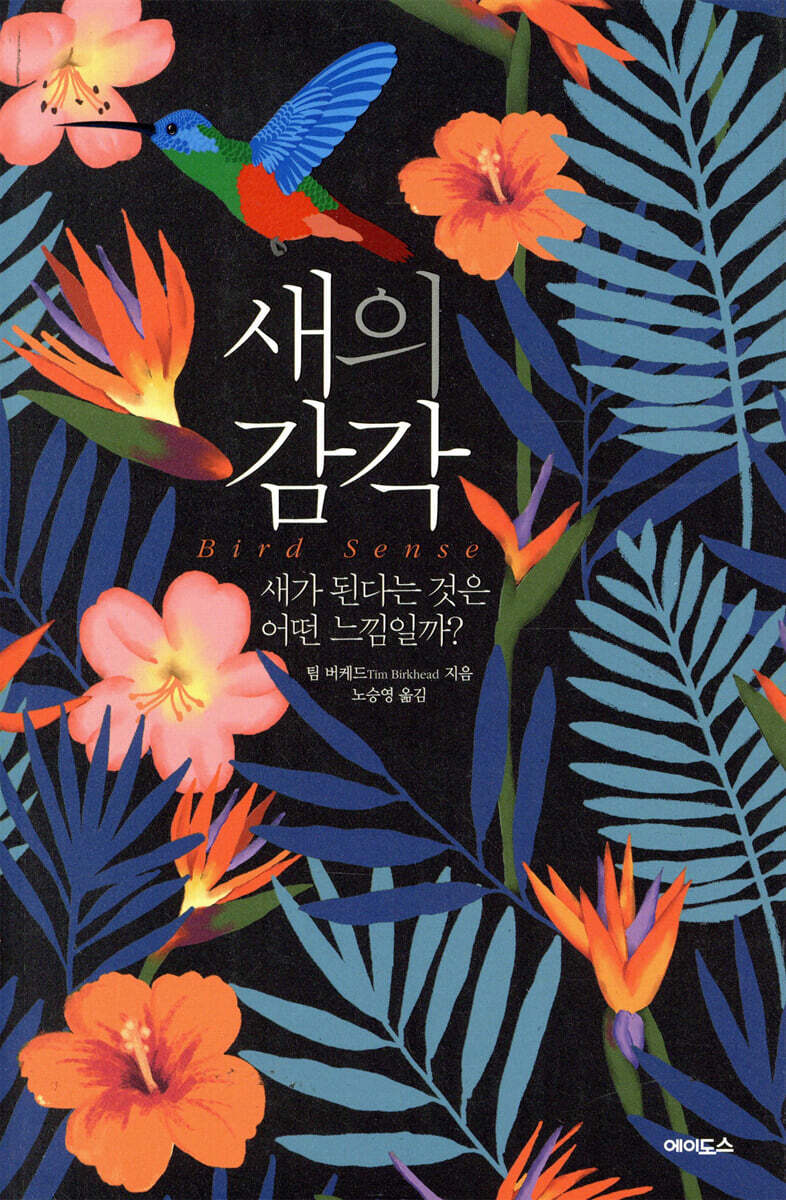
Bird's Senses
 |
Description
Book Introduction
What does it feel like to be a bird? Published in the UK in 2012, it was selected as a "Book of the Year" by The Guardian, The Independent, and The Sunday Times, and was shortlisted for the Royal Society Science Book Award, generating considerable buzz.
The author, a renowned biologist, presents a biologist's answer, different from that of a philosopher, through various scientific research results and behavioral experiments, to the question posed by philosopher Thomas Nagel in 1974 (and the title of his famous paper), "What does it feel like to be a bat?"
The author, who has spent his life studying birds and has traveled the world from the Arctic to the Amazon rainforest, reconstructs the intimate sensory world of birds, including their sight, hearing, touch, taste, smell, self-awareness, and emotions, and fascinatingly reveals how birds perceive the world and the surprising and secretive private lives of birds.
It covers a wide range of topics, from the stories of those who have made their mark on the study of birds in human history, such as Aristotle, Descartes, Humboldt, Darwin, Alfred Newton, Spallanzani, and Audubon, to the experimental examples of countless scientists who have come up with ingenious methods to understand birds, to the achievements of modern scientific research that has taken a step further into the sensory world of birds, using technologies such as 3D scanning.
The extraordinary eyesight of hawks that accurately detect prey from a great distance, the amazing ability of oil magpies to quickly and accurately avoid obstacles even in the dark, the story of the buffalo weaver bird's unusual sex life and orgasm, and the amazing flight story of the bar-tailed godwit that flies tens of thousands of kilometers from New Zealand to Alaska for eight days without rest, all add to the fun of reading.
The author argues that while we humans may not know 'exactly' what it feels like to be a bird, we can at least begin to understand how birds see, feel, taste, and perceive the world.
The author, a renowned biologist, presents a biologist's answer, different from that of a philosopher, through various scientific research results and behavioral experiments, to the question posed by philosopher Thomas Nagel in 1974 (and the title of his famous paper), "What does it feel like to be a bat?"
The author, who has spent his life studying birds and has traveled the world from the Arctic to the Amazon rainforest, reconstructs the intimate sensory world of birds, including their sight, hearing, touch, taste, smell, self-awareness, and emotions, and fascinatingly reveals how birds perceive the world and the surprising and secretive private lives of birds.
It covers a wide range of topics, from the stories of those who have made their mark on the study of birds in human history, such as Aristotle, Descartes, Humboldt, Darwin, Alfred Newton, Spallanzani, and Audubon, to the experimental examples of countless scientists who have come up with ingenious methods to understand birds, to the achievements of modern scientific research that has taken a step further into the sensory world of birds, using technologies such as 3D scanning.
The extraordinary eyesight of hawks that accurately detect prey from a great distance, the amazing ability of oil magpies to quickly and accurately avoid obstacles even in the dark, the story of the buffalo weaver bird's unusual sex life and orgasm, and the amazing flight story of the bar-tailed godwit that flies tens of thousands of kilometers from New Zealand to Alaska for eight days without rest, all add to the fun of reading.
The author argues that while we humans may not know 'exactly' what it feels like to be a bird, we can at least begin to understand how birds see, feel, taste, and perceive the world.
- You can preview some of the book's contents.
Preview
index
preface
What's it like to be a kiwi? · Human Perspective, Bird Perspective · How Birds Perceive the World
Chapter 1 Vision
Why eagle eyesight is so good · The evolution of the eye · The deceptive eyes of birds · The riddle of vision · How do birds see? · The courtship display of the rufous-crowned crane · The purpose of the right and left eyes · Birds that sleep with one eye open
Chapter 2 Hearing
The Great Horned Crane · Birds with Amazing Sounds · An Unfairly Neglected Sense · Birds Have No 'Ears' · The Unusual Bird Snail · Why Bird Songs Change with the Seasons · How Birds Detect Sound · The Cocktail Party Effect and the Longbart Effect · Songs and Territories · Echolocation in Bats
Chapter 3: Tactile sensation
Is the beak dull? · The woodpecker's beak is an axe · The social function of preening · The secret of feather plumage · The kiwi's beak, the woodpecker's tongue · Skin sensitivity and the number of eggs laid · The atrocious atrocities of the brood parasite · The sex lives of birds · Birds that experience orgasm
Chapter 4 Taste
Birds have a sense of taste, too. Birds' taste buds. Taste sensations that are different from those of humans. Color and taste.
Chapter 5: The Sense of Smell
Audubon's Experiment · The Death-Sensing Raven · The Medical Illustrator's Mystery · The Little Condor in the Gas Pipe · The Discovery of the Kiwi in 1813 · The Woodcock Finds Prey by Smell · Olfactory Topography and the Olfactory Seascape
Chapter 6: Awareness
The flight path of the sea duck · How birds find their way · The Emerson funnel · Birds 'see' the Earth's magnetic field
Chapter 7 Emotions
Darwin's Insights · Stress and Bird Behavior · Do Birds Feel Pain? · Bird Bonds
Reviews
Translator's Note
Americas
References
Glossary
Search
What's it like to be a kiwi? · Human Perspective, Bird Perspective · How Birds Perceive the World
Chapter 1 Vision
Why eagle eyesight is so good · The evolution of the eye · The deceptive eyes of birds · The riddle of vision · How do birds see? · The courtship display of the rufous-crowned crane · The purpose of the right and left eyes · Birds that sleep with one eye open
Chapter 2 Hearing
The Great Horned Crane · Birds with Amazing Sounds · An Unfairly Neglected Sense · Birds Have No 'Ears' · The Unusual Bird Snail · Why Bird Songs Change with the Seasons · How Birds Detect Sound · The Cocktail Party Effect and the Longbart Effect · Songs and Territories · Echolocation in Bats
Chapter 3: Tactile sensation
Is the beak dull? · The woodpecker's beak is an axe · The social function of preening · The secret of feather plumage · The kiwi's beak, the woodpecker's tongue · Skin sensitivity and the number of eggs laid · The atrocious atrocities of the brood parasite · The sex lives of birds · Birds that experience orgasm
Chapter 4 Taste
Birds have a sense of taste, too. Birds' taste buds. Taste sensations that are different from those of humans. Color and taste.
Chapter 5: The Sense of Smell
Audubon's Experiment · The Death-Sensing Raven · The Medical Illustrator's Mystery · The Little Condor in the Gas Pipe · The Discovery of the Kiwi in 1813 · The Woodcock Finds Prey by Smell · Olfactory Topography and the Olfactory Seascape
Chapter 6: Awareness
The flight path of the sea duck · How birds find their way · The Emerson funnel · Birds 'see' the Earth's magnetic field
Chapter 7 Emotions
Darwin's Insights · Stress and Bird Behavior · Do Birds Feel Pain? · Bird Bonds
Reviews
Translator's Note
Americas
References
Glossary
Search
Into the book
In his famous 1974 paper “What’s it like to be a bat?”, philosopher Thomas Nagel argued that we can never know what it feels like to be any other creature.
Feelings and consciousness are 'subjective' experiences, so they cannot be shared with anyone, and no one can imagine what I experience.
The reason Nagel chose bats is that bats are mammals, so they have many senses in common with us, but they also have one sense we don't have: echolocation (the ability to determine direction by analyzing the sound waves that bounce off objects and surfaces in the environment and then return to us), making it impossible for us to know how bats feel.
In a sense, Nagel is right.
We can never know 'exactly' what it feels like to be a bat or a bird.
As Nagel said, even if we imagine that feeling, it is only imagination.
It may seem subtle and demanding, but that is the philosopher's way.
Biologists take a more pragmatic approach.
This is what I'm trying to do.
Biologists have done a remarkable job of uncovering what it feels like to be another life form, using technologies that extend our senses and a variety of brain-based behavioral experiments.
Expanding and strengthening our senses was the secret to our success.
--- p.9
Birds are incredibly diverse, so asking “what does it feel like to be a bird?” is an oversimplification.
It would be much better to ask this:
- What would it be like to become a swordsman who appears at the end of a long cry?
- What would it be like to be an emperor penguin diving 400 meters deep into the pitch black of the Arctic Ocean?
What would it be like to be a flamingo, sensing the sound of invisible raindrops falling hundreds of kilometers away and knowing that a temporary wetland for breeding has formed?
What would it be like to be a male red-crowned dancer in the Central American rainforest, performing tricks like a wind-up toy in front of a scurrying female?
- What would it be like to be a pair of European reed warblers, who make love over 100 times a day, even though their mating time lasts only a tenth of a second?
Will I be exhausted or will I experience heavenly pleasure?
- What would it be like to be a lookout for a flock of great hornbills, performing short-term missions to watch for predatory eagles and long-term missions to find a mate?
- What would it be like to be overcome by a relentless hunger, become incredibly fat in a week, and then, driven by an invisible force, fly tenaciously thousands of kilometers in one direction (an annual event that many small songbirds perform twice a year)?
Feelings and consciousness are 'subjective' experiences, so they cannot be shared with anyone, and no one can imagine what I experience.
The reason Nagel chose bats is that bats are mammals, so they have many senses in common with us, but they also have one sense we don't have: echolocation (the ability to determine direction by analyzing the sound waves that bounce off objects and surfaces in the environment and then return to us), making it impossible for us to know how bats feel.
In a sense, Nagel is right.
We can never know 'exactly' what it feels like to be a bat or a bird.
As Nagel said, even if we imagine that feeling, it is only imagination.
It may seem subtle and demanding, but that is the philosopher's way.
Biologists take a more pragmatic approach.
This is what I'm trying to do.
Biologists have done a remarkable job of uncovering what it feels like to be another life form, using technologies that extend our senses and a variety of brain-based behavioral experiments.
Expanding and strengthening our senses was the secret to our success.
--- p.9
Birds are incredibly diverse, so asking “what does it feel like to be a bird?” is an oversimplification.
It would be much better to ask this:
- What would it be like to become a swordsman who appears at the end of a long cry?
- What would it be like to be an emperor penguin diving 400 meters deep into the pitch black of the Arctic Ocean?
What would it be like to be a flamingo, sensing the sound of invisible raindrops falling hundreds of kilometers away and knowing that a temporary wetland for breeding has formed?
What would it be like to be a male red-crowned dancer in the Central American rainforest, performing tricks like a wind-up toy in front of a scurrying female?
- What would it be like to be a pair of European reed warblers, who make love over 100 times a day, even though their mating time lasts only a tenth of a second?
Will I be exhausted or will I experience heavenly pleasure?
- What would it be like to be a lookout for a flock of great hornbills, performing short-term missions to watch for predatory eagles and long-term missions to find a mate?
- What would it be like to be overcome by a relentless hunger, become incredibly fat in a week, and then, driven by an invisible force, fly tenaciously thousands of kilometers in one direction (an annual event that many small songbirds perform twice a year)?
--- p.10-11
Publisher's Review
“What would it be like to be a bird?”
This book is a biologist's answer to the question posed by philosopher Thomas Nagel in 1974: "What is it like to be a bat?"
The surprisingly mysterious sensory world of birds, scientifically unearthed by biologists, and their secret private lives.
* 2012 [Guardian] [Independent] [Sunday Times] 'Book of the Year'
* Finalist for the 2012 Royal Society Scientific Book Award (Winton Prize)
* 2012 British Ornithology - Selected as 'Best Book of the Year' by the British Bird Trust
What does it feel like to be a bird? Published in the UK in 2012, it was selected as a "Book of the Year" by The Guardian, The Independent, and The Sunday Times, and was shortlisted for the Royal Society Science Book Award, generating considerable buzz.
The author, a renowned biologist, presents a biologist's answer, different from that of a philosopher, through various scientific research results and behavioral experiments, to the question posed by philosopher Thomas Nagel in 1974 (and the title of his famous paper), "What does it feel like to be a bat?"
The author, who has spent his life studying birds and has traveled the world from the Arctic to the Amazon rainforest, reconstructs the intimate sensory world of birds, including their sight, hearing, touch, taste, smell, self-awareness, and emotions, and fascinatingly reveals how birds perceive the world and the surprising and secretive private lives of birds.
It covers a wide range of topics, from the stories of those who have made their mark on the study of birds in human history, such as Aristotle, Descartes, Humboldt, Darwin, Alfred Newton, Spallanzani, and Audubon, to the experimental examples of countless scientists who have come up with ingenious methods to understand birds, to the achievements of modern scientific research that has taken a step further into the sensory world of birds, using technologies such as 3D scanning.
The extraordinary eyesight of hawks that accurately detect prey from a great distance, the amazing ability of oil magpies to quickly and accurately avoid obstacles even in the dark, the story of the buffalo weaver bird's unusual sex life and orgasm, and the amazing flight story of the bar-tailed godwit that flies tens of thousands of kilometers from New Zealand to Alaska for eight days without rest, all add to the fun of reading.
The author argues that while we humans may not know 'exactly' what it feels like to be a bird, we can at least begin to understand how birds see, feel, taste, and perceive the world.
* Recommended reviews
“We may never know exactly what it feels like to be a bird, but the author offers fascinating insights into how birds sense the world in their own unique way.”_[Nature]
“Buckard’s writing is a wonderful blend of his own insights and experiences.
Thoughtful, meticulously researched and engaging writing unfolds throughout.
“The sex life of the buffalo weaver bird and the story of how birds reach orgasm are very interesting and entertaining to read.”_[New Scientist]
“It is a very persuasive book.
This fascinating book teaches us much about what it means to be a bird, and about our responsibilities and rewards as humans in coexisting with these amazing creatures.”_[Guardian]
“The colorful depiction of birds evokes a profound awe for humanity and its intense curiosity.”_[Wall Street Journal]
“Delightful and captivating.”_[Sunday Times]
“It gives us a wealth of wonderful facts and insights about birds.
“It keeps our attention from beginning to end.”_[Independent]
“A brilliant popular science writer, Burke is filled with intense intellectual curiosity and passion, yet he does not compromise on the standards of science or scholarship.”_[Times Higher Education Supplement]
“Amazing.”_[Choice Magazine]Choice Magazine
“Buckard is the rare scientist who captures the hearts of the general reader.
His new book, Bird Sense, will delight experts and the general public alike.”_[BBC Wildlife]BBC Wildlife
“This is a really fascinating book.
“Every page is filled with surprising observations and new facts.”_[Daily Telegraph]
“A delightful book that will delight birders and captivate ecology students.”_[Kirkus Reviews]
This book is a biologist's answer to the question posed by philosopher Thomas Nagel in 1974: "What is it like to be a bat?"
The surprisingly mysterious sensory world of birds, scientifically unearthed by biologists, and their secret private lives.
* 2012 [Guardian] [Independent] [Sunday Times] 'Book of the Year'
* Finalist for the 2012 Royal Society Scientific Book Award (Winton Prize)
* 2012 British Ornithology - Selected as 'Best Book of the Year' by the British Bird Trust
What does it feel like to be a bird? Published in the UK in 2012, it was selected as a "Book of the Year" by The Guardian, The Independent, and The Sunday Times, and was shortlisted for the Royal Society Science Book Award, generating considerable buzz.
The author, a renowned biologist, presents a biologist's answer, different from that of a philosopher, through various scientific research results and behavioral experiments, to the question posed by philosopher Thomas Nagel in 1974 (and the title of his famous paper), "What does it feel like to be a bat?"
The author, who has spent his life studying birds and has traveled the world from the Arctic to the Amazon rainforest, reconstructs the intimate sensory world of birds, including their sight, hearing, touch, taste, smell, self-awareness, and emotions, and fascinatingly reveals how birds perceive the world and the surprising and secretive private lives of birds.
It covers a wide range of topics, from the stories of those who have made their mark on the study of birds in human history, such as Aristotle, Descartes, Humboldt, Darwin, Alfred Newton, Spallanzani, and Audubon, to the experimental examples of countless scientists who have come up with ingenious methods to understand birds, to the achievements of modern scientific research that has taken a step further into the sensory world of birds, using technologies such as 3D scanning.
The extraordinary eyesight of hawks that accurately detect prey from a great distance, the amazing ability of oil magpies to quickly and accurately avoid obstacles even in the dark, the story of the buffalo weaver bird's unusual sex life and orgasm, and the amazing flight story of the bar-tailed godwit that flies tens of thousands of kilometers from New Zealand to Alaska for eight days without rest, all add to the fun of reading.
The author argues that while we humans may not know 'exactly' what it feels like to be a bird, we can at least begin to understand how birds see, feel, taste, and perceive the world.
* Recommended reviews
“We may never know exactly what it feels like to be a bird, but the author offers fascinating insights into how birds sense the world in their own unique way.”_[Nature]
“Buckard’s writing is a wonderful blend of his own insights and experiences.
Thoughtful, meticulously researched and engaging writing unfolds throughout.
“The sex life of the buffalo weaver bird and the story of how birds reach orgasm are very interesting and entertaining to read.”_[New Scientist]
“It is a very persuasive book.
This fascinating book teaches us much about what it means to be a bird, and about our responsibilities and rewards as humans in coexisting with these amazing creatures.”_[Guardian]
“The colorful depiction of birds evokes a profound awe for humanity and its intense curiosity.”_[Wall Street Journal]
“Delightful and captivating.”_[Sunday Times]
“It gives us a wealth of wonderful facts and insights about birds.
“It keeps our attention from beginning to end.”_[Independent]
“A brilliant popular science writer, Burke is filled with intense intellectual curiosity and passion, yet he does not compromise on the standards of science or scholarship.”_[Times Higher Education Supplement]
“Amazing.”_[Choice Magazine]Choice Magazine
“Buckard is the rare scientist who captures the hearts of the general reader.
His new book, Bird Sense, will delight experts and the general public alike.”_[BBC Wildlife]BBC Wildlife
“This is a really fascinating book.
“Every page is filled with surprising observations and new facts.”_[Daily Telegraph]
“A delightful book that will delight birders and captivate ecology students.”_[Kirkus Reviews]
GOODS SPECIFICS
- Date of publication: February 27, 2015
- Page count, weight, size: 304 pages | 506g | 142*215*25mm
- ISBN13: 9791185415062
- ISBN10: 1185415068
You may also like
카테고리
korean


korean

![ELLE 엘르 스페셜 에디션 A형 : 12월 [2025]](http://librairie.coreenne.fr/cdn/shop/files/b8e27a3de6c9538896439686c6b0e8fb.jpg?v=1766436872&width=3840)


