

Everything About Brain Science in Pictures
 |
Description
Book Introduction
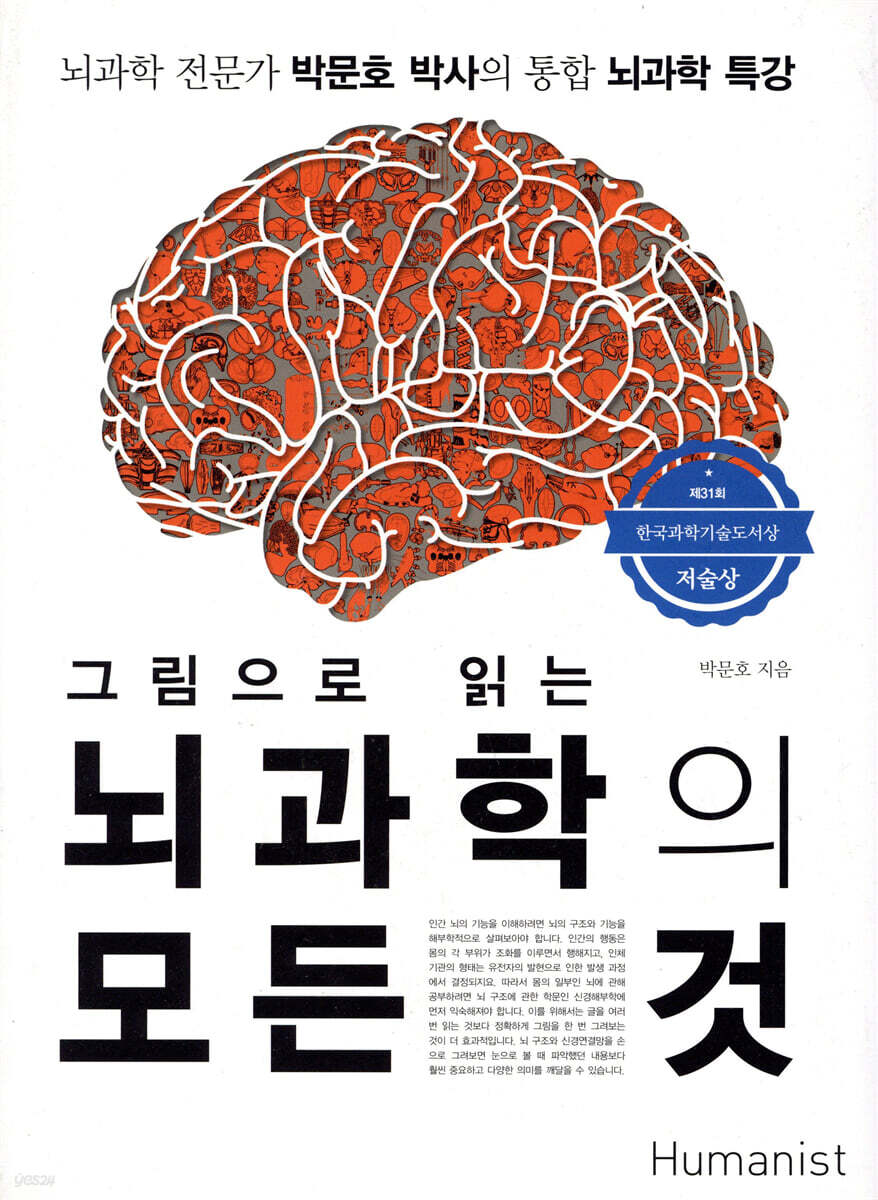
Integrated Brain Science Special Lecture by Dr. Park Moon-ho, a neuroscience expert
Dr. Park Moon-ho, the author of "The Brain, the Emergence of Thought," who presented "brain science from a macroscopic perspective," has compiled the contents and illustrations covered in his brain science lectures over the past five years into a book.
While the previous work traced the origins of life and thought as cosmic phenomena, this work presents "true brain science," meticulously exploring human consciousness and behavior through the functions and actions of the brain.
To this end, we thoroughly investigate the development, evolution, structure, and function of the nervous system, including the brain.
We examine the structure of the nervous system, including the spinal cord, nerves, brainstem, and cerebellum, trace the evolution and development of the nervous systems of vertebrates such as fish, reptiles, mammals, and humans, and explain how the functions of this nervous system shape our consciousness and behavior.
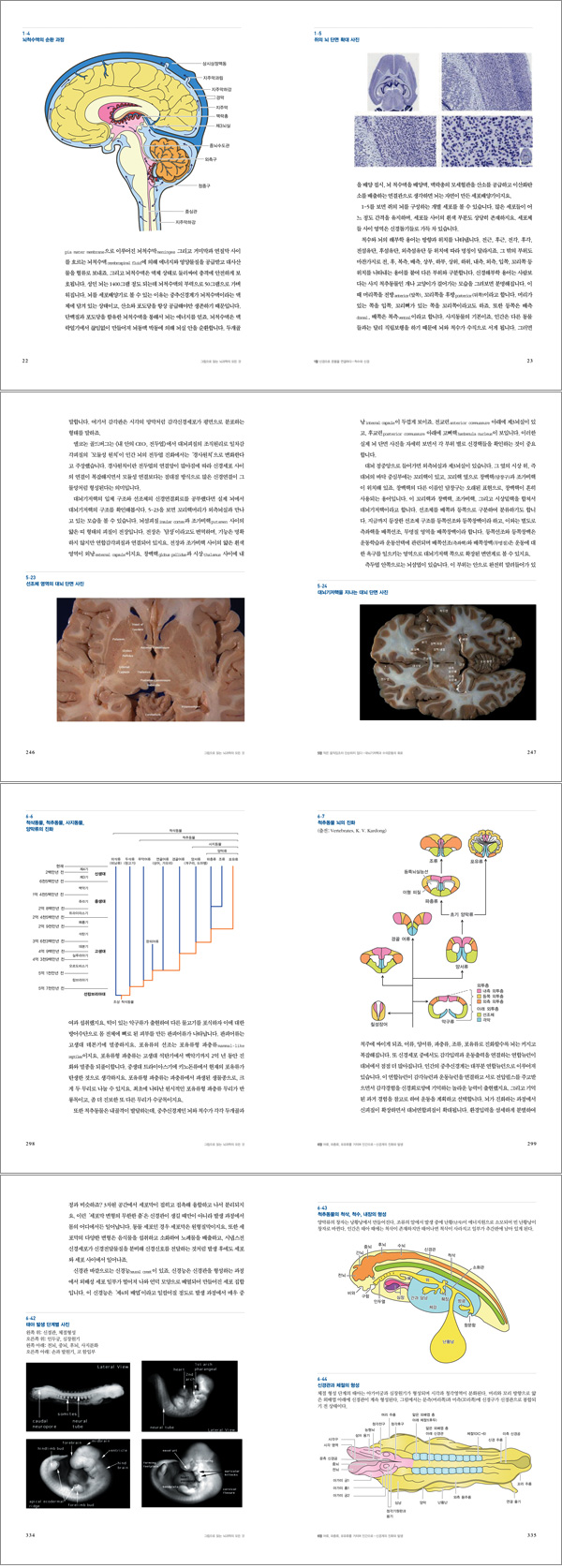
The easiest way to explain this process is with pictures rather than words, so I had to draw a massive amount of pictures, about 600 pages.
These drawings, which took over three years to complete with meticulous attention to even the direction of the arrows for accurate expression, can be said to be the culmination of the latest research in brain science.
The rich content, diverse illustrations, and style of the lectures, which translate the lectures, help readers understand the in-depth content of graduate school lectures by making it easy to understand.
Dr. Park Moon-ho, the author of "The Brain, the Emergence of Thought," who presented "brain science from a macroscopic perspective," has compiled the contents and illustrations covered in his brain science lectures over the past five years into a book.
While the previous work traced the origins of life and thought as cosmic phenomena, this work presents "true brain science," meticulously exploring human consciousness and behavior through the functions and actions of the brain.
To this end, we thoroughly investigate the development, evolution, structure, and function of the nervous system, including the brain.
We examine the structure of the nervous system, including the spinal cord, nerves, brainstem, and cerebellum, trace the evolution and development of the nervous systems of vertebrates such as fish, reptiles, mammals, and humans, and explain how the functions of this nervous system shape our consciousness and behavior.
The easiest way to explain this process is with pictures rather than words, so I had to draw a massive amount of pictures, about 600 pages.
These drawings, which took over three years to complete with meticulous attention to even the direction of the arrows for accurate expression, can be said to be the culmination of the latest research in brain science.
The rich content, diverse illustrations, and style of the lectures, which translate the lectures, help readers understand the in-depth content of graduate school lectures by making it easy to understand.
- You can preview some of the book's contents.
Preview
index
Author's Note
Chapter 1: Connecting the Whole Body with Nerves? The Spinal Cord and Nerves
01 Neural networks control the entire body from head to toe.
02 Sensory and motor signal transmission pathway, spinal cord
03 Nerve pathways that transmit sensory information to the brain
04 31 pairs of spinal nerves with different areas of control
05 Autonomic nervous system that moves independently
Chapter 2: Consciousness Before Movement - The Brainstem and Reticular Formation
01 Ascending net activation system that awakens consciousness
02 The center of consciousness and survival, the reticulum
03 Sensing and moving with the cranial nerves
04 The road through which the nerves pass
Chapter 3: More Natural and Refined Movements - The Cerebellum
01 The cerebellum that allows you to exercise ‘well’
02 Circuit of balance, circuit of exercise execution, circuit of exercise planning
03 How does motor learning occur?
Chapter 4: Nerves Meet Muscles to Move the Body - Biochemical Mechanisms of Muscle Movement
01 Motor signal, from the cerebral motor area to skeletal muscle
02 Cable within cable
03 Massive migration of muscle protein fibers
04 The Harmonious World of Exercise
Chapter 5 Even Small Movements Are Not Simple - The Basal Ganglia and the Circuit of Voluntary Movement
01 Basal ganglia that control voluntary movement
02 The thalamus mediates sensory and motor signals
03 Volitional movement, perception, emotion, and eye movement come together to form action.
04 When the exercise output is too strong or too weak
05 Movement is learned and remembered
Chapter 6: From Fish, Reptiles, Mammals, to Humans - The Evolution and Development of the Nervous System
01 Evolution of the vertebrate nervous system
02 From lower animals to humans, the nervous system evolves.
03 Development of the nervous system in triploblastic embryos
04 The spinal cord begins in the neural tube
05 The brain is formed by a deformed neural tube
06 Cerebral hemispheres, covered by the neocortex
07 The brain of instinct, the brain of memory and emotion, and then to the brain of thought.
Chapter 7: From Action to Thought: Arising as a Reflex - The Reflex Circuit
01 Unconditioned and conditioned reflexes
02 Between muscles and spinal cord, unconditioned reflexes
03 Conditioned reflexes ascend to the cerebral cortex
04 Polysynaptic reflexes occurring in the spinal cord, brainstem, and cerebral cortex
05 Habits and emotions are conditioned reflexes
Chapter 8: Emotions Call the Brain to Action - The Limbic System and the Emotional Circuit
01 The limbic system that generates emotions
02 Amygdala: Even logic is colored by emotion
03 The hypothalamus that turns instinct into movement
04 Being Addicted to Emotions
Chapter 9: Existing as Memory - Synapses and Long-Term Memory
01 Perceiving an object by connecting memories
02 Various memories stored in various parts of the brain and spinal cord
03 Learning Changes Your Mind
04 Creativity that springs from memory
Chapter 10: The Reality of Memory - The Reality of Memory is Synapse
01 Exist as a memory
02 Life is the function of cells
03 From short-term memory creation to early long-term memory strengthening
04 Synaptic growth occurs through the strengthening of long-term memory.
05 CPEB, Eternal Kiss
Chapter 11: Moving Through Dreams - Awakening and Sleep, the Mechanism of Dreams
01 Sleep research opens the door to consciousness and unconsciousness.
02 Mechanism of Awakening and Sleep
03 The brain that is awake during REM sleep
04 How does the dreaming phenomenon occur?
05 Reality may be a variation of a dream.
Chapter 12: The Great Ocean Beneath Senses, Emotions, and Thoughts - The World of Consciousness
01 Only after reaching humankind did they become conscious beings.
02 The 12 Attributes of Consciousness
03 Consciousness connecting the self and the outside world
04 Consciousness moves through eight cognitive operators
05 Evolution of Consciousness
06 Organizational morphology and input/output signals of the cerebral cortex
Chapter 13: The World of Higher Consciousness Created by Language - Language and Higher Consciousness
01 Intentional action begins with language.
02 Different language circuits for each person
03 Language that colors perception
04 The Birth of Purpose-Oriented Humans
05 Trapped in a virtual world
Chapter 14: Seeing Consciousness - The Mechanism of Absolute Unity
01 The moment when the distinction between self and world disappears in consciousness
02 Started by the volitional command of the frontal lobe
03 Blocking effect of the import pathway of the reticular nucleus
04 Activation of the sympathetic and parasympathetic nervous systems of the hypothalamus
05 Origin of Neurotransmitters
06 After the distinction between self and world disappears
References
Search
Chapter 1: Connecting the Whole Body with Nerves? The Spinal Cord and Nerves
01 Neural networks control the entire body from head to toe.
02 Sensory and motor signal transmission pathway, spinal cord
03 Nerve pathways that transmit sensory information to the brain
04 31 pairs of spinal nerves with different areas of control
05 Autonomic nervous system that moves independently
Chapter 2: Consciousness Before Movement - The Brainstem and Reticular Formation
01 Ascending net activation system that awakens consciousness
02 The center of consciousness and survival, the reticulum
03 Sensing and moving with the cranial nerves
04 The road through which the nerves pass
Chapter 3: More Natural and Refined Movements - The Cerebellum
01 The cerebellum that allows you to exercise ‘well’
02 Circuit of balance, circuit of exercise execution, circuit of exercise planning
03 How does motor learning occur?
Chapter 4: Nerves Meet Muscles to Move the Body - Biochemical Mechanisms of Muscle Movement
01 Motor signal, from the cerebral motor area to skeletal muscle
02 Cable within cable
03 Massive migration of muscle protein fibers
04 The Harmonious World of Exercise
Chapter 5 Even Small Movements Are Not Simple - The Basal Ganglia and the Circuit of Voluntary Movement
01 Basal ganglia that control voluntary movement
02 The thalamus mediates sensory and motor signals
03 Volitional movement, perception, emotion, and eye movement come together to form action.
04 When the exercise output is too strong or too weak
05 Movement is learned and remembered
Chapter 6: From Fish, Reptiles, Mammals, to Humans - The Evolution and Development of the Nervous System
01 Evolution of the vertebrate nervous system
02 From lower animals to humans, the nervous system evolves.
03 Development of the nervous system in triploblastic embryos
04 The spinal cord begins in the neural tube
05 The brain is formed by a deformed neural tube
06 Cerebral hemispheres, covered by the neocortex
07 The brain of instinct, the brain of memory and emotion, and then to the brain of thought.
Chapter 7: From Action to Thought: Arising as a Reflex - The Reflex Circuit
01 Unconditioned and conditioned reflexes
02 Between muscles and spinal cord, unconditioned reflexes
03 Conditioned reflexes ascend to the cerebral cortex
04 Polysynaptic reflexes occurring in the spinal cord, brainstem, and cerebral cortex
05 Habits and emotions are conditioned reflexes
Chapter 8: Emotions Call the Brain to Action - The Limbic System and the Emotional Circuit
01 The limbic system that generates emotions
02 Amygdala: Even logic is colored by emotion
03 The hypothalamus that turns instinct into movement
04 Being Addicted to Emotions
Chapter 9: Existing as Memory - Synapses and Long-Term Memory
01 Perceiving an object by connecting memories
02 Various memories stored in various parts of the brain and spinal cord
03 Learning Changes Your Mind
04 Creativity that springs from memory
Chapter 10: The Reality of Memory - The Reality of Memory is Synapse
01 Exist as a memory
02 Life is the function of cells
03 From short-term memory creation to early long-term memory strengthening
04 Synaptic growth occurs through the strengthening of long-term memory.
05 CPEB, Eternal Kiss
Chapter 11: Moving Through Dreams - Awakening and Sleep, the Mechanism of Dreams
01 Sleep research opens the door to consciousness and unconsciousness.
02 Mechanism of Awakening and Sleep
03 The brain that is awake during REM sleep
04 How does the dreaming phenomenon occur?
05 Reality may be a variation of a dream.
Chapter 12: The Great Ocean Beneath Senses, Emotions, and Thoughts - The World of Consciousness
01 Only after reaching humankind did they become conscious beings.
02 The 12 Attributes of Consciousness
03 Consciousness connecting the self and the outside world
04 Consciousness moves through eight cognitive operators
05 Evolution of Consciousness
06 Organizational morphology and input/output signals of the cerebral cortex
Chapter 13: The World of Higher Consciousness Created by Language - Language and Higher Consciousness
01 Intentional action begins with language.
02 Different language circuits for each person
03 Language that colors perception
04 The Birth of Purpose-Oriented Humans
05 Trapped in a virtual world
Chapter 14: Seeing Consciousness - The Mechanism of Absolute Unity
01 The moment when the distinction between self and world disappears in consciousness
02 Started by the volitional command of the frontal lobe
03 Blocking effect of the import pathway of the reticular nucleus
04 Activation of the sympathetic and parasympathetic nervous systems of the hypothalamus
05 Origin of Neurotransmitters
06 After the distinction between self and world disappears
References
Search
Detailed image
GOODS SPECIFICS
- Date of issue: April 1, 2013
- Page count, weight, size: 784 pages | 2,034g | 188*254*40mm
- ISBN13: 9788958625957
- ISBN10: 8958625953
You may also like
카테고리
korean


korean

![ELLE 엘르 스페셜 에디션 A형 : 12월 [2025]](http://librairie.coreenne.fr/cdn/shop/files/b8e27a3de6c9538896439686c6b0e8fb.jpg?v=1766436872&width=3840)


