

Life on the Grass
 |
Description
Book Introduction
Hannah Holmes, author of "Dust," observes the natural ecology of the suburbs.
This book is a record of the author's observations and recordings of the natural environment near South Portland, Maine, where she lives, over the past year.
One day, the author came across a quiz in a magazine asking, "Write the names of five resident and five migratory birds in the area where you currently live." He found himself unable to write down the names of even one, let alone five.
"Life on the Grass" is a book written in response to this trivial incident. She began observing based on the realization that she was ignorant of the creatures around her, and the belief that without knowing the creatures around her, she could not know how to protect them.
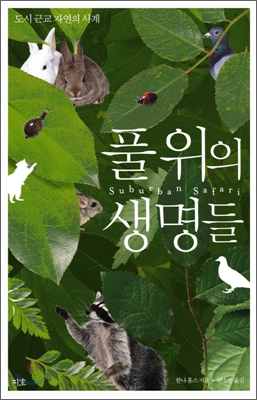
This book describes the ecology of countless animals and plants discovered by the author in an easy-to-read manner, including chipmunks, marmots, skunks, hummingbirds, starlings, raccoons, and deer, dozens of insects including wasps, weevils, gnats, and springtails, and countless plants ranging from oak, sumac, bamboo, and wild cherry trees to nameless weeds.
And we also talk about what we need to do to coexist with nature that breathes in the city.
This book is a record of the author's observations and recordings of the natural environment near South Portland, Maine, where she lives, over the past year.
One day, the author came across a quiz in a magazine asking, "Write the names of five resident and five migratory birds in the area where you currently live." He found himself unable to write down the names of even one, let alone five.
"Life on the Grass" is a book written in response to this trivial incident. She began observing based on the realization that she was ignorant of the creatures around her, and the belief that without knowing the creatures around her, she could not know how to protect them.
This book describes the ecology of countless animals and plants discovered by the author in an easy-to-read manner, including chipmunks, marmots, skunks, hummingbirds, starlings, raccoons, and deer, dozens of insects including wasps, weevils, gnats, and springtails, and countless plants ranging from oak, sumac, bamboo, and wild cherry trees to nameless weeds.
And we also talk about what we need to do to coexist with nature that breathes in the city.
- You can preview some of the book's contents.
Preview
index
preface
spring
1.
The flapping of birds' wings
2.
The bugs in my heart
3.
Three sources of water
summer
4.
The sad fate of animals that come to the city
5.
Life in the Soil
6.
Free lawn
autumn
7.
Backyard Past
8.
The Battle of the Oak Trees
9.
The story the wind tells
winter
10.
The coldest thirteen days of the year
11.
Attack of the Starlings
12.
The Strange Family
Acknowledgements
Translator's Note
spring
1.
The flapping of birds' wings
2.
The bugs in my heart
3.
Three sources of water
summer
4.
The sad fate of animals that come to the city
5.
Life in the Soil
6.
Free lawn
autumn
7.
Backyard Past
8.
The Battle of the Oak Trees
9.
The story the wind tells
winter
10.
The coldest thirteen days of the year
11.
Attack of the Starlings
12.
The Strange Family
Acknowledgements
Translator's Note
Publisher's Review
What kind of creatures live in the city we live in?
― Hannah Holmes, author of "Dust," observes the urban natural environment.
Looking at the lawn by the roadside, a curiosity suddenly arises.
What's the real name of the plant we simply call "grass"? What kind of insects are those we simply call "bugs"? That flower is so pretty, but what's its name? Are there any other birds you can recognize besides sparrows and pigeons? We are so ignorant of the flora and fauna around us.
What kind of life exists around us?
This is what led Hannah Holmes to observe the surroundings of her home for a year and write this book.
Holmes began his observations with the realization that he was ignorant of the creatures around him, and that he could not know how to protect them without knowing them.
Holmes' meticulous and colorful observations serve as a valuable guide for all who wish to live in harmony with nature.
The ultimate reason I spent a year in my backyard wasn't to gain knowledge for knowledge's sake (though it was a lot of fun).
Rather, I wanted to learn how to manage the land so that its inhabitants, including chipmunks, orioles, skunks, and even the humble moss, could live as well as possible.
My goal was to become a benevolent dictator in a world where humans had ascended to the position of biological leader.
But I will be able to rule fairly only if I become familiar with the needs and dislikes of all my subjects.
- Page 11
Animals returning to the city
But is there any nature worth observing in the so-called "desolate city"? But cities aren't as desolate as we think.
Hannah Holmes, who lives near South Portland, Maine, begins observing and discovers many unexpected flora and fauna.
The sheer number of animals that inhabit Holmes' lawn is astonishing: chipmunks, marmots, skunks, crows, geese, opossums, hummingbirds, starlings, raccoons, and even deer; dozens of insects, including wasps, weevils, gnats, spiders, ants, flies, springtails, and crickets; and countless plants, from oak, sumac, bamboo, and wild cherry to weeds you probably don't even know the names of.
In Korea, too, in recent years, there have been frequent reports of raccoons, deer, and even wild boars appearing in human villages.
Sometimes swallows build their nests in apartments or buildings.
In addition, Seoul has many wild mountains, and with the recent ecological restoration of World Cup Park and Yangjae Stream, there is considerable room for wild animals to live.
Most cities have an abundance of food, both discarded and provided by humans, and no large predators.
People don't even bother to catch animals.
As animals adapt to urban environments and green spaces increase in cities due to the spread of ecological awareness, the number of animals making cities their new home is gradually increasing.
Now, coexistence between humans and nature is beginning again in the city.
But on the other hand, the lack of predators has led to the overpopulation of animals, resulting in many animals being killed by cars or having to be deliberately shot.
Invasive Species Cast a Dark Shadow on Urban Ecosystems
Not everything is positive.
Although wildlife is thriving in urban ecosystems, not all wildlife is thriving.
Only species that can adapt to the city's ever-changing environment tend to thrive there.
Ultimately, while the number of wild animals living in cities may be large, their diversity is poor.
And those creatures that thrive in cities are usually invasive alien species.
In her book, Hannah Holmes points out that the surrounding nature contains few native North American species.
The most abundant species in the area where Holmes lives are European (house sparrows, starlings) or Asian (vines, bamboo).
These creatures outcompete native species in the struggle for survival, and instead take over their habitat.
There are several reasons for the success of invasive species.
First of all, the urban environment is very different from the environment in which native organisms evolved, making it difficult for them to adapt to new environments.
In contrast, invasive species have the ability to adapt to a wide range of environments.
Invasive species can also have an advantage over native species because they bring along existing parasites, bacteria, and natural enemies when they migrate.
From the author's perspective, just as species from Asia are invasive species that disrupt the ecosystem, we too are troubled by invasive species from North America.
Species such as the American bullfrog, the western (American) dandelion, the bullfrog, the bass, and the red-eared slider are native to North America and are notorious destroyers of native ecosystems.
Invasive species are the second-largest threat to rare animals after habitat destruction, and they cast a dark shadow over urban ecosystems.
How much do city people destroy the environment?
Hannah Holmes also calculates how much she, as a city dweller, is destroying the environment.
The results are impressive.
Here's how much pollution ecologist Hannah Holmes emitted from her home in a year:
4,656 kilograms of carbon dioxide, 47 kilograms of nitrogen oxide, 18 kilograms of sulfur dioxide, 85 grams of large particles, 284 grams of fine particles, 3 kilograms of volatile organic compounds, and 88 kilograms of methane.
She burned 1,850 cubic meters of gas and used 3,420 kilowatts of electricity.
And while driving the car, it emitted 2,300 kilograms of carbon dioxide, 9 kilograms of nitrogen oxides, and 5 kilograms of volatile oxides.
This also excludes emissions from consumption of goods and services.
The average American emits over 20 kilograms of carbon dioxide alone.
Although the trees she grows do absorb carbon dioxide, a single young, healthy tree only absorbs 11 kilograms of carbon dioxide in a year.
It takes thousands of trees to process the carbon dioxide emitted by one person.
Also, each liter of gasoline today is made from the decay of thousands of trees buried billions of years ago.
Every time we back our car out of the parking lot, we burn an ancient tree.
Even a single outing to the suburbs would mean burning tens of thousands of trees.
The resource consumption of city dwellers is dizzying, and the extent to which they pollute the Earth is terrifying.
Everyone who lives in a city contributes to the destruction of the ecosystem.
Why should we try to live with nature?
So what does biodiversity and ecosystems mean to us? Hannah Holmes ponders these questions during her observations.
Why do we feel heartbroken by the destruction of nature and the extinction of species? It's well known that biodiversity enhances the stability of ecosystems and that we can derive practical benefits, such as food and medicine, from diverse organisms.
But Hannah Holmes sees it differently.
Why do I crave the affection of these animals in my backyard? Perhaps we feel alienated, feared by all other species, in exchange for being the most powerful species.
Perhaps this passion for interacting with other species is a side effect of having a complex brain with a sense of community.
Who knows? Clearly, people crave companionship with animals.
-Page 124
We certainly long for communion with nature.
We naturally feel sympathy and compassion when we see trees dying or uprooted, when we see deer or raccoons hit and killed on the road, or when we see seabirds covered in oil.
The strongest driving force behind the desire to protect nature will undoubtedly come from this kind of emotion, not logic or reason.
It is a sentiment that humans and other animals are a family living together on this planet called Earth.
As Holmes gets to know the creatures around her over the course of a year, she welcomes them into her new family and strives to protect this 'family' even more.
Today, as animals come to cities, people have the opportunity to live with them.
Can we become close neighbors and family with them, or will we drive them out? The way for humans and nature to coexist in the city can be found by getting to know them.
The distinction between neighbors and friends is blurred.
The Indians who owned my yard two or three hundred years ago had a word for it, ntu'tem, meaning 'relatives of a strange race.'
The legend of Nuteum comes from the story of thirty people who ran into flowing water and were transformed into animals of this world.
For the Armuchikwas, these animals living around them were family.
Perhaps it means the same thing to me as the chipmunk 'Punchy', the spider Babette, the crows, the trees and mushrooms.
Neututem.
What a strange family.
But my family.
My family is something I must cherish, and I must take care of them as best I can.
-Pages 366-367
― Hannah Holmes, author of "Dust," observes the urban natural environment.
Looking at the lawn by the roadside, a curiosity suddenly arises.
What's the real name of the plant we simply call "grass"? What kind of insects are those we simply call "bugs"? That flower is so pretty, but what's its name? Are there any other birds you can recognize besides sparrows and pigeons? We are so ignorant of the flora and fauna around us.
What kind of life exists around us?
This is what led Hannah Holmes to observe the surroundings of her home for a year and write this book.
Holmes began his observations with the realization that he was ignorant of the creatures around him, and that he could not know how to protect them without knowing them.
Holmes' meticulous and colorful observations serve as a valuable guide for all who wish to live in harmony with nature.
The ultimate reason I spent a year in my backyard wasn't to gain knowledge for knowledge's sake (though it was a lot of fun).
Rather, I wanted to learn how to manage the land so that its inhabitants, including chipmunks, orioles, skunks, and even the humble moss, could live as well as possible.
My goal was to become a benevolent dictator in a world where humans had ascended to the position of biological leader.
But I will be able to rule fairly only if I become familiar with the needs and dislikes of all my subjects.
- Page 11
Animals returning to the city
But is there any nature worth observing in the so-called "desolate city"? But cities aren't as desolate as we think.
Hannah Holmes, who lives near South Portland, Maine, begins observing and discovers many unexpected flora and fauna.
The sheer number of animals that inhabit Holmes' lawn is astonishing: chipmunks, marmots, skunks, crows, geese, opossums, hummingbirds, starlings, raccoons, and even deer; dozens of insects, including wasps, weevils, gnats, spiders, ants, flies, springtails, and crickets; and countless plants, from oak, sumac, bamboo, and wild cherry to weeds you probably don't even know the names of.
In Korea, too, in recent years, there have been frequent reports of raccoons, deer, and even wild boars appearing in human villages.
Sometimes swallows build their nests in apartments or buildings.
In addition, Seoul has many wild mountains, and with the recent ecological restoration of World Cup Park and Yangjae Stream, there is considerable room for wild animals to live.
Most cities have an abundance of food, both discarded and provided by humans, and no large predators.
People don't even bother to catch animals.
As animals adapt to urban environments and green spaces increase in cities due to the spread of ecological awareness, the number of animals making cities their new home is gradually increasing.
Now, coexistence between humans and nature is beginning again in the city.
But on the other hand, the lack of predators has led to the overpopulation of animals, resulting in many animals being killed by cars or having to be deliberately shot.
Invasive Species Cast a Dark Shadow on Urban Ecosystems
Not everything is positive.
Although wildlife is thriving in urban ecosystems, not all wildlife is thriving.
Only species that can adapt to the city's ever-changing environment tend to thrive there.
Ultimately, while the number of wild animals living in cities may be large, their diversity is poor.
And those creatures that thrive in cities are usually invasive alien species.
In her book, Hannah Holmes points out that the surrounding nature contains few native North American species.
The most abundant species in the area where Holmes lives are European (house sparrows, starlings) or Asian (vines, bamboo).
These creatures outcompete native species in the struggle for survival, and instead take over their habitat.
There are several reasons for the success of invasive species.
First of all, the urban environment is very different from the environment in which native organisms evolved, making it difficult for them to adapt to new environments.
In contrast, invasive species have the ability to adapt to a wide range of environments.
Invasive species can also have an advantage over native species because they bring along existing parasites, bacteria, and natural enemies when they migrate.
From the author's perspective, just as species from Asia are invasive species that disrupt the ecosystem, we too are troubled by invasive species from North America.
Species such as the American bullfrog, the western (American) dandelion, the bullfrog, the bass, and the red-eared slider are native to North America and are notorious destroyers of native ecosystems.
Invasive species are the second-largest threat to rare animals after habitat destruction, and they cast a dark shadow over urban ecosystems.
How much do city people destroy the environment?
Hannah Holmes also calculates how much she, as a city dweller, is destroying the environment.
The results are impressive.
Here's how much pollution ecologist Hannah Holmes emitted from her home in a year:
4,656 kilograms of carbon dioxide, 47 kilograms of nitrogen oxide, 18 kilograms of sulfur dioxide, 85 grams of large particles, 284 grams of fine particles, 3 kilograms of volatile organic compounds, and 88 kilograms of methane.
She burned 1,850 cubic meters of gas and used 3,420 kilowatts of electricity.
And while driving the car, it emitted 2,300 kilograms of carbon dioxide, 9 kilograms of nitrogen oxides, and 5 kilograms of volatile oxides.
This also excludes emissions from consumption of goods and services.
The average American emits over 20 kilograms of carbon dioxide alone.
Although the trees she grows do absorb carbon dioxide, a single young, healthy tree only absorbs 11 kilograms of carbon dioxide in a year.
It takes thousands of trees to process the carbon dioxide emitted by one person.
Also, each liter of gasoline today is made from the decay of thousands of trees buried billions of years ago.
Every time we back our car out of the parking lot, we burn an ancient tree.
Even a single outing to the suburbs would mean burning tens of thousands of trees.
The resource consumption of city dwellers is dizzying, and the extent to which they pollute the Earth is terrifying.
Everyone who lives in a city contributes to the destruction of the ecosystem.
Why should we try to live with nature?
So what does biodiversity and ecosystems mean to us? Hannah Holmes ponders these questions during her observations.
Why do we feel heartbroken by the destruction of nature and the extinction of species? It's well known that biodiversity enhances the stability of ecosystems and that we can derive practical benefits, such as food and medicine, from diverse organisms.
But Hannah Holmes sees it differently.
Why do I crave the affection of these animals in my backyard? Perhaps we feel alienated, feared by all other species, in exchange for being the most powerful species.
Perhaps this passion for interacting with other species is a side effect of having a complex brain with a sense of community.
Who knows? Clearly, people crave companionship with animals.
-Page 124
We certainly long for communion with nature.
We naturally feel sympathy and compassion when we see trees dying or uprooted, when we see deer or raccoons hit and killed on the road, or when we see seabirds covered in oil.
The strongest driving force behind the desire to protect nature will undoubtedly come from this kind of emotion, not logic or reason.
It is a sentiment that humans and other animals are a family living together on this planet called Earth.
As Holmes gets to know the creatures around her over the course of a year, she welcomes them into her new family and strives to protect this 'family' even more.
Today, as animals come to cities, people have the opportunity to live with them.
Can we become close neighbors and family with them, or will we drive them out? The way for humans and nature to coexist in the city can be found by getting to know them.
The distinction between neighbors and friends is blurred.
The Indians who owned my yard two or three hundred years ago had a word for it, ntu'tem, meaning 'relatives of a strange race.'
The legend of Nuteum comes from the story of thirty people who ran into flowing water and were transformed into animals of this world.
For the Armuchikwas, these animals living around them were family.
Perhaps it means the same thing to me as the chipmunk 'Punchy', the spider Babette, the crows, the trees and mushrooms.
Neututem.
What a strange family.
But my family.
My family is something I must cherish, and I must take care of them as best I can.
-Pages 366-367
GOODS SPECIFICS
- Date of issue: May 2, 2008
- Page count, weight, size: 372 pages | 145*225*30mm
- ISBN13: 9788959090365
- ISBN10: 8959090360
You may also like
카테고리
korean


korean

![GQ KOREA Mark (Monthly): December [2025]](http://librairie.coreenne.fr/cdn/shop/files/8ef265dbbfbf186523ed75ba7319009d.jpg?v=1765340328&width=3840)


