

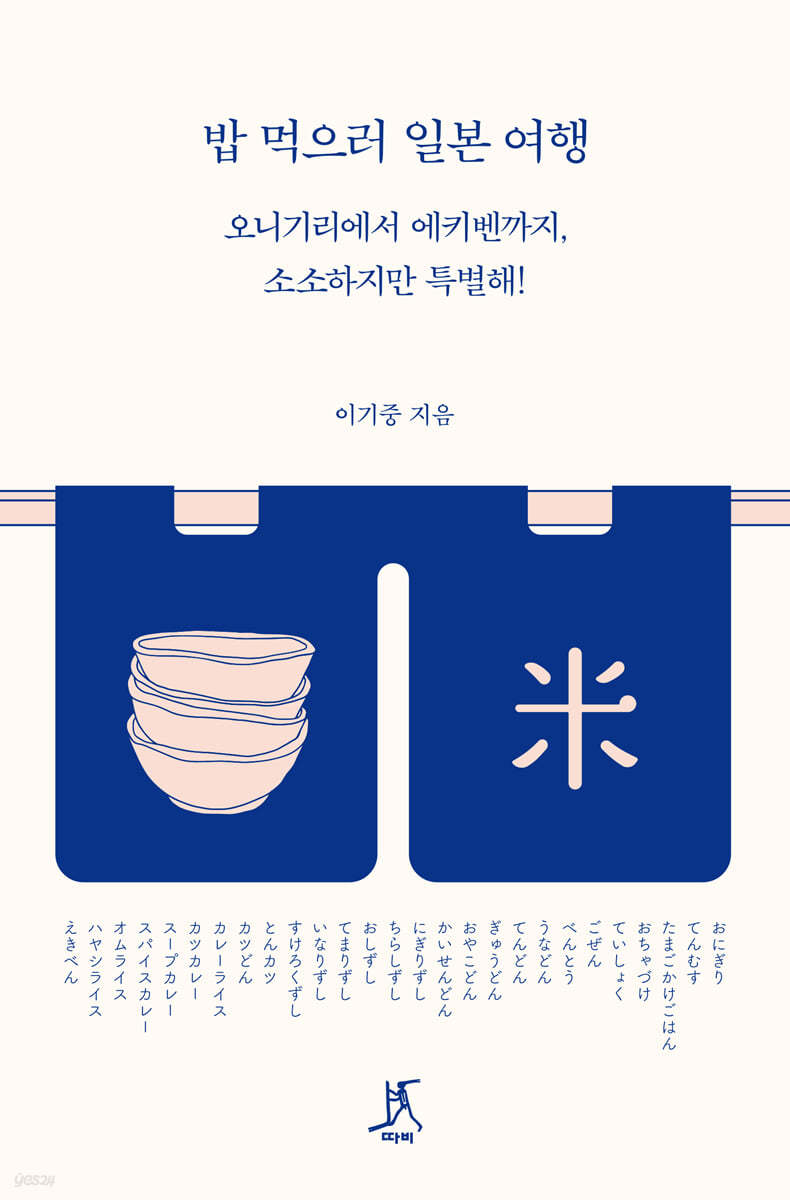
Traveling to Japan for food
 |
Description
Book Introduction
Enjoy the original taste of rice with onigiri seasoned only with gold.
Any dish can be placed on top of rice to make a donburi (rice bowl).
Japanese food, which is not found in the West, is considered soul food.
Turning ekiben purchased at train stations into the ultimate cultural experience.
Washoku, Yoshoku, Ekiben
Let's enjoy all the rice in Japan!
Although noodle dishes have developed in various ways, the core of Japanese food culture is rice and side dishes.
For Koreans who eat similar meals, this food culture is neither special nor exotic.
But perhaps it is precisely because of this that Koreans may be most sensitive to the individuality of Japanese 'rice'.
It is the ‘difference’ that can be felt within that intimacy.
Tabi Publishing's new book, "A Trip to Japan for Food - From Onigiri to Ekiben, Small but Special!" is an exploration of Japanese food culture and a guide for those seeking to savor the most authentically Japanese meal.
Any dish can be placed on top of rice to make a donburi (rice bowl).
Japanese food, which is not found in the West, is considered soul food.
Turning ekiben purchased at train stations into the ultimate cultural experience.
Washoku, Yoshoku, Ekiben
Let's enjoy all the rice in Japan!
Although noodle dishes have developed in various ways, the core of Japanese food culture is rice and side dishes.
For Koreans who eat similar meals, this food culture is neither special nor exotic.
But perhaps it is precisely because of this that Koreans may be most sensitive to the individuality of Japanese 'rice'.
It is the ‘difference’ that can be felt within that intimacy.
Tabi Publishing's new book, "A Trip to Japan for Food - From Onigiri to Ekiben, Small but Special!" is an exploration of Japanese food culture and a guide for those seeking to savor the most authentically Japanese meal.
- You can preview some of the book's contents.
Preview
index
Publishing a book 4
Washoku
Washoku, a Traditional Meal 16
① Japanese Comfort Food, Onigiri 18
The Origin of Koshihikari, Niigata's "Bakudan Onigiriya" 21 / Niigata's Another Famous Onigiri, Nigirimai 25 / Tokyo's "Onigiri Yadoroku," a Third-Generation Onigiri Shop 28 / Tokyo's Always-Long-Lined Onigiri Shop, Onigiri Bongo 33 / In Search of Nagoya's Famous Onigiri, "Tenmusu" 38
② The symbol of Japanese breakfast, Tamago Kake Gohan 41
Uchinotamago 44, a specialty tamago kake gohan restaurant inside Hakata Station / The fun of choosing and eating eggs, Kisaburonojo 46
③ Ochazuke 52: A Variety of Flavors and Comforting Fillings
Kyoto Obuya 54, a specialty ochazuke restaurant in Kyoto
④ The classic Japanese meal, Teishoku 57
Everything about sardines: Teishoku 58 at Shinjuku Kappo Nakajima in Tokyo / Teishoku you can taste anywhere in Japan: Yayoiken 62 / For a more extravagant teishoku, try Gozen, Akaraku 64 / For Kyoto-style obanzai Gozen, try Gyozaimi Nomura 66
⑤ Bento 69: A Long History and Spectacular Transformation
Kyoto Bento Masterpiece: Shimogamo Saryo 71
⑥ Donburi, Japan's representative dish, 76
Unadon 77, the leader in donburi
To taste the unadon of old Edo, visit Izuei Main Store 80 / Nagoya's famous hitsumabushi specialty store, Atsutahoraiken 83 / Cheap and delicious unadon specialty store, Unatoto Ueno Store 87
A Taste Born from a Western Encounter: Tendon 90
The Taste of the Original Tendon: Daikokuya 91 / Tendon Specialty Franchise: Tenya Yaesu Branch 97 / Gyudon: Japan's National Dish 100 / Kitsuneya, a Famous Gyudon Restaurant at Tokyo's Tsukiji Market 102 / A Quick Meal: Yoshinoya's Gyudon 107
Oyakodon 110, a dish that warms both body and soul
Oyakodon from a 100-year-old chicken specialty restaurant, Dorito 111
Seafood Donburi, Kaisendon 114
Donburi Chaya, a kaisendon specialty restaurant in Sapporo's fish market 116 / Kikuyoshokudo, a kaisendon specialty restaurant in Hakodate 118 / Niigata Senkyodonya Goshokudo, a fresh kaisendon restaurant at Niigata's fish market 122 / Yururi, a kaisendon restaurant in Murakami, the home of salmon 124 / Hakata Amano, a mentaiko-don restaurant, a famous Fukuoka dish 130
⑦ This is the taste of Japan, Sushi 133
To truly enjoy sushi, 138
141 different types of sushi
Ichibasushi, a specialty omakase sushi restaurant at Toyosu Market 145 / Sushizanmai, a long-established restaurant at Tokyo's Tsukiji Outer Market 149 / Nidaime Nanako, a kaisen chirashidon restaurant in Shinjuku 153 / Izuu, a long-established Kyoto oshizushi restaurant 156 / Hiraso, a representative Nara Prefecture Kakinoha-zushi 159 / Kashiwai, a beautiful temari-zushi restaurant in Kyoto 163 / Shinoda-zushi, a specialty inari-zushi restaurant with over 100 years of history 169 / Fukuzuya, a specialty inari-zushi takeout restaurant 172 / Nakamuraya, a specialty Kyoto sukeroku-zushi restaurant 175 / Ganso Mawaru Genroku Tenroku Branch, the originator of conveyor belt sushi 179 / Kura-zushi, a specialty conveyor belt sushi franchise 183
Yoshoku food
Yoshoku: A New Japanese Cuisine Created Through Encounters with the West 188
① Yoshoku, the soul food of the Japanese, tonkatsu 190
Tokyo's long-established tonkatsu restaurant, Pontahonke 192 / Nagoya's originator of misokatsu, Yabaton Yabacho Main Branch 195 / Katsuya, where you can enjoy tonkatsu at a reasonable price 199 / Katsudon, a transformation of tonkatsu 202 / Donki, a long-established tamago katsudon restaurant with a 50-year history 203 / Sousan, a sophisticated sauce katsudon specialty restaurant 207
② Japanese food that is neither Indian nor British, curry rice 210
Enjoy affordable Japanese curry rice at "Curry House Coco Ichibanya" 212 / The originator of Osaka curry rice, Jiyuken Namba Main Branch 215 / The originator of katsu curry, Ginza Swiss 218
Sapporo's famous dish, soup curry 221
Sapporo's popular soup curry restaurant, Soup Curry Karaku 222
Osaka's new wave: Spice Curry 226
The Origin of "Aigake" Curry, Kyuya Mutei Karahoi Branch 227 / Popular Spicy Curry Branch, Maruse 231
③ The most oriental yoshoku, omelet rice 234
The Origin of Omelet Rice, Rengatei 236
Another original omelet rice, Hokkyokusei Shinsaibashi Main Store 239
④ Hayashi Rice 242, a Western dish born in Japan
The Origin of Hayashi Rice, Maruzen Cafe 244
Ekiben?
Japanese Ekiben Travel 248
The Sparkle of the Sea, Uminokagayaki 250
Makunouchi Bento from the Showa Era, Showa no Makunouchi Bento 252
Savoring the Hokkaido Sea, Kaisen Ezo Shomi 253
Ishikari Sakemeshi 256, filled with salmon caught in Ishikari
A Feast of Shiretoko Native Chickens, Shiretoko Torimeshi 257
Ikameshi 259: A Lunchbox Born from the Poverty of War
A Harmony of Herring Meat and Roe, Nishinmigaki Bento 264
Kitano Ekibenyasan 267, a gift set-like ekiben
Chirashizushi, Ezochirashi 268, featuring Hokkaido seafood
Tsugaru Fish Assorted Lunch Box, Tsugaru No Obento Osaka Nadarake 270
Hachinohe Kota-zushi 272, a lunch box shaped like a shamisen
Sea urchin roe lunchbox cooked in three ways, Unitoni Touni 274
Toshimeshi Bento 276, an ekiben made with Akita native chicken
Sendai's iconic grilled beef tongue, served as a lunch box: Sendai Misoshitate Gyutan Bento 278
Packed with Yamagata beef, Yamagata Beef Gyumeshi 281
The Combination of Yamagata Beef and Rice, Gyunikudomannaka 282
The fun of solving a puzzle, Ebisenryo Chirashi 284
Murakami Gyudon Bento Box, Murakami Gyushigure 287
Masunosushi 289, Toyama's signature trout sushi lunch box
A lunch box filled with zuwaigani, Echizen Ganimeshi 292
Hitachi Gyuben 294, a gyudon bento made with Ibaraki beef
Local flavors in ceramic bowls, Togeno Kamameshi 296
The nature of Gunma in a Daruma-shaped lunchbox, Daruma Bento 299
Chicken Bento 301, a symbol of the Shinkansen and Tokyo Station
Nagoya's iconic chicken rice dish, Kochin Wappa Meshi 303
Soft Octopus Stew Lunch Box, Hipparidakomeshi 306
The first crab chirashizushi ekiben, Ganso Kani Sushi 308
When it comes to Hiroshima, oysters and Shamoji Kakimeshi 309 come to mind.
In Miyajima, try the Anago Donburi, Katsuanago Meshi 312.
Restoring a 1913 ekiben, Fukkokuban Kashiwameshi 314
Arita-yaki Curry 317, a symbol of Arita, the home of porcelain
Enjoy grilled silver carp as a lunch box, Ayuya Sandai 319
Kumamoto's representative Kumamon and Akagyu, Kumamoto Akagyu Lunch Box 322
The Taste of Kagoshima's New Year's Day, Ebimeshi 323
115 Japanese Phrases You Need to Know When Ordering Kaisendon and Sushi
Find restaurants by region 326
Washoku
Washoku, a Traditional Meal 16
① Japanese Comfort Food, Onigiri 18
The Origin of Koshihikari, Niigata's "Bakudan Onigiriya" 21 / Niigata's Another Famous Onigiri, Nigirimai 25 / Tokyo's "Onigiri Yadoroku," a Third-Generation Onigiri Shop 28 / Tokyo's Always-Long-Lined Onigiri Shop, Onigiri Bongo 33 / In Search of Nagoya's Famous Onigiri, "Tenmusu" 38
② The symbol of Japanese breakfast, Tamago Kake Gohan 41
Uchinotamago 44, a specialty tamago kake gohan restaurant inside Hakata Station / The fun of choosing and eating eggs, Kisaburonojo 46
③ Ochazuke 52: A Variety of Flavors and Comforting Fillings
Kyoto Obuya 54, a specialty ochazuke restaurant in Kyoto
④ The classic Japanese meal, Teishoku 57
Everything about sardines: Teishoku 58 at Shinjuku Kappo Nakajima in Tokyo / Teishoku you can taste anywhere in Japan: Yayoiken 62 / For a more extravagant teishoku, try Gozen, Akaraku 64 / For Kyoto-style obanzai Gozen, try Gyozaimi Nomura 66
⑤ Bento 69: A Long History and Spectacular Transformation
Kyoto Bento Masterpiece: Shimogamo Saryo 71
⑥ Donburi, Japan's representative dish, 76
Unadon 77, the leader in donburi
To taste the unadon of old Edo, visit Izuei Main Store 80 / Nagoya's famous hitsumabushi specialty store, Atsutahoraiken 83 / Cheap and delicious unadon specialty store, Unatoto Ueno Store 87
A Taste Born from a Western Encounter: Tendon 90
The Taste of the Original Tendon: Daikokuya 91 / Tendon Specialty Franchise: Tenya Yaesu Branch 97 / Gyudon: Japan's National Dish 100 / Kitsuneya, a Famous Gyudon Restaurant at Tokyo's Tsukiji Market 102 / A Quick Meal: Yoshinoya's Gyudon 107
Oyakodon 110, a dish that warms both body and soul
Oyakodon from a 100-year-old chicken specialty restaurant, Dorito 111
Seafood Donburi, Kaisendon 114
Donburi Chaya, a kaisendon specialty restaurant in Sapporo's fish market 116 / Kikuyoshokudo, a kaisendon specialty restaurant in Hakodate 118 / Niigata Senkyodonya Goshokudo, a fresh kaisendon restaurant at Niigata's fish market 122 / Yururi, a kaisendon restaurant in Murakami, the home of salmon 124 / Hakata Amano, a mentaiko-don restaurant, a famous Fukuoka dish 130
⑦ This is the taste of Japan, Sushi 133
To truly enjoy sushi, 138
141 different types of sushi
Ichibasushi, a specialty omakase sushi restaurant at Toyosu Market 145 / Sushizanmai, a long-established restaurant at Tokyo's Tsukiji Outer Market 149 / Nidaime Nanako, a kaisen chirashidon restaurant in Shinjuku 153 / Izuu, a long-established Kyoto oshizushi restaurant 156 / Hiraso, a representative Nara Prefecture Kakinoha-zushi 159 / Kashiwai, a beautiful temari-zushi restaurant in Kyoto 163 / Shinoda-zushi, a specialty inari-zushi restaurant with over 100 years of history 169 / Fukuzuya, a specialty inari-zushi takeout restaurant 172 / Nakamuraya, a specialty Kyoto sukeroku-zushi restaurant 175 / Ganso Mawaru Genroku Tenroku Branch, the originator of conveyor belt sushi 179 / Kura-zushi, a specialty conveyor belt sushi franchise 183
Yoshoku food
Yoshoku: A New Japanese Cuisine Created Through Encounters with the West 188
① Yoshoku, the soul food of the Japanese, tonkatsu 190
Tokyo's long-established tonkatsu restaurant, Pontahonke 192 / Nagoya's originator of misokatsu, Yabaton Yabacho Main Branch 195 / Katsuya, where you can enjoy tonkatsu at a reasonable price 199 / Katsudon, a transformation of tonkatsu 202 / Donki, a long-established tamago katsudon restaurant with a 50-year history 203 / Sousan, a sophisticated sauce katsudon specialty restaurant 207
② Japanese food that is neither Indian nor British, curry rice 210
Enjoy affordable Japanese curry rice at "Curry House Coco Ichibanya" 212 / The originator of Osaka curry rice, Jiyuken Namba Main Branch 215 / The originator of katsu curry, Ginza Swiss 218
Sapporo's famous dish, soup curry 221
Sapporo's popular soup curry restaurant, Soup Curry Karaku 222
Osaka's new wave: Spice Curry 226
The Origin of "Aigake" Curry, Kyuya Mutei Karahoi Branch 227 / Popular Spicy Curry Branch, Maruse 231
③ The most oriental yoshoku, omelet rice 234
The Origin of Omelet Rice, Rengatei 236
Another original omelet rice, Hokkyokusei Shinsaibashi Main Store 239
④ Hayashi Rice 242, a Western dish born in Japan
The Origin of Hayashi Rice, Maruzen Cafe 244
Ekiben?
Japanese Ekiben Travel 248
The Sparkle of the Sea, Uminokagayaki 250
Makunouchi Bento from the Showa Era, Showa no Makunouchi Bento 252
Savoring the Hokkaido Sea, Kaisen Ezo Shomi 253
Ishikari Sakemeshi 256, filled with salmon caught in Ishikari
A Feast of Shiretoko Native Chickens, Shiretoko Torimeshi 257
Ikameshi 259: A Lunchbox Born from the Poverty of War
A Harmony of Herring Meat and Roe, Nishinmigaki Bento 264
Kitano Ekibenyasan 267, a gift set-like ekiben
Chirashizushi, Ezochirashi 268, featuring Hokkaido seafood
Tsugaru Fish Assorted Lunch Box, Tsugaru No Obento Osaka Nadarake 270
Hachinohe Kota-zushi 272, a lunch box shaped like a shamisen
Sea urchin roe lunchbox cooked in three ways, Unitoni Touni 274
Toshimeshi Bento 276, an ekiben made with Akita native chicken
Sendai's iconic grilled beef tongue, served as a lunch box: Sendai Misoshitate Gyutan Bento 278
Packed with Yamagata beef, Yamagata Beef Gyumeshi 281
The Combination of Yamagata Beef and Rice, Gyunikudomannaka 282
The fun of solving a puzzle, Ebisenryo Chirashi 284
Murakami Gyudon Bento Box, Murakami Gyushigure 287
Masunosushi 289, Toyama's signature trout sushi lunch box
A lunch box filled with zuwaigani, Echizen Ganimeshi 292
Hitachi Gyuben 294, a gyudon bento made with Ibaraki beef
Local flavors in ceramic bowls, Togeno Kamameshi 296
The nature of Gunma in a Daruma-shaped lunchbox, Daruma Bento 299
Chicken Bento 301, a symbol of the Shinkansen and Tokyo Station
Nagoya's iconic chicken rice dish, Kochin Wappa Meshi 303
Soft Octopus Stew Lunch Box, Hipparidakomeshi 306
The first crab chirashizushi ekiben, Ganso Kani Sushi 308
When it comes to Hiroshima, oysters and Shamoji Kakimeshi 309 come to mind.
In Miyajima, try the Anago Donburi, Katsuanago Meshi 312.
Restoring a 1913 ekiben, Fukkokuban Kashiwameshi 314
Arita-yaki Curry 317, a symbol of Arita, the home of porcelain
Enjoy grilled silver carp as a lunch box, Ayuya Sandai 319
Kumamoto's representative Kumamon and Akagyu, Kumamoto Akagyu Lunch Box 322
The Taste of Kagoshima's New Year's Day, Ebimeshi 323
115 Japanese Phrases You Need to Know When Ordering Kaisendon and Sushi
Find restaurants by region 326
Detailed image

Into the book
However, compared to the long history of Japanese cuisine, the term 'washoku' has not been used for very long.
The term Washoku was coined during the Meiji period (1868-1912), when Japan transitioned from the feudal era to the modern era.
The trigger was an encounter with foreigners and foreign cultures.
--- p.16
Actually, I was thinking about going to this restaurant, but I hesitated for a long time before actually going because I was worried about whether I could eat that many eggs at once.
But when I actually got there, the eggs tasted different, so it was fun to compare them one by one.
--- p.50
In fact, the main dishes that go into teishoku are very diverse, including grilled or stewed fish, stewed or stir-fried pork or beef, sashimi, fried food, and tonkatsu. In fact, any dish served with rice and soup can be called "teishoku."
--- p.57
Shojo, who was also a master of painting, calligraphy, poetry, and tea ceremony, designed a calligraphy tool box and a tobacco tool box in the shape of the Chinese character for "field" (田), inspired by the way farmers stored seeds in small, partitioned containers. He was also deeply immersed in tea ceremony culture, and would often invite friends over and serve them tea with light food in a square box he had made.
--- p.70
The word tempura originally came from the word 'Quatuor Tempora', which means a period of three days of prayer and abstaining from eating meat in each of the four seasons in Christian churches.
--- p.90
This pickled mackerel is called shimesaba, and the sushi made with it is called sabazushi.
Sabazushi was a precious food eaten on special occasions, and Izuu was created to sell this simple festival food.
--- p.156
And one of the two inarizushi was made by flipping the fried tofu over and lightly grilling it.
This is inarizushi that has been made since Fukuzuya's founding. I found out that the recipe is to grill the surface of the flipped tofu with a far-infrared burner so that you can enjoy the flavor of the soybeans.
--- pp.172~173
Nagoya has a unique pork cutlet that you can't find anywhere else: misokatsu, a pork cutlet made with hatcho miso, a specialty of Nagoya (and Aichi Prefecture).
--- p.195
Former musicians and people in the entertainment industry who were in the show business became interested in the curry business run in this 'borrowed shop' because, compared to other foods that required skill through experience, curry rice was a relatively easy dish to make.
--- p.226
When you unpack it, you will find a box shaped like the body of a shamisen, along with a bachi, a tool used to pluck the strings of the shamisen, and shimesabazushi and shimebenizakezushi, made by pressing thick slices of mackerel and pink salmon caught in the waters off Hachinohe.
--- p.273
The round jar container has a very unique shape, and it is said to be modeled after the takotsubo?壺, a jar traditionally used in Japan to catch octopus.
'Hitpari' means 'very popular' or 'highly sought after'.
The term Washoku was coined during the Meiji period (1868-1912), when Japan transitioned from the feudal era to the modern era.
The trigger was an encounter with foreigners and foreign cultures.
--- p.16
Actually, I was thinking about going to this restaurant, but I hesitated for a long time before actually going because I was worried about whether I could eat that many eggs at once.
But when I actually got there, the eggs tasted different, so it was fun to compare them one by one.
--- p.50
In fact, the main dishes that go into teishoku are very diverse, including grilled or stewed fish, stewed or stir-fried pork or beef, sashimi, fried food, and tonkatsu. In fact, any dish served with rice and soup can be called "teishoku."
--- p.57
Shojo, who was also a master of painting, calligraphy, poetry, and tea ceremony, designed a calligraphy tool box and a tobacco tool box in the shape of the Chinese character for "field" (田), inspired by the way farmers stored seeds in small, partitioned containers. He was also deeply immersed in tea ceremony culture, and would often invite friends over and serve them tea with light food in a square box he had made.
--- p.70
The word tempura originally came from the word 'Quatuor Tempora', which means a period of three days of prayer and abstaining from eating meat in each of the four seasons in Christian churches.
--- p.90
This pickled mackerel is called shimesaba, and the sushi made with it is called sabazushi.
Sabazushi was a precious food eaten on special occasions, and Izuu was created to sell this simple festival food.
--- p.156
And one of the two inarizushi was made by flipping the fried tofu over and lightly grilling it.
This is inarizushi that has been made since Fukuzuya's founding. I found out that the recipe is to grill the surface of the flipped tofu with a far-infrared burner so that you can enjoy the flavor of the soybeans.
--- pp.172~173
Nagoya has a unique pork cutlet that you can't find anywhere else: misokatsu, a pork cutlet made with hatcho miso, a specialty of Nagoya (and Aichi Prefecture).
--- p.195
Former musicians and people in the entertainment industry who were in the show business became interested in the curry business run in this 'borrowed shop' because, compared to other foods that required skill through experience, curry rice was a relatively easy dish to make.
--- p.226
When you unpack it, you will find a box shaped like the body of a shamisen, along with a bachi, a tool used to pluck the strings of the shamisen, and shimesabazushi and shimebenizakezushi, made by pressing thick slices of mackerel and pink salmon caught in the waters off Hachinohe.
--- p.273
The round jar container has a very unique shape, and it is said to be modeled after the takotsubo?壺, a jar traditionally used in Japan to catch octopus.
'Hitpari' means 'very popular' or 'highly sought after'.
--- p.307
Publisher's Review
Japanese rice, what makes it different?
Although it is sometimes used to mean 'meal', rice is a food made from rice and is different from porridge or rice cake.
There are also Western dishes like Italian risotto and Spanish paella, but rice is basically a staple food for Asians.
Unless you eat a special meal on a special day, eating three meals a day is what we call rice.
Is there anything different about Japanese rice?
The author of this book is Professor Lee Ki-jung, an anthropologist and food hunter who has already published a book on Japanese noodle cuisine.
For him, Japanese food is not only a delicious dish but also a gastronomy created by the attitude towards food and Japaneseness, and is an object of exploration connected to Japanese identity.
The author explores Japanese rice by dividing it into three types.
Washoku refers to traditional Japanese food, Yoshoku refers to Japanese-style Western food, and Ekiben refers to lunch boxes purchased at train stations.
Among these, the one the author tastes first is Washoku.
Traditional Japanese food culture and various types of washoku
Just as traditional Korean food is called Hansik (韓食), traditional Japanese food is called Washoku (和食).
The extravagant "kaiseki cuisine," often considered the essence of Japanese culinary culture, is also part of Washoku, but the world of Washoku is much broader.
It is difficult to even count the types of rice, including the most basic rice dish, 'onigiri', 'teishoku' which is a Japanese-style set meal, and 'sushi' which is the face of Japanese food.
What criteria does the author use to enjoy and introduce these diverse types of washoku? In short, it's about finding their "roots."
To eat onigiri that truly showcases the flavor of rice, go to Akita Prefecture, the home of Koshihikari, Japan's representative rice variety.
The place I visited to eat tamago kake gohan is an egg specialty restaurant that receives special eggs from all over Japan directly from farms.
If this is a case of tasting rice in search of the 'root of taste', there is also rice in search of the 'root of history'.
We go to Kyoto to find the origin of oshizushi (pressed sushi), and to a long-established restaurant in Tokyo to find the origin of nigirizushi (hand-formed sushi).
Koreans consider soup as important as rice, and eat it as soup with rice mixed in any soup, while Japanese (at least when eating out) focus on one main dish rather than a variety of side dishes, and make a rice bowl by putting any side dish on top of rice.
Japanese rice bowls, such as unadon topped with grilled eel, kaisendon topped with a variety of seafood, and gyudon and oyakodon, which date back to the Meiji government's lifting of the ban on meat consumption, contain Japanese tradition, modernity, and industrialization.
The various donburi(?) introduced by the author from the northernmost Hokkaido to the southernmost Kyushu well demonstrate the characteristics and history of Japanese food culture.
Yoshoku and Ekiben Created by Modern Japan
If Washoku demonstrates the roots and diversity of Japanese food culture, Yoshoku demonstrates its flexibility.
Yoshoku (洋食) is a name given to Western food in contrast to Washoku, which means Japanese food.
However, it is not Western food itself, but food created in Japan that imitates Western food.
Tonkatsu, a variation of cutlet, croquette, which imitates croquette, and omelet rice, which is an adaptation of omelet, are all examples of Japanese yoshoku.
Eating tonkatsu, croquettes, hamburger patties, and even Napolitan (Japanese spaghetti with ketchup instead of tomato sauce) as side dishes is also a characteristic of Japanese food culture. Among these, the author tastes tonkatsu (both set and donburi), curry rice, omelet rice, and hayashi rice.
It covers not only the origins of each dish but also franchises that can be found anywhere, allowing you to enjoy the original form and diversity of Western cuisine that originated in Japan.
The last Japanese meal the author introduces is Ekiben (弁), which is a combination of the word 'eki(?)' meaning train station and 'ben' from bento meaning lunch box.
Ekiben is a very Japanese food that combines Japanese food culture, travel culture, railway culture, and Japan's unique packaging culture. It is a symbol of Japanese food that anyone planning a trip to Japan would want to try at least once.
Ekiben are sold at train stations, so they contain ingredients and recipes that reflect the local nature more than any other food.
The author travels by train from Hokkaido to Kyushu via Hokuriku, Tohoku, Kanto, Chubu, Kansai, and Chugoku, eating ekiben. He introduces not just delicious ekiben, but ekiben that symbolize each region.
These ekiben, filled with regional ingredients like Hokkaido seafood, Sendai beef, Nagoya native chicken, Hiroshima oysters, and Kagoshima shrimp, are packed in unique lunch boxes that capture the history of the region, such as those shaped like daruma dolls, shamisen, takotsubo-style pottery, and artisan pottery. These lunch boxes not only make your mouth water but also stimulate your desire to travel.
The author has faithfully included detailed explanations of the history and culture of Japanese food, food terminology, and information on restaurants and food reviews in each region.
This book will provide a delicious read not only for those planning a trip to Japan, but also for anyone curious about Japanese culture.
Although it is sometimes used to mean 'meal', rice is a food made from rice and is different from porridge or rice cake.
There are also Western dishes like Italian risotto and Spanish paella, but rice is basically a staple food for Asians.
Unless you eat a special meal on a special day, eating three meals a day is what we call rice.
Is there anything different about Japanese rice?
The author of this book is Professor Lee Ki-jung, an anthropologist and food hunter who has already published a book on Japanese noodle cuisine.
For him, Japanese food is not only a delicious dish but also a gastronomy created by the attitude towards food and Japaneseness, and is an object of exploration connected to Japanese identity.
The author explores Japanese rice by dividing it into three types.
Washoku refers to traditional Japanese food, Yoshoku refers to Japanese-style Western food, and Ekiben refers to lunch boxes purchased at train stations.
Among these, the one the author tastes first is Washoku.
Traditional Japanese food culture and various types of washoku
Just as traditional Korean food is called Hansik (韓食), traditional Japanese food is called Washoku (和食).
The extravagant "kaiseki cuisine," often considered the essence of Japanese culinary culture, is also part of Washoku, but the world of Washoku is much broader.
It is difficult to even count the types of rice, including the most basic rice dish, 'onigiri', 'teishoku' which is a Japanese-style set meal, and 'sushi' which is the face of Japanese food.
What criteria does the author use to enjoy and introduce these diverse types of washoku? In short, it's about finding their "roots."
To eat onigiri that truly showcases the flavor of rice, go to Akita Prefecture, the home of Koshihikari, Japan's representative rice variety.
The place I visited to eat tamago kake gohan is an egg specialty restaurant that receives special eggs from all over Japan directly from farms.
If this is a case of tasting rice in search of the 'root of taste', there is also rice in search of the 'root of history'.
We go to Kyoto to find the origin of oshizushi (pressed sushi), and to a long-established restaurant in Tokyo to find the origin of nigirizushi (hand-formed sushi).
Koreans consider soup as important as rice, and eat it as soup with rice mixed in any soup, while Japanese (at least when eating out) focus on one main dish rather than a variety of side dishes, and make a rice bowl by putting any side dish on top of rice.
Japanese rice bowls, such as unadon topped with grilled eel, kaisendon topped with a variety of seafood, and gyudon and oyakodon, which date back to the Meiji government's lifting of the ban on meat consumption, contain Japanese tradition, modernity, and industrialization.
The various donburi(?) introduced by the author from the northernmost Hokkaido to the southernmost Kyushu well demonstrate the characteristics and history of Japanese food culture.
Yoshoku and Ekiben Created by Modern Japan
If Washoku demonstrates the roots and diversity of Japanese food culture, Yoshoku demonstrates its flexibility.
Yoshoku (洋食) is a name given to Western food in contrast to Washoku, which means Japanese food.
However, it is not Western food itself, but food created in Japan that imitates Western food.
Tonkatsu, a variation of cutlet, croquette, which imitates croquette, and omelet rice, which is an adaptation of omelet, are all examples of Japanese yoshoku.
Eating tonkatsu, croquettes, hamburger patties, and even Napolitan (Japanese spaghetti with ketchup instead of tomato sauce) as side dishes is also a characteristic of Japanese food culture. Among these, the author tastes tonkatsu (both set and donburi), curry rice, omelet rice, and hayashi rice.
It covers not only the origins of each dish but also franchises that can be found anywhere, allowing you to enjoy the original form and diversity of Western cuisine that originated in Japan.
The last Japanese meal the author introduces is Ekiben (弁), which is a combination of the word 'eki(?)' meaning train station and 'ben' from bento meaning lunch box.
Ekiben is a very Japanese food that combines Japanese food culture, travel culture, railway culture, and Japan's unique packaging culture. It is a symbol of Japanese food that anyone planning a trip to Japan would want to try at least once.
Ekiben are sold at train stations, so they contain ingredients and recipes that reflect the local nature more than any other food.
The author travels by train from Hokkaido to Kyushu via Hokuriku, Tohoku, Kanto, Chubu, Kansai, and Chugoku, eating ekiben. He introduces not just delicious ekiben, but ekiben that symbolize each region.
These ekiben, filled with regional ingredients like Hokkaido seafood, Sendai beef, Nagoya native chicken, Hiroshima oysters, and Kagoshima shrimp, are packed in unique lunch boxes that capture the history of the region, such as those shaped like daruma dolls, shamisen, takotsubo-style pottery, and artisan pottery. These lunch boxes not only make your mouth water but also stimulate your desire to travel.
The author has faithfully included detailed explanations of the history and culture of Japanese food, food terminology, and information on restaurants and food reviews in each region.
This book will provide a delicious read not only for those planning a trip to Japan, but also for anyone curious about Japanese culture.
GOODS SPECIFICS
- Date of issue: March 30, 2024
- Page count, weight, size: 328 pages | 646g | 135*205*18mm
- ISBN13: 9791192169354
- ISBN10: 1192169352
You may also like
카테고리
korean


korean

![ELLE 엘르 스페셜 에디션 A형 : 12월 [2025]](http://librairie.coreenne.fr/cdn/shop/files/b8e27a3de6c9538896439686c6b0e8fb.jpg?v=1766436872&width=3840)


