

The Diamond Sutra, now understood
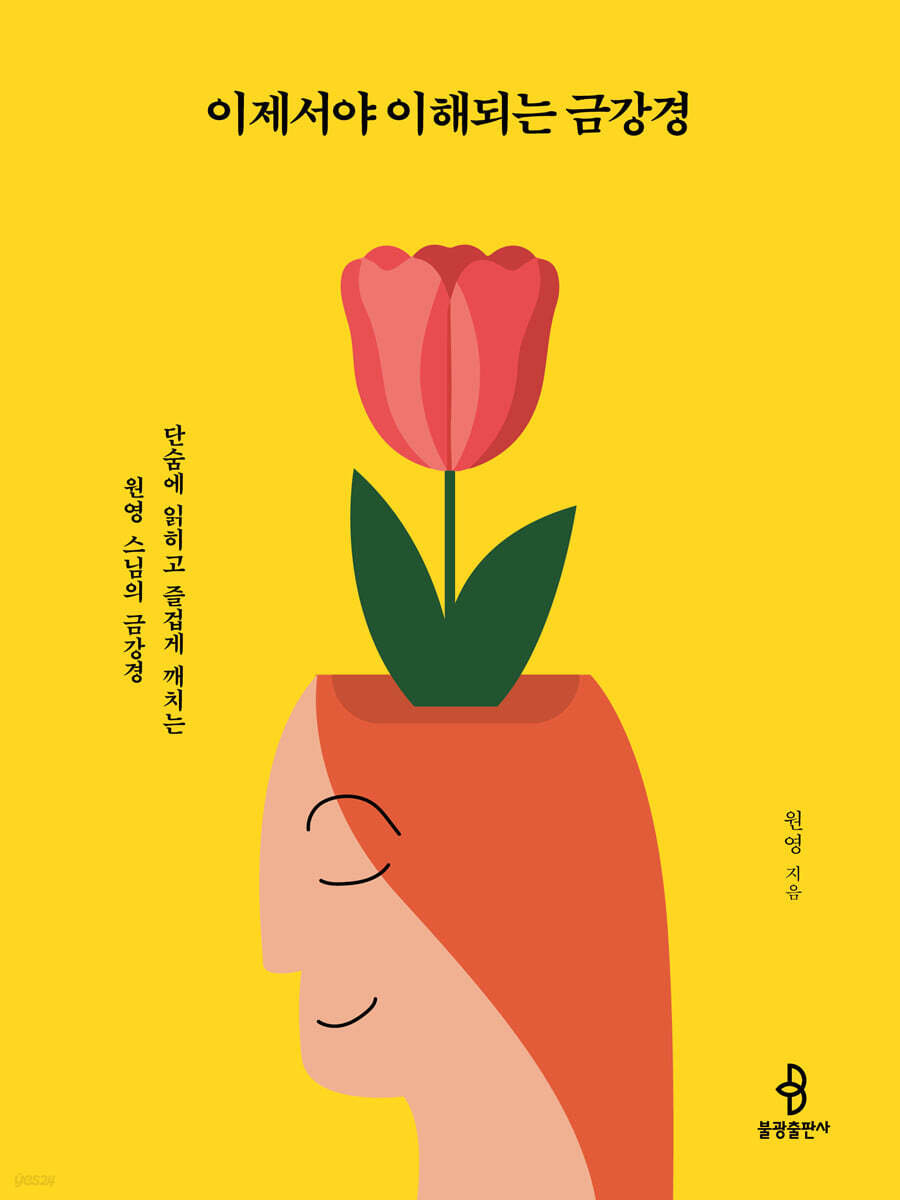 |
Description
Book Introduction
He is the best-selling author in the Buddhist world.
Buddhist study instructor Wonyoung
The third installment of the 'Now I Understand' series!
The life I'm living now feels so bleak
If you are suddenly overcome with anxiety and worry about the future,
There's no better time to study the Diamond Sutra!
The Diamond Sutra is the primary sutra of the Jogye Order of Korean Buddhism and, along with the Heart Sutra, is the most widely recited and studied sutra.
But even without that reason, the thoughts and wisdom contained in the Diamond Sutra are worth reading and studying, not only by Buddhism but by all people.
The teaching in the Diamond Sutra to dismantle all notions and ideas teaches all those who are anxious, fearful, and troubled the 'great freedom' of living unshaken by anything.
So, although it is said to be empty, it is filled with teachings.
Monk Won-yeong, a 'daily lecturer in Buddhist studies' who kindly explained the core teachings of Buddhism through his previous works, 'Buddhism Now Understood' and 'Heart Sutra Now Understood', has now explained the 'Diamond Sutra' in a way that anyone can easily read and understand.
It is written in everyday language instead of difficult terms, and with relatable examples and anecdotes instead of complex explanations, making it easy to read and understand right away.
This will help you know exactly what kind of mindset you should have when life feels bleak and you are tormented by anxiety and worry about the future.
Buddhist study instructor Wonyoung
The third installment of the 'Now I Understand' series!
The life I'm living now feels so bleak
If you are suddenly overcome with anxiety and worry about the future,
There's no better time to study the Diamond Sutra!
The Diamond Sutra is the primary sutra of the Jogye Order of Korean Buddhism and, along with the Heart Sutra, is the most widely recited and studied sutra.
But even without that reason, the thoughts and wisdom contained in the Diamond Sutra are worth reading and studying, not only by Buddhism but by all people.
The teaching in the Diamond Sutra to dismantle all notions and ideas teaches all those who are anxious, fearful, and troubled the 'great freedom' of living unshaken by anything.
So, although it is said to be empty, it is filled with teachings.
Monk Won-yeong, a 'daily lecturer in Buddhist studies' who kindly explained the core teachings of Buddhism through his previous works, 'Buddhism Now Understood' and 'Heart Sutra Now Understood', has now explained the 'Diamond Sutra' in a way that anyone can easily read and understand.
It is written in everyday language instead of difficult terms, and with relatable examples and anecdotes instead of complex explanations, making it easy to read and understand right away.
This will help you know exactly what kind of mindset you should have when life feels bleak and you are tormented by anxiety and worry about the future.
- You can preview some of the book's contents.
Preview
index
ㆍPublishing a book
Part 1: Understanding the Diamond Sutra
1.
The strong and solid Diamond Sutra
2.
The Buddha's Life Routine: The First Dharma Assembly
3.
Questions to live my life: Part 2.
Seonhyeongi Cheongbun
4.
How you think makes you a man: Part 3.
Mahayana Buddhist Order
5.
My mistakes that I hadn't thought of, Sang (相)
To start part 2 again
1.
You have to give even if you can't get it back: Part 4.
The mysterious and invincible
2.
I see your true self: Part 5.
Yeo-ri-sil-gyeon-bun
3.
There are answers even in the end times: Part 6.
Mental rare substance
4.
There is nothing to be stubborn about: 7.
No gain, no slander
5.
What is fortune?: Chapter 8.
Legal birth
6.
Are you confident that you will not be swayed by temptation?: No. 9.
Daily free portion
Part 3 Anytime, Anywhere
1.
Let your mind be still: Chapter 10.
Magnificent Pure Land Tomb
2.
Sharing Wisdom Brings Blessings: Lesson 11.
Muwiboksungbun
3.
The Power of Right Teaching: Chapter 12.
Respectful and honest relationship
4.
Don't be trapped by names: Part 13.
Yeobeopsuji branch
5.
A flower that blooms despite adversity is beautiful: Chapter 14.
Ideal extinction
6.
All successful people live by working hard: Chapter 15.
Jikyeonggongdeokbun
Part 4: Don't Be Shaken
1.
Clearing the Karma: Chapter 16.
Neungjeong karma division
2.
Because there is nothing fixed, it becomes truth: Chapter 17.
I don't care about anything
3.
The Illusion of Night: The 18th Ilchidonggwanbun
4.
It's hard to convince someone who has already decided on the answer: No. 19.
Dharma system currency
5.
Don't be fooled by the name: Part 20.
unusual
6.
Words are vessels that contain thoughts: 21.
Non-fiction fiction
Part 5: Open Your Heart
1.
Every Day is a Good Day: Part 22.
Full of lawlessness
2.
Clouds do not move without wind: Chapter 23.
Jeongsimhaengseonbun
3.
Wise Choices Bring Blessings: Chapter 24.
Welfare movie portion
4.
When you lose your way, you find a new way: Chapter 25.
Firefighting pot
5.
Don't be obsessed with life, it will disappear like smoke: Chapter 26.
Dharmakaya emergency
6.
Deceived by Thought: No. 27.
Unauthorized and unexploitable
Part 6: Enlightenment is visible
1.
Save the blessings you will enjoy: Chapter 28.
I can't stand it
2.
Oh, my Buddha! : Chapter 29.
The above titration
3.
Reason and Phenomenon Meet: Episode 30.
Rational common denominator
4.
Looking through the eyes of Buddha: 31.
Ji-geun-bul-saeng-bun
5.
Unshaken by anything: No. 32.
Eunghwabijinbun
ㆍEnding the book
Part 1: Understanding the Diamond Sutra
1.
The strong and solid Diamond Sutra
2.
The Buddha's Life Routine: The First Dharma Assembly
3.
Questions to live my life: Part 2.
Seonhyeongi Cheongbun
4.
How you think makes you a man: Part 3.
Mahayana Buddhist Order
5.
My mistakes that I hadn't thought of, Sang (相)
To start part 2 again
1.
You have to give even if you can't get it back: Part 4.
The mysterious and invincible
2.
I see your true self: Part 5.
Yeo-ri-sil-gyeon-bun
3.
There are answers even in the end times: Part 6.
Mental rare substance
4.
There is nothing to be stubborn about: 7.
No gain, no slander
5.
What is fortune?: Chapter 8.
Legal birth
6.
Are you confident that you will not be swayed by temptation?: No. 9.
Daily free portion
Part 3 Anytime, Anywhere
1.
Let your mind be still: Chapter 10.
Magnificent Pure Land Tomb
2.
Sharing Wisdom Brings Blessings: Lesson 11.
Muwiboksungbun
3.
The Power of Right Teaching: Chapter 12.
Respectful and honest relationship
4.
Don't be trapped by names: Part 13.
Yeobeopsuji branch
5.
A flower that blooms despite adversity is beautiful: Chapter 14.
Ideal extinction
6.
All successful people live by working hard: Chapter 15.
Jikyeonggongdeokbun
Part 4: Don't Be Shaken
1.
Clearing the Karma: Chapter 16.
Neungjeong karma division
2.
Because there is nothing fixed, it becomes truth: Chapter 17.
I don't care about anything
3.
The Illusion of Night: The 18th Ilchidonggwanbun
4.
It's hard to convince someone who has already decided on the answer: No. 19.
Dharma system currency
5.
Don't be fooled by the name: Part 20.
unusual
6.
Words are vessels that contain thoughts: 21.
Non-fiction fiction
Part 5: Open Your Heart
1.
Every Day is a Good Day: Part 22.
Full of lawlessness
2.
Clouds do not move without wind: Chapter 23.
Jeongsimhaengseonbun
3.
Wise Choices Bring Blessings: Chapter 24.
Welfare movie portion
4.
When you lose your way, you find a new way: Chapter 25.
Firefighting pot
5.
Don't be obsessed with life, it will disappear like smoke: Chapter 26.
Dharmakaya emergency
6.
Deceived by Thought: No. 27.
Unauthorized and unexploitable
Part 6: Enlightenment is visible
1.
Save the blessings you will enjoy: Chapter 28.
I can't stand it
2.
Oh, my Buddha! : Chapter 29.
The above titration
3.
Reason and Phenomenon Meet: Episode 30.
Rational common denominator
4.
Looking through the eyes of Buddha: 31.
Ji-geun-bul-saeng-bun
5.
Unshaken by anything: No. 32.
Eunghwabijinbun
ㆍEnding the book
Into the book
Anyway, the Diamond Sutra tells us what kind of mindset we should have as we live in this world.
It teaches us how to empty our minds and not to cling to any views or positions.
I encourage you to live the life of a bodhisattva, constantly practicing letting go of attachments in life.
To lead such a life, we guide you to have the insight to face reality without making hasty judgments or verbally condemning others.
--- p.8
Just because you have the mind of a Bodhisattva, it doesn't mean that your mind will easily obey.
Life is not always smooth sailing.
Just because we have the mind to do so doesn't mean we can suddenly save all living beings like Avalokitesvara Bodhisattva.
(Omitted) No matter how much you vow to save all living beings, as long as you have a physical body, you will still live in pain and control your mind.
Therefore, we must constantly discipline our minds.
In order to fill every capillary with the mind of Bodhisattva, we must let go of our desires and move forward step by step in this mirage-like life.
--- p.37~38
Life becomes a little easier when you realize that all phenomena are illusions.
The behavior of wanting and pursuing something can be reduced, and the wounds received from others can be avoided.
The image I created can either create a door leading to a harsh world or, conversely, destroy that door.
Either way, it's up to my own choice.
--- p.58
People are constantly asking questions and trying to differentiate.
They can't accept things purely and start to think about everything.
Discrimination always follows.
They are deeply immersed in the narrow-minded thinking created by their own accumulated karma, and they become swayed by inaccurate and false information, making them quarrelsome and judgmental.
This is the world we live in.
Even Barda is so absorbed in his thoughts that he often judges, criticizes, and criticizes others.
So, the reward for what is right cannot be considered pure.
--- p.88
All things in the world are phenomena that were created naturally through the encounter of fate, and the combination of those phenomena.
That's why Buddhism dislikes nouncing anything and giving it a name.
In other words, it refuses to name and give meaning to it.
The point is to stop creating labels that continue to instill subjective perceptions.
Because it only adds to the difference in discrimination.
--- p.104
If one has aroused the mind toward the highest enlightenment, there should naturally be no place to stay.
Don't be obsessed and don't be upset.
But if it ended there, it would be nice and simple, but the Diamond Sutra does not stop there.
He says that we must raise our minds again.
Don't confine yourself to a specific frame, but rather let your mind arise without being bound to anything.
To raise the mind without dwelling.
It does not teach the mind to be swayed by objects, but rather teaches the way to become the master of any object.
Ultimately, it seems to be based on the premise that what we must do is to embrace all living things with a heart of love and compassion.
Because each and every person is a part of all.
--- p.131
Natural landscapes such as mountains, rocks, and the sea existed before I was born.
It is certain that even after I disappear from this earth, it will still exist without much change.
No matter how great an achievement one of us may leave behind, his or her traces will not remain intact in this great nature.
I think our minds have already expanded tremendously if we can just look at everything we see with an open mind.
However, if we let go of our stereotypes and look at things with an open mind, we will see that most of the worries we face in our daily lives are actually trivial.
Perhaps it's because the little things in life seem so trivial that we can sometimes become reckless, and we can smile and do our best even in things that have a high chance of failure.
--- p.177
What makes life difficult for us is not that we haven't achieved what we want.
I am suffering because I cannot let go of the desires I have.
Our minds create our heavens and hells, our minds create the boundaries and situations we find ourselves in.
--- p.211
Just as if you imagine a large room in your mind and then see a small room, the concept of big or small arises, so the thought of something being short creates the thought of something being long, and the thought of something coming creates the thought of something going.
New ideas are born based on the conditions each person creates in their head.
Big and small, short and long, all of this is a result of acting, and there was no such thing in the first place.
That is why it is said that all things in the world are empty.
--- p.220
In Buddhism, truth is often likened to the 'moon', and explaining truth is often likened to a 'finger'.
And yet, they all unanimously emphasize, “You must look at the moon, not the finger pointing at the moon.”
The finger here is the 'name' mentioned in the Diamond Sutra.
A finger can point to anything.
You can point to the stars in the sky while talking about your dreams, or you can point to someone with a critical glare.
You can point to all kinds of things, but you can't point to the 'finger' itself that you're pointing at.
So there is no need to be obsessed with the name.
Names only create stereotypes.
--- p.224~225
If you say, 'Everything changes,' then there is no one who would not understand this.
However, in the process of applying it to reality and living, the 'hope that mine will not change' only creates problems.
Even though you know this, when your heart is not in control, you must often come into contact with wise words.
It's like when you don't know the way, you have to listen carefully to the person who gives you directions.
If you want to know where the moon is, you have to follow the finger pointing to the moon.
--- p.259
When you go to a temple, you don't bring your status or position.
The same goes for churches and cathedrals.
I think the same goes for fortune tellers.
Likewise, it is impossible to enter the world of enlightenment with anything differentiated.
The thoughts created by living beings do not illuminate everything clearly.
Therefore, although you may study Buddhism and wander through the world of enlightenment, you can never cross over without cutting off your discriminatory mind.
It teaches us how to empty our minds and not to cling to any views or positions.
I encourage you to live the life of a bodhisattva, constantly practicing letting go of attachments in life.
To lead such a life, we guide you to have the insight to face reality without making hasty judgments or verbally condemning others.
--- p.8
Just because you have the mind of a Bodhisattva, it doesn't mean that your mind will easily obey.
Life is not always smooth sailing.
Just because we have the mind to do so doesn't mean we can suddenly save all living beings like Avalokitesvara Bodhisattva.
(Omitted) No matter how much you vow to save all living beings, as long as you have a physical body, you will still live in pain and control your mind.
Therefore, we must constantly discipline our minds.
In order to fill every capillary with the mind of Bodhisattva, we must let go of our desires and move forward step by step in this mirage-like life.
--- p.37~38
Life becomes a little easier when you realize that all phenomena are illusions.
The behavior of wanting and pursuing something can be reduced, and the wounds received from others can be avoided.
The image I created can either create a door leading to a harsh world or, conversely, destroy that door.
Either way, it's up to my own choice.
--- p.58
People are constantly asking questions and trying to differentiate.
They can't accept things purely and start to think about everything.
Discrimination always follows.
They are deeply immersed in the narrow-minded thinking created by their own accumulated karma, and they become swayed by inaccurate and false information, making them quarrelsome and judgmental.
This is the world we live in.
Even Barda is so absorbed in his thoughts that he often judges, criticizes, and criticizes others.
So, the reward for what is right cannot be considered pure.
--- p.88
All things in the world are phenomena that were created naturally through the encounter of fate, and the combination of those phenomena.
That's why Buddhism dislikes nouncing anything and giving it a name.
In other words, it refuses to name and give meaning to it.
The point is to stop creating labels that continue to instill subjective perceptions.
Because it only adds to the difference in discrimination.
--- p.104
If one has aroused the mind toward the highest enlightenment, there should naturally be no place to stay.
Don't be obsessed and don't be upset.
But if it ended there, it would be nice and simple, but the Diamond Sutra does not stop there.
He says that we must raise our minds again.
Don't confine yourself to a specific frame, but rather let your mind arise without being bound to anything.
To raise the mind without dwelling.
It does not teach the mind to be swayed by objects, but rather teaches the way to become the master of any object.
Ultimately, it seems to be based on the premise that what we must do is to embrace all living things with a heart of love and compassion.
Because each and every person is a part of all.
--- p.131
Natural landscapes such as mountains, rocks, and the sea existed before I was born.
It is certain that even after I disappear from this earth, it will still exist without much change.
No matter how great an achievement one of us may leave behind, his or her traces will not remain intact in this great nature.
I think our minds have already expanded tremendously if we can just look at everything we see with an open mind.
However, if we let go of our stereotypes and look at things with an open mind, we will see that most of the worries we face in our daily lives are actually trivial.
Perhaps it's because the little things in life seem so trivial that we can sometimes become reckless, and we can smile and do our best even in things that have a high chance of failure.
--- p.177
What makes life difficult for us is not that we haven't achieved what we want.
I am suffering because I cannot let go of the desires I have.
Our minds create our heavens and hells, our minds create the boundaries and situations we find ourselves in.
--- p.211
Just as if you imagine a large room in your mind and then see a small room, the concept of big or small arises, so the thought of something being short creates the thought of something being long, and the thought of something coming creates the thought of something going.
New ideas are born based on the conditions each person creates in their head.
Big and small, short and long, all of this is a result of acting, and there was no such thing in the first place.
That is why it is said that all things in the world are empty.
--- p.220
In Buddhism, truth is often likened to the 'moon', and explaining truth is often likened to a 'finger'.
And yet, they all unanimously emphasize, “You must look at the moon, not the finger pointing at the moon.”
The finger here is the 'name' mentioned in the Diamond Sutra.
A finger can point to anything.
You can point to the stars in the sky while talking about your dreams, or you can point to someone with a critical glare.
You can point to all kinds of things, but you can't point to the 'finger' itself that you're pointing at.
So there is no need to be obsessed with the name.
Names only create stereotypes.
--- p.224~225
If you say, 'Everything changes,' then there is no one who would not understand this.
However, in the process of applying it to reality and living, the 'hope that mine will not change' only creates problems.
Even though you know this, when your heart is not in control, you must often come into contact with wise words.
It's like when you don't know the way, you have to listen carefully to the person who gives you directions.
If you want to know where the moon is, you have to follow the finger pointing to the moon.
--- p.259
When you go to a temple, you don't bring your status or position.
The same goes for churches and cathedrals.
I think the same goes for fortune tellers.
Likewise, it is impossible to enter the world of enlightenment with anything differentiated.
The thoughts created by living beings do not illuminate everything clearly.
Therefore, although you may study Buddhism and wander through the world of enlightenment, you can never cross over without cutting off your discriminatory mind.
--- p.295
Publisher's Review
The Diamond Sutra, a scripture of wisdom as hard as a diamond!
The teaching of great freedom to break all the images
A refreshing lecture by Monk Wonyoung
“Eungmu Soju Isaeng Gisim (應無所住 而生其心, Give birth to your mind without dwelling anywhere)”
“All forms are false. If you see all forms as not forms, you will see the Tathagata.”
If you are a Buddhist or interested in Buddhism, this is a phrase you have probably heard at least once.
These phrases, which are sometimes considered Buddhist sayings, are actually four-line verses (a verse that expresses the core ideas of a sutra in verse form) from the Diamond Sutra.
The Diamond Sutra, the primary scripture of the Jogye Order of Korean Buddhism, the representative Buddhist sect in Korea, and a name that even non-Buddhists would have heard at least once, is a representative scripture that contains the idea of 'emptiness', a core Buddhist idea.
Through the dialogue between the Buddha and Subhuti, the teachings are delivered to break all fixed ideas and not to be attached, but the depth of the teachings contained therein is by no means shallow, so it is not easy to fully understand the content.
From the numerous commentaries left by great monks of ancient China and Korea to commentaries written for modern people, we can see that there are far more commentaries on the Diamond Sutra than on other sutras.
This book is an explanation of the teachings contained in the Diamond Sutra by Monk Wonyeong, who teaches Buddhism in a most friendly and refreshing way.
It explains the teaching to abandon all aspects hidden in the form of the potentially difficult form of non-A ('A is not A, but its name is A') in an 'eye-level explanation' that even beginners in Buddhism can understand.
Beginning with the story of the Chinese version of the Diamond Sutra that we currently have, and ending with the final verse of the sutra, the core of the Buddha's teachings contained in each section is explained with various examples and rich explanations that can be seen in our lives.
“It’s finally out!”
For those curious about the Diamond Sutra
The world's warmest and most delightful lecture on the Diamond Sutra!
Monk Wonyoung is a monk with extensive experience communicating with the public, who has worked hard to make Buddhism more accessible and accessible through the television program “Monk Wonyoung’s Encyclopedia of Buddhism,” which is a must-see for anyone studying Buddhism.
All broadcasts of the program are available on YouTube, and among them, the lecture video on the Diamond Sutra was a popular video that many people searched for, with over 1 million views.
This means that the public's interest in the Diamond Sutra is high, but it also means that the Diamond Sutra has been well interpreted to suit the people's level of understanding.
This book is a lecture on the Diamond Sutra that goes one level further than what could be included in a two-hour video.
It explains the meaning contained in the sutra in detail without missing the core of the Diamond Sutra.
However, rather than using difficult terms and complex explanations, it uses simple language from everyday life and a variety of relatable examples so that even those who are unfamiliar with Buddhism can quickly understand it.
Additionally, concepts that may feel complicated are organized into tables so that you can understand the teachings of the Diamond Sutra with just this one book.
Just as the previous works, 『Buddhism Now Understood』 and 『Heart Sutra Now Understood』, conveyed the core teachings of Buddhism to those who had difficulty studying it in a friendly and fun way, this book will provide the warmest explanation of the 『Diamond Sutra』, delightfully conveying the wisdom contained within.
What the Diamond Sutra tells us
The wisdom to live a solid life without being shaken by anxiety and worry
The core teaching of the Diamond Sutra can be said to be 'abandon appearances.'
Aspect refers to the action of accepting an object, creating a concept, and giving it a name.
Ideas, thoughts, preconceptions, and prejudices can be called 'images'.
And this 'image' creates the sense of discrimination between like and dislike, right and wrong, clean and dirty, etc., which in turn leads to the feelings of anxiety, worry, and expectation that torment our lives.
The prize I create can either create a door leading to a harsh world, or conversely, it can destroy that door.
Either way, it's up to my own choice.
So, the Diamond Sutra tells us to live in a state of formlessness, that is, to eliminate form.
It teaches us to break free from the narrow-minded thoughts that have arisen without our knowledge, such as the idea that we are right, the idea that we distinguish ourselves from others, the idea that humans are the most superior creatures on Earth, and the idea that there is something immortal, and to see that all phenomena are illusions.
He says that we should not judge ourselves, others, or things, and that we should not even think about Buddha within our own framework.
No matter how you define it, it is not a valid definition.
If we break the mold created by our thoughts and language, we can live without being swayed by useless emotions or thoughts, creating anxiety and worry.
Because in this very moment, you can accept all beings and phenomena as they truly are, without being attached to anything.
If you can understand and master these teachings of the Diamond Sutra, you will be able to live free from worries and anxieties about the future, from concerns and dissatisfaction about the present, and without being bound by anything.
The teaching of great freedom to break all the images
A refreshing lecture by Monk Wonyoung
“Eungmu Soju Isaeng Gisim (應無所住 而生其心, Give birth to your mind without dwelling anywhere)”
“All forms are false. If you see all forms as not forms, you will see the Tathagata.”
If you are a Buddhist or interested in Buddhism, this is a phrase you have probably heard at least once.
These phrases, which are sometimes considered Buddhist sayings, are actually four-line verses (a verse that expresses the core ideas of a sutra in verse form) from the Diamond Sutra.
The Diamond Sutra, the primary scripture of the Jogye Order of Korean Buddhism, the representative Buddhist sect in Korea, and a name that even non-Buddhists would have heard at least once, is a representative scripture that contains the idea of 'emptiness', a core Buddhist idea.
Through the dialogue between the Buddha and Subhuti, the teachings are delivered to break all fixed ideas and not to be attached, but the depth of the teachings contained therein is by no means shallow, so it is not easy to fully understand the content.
From the numerous commentaries left by great monks of ancient China and Korea to commentaries written for modern people, we can see that there are far more commentaries on the Diamond Sutra than on other sutras.
This book is an explanation of the teachings contained in the Diamond Sutra by Monk Wonyeong, who teaches Buddhism in a most friendly and refreshing way.
It explains the teaching to abandon all aspects hidden in the form of the potentially difficult form of non-A ('A is not A, but its name is A') in an 'eye-level explanation' that even beginners in Buddhism can understand.
Beginning with the story of the Chinese version of the Diamond Sutra that we currently have, and ending with the final verse of the sutra, the core of the Buddha's teachings contained in each section is explained with various examples and rich explanations that can be seen in our lives.
“It’s finally out!”
For those curious about the Diamond Sutra
The world's warmest and most delightful lecture on the Diamond Sutra!
Monk Wonyoung is a monk with extensive experience communicating with the public, who has worked hard to make Buddhism more accessible and accessible through the television program “Monk Wonyoung’s Encyclopedia of Buddhism,” which is a must-see for anyone studying Buddhism.
All broadcasts of the program are available on YouTube, and among them, the lecture video on the Diamond Sutra was a popular video that many people searched for, with over 1 million views.
This means that the public's interest in the Diamond Sutra is high, but it also means that the Diamond Sutra has been well interpreted to suit the people's level of understanding.
This book is a lecture on the Diamond Sutra that goes one level further than what could be included in a two-hour video.
It explains the meaning contained in the sutra in detail without missing the core of the Diamond Sutra.
However, rather than using difficult terms and complex explanations, it uses simple language from everyday life and a variety of relatable examples so that even those who are unfamiliar with Buddhism can quickly understand it.
Additionally, concepts that may feel complicated are organized into tables so that you can understand the teachings of the Diamond Sutra with just this one book.
Just as the previous works, 『Buddhism Now Understood』 and 『Heart Sutra Now Understood』, conveyed the core teachings of Buddhism to those who had difficulty studying it in a friendly and fun way, this book will provide the warmest explanation of the 『Diamond Sutra』, delightfully conveying the wisdom contained within.
What the Diamond Sutra tells us
The wisdom to live a solid life without being shaken by anxiety and worry
The core teaching of the Diamond Sutra can be said to be 'abandon appearances.'
Aspect refers to the action of accepting an object, creating a concept, and giving it a name.
Ideas, thoughts, preconceptions, and prejudices can be called 'images'.
And this 'image' creates the sense of discrimination between like and dislike, right and wrong, clean and dirty, etc., which in turn leads to the feelings of anxiety, worry, and expectation that torment our lives.
The prize I create can either create a door leading to a harsh world, or conversely, it can destroy that door.
Either way, it's up to my own choice.
So, the Diamond Sutra tells us to live in a state of formlessness, that is, to eliminate form.
It teaches us to break free from the narrow-minded thoughts that have arisen without our knowledge, such as the idea that we are right, the idea that we distinguish ourselves from others, the idea that humans are the most superior creatures on Earth, and the idea that there is something immortal, and to see that all phenomena are illusions.
He says that we should not judge ourselves, others, or things, and that we should not even think about Buddha within our own framework.
No matter how you define it, it is not a valid definition.
If we break the mold created by our thoughts and language, we can live without being swayed by useless emotions or thoughts, creating anxiety and worry.
Because in this very moment, you can accept all beings and phenomena as they truly are, without being attached to anything.
If you can understand and master these teachings of the Diamond Sutra, you will be able to live free from worries and anxieties about the future, from concerns and dissatisfaction about the present, and without being bound by anything.
GOODS SPECIFICS
- Date of issue: April 14, 2025
- Page count, weight, size: 328 pages | 450g | 150*200*20mm
- ISBN13: 9791172611545
- ISBN10: 1172611548
You may also like
카테고리
korean


korean

![GQ KOREA Mark (Monthly): December [2025]](http://librairie.coreenne.fr/cdn/shop/files/8ef265dbbfbf186523ed75ba7319009d.jpg?v=1765340328&width=3840)


