

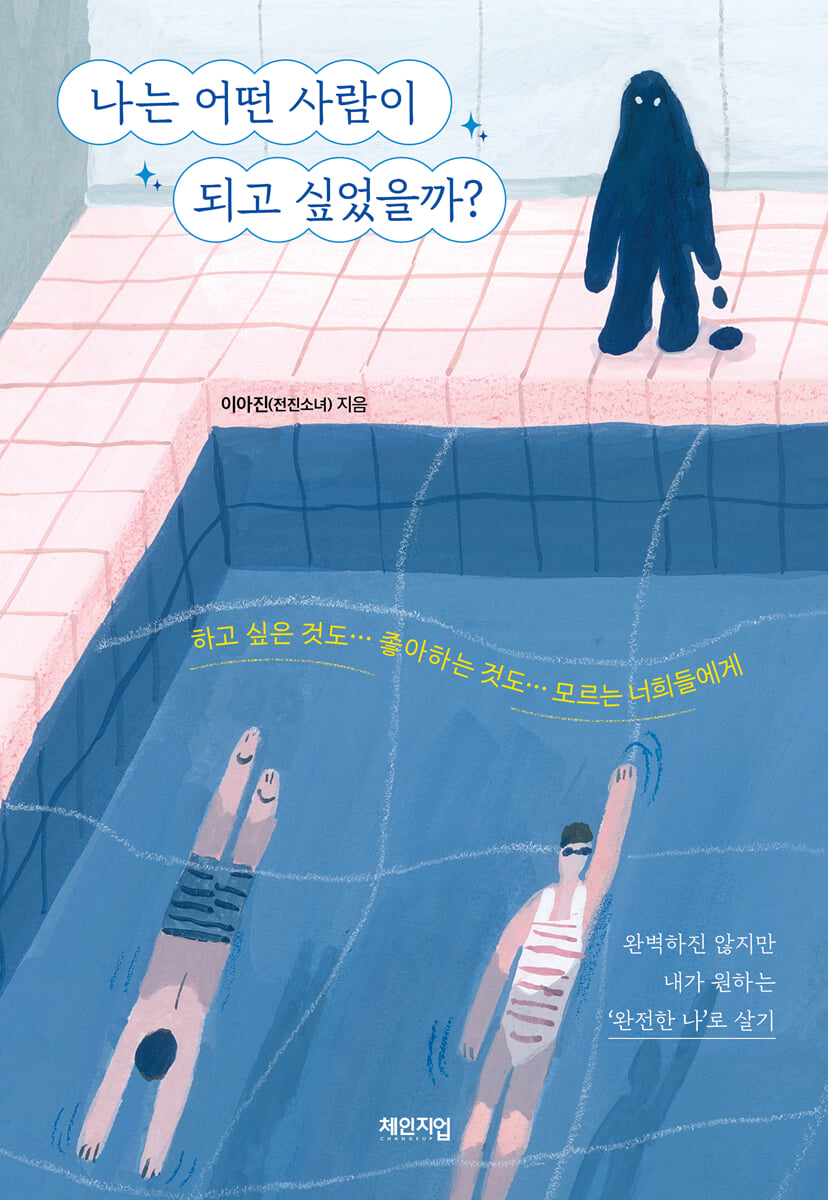
What kind of person did I want to be?
 |
Description
Book Introduction
“Should I do what I want to do or what I’m good at?”
First time studying abroad at 14, first time dropping out of school at 18, first time entering university at 22…
The story of a girl's 'dream' and 'career path' that no one supported.
We all chase our dreams.
However, those dreams are often dreams created or determined by the world.
Because they think that if they do what they truly want to do, they will not make money or will fail.
If you deviate even slightly from the framework created by the social structure, you will be criticized.
If you deviate even slightly from the world's standards, you are treated as a loser.
I'm just me, so why should I live conscious of others? The most important keyword the author cites is probably "love."
If you love yourself, love your family, love your work, love your dreams, and love the things that have been given to you, paths you never imagined will open up for you…
If someone went abroad to study at the age of 14, suddenly dropped out just before graduating from high school, and started working as a carpenter, would you truly support them? Let's meet the author, who faces criticism and rebuke head-on, and strives to "fulfill his dream" as an architecture student.
Life after the 'growing pains' that poured down like a downpour,
My own bittersweet life recipe that no one dares to imitate!
Recipes aren't just for cooking.
To become a 'chef', the master of one's own life, and to cook one's own life, one needs a recipe.
From menu selection to ingredient preparation, cooking, and plating, no step should be missed.
If we apply this to dreams, the entire process of choosing a dream and pursuing that dream is like a dish, and if this is also a dish, then the recipe is 'indispensable'.
Just as the earth hardens after the rain, no one can grow properly without growing pains.
I hope that countless young people, lost and wandering in the cold reality, will find the right path for themselves through this book, and take a grand leap toward their goals.
First time studying abroad at 14, first time dropping out of school at 18, first time entering university at 22…
The story of a girl's 'dream' and 'career path' that no one supported.
We all chase our dreams.
However, those dreams are often dreams created or determined by the world.
Because they think that if they do what they truly want to do, they will not make money or will fail.
If you deviate even slightly from the framework created by the social structure, you will be criticized.
If you deviate even slightly from the world's standards, you are treated as a loser.
I'm just me, so why should I live conscious of others? The most important keyword the author cites is probably "love."
If you love yourself, love your family, love your work, love your dreams, and love the things that have been given to you, paths you never imagined will open up for you…
If someone went abroad to study at the age of 14, suddenly dropped out just before graduating from high school, and started working as a carpenter, would you truly support them? Let's meet the author, who faces criticism and rebuke head-on, and strives to "fulfill his dream" as an architecture student.
Life after the 'growing pains' that poured down like a downpour,
My own bittersweet life recipe that no one dares to imitate!
Recipes aren't just for cooking.
To become a 'chef', the master of one's own life, and to cook one's own life, one needs a recipe.
From menu selection to ingredient preparation, cooking, and plating, no step should be missed.
If we apply this to dreams, the entire process of choosing a dream and pursuing that dream is like a dish, and if this is also a dish, then the recipe is 'indispensable'.
Just as the earth hardens after the rain, no one can grow properly without growing pains.
I hope that countless young people, lost and wandering in the cold reality, will find the right path for themselves through this book, and take a grand leap toward their goals.
- You can preview some of the book's contents.
Preview
index
Prologue_ The Genius of Hard Work
Chapter 1.
Prepare the ingredients
- I am a forward girl, who are you?
1.
The protagonist in the novel
2.
We're not that different
3.
College isn't everything
4.
The discrepancy between what you're good at and what you like
5.
Ask questions constantly
6.
10000% self-esteem
Chapter 2.
Material handling
- No one else, you
1.
It's good to help others, but it's not good to live for others.
2.
The supporting actor who blames the environment, the leading actor who changes the environment
3.
The first step to your own unique recipe
4.
You are most beautiful when you are you
5.
Another self I meet through reading
6.
If you really want it, start
Chapter 3.
Cooking
- Life helper
1.
We don't live on a desert island
2.
People who give me strength when I'm struggling
3.
My own role model
4.
You, be my colleague
5.
Becoming a 'Better Me' Through Relationships
6.
The power to attract others
7.
Conversation, like architecture, has stages.
Chapter 4.
Transfer to a bowl
- Fresh recipe
1.
When you're sick of your family and home
2.
When everything is bothersome and you don't want to do anything
3.
When you keep comparing yourself to your friends
4.
When there's something you want to do but circumstances don't allow it
5.
When you feel traumatized by failure
6.
When you are judged to have no talent for anything
7.
When life seems meaningless
8.
When others don't acknowledge you
Chapter 5.
meal
- For you who makes everything possible
1.
Establishing correct values
2.
Repeat, repeat, and repeat again
3.
Writing a growth diary
4.
Increase your achievement experience
5.
You and Your Mirror Match
Epilogue_ The Chef's Mood
Appendix_ Career Q&A
Chapter 1.
Prepare the ingredients
- I am a forward girl, who are you?
1.
The protagonist in the novel
2.
We're not that different
3.
College isn't everything
4.
The discrepancy between what you're good at and what you like
5.
Ask questions constantly
6.
10000% self-esteem
Chapter 2.
Material handling
- No one else, you
1.
It's good to help others, but it's not good to live for others.
2.
The supporting actor who blames the environment, the leading actor who changes the environment
3.
The first step to your own unique recipe
4.
You are most beautiful when you are you
5.
Another self I meet through reading
6.
If you really want it, start
Chapter 3.
Cooking
- Life helper
1.
We don't live on a desert island
2.
People who give me strength when I'm struggling
3.
My own role model
4.
You, be my colleague
5.
Becoming a 'Better Me' Through Relationships
6.
The power to attract others
7.
Conversation, like architecture, has stages.
Chapter 4.
Transfer to a bowl
- Fresh recipe
1.
When you're sick of your family and home
2.
When everything is bothersome and you don't want to do anything
3.
When you keep comparing yourself to your friends
4.
When there's something you want to do but circumstances don't allow it
5.
When you feel traumatized by failure
6.
When you are judged to have no talent for anything
7.
When life seems meaningless
8.
When others don't acknowledge you
Chapter 5.
meal
- For you who makes everything possible
1.
Establishing correct values
2.
Repeat, repeat, and repeat again
3.
Writing a growth diary
4.
Increase your achievement experience
5.
You and Your Mirror Match
Epilogue_ The Chef's Mood
Appendix_ Career Q&A
Detailed image

Into the book
All beginnings are slow, and as trivial as the slow pace.
Anyone who doesn't give up and keeps going until the end can achieve anything.
This book is not a book that contains know-how or advice on 'finding a career path'.
Above all, my experiences and methods may not be the correct answer.
The reason is simple.
Because it's better to try once than to hear a hundred times.
Besides, I just want to talk about that 'execution'.
This is my own 'dream strategy' about how I planned to achieve or learn something and how I put that plan into action.
To share this tip with you a little more closely(?), I'd like to use informal mode, aka 'banmo'.
So, instead of thinking of it as 'reading a book,' I want you to think of it as 'having a conversation.'
After all, conversation is more comfortable and better than talking to yourself.
---p.6
It's kind of funny that I, who quit school after developing my own dream and gave up on going to college, am now attending college. It's all because of one simple reason: a desire to learn more.
It's not that I didn't feel the need for college, it's that college wasn't an option.
College didn't mean much to me at the time.
Because with my dreams and goals vague, it was obvious that I would drop out of college even if I went.
However, in order to provide better spaces to more people through architecture, I had to grow much further than I am now, and I had to find a teacher who could teach me the right things.
I actually made this pledge before I dropped out.
---p.36
At that time, I thought about the meaning of what my mother had said to me.
I came to understand the true meaning of the saying, 'A person who knows how to do what he wants to do is braver than anyone else.'
I also realized that no matter what choice I make, I will have regrets, but those regrets must be my own.
If you don't want to take the difficult and remote path, you might take the path that other people recommend.
But later, when even the slightest difficult moment comes, you will inevitably end up resenting and hating the world.
Likewise, if you believe that life will be easy if you go to a good university and get a job at a good company, then when the university or company you went to becomes too difficult, you will inevitably end up blaming your parents.
---p.67
The professors insist that the students work in the studio.
They even jokingly say, "When you play, you play in the design studio, and when you sleep, you sleep in the design studio." At first, I didn't really understand why professors insisted on using the design studio so much.
That is, until you try working alone at home.
There was a time when I worked from home for about a month, and when given the same assignment, I often came away with different results than my friends.
Even if there are parts that are difficult to understand, I think about it on my own and end up thinking, 'I guess this is enough?'
Above all, I couldn't ask any questions to the seniors I met while going to and from the design studio, and I couldn't ask any questions to the professors who occasionally stopped by the design studio.
After working on it at home and giving a presentation, the professors would catch it like a ghost.
---p.113
There was a time when I felt that my relationships with friends were more important than my family or studies.
Until I became an adult, I felt like my friends were everything to me.
I always wanted to be with you, do everything with you, think the same way as you do, and always be on your side.
That's why, when my friend's thoughts differed from mine, when my friend became closer to another friend, when our relationship grew even slightly distant, we would fight over trivial things.
It's true that there was a long period of time when I considered my friend to be myself.
As time passed, I came to see them as colleagues who were walking different paths but had the same direction and were walking together for a while.
In other words, I learned that just because we are close doesn't mean we can go together forever until the end.
---p.129
A friend who has more than me, a friend who seems happier than me, a friend who is more popular than me, a friend who is prettier than me, a friend who studies better than me…
There are times when the words 'more than me' linger in my head.
It's natural to compare yourself to the person closest to you.
When I was a teenager, I used to compare myself to my friends.
Sometimes, I find myself comparing things and even giving scores without even realizing it.
It's not that 'comparison' that comes naturally is bad, but comparison is usually accompanied by envy and jealousy.
And that doesn't create a good situation for either side.
It's not as easy as it sounds to accept the element of envy as something to 'learn from'.
---p.169
My eyes went white.
At that moment, my body froze and I couldn't do anything.
I had no choice but to sit on the floor of the art room, spread out some drawing paper, and roughly sketched out everything from the description of the work to the picture itself.
Fortunately or unfortunately, contrary to my feelings of disappointment, my hands began to move very naturally as I created the work.
Although his face was sad, it didn't take long for him to remember the drawings he had been consistently drawing and transfer them to his memory.
Above all, I thought that my previously completed work was definitely my best and the best version that could come out, but the new drawing actually had more personality.
At the time, it was practically impossible to complete a portfolio using only the sensations my hands remembered.
How can a project that has been in progress for over two months be restored in just a few hours?
---p.188
A very important thing I've realized is that you can have fun repeating things if you don't differentiate between 'off the record' and 'on the record'.
What does this mean? For example, if I were to start a new design project that would take a semester to complete, my entire focus would be on the design.
I will continue to do this work even after I graduate from school, and I cannot take it lightly because it will be recorded in my portfolio.
More than anything, I feel like I want to do it right since I'm already doing it.
When designing, you need to receive weekly evaluations from your advisor and gradually improve your design.
When creating a work, there are times when you have to completely revise it from the beginning. You have to endure the process of repeating revisions and receiving sharp criticism from professors.
Anyone who doesn't give up and keeps going until the end can achieve anything.
This book is not a book that contains know-how or advice on 'finding a career path'.
Above all, my experiences and methods may not be the correct answer.
The reason is simple.
Because it's better to try once than to hear a hundred times.
Besides, I just want to talk about that 'execution'.
This is my own 'dream strategy' about how I planned to achieve or learn something and how I put that plan into action.
To share this tip with you a little more closely(?), I'd like to use informal mode, aka 'banmo'.
So, instead of thinking of it as 'reading a book,' I want you to think of it as 'having a conversation.'
After all, conversation is more comfortable and better than talking to yourself.
---p.6
It's kind of funny that I, who quit school after developing my own dream and gave up on going to college, am now attending college. It's all because of one simple reason: a desire to learn more.
It's not that I didn't feel the need for college, it's that college wasn't an option.
College didn't mean much to me at the time.
Because with my dreams and goals vague, it was obvious that I would drop out of college even if I went.
However, in order to provide better spaces to more people through architecture, I had to grow much further than I am now, and I had to find a teacher who could teach me the right things.
I actually made this pledge before I dropped out.
---p.36
At that time, I thought about the meaning of what my mother had said to me.
I came to understand the true meaning of the saying, 'A person who knows how to do what he wants to do is braver than anyone else.'
I also realized that no matter what choice I make, I will have regrets, but those regrets must be my own.
If you don't want to take the difficult and remote path, you might take the path that other people recommend.
But later, when even the slightest difficult moment comes, you will inevitably end up resenting and hating the world.
Likewise, if you believe that life will be easy if you go to a good university and get a job at a good company, then when the university or company you went to becomes too difficult, you will inevitably end up blaming your parents.
---p.67
The professors insist that the students work in the studio.
They even jokingly say, "When you play, you play in the design studio, and when you sleep, you sleep in the design studio." At first, I didn't really understand why professors insisted on using the design studio so much.
That is, until you try working alone at home.
There was a time when I worked from home for about a month, and when given the same assignment, I often came away with different results than my friends.
Even if there are parts that are difficult to understand, I think about it on my own and end up thinking, 'I guess this is enough?'
Above all, I couldn't ask any questions to the seniors I met while going to and from the design studio, and I couldn't ask any questions to the professors who occasionally stopped by the design studio.
After working on it at home and giving a presentation, the professors would catch it like a ghost.
---p.113
There was a time when I felt that my relationships with friends were more important than my family or studies.
Until I became an adult, I felt like my friends were everything to me.
I always wanted to be with you, do everything with you, think the same way as you do, and always be on your side.
That's why, when my friend's thoughts differed from mine, when my friend became closer to another friend, when our relationship grew even slightly distant, we would fight over trivial things.
It's true that there was a long period of time when I considered my friend to be myself.
As time passed, I came to see them as colleagues who were walking different paths but had the same direction and were walking together for a while.
In other words, I learned that just because we are close doesn't mean we can go together forever until the end.
---p.129
A friend who has more than me, a friend who seems happier than me, a friend who is more popular than me, a friend who is prettier than me, a friend who studies better than me…
There are times when the words 'more than me' linger in my head.
It's natural to compare yourself to the person closest to you.
When I was a teenager, I used to compare myself to my friends.
Sometimes, I find myself comparing things and even giving scores without even realizing it.
It's not that 'comparison' that comes naturally is bad, but comparison is usually accompanied by envy and jealousy.
And that doesn't create a good situation for either side.
It's not as easy as it sounds to accept the element of envy as something to 'learn from'.
---p.169
My eyes went white.
At that moment, my body froze and I couldn't do anything.
I had no choice but to sit on the floor of the art room, spread out some drawing paper, and roughly sketched out everything from the description of the work to the picture itself.
Fortunately or unfortunately, contrary to my feelings of disappointment, my hands began to move very naturally as I created the work.
Although his face was sad, it didn't take long for him to remember the drawings he had been consistently drawing and transfer them to his memory.
Above all, I thought that my previously completed work was definitely my best and the best version that could come out, but the new drawing actually had more personality.
At the time, it was practically impossible to complete a portfolio using only the sensations my hands remembered.
How can a project that has been in progress for over two months be restored in just a few hours?
---p.188
A very important thing I've realized is that you can have fun repeating things if you don't differentiate between 'off the record' and 'on the record'.
What does this mean? For example, if I were to start a new design project that would take a semester to complete, my entire focus would be on the design.
I will continue to do this work even after I graduate from school, and I cannot take it lightly because it will be recorded in my portfolio.
More than anything, I feel like I want to do it right since I'm already doing it.
When designing, you need to receive weekly evaluations from your advisor and gradually improve your design.
When creating a work, there are times when you have to completely revise it from the beginning. You have to endure the process of repeating revisions and receiving sharp criticism from professors.
---p.220
Publisher's Review
'Why am I so ordinary?'
'No one supports my dream.'
'I want to shine like you all!'
I was able to dream a 'perfect' dream because I wasn't 'perfect'
Jeonjin Girl's 'Turbulent' Youth Career Mentoring!
Lee Ah-jin, known as the 'Forward Girl' who gained attention through appearances in 'Human Theater', 'Anyway, Going to Work', and 'The Great Uprising', has published a career mentoring book for teenagers.
At a meeting with a publisher a year ago, I said, “I’m not the right person to give those guys advice.
The author, who said, “Through this book, I just want to tell my story and listen to the stories of my friends,” presents ‘answers’ rather than ‘correct answers’ to numerous questions.
Five chapters are filled with surprising experiences and intense career concerns that have never been fully expressed through the media. From studies to work, dreams, family, and relationships with friends, you will encounter the vast wisdom of life that comes from an overwhelming amount of experience.
In particular, the process of developing an independent lifestyle and forming a sense of self and self-esteem is more than enough to inspire challenges and motivation in young people.
“Study abroad, drop out, carpenter, creator…
“Wherever I go, there is happiness!”
Dreams and goals are driven by many factors: a spacious home, a luxury car, a wealthy background, a prestigious academic background—but our ultimate destination isn't graduation, certification, or qualifications.
I'm just moving forward towards 'happiness'.
Getting good grades, going to a good university, and becoming a good person are all ultimately for the sake of 'being happy.'
But we live every moment so caught up in our studies, work, and relationships that we miss that important fact.
A student's main job is studying, but that doesn't mean they have to live their lives obsessed with studying or grades.
If you put your heart and soul into what you want to do, a completely new path may open up in an unexpected place.
This book does not provide readers with complete direction.
However, it only presents the wisdom and methods to endure and overcome any path.
'No one supports my dream.'
'I want to shine like you all!'
I was able to dream a 'perfect' dream because I wasn't 'perfect'
Jeonjin Girl's 'Turbulent' Youth Career Mentoring!
Lee Ah-jin, known as the 'Forward Girl' who gained attention through appearances in 'Human Theater', 'Anyway, Going to Work', and 'The Great Uprising', has published a career mentoring book for teenagers.
At a meeting with a publisher a year ago, I said, “I’m not the right person to give those guys advice.
The author, who said, “Through this book, I just want to tell my story and listen to the stories of my friends,” presents ‘answers’ rather than ‘correct answers’ to numerous questions.
Five chapters are filled with surprising experiences and intense career concerns that have never been fully expressed through the media. From studies to work, dreams, family, and relationships with friends, you will encounter the vast wisdom of life that comes from an overwhelming amount of experience.
In particular, the process of developing an independent lifestyle and forming a sense of self and self-esteem is more than enough to inspire challenges and motivation in young people.
“Study abroad, drop out, carpenter, creator…
“Wherever I go, there is happiness!”
Dreams and goals are driven by many factors: a spacious home, a luxury car, a wealthy background, a prestigious academic background—but our ultimate destination isn't graduation, certification, or qualifications.
I'm just moving forward towards 'happiness'.
Getting good grades, going to a good university, and becoming a good person are all ultimately for the sake of 'being happy.'
But we live every moment so caught up in our studies, work, and relationships that we miss that important fact.
A student's main job is studying, but that doesn't mean they have to live their lives obsessed with studying or grades.
If you put your heart and soul into what you want to do, a completely new path may open up in an unexpected place.
This book does not provide readers with complete direction.
However, it only presents the wisdom and methods to endure and overcome any path.
GOODS SPECIFICS
- Date of issue: June 16, 2025
- Page count, weight, size: 272 pages | 455g | 145*210*17mm
- ISBN13: 9791191378764
- ISBN10: 1191378764
You may also like
카테고리
korean


korean

![GQ KOREA Mark (Monthly): December [2025]](http://librairie.coreenne.fr/cdn/shop/files/8ef265dbbfbf186523ed75ba7319009d.jpg?v=1765340328&width=3840)


