

Buddhist scriptures
 |
Description
Book Introduction
“If Christianity has the Bible and Islam has the Quran,
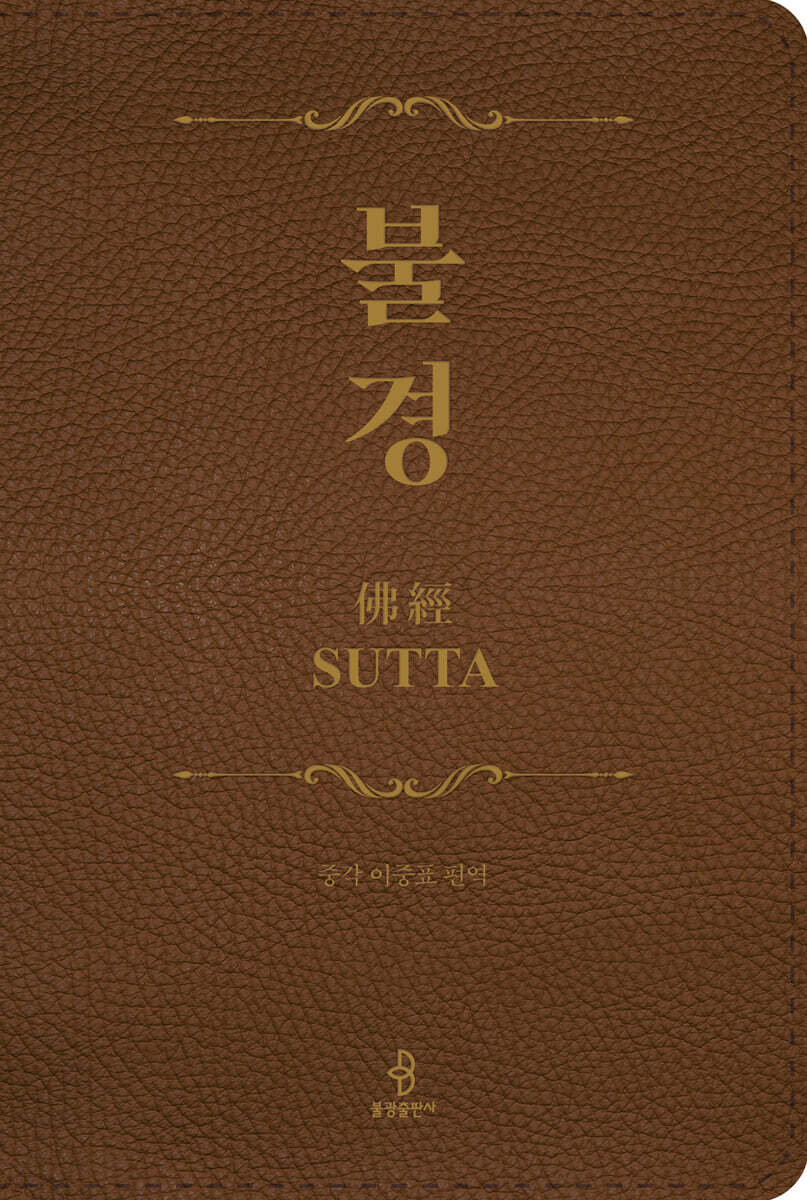
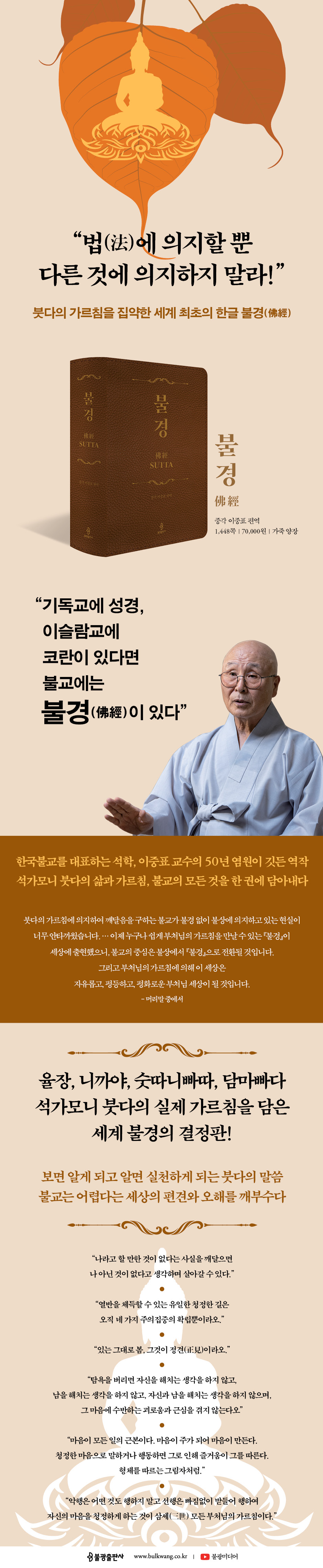
“Buddhism has Buddhist scriptures.” The one and only Buddhist bible everyone has been waiting for The world's first 'Hangul' Buddhist scriptures are finally born! Among the three major religions of the world, Buddhism, Christianity, and Islam, there is something that only Buddhism does not have. It is a Buddhist scripture consisting of one volume. Of course, there are numerous scriptures in Buddhism, but there is no 'single' bible that all Buddhists should know and use as a guide for their lives. This book is the world's first Korean Buddhist scripture, created by Professor Lee Jung-pyo, a leading scholar of Korean Buddhism, through his lifelong study of Buddhism. This is a masterpiece that selects and organizes the core contents of fundamental Buddhist texts that vividly contain the actual teachings of Shakyamuni Buddha, such as the Vinaya, the Four-part Nikaya, the Suttanipāta, and the Dhammapada. Now Korean Buddhists have a unique Buddhist scripture that is not found anywhere else in the world. Through this book, which can be easily read and understood by anyone, regardless of age or gender, I hope that many Buddhists will shift the focus of their Buddhist studies and practice to the life and teachings of the Buddha, and take a step closer to living the true life of the Buddha and the path of a proper Buddhist. |
- You can preview some of the book's contents.
Preview
index
preface
Buddha [Buddha] BUDDHA
Chapter 1 Attainment of Buddhahood | Chapter 2 The First Turning of the Dharma Wheel | Chapter 3 The Proclamation of the Dharma Transmission | Chapter 4 The Miracle of Uruvelā | Chapter 5 The Ordination of Sāriputta and Moggallāna | Chapter 6 The Legacy | Chapter 7 The Connection between Uposatha and the Rest | Chapter 8 The Ordination of Sona | Chapter 9 Jīvaka Komaravatca | Chapter 10 The Establishment of the Monastery | Chapter 11 The Division of the Sangha | Chapter 12 The Nuns | Chapter 13 The Five Hundred Councils
D?gha-Nik?ya
1.
Panmangyeong (梵網經)│2.
The Samantabhadra Sutra│3.
Kuttadan-tta-gyeong│4.
Tappada Gyeong│5.
Kewatda Gyeong│6.
Samyeonggyeong (三明經)│7.
The Great Cause and Effect Sutra│8.
Great Parinirvana Sutra│9.
Sutra of Great Thought│10.
The Sutra of the Roaring Lion of the Wheel-Turning Holy King│11.
The Great Beginning Sutra│12.
Purity Sutra│13.
The scriptures that taught Singala
Majjhima-Nik?ya
1.
The Fundamental Dharma Sutra│2.
All the Sutras of Delusion│3.
Wishful Thinking│4.
Clothes metaphor│5.
A Noble Life│6.
Jeong Gyeon-gyeong│7.
Little Lion's Back │8.
A Big Lump of Suffering│9.
A small lump of suffering│10.
Trash in the Heart│11.
Honey lump │12.
Morphology of Reason│13.
Top metaphor│14.
The Parable of the Poisonous Snake│15.
Holy Wish Sutra│16.
The Parable of the Big Elephant Footprints│17.
Small Gosinga Gyeong│18.
Parable of the Big Cow Herder│19.
Small Satjakkagyeong│20.
Big Satjakkagyeong│21.
The Great Sutra of the Extinction of Craving│22.
Great Asapura Sutra│23.
Small Asapura Sutra│24.
Sala Kyung│25.
Great Catechism│26.
Small Catechism│27.
The Sutra of Receiving Great Karma│28.
Kosambigyeong│29.
Jiwakagyeong│30.
Uppalli-gyeong│31.
Many Feelings│32.
Great Rahula Sutra│33.
Small Malungka Sutra│34.
Big Malungka Sutra│35.
Narakapanagyeong│36.
Kitagiri Sutra│37.
Musical Instrument Watchagotta Gyeong│38.
Dighanaka Sutra│39.
Magandiya Sutra│40.
Big Honey Bee │41.
Samanamandika Sutra│42.
Wekanassa Sutra│43.
Rattapalakyung│44.
Madhura Sutra│45.
Body Prince Gyeong│46.
Angulimala Sutra│47.
The Tower of Teachings│48.
Jjangkki-kyung│49.
Devadaha Sutra│50.
The Sutra of the Immovable Path│51.
Kanaka Mokgallana Sutra│52.
Gopaka Mokgalanagyeong│53.
Big Full Moon│54.
Chajegyeong (Next Sutra)│55.
Gyeongjijijeunggyeong (究竟智檢證經)│56.
The Sutra of the Multi-Realms│57.
Forty Great Law Gates Sutra│58.
Breathing Concentration Meditation│59.
Mindfulness of the Body Sutra│60.
Small Sutra│61.
Sutra of Happiness│62.
Small Karma Discernment Sutra│63.
Summary of the Sutra│64.
Sutra of Non-Dispute Discrimination│65.
The Sutra of the Division of Realms│66.
Chan Na-kyung│67.
Punnakyung│68.
Six Six Classics│69.
The Great Six Entrances Sutra│70.
Sutra on the Practice of Wisdom and Awakening
Sa?yutta-Nik?ya
1.
Sag?tha-Vagga (Verse of Songs)
The first Deva (Heavenly God) Sangyutta│The second Devaputta (Heavenly Son) Sangyutta│The third Kosala (Kosala) Sangyutta│The fourth Māra (Māra) Sangyutta│The fifth Bhikkhuni Sangyutta│The sixth Brahman (Brahman) Sangyutta│The seventh Brahman [Brāhma?a] Sangyutta│The ninth Vana [Forest] Sangyutta│The tenth Yakkha (Yakkha) Sangyutta
2.
Product of fate (Nid?na-Vagga)
Chapter 12: Nid?na (Causation and Dependence) Saṅyutta│Chapter 13: Abhisamaya (Understanding) Saṅyutta│Chapter 14: Dh?tu (Precepts and Precepts) Saṅyutta│Chapter 15: Since No Beginning Saṅyutta│Chapter 16: Kassapa (Kassapa) Saṅyutta│Chapter 17: Wealth and Respect [L?bhasakk?ra] Saṅyutta│Chapter 18: Rāhula Saṅyutta
3.
Khandha-Vagga
22nd Aggregate (Khandha) Satyutta│23rd Rādha Satyutta│24th View [Di??hi] Satyutta│25th Entering [Okkantika] Satyutta│26th Appearance [Upp?da] Satyutta│27th Defilement [Kilesa] Satyutta│28th Sāriputta Satyutta
4.
Entering the body (?yatana-Vagga)
Chapter 35 Sixth Entrance (Sa??yatana) Sa??yatta│Chapter 36 Feeling (Vedan?) Sa??yatta│Chapter 42 Village Chief (G?ma?i) Sa??yatta│Chapter 43 Non-action (Asa?khata) Sa??yatta
5.
Mah?-Vagga
The 45th Path [Magga] Satyutta│The 46th Awakening Branch [Bojjha?ga] Satyutta│The 47th Foundation of Mindfulness [Satipa??h?na] Satyutta│The 48th Root [Indriya] Satyutta│The 56th Truth [Sacca] Satyutta
A?guttara-Nik?ya
Chapter 1 One-Vowel [Eka-Nip?ta] Chapter 2 Two-Vowel [Duka-Nip?ta] Chapter 3 Three-Vowel [Tika-Nip?ta] Chapter 4 Four-Vowel [Catukka-Nip?ta] Chapter 5 Five-Vowel [Pancaka-Nip?ta] Chapter 6 Six-Vowel [Chakka-Nip?ta] Chapter 7 Seven-Vowel [Sattaka-Nip?ta] Chapter 8 Eight-Vowel [A??haka-Nip?ta] Chapter 9 Nine-Vowel [Navaka-Nip?ta] Chapter 10 Ten-Vowel [Dasaka-Nip?ta]
Sutta-Nip?ta
Chapter 1: Uraga Wagga - The Snake | Chapter 2: Chulla Wagga - The Small Chapter | Chapter 3: Maha Wagga - The Great Chapter | Chapter 4: Attaka Wagga - The Eight Songs | Chapter 5: Parayana Wagga - The Path to the Other Shore
Dhammapada
1.
Yamaka Wakka-Ssangyo-Pum (Double Essentials)│2.
Appamana Wakka-Bangilpum (放逸品)│3.
The Mind of the Buddha│4.
Bbaeppa Wakka-Hwahyangpum (Fragrance)│5.
Bala Wakka-Uampum (Foolishness Chapter)│6.
Pandita Wakka-Myeongcheolpum (Bright Philosophy Chapter)│7.
Arahanta Wakka-Nahanpum (羅漢品)│8.
Sahassa Wakka-Sulcheonpum (述千品)│9.
Papa Wakka - Evil Deeds│10.
Danda Wagga-seal (sword and staff product)│11.
Zara Wakka-Nomo-pum (Old Man's Clothes)│12.
Atta Wakka-Aesinpum (Love Body Product)│13.
Loka Wakka-Worldly Goods│14.
Buddha Wakka-Sulbulpum (Description of the Buddha)│15.
Suka Wakka-Annyeongpum (Pilgrimage to Peace)│16.
Piya Wakka-Hoheepum (Good Product)│17.
Kkoda Wakka-Anger Product│18.
Mala Wakka-Jingupum (Dust and Defilement)│19.
Dammatta Wakka-Bongjipum (Offering Items)│20.
Makga Wakgga-Dohaengpum (Chapter on the Way and Practice of the Way)│21.
Pakinnaka Wakka-Gwangyeonpum (Wide Expansion Product)│22.
Niraya Wakka - Hell Chapter│23.
Naga Wakka-Symbolic Items│24.
Ttangha Wakka-Aeyokpum (Love Products)│25.
Bhikkhu Wakka-Samanpura (沙門品)│26.
Brahmana Vakga-Brahma Chapter
Buddha [Buddha] BUDDHA
Chapter 1 Attainment of Buddhahood | Chapter 2 The First Turning of the Dharma Wheel | Chapter 3 The Proclamation of the Dharma Transmission | Chapter 4 The Miracle of Uruvelā | Chapter 5 The Ordination of Sāriputta and Moggallāna | Chapter 6 The Legacy | Chapter 7 The Connection between Uposatha and the Rest | Chapter 8 The Ordination of Sona | Chapter 9 Jīvaka Komaravatca | Chapter 10 The Establishment of the Monastery | Chapter 11 The Division of the Sangha | Chapter 12 The Nuns | Chapter 13 The Five Hundred Councils
D?gha-Nik?ya
1.
Panmangyeong (梵網經)│2.
The Samantabhadra Sutra│3.
Kuttadan-tta-gyeong│4.
Tappada Gyeong│5.
Kewatda Gyeong│6.
Samyeonggyeong (三明經)│7.
The Great Cause and Effect Sutra│8.
Great Parinirvana Sutra│9.
Sutra of Great Thought│10.
The Sutra of the Roaring Lion of the Wheel-Turning Holy King│11.
The Great Beginning Sutra│12.
Purity Sutra│13.
The scriptures that taught Singala
Majjhima-Nik?ya
1.
The Fundamental Dharma Sutra│2.
All the Sutras of Delusion│3.
Wishful Thinking│4.
Clothes metaphor│5.
A Noble Life│6.
Jeong Gyeon-gyeong│7.
Little Lion's Back │8.
A Big Lump of Suffering│9.
A small lump of suffering│10.
Trash in the Heart│11.
Honey lump │12.
Morphology of Reason│13.
Top metaphor│14.
The Parable of the Poisonous Snake│15.
Holy Wish Sutra│16.
The Parable of the Big Elephant Footprints│17.
Small Gosinga Gyeong│18.
Parable of the Big Cow Herder│19.
Small Satjakkagyeong│20.
Big Satjakkagyeong│21.
The Great Sutra of the Extinction of Craving│22.
Great Asapura Sutra│23.
Small Asapura Sutra│24.
Sala Kyung│25.
Great Catechism│26.
Small Catechism│27.
The Sutra of Receiving Great Karma│28.
Kosambigyeong│29.
Jiwakagyeong│30.
Uppalli-gyeong│31.
Many Feelings│32.
Great Rahula Sutra│33.
Small Malungka Sutra│34.
Big Malungka Sutra│35.
Narakapanagyeong│36.
Kitagiri Sutra│37.
Musical Instrument Watchagotta Gyeong│38.
Dighanaka Sutra│39.
Magandiya Sutra│40.
Big Honey Bee │41.
Samanamandika Sutra│42.
Wekanassa Sutra│43.
Rattapalakyung│44.
Madhura Sutra│45.
Body Prince Gyeong│46.
Angulimala Sutra│47.
The Tower of Teachings│48.
Jjangkki-kyung│49.
Devadaha Sutra│50.
The Sutra of the Immovable Path│51.
Kanaka Mokgallana Sutra│52.
Gopaka Mokgalanagyeong│53.
Big Full Moon│54.
Chajegyeong (Next Sutra)│55.
Gyeongjijijeunggyeong (究竟智檢證經)│56.
The Sutra of the Multi-Realms│57.
Forty Great Law Gates Sutra│58.
Breathing Concentration Meditation│59.
Mindfulness of the Body Sutra│60.
Small Sutra│61.
Sutra of Happiness│62.
Small Karma Discernment Sutra│63.
Summary of the Sutra│64.
Sutra of Non-Dispute Discrimination│65.
The Sutra of the Division of Realms│66.
Chan Na-kyung│67.
Punnakyung│68.
Six Six Classics│69.
The Great Six Entrances Sutra│70.
Sutra on the Practice of Wisdom and Awakening
Sa?yutta-Nik?ya
1.
Sag?tha-Vagga (Verse of Songs)
The first Deva (Heavenly God) Sangyutta│The second Devaputta (Heavenly Son) Sangyutta│The third Kosala (Kosala) Sangyutta│The fourth Māra (Māra) Sangyutta│The fifth Bhikkhuni Sangyutta│The sixth Brahman (Brahman) Sangyutta│The seventh Brahman [Brāhma?a] Sangyutta│The ninth Vana [Forest] Sangyutta│The tenth Yakkha (Yakkha) Sangyutta
2.
Product of fate (Nid?na-Vagga)
Chapter 12: Nid?na (Causation and Dependence) Saṅyutta│Chapter 13: Abhisamaya (Understanding) Saṅyutta│Chapter 14: Dh?tu (Precepts and Precepts) Saṅyutta│Chapter 15: Since No Beginning Saṅyutta│Chapter 16: Kassapa (Kassapa) Saṅyutta│Chapter 17: Wealth and Respect [L?bhasakk?ra] Saṅyutta│Chapter 18: Rāhula Saṅyutta
3.
Khandha-Vagga
22nd Aggregate (Khandha) Satyutta│23rd Rādha Satyutta│24th View [Di??hi] Satyutta│25th Entering [Okkantika] Satyutta│26th Appearance [Upp?da] Satyutta│27th Defilement [Kilesa] Satyutta│28th Sāriputta Satyutta
4.
Entering the body (?yatana-Vagga)
Chapter 35 Sixth Entrance (Sa??yatana) Sa??yatta│Chapter 36 Feeling (Vedan?) Sa??yatta│Chapter 42 Village Chief (G?ma?i) Sa??yatta│Chapter 43 Non-action (Asa?khata) Sa??yatta
5.
Mah?-Vagga
The 45th Path [Magga] Satyutta│The 46th Awakening Branch [Bojjha?ga] Satyutta│The 47th Foundation of Mindfulness [Satipa??h?na] Satyutta│The 48th Root [Indriya] Satyutta│The 56th Truth [Sacca] Satyutta
A?guttara-Nik?ya
Chapter 1 One-Vowel [Eka-Nip?ta] Chapter 2 Two-Vowel [Duka-Nip?ta] Chapter 3 Three-Vowel [Tika-Nip?ta] Chapter 4 Four-Vowel [Catukka-Nip?ta] Chapter 5 Five-Vowel [Pancaka-Nip?ta] Chapter 6 Six-Vowel [Chakka-Nip?ta] Chapter 7 Seven-Vowel [Sattaka-Nip?ta] Chapter 8 Eight-Vowel [A??haka-Nip?ta] Chapter 9 Nine-Vowel [Navaka-Nip?ta] Chapter 10 Ten-Vowel [Dasaka-Nip?ta]
Sutta-Nip?ta
Chapter 1: Uraga Wagga - The Snake | Chapter 2: Chulla Wagga - The Small Chapter | Chapter 3: Maha Wagga - The Great Chapter | Chapter 4: Attaka Wagga - The Eight Songs | Chapter 5: Parayana Wagga - The Path to the Other Shore
Dhammapada
1.
Yamaka Wakka-Ssangyo-Pum (Double Essentials)│2.
Appamana Wakka-Bangilpum (放逸品)│3.
The Mind of the Buddha│4.
Bbaeppa Wakka-Hwahyangpum (Fragrance)│5.
Bala Wakka-Uampum (Foolishness Chapter)│6.
Pandita Wakka-Myeongcheolpum (Bright Philosophy Chapter)│7.
Arahanta Wakka-Nahanpum (羅漢品)│8.
Sahassa Wakka-Sulcheonpum (述千品)│9.
Papa Wakka - Evil Deeds│10.
Danda Wagga-seal (sword and staff product)│11.
Zara Wakka-Nomo-pum (Old Man's Clothes)│12.
Atta Wakka-Aesinpum (Love Body Product)│13.
Loka Wakka-Worldly Goods│14.
Buddha Wakka-Sulbulpum (Description of the Buddha)│15.
Suka Wakka-Annyeongpum (Pilgrimage to Peace)│16.
Piya Wakka-Hoheepum (Good Product)│17.
Kkoda Wakka-Anger Product│18.
Mala Wakka-Jingupum (Dust and Defilement)│19.
Dammatta Wakka-Bongjipum (Offering Items)│20.
Makga Wakgga-Dohaengpum (Chapter on the Way and Practice of the Way)│21.
Pakinnaka Wakka-Gwangyeonpum (Wide Expansion Product)│22.
Niraya Wakka - Hell Chapter│23.
Naga Wakka-Symbolic Items│24.
Ttangha Wakka-Aeyokpum (Love Products)│25.
Bhikkhu Wakka-Samanpura (沙門品)│26.
Brahmana Vakga-Brahma Chapter
Detailed image
Into the book
When you realize that there is nothing that can be called 'me', you can live thinking that there is nothing that is not 'me'.
If you live your life thinking that there is nothing other than yourself, the sense of discrimination that distinguishes between yourself and the world will disappear.
…when the thought that I was born disappears, the thought that I will grow old and die disappears.
If you continue with this kind of insight, the mass of suffering that causes all kinds of pain will disappear.'
--- p.39
Bhikkhus, the only pure path by which living beings can overcome worry and sorrow, learn to eliminate suffering and discontent, and attain Nirvana is through the establishment of the four foundations of mindfulness [catt?rosatipa??h?na, 四念處].
What are the four? Bhikkhus, a bhikkhu should observe the body, dwell in it, diligently concentrate and be mindful, and eliminate greed and dissatisfaction with the world.
By observing the feeling [受] and dwelling on the feeling, you should diligently concentrate and be aware, and eliminate greed and dissatisfaction with the world.
By observing the mind and staying in the mind, you should diligently concentrate and be aware and eliminate greed and dissatisfaction with the world.
By observing the Dharma and staying in the Dharma, you should diligently concentrate and be aware, eliminating greed and dissatisfaction with the world.
--- p.284
Cunda, I say that the aspiration (cittupp?da?) is of great help in the good dharma.
So, what are the vows of aspiration that we should adhere to both physically and verbally? "Sunda," we should vow, "Even if others commit violence, we will not commit it."
… We must make up our minds to say, ‘Even if others are tainted by the world and stubborn and find it difficult to break away, we will not be tainted by the world, we will not be stubborn, and we will willingly break away.’
--- p.361
To see things as they are [yath?bh?tassa di??hi], that is right view.
The intention as it is, that is right thinking.
Just being diligent, that is right diligence.
Focusing on what is, that is right mindfulness.
Samadhi as it is, that is right concentration.
The karma of the body, the karma of the mouth, and the karma of life (?j?va) are purified before that.
In this way, the practice of the noble Eightfold Path is completed.
--- p.718
Bhikkhus, ignorance is the cause of actions, actions are the cause of consciousness, consciousness is the cause of name and form, name and form are the cause of the six bases of perception, the six bases of perception are the cause of contact, contact is the cause of feeling, feeling is the cause of craving, craving is the cause of grasping, grasping is the cause of becoming, grasping is the cause of birth, birth is the cause of suffering, suffering is the cause of belief, belief is the cause of joy, joy is the cause of reverence, reverence is the cause of joy, joy is the cause of samadhi, samadhi is the cause of true knowledge, true knowledge is the cause of disgust, disgust is the cause of abandoning desire, and abandoning desire is It is the cause of liberation, and liberation is the cause of knowledge of cessation [khaye n??a].
--- p.805
Brahmin, a mind that is tainted, conquered, and captivated by greed thinks of harm to itself, thinks of harm to others, thinks of harm to itself and others, and experiences the suffering and worry that accompany such a mind.
If you give up greed, you will not think of harming yourself, you will not think of harming others, you will not think of harming yourself or others, and you will not experience the suffering and worry that come with that.
Brahmin, 'Nirvana that can be seen here and now' is like this.
--- p.1073
Profit makes people fall into a bad odor and prevents them from reaching the state of inaction.
Bhikkhus, do not take the mind of attachment to thoughts and advance toward gain, but rather think of abandoning and moving away from gain.
A monk who is obsessed with profit cannot attain the five-part dharmakaya and cannot acquire the virtue of precepts.
Therefore, a monk should not allow the mind of benefit that has not yet arisen to arise, and should quickly eliminate the mind of benefit that has already arisen.
Bhikkhus, you should study in this way.
--- p.1191
Sn.
0077.-0080.
Faith is the seed, practice is the rain/ Insight [般若] is my yoke and plow/ Shame is the drawstring, the mind is the yoke cord/ Attention [sati] is my hoe and whip.
// I am careful with my conduct, careful with my words,/ I eat in moderation,/ And I cut down the weeds with truth./ Gentleness is my rest.// My ox, which carries the highest happiness,/ is diligence./ It advances without retreating./ Wherever it goes, there is no worry.// This is how I farm./ Immortality is the fruit of this farming./ If I farm well,/ I will be free from all suffering.
--- p.1234
Dh.
001.-002.
The mind is the root of all things./ The mind is the master and the mind creates./ If one speaks or acts with an evil mind,/ then suffering follows him/ like the wheels of a cart following his steps.// The mind is the root of all things./ The mind is the master and the mind creates./ If one speaks or acts with a pure mind,/ then joy follows him/ like the shadow following a form.
--- p.1368
Dh.
183-184.
Do not commit any evil deeds/ Do all good deeds without fail/ Purify your mind/ This is the teaching of all Buddhas of the three times.// Patience and forgiveness are the greatest asceticism./ All Buddhas say that nirvana is the best./ Not harming others is a monk./ Not harassing others is a monk.
If you live your life thinking that there is nothing other than yourself, the sense of discrimination that distinguishes between yourself and the world will disappear.
…when the thought that I was born disappears, the thought that I will grow old and die disappears.
If you continue with this kind of insight, the mass of suffering that causes all kinds of pain will disappear.'
--- p.39
Bhikkhus, the only pure path by which living beings can overcome worry and sorrow, learn to eliminate suffering and discontent, and attain Nirvana is through the establishment of the four foundations of mindfulness [catt?rosatipa??h?na, 四念處].
What are the four? Bhikkhus, a bhikkhu should observe the body, dwell in it, diligently concentrate and be mindful, and eliminate greed and dissatisfaction with the world.
By observing the feeling [受] and dwelling on the feeling, you should diligently concentrate and be aware, and eliminate greed and dissatisfaction with the world.
By observing the mind and staying in the mind, you should diligently concentrate and be aware and eliminate greed and dissatisfaction with the world.
By observing the Dharma and staying in the Dharma, you should diligently concentrate and be aware, eliminating greed and dissatisfaction with the world.
--- p.284
Cunda, I say that the aspiration (cittupp?da?) is of great help in the good dharma.
So, what are the vows of aspiration that we should adhere to both physically and verbally? "Sunda," we should vow, "Even if others commit violence, we will not commit it."
… We must make up our minds to say, ‘Even if others are tainted by the world and stubborn and find it difficult to break away, we will not be tainted by the world, we will not be stubborn, and we will willingly break away.’
--- p.361
To see things as they are [yath?bh?tassa di??hi], that is right view.
The intention as it is, that is right thinking.
Just being diligent, that is right diligence.
Focusing on what is, that is right mindfulness.
Samadhi as it is, that is right concentration.
The karma of the body, the karma of the mouth, and the karma of life (?j?va) are purified before that.
In this way, the practice of the noble Eightfold Path is completed.
--- p.718
Bhikkhus, ignorance is the cause of actions, actions are the cause of consciousness, consciousness is the cause of name and form, name and form are the cause of the six bases of perception, the six bases of perception are the cause of contact, contact is the cause of feeling, feeling is the cause of craving, craving is the cause of grasping, grasping is the cause of becoming, grasping is the cause of birth, birth is the cause of suffering, suffering is the cause of belief, belief is the cause of joy, joy is the cause of reverence, reverence is the cause of joy, joy is the cause of samadhi, samadhi is the cause of true knowledge, true knowledge is the cause of disgust, disgust is the cause of abandoning desire, and abandoning desire is It is the cause of liberation, and liberation is the cause of knowledge of cessation [khaye n??a].
--- p.805
Brahmin, a mind that is tainted, conquered, and captivated by greed thinks of harm to itself, thinks of harm to others, thinks of harm to itself and others, and experiences the suffering and worry that accompany such a mind.
If you give up greed, you will not think of harming yourself, you will not think of harming others, you will not think of harming yourself or others, and you will not experience the suffering and worry that come with that.
Brahmin, 'Nirvana that can be seen here and now' is like this.
--- p.1073
Profit makes people fall into a bad odor and prevents them from reaching the state of inaction.
Bhikkhus, do not take the mind of attachment to thoughts and advance toward gain, but rather think of abandoning and moving away from gain.
A monk who is obsessed with profit cannot attain the five-part dharmakaya and cannot acquire the virtue of precepts.
Therefore, a monk should not allow the mind of benefit that has not yet arisen to arise, and should quickly eliminate the mind of benefit that has already arisen.
Bhikkhus, you should study in this way.
--- p.1191
Sn.
0077.-0080.
Faith is the seed, practice is the rain/ Insight [般若] is my yoke and plow/ Shame is the drawstring, the mind is the yoke cord/ Attention [sati] is my hoe and whip.
// I am careful with my conduct, careful with my words,/ I eat in moderation,/ And I cut down the weeds with truth./ Gentleness is my rest.// My ox, which carries the highest happiness,/ is diligence./ It advances without retreating./ Wherever it goes, there is no worry.// This is how I farm./ Immortality is the fruit of this farming./ If I farm well,/ I will be free from all suffering.
--- p.1234
Dh.
001.-002.
The mind is the root of all things./ The mind is the master and the mind creates./ If one speaks or acts with an evil mind,/ then suffering follows him/ like the wheels of a cart following his steps.// The mind is the root of all things./ The mind is the master and the mind creates./ If one speaks or acts with a pure mind,/ then joy follows him/ like the shadow following a form.
--- p.1368
Dh.
183-184.
Do not commit any evil deeds/ Do all good deeds without fail/ Purify your mind/ This is the teaching of all Buddhas of the three times.// Patience and forgiveness are the greatest asceticism./ All Buddhas say that nirvana is the best./ Not harming others is a monk./ Not harassing others is a monk.
--- p.1402
Publisher's Review
'Why Buddhist scriptures?'
The need for Buddhism is a global and contemporary demand!
A masterpiece that embodies the 50-year aspiration of Professor Lee Jung-pyo, a renowned scholar.
A common complaint from people who want to learn about Buddhism is that they don't know where to start.
There are countless scriptures in Buddhism, such as the so-called Tripitaka Koreana, and there are countless teachers who teach Buddhism.
But too many choices can be counterproductive.
It is difficult to discern what the true teachings of the Buddha are and whose words we should follow.
This is not just a problem for Korean Buddhism.
As Buddhist practice, particularly meditation, spreads throughout the world, the number of people seeking to understand the essence of Buddhism is increasing, and the demand for Buddhist study texts and practice guides that can serve as a reference and standard for everyone is also increasing.
In other words, the need for Buddhist scriptures is emerging.
This book, translated by Professor Lee Jung-pyo, a leading scholar of Korean Buddhism, is the first Korean Buddhist scripture to summarize and organize the core of the Nikaya and Agamas, which are recognized as the actual teachings of Shakyamuni Buddha, into a single volume.
Like the Bible in Christianity and the Quran in Islam, it contains the entire life and teachings of Buddha in one book.
This book, consisting of seven parts, first introduces the history of the Buddha Shakyamuni's attainment of Buddhahood, his transmission of the Dharma, the establishment of precepts, the formation of the Buddhist order, and the gathering that took place after his death, based on the Vinaya.
Next, it unfolds the essence of the Buddha's teachings contained in the Digha Nikaya, the Majjhima Nikaya, the Samyutta Nikaya, the Anguttara Nikaya, the Suttanipāta, and the Dhammapāda.
Compressing a vast amount of scripture into a single volume is no easy task, but what makes this book special is something else.
The point is that you can intuitively understand the Buddha's teachings.
The reason why studying Buddhism is difficult is because there are so many books to read, but also because no matter how many books you read, you can never completely understand it and say, "Oh, that's right."
But the original teachings of Buddha are not difficult or complicated.
It is clear and practical enough that anyone can easily understand it and put it into practice in their daily lives based on that understanding.
However, as I translated and explained the scriptures without a clear understanding of the teachings, my speech and writing gradually became more difficult.
Professor Lee Jung-pyo, who had been acutely aware of this reality early on, first encountered Buddhism in his late teens and made a wish to compile Buddhist scriptures so that people could study and practice by relying on the teachings of the Buddha rather than on statues or teachers.
This book, 'Buddhist Scripture', is a work that was finally completed after 50 years of life and study, starting from that origin.
What should Buddhism rely on?
There is only one teaching [Dharma]!
The purpose of Buddhism is to help us escape from a life of suffering and move toward a life of happiness.
Buddha was the first human being to overcome all suffering in life and to openly teach people the way to achieve it.
But why can't people become like Buddha, instead living lives that seem to become increasingly painful? The reason is clear.
Because we do not live as Buddha said.
So why do people want to be like the Buddha but don't live like him? As you know, there is no god in Buddhism.
Buddha is not an omnipotent god, but a benevolent teacher who has realized the universal truth of the world and taught it to the world.
Nevertheless, many people regard Buddha as a god, put their hands together in front of the Buddha statue, make wishes, and even ask for help to satisfy their selfish desires.
Some people follow those who have studied more and practiced more than they do and depend on them for everything.
The Buddha's words take a back seat and we live and die by the teacher's words.
All of this is not true Buddhism.
There is only one place of refuge and refuge in Buddhism.
There is only the Buddha's teachings, that is, the truth [Dharma].
Without a clear understanding and mastery of this, one can never live a life like Buddha by relying on other things.
Amazingly, over 2,600 years ago, Shakyamuni Buddha foresaw this very situation and left these final words before he passed away:
‘Self-illumination, Dharma-illumination.’ This is a warning to rely only on yourself and the Dharma and not on anything else.
This is a teaching that anyone who studies and practices Buddhism must take to heart.
No matter what Buddhist tradition you belong to or what Buddhist practice you practice, the core is the Buddha's teachings.
It contains all the truth about happiness, the path to happiness, and how to walk along that path.
The publication of this book, which contains the teachings of the Buddha that can be read by anyone, regardless of age or gender, understood through reading, and put into practice through understanding, is like a declaration calling for a shift in the focus of Buddhism from the Buddha statue and the teacher to the teachings of the Buddha.
There is no longer any need to wander around looking for answers to the questions, “What is Buddhism?” and “How should I practice it?”
If you keep this book by your side and always practice the Buddha's teachings, your life will become like the Buddha's every moment.
The need for Buddhism is a global and contemporary demand!
A masterpiece that embodies the 50-year aspiration of Professor Lee Jung-pyo, a renowned scholar.
A common complaint from people who want to learn about Buddhism is that they don't know where to start.
There are countless scriptures in Buddhism, such as the so-called Tripitaka Koreana, and there are countless teachers who teach Buddhism.
But too many choices can be counterproductive.
It is difficult to discern what the true teachings of the Buddha are and whose words we should follow.
This is not just a problem for Korean Buddhism.
As Buddhist practice, particularly meditation, spreads throughout the world, the number of people seeking to understand the essence of Buddhism is increasing, and the demand for Buddhist study texts and practice guides that can serve as a reference and standard for everyone is also increasing.
In other words, the need for Buddhist scriptures is emerging.
This book, translated by Professor Lee Jung-pyo, a leading scholar of Korean Buddhism, is the first Korean Buddhist scripture to summarize and organize the core of the Nikaya and Agamas, which are recognized as the actual teachings of Shakyamuni Buddha, into a single volume.
Like the Bible in Christianity and the Quran in Islam, it contains the entire life and teachings of Buddha in one book.
This book, consisting of seven parts, first introduces the history of the Buddha Shakyamuni's attainment of Buddhahood, his transmission of the Dharma, the establishment of precepts, the formation of the Buddhist order, and the gathering that took place after his death, based on the Vinaya.
Next, it unfolds the essence of the Buddha's teachings contained in the Digha Nikaya, the Majjhima Nikaya, the Samyutta Nikaya, the Anguttara Nikaya, the Suttanipāta, and the Dhammapāda.
Compressing a vast amount of scripture into a single volume is no easy task, but what makes this book special is something else.
The point is that you can intuitively understand the Buddha's teachings.
The reason why studying Buddhism is difficult is because there are so many books to read, but also because no matter how many books you read, you can never completely understand it and say, "Oh, that's right."
But the original teachings of Buddha are not difficult or complicated.
It is clear and practical enough that anyone can easily understand it and put it into practice in their daily lives based on that understanding.
However, as I translated and explained the scriptures without a clear understanding of the teachings, my speech and writing gradually became more difficult.
Professor Lee Jung-pyo, who had been acutely aware of this reality early on, first encountered Buddhism in his late teens and made a wish to compile Buddhist scriptures so that people could study and practice by relying on the teachings of the Buddha rather than on statues or teachers.
This book, 'Buddhist Scripture', is a work that was finally completed after 50 years of life and study, starting from that origin.
What should Buddhism rely on?
There is only one teaching [Dharma]!
The purpose of Buddhism is to help us escape from a life of suffering and move toward a life of happiness.
Buddha was the first human being to overcome all suffering in life and to openly teach people the way to achieve it.
But why can't people become like Buddha, instead living lives that seem to become increasingly painful? The reason is clear.
Because we do not live as Buddha said.
So why do people want to be like the Buddha but don't live like him? As you know, there is no god in Buddhism.
Buddha is not an omnipotent god, but a benevolent teacher who has realized the universal truth of the world and taught it to the world.
Nevertheless, many people regard Buddha as a god, put their hands together in front of the Buddha statue, make wishes, and even ask for help to satisfy their selfish desires.
Some people follow those who have studied more and practiced more than they do and depend on them for everything.
The Buddha's words take a back seat and we live and die by the teacher's words.
All of this is not true Buddhism.
There is only one place of refuge and refuge in Buddhism.
There is only the Buddha's teachings, that is, the truth [Dharma].
Without a clear understanding and mastery of this, one can never live a life like Buddha by relying on other things.
Amazingly, over 2,600 years ago, Shakyamuni Buddha foresaw this very situation and left these final words before he passed away:
‘Self-illumination, Dharma-illumination.’ This is a warning to rely only on yourself and the Dharma and not on anything else.
This is a teaching that anyone who studies and practices Buddhism must take to heart.
No matter what Buddhist tradition you belong to or what Buddhist practice you practice, the core is the Buddha's teachings.
It contains all the truth about happiness, the path to happiness, and how to walk along that path.
The publication of this book, which contains the teachings of the Buddha that can be read by anyone, regardless of age or gender, understood through reading, and put into practice through understanding, is like a declaration calling for a shift in the focus of Buddhism from the Buddha statue and the teacher to the teachings of the Buddha.
There is no longer any need to wander around looking for answers to the questions, “What is Buddhism?” and “How should I practice it?”
If you keep this book by your side and always practice the Buddha's teachings, your life will become like the Buddha's every moment.
GOODS SPECIFICS
- Date of issue: October 1, 2024
- Format: Hardcover book binding method guide
- Page count, weight, size: 1,448 pages | 1,198g | 143*215*45mm
- ISBN13: 9791172610524
- ISBN10: 1172610525
You may also like
카테고리
korean


korean

![GQ KOREA Mark (Monthly): December [2025]](http://librairie.coreenne.fr/cdn/shop/files/8ef265dbbfbf186523ed75ba7319009d.jpg?v=1765340328&width=3840)


