

The Heart Sutra, now understood
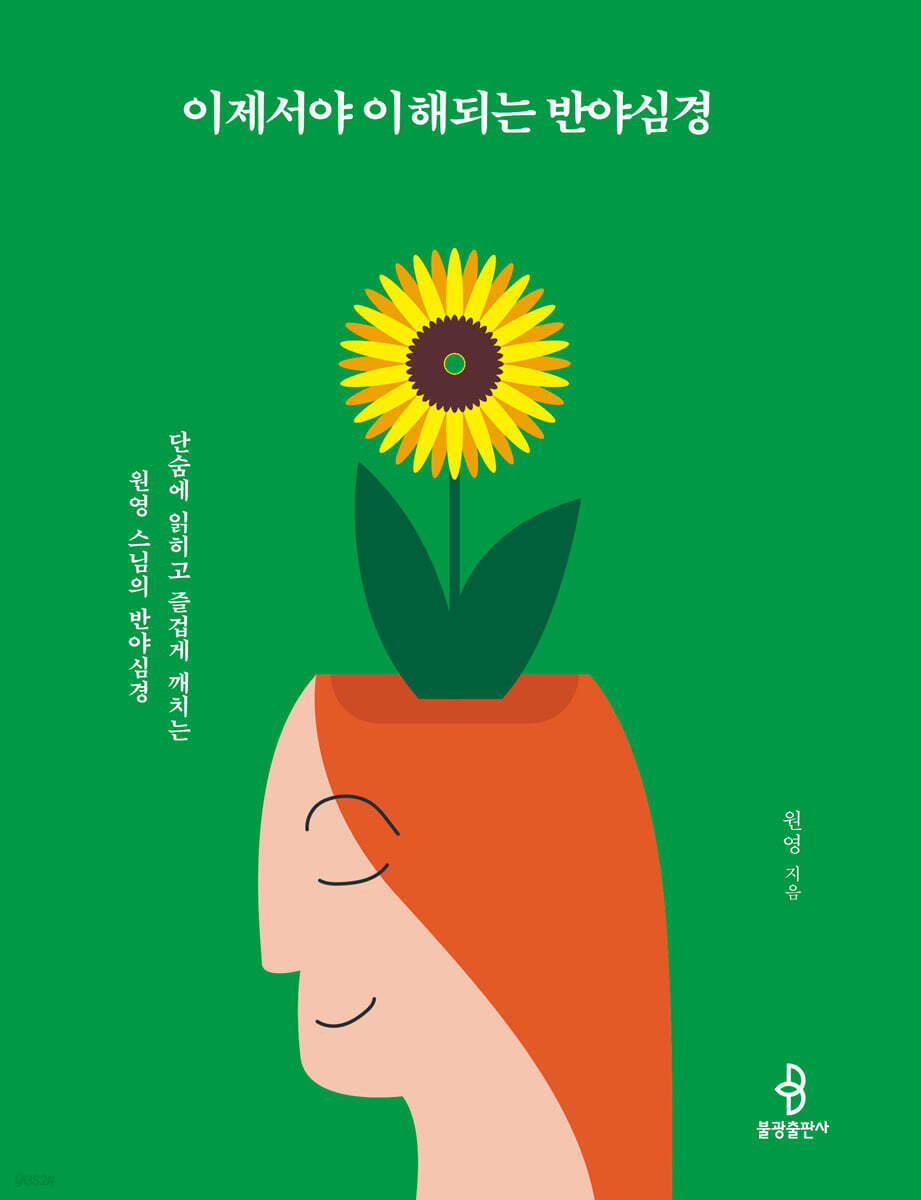 |
Description
Book Introduction
If you suddenly don't know how to live There's no better time to study the Heart Sutra If you were to ask Buddhists around the world to name the most frequently encountered and familiar sutra, most people would answer the Heart Sutra. In every country, it is not only recited without fail at every Buddhist ceremony or event, but it is also common to see people memorizing the entire text because it is a short sutra consisting of 54 verses and 260 Chinese characters. However, just because the content of the scriptures is familiar, that doesn't mean the teachings contained within are easy. This is because the Heart Sutra contains the teaching of 'emptiness', which is the most easily misunderstood teaching among Buddhist thoughts. It reveals the reality of the world and the 'self' from the perspective of the 'public', and through this, it contains the teaching that if we break free from our habit of dichotomous thinking, we can reach the world of eternal happiness, that is, enlightenment. Monk Won-yeong, who kindly explained the core teachings of Buddhism in his previous work, “Buddhism Now Understood,” has now reinterpreted the “Heart Sutra” in a way that anyone can easily read and understand. It is written in everyday language instead of difficult terms, and with relatable examples and anecdotes instead of complex explanations, making it easy to read and understand right away. Through this, you will be able to know exactly what kind of mindset you should have when you are lost and wandering in life, or when you face painful or sad moments. |
- You can preview some of the book's contents.
Preview
index
· Publishing a book
· Heart Sutra (Chinese, Korean)
Part 1: The Heart Sutra
Chapter 1: Reading the Scriptures with Your Heart
Reading the scriptures with your heart
The Heart Sutra, you have to understand its meaning.
· Learn more_The broad and abbreviated versions of the Heart Sutra
The unwavering wisdom of the Heart Sutra
· Learn more_The root and the aftereffects
Emptiness, the eyes of the living Buddha
· Learn more_Types of Prajna
The field had a heart-to-heart
Chapter 2 So that they can be happy
So that they can be happy
Behind me is Avalokitesvara Bodhisattva
I will practice profound Prajna Paramita.
Chapter 3: What Am I Made of?
What am I made of?
When you open your mind's eye, the door to truth opens.
How to look at it
Part 2: What You See When You Open Your Mind's Eyes
Chapter 1: Knowing the Principles is Most Important
Knowing the principles is most important
Wise, Sariputra
Eyes that see color, you haven't opened them yet
There is no such thing as a non-public phenomenon.
Everything you touch is public
Chapter 2: Everything That Exists Has a Reason
Everything that exists has a reason.
· Learn more_Samsung
Color is emptiness, emptiness is color
The siege of relationships as told to the little prince by the fox
Extinguishing the flames of attachment brings renewal.
Chapter 3: If you want to be happy, change your perspective.
If you want to be happy, change your perspective.
It's not the other person who has changed, it's my heart.
A mirror that looks into me?
A fly is flying in my stomach
All the answers are within me
Part 3: Balancing Your Life One Step at a Time
Chapter 1: The Transformation of Existence
Change of existence
Ouch! I saw a ghost.
Is there anything eternal?
Chapter 2 Beyond the Wall of the Heart
As time passes, the fleeting body will crumble
If you add sincerity to coincidence, it becomes karma.
Part 4: Everything is Fate
Chapter 1: Things the Mind Instructs - The Twelve Links of Dependent Origination
Things the Heart Tells - The Twelve Links of Dependent Origination
If you know the twelve links of dependent origination, you will see karma.
Spiderweb-like relationships
The quality of life is determined by karma.
Chapter 2: Learning from Adversity - The Four Noble Truths
Get rid of what's holding your mind back
Please be on your guard, please get out!
Part 5: The Possibility of the Impossible
Chapter 1: Enlightenment in the Skull Basket
Enlightenment in the Skull Bowl
The bird of the mind flies wherever it pleases.
Chapter 2: We still have a long way to go, but let's live our own way.
There's a long way to go, but let's live our own way.
Let go of all 3 chapters
Let go of everything
Chapter 4 We too are like Buddha
We too are like Buddha
Chapter 5: Song of Enlightenment
Song of Enlightenment
· In closing the book
· Heart Sutra (Chinese, Korean)
Part 1: The Heart Sutra
Chapter 1: Reading the Scriptures with Your Heart
Reading the scriptures with your heart
The Heart Sutra, you have to understand its meaning.
· Learn more_The broad and abbreviated versions of the Heart Sutra
The unwavering wisdom of the Heart Sutra
· Learn more_The root and the aftereffects
Emptiness, the eyes of the living Buddha
· Learn more_Types of Prajna
The field had a heart-to-heart
Chapter 2 So that they can be happy
So that they can be happy
Behind me is Avalokitesvara Bodhisattva
I will practice profound Prajna Paramita.
Chapter 3: What Am I Made of?
What am I made of?
When you open your mind's eye, the door to truth opens.
How to look at it
Part 2: What You See When You Open Your Mind's Eyes
Chapter 1: Knowing the Principles is Most Important
Knowing the principles is most important
Wise, Sariputra
Eyes that see color, you haven't opened them yet
There is no such thing as a non-public phenomenon.
Everything you touch is public
Chapter 2: Everything That Exists Has a Reason
Everything that exists has a reason.
· Learn more_Samsung
Color is emptiness, emptiness is color
The siege of relationships as told to the little prince by the fox
Extinguishing the flames of attachment brings renewal.
Chapter 3: If you want to be happy, change your perspective.
If you want to be happy, change your perspective.
It's not the other person who has changed, it's my heart.
A mirror that looks into me?
A fly is flying in my stomach
All the answers are within me
Part 3: Balancing Your Life One Step at a Time
Chapter 1: The Transformation of Existence
Change of existence
Ouch! I saw a ghost.
Is there anything eternal?
Chapter 2 Beyond the Wall of the Heart
As time passes, the fleeting body will crumble
If you add sincerity to coincidence, it becomes karma.
Part 4: Everything is Fate
Chapter 1: Things the Mind Instructs - The Twelve Links of Dependent Origination
Things the Heart Tells - The Twelve Links of Dependent Origination
If you know the twelve links of dependent origination, you will see karma.
Spiderweb-like relationships
The quality of life is determined by karma.
Chapter 2: Learning from Adversity - The Four Noble Truths
Get rid of what's holding your mind back
Please be on your guard, please get out!
Part 5: The Possibility of the Impossible
Chapter 1: Enlightenment in the Skull Basket
Enlightenment in the Skull Bowl
The bird of the mind flies wherever it pleases.
Chapter 2: We still have a long way to go, but let's live our own way.
There's a long way to go, but let's live our own way.
Let go of all 3 chapters
Let go of everything
Chapter 4 We too are like Buddha
We too are like Buddha
Chapter 5: Song of Enlightenment
Song of Enlightenment
· In closing the book
Into the book
In the Heart Sutra, which expands the idea of publicness, it explains in various ways, especially based on the 'Five Aggregates'.
They say that if you just know that 'Oh-on' is 'empty', you can cross the sea of suffering.
Furthermore, it tells us that there is a hollow truth in all the discriminatory delusions we create while living.
These are unfamiliar words, so they may seem very difficult to those who are hearing them for the first time, but if you just change your mindset, it's not that difficult.
--- p.7
This phenomenal world we live in has no substance, as it was created by fate and then disappeared in the blink of an eye.
Knowing that the world has no substance is called Prajna wisdom, and it contains the content that through this wisdom one can cross the sea of suffering.
--- p.29
They say there is no better lesson in life than your own experiences.
Even so, Prajna (wisdom) transcends everyday wisdom.
Prajna is the wisdom that removes obstacles like water that flows naturally.
Moreover, Prajna does not simply refer to the acquisition of information.
The reason is that it is fundamentally wisdom that is free from the three poisons of greed, anger, and ignorance.
Therefore, this wisdom gives the power of insight.
In early Buddhism, wisdom based on the Four Noble Truths, which are suffering, the cause of suffering, the cessation of suffering, and the path leading to that cessation, was called 'prajna.'
And the Buddha always guided us on the path of wisdom.
Here is the way to end suffering, so don't suffer anymore!
--- p.65~66
In fact, there are many things you can know just by looking at someone's appearance.
There are things you can tell by looking at what the face looks like and whether the limbs are long or short.
If we delve a little deeper into it, we can grasp the emptiness through the revealed appearance called 'color'.
The human body, represented by 'color', is a product of karma created by fate or karma.
Just because you look like this now, it doesn't mean you'll always look like this, and it's impossible that you were like this in your past life.
The appearance is not always the same.
Just by looking at this, you can find the 'emptiness' through the flesh.
--- p.100
From the time we were born until now, we have existed in a constant state of causality.
The precious relationships we make are all the result of the time and sincerity we pour into each other.
The union of my parents was a bond of fate, and my upbringing and other circumstances were also bonds of fate.
Because of this, none of the feelings, thoughts, intentions, or perceptions that we each accept at any given moment are fixed.
‘Number, appearance, action, and consciousness’ are also impermanent because they are the result of a combination of causes and conditions.
The sayings, “Receiving is emptiness,” “thinking is emptiness,” “action is emptiness,” and “consciousness is emptiness” are also based on this same principle.
--- p.132~133
Here is a clear mirror that allows us to look deeply into everything.
Let's take a look at ourselves in this clear mirror.
Everything that is reflected is an appearance that appears according to fate.
When we look at them from the perspective of the ball, they transcend dirt and cleanliness.
However, our minds are bound by distinguishing and discriminating against the revealed phenomena.
By evaluating and discerning ourselves, we actually bind and are bound.
--- p.157~158
I like flowers.
No one would dislike the sight of a beautifully blooming flower, but in reality, a flower is just a flower.
If the environment is right, flowers bloom and fall in due time, and they do not intend to show off to anyone.
Whether a flower is pretty or not is a result of the viewer's discernment.
So, there is no problem with the ‘color’ itself called a flower.
The question is whether I am captivated by flowers or not.
Likewise, originally, everything in the world is equal, but discrimination arises because those who deal with it lose their sense of equality and become unstable.
It's all a matter of the person who creates the discernment.
--- p.178
Ignorance, formation, consciousness, name and form, six sense bases, touch, feeling, desire, grasping, existence, birth, old age and death.
Even in this twelve links of dependent origination, it is said that everything from the nameless one at the very beginning to the old one at the very end is non-existent.
Why? From the perspective of the public, all laws of karma—that is, everything from natural karma to death—contain emptiness.
Things that are temporarily combined produce some result, but they are not even the cause.
Everything that dies becomes the seed of something else, but all of that, according to the logic of the universe, is said to be nonexistent.
--- p.227
Just as a shoe fits perfectly and you don't even realize you're wearing it, life is not full of pain or anger.
There is nothing to gain or lose.
However, if the shoes are too big or too small, you will constantly be concerned about your feet.
It's like feeling uncomfortable and irritated even if just a few grains of sand get in.
Everything in this world is like that.
It has to be just right so that you can forget it without even realizing it.
--- p.256
Everything is created from me when my muscles and the object meet.
When I realize that everything is empty, we have nothing left to worry about.
Because you know that there was no relationship in the first place, you gain freedom from everything.
The story goes that if you realize that your nature is empty, you will not be disturbed by anything.
Just like those monks and Buddha did!
They say that if you just know that 'Oh-on' is 'empty', you can cross the sea of suffering.
Furthermore, it tells us that there is a hollow truth in all the discriminatory delusions we create while living.
These are unfamiliar words, so they may seem very difficult to those who are hearing them for the first time, but if you just change your mindset, it's not that difficult.
--- p.7
This phenomenal world we live in has no substance, as it was created by fate and then disappeared in the blink of an eye.
Knowing that the world has no substance is called Prajna wisdom, and it contains the content that through this wisdom one can cross the sea of suffering.
--- p.29
They say there is no better lesson in life than your own experiences.
Even so, Prajna (wisdom) transcends everyday wisdom.
Prajna is the wisdom that removes obstacles like water that flows naturally.
Moreover, Prajna does not simply refer to the acquisition of information.
The reason is that it is fundamentally wisdom that is free from the three poisons of greed, anger, and ignorance.
Therefore, this wisdom gives the power of insight.
In early Buddhism, wisdom based on the Four Noble Truths, which are suffering, the cause of suffering, the cessation of suffering, and the path leading to that cessation, was called 'prajna.'
And the Buddha always guided us on the path of wisdom.
Here is the way to end suffering, so don't suffer anymore!
--- p.65~66
In fact, there are many things you can know just by looking at someone's appearance.
There are things you can tell by looking at what the face looks like and whether the limbs are long or short.
If we delve a little deeper into it, we can grasp the emptiness through the revealed appearance called 'color'.
The human body, represented by 'color', is a product of karma created by fate or karma.
Just because you look like this now, it doesn't mean you'll always look like this, and it's impossible that you were like this in your past life.
The appearance is not always the same.
Just by looking at this, you can find the 'emptiness' through the flesh.
--- p.100
From the time we were born until now, we have existed in a constant state of causality.
The precious relationships we make are all the result of the time and sincerity we pour into each other.
The union of my parents was a bond of fate, and my upbringing and other circumstances were also bonds of fate.
Because of this, none of the feelings, thoughts, intentions, or perceptions that we each accept at any given moment are fixed.
‘Number, appearance, action, and consciousness’ are also impermanent because they are the result of a combination of causes and conditions.
The sayings, “Receiving is emptiness,” “thinking is emptiness,” “action is emptiness,” and “consciousness is emptiness” are also based on this same principle.
--- p.132~133
Here is a clear mirror that allows us to look deeply into everything.
Let's take a look at ourselves in this clear mirror.
Everything that is reflected is an appearance that appears according to fate.
When we look at them from the perspective of the ball, they transcend dirt and cleanliness.
However, our minds are bound by distinguishing and discriminating against the revealed phenomena.
By evaluating and discerning ourselves, we actually bind and are bound.
--- p.157~158
I like flowers.
No one would dislike the sight of a beautifully blooming flower, but in reality, a flower is just a flower.
If the environment is right, flowers bloom and fall in due time, and they do not intend to show off to anyone.
Whether a flower is pretty or not is a result of the viewer's discernment.
So, there is no problem with the ‘color’ itself called a flower.
The question is whether I am captivated by flowers or not.
Likewise, originally, everything in the world is equal, but discrimination arises because those who deal with it lose their sense of equality and become unstable.
It's all a matter of the person who creates the discernment.
--- p.178
Ignorance, formation, consciousness, name and form, six sense bases, touch, feeling, desire, grasping, existence, birth, old age and death.
Even in this twelve links of dependent origination, it is said that everything from the nameless one at the very beginning to the old one at the very end is non-existent.
Why? From the perspective of the public, all laws of karma—that is, everything from natural karma to death—contain emptiness.
Things that are temporarily combined produce some result, but they are not even the cause.
Everything that dies becomes the seed of something else, but all of that, according to the logic of the universe, is said to be nonexistent.
--- p.227
Just as a shoe fits perfectly and you don't even realize you're wearing it, life is not full of pain or anger.
There is nothing to gain or lose.
However, if the shoes are too big or too small, you will constantly be concerned about your feet.
It's like feeling uncomfortable and irritated even if just a few grains of sand get in.
Everything in this world is like that.
It has to be just right so that you can forget it without even realizing it.
--- p.256
Everything is created from me when my muscles and the object meet.
When I realize that everything is empty, we have nothing left to worry about.
Because you know that there was no relationship in the first place, you gain freedom from everything.
The story goes that if you realize that your nature is empty, you will not be disturbed by anything.
Just like those monks and Buddha did!
--- p.289
Publisher's Review
The shortest Buddhist scripture, the Heart Sutra
Unraveling the teachings of 'emptiness' compressed into 260 characters
“Ajeajeva barajeva mojisabaha” and “Color is emptiness, emptiness is color.”
These are the most famous and familiar phrases from Buddhism, as you may have encountered them in mass media such as movies and novels, or in classes related to Eastern philosophy.
This is all a passage from the shortest Buddhist scripture, the Heart Sutra.
This sutra, which is recited by monks and attendees not only during the three daily Buddhist services held at temples but also at other Buddhist events and ceremonies, is the most widely known Buddhist sutra among Koreans, along with the Diamond Sutra.
However, it is only a famous phrase, and we do not know the full meaning contained within it.
No matter how many Korean translations you read, it is not easy to fully grasp their meaning.
As the title of the sutra, 『Heart Sutra』, suggests, it is a condensation of the core [heart] of the entire 600-volume 『Heart Sutra』 into just 260 characters.
So, although each phrase of the Heart Sutra only points out the core points that we must know, it is not easy to fully understand the teachings contained within it even after looking at it dozens of times.
This book is an explanation of the teachings of 'emptiness' in the Heart Sutra by Monk Wonyeong, who teaches Buddhism in the most friendly and refreshing way.
This teaching, which was more confusing and easy to misunderstand because of the meaning of the Chinese character 'gong', is explained in an 'eye-level explanation' that anyone can understand.
Starting with the story of Monk Hyeonjang, who translated the Chinese version of the Heart Sutra, which we most often read today, and even the incantation “Ajeaje Baraje Barasengaje Mojisabaha” to pray for passage to the world of enlightenment, each phrase is explained with various examples and rich explanations that can be seen in our lives.
“It’s finally out!”
For those curious about the Heart Sutra
The most affectionate and exciting thing in the world
Lecture on the Heart Sutra!
Monk Wonyoung is a monk with extensive experience communicating with the public, who has worked hard to make Buddhism more accessible and accessible through the television program “Monk Wonyoung’s Encyclopedia of Buddhism,” which is a must-see for anyone studying Buddhism.
All of the broadcasts of the program are available on YouTube, and among the many videos, the one that has been viewed the most is the lecture video on the Heart Sutra.
This means that the Heart Sutra is profound, but it also means that it is well-explained to suit people's level of understanding.
This book is a lecture on the Heart Sutra that goes one level further than what could be captured on video.
It explains the teachings contained in each verse of the Heart Sutra from beginning to end.
However, rather than using difficult terms and complex explanations, it uses simple language from everyday life and a variety of relatable examples so that even those who are not familiar with Buddhism can quickly understand it.
Additionally, concepts that may feel complicated are expressed in tables and figures, and stories or concepts that are worth knowing more about are included in a separate document, so that you can understand the teachings of the Heart Sutra with just this one book.
Just as the previous work, "Buddhism Now Understood," conveyed the core teachings of Buddhism to those who find it difficult to study in a friendly and entertaining way, this book will provide the most affectionate and engaging introduction to the "Heart Sutra."
“Like the wind that doesn’t get caught in a net”
It teaches you the wisdom to live without being hindered by anything.
Lecture on the Heart Sutra
The core and most famous phrase of the Heart Sutra can be said to be “Form is emptiness, emptiness is form, perception, formation, and consciousness are reversed.”
In Korean, it means, “Color (form) is emptiness and emptiness is color, so are feeling (feeling), thought (thought), action (action with intention), and consciousness (consciousness).”
The 'emptiness' here does not mean 'nothing'.
It means that although it exists phenomenally, it does not always exist because it is created and then destroyed.
Not only my body and mind, but everything in the world does not exist unchangingly, yet we consider it eternal.
So the moment this breaks down or goes out of alignment even a little bit, we fall into misery.
The Heart Sutra contains teachings that shatter that ‘illusion.’
It dissects the reality of myself and the world in detail, making me realize how meaningless my discernment is.
When we free ourselves from this discriminating thinking, everything becomes free.
Because there is nothing to hinder your mind and actions, fear disappears, and because you are not afraid, you cannot be hindered by anything.
Through this, you will be able to know the direction of life when you are lost and wandering as you go through life, and you will be able to know what kind of mindset you should have when you are in too much pain.
Unraveling the teachings of 'emptiness' compressed into 260 characters
“Ajeajeva barajeva mojisabaha” and “Color is emptiness, emptiness is color.”
These are the most famous and familiar phrases from Buddhism, as you may have encountered them in mass media such as movies and novels, or in classes related to Eastern philosophy.
This is all a passage from the shortest Buddhist scripture, the Heart Sutra.
This sutra, which is recited by monks and attendees not only during the three daily Buddhist services held at temples but also at other Buddhist events and ceremonies, is the most widely known Buddhist sutra among Koreans, along with the Diamond Sutra.
However, it is only a famous phrase, and we do not know the full meaning contained within it.
No matter how many Korean translations you read, it is not easy to fully grasp their meaning.
As the title of the sutra, 『Heart Sutra』, suggests, it is a condensation of the core [heart] of the entire 600-volume 『Heart Sutra』 into just 260 characters.
So, although each phrase of the Heart Sutra only points out the core points that we must know, it is not easy to fully understand the teachings contained within it even after looking at it dozens of times.
This book is an explanation of the teachings of 'emptiness' in the Heart Sutra by Monk Wonyeong, who teaches Buddhism in the most friendly and refreshing way.
This teaching, which was more confusing and easy to misunderstand because of the meaning of the Chinese character 'gong', is explained in an 'eye-level explanation' that anyone can understand.
Starting with the story of Monk Hyeonjang, who translated the Chinese version of the Heart Sutra, which we most often read today, and even the incantation “Ajeaje Baraje Barasengaje Mojisabaha” to pray for passage to the world of enlightenment, each phrase is explained with various examples and rich explanations that can be seen in our lives.
“It’s finally out!”
For those curious about the Heart Sutra
The most affectionate and exciting thing in the world
Lecture on the Heart Sutra!
Monk Wonyoung is a monk with extensive experience communicating with the public, who has worked hard to make Buddhism more accessible and accessible through the television program “Monk Wonyoung’s Encyclopedia of Buddhism,” which is a must-see for anyone studying Buddhism.
All of the broadcasts of the program are available on YouTube, and among the many videos, the one that has been viewed the most is the lecture video on the Heart Sutra.
This means that the Heart Sutra is profound, but it also means that it is well-explained to suit people's level of understanding.
This book is a lecture on the Heart Sutra that goes one level further than what could be captured on video.
It explains the teachings contained in each verse of the Heart Sutra from beginning to end.
However, rather than using difficult terms and complex explanations, it uses simple language from everyday life and a variety of relatable examples so that even those who are not familiar with Buddhism can quickly understand it.
Additionally, concepts that may feel complicated are expressed in tables and figures, and stories or concepts that are worth knowing more about are included in a separate document, so that you can understand the teachings of the Heart Sutra with just this one book.
Just as the previous work, "Buddhism Now Understood," conveyed the core teachings of Buddhism to those who find it difficult to study in a friendly and entertaining way, this book will provide the most affectionate and engaging introduction to the "Heart Sutra."
“Like the wind that doesn’t get caught in a net”
It teaches you the wisdom to live without being hindered by anything.
Lecture on the Heart Sutra
The core and most famous phrase of the Heart Sutra can be said to be “Form is emptiness, emptiness is form, perception, formation, and consciousness are reversed.”
In Korean, it means, “Color (form) is emptiness and emptiness is color, so are feeling (feeling), thought (thought), action (action with intention), and consciousness (consciousness).”
The 'emptiness' here does not mean 'nothing'.
It means that although it exists phenomenally, it does not always exist because it is created and then destroyed.
Not only my body and mind, but everything in the world does not exist unchangingly, yet we consider it eternal.
So the moment this breaks down or goes out of alignment even a little bit, we fall into misery.
The Heart Sutra contains teachings that shatter that ‘illusion.’
It dissects the reality of myself and the world in detail, making me realize how meaningless my discernment is.
When we free ourselves from this discriminating thinking, everything becomes free.
Because there is nothing to hinder your mind and actions, fear disappears, and because you are not afraid, you cannot be hindered by anything.
Through this, you will be able to know the direction of life when you are lost and wandering as you go through life, and you will be able to know what kind of mindset you should have when you are in too much pain.
GOODS SPECIFICS
- Date of issue: May 15, 2024
- Page count, weight, size: 304 pages | 410g | 150*200*19mm
- ISBN13: 9791193454923
- ISBN10: 1193454921
You may also like
카테고리
korean


korean

![GQ KOREA Mark (Monthly): December [2025]](http://librairie.coreenne.fr/cdn/shop/files/8ef265dbbfbf186523ed75ba7319009d.jpg?v=1765340328&width=3840)


