

Languages of Confession
 |
Description
Book Introduction
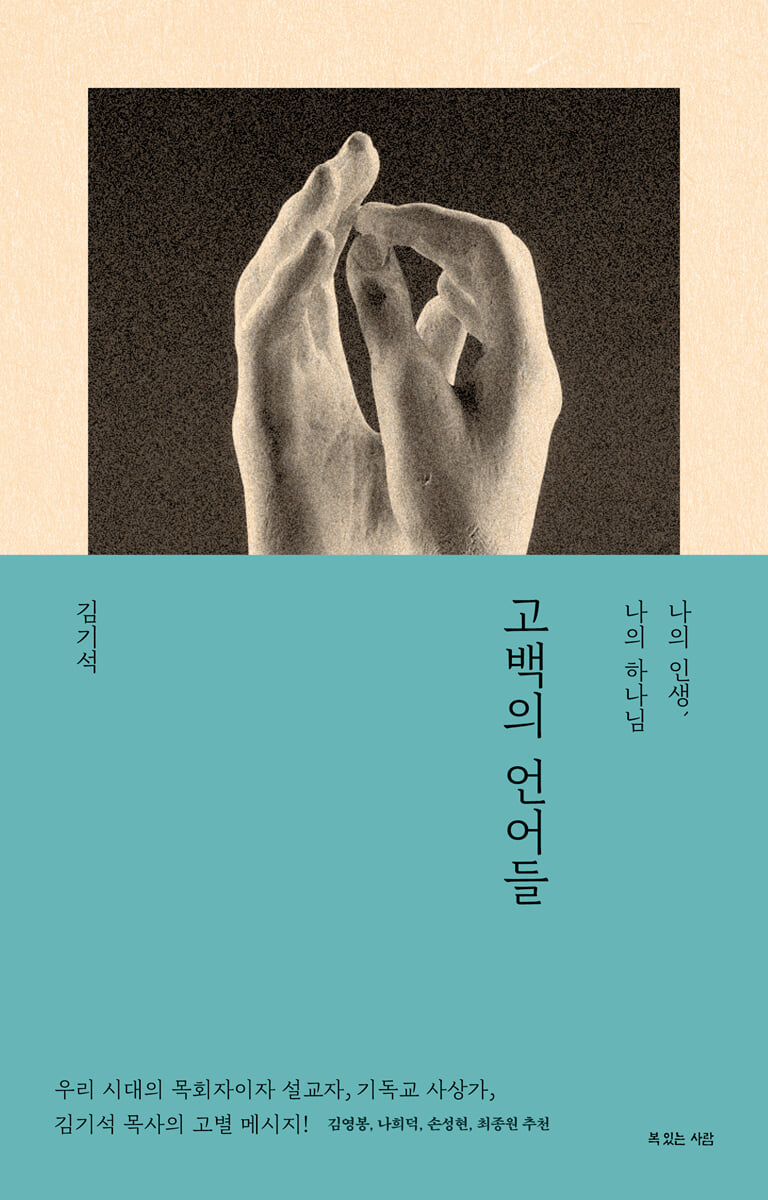
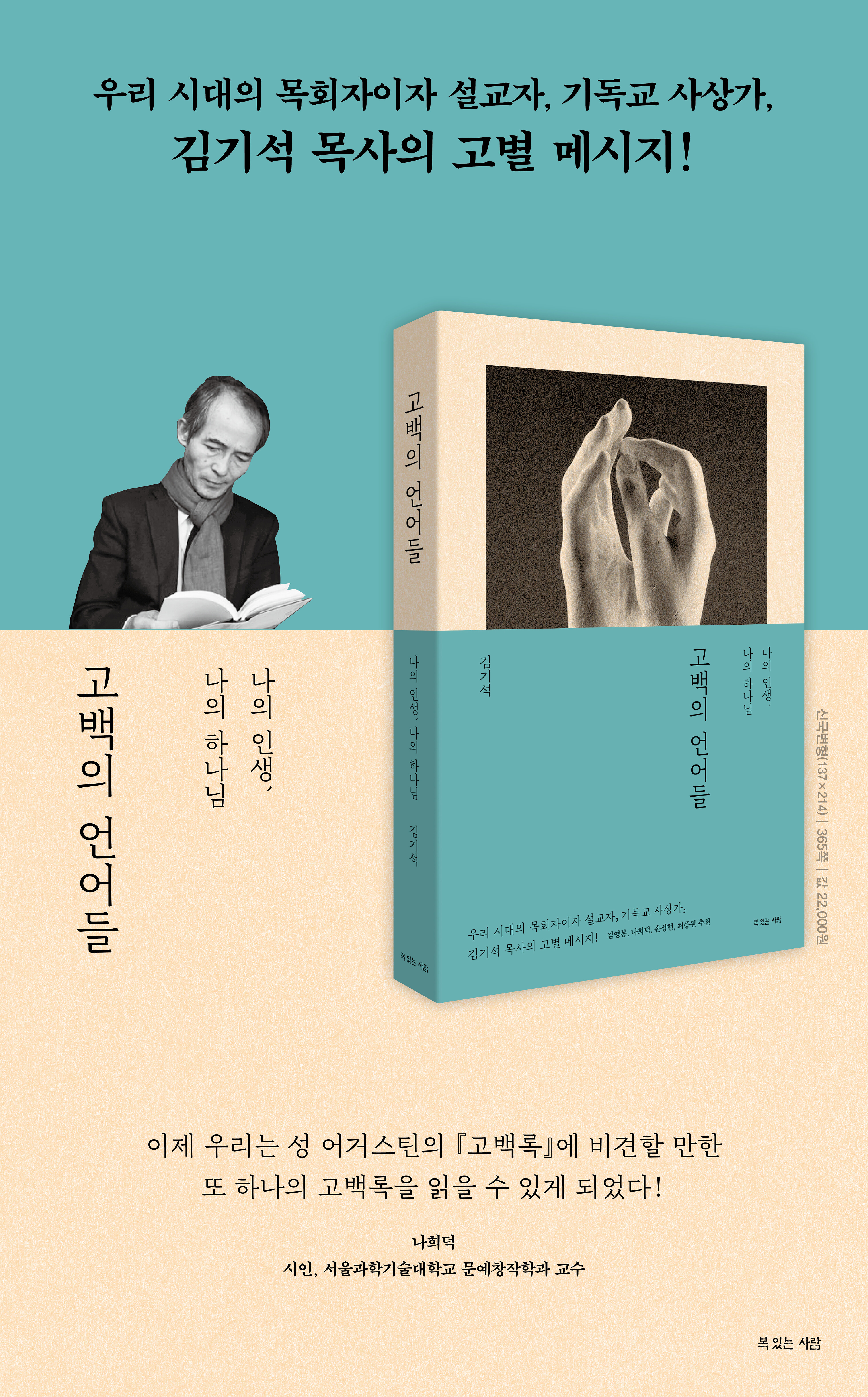
A pastor, preacher, and Christian thinker of our time, Pastor Kim Ki-seok's farewell message! “Now we have a book comparable to St. Augustine’s Confessions. “I got to read another confession!” - Recommended by Kim Young-bong, Na Hee-deok, Son Seong-hyeon, and Choi Jong-won "The Essence of Pastor Kim Ki-seok's Life, Faith, Experience, and Insights" This book is a farewell message from Pastor Kim Ki-seok, a pastor, preacher, and Christian thinker of our time. He has served Cheongpa Church for many years and is nearing retirement. During the COVID-19 pandemic, he has provided much comfort and hope to Christians at home and abroad through broadcast and online sermons, including CBS's "Jaljalbeop" (How to Believe Well and Live Well). In particular, his sermons and lectures provided relief to those struggling with life's unsolvable problems, those wandering inside and outside the church, and those wandering in the darkness of the times. This book contains the life and faith of a lonely seeker who has been running towards truth and faithfulness before God. Although he has given numerous sermons, lectures, and written works, this book is quite different in nature from them. This is because the image of Kim Ki-seok as a unique Korean Christian thinker is fully reflected in it. Pastor Kim Ki-seok has been a pastor for 43 years, but he confesses that there is much more he does not know about God than he does know. “As I approach retirement from ministry, I wanted to calmly reflect on the God I have met and continue to meet. This book begins with God as the absolute Other who approaches us in a very unfamiliar manner, and contains concerns about the joy and strength that come from an intimate relationship with God, as well as how to believe in God who becomes unfamiliar again just as we think we know Him.” |
- You can preview some of the book's contents.
Preview
index
introduction
Lecture 1│The Mystery of Humanity
Finite human, infinite God│Look at this shining point│What is a human being│What humans learn through various studies│Human existence, a life where wandering is a constant│Who am I│Humans are relational beings│Human nature contained in “Enuma Elish”│Human nature contained in “The Epic of Gilgamesh”│The Bible, a wrinkled text│The creation story in the Bible│The pinnacle of the creation story, the creation of humans│Knowing names│An invitation to a world of wonder│Humans belong to one another│Humans as the image of God
Lecture 2: Born in God
Living with Discernment of Time│Life is a Pilgrimage│The Light of the Eternal One Within Humans│The Deep-Rooted Sin of Humans│The Procrustean Bed Within Humans│Between Universality and Particularity│The Story is Important│The Birth of a Human Being│Why God Does Not Intervene│The Discordant Relationship Between the Creator and Creation│The Path Beyond Conflict to Reconciliation│A Life Responding to the Face of the Other│When Our Horizons Broaden│The Beginning of the Experience of God│Theism and Atheism│A Call to an Unfamiliar World│Leaving the World Dominated by Fatalism│God Accompanying Us in Time
Lecture 3│Walking with God
The dream of a new world│The path of contact and resistance│Should we follow God's law or positive law│The beginning of trials│In the presence of the Holy One│God as a relational being│Invitation to God's dream│God who reveals himself through events│A deepened experience of God│God's promise│A life that takes responsibility for others│When life's difficulties approach│The experience of acceptance│Nothing in the world is taken for granted│When treated as a means rather than an end│God in the depths of history│The meaning of suffering and trials
Lecture Four: Moving Toward God
The essence of religious life│Humans, beings bound by sin│Denying oneself│God's rule│When crushed by the weight of existence│God's judgment on the empire│The economic law of manna│God's law of love│Invitation to the covenant│The seed contains life│God's world│Freedom is connected to love│God who reveals and hides at the same time│The moment the eyes of faith open│The essence of prayer│The call to a holy life│Justice and righteousness│The diversity of God's experience│A life that sanctifies everyday life
Lecture Five│My Life, My God
A world of anxiety│On the course of life│Light entering through the cracks│The invisible world│Between the presence and absence of God│The motivation for my faith│When going through times of suffering│Moments of groaning and sighing│Living conscious of God's eclipse│Before a world of the unknown│When opening one's eyes to the reality of God│Between the 'politics of holiness' and the 'politics of mercy'│The kingdom of God formed in hospitality│Trust, entrusting it to God's hands│In a reality where the answer is unknown│In God, with God, toward God
main
Lecture 1│The Mystery of Humanity
Finite human, infinite God│Look at this shining point│What is a human being│What humans learn through various studies│Human existence, a life where wandering is a constant│Who am I│Humans are relational beings│Human nature contained in “Enuma Elish”│Human nature contained in “The Epic of Gilgamesh”│The Bible, a wrinkled text│The creation story in the Bible│The pinnacle of the creation story, the creation of humans│Knowing names│An invitation to a world of wonder│Humans belong to one another│Humans as the image of God
Lecture 2: Born in God
Living with Discernment of Time│Life is a Pilgrimage│The Light of the Eternal One Within Humans│The Deep-Rooted Sin of Humans│The Procrustean Bed Within Humans│Between Universality and Particularity│The Story is Important│The Birth of a Human Being│Why God Does Not Intervene│The Discordant Relationship Between the Creator and Creation│The Path Beyond Conflict to Reconciliation│A Life Responding to the Face of the Other│When Our Horizons Broaden│The Beginning of the Experience of God│Theism and Atheism│A Call to an Unfamiliar World│Leaving the World Dominated by Fatalism│God Accompanying Us in Time
Lecture 3│Walking with God
The dream of a new world│The path of contact and resistance│Should we follow God's law or positive law│The beginning of trials│In the presence of the Holy One│God as a relational being│Invitation to God's dream│God who reveals himself through events│A deepened experience of God│God's promise│A life that takes responsibility for others│When life's difficulties approach│The experience of acceptance│Nothing in the world is taken for granted│When treated as a means rather than an end│God in the depths of history│The meaning of suffering and trials
Lecture Four: Moving Toward God
The essence of religious life│Humans, beings bound by sin│Denying oneself│God's rule│When crushed by the weight of existence│God's judgment on the empire│The economic law of manna│God's law of love│Invitation to the covenant│The seed contains life│God's world│Freedom is connected to love│God who reveals and hides at the same time│The moment the eyes of faith open│The essence of prayer│The call to a holy life│Justice and righteousness│The diversity of God's experience│A life that sanctifies everyday life
Lecture Five│My Life, My God
A world of anxiety│On the course of life│Light entering through the cracks│The invisible world│Between the presence and absence of God│The motivation for my faith│When going through times of suffering│Moments of groaning and sighing│Living conscious of God's eclipse│Before a world of the unknown│When opening one's eyes to the reality of God│Between the 'politics of holiness' and the 'politics of mercy'│The kingdom of God formed in hospitality│Trust, entrusting it to God's hands│In a reality where the answer is unknown│In God, with God, toward God
main
Detailed image
Into the book
Humans cannot find rest in time.
It is difficult to escape the fate of anxiety.
Although I experience occasional moments of peace, I spend most of my time in a state of anxiety.
What should I call this? Words like "restlessness" and "loss of home" come to mind.
Since the creation of Eden, humans have always lived in fear.
The Bible says that after Cain killed his brother, he left the land where he was living and settled in Nod, east of Eden (Genesis 4:16).
'Not' means 'to be free' or 'to wander'.
A life of constant wandering, this is our existence.
When will this anxiety cease? Augustine answers, "When our hearts rest in you."
It is only when we anchor ourselves in God's embrace that we can escape the fate of anxiety.
---「First lecture.
From "The Mystery of Humanity"
As we live, there are times when we inevitably face limitations.
At that time, I couldn't do anything.
My family is going through mental or physical difficulties and I can't do anything about it.
I can't help but tear my hair out in helplessness.
When faced with such a limiting situation, some people simply collapse.
In contrast, there are those who attempt an existential leap.
A leap is to overcome that limit.
The moment you take a leap, your horizons expand.
People who only hiked Mt. Bukhan or Mt. Dobong near Seoul will find their abilities improve after they decide to hike Mt. Jirisan.
The same goes for the reading experience.
Earlier this year, I made a firm resolution to read Marcel Proust's In Search of Lost Time.
This is a book that I always thought, 'I have to read it this time,' but never had the courage to read.
That book is not an easy read.
The quantity is also not small.
I read all thirteen books in about three weeks.
After reading such a book, a 300-400 page book becomes a little easier.
Sometimes, I need to read books that really challenge me, books that test my patience, to improve my reading skills.
It's a different case, but that's also a kind of leap.
You have to take a leap to expand your world of experience.
But no matter how much you jump, there are times when your feet don't touch the ground.
These are unavoidable events.
When people have such experiences, they finally realize, 'Ah, there is a larger world in this world that cannot be integrated by human reason or experience.'
That is how our connection with the greater world, our encounter with the sacred, begins.
The first line of Ham Seok-heon's poem bursts forth only because of such an experience.
---「Second lecture.
From “Born in God”
As we have seen, Noah was a righteous and blameless man, a model of obedience.
But why didn't God open the way to salvation through Noah? Why didn't He make him the source of blessing? Why did He make him the father of all nations? For this purpose, God chose Abraham.
Abraham may not be considered a blameless man, but he was obedient to God's calling.
Even when he was told to leave his familiar world and go to an unfamiliar one, he obeyed, and even when he was later told to sacrifice his son, whom he had at the age of one hundred, he tried to obey in the midst of chaos.
Abraham is also a champion of obedience.
But there was one thing that Abraham had and Noah did not.
That made the difference.
It is a sense of responsibility towards the typist.
---「Third lecture.
From “Walking with God”
Narrow-minded believers create their own framework for understanding God and then say that anyone who doesn't fit that framework is wrong.
Of course, we must distinguish between heretics.
They draw people into their own web of teachings, ultimately devastating their inner selves.
Many people have lost their ability to communicate with people outside their social selves.
Heretical sects deprive people of the ability to think for themselves and force them to blindly follow their doctrines and leaders.
In her book, Eichmann in Jerusalem, American political philosopher Hannah Arendt says that “not thinking,” or lack of thought, is the root of evil.
While we must be wary of such cases, we must also acknowledge that our experiences of God can be diverse.
The person who confesses, “The Lord is my shepherd” should not argue with the person who confesses, “God is my lamp.”
Our experience of God becomes richer when we listen to each other's stories.
---「The fourth lecture.
From “Going Towards God”
Today, we must reflect on whether we are fixated on the image of a God who cares for us meticulously, while forgetting the God who looks upon history and is angry and judging.
There is still a deep darkness over the world.
“If there is a God, how could this happen?” People ask this question even though they know there is no answer.
Can we believe and trust in God without knowing the answer? Is it even okay to trust? We can't give up on life just because there's no right answer.
Life is ultimately about choices.
You can either crash into the absurd world and be shipwrecked, or you can break through it and reach a better world.
You can live a fatalistic life, crushed by the meaninglessness of the world, or you can resist the pull of fate and leap toward a new life.
It is difficult to escape the fate of anxiety.
Although I experience occasional moments of peace, I spend most of my time in a state of anxiety.
What should I call this? Words like "restlessness" and "loss of home" come to mind.
Since the creation of Eden, humans have always lived in fear.
The Bible says that after Cain killed his brother, he left the land where he was living and settled in Nod, east of Eden (Genesis 4:16).
'Not' means 'to be free' or 'to wander'.
A life of constant wandering, this is our existence.
When will this anxiety cease? Augustine answers, "When our hearts rest in you."
It is only when we anchor ourselves in God's embrace that we can escape the fate of anxiety.
---「First lecture.
From "The Mystery of Humanity"
As we live, there are times when we inevitably face limitations.
At that time, I couldn't do anything.
My family is going through mental or physical difficulties and I can't do anything about it.
I can't help but tear my hair out in helplessness.
When faced with such a limiting situation, some people simply collapse.
In contrast, there are those who attempt an existential leap.
A leap is to overcome that limit.
The moment you take a leap, your horizons expand.
People who only hiked Mt. Bukhan or Mt. Dobong near Seoul will find their abilities improve after they decide to hike Mt. Jirisan.
The same goes for the reading experience.
Earlier this year, I made a firm resolution to read Marcel Proust's In Search of Lost Time.
This is a book that I always thought, 'I have to read it this time,' but never had the courage to read.
That book is not an easy read.
The quantity is also not small.
I read all thirteen books in about three weeks.
After reading such a book, a 300-400 page book becomes a little easier.
Sometimes, I need to read books that really challenge me, books that test my patience, to improve my reading skills.
It's a different case, but that's also a kind of leap.
You have to take a leap to expand your world of experience.
But no matter how much you jump, there are times when your feet don't touch the ground.
These are unavoidable events.
When people have such experiences, they finally realize, 'Ah, there is a larger world in this world that cannot be integrated by human reason or experience.'
That is how our connection with the greater world, our encounter with the sacred, begins.
The first line of Ham Seok-heon's poem bursts forth only because of such an experience.
---「Second lecture.
From “Born in God”
As we have seen, Noah was a righteous and blameless man, a model of obedience.
But why didn't God open the way to salvation through Noah? Why didn't He make him the source of blessing? Why did He make him the father of all nations? For this purpose, God chose Abraham.
Abraham may not be considered a blameless man, but he was obedient to God's calling.
Even when he was told to leave his familiar world and go to an unfamiliar one, he obeyed, and even when he was later told to sacrifice his son, whom he had at the age of one hundred, he tried to obey in the midst of chaos.
Abraham is also a champion of obedience.
But there was one thing that Abraham had and Noah did not.
That made the difference.
It is a sense of responsibility towards the typist.
---「Third lecture.
From “Walking with God”
Narrow-minded believers create their own framework for understanding God and then say that anyone who doesn't fit that framework is wrong.
Of course, we must distinguish between heretics.
They draw people into their own web of teachings, ultimately devastating their inner selves.
Many people have lost their ability to communicate with people outside their social selves.
Heretical sects deprive people of the ability to think for themselves and force them to blindly follow their doctrines and leaders.
In her book, Eichmann in Jerusalem, American political philosopher Hannah Arendt says that “not thinking,” or lack of thought, is the root of evil.
While we must be wary of such cases, we must also acknowledge that our experiences of God can be diverse.
The person who confesses, “The Lord is my shepherd” should not argue with the person who confesses, “God is my lamp.”
Our experience of God becomes richer when we listen to each other's stories.
---「The fourth lecture.
From “Going Towards God”
Today, we must reflect on whether we are fixated on the image of a God who cares for us meticulously, while forgetting the God who looks upon history and is angry and judging.
There is still a deep darkness over the world.
“If there is a God, how could this happen?” People ask this question even though they know there is no answer.
Can we believe and trust in God without knowing the answer? Is it even okay to trust? We can't give up on life just because there's no right answer.
Life is ultimately about choices.
You can either crash into the absurd world and be shipwrecked, or you can break through it and reach a better world.
You can live a fatalistic life, crushed by the meaninglessness of the world, or you can resist the pull of fate and leap toward a new life.
---「Fifth lecture.
From “My Life, My God”
From “My Life, My God”
Publisher's Review
"A feast of writing, freely crossing poetry and prose, modern literature, and Eastern and Western classics."
The most significant feature of this book is that it opens up diverse horizons of interpretation by weaving together the language of the Bible with the languages of poetry, novels, philosophy, and art.
The author invites readers into a captivating new experience by unraveling the profound spiritual dimension through the work of writers, philosophers, and artists from the East and the West, past and present.
“God has always led me one step ahead.
He always approached me with something new, and I couldn't help but feel a deep sense of awe at each encounter.”
The author confesses that God is not something that can be grasped through concepts.
That is why this book focuses on stories rather than explaining God through concepts.
This book encourages us to reflect on ourselves as seekers and believers living in the modern world, using the figures of the Bible as a mirror.
One story leads to another.
Those who are going through the "dark night of the soul," those shaken by profound wandering, and those who long to understand God but are frustrated by their inability to do so will read this book and realize that they are already part of God's salvation story.
“We are born in God,
Walking the path of life with God,
The ultimate destination we are going to is
It is going towards God.
Our hearts are troubled by anxiety and sometimes waver, but our feet are firmly planted on the ground.
I believe that as we move toward God, hope will flow into this world.
God is not something that can be grasped, but He is present in every moment of time.
He is the one who accompanies us and causes events, and through those events
“The land of peace will gradually come to us.”
The most significant feature of this book is that it opens up diverse horizons of interpretation by weaving together the language of the Bible with the languages of poetry, novels, philosophy, and art.
The author invites readers into a captivating new experience by unraveling the profound spiritual dimension through the work of writers, philosophers, and artists from the East and the West, past and present.
“God has always led me one step ahead.
He always approached me with something new, and I couldn't help but feel a deep sense of awe at each encounter.”
The author confesses that God is not something that can be grasped through concepts.
That is why this book focuses on stories rather than explaining God through concepts.
This book encourages us to reflect on ourselves as seekers and believers living in the modern world, using the figures of the Bible as a mirror.
One story leads to another.
Those who are going through the "dark night of the soul," those shaken by profound wandering, and those who long to understand God but are frustrated by their inability to do so will read this book and realize that they are already part of God's salvation story.
“We are born in God,
Walking the path of life with God,
The ultimate destination we are going to is
It is going towards God.
Our hearts are troubled by anxiety and sometimes waver, but our feet are firmly planted on the ground.
I believe that as we move toward God, hope will flow into this world.
God is not something that can be grasped, but He is present in every moment of time.
He is the one who accompanies us and causes events, and through those events
“The land of peace will gradually come to us.”
GOODS SPECIFICS
- Date of issue: April 1, 2024
- Page count, weight, size: 365 pages | 137*214*30mm
- ISBN13: 9791170831211
- ISBN10: 1170831214
You may also like
카테고리
korean


korean

![GQ KOREA Mark (Monthly): December [2025]](http://librairie.coreenne.fr/cdn/shop/files/8ef265dbbfbf186523ed75ba7319009d.jpg?v=1765340328&width=3840)


