

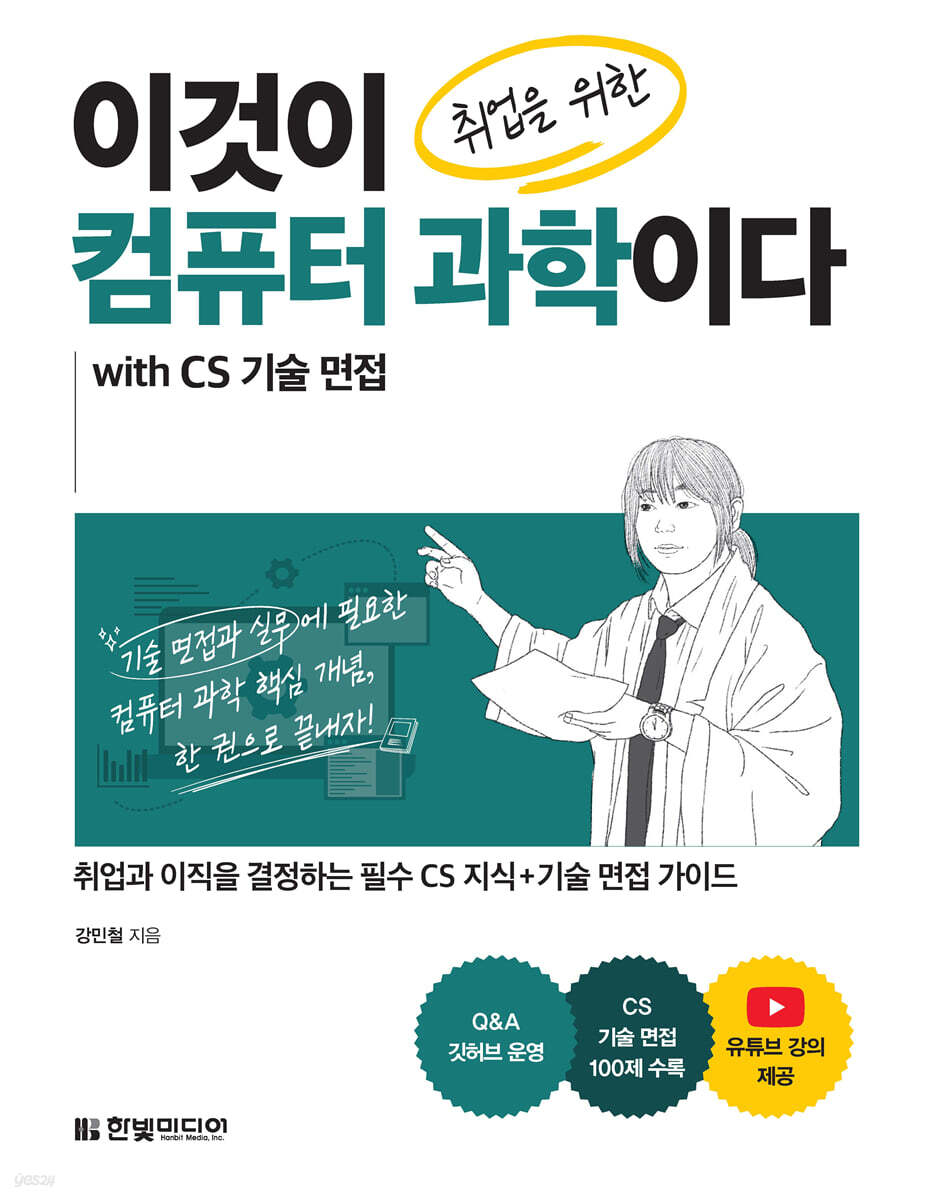
This is Computer Science for Jobs with CS Tech Interviews
 |
Description
Book Introduction
Get the CS knowledge you need for technical interviews and practical work, all in one book! Which is easier: "just making it work" without understanding the program's principles, or "making it work properly" after understanding it accurately? Anyone who's ever done any development already knows the answer. To develop a well-functioning program, you must be able to define and solve problems. Solving problems often begins with computer science, which is why so many companies test applicants for computer science knowledge. This book covers the entire spectrum of computer science (computer architecture, operating systems, data structures, networks, and databases) closely related to employment, job changes, and technical interviews. It provides a comprehensive overview of the vast subject of computer science through specific examples and helpful explanations applied to actual programming. This book will not only broaden your understanding of computer science, but also help you grow into a developer with better practical skills and capabilities. |
- You can preview some of the book's contents.
Preview
index
CHAPTER 01 Computer Science for Technical Interviews and Practice
A developer who doesn't know the principles is not a great developer.
Code that just works vs. code that works properly
Computer Science to Understand the Principles of __Programs
2 Drawing Computer Science Maps: If You Want to Prepare for Technical Interviews
__Computer science is not a subject about memorizing keywords.
__What the book covers: Knowledge emphasized in most professions
__What the book doesn't cover: Knowledge whose importance varies depending on the job.
[Further Study NOTE] CS Note: Computer Science Glossary for Developers
CHAPTER 02 COMPUTER ARCHITECTURE
1 The Big Picture of Computer Architecture
__Information that computers understand
__Core components of a computer
__Drawing a computer architecture map
2 Information that computers understand
__Data - Representing numbers with 0 and 1
__Data - Representing characters with 0s and 1s
__command
3 CPU
__register
__interrupt
__Designed for improved CPU performance
__Instruction parallel processing through pipelining
4 memory
__RAM
__The order in which bytes are pushed into memory - big endian and little endian
__cache memory
5 Auxiliary memory and input/output devices
__RAID
__Input/Output Techniques
[Additional Learning NOTE] GPU Uses and Processing Methods
[Technical Interview Tips] 15 Technical Interview Questions from a Job Mentor
CHAPTER 03 Operating System
1 The big picture of the operating system
__The role of the operating system
__Drawing an operating system map
__System calls and dual mode
2 Processes and Threads
__Multiprocess and multithreading
__Interprocess communication
3 Synchronization and Deadlock
__Synchronization technique
__deadlock
4 CPU Scheduling
__CPU scheduling algorithm
__Linux CPU Scheduling
5 virtual memory
__Physical address and logical address
__Swapping and contiguous memory allocation
__Virtual memory management through paging
__Page replacement algorithm
6 file systems
__files and directories
__file system
[Additional Learning NOTE] Press the power button until it boots up.
[Additional Learning NOTE] Virtual Machines and Containers
[Technical Interview Tips] 25 Technical Interview Questions from a Job Mentor
CHAPTER 04 DATA STRUCTURES
1 The Big Picture of Data Structures
__Data Structures and Algorithms
__Time complexity and space complexity
__Drawing a data structure map
2 Arrays and linked lists
__arrangement
__linked list
3 Stacks and Queues
__stack
__cue
4 hash tables
__hash function
__hash collision
5 trees
Traversing the __tree
__Type of tree
6 graphs
__Types and implementation of graphs
__Depth-first search and breadth-first search
__Shortest path algorithm
[Technical Interview Tips] 15 Technical Interview Questions from a Job Mentor
CHAPTER 05 NETWORK
1 The Big Picture of the Network
__Basic structure of the network
__The process by which two hosts exchange packets
__Drawing a network map
2 Physical layer and data link layer
__Ethernet
__Wired and wireless communication media
__Network Interface: NIC
__hubs and switches
3 Network Layer - IP
__Purpose and characteristics of IP
__IP address structure
__Public IP address and private IP address
__IP address allocation
__IP transport features complement: ICMP
__IP address and MAC address correspondence: ARP
4 Transport Layer - TCP and UDP
__Purpose and characteristics of TCP and UDP
__From TCP connection to termination
__TCP state management
5 Application Layer - HTTP Foundation
__DNS and URI/URL
__HTTP features and message structure
__HTTP methods and status codes
__HTTP Main Headers
6 Application Layer - Application of HTTP
__cookie
__cache
__Content Negotiation
__Security: SSL/TLS and HTTPS
7 Proxies and Stable Traffic
__Origin Server and Intermediate Server: Forward Proxy and Reverse Proxy
__High Availability: Load Balancing and Scaling
__Load Balancing with Nginx
[Additional Learning NOTE] Web Servers and Web Application Servers
[Additional Learning NOTE] Socket Programming
[Technical Interview Tips] 25 Technical Interview Questions from a Job Mentor
CHAPTER 06 DATABASE
1 The Big Picture of the Database
__Database and DBMS
Why use a database instead of a file?
__Database storage units and transactions
__Draw a database map
2 RDBMS Basics
__Table Structure: Fields and Records
__table relationship
__Integrity constraints
3 SQL
__Data Definition Language (DDL)
__Data Manipulation Language (DML)
Transaction Control Language (TCL)
4 Efficient Queries
__Subqueries and Joins
__views
__Index
5 Database Design
__ER diagram
__Normalization
6 NoSQL
__RDBMS vs. NoSQL: Characteristics of NoSQL
__Diverse NoSQL: A Taste of MongoDB and Redis
[Additional Learning NOTE] Database Partitioning and Sharding
[Technical Interview Tips] 20 Technical Interview Questions from a Job Mentor
Search
A developer who doesn't know the principles is not a great developer.
Code that just works vs. code that works properly
Computer Science to Understand the Principles of __Programs
2 Drawing Computer Science Maps: If You Want to Prepare for Technical Interviews
__Computer science is not a subject about memorizing keywords.
__What the book covers: Knowledge emphasized in most professions
__What the book doesn't cover: Knowledge whose importance varies depending on the job.
[Further Study NOTE] CS Note: Computer Science Glossary for Developers
CHAPTER 02 COMPUTER ARCHITECTURE
1 The Big Picture of Computer Architecture
__Information that computers understand
__Core components of a computer
__Drawing a computer architecture map
2 Information that computers understand
__Data - Representing numbers with 0 and 1
__Data - Representing characters with 0s and 1s
__command
3 CPU
__register
__interrupt
__Designed for improved CPU performance
__Instruction parallel processing through pipelining
4 memory
__RAM
__The order in which bytes are pushed into memory - big endian and little endian
__cache memory
5 Auxiliary memory and input/output devices
__RAID
__Input/Output Techniques
[Additional Learning NOTE] GPU Uses and Processing Methods
[Technical Interview Tips] 15 Technical Interview Questions from a Job Mentor
CHAPTER 03 Operating System
1 The big picture of the operating system
__The role of the operating system
__Drawing an operating system map
__System calls and dual mode
2 Processes and Threads
__Multiprocess and multithreading
__Interprocess communication
3 Synchronization and Deadlock
__Synchronization technique
__deadlock
4 CPU Scheduling
__CPU scheduling algorithm
__Linux CPU Scheduling
5 virtual memory
__Physical address and logical address
__Swapping and contiguous memory allocation
__Virtual memory management through paging
__Page replacement algorithm
6 file systems
__files and directories
__file system
[Additional Learning NOTE] Press the power button until it boots up.
[Additional Learning NOTE] Virtual Machines and Containers
[Technical Interview Tips] 25 Technical Interview Questions from a Job Mentor
CHAPTER 04 DATA STRUCTURES
1 The Big Picture of Data Structures
__Data Structures and Algorithms
__Time complexity and space complexity
__Drawing a data structure map
2 Arrays and linked lists
__arrangement
__linked list
3 Stacks and Queues
__stack
__cue
4 hash tables
__hash function
__hash collision
5 trees
Traversing the __tree
__Type of tree
6 graphs
__Types and implementation of graphs
__Depth-first search and breadth-first search
__Shortest path algorithm
[Technical Interview Tips] 15 Technical Interview Questions from a Job Mentor
CHAPTER 05 NETWORK
1 The Big Picture of the Network
__Basic structure of the network
__The process by which two hosts exchange packets
__Drawing a network map
2 Physical layer and data link layer
__Ethernet
__Wired and wireless communication media
__Network Interface: NIC
__hubs and switches
3 Network Layer - IP
__Purpose and characteristics of IP
__IP address structure
__Public IP address and private IP address
__IP address allocation
__IP transport features complement: ICMP
__IP address and MAC address correspondence: ARP
4 Transport Layer - TCP and UDP
__Purpose and characteristics of TCP and UDP
__From TCP connection to termination
__TCP state management
5 Application Layer - HTTP Foundation
__DNS and URI/URL
__HTTP features and message structure
__HTTP methods and status codes
__HTTP Main Headers
6 Application Layer - Application of HTTP
__cookie
__cache
__Content Negotiation
__Security: SSL/TLS and HTTPS
7 Proxies and Stable Traffic
__Origin Server and Intermediate Server: Forward Proxy and Reverse Proxy
__High Availability: Load Balancing and Scaling
__Load Balancing with Nginx
[Additional Learning NOTE] Web Servers and Web Application Servers
[Additional Learning NOTE] Socket Programming
[Technical Interview Tips] 25 Technical Interview Questions from a Job Mentor
CHAPTER 06 DATABASE
1 The Big Picture of the Database
__Database and DBMS
Why use a database instead of a file?
__Database storage units and transactions
__Draw a database map
2 RDBMS Basics
__Table Structure: Fields and Records
__table relationship
__Integrity constraints
3 SQL
__Data Definition Language (DDL)
__Data Manipulation Language (DML)
Transaction Control Language (TCL)
4 Efficient Queries
__Subqueries and Joins
__views
__Index
5 Database Design
__ER diagram
__Normalization
6 NoSQL
__RDBMS vs. NoSQL: Characteristics of NoSQL
__Diverse NoSQL: A Taste of MongoDB and Redis
[Additional Learning NOTE] Database Partitioning and Sharding
[Technical Interview Tips] 20 Technical Interview Questions from a Job Mentor
Search
Detailed image
.jpg)
Publisher's Review
From technical interviews to practical development, CS knowledge for real developers!
Technical interviews for developer jobs often ask about the applicant's understanding of CS knowledge.
In the introduction to the book, the author emphasizes that computer science is not a subject of simple memorization.
This is because the purpose of a technical interview is not to test the applicant's memorization ability, but to see how much material he or she has for practical development.
"This is Computer Science for Jobs with CS Technical Interviews" organizes the vast topic of computer science with specific examples applied to real-world programming, helpful illustrations, and detailed explanations, effectively preparing for technical interviews.
This book is recommended for job seekers preparing for technical interviews with the goal of finding a job or changing jobs, computer science (non-)majors looking to supplement the CS major knowledge essential to true developers, and current developers who want to systematically organize CS concepts for practical use.
[Special Offer]
- 100 CS Technical Interview Questions (included in the book)
- CS Note (Computer Science Glossary for Developers) (Web Documentation)
Technical interviews for developer jobs often ask about the applicant's understanding of CS knowledge.
In the introduction to the book, the author emphasizes that computer science is not a subject of simple memorization.
This is because the purpose of a technical interview is not to test the applicant's memorization ability, but to see how much material he or she has for practical development.
"This is Computer Science for Jobs with CS Technical Interviews" organizes the vast topic of computer science with specific examples applied to real-world programming, helpful illustrations, and detailed explanations, effectively preparing for technical interviews.
This book is recommended for job seekers preparing for technical interviews with the goal of finding a job or changing jobs, computer science (non-)majors looking to supplement the CS major knowledge essential to true developers, and current developers who want to systematically organize CS concepts for practical use.
[Special Offer]
- 100 CS Technical Interview Questions (included in the book)
- CS Note (Computer Science Glossary for Developers) (Web Documentation)
GOODS SPECIFICS
- Date of issue: August 13, 2024
- Page count, weight, size: 640 pages | 1,150g | 183*235*27mm
- ISBN13: 9791169212540
- ISBN10: 1169212549
You may also like
카테고리
korean


korean

![GQ KOREA Mark (Monthly): December [2025]](http://librairie.coreenne.fr/cdn/shop/files/8ef265dbbfbf186523ed75ba7319009d.jpg?v=1765340328&width=3840)


