

Do you like broccoli?
 |
Description
Book Introduction
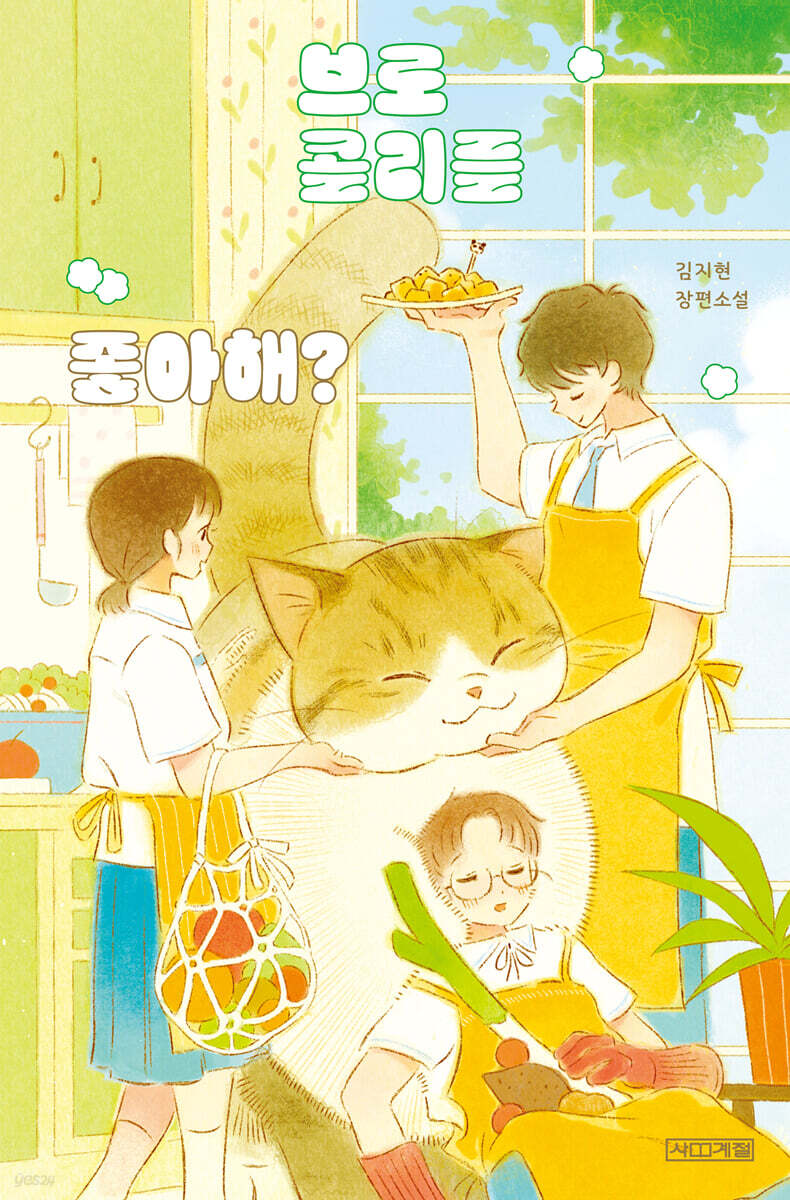
“How does it affect me if my crush doesn’t eat meat?” The question written on the book cover is both interesting and romantic. I like it, but what does it matter? I want to cheer for it. So let's ask ourselves that question. Is it too much of a stretch to date someone who eats chicken? As long as they don't object to my eating, it's fine. Should I cut down on meat while I'm at it? Judging by my eating habits, am I a picky eater? The answers will vary. This question, which seems much lighter than the grand question of what you think about vegetarianism, makes us reflect on our daily thoughts and preferences in a much more subtle way. The same goes for Eugene, the main character of this book. After learning why her favorite child won't eat school lunch, Eugene looks back on the daily life she's taken for granted and discovers various choices that have always been there but she's ignored. And Eugene has friends by his side who will share in his big and small choices and trials and errors, like leaving school, rescuing stray cats, or eating less meat. Of course, there's also the first unrequited love that wants to know every little thing about what you eat and what you dream about at night! "Do You Like Broccoli?" is the story of teenagers who decide what to eat, who they like, and what kind of person they will be. This book is the second young adult novel by author Ji-Hyeon Kim, who, through her work “Our Garden,” which won the grand prize at the 20th Four Seasons Literary Award, demonstrated the power of affection and her unwavering faith in the bonds between young people. |
- You can preview some of the book's contents.
Preview
index
1 thing
2 onions
3 avocados
4 kidney beans
5 chicory
6 cherry tomatoes
7 sweet potatoes
8 shiitake mushrooms
9 bell peppers
10 Colabi
11 lettuce
12 potatoes
13 carrots
14 zucchini
15 spinach
16 cucumbers
17 Bok choy
18 kale
19 Salary
20 asparagus
21 Corn
22 Broccoli
Author's Note
2 onions
3 avocados
4 kidney beans
5 chicory
6 cherry tomatoes
7 sweet potatoes
8 shiitake mushrooms
9 bell peppers
10 Colabi
11 lettuce
12 potatoes
13 carrots
14 zucchini
15 spinach
16 cucumbers
17 Bok choy
18 kale
19 Salary
20 asparagus
21 Corn
22 Broccoli
Author's Note
Detailed image
.jpg)
Into the book
You are what you eat.
A long time ago, I heard this in a documentary about eating habits.
What, how, and how much you eat says more about a person than you might think.
Just like when you eat curry, your hair and uniform inevitably smell of curry.
So then, what does it mean to not eat the school lunch that everyone takes for granted?
--- p.26
Just an adult who cooks and eats rice.
I will become a teacher.
I want to become a building owner and just sit back and make money.
My life goal is to win the lottery.
This life is ruined, and in the next life I want to do what I really want to do.
It was the first time I'd seen someone say they wanted to be an adult who cooks and eats, with some people talking seriously and others playfully.
--- p.117
Perhaps a person's attitude toward a meal may reveal his or her attitude toward life.
I could easily picture what Choi Hee-won, who eats the most leisurely of all the people I know, would look like when she cooked herself.
I like it when you eat slowly, I thought I might say that without realizing it.
My heart kept pounding.
--- p.118
“I will become a person that cats can like.”
Choi Hee-won stopped walking.
I will cherish things that move quietly and slowly, without making a sound.
Because these are things I learned over the course of this summer and fall.
Because I know how it feels to lie in bed before going to sleep, look back on the day, and realize that I didn't waste a single life today.
A long time ago, I heard this in a documentary about eating habits.
What, how, and how much you eat says more about a person than you might think.
Just like when you eat curry, your hair and uniform inevitably smell of curry.
So then, what does it mean to not eat the school lunch that everyone takes for granted?
--- p.26
Just an adult who cooks and eats rice.
I will become a teacher.
I want to become a building owner and just sit back and make money.
My life goal is to win the lottery.
This life is ruined, and in the next life I want to do what I really want to do.
It was the first time I'd seen someone say they wanted to be an adult who cooks and eats, with some people talking seriously and others playfully.
--- p.117
Perhaps a person's attitude toward a meal may reveal his or her attitude toward life.
I could easily picture what Choi Hee-won, who eats the most leisurely of all the people I know, would look like when she cooked herself.
I like it when you eat slowly, I thought I might say that without realizing it.
My heart kept pounding.
--- p.118
“I will become a person that cats can like.”
Choi Hee-won stopped walking.
I will cherish things that move quietly and slowly, without making a sound.
Because these are things I learned over the course of this summer and fall.
Because I know how it feels to lie in bed before going to sleep, look back on the day, and realize that I didn't waste a single life today.
--- p.196
Publisher's Review
I wanted to see my favorite person eating every day.
Eugene feels at ease only when he works hard at something he has to do.
I like school because it's clear what I should and shouldn't do.
My ideal type was someone who was perfect in everything… until middle school.
But then I started liking Choi Hee-won, who was in the same class.
Choi Hee-won reads mystery novels in class, doesn't have a cell phone, and disappears with his lunch box during lunchtime.
In a chance conversation, Choi Hee-won tells Eugene that he cannot eat meat.
There are people who can't eat wheat flour or peanuts, so there must be people who can't eat meat.
Eugene, who thought it was nothing special, realizes it when he looks at the cafeteria menu.
There are very few days when no meat is served in the school lunch, and vegetarian days are only once a month.
It's not that Choi Hee-won doesn't eat lunch; he just can't eat! Eugene feels wronged as she watches Choi Hee-won eat his lunch alone in the cafeteria.
Choi Hee-won ate his lunchbox in silence.
(…) Sit upright and neatly, very relaxed.
If I could just watch it without anyone noticing, I thought I could.
This is what it feels like to see someone you like eat.
Why can't we see that sight every day in the cafeteria? (Page 48)
"Do You Like Broccoli?" centers around Eugene's exciting love story.
The reason Eugene started eating less meat is because he wanted to see the person he liked eating every day and he didn't want to leave him alone.
This simple reason naturally draws the reader's sympathy more than any knowledge or logic.
When you like someone, it's natural to become more curious and want to get closer to them.
But the more you learn about Choi Hee-won, the more Eugene's world becomes wider, not narrower.
What's next for children who eat lunch boxes in the cafeteria?
Eventually, Eugene decides to eat less meat and starts eating lunch boxes at the store with Soo-hyun.
The city tour group was born out of nowhere.
Since then, many things have come into Eugene's sight.
A diet full of meat is just the beginning.
I realized that the streets I always pass by are lined with pork belly and pig's feet restaurants, that there are three chicken restaurants in the academy building, and that I always eat meat to 'take care of my body' on the last day of the exam.
Humans are born to eat, but is it okay for some animals to live as if they were born only to be eaten?
The place that has become the most unfamiliar is school.
Even though I knew that not doing what everyone else did at school could be a problem, I still resented not having a place to eat lunch, and I was perplexed by the looks from teachers and students asking why I wasn't eating lunch.
But Eugene doesn't stop there.
She visits the nutrition teacher to get permission to eat lunch in the cafeteria, conducts a survey to increase the number of 'vegetarian days', and finally enters the 'vegetarian lunch recipe contest'.
Of course, with Su-hyeon and Hee-won from the lunchbox gathering.
Su-hyeon, who wants to promote vegetarianism by riding a motorcycle, Hee-won, who says something outrageous like he likes the rice cake in fried chicken, and Eugene, whose heart feels like it's going to burst because of Hee-won.
Will the lunchbox gathering be able to capture the target audience?
In many young adult novels, school is depicted as a place that restricts freedom.
But in Do You Like Broccoli?, school is a safe and secure space, yet one that can change.
Eugene was called to the teacher's office for not eating lunch and was very nervous, but the homeroom teacher just asked why and sent her away.
A vegan nutrition teacher ponders how to engage vegetarian students, saying, "Just because it's a minority choice doesn't mean it's not the right answer."
For Eugene, who has always believed that making the same choices as the majority is the most comfortable, the change in school suggests that society can change.
What is the most important thing in life?
Eugene's best friend Eun-oh dropped out of school as soon as he became a sophomore in high school.
Although they still keep in touch whenever they have time, Eugene never asks Eun-oh why she left school.
If the reason is too unfamiliar, it's because I'm afraid of growing distant from Eun-oh.
Su-hyeon is called the Air Conditioner Villain because he turns off the air conditioner in an empty classroom, and he takes care of stray cats.
Su-hyeon, who was called to the teachers' office while putting up flyers looking for adopters for a cat in foster care, grumbles like this.
“Do you know what the teacher said? (…) Don’t waste time on things that don’t matter.
"Why don't you decide for yourself whether it's important or not?" (p. 35)
Heewon is a quiet person, has distinct tastes, and seems uninterested in other people.
His dream is to become an adult who prepares and eats every meal with care.
Those words remain deeply in Eugene's heart.
Perhaps a person's attitude toward a meal may reveal his or her attitude toward life.
I could easily picture what Choi Hee-won, who eats the most leisurely of all the people I know, would look like when she cooked herself.
I like it when you eat slowly, I thought I might say that without realizing it.
(Page 118)
People say that vegetarianism is good, so I know it's good, but I've never thought about it. I don't want to criticize others, but I think it has nothing to do with me. Eugene is a very ordinary person.
Because that's how we usually live.
So, the process of Eugene becoming interested in vegetarianism and practicing it is meaningful.
Through his friends, Eugene learned that living a 'different life' was not something grandiose at all, and that anyone could do it.
And think about what you consider important in your life.
"Do You Like Broccoli?" is not a novel that recommends vegetarianism.
It is said that when a hundred people make a hundred choices, each of them has a different reason for making that choice.
So, when it comes to what we eat, who we like, and what books or music we like, let's make our own choices matter, not anyone else's, and it's okay to do that.
For teenagers who feel pressured to give the right answer amid school, entrance exams, and countless assignments and competitions, this work will restore the diverse colors of life that now seem dim.
Eugene feels at ease only when he works hard at something he has to do.
I like school because it's clear what I should and shouldn't do.
My ideal type was someone who was perfect in everything… until middle school.
But then I started liking Choi Hee-won, who was in the same class.
Choi Hee-won reads mystery novels in class, doesn't have a cell phone, and disappears with his lunch box during lunchtime.
In a chance conversation, Choi Hee-won tells Eugene that he cannot eat meat.
There are people who can't eat wheat flour or peanuts, so there must be people who can't eat meat.
Eugene, who thought it was nothing special, realizes it when he looks at the cafeteria menu.
There are very few days when no meat is served in the school lunch, and vegetarian days are only once a month.
It's not that Choi Hee-won doesn't eat lunch; he just can't eat! Eugene feels wronged as she watches Choi Hee-won eat his lunch alone in the cafeteria.
Choi Hee-won ate his lunchbox in silence.
(…) Sit upright and neatly, very relaxed.
If I could just watch it without anyone noticing, I thought I could.
This is what it feels like to see someone you like eat.
Why can't we see that sight every day in the cafeteria? (Page 48)
"Do You Like Broccoli?" centers around Eugene's exciting love story.
The reason Eugene started eating less meat is because he wanted to see the person he liked eating every day and he didn't want to leave him alone.
This simple reason naturally draws the reader's sympathy more than any knowledge or logic.
When you like someone, it's natural to become more curious and want to get closer to them.
But the more you learn about Choi Hee-won, the more Eugene's world becomes wider, not narrower.
What's next for children who eat lunch boxes in the cafeteria?
Eventually, Eugene decides to eat less meat and starts eating lunch boxes at the store with Soo-hyun.
The city tour group was born out of nowhere.
Since then, many things have come into Eugene's sight.
A diet full of meat is just the beginning.
I realized that the streets I always pass by are lined with pork belly and pig's feet restaurants, that there are three chicken restaurants in the academy building, and that I always eat meat to 'take care of my body' on the last day of the exam.
Humans are born to eat, but is it okay for some animals to live as if they were born only to be eaten?
The place that has become the most unfamiliar is school.
Even though I knew that not doing what everyone else did at school could be a problem, I still resented not having a place to eat lunch, and I was perplexed by the looks from teachers and students asking why I wasn't eating lunch.
But Eugene doesn't stop there.
She visits the nutrition teacher to get permission to eat lunch in the cafeteria, conducts a survey to increase the number of 'vegetarian days', and finally enters the 'vegetarian lunch recipe contest'.
Of course, with Su-hyeon and Hee-won from the lunchbox gathering.
Su-hyeon, who wants to promote vegetarianism by riding a motorcycle, Hee-won, who says something outrageous like he likes the rice cake in fried chicken, and Eugene, whose heart feels like it's going to burst because of Hee-won.
Will the lunchbox gathering be able to capture the target audience?
In many young adult novels, school is depicted as a place that restricts freedom.
But in Do You Like Broccoli?, school is a safe and secure space, yet one that can change.
Eugene was called to the teacher's office for not eating lunch and was very nervous, but the homeroom teacher just asked why and sent her away.
A vegan nutrition teacher ponders how to engage vegetarian students, saying, "Just because it's a minority choice doesn't mean it's not the right answer."
For Eugene, who has always believed that making the same choices as the majority is the most comfortable, the change in school suggests that society can change.
What is the most important thing in life?
Eugene's best friend Eun-oh dropped out of school as soon as he became a sophomore in high school.
Although they still keep in touch whenever they have time, Eugene never asks Eun-oh why she left school.
If the reason is too unfamiliar, it's because I'm afraid of growing distant from Eun-oh.
Su-hyeon is called the Air Conditioner Villain because he turns off the air conditioner in an empty classroom, and he takes care of stray cats.
Su-hyeon, who was called to the teachers' office while putting up flyers looking for adopters for a cat in foster care, grumbles like this.
“Do you know what the teacher said? (…) Don’t waste time on things that don’t matter.
"Why don't you decide for yourself whether it's important or not?" (p. 35)
Heewon is a quiet person, has distinct tastes, and seems uninterested in other people.
His dream is to become an adult who prepares and eats every meal with care.
Those words remain deeply in Eugene's heart.
Perhaps a person's attitude toward a meal may reveal his or her attitude toward life.
I could easily picture what Choi Hee-won, who eats the most leisurely of all the people I know, would look like when she cooked herself.
I like it when you eat slowly, I thought I might say that without realizing it.
(Page 118)
People say that vegetarianism is good, so I know it's good, but I've never thought about it. I don't want to criticize others, but I think it has nothing to do with me. Eugene is a very ordinary person.
Because that's how we usually live.
So, the process of Eugene becoming interested in vegetarianism and practicing it is meaningful.
Through his friends, Eugene learned that living a 'different life' was not something grandiose at all, and that anyone could do it.
And think about what you consider important in your life.
"Do You Like Broccoli?" is not a novel that recommends vegetarianism.
It is said that when a hundred people make a hundred choices, each of them has a different reason for making that choice.
So, when it comes to what we eat, who we like, and what books or music we like, let's make our own choices matter, not anyone else's, and it's okay to do that.
For teenagers who feel pressured to give the right answer amid school, entrance exams, and countless assignments and competitions, this work will restore the diverse colors of life that now seem dim.
GOODS SPECIFICS
- Date of issue: June 28, 2024
- Page count, weight, size: 200 pages | 310g | 135*205*12mm
- ISBN13: 9791169811972
- ISBN10: 1169811973
You may also like
카테고리
korean


korean

![GQ KOREA Mark (Monthly): December [2025]](http://librairie.coreenne.fr/cdn/shop/files/8ef265dbbfbf186523ed75ba7319009d.jpg?v=1765340328&width=3840)


