

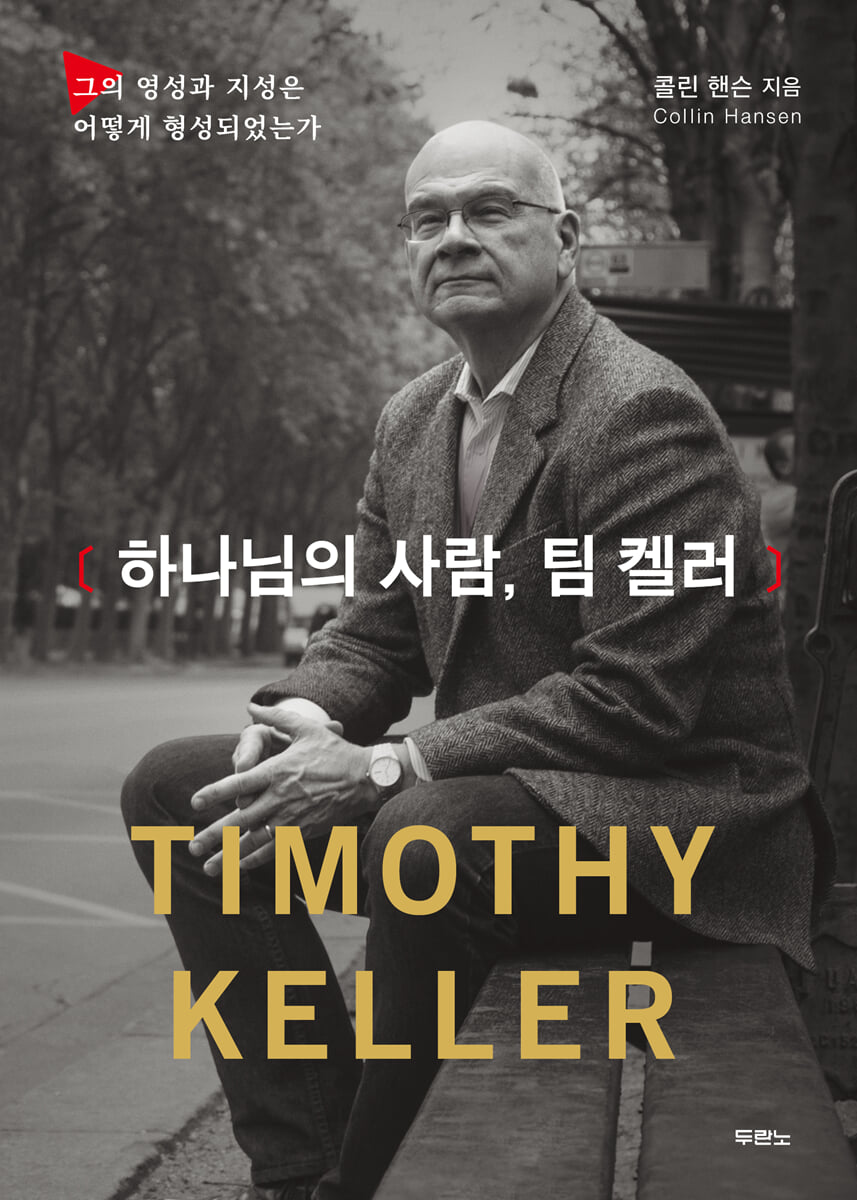
Man of God, Tim Keller
 |
Description
Book Introduction
A preacher who reads the infinitely deep and complex gospel and words in this age.
A pastor who prepared evangelicals for the future of globalization, multiculturalism, and cities.
A thinker who added his own variation to the outstanding 'comprehensive and analytical skills'
An evangelist who listens gently and fairly to skeptics and theological dissenters.
A humble Christian who acknowledges his limitations before God
“C of the 21st century.
From the man who became Tim Keller, now known as “S. Lewis”!
Tracing the people and events that shaped him, the layers of his life and ministry.
Countless Christians and skeptics of our time have read Tim Keller's books and heard his sermons.
And he testifies that his life has changed through it.
So, one cannot help but wonder who shaped Tim Keller's thinking and led his spiritual growth, and what events influenced him.
The author of this book, Colin Hanson, reveals that Tim Keller has no interest in "publicity" and doesn't enjoy talking about himself, but thankfully, he does enjoy talking about what he's reading, what he's learning, and what he's watching.
And so this book was born.
We closely examine Tim Keller's personal notes and sermons, and conduct exclusive interviews with Tim Keller himself, his family, longtime friends, and acquaintances.
A pastor who prepared evangelicals for the future of globalization, multiculturalism, and cities.
A thinker who added his own variation to the outstanding 'comprehensive and analytical skills'
An evangelist who listens gently and fairly to skeptics and theological dissenters.
A humble Christian who acknowledges his limitations before God
“C of the 21st century.
From the man who became Tim Keller, now known as “S. Lewis”!
Tracing the people and events that shaped him, the layers of his life and ministry.
Countless Christians and skeptics of our time have read Tim Keller's books and heard his sermons.
And he testifies that his life has changed through it.
So, one cannot help but wonder who shaped Tim Keller's thinking and led his spiritual growth, and what events influenced him.
The author of this book, Colin Hanson, reveals that Tim Keller has no interest in "publicity" and doesn't enjoy talking about himself, but thankfully, he does enjoy talking about what he's reading, what he's learning, and what he's watching.
And so this book was born.
We closely examine Tim Keller's personal notes and sermons, and conduct exclusive interviews with Tim Keller himself, his family, longtime friends, and acquaintances.
- You can preview some of the book's contents.
Preview
index
prolog.
Into the time created by his spirituality and intelligence
Part 1.
Be honest with God
( 1950-1972 )
1.
Perfectionist Moms and Loneliness
Allentown, Pennsylvania
2.
Absurd human
/ Bucknell University
3.
How to Read and Study the Bible
/ IVF
4.
Brave Cash
/ Kathy Christie
5.
True myth
/ Inklings
6.
Welcome, skeptics!
/ R.
C. Sproul and Ligonier Valley Research Institute
Part 2.
A place of learning, friends and teachers
( 1972-1975 )
7.
Theological diversity
Gordon-Conwell Theological Seminary
8.
Table Talk
/ Elizabeth Elliot and the Birds
9.
The joyful coexistence of different opinions
Roger Nicoll and Neo-Calvinism
10.
Spiritual Dynamics, Dynamics of Revival
/ Richard Lovelace and Jonathan Edwards
Part 3.
Fire test
( 1975-1989 )
11.
Southern chemical industry center, Siljeon Mokyang
Hopewell, Virginia
12.
The unfolding drama
/ Edmund P.
Clowney
13.
Shaped by the Gospel
Westminster Theological Seminary
Part 4.
From New York to the world
(1989-present)
14.
Nest among the rulers of the universe
/ New York City
15.
The Land of 'Yes'
/ Redeemer Presbyterian Church
16.
Everyone worships
/ The 9/11 Terror Attacks and Tim Keller: Speaking of God
17.
The Birth of "Christianity as the Answer"
/ Dogwood Fellowship
18.
The Age of Life and Ministry
/ finish
Epilogue.
Without stopping, getting closer to Him every day
Reviews
Acknowledgements
main
Into the time created by his spirituality and intelligence
Part 1.
Be honest with God
( 1950-1972 )
1.
Perfectionist Moms and Loneliness
Allentown, Pennsylvania
2.
Absurd human
/ Bucknell University
3.
How to Read and Study the Bible
/ IVF
4.
Brave Cash
/ Kathy Christie
5.
True myth
/ Inklings
6.
Welcome, skeptics!
/ R.
C. Sproul and Ligonier Valley Research Institute
Part 2.
A place of learning, friends and teachers
( 1972-1975 )
7.
Theological diversity
Gordon-Conwell Theological Seminary
8.
Table Talk
/ Elizabeth Elliot and the Birds
9.
The joyful coexistence of different opinions
Roger Nicoll and Neo-Calvinism
10.
Spiritual Dynamics, Dynamics of Revival
/ Richard Lovelace and Jonathan Edwards
Part 3.
Fire test
( 1975-1989 )
11.
Southern chemical industry center, Siljeon Mokyang
Hopewell, Virginia
12.
The unfolding drama
/ Edmund P.
Clowney
13.
Shaped by the Gospel
Westminster Theological Seminary
Part 4.
From New York to the world
(1989-present)
14.
Nest among the rulers of the universe
/ New York City
15.
The Land of 'Yes'
/ Redeemer Presbyterian Church
16.
Everyone worships
/ The 9/11 Terror Attacks and Tim Keller: Speaking of God
17.
The Birth of "Christianity as the Answer"
/ Dogwood Fellowship
18.
The Age of Life and Ministry
/ finish
Epilogue.
Without stopping, getting closer to Him every day
Reviews
Acknowledgements
main
Into the book
What happened? Why did the team change? His intellectual interest in evil, suffering, and judgment didn't suddenly disappear.
But after seeking answers from other religions and engaging in heated discussions with Christians, the team ultimately realized that they needed God.
It is not a new kind of spiritual awakening, but rather a final reaching of one's limits.
Overwhelmed by their own sin and confronted with their failures and shortcomings, Tim encountered the loving God who revealed Himself through the Bible and Jesus Christ.
He decided to stop judging God presumptuously.
Now I have decided to follow God who is righteous and at the same time justifies sinners.
He who is righteous forgives his sins.
In this way, the religious studies student became a disciple of Jesus.
In Tim Keller's Jesus the King, he writes:
“During my college years, the Bible came alive to me in a way that is difficult to explain.
It would be best to express it like this.
Before I was transformed, I would dissect the Bible, ask questions, and analyze it, but after I was transformed, it was as if the Bible or God was dissecting me, asking questions, and analyzing me through the Bible.” Of course, he learned from his mother and from the church he attended while growing up that the Bible is the word of God.
But it was after this personal encounter that the good news of the gospel became his ultimate reality.
--- pp.53~54
To divide the world into good and bad people misses the heart of Christianity's profound revolutionary nature.
Preferences for emotional expression, musical selection, and the length of worship services may vary across cultures, yet still convey the same Christian faith.
Yet Christians often regard such preferences as an absolute requirement for faithful practice.
But revival breaks down all the barriers of the world.
Because Christians no longer rely on cultural preferences but only on Jesus.
Lovelace saw the Jesus Movement (an evangelical Christian movement that began in the American West in the 1960s and 1970s and spread to Europe and elsewhere, aimed at restoring the early church and was largely countercultural - translator) as such a revival.
Other Christian leaders viewed the movement with suspicion because of its countercultural clothing and music.
Lovelace interpreted the Jesus movement as a welcome challenge to the old ways.
Keller applied this dynamic of revival to the church.
It was like that in Hopewell at first, and then in New York.
He heeded Lovelace's warning:
“When pastors who strive to shape their congregations into tools for evangelism and social healing encounter such fierce opposition, they lose their enthusiasm for being agents of change in the church and gradually become complacent.
There is an unconscious collusion between the pastor's body and the congregation's body.
According to this tacit agreement, if the pastor does not interfere with the congregation's pre-Christian lifestyle and does not use the laity's gifts for the work of God's kingdom, the laity will also give the pastor special treatment and allow him to use his gifts to his heart's content.
Now pastors can become superstars in ministry.
While the pastor's ego is satisfied, the congregation can remain a flock of sheep, each happily going its own way." Even after becoming world-famous in New York, Keller, as he had learned from Lovelace, continued to push the congregation out of their comfort zone and toward revival.
--- pp.158~159
According to many, Keller learned at Hopewell how to “speak so that everyone can understand.”
It's no exaggeration to say that Hopewell's blue-collar congregation forced him to refine difficult and complex concepts into something understandable to Christians and non-believers alike.
If he had gone straight from seminary to a congregation of highly educated people, he would never have become a widely popular writer or preacher.
I would not have been able to produce writings or sermons that would challenge those who were eager to learn, while also building up the virtues of everyone else.
But the picture in chronological order is a bit different when you look back at it later.
Keller needed to learn the fundamentals of ministry somewhere, and Hopewell happened to be the place.
When he graduated from seminary, he didn't know how to officiate at weddings or funerals, or what to say at retreats, nursing homes, or Christian school chapels.
In his own eyes, he was neither a ministry genius nor a gift from God to this small southern town.
I was just a young pastor, a young husband, and a young father, and I wasn't entirely confident in any of these new roles.
The Kellers grew up together in Hopewell.
--- pp.188~189
Previous church plantings in New York City failed due to lack of funds as well as resistance from local people.
Starting a church in New York was different from branching off a church in Greenville, South Carolina.
So the PCA decided to provide financial support to Redeemer Church and the Kellers.
It also helped that the team had established a fundraising network within the PCA while working on the ministry of compassion.
Each year, the PCA Women's Association collected a special offering and gave it to one of the denomination's mission departments.
The beneficiary that year, when Redeemer Church was founded, was the North American Mission Board, the department to which Keller belonged and which sent him to New York through Terry Geiger.
The Redeemer received nearly $90,000 in donations from this Presbyterian women's group, about a third of the total raised for the pioneering effort.
Their support did not stop at a single donation.
By her own admission, the prayer letters Cathy wrote to the women were “the most self-pitying, whining I’d ever written or received from anyone.”33 In Cathy’s view, the women were simply grateful that they weren’t in Cathy’s shoes, having to raise three sons in a brutal big city! Among the offerings she received was $12, which one family had scraped together and marked as a McDonald’s meal for the Kellers.
Even now, she thanks God for these women.
Cathy Keller said:
“They fought a battle of prayer.
So I don't think we made any wrong decisions in the first few years.
I am convinced that, going back to the Apostle Paul and the early church, there has never been a time when so many people, especially women, prayed for the establishment of a church.”
--- pp.280~281
Keller had no intention of attracting the existing evangelicals in the city, but rather wanted to recreate a local church like Lovely in a fiercely secular city.
Christians at Redeemer were encouraged to bring non-believing friends.
He met with these friends during the week, listened to their objections, and then incorporated those objections into his sermons the following week, adding insights he had learned from counseling studies to discern the underlying issues behind the questions.
“He had a knack for listening and probing to get to the bottom of people’s real questions,” Jim Pitzert said.
I often started conversations by asking, “Is your soul at peace?”
Keller met so many people at the Tramway Diner at the intersection of the 59th Street Bridge and Second Avenue that Cash would call the kitchen there as if it were the team's office.
The restaurant didn't care either.
This is because the team met there three or four times a day and steadily increased sales.
Meeting a diverse range of people helped Keller avoid the vicious cycle of preaching—the phenomenon of focusing too much on the same audience and narrowing the scope of audience that can be reached through preaching.
Jackie Arthur, a Redeemer Church member, saw Keller as a master of listening.
Long before he wrote his best-selling book, he had heard every objection to Jesus, and he went home and searched through his books to better answer those questions.
As he answered the questions, his memory also improved through repetition.
New Yorkers were amazed at how he knew exactly what they were thinking.
Glenn Kleinknecht said, “His sermons were like the most brilliant legal arguments.”
People didn't realize how much time he spent listening rather than speaking, trying to better connect the gospel to the culture.
--- pp.282~283
During the three years I spent interviewing Tim Keller for this book, one theme stood out above all others.
The team never stopped striving to experience God's grace more deeply.
“I’m not fighting cancer, I’m fighting my sins,” he told me while undergoing treatment for pancreatic cancer.
He wanted to rest in Christ, rejoicing in the hope of resurrection.
That's what Tim saw in The Glory of Christ, written by the 17th-century theologian John Owen before his death.
Tim also told me about John Newton's struggle to overcome his excessive attachment to me.
The 18th-century English clergyman makes us reflect on what we value so much in this life that we neglect the afterlife.
… (omitted)… “The other night we talked about this.
'We really are trying to make this world a paradise.' ... ... As a result of all this, we have always been unhappy.
Because I can't stay in England and have to come home.
I can't stay in South Carolina.
… … On the other hand, I have never had a happy day because I am always thinking about tomorrow.
I have a mountain of things to do, but I always fall behind.
… … We cannot create heaven on earth.
Such a heaven is bound to disappear.
… … If we actually make heaven our heaven, the joys of this world will become more thrilling than before.
It's really amazing.
“Every day becomes more enjoyable than ever before.”
But after seeking answers from other religions and engaging in heated discussions with Christians, the team ultimately realized that they needed God.
It is not a new kind of spiritual awakening, but rather a final reaching of one's limits.
Overwhelmed by their own sin and confronted with their failures and shortcomings, Tim encountered the loving God who revealed Himself through the Bible and Jesus Christ.
He decided to stop judging God presumptuously.
Now I have decided to follow God who is righteous and at the same time justifies sinners.
He who is righteous forgives his sins.
In this way, the religious studies student became a disciple of Jesus.
In Tim Keller's Jesus the King, he writes:
“During my college years, the Bible came alive to me in a way that is difficult to explain.
It would be best to express it like this.
Before I was transformed, I would dissect the Bible, ask questions, and analyze it, but after I was transformed, it was as if the Bible or God was dissecting me, asking questions, and analyzing me through the Bible.” Of course, he learned from his mother and from the church he attended while growing up that the Bible is the word of God.
But it was after this personal encounter that the good news of the gospel became his ultimate reality.
--- pp.53~54
To divide the world into good and bad people misses the heart of Christianity's profound revolutionary nature.
Preferences for emotional expression, musical selection, and the length of worship services may vary across cultures, yet still convey the same Christian faith.
Yet Christians often regard such preferences as an absolute requirement for faithful practice.
But revival breaks down all the barriers of the world.
Because Christians no longer rely on cultural preferences but only on Jesus.
Lovelace saw the Jesus Movement (an evangelical Christian movement that began in the American West in the 1960s and 1970s and spread to Europe and elsewhere, aimed at restoring the early church and was largely countercultural - translator) as such a revival.
Other Christian leaders viewed the movement with suspicion because of its countercultural clothing and music.
Lovelace interpreted the Jesus movement as a welcome challenge to the old ways.
Keller applied this dynamic of revival to the church.
It was like that in Hopewell at first, and then in New York.
He heeded Lovelace's warning:
“When pastors who strive to shape their congregations into tools for evangelism and social healing encounter such fierce opposition, they lose their enthusiasm for being agents of change in the church and gradually become complacent.
There is an unconscious collusion between the pastor's body and the congregation's body.
According to this tacit agreement, if the pastor does not interfere with the congregation's pre-Christian lifestyle and does not use the laity's gifts for the work of God's kingdom, the laity will also give the pastor special treatment and allow him to use his gifts to his heart's content.
Now pastors can become superstars in ministry.
While the pastor's ego is satisfied, the congregation can remain a flock of sheep, each happily going its own way." Even after becoming world-famous in New York, Keller, as he had learned from Lovelace, continued to push the congregation out of their comfort zone and toward revival.
--- pp.158~159
According to many, Keller learned at Hopewell how to “speak so that everyone can understand.”
It's no exaggeration to say that Hopewell's blue-collar congregation forced him to refine difficult and complex concepts into something understandable to Christians and non-believers alike.
If he had gone straight from seminary to a congregation of highly educated people, he would never have become a widely popular writer or preacher.
I would not have been able to produce writings or sermons that would challenge those who were eager to learn, while also building up the virtues of everyone else.
But the picture in chronological order is a bit different when you look back at it later.
Keller needed to learn the fundamentals of ministry somewhere, and Hopewell happened to be the place.
When he graduated from seminary, he didn't know how to officiate at weddings or funerals, or what to say at retreats, nursing homes, or Christian school chapels.
In his own eyes, he was neither a ministry genius nor a gift from God to this small southern town.
I was just a young pastor, a young husband, and a young father, and I wasn't entirely confident in any of these new roles.
The Kellers grew up together in Hopewell.
--- pp.188~189
Previous church plantings in New York City failed due to lack of funds as well as resistance from local people.
Starting a church in New York was different from branching off a church in Greenville, South Carolina.
So the PCA decided to provide financial support to Redeemer Church and the Kellers.
It also helped that the team had established a fundraising network within the PCA while working on the ministry of compassion.
Each year, the PCA Women's Association collected a special offering and gave it to one of the denomination's mission departments.
The beneficiary that year, when Redeemer Church was founded, was the North American Mission Board, the department to which Keller belonged and which sent him to New York through Terry Geiger.
The Redeemer received nearly $90,000 in donations from this Presbyterian women's group, about a third of the total raised for the pioneering effort.
Their support did not stop at a single donation.
By her own admission, the prayer letters Cathy wrote to the women were “the most self-pitying, whining I’d ever written or received from anyone.”33 In Cathy’s view, the women were simply grateful that they weren’t in Cathy’s shoes, having to raise three sons in a brutal big city! Among the offerings she received was $12, which one family had scraped together and marked as a McDonald’s meal for the Kellers.
Even now, she thanks God for these women.
Cathy Keller said:
“They fought a battle of prayer.
So I don't think we made any wrong decisions in the first few years.
I am convinced that, going back to the Apostle Paul and the early church, there has never been a time when so many people, especially women, prayed for the establishment of a church.”
--- pp.280~281
Keller had no intention of attracting the existing evangelicals in the city, but rather wanted to recreate a local church like Lovely in a fiercely secular city.
Christians at Redeemer were encouraged to bring non-believing friends.
He met with these friends during the week, listened to their objections, and then incorporated those objections into his sermons the following week, adding insights he had learned from counseling studies to discern the underlying issues behind the questions.
“He had a knack for listening and probing to get to the bottom of people’s real questions,” Jim Pitzert said.
I often started conversations by asking, “Is your soul at peace?”
Keller met so many people at the Tramway Diner at the intersection of the 59th Street Bridge and Second Avenue that Cash would call the kitchen there as if it were the team's office.
The restaurant didn't care either.
This is because the team met there three or four times a day and steadily increased sales.
Meeting a diverse range of people helped Keller avoid the vicious cycle of preaching—the phenomenon of focusing too much on the same audience and narrowing the scope of audience that can be reached through preaching.
Jackie Arthur, a Redeemer Church member, saw Keller as a master of listening.
Long before he wrote his best-selling book, he had heard every objection to Jesus, and he went home and searched through his books to better answer those questions.
As he answered the questions, his memory also improved through repetition.
New Yorkers were amazed at how he knew exactly what they were thinking.
Glenn Kleinknecht said, “His sermons were like the most brilliant legal arguments.”
People didn't realize how much time he spent listening rather than speaking, trying to better connect the gospel to the culture.
--- pp.282~283
During the three years I spent interviewing Tim Keller for this book, one theme stood out above all others.
The team never stopped striving to experience God's grace more deeply.
“I’m not fighting cancer, I’m fighting my sins,” he told me while undergoing treatment for pancreatic cancer.
He wanted to rest in Christ, rejoicing in the hope of resurrection.
That's what Tim saw in The Glory of Christ, written by the 17th-century theologian John Owen before his death.
Tim also told me about John Newton's struggle to overcome his excessive attachment to me.
The 18th-century English clergyman makes us reflect on what we value so much in this life that we neglect the afterlife.
… (omitted)… “The other night we talked about this.
'We really are trying to make this world a paradise.' ... ... As a result of all this, we have always been unhappy.
Because I can't stay in England and have to come home.
I can't stay in South Carolina.
… … On the other hand, I have never had a happy day because I am always thinking about tomorrow.
I have a mountain of things to do, but I always fall behind.
… … We cannot create heaven on earth.
Such a heaven is bound to disappear.
… … If we actually make heaven our heaven, the joys of this world will become more thrilling than before.
It's really amazing.
“Every day becomes more enjoyable than ever before.”
--- pp.380~381
Publisher's Review
“It is the story of a faithful but imperfect human being,
“The story of God, whom he loved so much that he devoted his life to serving Him.”
This book takes us into Tim Keller's childhood, where he learned to persuade people for unexpected reasons, the church where he learned to care for diverse souls, and the city that launched him to an international reputation he never wanted.
The story of Tim Keller is the story of the people who shaped his spirituality and intellect: the woman who taught him to read the Bible, the professor who taught him to preach Jesus through every text, the sociologist who taught him to see beneath the surface of society.
When we understand the principles and practices behind how he synthesized the countless waves coming toward him into a coherent ministry, we will more fully interpret the message of this Christian leader whose influence extends beyond Manhattan, New York, and extends to the entire world.
Take the key points from Tim Keller's sermons and teachings and establish your own view of history, theology, and culture.
So respond to the fiery challenges facing Christian faith in the 21st century!
Readers who wish to delve deeper into the thought of this figure, who has had a profound influence on recent Protestant history, will be well rewarded.
This book meticulously describes Keller's thoughts and beliefs, providing new insights.
- [Publishers Weekly]
“The story of God, whom he loved so much that he devoted his life to serving Him.”
This book takes us into Tim Keller's childhood, where he learned to persuade people for unexpected reasons, the church where he learned to care for diverse souls, and the city that launched him to an international reputation he never wanted.
The story of Tim Keller is the story of the people who shaped his spirituality and intellect: the woman who taught him to read the Bible, the professor who taught him to preach Jesus through every text, the sociologist who taught him to see beneath the surface of society.
When we understand the principles and practices behind how he synthesized the countless waves coming toward him into a coherent ministry, we will more fully interpret the message of this Christian leader whose influence extends beyond Manhattan, New York, and extends to the entire world.
Take the key points from Tim Keller's sermons and teachings and establish your own view of history, theology, and culture.
So respond to the fiery challenges facing Christian faith in the 21st century!
Readers who wish to delve deeper into the thought of this figure, who has had a profound influence on recent Protestant history, will be well rewarded.
This book meticulously describes Keller's thoughts and beliefs, providing new insights.
- [Publishers Weekly]
GOODS SPECIFICS
- Date of issue: April 26, 2023
- Page count, weight, size: 420 pages | 608g | 150*210*22mm
- ISBN13: 9788953144460
- ISBN10: 8953144469
You may also like
카테고리
korean


korean

![GQ KOREA Mark (Monthly): December [2025]](http://librairie.coreenne.fr/cdn/shop/files/8ef265dbbfbf186523ed75ba7319009d.jpg?v=1765340328&width=3840)


