

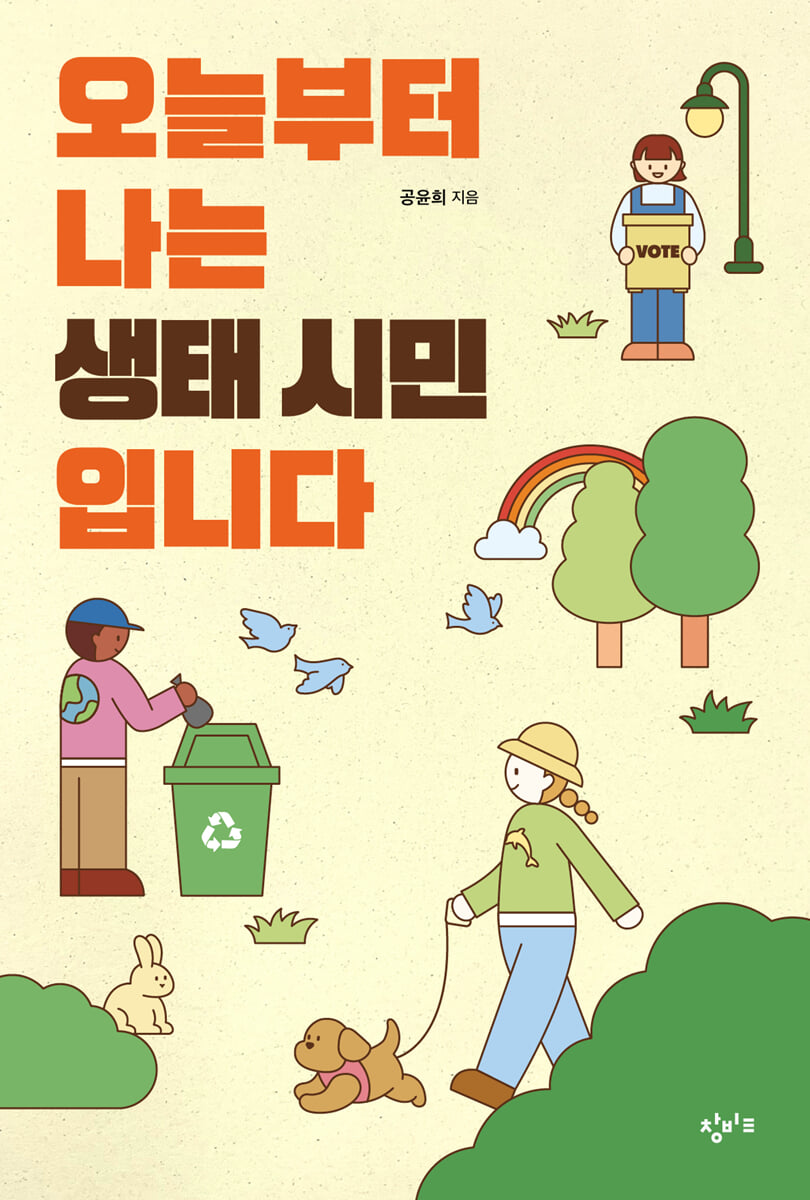
From today on, I am an ecological citizen.
 |
Description
Book Introduction
Environmental protection and changes in daily life are fundamental
Now is the time to demand it from the world!
I want to protect my rights and create a sustainable planet.
An Environmental Guide for Ecological Citizens
This book is a youth education guide that selects eight environmental issues closely related to our daily lives, shows the close relationship between the ecosystem and humans from various angles, and then guides us through specific methods we can take to establish the laws and policies necessary for society.
Unlike existing environmental textbooks, it presents a new perspective centered on the keywords "ecocentrism" and "human rights," while emphasizing not only everyday practices but also social action.
The perspective on the environment has long been divided into two: conservation and development.
But while these two perspectives clashed, the Earth faced a triple crisis: environmental pollution, biodiversity loss, and climate change.
Accordingly, the United Nations declared the “right to access to a clean, healthy and sustainable environment” as a universal human right, informing the world that the destruction of the ecosystem is an act that violates the rights of citizens.
The author argues that our country should also view environmental issues from an ecocentric perspective, prioritizing human rights protection and solving these problems to create a sustainable future.
To achieve this, businesses and governments must take the lead, and he emphasizes that only the active voices of citizens can bring about change in irresponsible and indifferent businesses, local governments, and governments.
Through this book, readers will be able to grow into proactive "ecological citizens" who practice environmental protection in their daily lives and call for social change, not only for themselves but also for others, society, animals, and plants.
With its diverse educational and practical applications, this book will serve as an excellent guide for many readers, helping them address climate change with forward-thinking insights and actions suited to the changing times.
Now is the time to demand it from the world!
I want to protect my rights and create a sustainable planet.
An Environmental Guide for Ecological Citizens
This book is a youth education guide that selects eight environmental issues closely related to our daily lives, shows the close relationship between the ecosystem and humans from various angles, and then guides us through specific methods we can take to establish the laws and policies necessary for society.
Unlike existing environmental textbooks, it presents a new perspective centered on the keywords "ecocentrism" and "human rights," while emphasizing not only everyday practices but also social action.
The perspective on the environment has long been divided into two: conservation and development.
But while these two perspectives clashed, the Earth faced a triple crisis: environmental pollution, biodiversity loss, and climate change.
Accordingly, the United Nations declared the “right to access to a clean, healthy and sustainable environment” as a universal human right, informing the world that the destruction of the ecosystem is an act that violates the rights of citizens.
The author argues that our country should also view environmental issues from an ecocentric perspective, prioritizing human rights protection and solving these problems to create a sustainable future.
To achieve this, businesses and governments must take the lead, and he emphasizes that only the active voices of citizens can bring about change in irresponsible and indifferent businesses, local governments, and governments.
Through this book, readers will be able to grow into proactive "ecological citizens" who practice environmental protection in their daily lives and call for social change, not only for themselves but also for others, society, animals, and plants.
With its diverse educational and practical applications, this book will serve as an excellent guide for many readers, helping them address climate change with forward-thinking insights and actions suited to the changing times.
- You can preview some of the book's contents.
Preview
index
Introduction - Protecting the Environment is Protecting My Rights
Part 1.
The right to live in a clean environment
01.
Interpreting smells
Introduction_Who is the culprit behind the 'Black Court' case? / Smells that steal everyday happiness / Smells that threaten life / Smells that change with emotion / Smells that express disgust / Action_Protecting yourself and others from smells
02.
Reducing fine dust
Introduction_Selling Clean Air/Good Dust, Bad Dust/Where Does Fine Dust Come From?/Fine Dust Shakes the Economy/Is It Your Fault or My Fault?/Take Action_Protecting Everyone from Fine Dust
03.
Know your trash
Introduction_A world where consumption proves who I am/The circulating waste/Where to bury and burn it/Using waste as fuel?/Even medicine is ultimately waste/Distinguishing between eco-friendliness and greenwashing/Taking action_Creating a clean land
Part 2.
The right to live in a healthy environment
04.
Escape from light pollution
Introduction_One night disappeared/Why I couldn't sleep in particular/A dark future created by bright light/What is the right light?/Protect the darkness/Act_How to create good light
05.
Reducing noise in everyday life
Introduction_City dwellers who can't sleep/Understanding inter-floor noise/How to manage harsh noise/Reducing environmental noise is essential for health/Rights clashing with rights due to noise?/Take action_Reducing noise stress
06.
Managing Nuclear Energy Safely
Introduction: Godzilla, Astro Boy, and Beyond / What Energy Should We Use Where? / Nuclear for Peace? / Preventing Nuclear Power Plant Accidents / Accumulating Radioactive Waste / Taking Action: Creating a Safe Nuclear Power Environment
Part 3.
The right to live in a sustainable environment
07.
Living with animals
Introduction_The Utopia We All Dream of/The Unbearable Lightness of Life/Experiments of, for, and by Humans/What Has Happened, What Will Happen, and How to Prevent Harm/The Problem of Minimum Cost and Maximum Effect?/Taking Action_Respecting Animal Rights
08.
Lowering the Earth's temperature
Introduction: Is Global Warming a Fiction? / Climate Change as Arctic Sea Ice Declines / Drinking Water Scarcity as Sea Levels Rise / Hopeless Lands and the Chosen One / Climate Change Causes Conflict / Taking Action: Creating Carbon-Neutral Local Governments
Source/References/Images
Part 1.
The right to live in a clean environment
01.
Interpreting smells
Introduction_Who is the culprit behind the 'Black Court' case? / Smells that steal everyday happiness / Smells that threaten life / Smells that change with emotion / Smells that express disgust / Action_Protecting yourself and others from smells
02.
Reducing fine dust
Introduction_Selling Clean Air/Good Dust, Bad Dust/Where Does Fine Dust Come From?/Fine Dust Shakes the Economy/Is It Your Fault or My Fault?/Take Action_Protecting Everyone from Fine Dust
03.
Know your trash
Introduction_A world where consumption proves who I am/The circulating waste/Where to bury and burn it/Using waste as fuel?/Even medicine is ultimately waste/Distinguishing between eco-friendliness and greenwashing/Taking action_Creating a clean land
Part 2.
The right to live in a healthy environment
04.
Escape from light pollution
Introduction_One night disappeared/Why I couldn't sleep in particular/A dark future created by bright light/What is the right light?/Protect the darkness/Act_How to create good light
05.
Reducing noise in everyday life
Introduction_City dwellers who can't sleep/Understanding inter-floor noise/How to manage harsh noise/Reducing environmental noise is essential for health/Rights clashing with rights due to noise?/Take action_Reducing noise stress
06.
Managing Nuclear Energy Safely
Introduction: Godzilla, Astro Boy, and Beyond / What Energy Should We Use Where? / Nuclear for Peace? / Preventing Nuclear Power Plant Accidents / Accumulating Radioactive Waste / Taking Action: Creating a Safe Nuclear Power Environment
Part 3.
The right to live in a sustainable environment
07.
Living with animals
Introduction_The Utopia We All Dream of/The Unbearable Lightness of Life/Experiments of, for, and by Humans/What Has Happened, What Will Happen, and How to Prevent Harm/The Problem of Minimum Cost and Maximum Effect?/Taking Action_Respecting Animal Rights
08.
Lowering the Earth's temperature
Introduction: Is Global Warming a Fiction? / Climate Change as Arctic Sea Ice Declines / Drinking Water Scarcity as Sea Levels Rise / Hopeless Lands and the Chosen One / Climate Change Causes Conflict / Taking Action: Creating Carbon-Neutral Local Governments
Source/References/Images
Detailed image

Publisher's Review
Persistent technocentrism and anthropocentrism
The ecological destruction and climate crisis it has caused
The author argues that in the long-standing debate over whether to preserve the environment or develop it, humanity has ultimately chosen development.
There are counterarguments that the environment has been preserved, but in reality, nature has been destroyed “to survive when poverty weighed on life,” later “for a comfortable life,” and today for human entertainment and pleasure.
As a result, environmental issues have become the main culprit causing unprecedented social, political, and diplomatic conflicts.
Nevertheless, based on 'technocentrism,' we vaguely expect that the problems that arose during the industrialization process will be solved by science and technology developed by using the sacrificed nature as fertilizer.
But the author points out that there is a blind spot here.
The fact is that technology requires time, capital, and energy.
Ultimately, the author argues that the root cause of all this lies in the persistent 'human-centered' thinking.
The author, who is pessimistic that the current perspective and approach will accelerate humanity's crisis uncontrollably, argues that we must now adopt an "ecocentric" perspective to correctly view and redefine the Earth and its environmental issues.
Ecocentrism is the view that humans are not beings who rule over nature, but rather a part of nature, and therefore must build a sustainable ecosystem in which they coexist with other living beings.
This book argues that, from this perspective, we must become 'ecological citizens' who act for the sustainability of the ecosystem.
It's time to change our perspective on environmental issues.
Destruction of the ecosystem is an act that violates citizens' 'rights'.
To convince readers of the close relationship between humans and the ecosystem and the need for an ecocentric perspective, the author chose eight environmental problems closely related to our lives: odor, fine dust, waste, light pollution, noise, nuclear energy, animal abuse, and global warming.
This is because the closer an issue is to our daily lives, the more we tend to dismiss it as an inevitable inconvenience resulting from urbanization and industrialization, rather than recognizing it as an inconvenience resulting from environmental issues.
On the other hand, even if someone understands environmental issues well, the question, "Why should I solve them?" may arise.
To this the author responds that these problems are because they violate our 'rights'.
The UN's 2022 declaration that "access to a clean, healthy and sustainable environment is a universal human right" solidified this perspective as a global trend.
The expression 'human rights' may be perceived as a human-centered perspective, but the author interprets that the UN declaration ultimately imposed on the entire world the imperative to protect the survival rights of the entire ecosystem, as humanity cannot create a sustainable environment by damaging the ecosystem.
Therefore, this book focuses on and analyzes eight environmental problems that violate humanity's right to live in a 'clean environment', a 'healthy environment', and a 'sustainable environment'.
And because society is complex and a single issue can impact multiple fields simultaneously, environmental issues are not limited to the fields of health and science, but are examined from various angles by connecting them to social, political, diplomatic, and economic fields.
It also effectively highlights the severity of the climate crisis by presenting already verified domestic and international data as evidence.
Strictly monitor businesses, local governments, and the government
We, who are creating a wave of change, are ‘ecological citizens’!
The author argues that as our society shifts toward eco-centrism, the role of citizens will also change.
This means that we must live as 'ecological citizens' who speak out to ensure our rights.
The voice will be directed at companies, local governments, and the government that are passive about environmental issues.
This is because their influence and responsibility are enormous, and capitalists and politicians are interested in and try to solve problems that attract public attention and public opinion.
Therefore, this book presents concrete actions that ecological citizens can take to encourage change.
For example, if your region lacks a fine dust reduction policy or has no ordinance on waste pharmaceutical disposal, you can request specific solutions through the resident petition bulletin board on your local government website.
It also informs that businesses that pollute the local environment can be reported through local government complaint offices.
And the National Human Rights Commission of Korea's "People's Thoughts" is a policy proposal platform that anyone, regardless of age, can participate in, informing people that they can propose ideas for laws and policies necessary for environmental protection.
In order to exercise your right to vote for the ecosystem, you need to know the activities of your National Assembly members. You can check what legislative activities related to the environment your members have carried out through the National Assembly website or the website of the civic group 'Korea Manifesto Implementation Headquarters'.
In this way, the author goes beyond encouraging everyday efforts to improve environmental issues, and strongly suggests that we live as proactive and active ecological citizens who monitor corporations and make demands on local governments and the government.
Thus, he argues that each wheel that moves society should turn together to move toward a sustainable Earth.
Readers who read this book will develop a desire to live as ecological citizens who practice for themselves, their neighbors, the ecosystem, and future generations.
As the school curriculum emphasizes "ecological sensitivity" and living as an "ecological citizen," this book will serve as an excellent textbook and guidebook for schools, other educational settings, and practical settings.
The ecological destruction and climate crisis it has caused
The author argues that in the long-standing debate over whether to preserve the environment or develop it, humanity has ultimately chosen development.
There are counterarguments that the environment has been preserved, but in reality, nature has been destroyed “to survive when poverty weighed on life,” later “for a comfortable life,” and today for human entertainment and pleasure.
As a result, environmental issues have become the main culprit causing unprecedented social, political, and diplomatic conflicts.
Nevertheless, based on 'technocentrism,' we vaguely expect that the problems that arose during the industrialization process will be solved by science and technology developed by using the sacrificed nature as fertilizer.
But the author points out that there is a blind spot here.
The fact is that technology requires time, capital, and energy.
Ultimately, the author argues that the root cause of all this lies in the persistent 'human-centered' thinking.
The author, who is pessimistic that the current perspective and approach will accelerate humanity's crisis uncontrollably, argues that we must now adopt an "ecocentric" perspective to correctly view and redefine the Earth and its environmental issues.
Ecocentrism is the view that humans are not beings who rule over nature, but rather a part of nature, and therefore must build a sustainable ecosystem in which they coexist with other living beings.
This book argues that, from this perspective, we must become 'ecological citizens' who act for the sustainability of the ecosystem.
It's time to change our perspective on environmental issues.
Destruction of the ecosystem is an act that violates citizens' 'rights'.
To convince readers of the close relationship between humans and the ecosystem and the need for an ecocentric perspective, the author chose eight environmental problems closely related to our lives: odor, fine dust, waste, light pollution, noise, nuclear energy, animal abuse, and global warming.
This is because the closer an issue is to our daily lives, the more we tend to dismiss it as an inevitable inconvenience resulting from urbanization and industrialization, rather than recognizing it as an inconvenience resulting from environmental issues.
On the other hand, even if someone understands environmental issues well, the question, "Why should I solve them?" may arise.
To this the author responds that these problems are because they violate our 'rights'.
The UN's 2022 declaration that "access to a clean, healthy and sustainable environment is a universal human right" solidified this perspective as a global trend.
The expression 'human rights' may be perceived as a human-centered perspective, but the author interprets that the UN declaration ultimately imposed on the entire world the imperative to protect the survival rights of the entire ecosystem, as humanity cannot create a sustainable environment by damaging the ecosystem.
Therefore, this book focuses on and analyzes eight environmental problems that violate humanity's right to live in a 'clean environment', a 'healthy environment', and a 'sustainable environment'.
And because society is complex and a single issue can impact multiple fields simultaneously, environmental issues are not limited to the fields of health and science, but are examined from various angles by connecting them to social, political, diplomatic, and economic fields.
It also effectively highlights the severity of the climate crisis by presenting already verified domestic and international data as evidence.
Strictly monitor businesses, local governments, and the government
We, who are creating a wave of change, are ‘ecological citizens’!
The author argues that as our society shifts toward eco-centrism, the role of citizens will also change.
This means that we must live as 'ecological citizens' who speak out to ensure our rights.
The voice will be directed at companies, local governments, and the government that are passive about environmental issues.
This is because their influence and responsibility are enormous, and capitalists and politicians are interested in and try to solve problems that attract public attention and public opinion.
Therefore, this book presents concrete actions that ecological citizens can take to encourage change.
For example, if your region lacks a fine dust reduction policy or has no ordinance on waste pharmaceutical disposal, you can request specific solutions through the resident petition bulletin board on your local government website.
It also informs that businesses that pollute the local environment can be reported through local government complaint offices.
And the National Human Rights Commission of Korea's "People's Thoughts" is a policy proposal platform that anyone, regardless of age, can participate in, informing people that they can propose ideas for laws and policies necessary for environmental protection.
In order to exercise your right to vote for the ecosystem, you need to know the activities of your National Assembly members. You can check what legislative activities related to the environment your members have carried out through the National Assembly website or the website of the civic group 'Korea Manifesto Implementation Headquarters'.
In this way, the author goes beyond encouraging everyday efforts to improve environmental issues, and strongly suggests that we live as proactive and active ecological citizens who monitor corporations and make demands on local governments and the government.
Thus, he argues that each wheel that moves society should turn together to move toward a sustainable Earth.
Readers who read this book will develop a desire to live as ecological citizens who practice for themselves, their neighbors, the ecosystem, and future generations.
As the school curriculum emphasizes "ecological sensitivity" and living as an "ecological citizen," this book will serve as an excellent textbook and guidebook for schools, other educational settings, and practical settings.
GOODS SPECIFICS
- Date of issue: March 27, 2024
- Page count, weight, size: 256 pages | 474g | 152*225*16mm
- ISBN13: 9791165702472
- ISBN10: 1165702479
You may also like
카테고리
korean


korean

![GQ KOREA Mark (Monthly): December [2025]](http://librairie.coreenne.fr/cdn/shop/files/8ef265dbbfbf186523ed75ba7319009d.jpg?v=1765340328&width=3840)


