

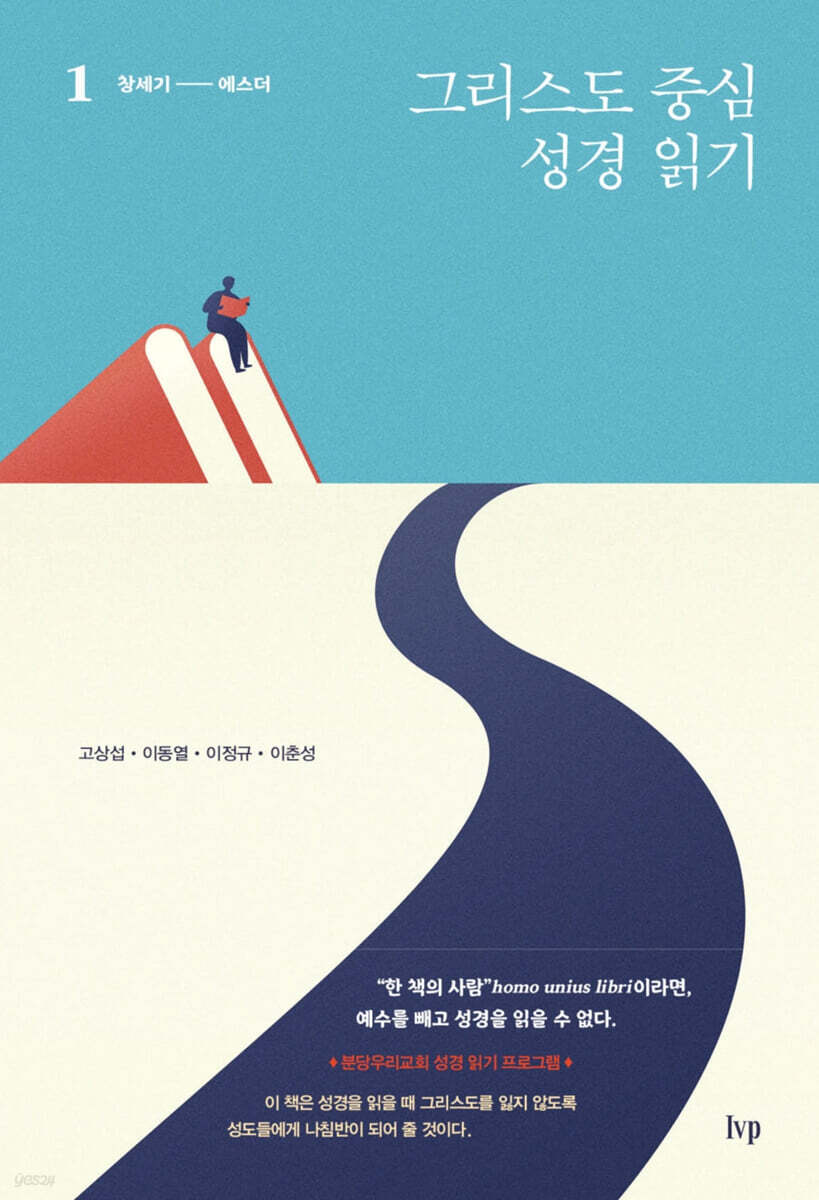
Christ-Centered Bible Reading 1
 |
Description
Book Introduction
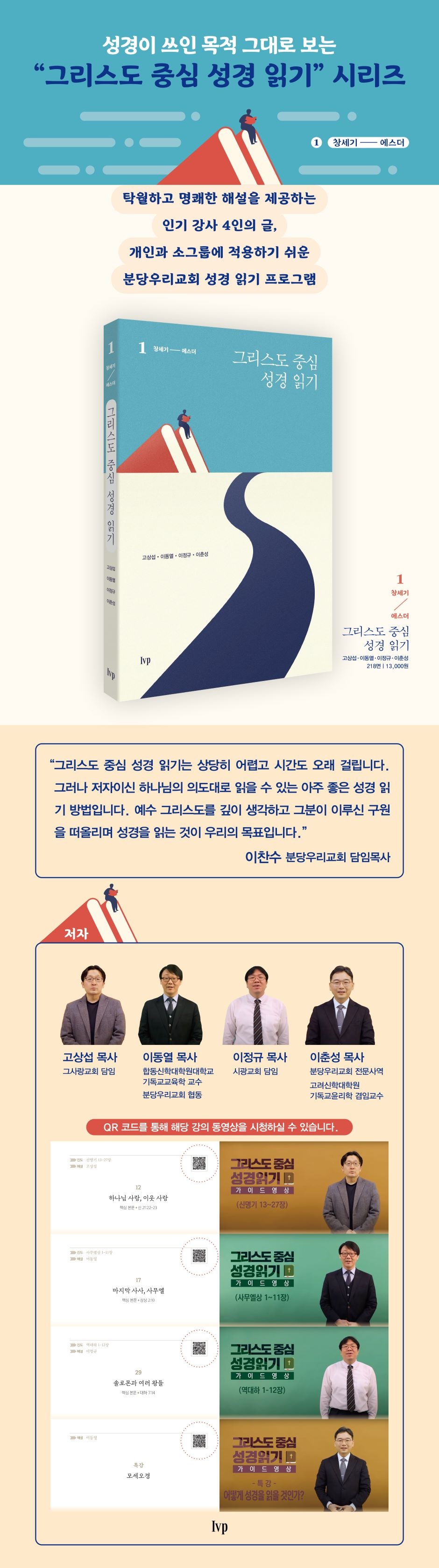
[Christ-Centered Bible Reading] Series: Seeing the Bible for Its Original Purpose
Writings by four popular lecturers who provide excellent and clear explanations.
Easy to apply to individuals and small groups
Bundang Woori Church Bible Reading Program
This is a series of Bible reading programs conducted at Bundang Woori Church in 2022.
The first of these is a volume that covers everything from the Pentateuch to the historical books.
With so many different ways to read the Bible these days, why should we focus on a Christ-centered approach? A Christ-centered approach is one that adheres to the Bible's intended purpose.
The Bible testifies and points to Jesus Christ.
This is because without Jesus, no one can know God the Father and His will, and no one can know what the Holy Spirit says about Christ.
This book, with commentary by four pastors who stand out for their clear lectures, will encourage church members to read the Bible and serve as a guide for understanding it from a Christ-centered perspective.
Writings by four popular lecturers who provide excellent and clear explanations.
Easy to apply to individuals and small groups
Bundang Woori Church Bible Reading Program
This is a series of Bible reading programs conducted at Bundang Woori Church in 2022.
The first of these is a volume that covers everything from the Pentateuch to the historical books.
With so many different ways to read the Bible these days, why should we focus on a Christ-centered approach? A Christ-centered approach is one that adheres to the Bible's intended purpose.
The Bible testifies and points to Jesus Christ.
This is because without Jesus, no one can know God the Father and His will, and no one can know what the Holy Spirit says about Christ.
This book, with commentary by four pastors who stand out for their clear lectures, will encourage church members to read the Bible and serve as a guide for understanding it from a Christ-centered perspective.
- You can preview some of the book's contents.
Preview
index
Recommended Article: The Joy of Discovering Christ by Chan-su Lee
Introduction: What is Christ-Centered Reading of the Bible? Lee Jeong-gyu
Pentateuch
1 Creation, Fall, and Grace · Genesis 1-15 Lee Jeong-gyu
2. Covenant Faithfulness and Evidence of Love · Genesis 16-30 Lee Chun-seong
3 Jacob and His Family · Genesis 31-45
4 Joseph's Death and the Beginning of the Exodus · Genesis 46-Exodus 10 Go Sang-seop
God Who Taught the Law · Exodus 11-25 Lee Jeong-gyu
6 God's Presence, the Tabernacle, Exodus 26-40 Lee Jeong-gyu
7 Forms of Worship, Everyday Ethics · Leviticus 1-15 by Lee Chun-seong
The Day of Atonement, the Sabbath, and the Year of Jubilee · Leviticus 16-27 by Lee Chun-seong
9 The Wilderness, a Journey of Victory · Numbers 1-18 Lee Dong-yeol
10 Restoration in the Wilderness · Numbers 19-33 Lee Dong-yeol
11 Remember and Hear · Numbers 34-Deuteronomy 12 Go Sang-seop
12 Love of God, Love of Neighbor · Deuteronomy 13-27, Ko Sang-seop
13 Obedience to God's Word · Deuteronomy 28 - Joshua 8 Lee Jeong-gyu
history books
14 True Rest · Chapters 9-24 by Lee Jeong-gyu
15 Return to God · Judges 1-16 Lee Chun-seong
16 The Light of Hope · Judges 17 - Ruth 4 Lee Chun-seong
17 The Last Judge, Samuel · 1 Samuel 1-11 Lee Dong-yeol
18 King Saul, the Shepherd David · 1 Samuel 12-20 Lee Dong-yeol
19 The City of Bsor, The Principle of Grace · 1 Samuel 21-31 Go Sang-seop
20 The Establishment of David's Kingdom · 2 Samuel 1-12 Go Sang-seop
21 Sin and Its Terrible Consequences · 2 Samuel 13-24 Lee Jeong-gyu
22 The Rise and Fall of Solomon · 1 Kings 1-10 Lee Jeong-gyu
23 Elijah, Hope in Loss · 1 Kings 11-19 Lee Chun-seong
24 The End of Ahab and the Transfer of Spiritual Leadership · 1 Kings 20-2 Kings 6 Lee Chun-seong
25 The Division and Destruction of Israel 1 · 2 Kings 7-15 Lee Dong-yeol
26 The Division and Destruction of Israel 2 · 2 Kings 16-25 Lee Dong-yeol
27 Hope, the Davidic Covenant · Chapters 1-15 by Sang-Seop Ko
28 The Temple, Evidence of God's Presence · Chapters 16-29 by Sang-Seop Ko
29 Solomon and the Kings · 2 Chronicles 1-12 Lee Jeong-gyu
30 The Identity and Life of God's People · 2 Chronicles 13-24 Lee Jeong-gyu
31 The Dark Hours · 2 Chronicles 25-36 by Lee Chun-seong
32 Rebuilding the Temple and Life · Chapters 1-10 Lee Chun-seong
33 Return, Rebuilding the Walls, and Reforming Life · Nehemiah 1-13
34 The People of Judah in a Foreign Land · Chapters 1-10 Lee Dong-yeol
Special Lecture: The Pentateuch of Moses, Lee Dong-yeol
Introduction: What is Christ-Centered Reading of the Bible? Lee Jeong-gyu
Pentateuch
1 Creation, Fall, and Grace · Genesis 1-15 Lee Jeong-gyu
2. Covenant Faithfulness and Evidence of Love · Genesis 16-30 Lee Chun-seong
3 Jacob and His Family · Genesis 31-45
4 Joseph's Death and the Beginning of the Exodus · Genesis 46-Exodus 10 Go Sang-seop
God Who Taught the Law · Exodus 11-25 Lee Jeong-gyu
6 God's Presence, the Tabernacle, Exodus 26-40 Lee Jeong-gyu
7 Forms of Worship, Everyday Ethics · Leviticus 1-15 by Lee Chun-seong
The Day of Atonement, the Sabbath, and the Year of Jubilee · Leviticus 16-27 by Lee Chun-seong
9 The Wilderness, a Journey of Victory · Numbers 1-18 Lee Dong-yeol
10 Restoration in the Wilderness · Numbers 19-33 Lee Dong-yeol
11 Remember and Hear · Numbers 34-Deuteronomy 12 Go Sang-seop
12 Love of God, Love of Neighbor · Deuteronomy 13-27, Ko Sang-seop
13 Obedience to God's Word · Deuteronomy 28 - Joshua 8 Lee Jeong-gyu
history books
14 True Rest · Chapters 9-24 by Lee Jeong-gyu
15 Return to God · Judges 1-16 Lee Chun-seong
16 The Light of Hope · Judges 17 - Ruth 4 Lee Chun-seong
17 The Last Judge, Samuel · 1 Samuel 1-11 Lee Dong-yeol
18 King Saul, the Shepherd David · 1 Samuel 12-20 Lee Dong-yeol
19 The City of Bsor, The Principle of Grace · 1 Samuel 21-31 Go Sang-seop
20 The Establishment of David's Kingdom · 2 Samuel 1-12 Go Sang-seop
21 Sin and Its Terrible Consequences · 2 Samuel 13-24 Lee Jeong-gyu
22 The Rise and Fall of Solomon · 1 Kings 1-10 Lee Jeong-gyu
23 Elijah, Hope in Loss · 1 Kings 11-19 Lee Chun-seong
24 The End of Ahab and the Transfer of Spiritual Leadership · 1 Kings 20-2 Kings 6 Lee Chun-seong
25 The Division and Destruction of Israel 1 · 2 Kings 7-15 Lee Dong-yeol
26 The Division and Destruction of Israel 2 · 2 Kings 16-25 Lee Dong-yeol
27 Hope, the Davidic Covenant · Chapters 1-15 by Sang-Seop Ko
28 The Temple, Evidence of God's Presence · Chapters 16-29 by Sang-Seop Ko
29 Solomon and the Kings · 2 Chronicles 1-12 Lee Jeong-gyu
30 The Identity and Life of God's People · 2 Chronicles 13-24 Lee Jeong-gyu
31 The Dark Hours · 2 Chronicles 25-36 by Lee Chun-seong
32 Rebuilding the Temple and Life · Chapters 1-10 Lee Chun-seong
33 Return, Rebuilding the Walls, and Reforming Life · Nehemiah 1-13
34 The People of Judah in a Foreign Land · Chapters 1-10 Lee Dong-yeol
Special Lecture: The Pentateuch of Moses, Lee Dong-yeol
Detailed image
Into the book
What is the purpose of the Bible? It is for those who read it to know the history of salvation through Jesus Christ and attain salvation.
That is, we must read the Bible while thinking deeply about Jesus Christ and recalling the salvation He accomplished.
That is our goal.
There are good guides along the way.
In 2022, Bundang Woori Church enjoyed discovering Christ as he spoke of Himself in the Bible through Christ-centered Bible reading.
This is because there were four precious pastors who served us with lectures every week.
I am very excited to publish this collection of their key lectures.
As you read the Bible with the four pastors as your guides, I hope you will be filled with the joy of discovering Jesus Christ, who the Bible speaks of.
I hope that the emotions I felt when I heard about it in class will deepen as I read the book.
---From “Recommendation | The Joy of Discovering Christ”
2.
Why should we read the Bible with Christ at the center?
I have already given you the answer.
Because the Bible is a book written to point to Jesus and reveal Jesus.
But some of you may be asking this question:
"Isn't the God we believe in a triune God? Why is it centered on the Son, Jesus, rather than the Father and the Holy Spirit?" That's a very good question.
The answer is simple.
Because we cannot know God the Father except through Jesus, and the Holy Spirit is the one who teaches us who Jesus is and what he said.
---From “Introduction | What is Christ-Centered Reading of the Bible?”
The first half of Genesis repeats the story of the fall of man, the rebellion of created beings trying to become like God, their Creator.
The history of human rebellion includes the incident in which Adam and Eve ate the forbidden fruit from the tree of the knowledge of good and evil and were driven out of Eden; the incident in which Adam's son Cain murdered his younger brother Abel despite God's warning; the incident in which God judged all of humanity with a flood in Noah's time; and the incident in which God scattered the language of humans who built the Tower of Babel to the ends of the heavens in an attempt to become like God (which can be summarized as 'Garden of Eden - Murder - Flood - Tower of Babel').
However, God has not stopped trying to break the history of human sin and rebellion and to save humanity from sin.
Therefore, if we look at the history of judgment in reverse, it is also the history of God's purification and reform.
---From “2 Evidence of the Covenant’s Faithfulness and Love”
The people of Israel did not seek fellowship with God.
There was no need for God's presence.
When Moses, who had been communing with God on Mount Sinai, did not come down quickly, they made a golden calf and worshipped it as an idol.
God is angry (Exodus 32:10), but Moses prays for them.
So I was barely able to be saved.
God wanted to be with Israel, but sinful Israel rejected God.
What should we do? A better tabernacle than the visible tabernacle, a greater temple, has come to this earth.
He is also a far better priest than Moses.
---From “6 God’s Presence, the Tabernacle”
Through Moses, God taught the Israelites how to offer sacrifices and offerings, such as peace offerings, sin offerings, and guilt offerings, how to appoint priests, and the conditions for those who could participate in the sacrifices.
Now all the preparations for the sacrifice are complete.
In chapter 16, God calls Moses and Aaron to the tabernacle and commands them to begin the sin offering.
---From “The 8 Days of Atonement, the Sabbath, and the Year of Jubilee”
Throughout the Bible, there is one person who obeyed all of God's words and commands, yet did not receive the blessings described here, and yet received all of God's wrath and curses, even though he never disobeyed God's words even once.
Who is it? Our Savior Jesus Christ.
Why? Because He obeyed the law we should have obeyed in our place, and He bore the sins and curses we should have borne in our place (2 Corinthians 5:21).
So, even though we have sinned, we are forgiven and have the obedience that Jesus performed made ours.
---From “13 Obedience to God’s Word”
The Book of Judges can be divided into two parts: the biographical section (chapters 1-16), which records the names of the judges and their deeds; and the explanatory section (chapters 17-21), which explains why the judges were destined to fail.
Chapters 17-21, which we will read together this time, are this commentary.
Here are four events that occurred in the early days of the Judges' period that were the key reasons why the period of the Judges was so dark.
Next, the Book of Ruth, which follows the Book of Judges in the Bible, shows a ray of hope that will end the dark period of the Judges and lead Israel back to God.
---From “16 Lights of Hope”
It is important to keep the rules God gave us in the Old Testament.
Because the word is not a mere rule, but a foreshadowing of Christ who saves us.
The incident where Uzzah touched the Ark of God was not only an example of ignorance of the Word, but also an example of what people thought about the Ark of God and God at that time. It was a time when the Ark of God existed, but people did not ask about God.
After all, sinful humans should not touch the holy things of God.
However, humans did not deeply recognize their own sin, and they thought of God as an object of transportation rather than an object of fear.
It also seems that humans had an awareness that they had to protect the Ark of God.
It can be seen as an era in which the fear of God disappeared.
---From “20 Establishment of the Kingdom of David”
The reign of Ahab and Jezebel, when darkness was at its deepest, was the culmination of the history of rebellion against Jehovah God that began with Solomon.
Elijah cried out for God's justice and love in the midst of evil, urging God's people to repent and return.
But no one responded.
In despair and the threat of death, he fled into the wilderness, sat down under a broom tree, and cried out to heaven.
“Lord, it is enough; now take my life.
“I am no better than my ancestors” (19:4).
This cry echoed softly through Jesus' mouth even on the cross standing on Golgotha Hill.
---From “23 Elijah, Hope in Loss”
Just as Israel eagerly awaited the Messiah, we too today eagerly await the return of our King, Jesus Christ, to this earth.
At that time, the eternal kingdom of God will finally be completed.
With this hope in mind, I hope we can live honestly and faithfully before God, who is at the center of our hearts.
Although we fall repeatedly, we always bow down before God and repent with a poor heart. Although we live in a world that is still evil, I hope we can live as saints who rely only on God and pray, living according to God's heart.
---From “26 The Division and Destruction of Israel 2”
When Jesus was tried by the Sanhedrin in the courtyard of the house of the high priest Caiaphas, one of the charges against him was the destruction of the temple.
In John 2, Jesus, after cleansing the temple in Jerusalem and seeing that it had been transformed into a religious industrial complex, warns, “Do not make my Father’s house a house of merchandise” (v. 16).
At this point, the Pharisees demanded that Jesus show them a sign if he had the authority to say such things.
Jesus said to the Pharisees:
“Destroy this temple.
“I will raise it up in three days” (2:19).
The Pharisees denounced the idea that Herod's temple took 46 years to build and that it would be rebuilt in three days, calling it a preposterous lie.
However, John confesses that even Jesus' disciples could not understand the true meaning of these words until after his resurrection, saying:
“But Jesus was speaking of the temple of his body” (2:21).
---From “32 Temples and the Reconstruction of Life”
Genesis, Exodus, Leviticus, Numbers, and Deuteronomy are five books written by Moses, so they are also called the 'Pentateuch' or 'Torah', which means 'book of laws'.
These books are incredibly important in many ways.
First of all, the Pentateuch is the first book of the Bible and serves as the background for the entire Old and New Testaments.
When Psalm 1 says, “Blessed is the man…whose delight is in the law of the LORD, and on his law he meditates day and night” (vv. 1-2, author’s emphasis), the law mentioned here is the Torah, the Pentateuch, the book of laws.
For the people of the Old Testament, the Pentateuch was the Word of God, the Bible, and the core of their faith and life.
Moreover, the Pentateuch provides a glimpse into the entire Bible and ultimately leads us to Jesus, the main character of the Old and New Testaments.
That is, we must read the Bible while thinking deeply about Jesus Christ and recalling the salvation He accomplished.
That is our goal.
There are good guides along the way.
In 2022, Bundang Woori Church enjoyed discovering Christ as he spoke of Himself in the Bible through Christ-centered Bible reading.
This is because there were four precious pastors who served us with lectures every week.
I am very excited to publish this collection of their key lectures.
As you read the Bible with the four pastors as your guides, I hope you will be filled with the joy of discovering Jesus Christ, who the Bible speaks of.
I hope that the emotions I felt when I heard about it in class will deepen as I read the book.
---From “Recommendation | The Joy of Discovering Christ”
2.
Why should we read the Bible with Christ at the center?
I have already given you the answer.
Because the Bible is a book written to point to Jesus and reveal Jesus.
But some of you may be asking this question:
"Isn't the God we believe in a triune God? Why is it centered on the Son, Jesus, rather than the Father and the Holy Spirit?" That's a very good question.
The answer is simple.
Because we cannot know God the Father except through Jesus, and the Holy Spirit is the one who teaches us who Jesus is and what he said.
---From “Introduction | What is Christ-Centered Reading of the Bible?”
The first half of Genesis repeats the story of the fall of man, the rebellion of created beings trying to become like God, their Creator.
The history of human rebellion includes the incident in which Adam and Eve ate the forbidden fruit from the tree of the knowledge of good and evil and were driven out of Eden; the incident in which Adam's son Cain murdered his younger brother Abel despite God's warning; the incident in which God judged all of humanity with a flood in Noah's time; and the incident in which God scattered the language of humans who built the Tower of Babel to the ends of the heavens in an attempt to become like God (which can be summarized as 'Garden of Eden - Murder - Flood - Tower of Babel').
However, God has not stopped trying to break the history of human sin and rebellion and to save humanity from sin.
Therefore, if we look at the history of judgment in reverse, it is also the history of God's purification and reform.
---From “2 Evidence of the Covenant’s Faithfulness and Love”
The people of Israel did not seek fellowship with God.
There was no need for God's presence.
When Moses, who had been communing with God on Mount Sinai, did not come down quickly, they made a golden calf and worshipped it as an idol.
God is angry (Exodus 32:10), but Moses prays for them.
So I was barely able to be saved.
God wanted to be with Israel, but sinful Israel rejected God.
What should we do? A better tabernacle than the visible tabernacle, a greater temple, has come to this earth.
He is also a far better priest than Moses.
---From “6 God’s Presence, the Tabernacle”
Through Moses, God taught the Israelites how to offer sacrifices and offerings, such as peace offerings, sin offerings, and guilt offerings, how to appoint priests, and the conditions for those who could participate in the sacrifices.
Now all the preparations for the sacrifice are complete.
In chapter 16, God calls Moses and Aaron to the tabernacle and commands them to begin the sin offering.
---From “The 8 Days of Atonement, the Sabbath, and the Year of Jubilee”
Throughout the Bible, there is one person who obeyed all of God's words and commands, yet did not receive the blessings described here, and yet received all of God's wrath and curses, even though he never disobeyed God's words even once.
Who is it? Our Savior Jesus Christ.
Why? Because He obeyed the law we should have obeyed in our place, and He bore the sins and curses we should have borne in our place (2 Corinthians 5:21).
So, even though we have sinned, we are forgiven and have the obedience that Jesus performed made ours.
---From “13 Obedience to God’s Word”
The Book of Judges can be divided into two parts: the biographical section (chapters 1-16), which records the names of the judges and their deeds; and the explanatory section (chapters 17-21), which explains why the judges were destined to fail.
Chapters 17-21, which we will read together this time, are this commentary.
Here are four events that occurred in the early days of the Judges' period that were the key reasons why the period of the Judges was so dark.
Next, the Book of Ruth, which follows the Book of Judges in the Bible, shows a ray of hope that will end the dark period of the Judges and lead Israel back to God.
---From “16 Lights of Hope”
It is important to keep the rules God gave us in the Old Testament.
Because the word is not a mere rule, but a foreshadowing of Christ who saves us.
The incident where Uzzah touched the Ark of God was not only an example of ignorance of the Word, but also an example of what people thought about the Ark of God and God at that time. It was a time when the Ark of God existed, but people did not ask about God.
After all, sinful humans should not touch the holy things of God.
However, humans did not deeply recognize their own sin, and they thought of God as an object of transportation rather than an object of fear.
It also seems that humans had an awareness that they had to protect the Ark of God.
It can be seen as an era in which the fear of God disappeared.
---From “20 Establishment of the Kingdom of David”
The reign of Ahab and Jezebel, when darkness was at its deepest, was the culmination of the history of rebellion against Jehovah God that began with Solomon.
Elijah cried out for God's justice and love in the midst of evil, urging God's people to repent and return.
But no one responded.
In despair and the threat of death, he fled into the wilderness, sat down under a broom tree, and cried out to heaven.
“Lord, it is enough; now take my life.
“I am no better than my ancestors” (19:4).
This cry echoed softly through Jesus' mouth even on the cross standing on Golgotha Hill.
---From “23 Elijah, Hope in Loss”
Just as Israel eagerly awaited the Messiah, we too today eagerly await the return of our King, Jesus Christ, to this earth.
At that time, the eternal kingdom of God will finally be completed.
With this hope in mind, I hope we can live honestly and faithfully before God, who is at the center of our hearts.
Although we fall repeatedly, we always bow down before God and repent with a poor heart. Although we live in a world that is still evil, I hope we can live as saints who rely only on God and pray, living according to God's heart.
---From “26 The Division and Destruction of Israel 2”
When Jesus was tried by the Sanhedrin in the courtyard of the house of the high priest Caiaphas, one of the charges against him was the destruction of the temple.
In John 2, Jesus, after cleansing the temple in Jerusalem and seeing that it had been transformed into a religious industrial complex, warns, “Do not make my Father’s house a house of merchandise” (v. 16).
At this point, the Pharisees demanded that Jesus show them a sign if he had the authority to say such things.
Jesus said to the Pharisees:
“Destroy this temple.
“I will raise it up in three days” (2:19).
The Pharisees denounced the idea that Herod's temple took 46 years to build and that it would be rebuilt in three days, calling it a preposterous lie.
However, John confesses that even Jesus' disciples could not understand the true meaning of these words until after his resurrection, saying:
“But Jesus was speaking of the temple of his body” (2:21).
---From “32 Temples and the Reconstruction of Life”
Genesis, Exodus, Leviticus, Numbers, and Deuteronomy are five books written by Moses, so they are also called the 'Pentateuch' or 'Torah', which means 'book of laws'.
These books are incredibly important in many ways.
First of all, the Pentateuch is the first book of the Bible and serves as the background for the entire Old and New Testaments.
When Psalm 1 says, “Blessed is the man…whose delight is in the law of the LORD, and on his law he meditates day and night” (vv. 1-2, author’s emphasis), the law mentioned here is the Torah, the Pentateuch, the book of laws.
For the people of the Old Testament, the Pentateuch was the Word of God, the Bible, and the core of their faith and life.
Moreover, the Pentateuch provides a glimpse into the entire Bible and ultimately leads us to Jesus, the main character of the Old and New Testaments.
---From “Special Lecture | The Pentateuch”
Publisher's Review
“Christ-Centered Bible Reading” is a Bible reading project conducted by Bundang Woori Church in 2022.
As part of the project of the Next Generation Research Institute of Bundang Woori Church, we guided the congregation to read the entire Bible over the course of a year, and invited four lecturers (Sangseop Ko, Dongyeol Lee, Jeonggyu Lee, and Chunseong Lee) to produce lectures to help them understand the flow of reading the Bible and discover Jesus Christ contained within the text.
This book is a publication of that commentary lecture.
The topic and objective are clearly stated in the title.
Reading the entire Bible with Christ at the center!
Why should we read the Bible with Christ at the center?
Because it is a way to read the Bible according to its intended purpose.
The Bible contains the story of redemption, and at its center is Jesus Christ.
The Old Testament prophesies Christ, and the New Testament reveals Jesus in action.
Moreover, no one can know God the Father and His will without Jesus Christ, and no one can know what the Holy Spirit has to say about Christ.
Therefore, if you do not discover Christ while reading the Bible, you cannot say that you have read the Bible.
How can we read the Bible in a Christ-centered way?
It's not difficult.
Because the Bible itself was written with Christ at the center.
The Old Testament points to the Messiah, and the New Testament is, of course, full of content introducing Christ.
Therefore, reading the Bible is like meeting Christ.
However, as you read through the vast volume of the Bible, you may lose your direction or feel lacking motivation, so you need appropriate help.
By reading the Bible daily and progressing through the commentary in this book, you can grasp the overall flow and discover Jesus Christ within it.
Using a Bible reading schedule or reading and sharing with family or church members can also be very helpful.
The depth and breadth of your knowledge of Christ will double compared to when you read it alone.
You can't read the Bible alone and understand all its rich content.
That's why we need help.
In that respect, this book is very suitable for grasping the context of the Bible with Christ as its goal and theme.
What benefits does this book provide?
First, the Bible can be easily understood with Christ at the center.
There are many books on the market that are similar or better organized.
However, most of them are translations of foreign authors or books that require a certain level of training for believers to access the content.
Therefore, training of pastors, community leaders, and learners in charge of church education is essential.
However, this book was not only organized to suit the sentiments of the Korean church, but also made it easy for believers to read and understand.
Second, it is intuitive and easy to use.
We've improved the readability of the text so that it can be read comfortably regardless of age, and included QR codes so that you can read the book or watch video lectures as needed.
Rather than a textbook format with questions and answers, it adopts a lecture format that you read and apply, making it easy to apply and utilize on your own, either individually or in small groups.
Third, this book is the foundation for various programs to understand the Bible.
Not only pastors, aspiring pastors, and church (group) leaders, but also believers want to know the Bible properly.
And there are many good books that can help you solve this.
However, it is difficult to find a book that is easily accessible and digestible to everyone.
This book will serve as a basic guide that will help you approach books and programs that study the Bible in depth more easily.
In short, the barrier to entry is low!
This book is the first of a three-volume series and covers the books of Genesis through Esther.
The beginning of the history of redemption contained in the Pentateuch and the magnificent history of grace contained in the historical books will clearly show Christ.
Volume 1: Genesis-Esther (Old Testament 1), Special Lecture 1
Volume 2: Job-Malachi (Old Testament 2), Special Lecture 4 (to be published)
Volume 3: Matthew-Revelation (New Testament), Special Lecture 1 (to be published)
characteristic
- Reading the Bible centered on Jesus Christ, the theme and purpose of the entire Bible.
- A Bible reading guide for Korean church members
- Four popular lecturers and authors who provide excellent and clear commentary
- Textbooks that can be used individually and in small groups
■ Target audience
- Modern Christians thirsting for a proper Bible reading program
- Believers who are struggling to grow spiritually through the Bible
- A church (community) leader who seeks to train members to live Christ-centered lives through reading the Bible.
- Churches and organizations that aim to establish a Christ-centered faith throughout the year
As part of the project of the Next Generation Research Institute of Bundang Woori Church, we guided the congregation to read the entire Bible over the course of a year, and invited four lecturers (Sangseop Ko, Dongyeol Lee, Jeonggyu Lee, and Chunseong Lee) to produce lectures to help them understand the flow of reading the Bible and discover Jesus Christ contained within the text.
This book is a publication of that commentary lecture.
The topic and objective are clearly stated in the title.
Reading the entire Bible with Christ at the center!
Why should we read the Bible with Christ at the center?
Because it is a way to read the Bible according to its intended purpose.
The Bible contains the story of redemption, and at its center is Jesus Christ.
The Old Testament prophesies Christ, and the New Testament reveals Jesus in action.
Moreover, no one can know God the Father and His will without Jesus Christ, and no one can know what the Holy Spirit has to say about Christ.
Therefore, if you do not discover Christ while reading the Bible, you cannot say that you have read the Bible.
How can we read the Bible in a Christ-centered way?
It's not difficult.
Because the Bible itself was written with Christ at the center.
The Old Testament points to the Messiah, and the New Testament is, of course, full of content introducing Christ.
Therefore, reading the Bible is like meeting Christ.
However, as you read through the vast volume of the Bible, you may lose your direction or feel lacking motivation, so you need appropriate help.
By reading the Bible daily and progressing through the commentary in this book, you can grasp the overall flow and discover Jesus Christ within it.
Using a Bible reading schedule or reading and sharing with family or church members can also be very helpful.
The depth and breadth of your knowledge of Christ will double compared to when you read it alone.
You can't read the Bible alone and understand all its rich content.
That's why we need help.
In that respect, this book is very suitable for grasping the context of the Bible with Christ as its goal and theme.
What benefits does this book provide?
First, the Bible can be easily understood with Christ at the center.
There are many books on the market that are similar or better organized.
However, most of them are translations of foreign authors or books that require a certain level of training for believers to access the content.
Therefore, training of pastors, community leaders, and learners in charge of church education is essential.
However, this book was not only organized to suit the sentiments of the Korean church, but also made it easy for believers to read and understand.
Second, it is intuitive and easy to use.
We've improved the readability of the text so that it can be read comfortably regardless of age, and included QR codes so that you can read the book or watch video lectures as needed.
Rather than a textbook format with questions and answers, it adopts a lecture format that you read and apply, making it easy to apply and utilize on your own, either individually or in small groups.
Third, this book is the foundation for various programs to understand the Bible.
Not only pastors, aspiring pastors, and church (group) leaders, but also believers want to know the Bible properly.
And there are many good books that can help you solve this.
However, it is difficult to find a book that is easily accessible and digestible to everyone.
This book will serve as a basic guide that will help you approach books and programs that study the Bible in depth more easily.
In short, the barrier to entry is low!
This book is the first of a three-volume series and covers the books of Genesis through Esther.
The beginning of the history of redemption contained in the Pentateuch and the magnificent history of grace contained in the historical books will clearly show Christ.
Volume 1: Genesis-Esther (Old Testament 1), Special Lecture 1
Volume 2: Job-Malachi (Old Testament 2), Special Lecture 4 (to be published)
Volume 3: Matthew-Revelation (New Testament), Special Lecture 1 (to be published)
characteristic
- Reading the Bible centered on Jesus Christ, the theme and purpose of the entire Bible.
- A Bible reading guide for Korean church members
- Four popular lecturers and authors who provide excellent and clear commentary
- Textbooks that can be used individually and in small groups
■ Target audience
- Modern Christians thirsting for a proper Bible reading program
- Believers who are struggling to grow spiritually through the Bible
- A church (community) leader who seeks to train members to live Christ-centered lives through reading the Bible.
- Churches and organizations that aim to establish a Christ-centered faith throughout the year
GOODS SPECIFICS
- Date of issue: March 3, 2023
- Page count, weight, size: 218 pages | 414g | 153*224*15mm
- ISBN13: 9788932821412
- ISBN10: 8932821410
You may also like
카테고리
korean


korean

![GQ KOREA Mark (Monthly): December [2025]](http://librairie.coreenne.fr/cdn/shop/files/8ef265dbbfbf186523ed75ba7319009d.jpg?v=1765340328&width=3840)


