

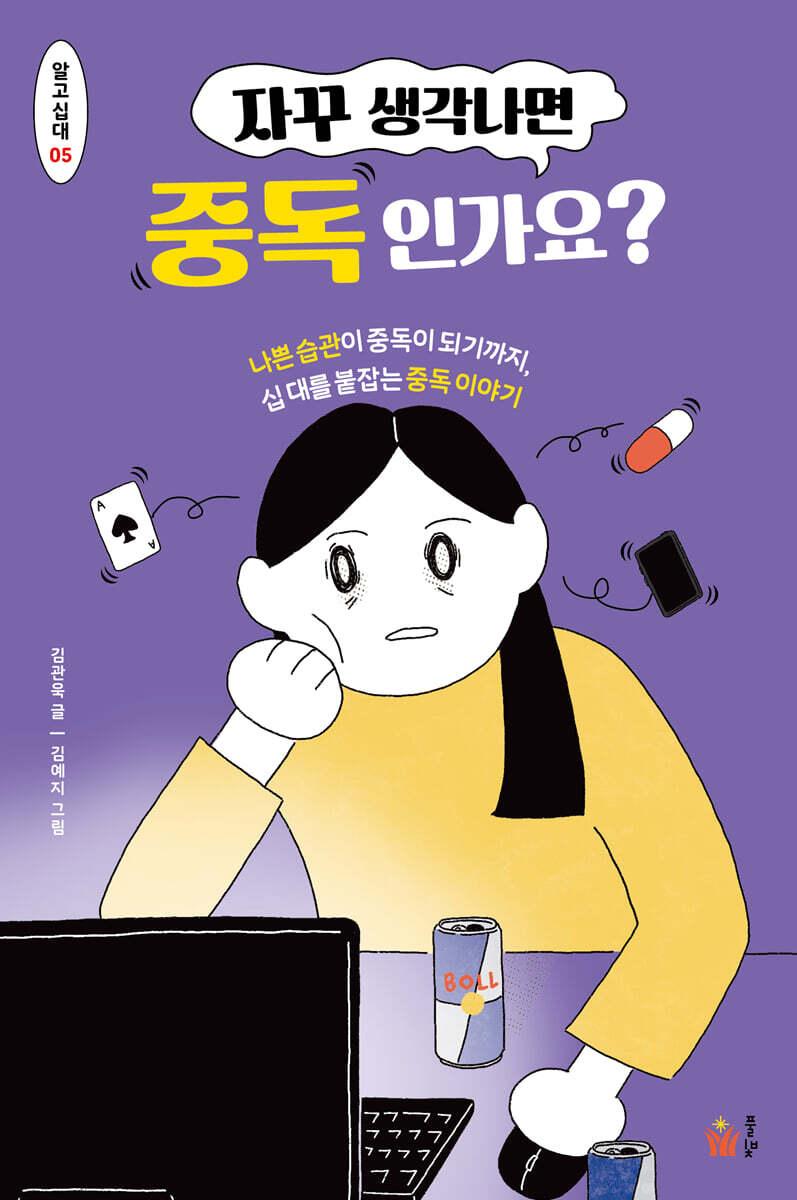
If I keep thinking about it, is it an addiction?
 |
Description
Book Introduction
“If you like something and do it a lot, is it all addiction?”
Understanding the misconceptions and truths about addiction, which has deeply permeated the daily lives of teenagers.
Addiction, ask me anything!
Since some time ago, addiction issues among teenagers have been appearing frequently in the news, and it is not difficult to find cases of teenagers becoming addicted to drugs and gambling, beyond smartphones, drinking, and smoking.
In this day and age where anyone can easily access addictive substances and behaviors, but where explanations and help for youth addiction problems are hard to find, what information should we trust, and what should we be wary of?
The author, a family medicine physician and professor of anthropology who has long studied smoking, wrote this book to confront the current state of addiction, especially among youth, which is no longer limited to a select few, and to provide clear help.
We help you understand addiction through 10 of the most frequently asked questions from teenagers, and we also introduce solutions to help you turn bad habits in your daily life that can lead to addiction into good ones.
Furthermore, it will provide a variety of knowledge and information that will help you reflect on your daily life and help you understand, making it the easiest guide for those curious about addiction.
Understanding the misconceptions and truths about addiction, which has deeply permeated the daily lives of teenagers.
Addiction, ask me anything!
Since some time ago, addiction issues among teenagers have been appearing frequently in the news, and it is not difficult to find cases of teenagers becoming addicted to drugs and gambling, beyond smartphones, drinking, and smoking.
In this day and age where anyone can easily access addictive substances and behaviors, but where explanations and help for youth addiction problems are hard to find, what information should we trust, and what should we be wary of?
The author, a family medicine physician and professor of anthropology who has long studied smoking, wrote this book to confront the current state of addiction, especially among youth, which is no longer limited to a select few, and to provide clear help.
We help you understand addiction through 10 of the most frequently asked questions from teenagers, and we also introduce solutions to help you turn bad habits in your daily life that can lead to addiction into good ones.
Furthermore, it will provide a variety of knowledge and information that will help you reflect on your daily life and help you understand, making it the easiest guide for those curious about addiction.
- You can preview some of the book's contents.
Preview
index
Prologue: The Path to Becoming Free from Addiction
Chapter 1.
If you like something and do it a lot, is it all addiction?
Chapter 2.
What's the difference between a habit and an addiction?
Chapter 3.
Is it an addiction to occasionally indulge in something, even though I can control it?
Chapter 4.
Why is addiction so dangerous?
Chapter 5.
Why is addiction so bad for teens?
Chapter 6.
Are there any things that are easy to become addicted to?
Chapter 7.
Is it dangerous to use the internet/smartphone a lot?
Chapter 8.
Are there any types of people who are prone to addiction?
Chapter 9.
Once you get addicted, is it impossible to quit?
Chapter 10.
It's not an addiction, but is there a way to turn a bad habit into a good one?
The core of addiction at a glance!
Chapter 1.
If you like something and do it a lot, is it all addiction?
Chapter 2.
What's the difference between a habit and an addiction?
Chapter 3.
Is it an addiction to occasionally indulge in something, even though I can control it?
Chapter 4.
Why is addiction so dangerous?
Chapter 5.
Why is addiction so bad for teens?
Chapter 6.
Are there any things that are easy to become addicted to?
Chapter 7.
Is it dangerous to use the internet/smartphone a lot?
Chapter 8.
Are there any types of people who are prone to addiction?
Chapter 9.
Once you get addicted, is it impossible to quit?
Chapter 10.
It's not an addiction, but is there a way to turn a bad habit into a good one?
The core of addiction at a glance!
Detailed image

Into the book
Things like boredom, tedium, distress, and stress are so common that you might think they can't be the cause.
But addiction often starts very slowly in our daily lives.
In fact, Professor David Courtright, an American historian who has studied addiction, also cited three causes of addiction in human history.
Boredom, misery, and stress! These are the things we habitually do or feel, and they can actually be the cause of addiction.
--- 「2.
What is the difference between habit and addiction?
Professor Volkow emphasizes that even if addiction progresses "slowly," the first signs of a break are crucial.
That is, the signal that makes you take the 'first step' toward addictive behavior.
It's like the gun signaling the start of a running race.
Professor Volkow warns that someone is constantly pulling the 'trigger' of that very gun.
It includes everything from tempting Internet games to gambling applications, alcohol and cigarettes, and various harmful Internet sites.
It feels like there's not a single moment in our lives these days where we don't hear the sound of gunshots.
In medicine, the trigger that causes addiction is called a 'trigger' or 'inducing factor'.
This acts to disrupt the brain's healthy happiness and reward circuits, the dopamine system.
--- 「3.
Is it an addiction to occasionally fall for it? Even though I can control it?
Professor Wendy Wood, a renowned American psychologist, points out 'friction' as one of the important factors in forming habits.
Just as a car cannot move forward well when the friction on the road is high, it is difficult to become addicted when there are many conditions that hinder addictive behavior.
Of course, the opposite is also true.
Professor Wood says that the most powerful friction when it comes to habits is 'location'.
This is also called 'distance friction'.
From this perspective, what type of addiction would cause the least friction for teenagers? Yes, of course it would be smartphones.
Since it's always by your side, distance friction is practically close to 0.
As a result, as previously introduced, 4 out of 10 teenagers are at risk of smartphone over-reliance.
--- 「6.
Are there any things that are easy to become addicted to?
The dopamine pathways fade over time, but the memory of that experience remains (this is called 'episodic memory').
And that memory contains the emotions of that time.
The greater the intensity of that emotion, the longer the memory will remain and the faster it can be retrieved from memory storage.
So, even if you overcome and break free from addiction, the memories may last a lifetime.
As long as that memory remains, there is always the risk of falling back into the addiction you once fell into.
So you should never try it again out of curiosity.
But addiction often starts very slowly in our daily lives.
In fact, Professor David Courtright, an American historian who has studied addiction, also cited three causes of addiction in human history.
Boredom, misery, and stress! These are the things we habitually do or feel, and they can actually be the cause of addiction.
--- 「2.
What is the difference between habit and addiction?
Professor Volkow emphasizes that even if addiction progresses "slowly," the first signs of a break are crucial.
That is, the signal that makes you take the 'first step' toward addictive behavior.
It's like the gun signaling the start of a running race.
Professor Volkow warns that someone is constantly pulling the 'trigger' of that very gun.
It includes everything from tempting Internet games to gambling applications, alcohol and cigarettes, and various harmful Internet sites.
It feels like there's not a single moment in our lives these days where we don't hear the sound of gunshots.
In medicine, the trigger that causes addiction is called a 'trigger' or 'inducing factor'.
This acts to disrupt the brain's healthy happiness and reward circuits, the dopamine system.
--- 「3.
Is it an addiction to occasionally fall for it? Even though I can control it?
Professor Wendy Wood, a renowned American psychologist, points out 'friction' as one of the important factors in forming habits.
Just as a car cannot move forward well when the friction on the road is high, it is difficult to become addicted when there are many conditions that hinder addictive behavior.
Of course, the opposite is also true.
Professor Wood says that the most powerful friction when it comes to habits is 'location'.
This is also called 'distance friction'.
From this perspective, what type of addiction would cause the least friction for teenagers? Yes, of course it would be smartphones.
Since it's always by your side, distance friction is practically close to 0.
As a result, as previously introduced, 4 out of 10 teenagers are at risk of smartphone over-reliance.
--- 「6.
Are there any things that are easy to become addicted to?
The dopamine pathways fade over time, but the memory of that experience remains (this is called 'episodic memory').
And that memory contains the emotions of that time.
The greater the intensity of that emotion, the longer the memory will remain and the faster it can be retrieved from memory storage.
So, even if you overcome and break free from addiction, the memories may last a lifetime.
As long as that memory remains, there is always the risk of falling back into the addiction you once fell into.
So you should never try it again out of curiosity.
--- 「9.
Once you get addicted, is it impossible to quit?
Once you get addicted, is it impossible to quit?
Publisher's Review
“It just happened once...
“It’s not like I’m addicted, is it?”
“Everyone is doing it, but is it really that dangerous?”
This is the story of addiction in the real world of ordinary teenagers.
It's time to confront the bad habits that are eating away at me.
News reports that the number of youth gambling addicts has tripled in just six years, that middle school students have taken methamphetamine, and that 40% of youth are overly dependent on smartphones make us realize that the problem of youth addiction in our country is one that can no longer be ignored.
Although public institutions have recently proposed various measures to prevent addiction problems and the National Assembly has proposed related bills, the reality is that these measures are still insufficient.
In particular, as smartphone use takes up a large part of teenagers' daily lives, addiction problems are becoming more complex.
Gambling and drugs, which were previously difficult for teenagers to access, are becoming more accessible, and they are easily exposed to triggers that lead them to take the first step toward addiction through various channels.
The unfiltered torrent of media content dulls the awareness of addiction among young people.
The author wrote this book because, based on his own experience counseling addictions, he could no longer ignore the problems of adolescents who are particularly vulnerable to addiction.
Rather than using examples of addicts that you would only see in movies, it provides an easy-to-understand overview of the elements of addiction that ordinary teenagers today can unknowingly fall into in their daily lives.
It helps us debunk common misconceptions about addiction and exposes the truth about the bad habits that are eating away at us, helping us prevent regrettable choices and break free from the bad choices we do regret.
“Once you get addicted, is it impossible to quit?”
Knowing the mechanism of addiction and having the right knowledge
How to maintain a healthy life!
Many teenagers ask whether doing something once in a while out of curiosity or for a short time out of stress is an addiction.
Also, because it is such a small act, we are proud that we can control it ourselves.
But what most people miss is that addiction begins right at the edge of those seemingly trivial bad habits.
It cannot be denied that especially in the case of adolescents, they are more prone to addiction due to their characteristics such as stimulation-seeking tendencies and brain development.
So, does this mean that teenagers who have fallen prey to addiction can never escape? At the end of the book, the author offers a message of hope, offering helpful methods for overcoming addiction.
Of course, there is a high risk of relapse and it is a difficult path, but it is possible to break free.
It introduces the 'three keys to overcoming addiction' - time, place, and exercise - and contains practical methods that can be put into practice by young people in our country.
It also introduces how to create good habits that will help your teen live a healthy life beyond addiction issues.
As the title suggests, "If I keep thinking about it, is it an addiction?", the table of contents is composed of the most common questions about addiction, so you can open it and start looking at the part you want to know about.
When you have questions about addiction, are worried about addiction, or want to break free from addiction, Wooksam's kind and clear answers await to point you in the right direction.
“It’s not like I’m addicted, is it?”
“Everyone is doing it, but is it really that dangerous?”
This is the story of addiction in the real world of ordinary teenagers.
It's time to confront the bad habits that are eating away at me.
News reports that the number of youth gambling addicts has tripled in just six years, that middle school students have taken methamphetamine, and that 40% of youth are overly dependent on smartphones make us realize that the problem of youth addiction in our country is one that can no longer be ignored.
Although public institutions have recently proposed various measures to prevent addiction problems and the National Assembly has proposed related bills, the reality is that these measures are still insufficient.
In particular, as smartphone use takes up a large part of teenagers' daily lives, addiction problems are becoming more complex.
Gambling and drugs, which were previously difficult for teenagers to access, are becoming more accessible, and they are easily exposed to triggers that lead them to take the first step toward addiction through various channels.
The unfiltered torrent of media content dulls the awareness of addiction among young people.
The author wrote this book because, based on his own experience counseling addictions, he could no longer ignore the problems of adolescents who are particularly vulnerable to addiction.
Rather than using examples of addicts that you would only see in movies, it provides an easy-to-understand overview of the elements of addiction that ordinary teenagers today can unknowingly fall into in their daily lives.
It helps us debunk common misconceptions about addiction and exposes the truth about the bad habits that are eating away at us, helping us prevent regrettable choices and break free from the bad choices we do regret.
“Once you get addicted, is it impossible to quit?”
Knowing the mechanism of addiction and having the right knowledge
How to maintain a healthy life!
Many teenagers ask whether doing something once in a while out of curiosity or for a short time out of stress is an addiction.
Also, because it is such a small act, we are proud that we can control it ourselves.
But what most people miss is that addiction begins right at the edge of those seemingly trivial bad habits.
It cannot be denied that especially in the case of adolescents, they are more prone to addiction due to their characteristics such as stimulation-seeking tendencies and brain development.
So, does this mean that teenagers who have fallen prey to addiction can never escape? At the end of the book, the author offers a message of hope, offering helpful methods for overcoming addiction.
Of course, there is a high risk of relapse and it is a difficult path, but it is possible to break free.
It introduces the 'three keys to overcoming addiction' - time, place, and exercise - and contains practical methods that can be put into practice by young people in our country.
It also introduces how to create good habits that will help your teen live a healthy life beyond addiction issues.
As the title suggests, "If I keep thinking about it, is it an addiction?", the table of contents is composed of the most common questions about addiction, so you can open it and start looking at the part you want to know about.
When you have questions about addiction, are worried about addiction, or want to break free from addiction, Wooksam's kind and clear answers await to point you in the right direction.
GOODS SPECIFICS
- Date of issue: January 19, 2024
- Page count, weight, size: 160 pages | 244g | 135*203*20mm
- ISBN13: 9791161729053
- ISBN10: 1161729054
You may also like
카테고리
korean


korean

![GQ KOREA Mark (Monthly): December [2025]](http://librairie.coreenne.fr/cdn/shop/files/8ef265dbbfbf186523ed75ba7319009d.jpg?v=1765340328&width=3840)


