

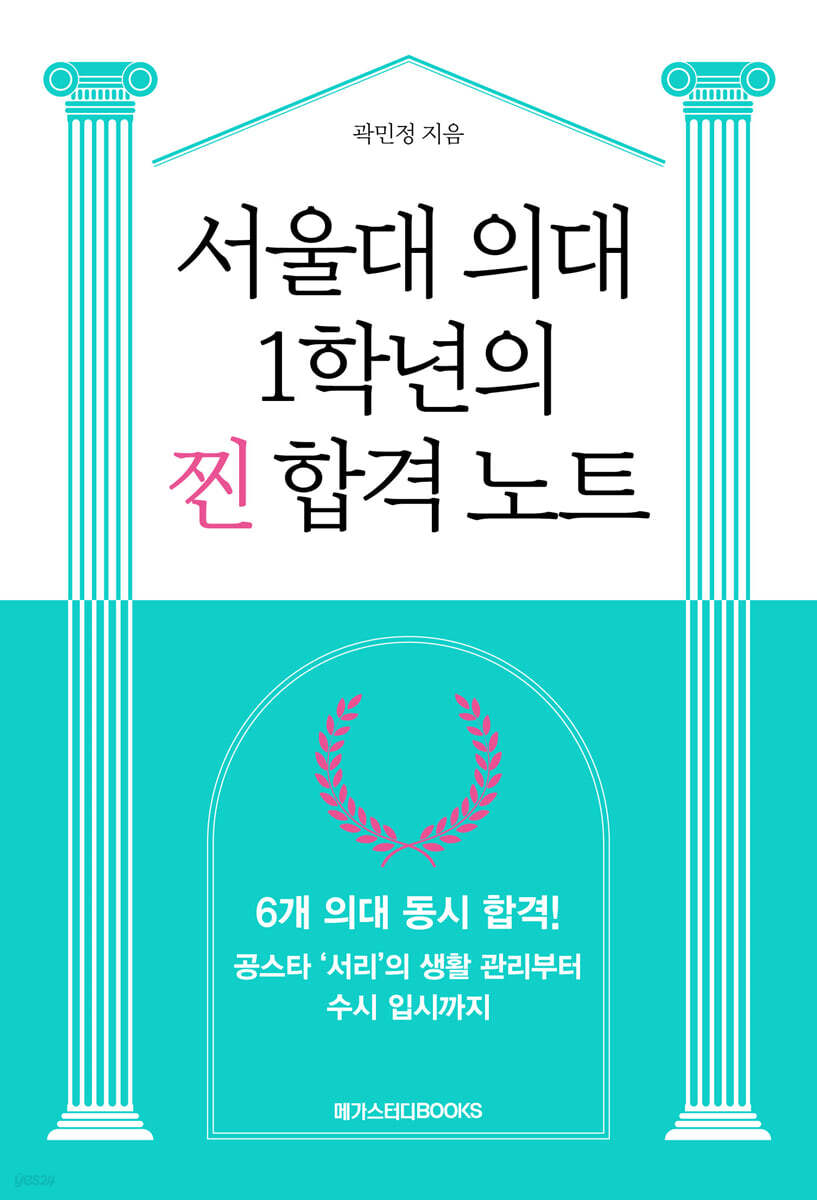
A Seoul National University Medical School freshman's authentic admissions notes
 |
Description
Book Introduction
Don't get tired, reduce mistakes, and achieve your goals Seoriman's special study record It made it possible to be accepted to 6 medical schools at the same time. Contains all the know-how for exam preparation Set goals and make plans to achieve them Gongstar Seori's foolproof study routine that puts plans into action and ultimately achieves goals. * The secret to mind control that won't tire you out during the entrance exam period * Disclosure of the admission process * How to manage your daily journal / study planner / mistake notebook revealed * Includes Frost's playlist and reading list * Includes daily planner written by Seori Frost (@frost_med), a public stargrammer who was accepted to six medical schools at the same time in 2023 (Seoul National University, Yonsei University, Korea University, Sungkyunkwan University, Hanyang University, and Catholic University) and became a hot topic after her video on the YouTube channel “Studio Sha” recorded 540,000 views, has published her first book. College entrance isn't something you can succeed at just by having good grades. To successfully pass the entrance exam, you need to consistently manage your schedule and lifestyle in addition to studying to achieve your goals. This book contains the author's realistic records of his entrance exam preparation. |
- You can preview some of the book's contents.
Preview
index
prolog
PLAN 1.
Knowing why you study will change your attitude toward studying.
01 The real reason I started studying
02 In the end, studying is something you do alone.
03 Studying as you say
04 Why a Slump Isn't Defined as a 'Slump'
05 Even so, when difficult moments come
06 My parents, who have been the best mentors
07 Building friendships based on my own standards
Seori's Q&A I'm curious about the daily routine of first and second year high school students.
Seori's Q&A I can't read the Korean text at all.
How should I study?
PLAN 2.
If you plan well, it's easy to execute.
01 Year, Month, and Day Planning Method
02 How to Create a Daily Planner
03 Tips for executing plans well
04. Converting a single volume into a notebook
05 Class Time VS Study Time
06 Memorization Tips Without Exceptions
07 Interview Review
Seori's Q&A Is there a way to study while sitting at a desk for a long time?
Seori's Q&A What were your elective subjects in high school?
PLAN 3.
Everything about high school life is about the entrance exam
01 How to Treat Your Teacher
02 Thoughts on Class Officers
03 Sleep that affects your daily condition
04 Dietary management that requires adjustment
05 Drowsiness that must be managed
06 Electronic devices that can be medicine when used well, poison when used wrongly
07 Reasons and methods for operating SNS
Seori's Q&A How many school activities did you participate in that helped you with your college entrance exams?
Seori's Q&A Seori, were there any subjects you were unsure of? What subjects were they?
PLAN 4.
Prepare thoroughly and pass confidently.
01 Finding the Right Admissions Strategy for You
02 Self-introduction and interview tips
03 How to fill out your school record book with school activities
Seori's Q&A Are there any videos that helped you maintain your mental focus while studying?
Seori's Q&A What is your daily routine on exam day?
supplement
Frost's Playlist
Frost's Reading List
Seori's Study Chat Room
Frost's Study Planner
PLAN 1.
Knowing why you study will change your attitude toward studying.
01 The real reason I started studying
02 In the end, studying is something you do alone.
03 Studying as you say
04 Why a Slump Isn't Defined as a 'Slump'
05 Even so, when difficult moments come
06 My parents, who have been the best mentors
07 Building friendships based on my own standards
Seori's Q&A I'm curious about the daily routine of first and second year high school students.
Seori's Q&A I can't read the Korean text at all.
How should I study?
PLAN 2.
If you plan well, it's easy to execute.
01 Year, Month, and Day Planning Method
02 How to Create a Daily Planner
03 Tips for executing plans well
04. Converting a single volume into a notebook
05 Class Time VS Study Time
06 Memorization Tips Without Exceptions
07 Interview Review
Seori's Q&A Is there a way to study while sitting at a desk for a long time?
Seori's Q&A What were your elective subjects in high school?
PLAN 3.
Everything about high school life is about the entrance exam
01 How to Treat Your Teacher
02 Thoughts on Class Officers
03 Sleep that affects your daily condition
04 Dietary management that requires adjustment
05 Drowsiness that must be managed
06 Electronic devices that can be medicine when used well, poison when used wrongly
07 Reasons and methods for operating SNS
Seori's Q&A How many school activities did you participate in that helped you with your college entrance exams?
Seori's Q&A Seori, were there any subjects you were unsure of? What subjects were they?
PLAN 4.
Prepare thoroughly and pass confidently.
01 Finding the Right Admissions Strategy for You
02 Self-introduction and interview tips
03 How to fill out your school record book with school activities
Seori's Q&A Are there any videos that helped you maintain your mental focus while studying?
Seori's Q&A What is your daily routine on exam day?
supplement
Frost's Playlist
Frost's Reading List
Seori's Study Chat Room
Frost's Study Planner
Detailed image

Into the book
When I was in the third year of middle school, I had a new dream: becoming a doctor.
(..) Although there was no grand opportunity or beginning that I could tell people about, I definitely started studying hard after I started dreaming of becoming a ‘doctor.’
My parents even said that I was more passionate about studying in my third year of middle school than they were throughout my entire high school years.
--- From "The Real Reason I Started Studying"
Still, I think that 'studying' can be done without feeling lonely.
Studying something you do on your own can be incredibly fun, and you can feel a sense of fulfillment as you learn new things.
I believe that our country's current college entrance exam process is inherently bound to instill loneliness in students.
The pressure, anxiety, and loneliness that come with college entrance exams are, to a certain extent, natural.
I was like that, and so were my friends.
--- From "In the end, studying is something you do alone"
Instead of thinking, "I'm in a slump, feeling depressed and listless," I tried to think positively, "I'm going through a bit of a tough time right now, but I've been through this much burden and sadness, so I think I should have the strength to overcome those feelings now!"
The human mind is truly amazing.
The more I affirmed positively that I could get out of this, that I could do it, the more I found the strength to start again.
--- From "Why I Don't Define a Slump as a 'Slump'"
Before the new semester begins, I use the academic calendar distributed by the school to figure out major events for the coming year or semester.
I need to know when midterm and final exam periods, school festivals, important competitions, etc. are scheduled so I can figure out how much time I can study.
I looked at the schedule to see if I had three or four weeks to study for the midterm (or final) and if there was enough time between the midterm and final to do extracurricular activities.
--- From "Planning a Year, a Month, and a Day"
I've found using the planner very motivating.
I enjoyed studying a lot and filling up the spaces, and especially on days when I studied a lot, I felt a sense of satisfaction writing down the time I spent studying.
Not only that, I was able to get objective data on how much I studied in how much time, which helped me plan my future studies more accurately.
--- From "Planning a Year, a Month, and a Day"
During the vacation, I tried to stick to the overall 'routine' rather than focusing on specific parts.
For example, let's take my routine during the summer vacation of my third year of high school. I planned to read Korean language passages and solve problems in the morning, solve math problems until the afternoon, and spend the evening studying science.
--- From "Tips for Executing Plans Well"
I didn't measure 'time spent not fully focused' as pure time.
The time spent memorizing things on your own while the teacher is teaching in front of you at school, the time spent watching video lectures like online lectures, the time spent listening to English texts on MP3 while commuting, the time spent looking at printed materials in your spare time, and the time spent studying while eating were not measured as pure study time.
(..) Although there was no grand opportunity or beginning that I could tell people about, I definitely started studying hard after I started dreaming of becoming a ‘doctor.’
My parents even said that I was more passionate about studying in my third year of middle school than they were throughout my entire high school years.
--- From "The Real Reason I Started Studying"
Still, I think that 'studying' can be done without feeling lonely.
Studying something you do on your own can be incredibly fun, and you can feel a sense of fulfillment as you learn new things.
I believe that our country's current college entrance exam process is inherently bound to instill loneliness in students.
The pressure, anxiety, and loneliness that come with college entrance exams are, to a certain extent, natural.
I was like that, and so were my friends.
--- From "In the end, studying is something you do alone"
Instead of thinking, "I'm in a slump, feeling depressed and listless," I tried to think positively, "I'm going through a bit of a tough time right now, but I've been through this much burden and sadness, so I think I should have the strength to overcome those feelings now!"
The human mind is truly amazing.
The more I affirmed positively that I could get out of this, that I could do it, the more I found the strength to start again.
--- From "Why I Don't Define a Slump as a 'Slump'"
Before the new semester begins, I use the academic calendar distributed by the school to figure out major events for the coming year or semester.
I need to know when midterm and final exam periods, school festivals, important competitions, etc. are scheduled so I can figure out how much time I can study.
I looked at the schedule to see if I had three or four weeks to study for the midterm (or final) and if there was enough time between the midterm and final to do extracurricular activities.
--- From "Planning a Year, a Month, and a Day"
I've found using the planner very motivating.
I enjoyed studying a lot and filling up the spaces, and especially on days when I studied a lot, I felt a sense of satisfaction writing down the time I spent studying.
Not only that, I was able to get objective data on how much I studied in how much time, which helped me plan my future studies more accurately.
--- From "Planning a Year, a Month, and a Day"
During the vacation, I tried to stick to the overall 'routine' rather than focusing on specific parts.
For example, let's take my routine during the summer vacation of my third year of high school. I planned to read Korean language passages and solve problems in the morning, solve math problems until the afternoon, and spend the evening studying science.
--- From "Tips for Executing Plans Well"
I didn't measure 'time spent not fully focused' as pure time.
The time spent memorizing things on your own while the teacher is teaching in front of you at school, the time spent watching video lectures like online lectures, the time spent listening to English texts on MP3 while commuting, the time spent looking at printed materials in your spare time, and the time spent studying while eating were not measured as pure study time.
--- From "Class Time vs. Study Time"
Publisher's Review
Real advice for passing the entrance exam from a senior who recently took the exam.
Most of the author's over 30,000 Instagram followers are middle and high school students preparing for college entrance exams.
They ask the author a variety of questions, from his lifestyle to his favorite music, drinks, celebrities, and even study methods.
I began writing this book with the desire to compile and share my own answers to these questions. In PLAN 1, the author carefully and kindly explains, based on his own experience, everything from the real reason he began studying to his relationships with his parents, friends, and even mind management.
This will help you set study goals and focus your mind. PLAN2 covers how to plan well and put it into practice.
It explains how to write a planner and a notebook, and attaches actual planners and notebooks that were written to help.
In PLAN3, the author, based on his experiences during his three years of high school, covers in detail everything from managing sleep, drowsiness, and meals, which many students consider trivial but struggle with because they fail to manage them, to how to use electronic devices.
In fact, among the questions the author received on social media, there were as many about drowsiness and how to use electronic devices as there were about study methods, so this part will help many students resolve their questions and manage their lives to have a healthy exam preparation life.
In the final PLAN4, the author vividly recorded his record of being accepted to college on multiple occasions.
You can hear vivid stories about the early admission process from real-life experiences, including how to fill out a student record book, self-introduction questions, and interview tips.
Additionally, for each part, we added Q&A sections in which the author faithfully answers questions he received, so that you can get many tips for your overall college entrance exam life.
It couldn't be more honest!
The author, who studied with the goal of entering the Seoul National University College of Medicine, Class of 23, achieved the difficult but remarkable result of a 1.0 GPA and six-time medical champion, but the process was by no means easy.
The book is filled with tips on how to move forward toward your goals step by step when things are difficult, tiring, and you want to give up.
How much do you sleep, what do you eat, how do you study, how do you handle rolling interviews, how do you manage your schedule? The book not only answers the questions you've received, but also provides detailed information that will be helpful to your juniors and their parents preparing for the college entrance exam. At the end of the book, you can check out the author's playlist of music he listened to while studying, a list of books he read, and a sample study planner he created in his third year of high school.
Most of the author's over 30,000 Instagram followers are middle and high school students preparing for college entrance exams.
They ask the author a variety of questions, from his lifestyle to his favorite music, drinks, celebrities, and even study methods.
I began writing this book with the desire to compile and share my own answers to these questions. In PLAN 1, the author carefully and kindly explains, based on his own experience, everything from the real reason he began studying to his relationships with his parents, friends, and even mind management.
This will help you set study goals and focus your mind. PLAN2 covers how to plan well and put it into practice.
It explains how to write a planner and a notebook, and attaches actual planners and notebooks that were written to help.
In PLAN3, the author, based on his experiences during his three years of high school, covers in detail everything from managing sleep, drowsiness, and meals, which many students consider trivial but struggle with because they fail to manage them, to how to use electronic devices.
In fact, among the questions the author received on social media, there were as many about drowsiness and how to use electronic devices as there were about study methods, so this part will help many students resolve their questions and manage their lives to have a healthy exam preparation life.
In the final PLAN4, the author vividly recorded his record of being accepted to college on multiple occasions.
You can hear vivid stories about the early admission process from real-life experiences, including how to fill out a student record book, self-introduction questions, and interview tips.
Additionally, for each part, we added Q&A sections in which the author faithfully answers questions he received, so that you can get many tips for your overall college entrance exam life.
It couldn't be more honest!
The author, who studied with the goal of entering the Seoul National University College of Medicine, Class of 23, achieved the difficult but remarkable result of a 1.0 GPA and six-time medical champion, but the process was by no means easy.
The book is filled with tips on how to move forward toward your goals step by step when things are difficult, tiring, and you want to give up.
How much do you sleep, what do you eat, how do you study, how do you handle rolling interviews, how do you manage your schedule? The book not only answers the questions you've received, but also provides detailed information that will be helpful to your juniors and their parents preparing for the college entrance exam. At the end of the book, you can check out the author's playlist of music he listened to while studying, a list of books he read, and a sample study planner he created in his third year of high school.
GOODS SPECIFICS
- Date of issue: November 5, 2023
- Page count, weight, size: 224 pages | 298g | 128*188*13mm
- ISBN13: 9791129711038
- ISBN10: 112971103X
You may also like
카테고리
korean


korean

![GQ KOREA Mark (Monthly): December [2025]](http://librairie.coreenne.fr/cdn/shop/files/8ef265dbbfbf186523ed75ba7319009d.jpg?v=1765340328&width=3840)


