

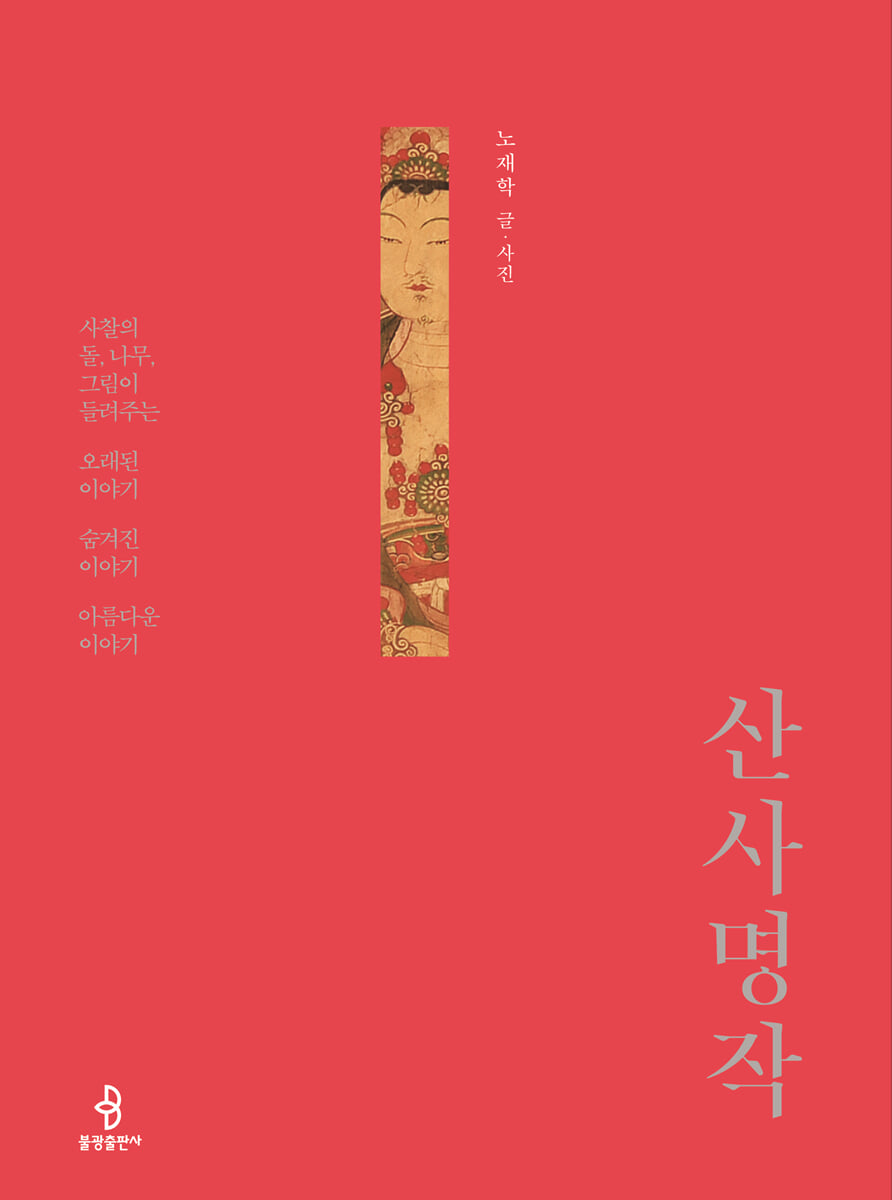
Sansa masterpiece
 |
Description
Book Introduction
There are things that are 'masterpieces' no matter who looks at them or how you look at them.
There are things like the Seokguram Buddha, who would boast perfect body proportions even if he were to jump up right now, or the gilt-bronze Maitreya seated in meditation, who exudes deep thought even with a faint expression.
These works are usually labeled as ‘national treasures.’
But even if they are not national treasures or treasures, there are countless masterpieces in old temples.
Of course, it takes effort to look at it for a long time and the insight to read the inner thoughts.
These works usually have layers of stories, a "one-hit wonder" that will make you slap your knees with a lively idea, and sometimes a sacredness that makes you join hands with deep longing and faith.
There are things like the Seokguram Buddha, who would boast perfect body proportions even if he were to jump up right now, or the gilt-bronze Maitreya seated in meditation, who exudes deep thought even with a faint expression.
These works are usually labeled as ‘national treasures.’
But even if they are not national treasures or treasures, there are countless masterpieces in old temples.
Of course, it takes effort to look at it for a long time and the insight to read the inner thoughts.
These works usually have layers of stories, a "one-hit wonder" that will make you slap your knees with a lively idea, and sometimes a sacredness that makes you join hands with deep longing and faith.
- You can preview some of the book's contents.
Preview
index
preface
Ⅰ The Boat to Paradise, the Prajna Dragon Boat
1.
Amitabha Buddha, bring the boat
Anseong Cheongnyongsa Temple Daeungjeon Hall (Prajna Dragon Buddha Painting)
2.
The Giant Lifts the Reborn into the Sky
Cheongdo Daejeoksa Temple Geukrakjeon
3.
Amitabha Buddha preaching at the Lotus Pond Assembly
Gumi Dorisa Temple's Paradise Hall
4.
Who gathered in the Pure Land?
Lotus Flower Life Mural in Daeungbojeon Hall of Bogwangsa Temple in Paju
Ⅱ Noble grandeur from the lattice door to the closed house
5.
The Universe Within the Universe, the House of Nirvana
Busan Beomeosa Temple Daeungjeon closed house
6.
Stories of Buddha's past lives engraved on Buddhist altars
Gyeongsan Hwanseongsa Temple Daeungjeon Buddhist altar
7.
Wooden back-burner
Yecheon Yongmunsa Temple Daejangjeon Woodcarving
8.
Yunjangdae, a rotating bookshelf containing the law
Yun Jang-dae, the main hall of Yongmunsa Temple in Yecheon
9.
The web of life resonates through the chorus of coexistence
Yeongju Seonghyeolsa Temple Nahanjeon Flower Lattice Gate
Ⅲ From Practice to Enlightenment
10.
The National History Dictionary, together we are immersed in the Dharma of truth.
The National Preceptor Hall and the Camp of the 16 National Preceptors at Songgwangsa Temple in Suncheon
11.
Human, all too human
Five Hundred Arhat Statues at Yeongsanjeon, Geojosa Temple, Yeongcheon
12.
The pinnacle of the Buddhist sect, the Geumganggyedan
Yangsan Tongdosa Temple Geumgang Stairs
Ⅳ The moon reflected in the river and the stars in the sky
13.
Bodhisattva, appearing on a rock
Gyeongju Gulbulsa Temple Site Four-sided Stone Buddha
14.
The three thousand great thousand worlds spread out in a small house
Buddhist mural at Yaksa Hall 53 of Gwanryongsa Temple in Changnyeong
15.
Carrying a basket of fish
Avalokitesvara Bodhisattva comes to the market
Yangsan Sinheungsa Temple Daegwangjeon Hall "Avalokitesvara Triad"
16.
Shakyamuni Buddha, please sit here.
Yangsan Tongdosa Temple Yeongsanjeon Hall (Gyeonbotap Pumdo)
17.
A Buddhist mandala in one painting
Anseong Chiljangsa Temple "Five-Buddhist Hanging Painting"
18.
The stars of the sky, shining with the faith of the Seven Stars
Mural of Chilseongjeon Hall at Jijoam Hermitage in Bongjeongsa Temple, Andong
19.
The light of Avatamsaka Sutra that fills the universe
Vairocana Buddha at the Bogwangjeon Hall of Bonghwa Chukseo Temple
V Pine tree in front of the yard
20.
The spring's direct message, the ancient plum of that temple
The noble temples of Seonam, Satongdosa, Hwaeomsa, and Baekyangsa
21.
Transplant the tree as is to the eaves pillar
Gurye Hwaeomsa Temple's Gucheongam Apple Tree Pillar
22.
Legend of Autumn, Ginkgo Tree
British, English, Jeweler, Red Angel, Ginkgo Tree
23.
Pine Tree Receives Makgeolli Offering at a Temple
The drooping pine tree at Unmunsa Temple in Cheongdo
Ⅰ The Boat to Paradise, the Prajna Dragon Boat
1.
Amitabha Buddha, bring the boat
Anseong Cheongnyongsa Temple Daeungjeon Hall (Prajna Dragon Buddha Painting)
2.
The Giant Lifts the Reborn into the Sky
Cheongdo Daejeoksa Temple Geukrakjeon
3.
Amitabha Buddha preaching at the Lotus Pond Assembly
Gumi Dorisa Temple's Paradise Hall
4.
Who gathered in the Pure Land?
Lotus Flower Life Mural in Daeungbojeon Hall of Bogwangsa Temple in Paju
Ⅱ Noble grandeur from the lattice door to the closed house
5.
The Universe Within the Universe, the House of Nirvana
Busan Beomeosa Temple Daeungjeon closed house
6.
Stories of Buddha's past lives engraved on Buddhist altars
Gyeongsan Hwanseongsa Temple Daeungjeon Buddhist altar
7.
Wooden back-burner
Yecheon Yongmunsa Temple Daejangjeon Woodcarving
8.
Yunjangdae, a rotating bookshelf containing the law
Yun Jang-dae, the main hall of Yongmunsa Temple in Yecheon
9.
The web of life resonates through the chorus of coexistence
Yeongju Seonghyeolsa Temple Nahanjeon Flower Lattice Gate
Ⅲ From Practice to Enlightenment
10.
The National History Dictionary, together we are immersed in the Dharma of truth.
The National Preceptor Hall and the Camp of the 16 National Preceptors at Songgwangsa Temple in Suncheon
11.
Human, all too human
Five Hundred Arhat Statues at Yeongsanjeon, Geojosa Temple, Yeongcheon
12.
The pinnacle of the Buddhist sect, the Geumganggyedan
Yangsan Tongdosa Temple Geumgang Stairs
Ⅳ The moon reflected in the river and the stars in the sky
13.
Bodhisattva, appearing on a rock
Gyeongju Gulbulsa Temple Site Four-sided Stone Buddha
14.
The three thousand great thousand worlds spread out in a small house
Buddhist mural at Yaksa Hall 53 of Gwanryongsa Temple in Changnyeong
15.
Carrying a basket of fish
Avalokitesvara Bodhisattva comes to the market
Yangsan Sinheungsa Temple Daegwangjeon Hall "Avalokitesvara Triad"
16.
Shakyamuni Buddha, please sit here.
Yangsan Tongdosa Temple Yeongsanjeon Hall (Gyeonbotap Pumdo)
17.
A Buddhist mandala in one painting
Anseong Chiljangsa Temple "Five-Buddhist Hanging Painting"
18.
The stars of the sky, shining with the faith of the Seven Stars
Mural of Chilseongjeon Hall at Jijoam Hermitage in Bongjeongsa Temple, Andong
19.
The light of Avatamsaka Sutra that fills the universe
Vairocana Buddha at the Bogwangjeon Hall of Bonghwa Chukseo Temple
V Pine tree in front of the yard
20.
The spring's direct message, the ancient plum of that temple
The noble temples of Seonam, Satongdosa, Hwaeomsa, and Baekyangsa
21.
Transplant the tree as is to the eaves pillar
Gurye Hwaeomsa Temple's Gucheongam Apple Tree Pillar
22.
Legend of Autumn, Ginkgo Tree
British, English, Jeweler, Red Angel, Ginkgo Tree
23.
Pine Tree Receives Makgeolli Offering at a Temple
The drooping pine tree at Unmunsa Temple in Cheongdo
Detailed image

Publisher's Review
Baudeok, I rode the Prajna Dragon Boat to Paradise
The painting “Prajna Dragon and Seondo” in the Daeungjeon Hall of Cheongnyongsa Temple in Anseong is considered a well-painted painting in itself, but there is something special hidden within it that makes it shine even more.
There is a boat that Amitabha Buddha rides when he goes to paradise with his reborn beings, and that boat is called the Prajna Dragon Boat.
There is no distinction between the passengers heading to paradise, regardless of class, gender, or speed.
So, the description of the passengers usually reflects the times.
The “Banya Yongseondo” at Anseong Cheongnyongsa Temple features a unique Namsadangpae riding it.
This is because Anseong Cheongnyongsa Temple was one of the bases of the Namsadangpae, a group of people who sold talismans written by monks in the late Joseon Dynasty and used them to support temple Buddhist ceremonies.
Among the three men and three women in the painting, some are seen holding instruments such as the sogo (small drum) and yoryeong (a type of percussion instrument).
However, at the front of the bow where these Namsadangpae are gathered, a woman with various decorations can be seen.
This is a part that will make anyone who knows the format of the “Banya Yongseondo” tilt their head.
This is because most of those places were the seats of Buddha or Bodhisattva.
The woman holds a long wooden stick, the end of which is shaped like a cross, reminiscent of a 'salpo', a ceremonial tool from agricultural societies.
It means not an ordinary person, but a ‘general’.
The author assumes that this woman is Baudeok, known as the only female puppet in the history of Namsadang.
Baudeok, who was raised by monks at Anseong Cheongryongsa Temple and became the leader of the Namsadangpae, took the lead in the Namsadangpae.
Of course, it is a 'guess', but if you understand the context, it is a completely possible story.
As these stories were added, the Anseong Cheongnyongsa Temple “Prajna Dragon Painting” went from being a “well-drawn painting” to a “meaningful painting,” and over time, it rose to the ranks of what could be called a masterpiece.
A powerful Arhat lifts a reborn child to paradise on his balu
While the Anseong Cheongnyongsa Temple's "Prajna Dragon Painting" is a masterpiece born from history and story, there are also masterpieces born from novel ideas.
The murals of the Geukrakjeon Hall of Daejeoksa Temple in Cheongdo have unique and original paintings that cannot be found anywhere else in the world.
A strong man of martial prowess lifted a person high into the sky with his balwoo.
It seems like a bold and dramatic scene, but it's hard to understand just by looking at it.
The trick to appreciating it is to expand your field of vision to cover the entire wall.
At the top of the painting, there is a flying celestial being draped in a thousand-year-old robe, and the main beam is decorated with auspicious flowers.
If you still don't understand, look to the left.
Inro King Bodhisattva and Ksitigarbha Bodhisattva are seated.
These are the two bodhisattvas who lead us to paradise.
Paradise is above, and the Inro King Bodhisattva and Ksitigarbha Bodhisattva guide from the side.
The strong warrior lifted them up in his hand to send them to paradise.
The most common way to go to paradise is through lotus flower incarnation, or through riding a dragon boat led by Amitabha Buddha, as seen in the Prajnaparamita Sutra.
There is no painting in the world, let alone in Korea, that can lift someone up and send them to paradise in such a single breath.
Of course, it is not just a completely baseless 'novel'.
The true identity of the mighty warrior is the second Arhat, Garakgabeolcha, whose object is 'Bin Balu' among the 16 Arhats.
The artist chose the 'unconventional' option of sending a man and a woman to paradise via a Garakgabeolcha.
Finally, it broke the rules and was born as a masterpiece.
Even a single tree became a masterpiece
This book presents works that were created with such liveliness and historical stories as 'masterpieces'.
There are also relatively familiar works such as ‘The closed door of the Daeungjeon Hall of Beomeosa Temple in Busan’, ‘Yeonjangdae of the Daejangjeon Hall of Yongmunsa Temple in Yecheon’, and ‘The flower lattice door of the Nahanjeon Hall of Seonghyeolsa Temple in Yeongju’.
The murals of Chilseongjeon Hall at Bongjeongsa Temple in Andong and the Avalokitesvara statue at Daegwangjeon Hall at Sinheungsa Temple in Yangsan are somewhat unfamiliar to most people.
However, if you take the time to look at it for a little longer and have the insight to look deeply, you can see that it is a 'masterpiece' no less than Seokguram Grotto or the Gilt-bronze Maitreya Seated in Bodhisattva Position.
The story of how the stars in the sky became 'Tathagata' or the mural of Avalokitesvara Bodhisattva going to the market carrying a basket of meat should be read as 'masterpieces' just for the idea itself.
But the author goes one step further.
In addition to history and liveliness, it is presented as a ‘masterpiece’ by including ‘nature’.
The pillars of the nine-story rock temple building of Hwaeomsa Temple in Gurye are made of apple trees.
There are cases where crooked pine trees were used as pillars, but it is the first time I have heard of apple trees, which do not grow straight or tall, being used as pillars.
Another piece of nature has entered the temple in the middle of nature.
The author evaluates this apple tree as 'the pinnacle of naturalistic aesthetics.'
Another tree also entered the temple.
It is a pine tree that is treated specially, but it is the drooping pine tree of Unmunsa Temple.
Although the drooping pine tree is not common, it is people who make it a masterpiece.
The drooping pine tree of Unmunsa Temple, located in the middle of the temple complex, receives twelve mal of makgeolli offerings from monks every year.
This is a story from 40 years ago.
It contains not only history but also people, so it is truly the birth of a masterpiece.
23 Masterpieces Selected by Photographer Noh Jae-hak, Who Has Captured Our Culture for 20 Years
The author, Jaehak Noh, is a photographer who has been capturing Korean culture, including traditional patterns, hyanggyo (Confucian schools), and temples, through his lens for over 20 years.
He himself says that he 'lives outside' for 300 days a year.
He visited numerous temples and captured their scenery through his lens, and wrote about twenty-three places that he considered to be 'masterpieces'.
The writings are not only filled with admiration for beauty, but also with the joys and sorrows of our history, the ideals of Buddhism, and the aspirations of believers.
The painting “Prajna Dragon and Seondo” in the Daeungjeon Hall of Cheongnyongsa Temple in Anseong is considered a well-painted painting in itself, but there is something special hidden within it that makes it shine even more.
There is a boat that Amitabha Buddha rides when he goes to paradise with his reborn beings, and that boat is called the Prajna Dragon Boat.
There is no distinction between the passengers heading to paradise, regardless of class, gender, or speed.
So, the description of the passengers usually reflects the times.
The “Banya Yongseondo” at Anseong Cheongnyongsa Temple features a unique Namsadangpae riding it.
This is because Anseong Cheongnyongsa Temple was one of the bases of the Namsadangpae, a group of people who sold talismans written by monks in the late Joseon Dynasty and used them to support temple Buddhist ceremonies.
Among the three men and three women in the painting, some are seen holding instruments such as the sogo (small drum) and yoryeong (a type of percussion instrument).
However, at the front of the bow where these Namsadangpae are gathered, a woman with various decorations can be seen.
This is a part that will make anyone who knows the format of the “Banya Yongseondo” tilt their head.
This is because most of those places were the seats of Buddha or Bodhisattva.
The woman holds a long wooden stick, the end of which is shaped like a cross, reminiscent of a 'salpo', a ceremonial tool from agricultural societies.
It means not an ordinary person, but a ‘general’.
The author assumes that this woman is Baudeok, known as the only female puppet in the history of Namsadang.
Baudeok, who was raised by monks at Anseong Cheongryongsa Temple and became the leader of the Namsadangpae, took the lead in the Namsadangpae.
Of course, it is a 'guess', but if you understand the context, it is a completely possible story.
As these stories were added, the Anseong Cheongnyongsa Temple “Prajna Dragon Painting” went from being a “well-drawn painting” to a “meaningful painting,” and over time, it rose to the ranks of what could be called a masterpiece.
A powerful Arhat lifts a reborn child to paradise on his balu
While the Anseong Cheongnyongsa Temple's "Prajna Dragon Painting" is a masterpiece born from history and story, there are also masterpieces born from novel ideas.
The murals of the Geukrakjeon Hall of Daejeoksa Temple in Cheongdo have unique and original paintings that cannot be found anywhere else in the world.
A strong man of martial prowess lifted a person high into the sky with his balwoo.
It seems like a bold and dramatic scene, but it's hard to understand just by looking at it.
The trick to appreciating it is to expand your field of vision to cover the entire wall.
At the top of the painting, there is a flying celestial being draped in a thousand-year-old robe, and the main beam is decorated with auspicious flowers.
If you still don't understand, look to the left.
Inro King Bodhisattva and Ksitigarbha Bodhisattva are seated.
These are the two bodhisattvas who lead us to paradise.
Paradise is above, and the Inro King Bodhisattva and Ksitigarbha Bodhisattva guide from the side.
The strong warrior lifted them up in his hand to send them to paradise.
The most common way to go to paradise is through lotus flower incarnation, or through riding a dragon boat led by Amitabha Buddha, as seen in the Prajnaparamita Sutra.
There is no painting in the world, let alone in Korea, that can lift someone up and send them to paradise in such a single breath.
Of course, it is not just a completely baseless 'novel'.
The true identity of the mighty warrior is the second Arhat, Garakgabeolcha, whose object is 'Bin Balu' among the 16 Arhats.
The artist chose the 'unconventional' option of sending a man and a woman to paradise via a Garakgabeolcha.
Finally, it broke the rules and was born as a masterpiece.
Even a single tree became a masterpiece
This book presents works that were created with such liveliness and historical stories as 'masterpieces'.
There are also relatively familiar works such as ‘The closed door of the Daeungjeon Hall of Beomeosa Temple in Busan’, ‘Yeonjangdae of the Daejangjeon Hall of Yongmunsa Temple in Yecheon’, and ‘The flower lattice door of the Nahanjeon Hall of Seonghyeolsa Temple in Yeongju’.
The murals of Chilseongjeon Hall at Bongjeongsa Temple in Andong and the Avalokitesvara statue at Daegwangjeon Hall at Sinheungsa Temple in Yangsan are somewhat unfamiliar to most people.
However, if you take the time to look at it for a little longer and have the insight to look deeply, you can see that it is a 'masterpiece' no less than Seokguram Grotto or the Gilt-bronze Maitreya Seated in Bodhisattva Position.
The story of how the stars in the sky became 'Tathagata' or the mural of Avalokitesvara Bodhisattva going to the market carrying a basket of meat should be read as 'masterpieces' just for the idea itself.
But the author goes one step further.
In addition to history and liveliness, it is presented as a ‘masterpiece’ by including ‘nature’.
The pillars of the nine-story rock temple building of Hwaeomsa Temple in Gurye are made of apple trees.
There are cases where crooked pine trees were used as pillars, but it is the first time I have heard of apple trees, which do not grow straight or tall, being used as pillars.
Another piece of nature has entered the temple in the middle of nature.
The author evaluates this apple tree as 'the pinnacle of naturalistic aesthetics.'
Another tree also entered the temple.
It is a pine tree that is treated specially, but it is the drooping pine tree of Unmunsa Temple.
Although the drooping pine tree is not common, it is people who make it a masterpiece.
The drooping pine tree of Unmunsa Temple, located in the middle of the temple complex, receives twelve mal of makgeolli offerings from monks every year.
This is a story from 40 years ago.
It contains not only history but also people, so it is truly the birth of a masterpiece.
23 Masterpieces Selected by Photographer Noh Jae-hak, Who Has Captured Our Culture for 20 Years
The author, Jaehak Noh, is a photographer who has been capturing Korean culture, including traditional patterns, hyanggyo (Confucian schools), and temples, through his lens for over 20 years.
He himself says that he 'lives outside' for 300 days a year.
He visited numerous temples and captured their scenery through his lens, and wrote about twenty-three places that he considered to be 'masterpieces'.
The writings are not only filled with admiration for beauty, but also with the joys and sorrows of our history, the ideals of Buddhism, and the aspirations of believers.
GOODS SPECIFICS
- Publication date: December 5, 2022
- Page count, weight, size: 488 pages | 1,032g | 190*250*25mm
- ISBN13: 9791192476650
- ISBN10: 1192476654
You may also like
카테고리
korean


korean

![ELLE 엘르 스페셜 에디션 A형 : 12월 [2025]](http://librairie.coreenne.fr/cdn/shop/files/b8e27a3de6c9538896439686c6b0e8fb.jpg?v=1766436872&width=3840)


