

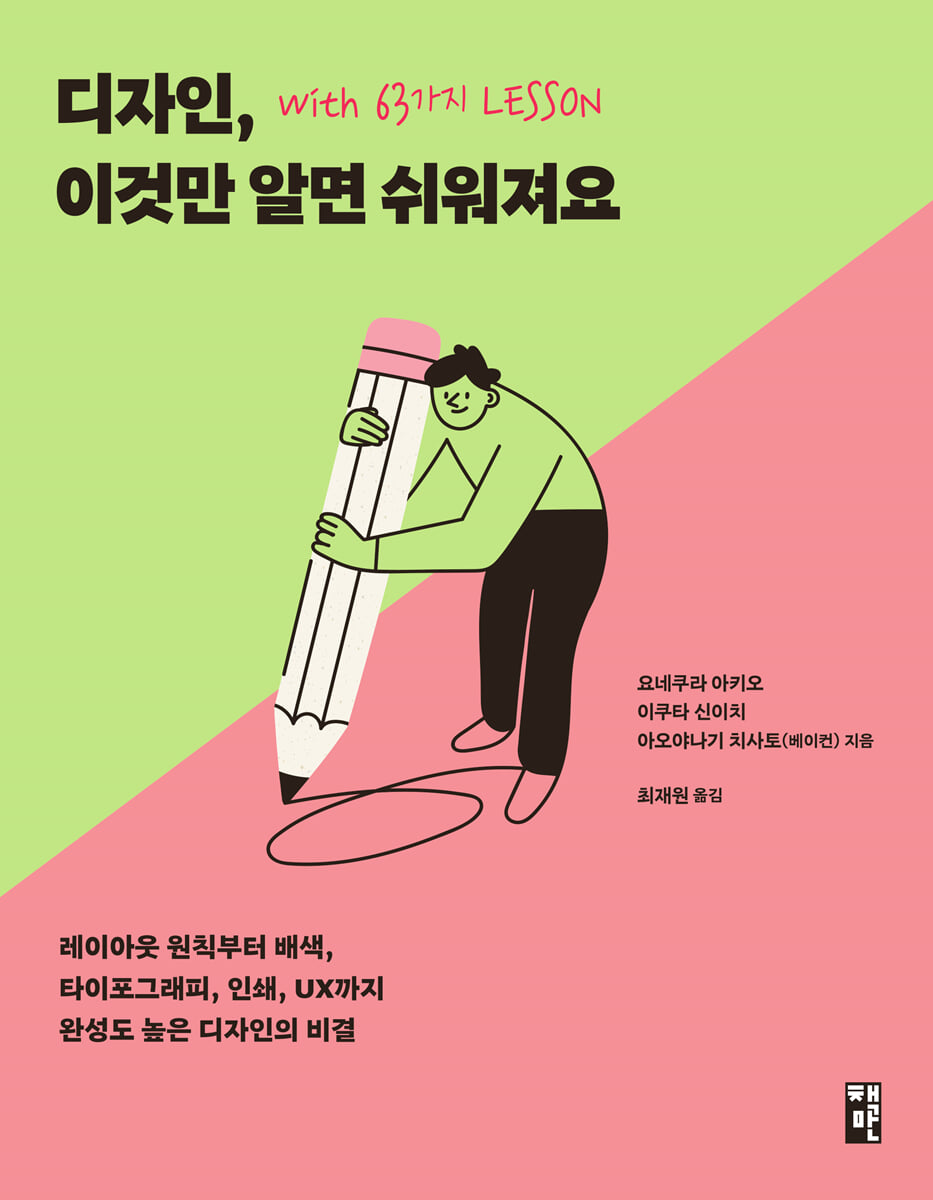
Design: Knowing This Makes It Easy with 63 Lessons
 |
Description
Book Introduction
A design book has been published for people who feel like they lack a sense of design or are concerned that their designs are disorganized.
Design is no longer difficult if you just learn what this book teaches!
This book provides a solid foundation in design for anyone who wants to create designs that captivate customers or users, or create presentations, presentation materials, and reports that convey information at a glance.
This is a design textbook that allows even those without a sense of design to acquire practical design skills by following the book's contents and disassembling and assembling design elements like a puzzle.
It is full of basic design knowledge and practical techniques that everyone who needs to convey information through 'design', including beginners and working designers, as well as planners, marketers, presenters, and office workers, should know. It is well organized with abundant design cases and production techniques, divided into 63 lessons, ranging from "basic principles of layout design to color schemes, typography, packaging, posters, printed materials, and infographics" that can be used in practice.
Always keep in mind that "design is not just pretty decoration, but a communication tool for accurately conveying information." Let's learn the basic principles, continuously apply them, and practice them to make them our own!
Design is no longer difficult if you just learn what this book teaches!
This book provides a solid foundation in design for anyone who wants to create designs that captivate customers or users, or create presentations, presentation materials, and reports that convey information at a glance.
This is a design textbook that allows even those without a sense of design to acquire practical design skills by following the book's contents and disassembling and assembling design elements like a puzzle.
It is full of basic design knowledge and practical techniques that everyone who needs to convey information through 'design', including beginners and working designers, as well as planners, marketers, presenters, and office workers, should know. It is well organized with abundant design cases and production techniques, divided into 63 lessons, ranging from "basic principles of layout design to color schemes, typography, packaging, posters, printed materials, and infographics" that can be used in practice.
Always keep in mind that "design is not just pretty decoration, but a communication tool for accurately conveying information." Let's learn the basic principles, continuously apply them, and practice them to make them our own!
- You can preview some of the book's contents.
Preview
index
Chapter 01 Design changes just by changing the layout.
LESSON 01 Good Layout vs. Bad Layout
[COLUMN] Logo design that encapsulates the basic principles of layout.
LESSON 02 Create a layout that clearly conveys information.
[COLUMN] Why Layouts Are Broken
LESSON 03 What to convey to whom
LESSON 04: Changing the layout changes the way you deliver your message.
[COLUMN] Great designers are good data collectors.
Chapter 02 Basic Principles of Graphic Design
LESSON 01 Principles of Sorting
LESSON 02 The Principle of Proximity
LESSON 03 The Principle of Repetition
LESSON 04 The Principle of Preparation
[COLUMN] Let's adjust the letter spacing.
LESSON 05 The Principle of Priority
LESSON 06: The Principle of Eye Guiding
LESSON 07 The Principle of Margins
LESSON 08 The Principle of Division
[COLUMN] How to Split Web and Mobile Design
LESSON 09: The Golden Ratio vs. the Silver Ratio
LESSON 10: Principles of Grid Systems
LESSON 11 How to Use the Grid System
LESSON 12: Rough Sketch Example Using a Two-Column Grid
LESSON 13: Rough Sketch Example Using a Three-Column Grid
LESSON 14: Rough Sketch Example Using a Four-Column Grid
LESSON 15: The Principles of Symmetry and Asymmetry
LESSON 16: Principles of the Central Axis Technique
[COLUMN] Sometimes it's better to keep the original form.
LESSON 17: Principles of Radial and Circular Layouts
LESSON 18: The Principle of Random Placement
LESSON 19: Design Principles Using Modules
[COLUMN] Let's check the established rules.
LESSON 20: Principles of Format, Layout, and Margins in Printed Materials
LESSON 21: Principles of Publication Structure
[COLUMN] Let me make it just like the original.
LESSON 22 Principles of Universal Design
[COLUMN] Universal Design Fonts
[COLUMN] Recommended Sites for Gathering Design Information
Chapter 03 Various design cases from professional designers
LESSON 01 Triangular Composition
LESSON 02 Using Motifs
[COLUMN] Why Design Results Have a Similar Atmosphere
LESSON 03 Repetitive arrangement using color or design elements
LESSON 04: Easily Communicate Content with Pictograms
LESSON 05 Using various colors including basic colors
LESSON 06 Infographics that convey information at a glance
LESSON 07: Communicating Content in an Easy-to-Understand Way Using Graphs and Charts
LESSON 08: Classifying and Organizing Information Using Dividers
LESSON 09 A soft and friendly atmosphere using curves
LESSON 10: Using Speech Bubbles to Provide Additional Information
LESSON 11: Guided Eyes Using Numbers
LESSON 12: Expressing Depth Using Three-Dimensional Objects
LESSON 13: Classifying Information Using Background Color
LESSON 14: Using Patterns
LESSON 15 Combination of various texts such as English, Korean, and Chinese characters
[COLUMN] Layout is just one of the important elements of design.
LESSON 16 Creating Direction and Guiding Natural Eyes
LESSON 17 Creating rhythm and expressing a lively feeling
LESSON 18: Beauty Created with Geometric Patterns
LESSON 19 Emphasizing Your Message Using Text Contrast
LESSON 20: Color Contrast
LESSON 21 Adding Accents
[COLUMN] UX Design: Seeing Isn't Everything
LESSON 22: Using Unique Typography
LESSON 23: A Colorful Combination of Photos and Promotional Text
LESSON 24: Using Different Photo Arrangements
LESSON 25: Using the background to isolate only the subject
[COLUMN] If you need to intentionally crop and place an image
LESSON 26: Utilizing Wide Margins
LESSON 27: The Beauty of Order in Free Random Arrangement
[COLUMN] Let's Learn the History of Design
Chapter 04 Design Production Practice Project
LESSON 01 Let's make a promotional poster
LESSON 02 Set a goal
LESSON 03 Let's decide on a concept
[COLUMN] Things to keep in mind when organizing the 5W1H
LESSON 04 Organize the necessary design elements
LESSON 05: Establishing a Layout Style
LESSON 06 Decide on a font pattern
LESSON 07 Let's decide on a coloring pattern.
LESSON 08 Adding Detailed Decorative Elements
LESSON 09 Final Finishing Steps
LESSON 10: Completing the Results
[COLUMN] The Dangers of Broadening Your Target Audience Too Much
LESSON 01 Good Layout vs. Bad Layout
[COLUMN] Logo design that encapsulates the basic principles of layout.
LESSON 02 Create a layout that clearly conveys information.
[COLUMN] Why Layouts Are Broken
LESSON 03 What to convey to whom
LESSON 04: Changing the layout changes the way you deliver your message.
[COLUMN] Great designers are good data collectors.
Chapter 02 Basic Principles of Graphic Design
LESSON 01 Principles of Sorting
LESSON 02 The Principle of Proximity
LESSON 03 The Principle of Repetition
LESSON 04 The Principle of Preparation
[COLUMN] Let's adjust the letter spacing.
LESSON 05 The Principle of Priority
LESSON 06: The Principle of Eye Guiding
LESSON 07 The Principle of Margins
LESSON 08 The Principle of Division
[COLUMN] How to Split Web and Mobile Design
LESSON 09: The Golden Ratio vs. the Silver Ratio
LESSON 10: Principles of Grid Systems
LESSON 11 How to Use the Grid System
LESSON 12: Rough Sketch Example Using a Two-Column Grid
LESSON 13: Rough Sketch Example Using a Three-Column Grid
LESSON 14: Rough Sketch Example Using a Four-Column Grid
LESSON 15: The Principles of Symmetry and Asymmetry
LESSON 16: Principles of the Central Axis Technique
[COLUMN] Sometimes it's better to keep the original form.
LESSON 17: Principles of Radial and Circular Layouts
LESSON 18: The Principle of Random Placement
LESSON 19: Design Principles Using Modules
[COLUMN] Let's check the established rules.
LESSON 20: Principles of Format, Layout, and Margins in Printed Materials
LESSON 21: Principles of Publication Structure
[COLUMN] Let me make it just like the original.
LESSON 22 Principles of Universal Design
[COLUMN] Universal Design Fonts
[COLUMN] Recommended Sites for Gathering Design Information
Chapter 03 Various design cases from professional designers
LESSON 01 Triangular Composition
LESSON 02 Using Motifs
[COLUMN] Why Design Results Have a Similar Atmosphere
LESSON 03 Repetitive arrangement using color or design elements
LESSON 04: Easily Communicate Content with Pictograms
LESSON 05 Using various colors including basic colors
LESSON 06 Infographics that convey information at a glance
LESSON 07: Communicating Content in an Easy-to-Understand Way Using Graphs and Charts
LESSON 08: Classifying and Organizing Information Using Dividers
LESSON 09 A soft and friendly atmosphere using curves
LESSON 10: Using Speech Bubbles to Provide Additional Information
LESSON 11: Guided Eyes Using Numbers
LESSON 12: Expressing Depth Using Three-Dimensional Objects
LESSON 13: Classifying Information Using Background Color
LESSON 14: Using Patterns
LESSON 15 Combination of various texts such as English, Korean, and Chinese characters
[COLUMN] Layout is just one of the important elements of design.
LESSON 16 Creating Direction and Guiding Natural Eyes
LESSON 17 Creating rhythm and expressing a lively feeling
LESSON 18: Beauty Created with Geometric Patterns
LESSON 19 Emphasizing Your Message Using Text Contrast
LESSON 20: Color Contrast
LESSON 21 Adding Accents
[COLUMN] UX Design: Seeing Isn't Everything
LESSON 22: Using Unique Typography
LESSON 23: A Colorful Combination of Photos and Promotional Text
LESSON 24: Using Different Photo Arrangements
LESSON 25: Using the background to isolate only the subject
[COLUMN] If you need to intentionally crop and place an image
LESSON 26: Utilizing Wide Margins
LESSON 27: The Beauty of Order in Free Random Arrangement
[COLUMN] Let's Learn the History of Design
Chapter 04 Design Production Practice Project
LESSON 01 Let's make a promotional poster
LESSON 02 Set a goal
LESSON 03 Let's decide on a concept
[COLUMN] Things to keep in mind when organizing the 5W1H
LESSON 04 Organize the necessary design elements
LESSON 05: Establishing a Layout Style
LESSON 06 Decide on a font pattern
LESSON 07 Let's decide on a coloring pattern.
LESSON 08 Adding Detailed Decorative Elements
LESSON 09 Final Finishing Steps
LESSON 10: Completing the Results
[COLUMN] The Dangers of Broadening Your Target Audience Too Much
Detailed image

Publisher's Review
What this book covers
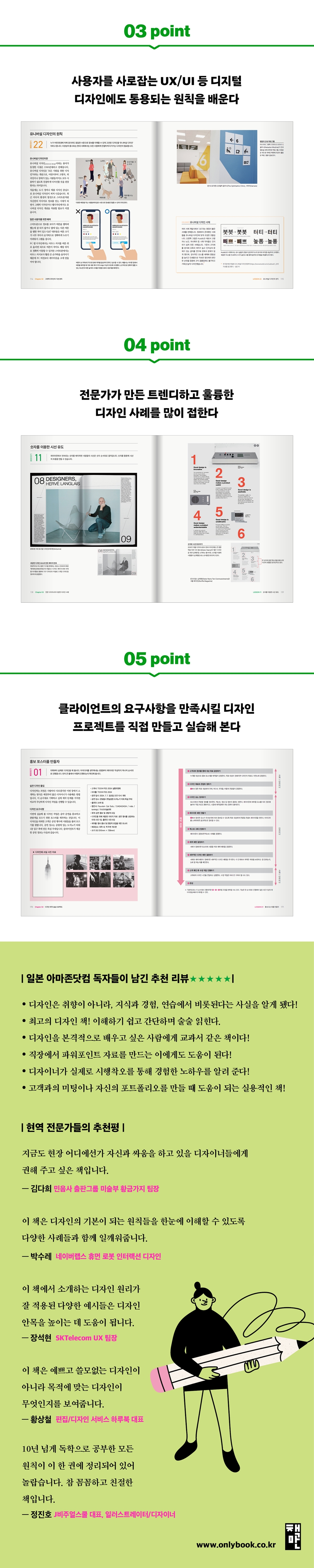
- Learn the basic principles of design and layout
- Learn practical skills by disassembling and reassembling design elements like a puzzle.
- Discover trendy design examples created by experts and make them your own.
- Understand the difference between 'good design' and 'bad design' and improve it.
- Create and practice design projects with your own hands.
Target audience for this book
- A beginner designer who is just starting to learn design
- All working designers who want to revisit the basics
- Office workers who want to create presentations or reports that convey information at a glance.
Structure of this book
Chapter 1: "Design Changes Just by Changing the Layout"
Any design must have something it wants to convey to the viewer.
The content you want to convey is the goal of the design, and to achieve this goal, you need to think about who the target audience is and what concept to choose.
Chapter 1 explores how design concepts and message delivery change depending on differences and changes in layout.
Chapter 2: 'Basic Principles of Graphic Design'
In the field of graphic design, there are principles that designers have discovered through trial and error over a long period of time.
Every design that is pleasing to the eye and beautiful has its own reason.
Chapter 2 introduces basic layout principles and how to apply them in practice.
Even if you've only created rough layouts so far, you'll be able to create better designs once you learn the basic principles.
Chapter 3: 'Various Design Cases from Professional Designers'
Chapter 3 introduces high-level graphic design, web design, UI design, and media design, and also explains the layout and design techniques used in each work.
The more you encounter, see, and learn about great designs and beautiful layouts, the more your design sense will develop.
Chapter 4: Design Production Practice Project
In Chapter 4, we will apply the layout techniques we have learned so far to create an actual layout.
Learn the process of completing a design through hands-on practice, from concept setting to final layout creation.
Author's Note
In design, 'layout' means arrangement.
Creating a layout means organizing and considering where and what elements to place in the design space to effectively convey the designed content to people.
Layout is a very important step in the overall design process, and this book examines layout in two main topics.
First, learn the basic principles of layout.
You can create beautiful designs just by following basic principles.
We will look at this in more detail in Chapter 2.
The fundamental principles presented in this book are those discovered by previous generations through trial and error over a long period of history.
That's why these principles are timeless and universal, so you'll be able to apply them for years to come.
Second, let's look at the latest design trends.
Design also has trends from time to time.
It is very important to keep up with trends and determine which designs are relevant to today's times.
This book presents excellent design examples collected from around the world.
You can develop your design sense by being exposed to many well-made design examples.
Sense is not an innate talent, but is accumulated through experience.
As you develop your design sense, you will gain the ability to distinguish between good and bad design.
The 'basic principles' that pursue universality and the ever-changing 'trends' may seem to conflict with each other, but in fact, they are fundamentally closely connected.
By carefully examining the layout and design principles utilized in the various design best practices covered in this book, you will be able to understand how the fundamental principles and trends connect with each other.
After reading this book and gaining knowledge of the basic principles and trends, let's try designing and practicing on our own, referring to the contents of Chapter 4 and the various design cases included in this book.
Knowledge is important, but just 'knowing' doesn't make for good design.
Only after going through the process of thinking and practicing on your own can you create your own design.
If you constantly think about it, use your hands, and combine knowledge and skills, you will be able to create great designs.
I hope this book will help you learn design.
Translator's Note
When I first received a request from the publisher to review the original text before the decision was made to publish the translated version of this book, it didn't take long for me to offer a positive opinion.
That's because I felt a strong and fresh feeling from the moment I first opened the pages of the book.
I think it might help readers decide whether or not they should read this book if I give them some reasons why I think that way.
First of all, as the original title of this book was ‘Textbook of Layout Design,’ it devotes a considerable amount of space to ‘layout.’
Layout refers to the process of arranging each component of a design within a limited space in an aesthetically pleasing manner. Based on my experience studying design during my undergraduate and graduate studies, I believe that ‘layout’ is “the easiest and fastest way to visually present something in a plausible and attractive way.”
For example, assuming that the completion rate of an excellent design result is 100%, I believe that not only professional designers but also ordinary people can quickly complete a design result of 80-90% level by simply applying the layout concept well.
In that respect, I am very happy that a book that faithfully deals with 'layout' has been published.
Another unique feature of this book is the way it explains to readers “What is good design?”
The assessment of what constitutes good design can be a somewhat subjective area, and there are no absolute formulas or rules.
However, this book explains, step by step, the basic design principles that most people empirically recognize and agree on, and in the latter part, links these principles into a single, chained process, explaining the design work that can be done in practice through specific procedures.
Rather than theoretically enumerating 'abstract expressions or explanations' about design and beauty, this book provides 'explicit work instructions' on what to do and how to do it in practice in a concise and easy-to-understand manner, so those new to design will be able to acquire basic design concepts relatively easily and quickly.
Additionally, this book provides an opportunity for current designers to reflect on whether they are adhering to the design principles they know.
For this reason, this book, "Design, Easy with 63 Lessons," is useful not only for professional designers working in the field, but also for those performing general work at work, when preparing reports or presentations.
Furthermore, as the title of the translated book clearly indicates, the greatest strength of this book is that it goes beyond simply learning and applying layout design and allows you to learn the concepts and applications of design in general in a fun and easy way, with abundant examples.
The layout and design fundamentals presented in the book are not difficult at all; they are simply not well known to the general public.
In some ways, it's similar to Columbus's egg.
However, there is a significant difference in the design results when you know the basic principles of layout and design and when you don't.
Although I studied design, my current main job is data analysis. The reason I willingly took on the task of translating this book is because I believed it would be very useful even to people who are not directly involved in design, and I thought that translating and publishing it would be a worthwhile endeavor.
Despite the excellence of this book, the translation process was quite a tedious and difficult task.
The book presents various design results as examples. Many of the titles, subtitles, and promotional texts included in the various works contain metaphorical expressions, and direct translations would have resulted in cultural differences, so a lot of effort was put into conveying these contents in a way that was familiar to Korean readers.
I believe that we were able to overcome many difficulties during this process thanks to the many ideas and dedication of the Bookman staff, including CEO Kim Hee-jung.
I would like to take this opportunity to once again express my gratitude to the publisher of this book.
I hope that this book, which took a lot of time and effort to publish, will continue to be a valuable resource that can help and inspire many people for a long time to come.
- Learn the basic principles of design and layout
- Learn practical skills by disassembling and reassembling design elements like a puzzle.
- Discover trendy design examples created by experts and make them your own.
- Understand the difference between 'good design' and 'bad design' and improve it.
- Create and practice design projects with your own hands.
Target audience for this book
- A beginner designer who is just starting to learn design
- All working designers who want to revisit the basics
- Office workers who want to create presentations or reports that convey information at a glance.
Structure of this book
Chapter 1: "Design Changes Just by Changing the Layout"
Any design must have something it wants to convey to the viewer.
The content you want to convey is the goal of the design, and to achieve this goal, you need to think about who the target audience is and what concept to choose.
Chapter 1 explores how design concepts and message delivery change depending on differences and changes in layout.
Chapter 2: 'Basic Principles of Graphic Design'
In the field of graphic design, there are principles that designers have discovered through trial and error over a long period of time.
Every design that is pleasing to the eye and beautiful has its own reason.
Chapter 2 introduces basic layout principles and how to apply them in practice.
Even if you've only created rough layouts so far, you'll be able to create better designs once you learn the basic principles.
Chapter 3: 'Various Design Cases from Professional Designers'
Chapter 3 introduces high-level graphic design, web design, UI design, and media design, and also explains the layout and design techniques used in each work.
The more you encounter, see, and learn about great designs and beautiful layouts, the more your design sense will develop.
Chapter 4: Design Production Practice Project
In Chapter 4, we will apply the layout techniques we have learned so far to create an actual layout.
Learn the process of completing a design through hands-on practice, from concept setting to final layout creation.
Author's Note
In design, 'layout' means arrangement.
Creating a layout means organizing and considering where and what elements to place in the design space to effectively convey the designed content to people.
Layout is a very important step in the overall design process, and this book examines layout in two main topics.
First, learn the basic principles of layout.
You can create beautiful designs just by following basic principles.
We will look at this in more detail in Chapter 2.
The fundamental principles presented in this book are those discovered by previous generations through trial and error over a long period of history.
That's why these principles are timeless and universal, so you'll be able to apply them for years to come.
Second, let's look at the latest design trends.
Design also has trends from time to time.
It is very important to keep up with trends and determine which designs are relevant to today's times.
This book presents excellent design examples collected from around the world.
You can develop your design sense by being exposed to many well-made design examples.
Sense is not an innate talent, but is accumulated through experience.
As you develop your design sense, you will gain the ability to distinguish between good and bad design.
The 'basic principles' that pursue universality and the ever-changing 'trends' may seem to conflict with each other, but in fact, they are fundamentally closely connected.
By carefully examining the layout and design principles utilized in the various design best practices covered in this book, you will be able to understand how the fundamental principles and trends connect with each other.
After reading this book and gaining knowledge of the basic principles and trends, let's try designing and practicing on our own, referring to the contents of Chapter 4 and the various design cases included in this book.
Knowledge is important, but just 'knowing' doesn't make for good design.
Only after going through the process of thinking and practicing on your own can you create your own design.
If you constantly think about it, use your hands, and combine knowledge and skills, you will be able to create great designs.
I hope this book will help you learn design.
Translator's Note
When I first received a request from the publisher to review the original text before the decision was made to publish the translated version of this book, it didn't take long for me to offer a positive opinion.
That's because I felt a strong and fresh feeling from the moment I first opened the pages of the book.
I think it might help readers decide whether or not they should read this book if I give them some reasons why I think that way.
First of all, as the original title of this book was ‘Textbook of Layout Design,’ it devotes a considerable amount of space to ‘layout.’
Layout refers to the process of arranging each component of a design within a limited space in an aesthetically pleasing manner. Based on my experience studying design during my undergraduate and graduate studies, I believe that ‘layout’ is “the easiest and fastest way to visually present something in a plausible and attractive way.”
For example, assuming that the completion rate of an excellent design result is 100%, I believe that not only professional designers but also ordinary people can quickly complete a design result of 80-90% level by simply applying the layout concept well.
In that respect, I am very happy that a book that faithfully deals with 'layout' has been published.
Another unique feature of this book is the way it explains to readers “What is good design?”
The assessment of what constitutes good design can be a somewhat subjective area, and there are no absolute formulas or rules.
However, this book explains, step by step, the basic design principles that most people empirically recognize and agree on, and in the latter part, links these principles into a single, chained process, explaining the design work that can be done in practice through specific procedures.
Rather than theoretically enumerating 'abstract expressions or explanations' about design and beauty, this book provides 'explicit work instructions' on what to do and how to do it in practice in a concise and easy-to-understand manner, so those new to design will be able to acquire basic design concepts relatively easily and quickly.
Additionally, this book provides an opportunity for current designers to reflect on whether they are adhering to the design principles they know.
For this reason, this book, "Design, Easy with 63 Lessons," is useful not only for professional designers working in the field, but also for those performing general work at work, when preparing reports or presentations.
Furthermore, as the title of the translated book clearly indicates, the greatest strength of this book is that it goes beyond simply learning and applying layout design and allows you to learn the concepts and applications of design in general in a fun and easy way, with abundant examples.
The layout and design fundamentals presented in the book are not difficult at all; they are simply not well known to the general public.
In some ways, it's similar to Columbus's egg.
However, there is a significant difference in the design results when you know the basic principles of layout and design and when you don't.
Although I studied design, my current main job is data analysis. The reason I willingly took on the task of translating this book is because I believed it would be very useful even to people who are not directly involved in design, and I thought that translating and publishing it would be a worthwhile endeavor.
Despite the excellence of this book, the translation process was quite a tedious and difficult task.
The book presents various design results as examples. Many of the titles, subtitles, and promotional texts included in the various works contain metaphorical expressions, and direct translations would have resulted in cultural differences, so a lot of effort was put into conveying these contents in a way that was familiar to Korean readers.
I believe that we were able to overcome many difficulties during this process thanks to the many ideas and dedication of the Bookman staff, including CEO Kim Hee-jung.
I would like to take this opportunity to once again express my gratitude to the publisher of this book.
I hope that this book, which took a lot of time and effort to publish, will continue to be a valuable resource that can help and inspire many people for a long time to come.
GOODS SPECIFICS
- Date of issue: February 29, 2024
- Page count, weight, size: 208 pages | 722g | 185*235*16mm
- ISBN13: 9791189909604
- ISBN10: 118990960X
You may also like
카테고리
korean


korean

![GQ KOREA Mark (Monthly): December [2025]](http://librairie.coreenne.fr/cdn/shop/files/8ef265dbbfbf186523ed75ba7319009d.jpg?v=1765340328&width=3840)


