

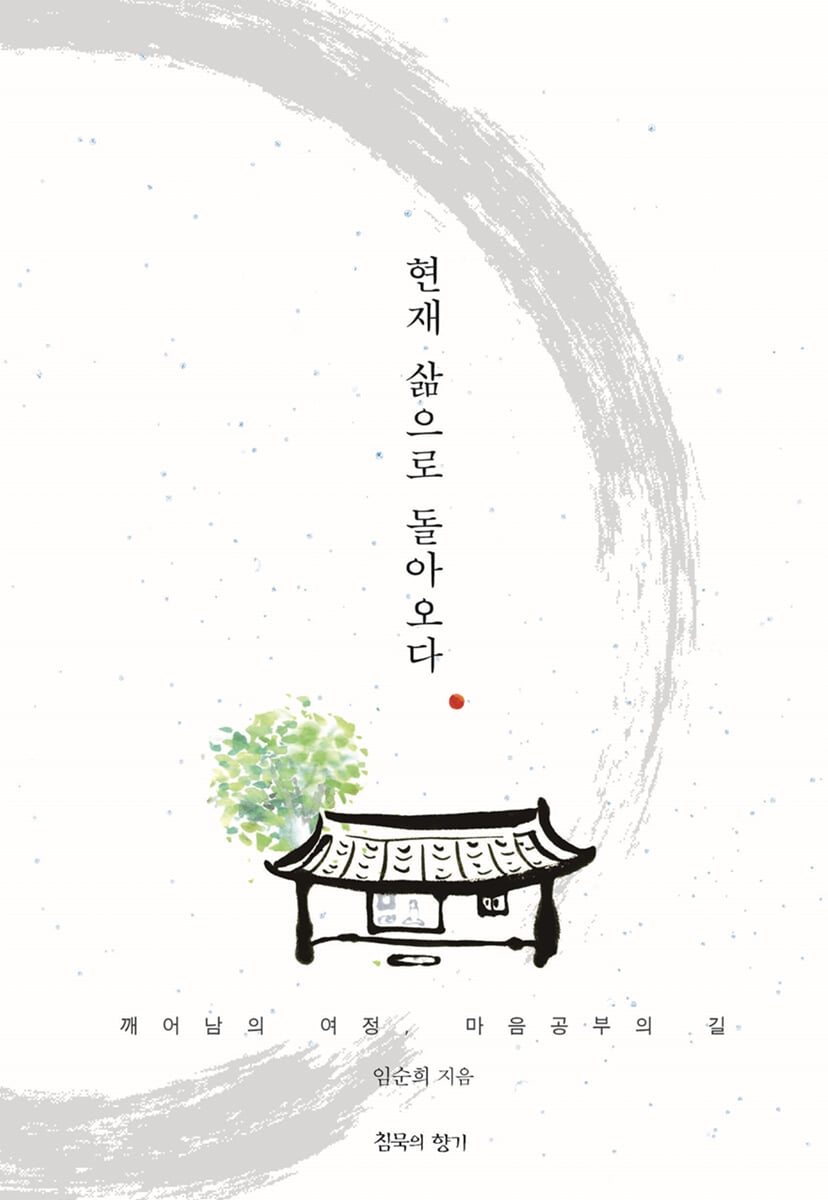
Return to present life
 |
Description
Book Introduction
A practical travel guide to awakening,
A detailed guide to the entire process from initiation to complete awakening.
A travel guide to mind study to help seekers on the path of mind study reach their destination smoothly without getting lost on the wrong path.
Based on the author's own experience, this book guides you through the entire process of this study, from the beginning to complete awakening.
It details the various experiences you will encounter along the way and also teaches you how to overcome the challenges that arise along the way.
Based on the "Ten Ox-Do", which depicts the journey of awakening in ten pictures, the book weaves together the author's study experience, the insights of Zen masters, and the words of scriptures. The author's insights, which have always awakened to the consistent and unchanging nature, are densely embedded like jewels throughout the book.
This is the author's fourth book, following "Auntie and Zen" and "I Have a Path."
A detailed guide to the entire process from initiation to complete awakening.
A travel guide to mind study to help seekers on the path of mind study reach their destination smoothly without getting lost on the wrong path.
Based on the author's own experience, this book guides you through the entire process of this study, from the beginning to complete awakening.
It details the various experiences you will encounter along the way and also teaches you how to overcome the challenges that arise along the way.
Based on the "Ten Ox-Do", which depicts the journey of awakening in ten pictures, the book weaves together the author's study experience, the insights of Zen masters, and the words of scriptures. The author's insights, which have always awakened to the consistent and unchanging nature, are densely embedded like jewels throughout the book.
This is the author's fourth book, following "Auntie and Zen" and "I Have a Path."
- You can preview some of the book's contents.
Preview
index
preface
About the Ten Ox-Dolls
1.
Why should we study the mind?
2.
Past, present, and future unfold here and now.
3.
Ah! This is everything in the world!
4.
I reached the top and got trapped in the clouds.
5.
Enter the place you cannot escape!
6.
A consciousness that unfolds endlessly
7.
There was nothing wrong originally
8.
Return to present life
About the Ten Ox-Dolls
1.
Why should we study the mind?
2.
Past, present, and future unfold here and now.
3.
Ah! This is everything in the world!
4.
I reached the top and got trapped in the clouds.
5.
Enter the place you cannot escape!
6.
A consciousness that unfolds endlessly
7.
There was nothing wrong originally
8.
Return to present life
Into the book
As you read this book, you will also learn that enlightenment is neither mysterious nor far away.
It is the truth for all of us who live ordinary lives, and we can see that anyone can wake up without much difficulty if they have the will.
Anyone can become enlightened in their true nature if they set their mind to studying the mind, meet a discerning teacher, listen to the teachings of the Dharma, and advance with a sincere heart.
--- p.7
Experience is only the beginning of learning, so whether you have had a strong experience or a weak one, you have not actually awakened from discrimination.
Temporarily, the power of discernment is weakened and the true nature is revealed, but when the afterglow of the experience fades, the world is seen again as a place of duality.
Just as the weeds of discernment have only temporarily lost their strength and withered, but have not been completely uprooted, so the bright vision has not yet opened.
If the experience is intense, you may become fixated on the experiential phenomenon.
It can be tempting to consciously maintain this experiential phenomenon.
At this time, if it is not properly inspected by a discerning person, the boundary of the experience may be mistaken for an experience.
--- p.76
True nature is not a state.
Any state that you have never experienced before will eventually disappear.
No matter how intense the experience, it does not last long.
Then, you panic and seek a similar experience again, thinking you have lost it.
What we must see through the experience of revealing our true nature is not a change in some boundary that was not there before.
When everything is revealed as one, it is the 'unknown nature' that reveals everything as one.
This is the nature that remains unchanged before, during, and after the practice of mind study.
Only this unknown awakening that reveals everything in this world is true.
--- p.76
Discernment accumulated over many years does not easily disappear.
If you are having a good time and then encounter a negative relationship, your heart will be greatly shaken.
It was so quiet that I thought it was enough, but then suddenly it became noisy as if it had fallen into the abyss.
One student who had been experiencing the nature for five months said that he felt like he was more noisy because his sense of judgment was rising and he was getting angrier.
He said that he sometimes wondered if what he had experienced was right.
Another robber said that when a big crisis comes, the peace suddenly disappears and he doesn't know what to do.
He said that when he thinks about his child's future, he suddenly feels worried and anxious.
Your body's energy field may seem to change and your sleep may become shorter.
Even though we know in our heads that there are no separate boundaries between objects, their presence still remains.
Although its power has been reduced, it is still swayed when it encounters an obsessed target boundary.
--- p.93
The inevitable return to a place of no work, like pulling the reins of an ox, is to become accustomed to this place, to gain strength, and to awaken from the rough and persistent delusion of discrimination.
Although this expedient is unavoidable at this time, returning to this place all the time is not the ultimate goal of study.
If you are still going back and forth after a long time, your studies are not deepening.
By relying on the expedients of whip and reins to weaken the mind of discernment, we become free when we realize that each and every boundary is this mind.
Pulling the reins at this time is a process to move forward with truth, not with the mind and boundaries.
--- p.104
It is very difficult to overcome this hurdle in studies after the experience.
During this period, it is important to open your sense of study to surrendering yourself to fate rather than letting your ego become the master of your studies.
The ego, which is the source of all suffering, must lose its power by becoming powerless.
This is a different way of life than the way we have lived so far: pushing, judging, facing, avoiding, rationalizing, choosing, or discarding.
Resting the mind from manipulating, not reflecting on one's own judgment, and submitting to fate diminishes the ego, leaving the ego with nothing to do and exposing its illusions.
--- p.123
The boundary that we want to avoid and abandon is the very place where pain cannot reach.
Originally, I am one with all fear and all fear-feeling.
Fear and I are emotions and self-consciousness that arise from this mind.
But we mistakenly believe that we are facing that experience, and so we separate ourselves from that experience.
In that separation, we try to solve the problem again.
It is in that very fear, in this place where fear and I are not separate, that all fears cannot reach, and it is a place where I cannot feel fear.
Overcoming the obstacle of fear is entering into fear and becoming one with it.
If I separate myself from fear, fear will exert its power like a demon king, but if I enter into fear, even the demon king will be powerless.
Because there is no fear there, no one to feel fear, and no devil.
--- pp.129~130
The reality that was revealed was study and Buddha.
The foundation of all existence fell away and disappeared into the void.
I thought my body and mind were me, but that was just karma accumulated over the course of my life.
There was only the unknowable wholeness, where there was no me and no world.
The unknown was revealing everything, including the body, mind, and even everything in this world.
The country's wholeness spread out endlessly beyond body and mind.
The whole universe came into view.
Everything that was supposed to be there was there.
The table was not in the sky, nor were the clouds on the ground.
Everything was in its place without exception, just empty.
The phenomenon of the void was real.
--- p.182
The reality I had been trying to avoid was actually the world of truth.
There was nowhere to go and nowhere to leave this truth.
When my mind disappeared, reality became clear.
(......) I entered the path of mind study to escape from reality, but the place I arrived at was the reality right in front of my eyes, which I had never left for even a moment.
Life was the way.
It was a study of every single thing.
I was experiencing a life of discrimination in a place where everything was equal.
Originally, it was freedom and peace without any conditions.
It was natural to live a life free from the weight of life and free from the burdens and bonds of all kinds of experiences.
It's not something you get through effort, it's just how it was.
There was no one who was tied down, and there was originally no one who could tie me down.
It is the truth for all of us who live ordinary lives, and we can see that anyone can wake up without much difficulty if they have the will.
Anyone can become enlightened in their true nature if they set their mind to studying the mind, meet a discerning teacher, listen to the teachings of the Dharma, and advance with a sincere heart.
--- p.7
Experience is only the beginning of learning, so whether you have had a strong experience or a weak one, you have not actually awakened from discrimination.
Temporarily, the power of discernment is weakened and the true nature is revealed, but when the afterglow of the experience fades, the world is seen again as a place of duality.
Just as the weeds of discernment have only temporarily lost their strength and withered, but have not been completely uprooted, so the bright vision has not yet opened.
If the experience is intense, you may become fixated on the experiential phenomenon.
It can be tempting to consciously maintain this experiential phenomenon.
At this time, if it is not properly inspected by a discerning person, the boundary of the experience may be mistaken for an experience.
--- p.76
True nature is not a state.
Any state that you have never experienced before will eventually disappear.
No matter how intense the experience, it does not last long.
Then, you panic and seek a similar experience again, thinking you have lost it.
What we must see through the experience of revealing our true nature is not a change in some boundary that was not there before.
When everything is revealed as one, it is the 'unknown nature' that reveals everything as one.
This is the nature that remains unchanged before, during, and after the practice of mind study.
Only this unknown awakening that reveals everything in this world is true.
--- p.76
Discernment accumulated over many years does not easily disappear.
If you are having a good time and then encounter a negative relationship, your heart will be greatly shaken.
It was so quiet that I thought it was enough, but then suddenly it became noisy as if it had fallen into the abyss.
One student who had been experiencing the nature for five months said that he felt like he was more noisy because his sense of judgment was rising and he was getting angrier.
He said that he sometimes wondered if what he had experienced was right.
Another robber said that when a big crisis comes, the peace suddenly disappears and he doesn't know what to do.
He said that when he thinks about his child's future, he suddenly feels worried and anxious.
Your body's energy field may seem to change and your sleep may become shorter.
Even though we know in our heads that there are no separate boundaries between objects, their presence still remains.
Although its power has been reduced, it is still swayed when it encounters an obsessed target boundary.
--- p.93
The inevitable return to a place of no work, like pulling the reins of an ox, is to become accustomed to this place, to gain strength, and to awaken from the rough and persistent delusion of discrimination.
Although this expedient is unavoidable at this time, returning to this place all the time is not the ultimate goal of study.
If you are still going back and forth after a long time, your studies are not deepening.
By relying on the expedients of whip and reins to weaken the mind of discernment, we become free when we realize that each and every boundary is this mind.
Pulling the reins at this time is a process to move forward with truth, not with the mind and boundaries.
--- p.104
It is very difficult to overcome this hurdle in studies after the experience.
During this period, it is important to open your sense of study to surrendering yourself to fate rather than letting your ego become the master of your studies.
The ego, which is the source of all suffering, must lose its power by becoming powerless.
This is a different way of life than the way we have lived so far: pushing, judging, facing, avoiding, rationalizing, choosing, or discarding.
Resting the mind from manipulating, not reflecting on one's own judgment, and submitting to fate diminishes the ego, leaving the ego with nothing to do and exposing its illusions.
--- p.123
The boundary that we want to avoid and abandon is the very place where pain cannot reach.
Originally, I am one with all fear and all fear-feeling.
Fear and I are emotions and self-consciousness that arise from this mind.
But we mistakenly believe that we are facing that experience, and so we separate ourselves from that experience.
In that separation, we try to solve the problem again.
It is in that very fear, in this place where fear and I are not separate, that all fears cannot reach, and it is a place where I cannot feel fear.
Overcoming the obstacle of fear is entering into fear and becoming one with it.
If I separate myself from fear, fear will exert its power like a demon king, but if I enter into fear, even the demon king will be powerless.
Because there is no fear there, no one to feel fear, and no devil.
--- pp.129~130
The reality that was revealed was study and Buddha.
The foundation of all existence fell away and disappeared into the void.
I thought my body and mind were me, but that was just karma accumulated over the course of my life.
There was only the unknowable wholeness, where there was no me and no world.
The unknown was revealing everything, including the body, mind, and even everything in this world.
The country's wholeness spread out endlessly beyond body and mind.
The whole universe came into view.
Everything that was supposed to be there was there.
The table was not in the sky, nor were the clouds on the ground.
Everything was in its place without exception, just empty.
The phenomenon of the void was real.
--- p.182
The reality I had been trying to avoid was actually the world of truth.
There was nowhere to go and nowhere to leave this truth.
When my mind disappeared, reality became clear.
(......) I entered the path of mind study to escape from reality, but the place I arrived at was the reality right in front of my eyes, which I had never left for even a moment.
Life was the way.
It was a study of every single thing.
I was experiencing a life of discrimination in a place where everything was equal.
Originally, it was freedom and peace without any conditions.
It was natural to live a life free from the weight of life and free from the burdens and bonds of all kinds of experiences.
It's not something you get through effort, it's just how it was.
There was no one who was tied down, and there was originally no one who could tie me down.
--- p.212
Publisher's Review
Lim Soon-hee, who studied Zen while living as an ordinary housewife and opened her eyes to the consistent truth, has published a new book titled “Returning to Present Life” by Silent Fragrance Publishing.
This is the author's fourth book, following "Auntie and Zen" and "I Have a Path."
It guides you step by step on the path of mind training to wake up from the dream of discriminatory delusion, the cause of all suffering, and return to the world of truth, which is one and equal.
Based on the 'Ten Ox-Do', which shows the journey of awakening, the book weaves together the author's study experience, the insights of sages, and the words of scriptures, and the author's deep insights are densely embedded throughout like jewels.
A practical travel guide to awakening,
A detailed guide to the entire process from initiation to complete awakening.
Countless spiritual books have been published, each offering excellent teachings. However, it is difficult to find a book that provides a detailed, modern explanation and guidance on the actual process a seeker must go through to fully awaken to the true truth.
This is why this book has rare value.
The author, drawing on his own personal experience, guides us through the entire process from initiation to complete awakening.
This book, Return to the Present Life, is like a good travel guide.
Just as a guidebook is a great help when traveling to a foreign country where everything is unfamiliar, a guidebook from someone who has been there before can be very helpful to seekers entering an unfamiliar world.
Without such guidance, you could end up wandering around for a long time in a strange place far from your destination.
For example, one of the common mistakes seekers make is the misunderstanding of 'experience'.
As you practice mindfulness, you may have miraculous experiences, but you may mistake these fleeting, temporary experiences for experiences of your true nature or enlightenment.
Then, it is easy to waste time obsessing over that experience without being able to move forward.
To avoid falling into this error, we must know the criteria for distinguishing between a temporary experience and a true experience of our nature.
“As you study, various changes occur.
Most of the time, these are new and novel experiences that we experience for the first time, so we may treasure them and become obsessed with them, mistakenly thinking that they are learning.
What did not exist before has been created, and what is created is impermanent and will eventually disappear.
The original mind is always unchanging, and is the same before, after, and during the process of studying the mind.
(......) If you have experienced it, the important thing is, 'Is it still like that? Is it always like that?'
“The key to examining one’s own studies is whether it is something that remains the same now, whether it is something that is perceived in the same way, rather than whether it is a memory of the past or something that will happen in the future.” (pp. 42-43)
In short, the true nature or original mind we seek is always constant and unchanging, so we should examine whether our experiences are truly experiences of true nature by asking ourselves, "Is it still like this now? Is it always like this?"
This simple question is an important key to avoiding the pitfalls that can easily arise in the early stages of mind training.
The Ten Ox-Wood Path, the Ten Stages of a Journey to Mindfulness
Where am I and what do I need to learn?
This book unfolds its story based on the 'Ten Ox-Do', which depicts the inner changes that occur as one's mind becomes more deeply studied.
Among the Ten Ox-Dolls, there are two paintings: Bo-Myeong's 'Mok-Woo-Do' and Gwak-Am's 'Sim-Woo-Do', both made during the Song Dynasty in China. The author chose Gwak-Am's Ten Ox-Doll, which he believed was closer to reality because it depicted all stages of the painting within the original image.
The Ten Ox-Taking Path begins with the first step, Sim-u (finding a cow), and ends with the tenth step, Ip-jeon-su-su (entering the marketplace and offering a helping hand).
In other words, it begins with a thought and is completed by returning to the present life.
One of the great things about the Ten Ox Chart is that it gives you an idea of where you are on your journey.
For example, the experience of one's true nature that many seekers misunderstand as the end of their studies or enlightenment corresponds to the cowherd (seeing the ox) in the Ten Ox-Tailed Tao, which is only the third of the ten stages.
This stage is not the end of study, but the true beginning, and we are not yet free from the illusion of discrimination.
“The discernment accumulated over a long period of time does not easily disappear.
If you are having a good time and then encounter a negative relationship, your heart will be greatly shaken.
“It was so quiet that I thought it was enough, but then suddenly it became noisy as if I had fallen into an abyss.” (Page 93)
The author also experienced his true nature and became much more comfortable, but three or four years later, he encountered difficult adversity and went through a difficult time.
When I encountered such an unexpectedly large obstacle, I couldn't study hard, and although I knew that this discomfort was nothing special, I couldn't truly accept it or let it go, and my body even became ill.
For the author who was facing such a barrier, a certain saying of Master Daehye provided a breakthrough, and through this, he was able to break free from the duality of good and bad.
“When I came to the brink of death, the standard of discernment that distinguished between good and bad collapsed, and all other standards of discernment collapsed at once.
It was like an experience where, when one piece falls in a game of dominoes, all the pieces fall in succession.
“All the standards of discrimination that had been building up the duality of phenomena, such as good and bad, right and wrong, happy and unhappy, beautiful and ugly, woman and man, human and non-human, me and the world, good and evil, etc., were all destroyed at once.” (p. 131)
The final destination of the journey of mind study,
Return to present life
After experiencing the true nature, the author continued to study and progress, and it is said that after 10 years, his mind disappeared.
The final destination on the journey of mind study, as mentioned in the ten stages of the Ten Ox Path, was the reality before our eyes and our current life.
“When my mind disappeared, reality became clear.
(.....) I entered the path of mind study to escape from reality, but the place I arrived at was the reality right in front of my eyes, which I had never left for even a moment.
Life was the way.
It was a study of every single thing.
I was experiencing a life of discrimination in a place where everything was equal.
Originally, it was freedom and peace without any conditions.
It was natural to live a life free from the weight of life and free from the burdens and bonds of all kinds of experiences.
It's not something you get through effort, it's just how it was.
“There is no one who is bound, and there was originally no one who could bind me.” (p. 212)
This is precisely the destination that the author wants to guide students toward through this book.
If you are a student who finally gets here, you might say something like the author said.
“When I first started studying, I tried to obtain truth and liberation with a discerning mind.
But once you become aware of the truth, there is no truth to be gained, and there is no me to be gained.
“Nothing happened originally.” (p. 192)
This is the author's fourth book, following "Auntie and Zen" and "I Have a Path."
It guides you step by step on the path of mind training to wake up from the dream of discriminatory delusion, the cause of all suffering, and return to the world of truth, which is one and equal.
Based on the 'Ten Ox-Do', which shows the journey of awakening, the book weaves together the author's study experience, the insights of sages, and the words of scriptures, and the author's deep insights are densely embedded throughout like jewels.
A practical travel guide to awakening,
A detailed guide to the entire process from initiation to complete awakening.
Countless spiritual books have been published, each offering excellent teachings. However, it is difficult to find a book that provides a detailed, modern explanation and guidance on the actual process a seeker must go through to fully awaken to the true truth.
This is why this book has rare value.
The author, drawing on his own personal experience, guides us through the entire process from initiation to complete awakening.
This book, Return to the Present Life, is like a good travel guide.
Just as a guidebook is a great help when traveling to a foreign country where everything is unfamiliar, a guidebook from someone who has been there before can be very helpful to seekers entering an unfamiliar world.
Without such guidance, you could end up wandering around for a long time in a strange place far from your destination.
For example, one of the common mistakes seekers make is the misunderstanding of 'experience'.
As you practice mindfulness, you may have miraculous experiences, but you may mistake these fleeting, temporary experiences for experiences of your true nature or enlightenment.
Then, it is easy to waste time obsessing over that experience without being able to move forward.
To avoid falling into this error, we must know the criteria for distinguishing between a temporary experience and a true experience of our nature.
“As you study, various changes occur.
Most of the time, these are new and novel experiences that we experience for the first time, so we may treasure them and become obsessed with them, mistakenly thinking that they are learning.
What did not exist before has been created, and what is created is impermanent and will eventually disappear.
The original mind is always unchanging, and is the same before, after, and during the process of studying the mind.
(......) If you have experienced it, the important thing is, 'Is it still like that? Is it always like that?'
“The key to examining one’s own studies is whether it is something that remains the same now, whether it is something that is perceived in the same way, rather than whether it is a memory of the past or something that will happen in the future.” (pp. 42-43)
In short, the true nature or original mind we seek is always constant and unchanging, so we should examine whether our experiences are truly experiences of true nature by asking ourselves, "Is it still like this now? Is it always like this?"
This simple question is an important key to avoiding the pitfalls that can easily arise in the early stages of mind training.
The Ten Ox-Wood Path, the Ten Stages of a Journey to Mindfulness
Where am I and what do I need to learn?
This book unfolds its story based on the 'Ten Ox-Do', which depicts the inner changes that occur as one's mind becomes more deeply studied.
Among the Ten Ox-Dolls, there are two paintings: Bo-Myeong's 'Mok-Woo-Do' and Gwak-Am's 'Sim-Woo-Do', both made during the Song Dynasty in China. The author chose Gwak-Am's Ten Ox-Doll, which he believed was closer to reality because it depicted all stages of the painting within the original image.
The Ten Ox-Taking Path begins with the first step, Sim-u (finding a cow), and ends with the tenth step, Ip-jeon-su-su (entering the marketplace and offering a helping hand).
In other words, it begins with a thought and is completed by returning to the present life.
One of the great things about the Ten Ox Chart is that it gives you an idea of where you are on your journey.
For example, the experience of one's true nature that many seekers misunderstand as the end of their studies or enlightenment corresponds to the cowherd (seeing the ox) in the Ten Ox-Tailed Tao, which is only the third of the ten stages.
This stage is not the end of study, but the true beginning, and we are not yet free from the illusion of discrimination.
“The discernment accumulated over a long period of time does not easily disappear.
If you are having a good time and then encounter a negative relationship, your heart will be greatly shaken.
“It was so quiet that I thought it was enough, but then suddenly it became noisy as if I had fallen into an abyss.” (Page 93)
The author also experienced his true nature and became much more comfortable, but three or four years later, he encountered difficult adversity and went through a difficult time.
When I encountered such an unexpectedly large obstacle, I couldn't study hard, and although I knew that this discomfort was nothing special, I couldn't truly accept it or let it go, and my body even became ill.
For the author who was facing such a barrier, a certain saying of Master Daehye provided a breakthrough, and through this, he was able to break free from the duality of good and bad.
“When I came to the brink of death, the standard of discernment that distinguished between good and bad collapsed, and all other standards of discernment collapsed at once.
It was like an experience where, when one piece falls in a game of dominoes, all the pieces fall in succession.
“All the standards of discrimination that had been building up the duality of phenomena, such as good and bad, right and wrong, happy and unhappy, beautiful and ugly, woman and man, human and non-human, me and the world, good and evil, etc., were all destroyed at once.” (p. 131)
The final destination of the journey of mind study,
Return to present life
After experiencing the true nature, the author continued to study and progress, and it is said that after 10 years, his mind disappeared.
The final destination on the journey of mind study, as mentioned in the ten stages of the Ten Ox Path, was the reality before our eyes and our current life.
“When my mind disappeared, reality became clear.
(.....) I entered the path of mind study to escape from reality, but the place I arrived at was the reality right in front of my eyes, which I had never left for even a moment.
Life was the way.
It was a study of every single thing.
I was experiencing a life of discrimination in a place where everything was equal.
Originally, it was freedom and peace without any conditions.
It was natural to live a life free from the weight of life and free from the burdens and bonds of all kinds of experiences.
It's not something you get through effort, it's just how it was.
“There is no one who is bound, and there was originally no one who could bind me.” (p. 212)
This is precisely the destination that the author wants to guide students toward through this book.
If you are a student who finally gets here, you might say something like the author said.
“When I first started studying, I tried to obtain truth and liberation with a discerning mind.
But once you become aware of the truth, there is no truth to be gained, and there is no me to be gained.
“Nothing happened originally.” (p. 192)
GOODS SPECIFICS
- Publication date: October 5, 2022
- Page count, weight, size: 217 pages | 358g | 145*210*13mm
- ISBN13: 9788989590972
- ISBN10: 8989590973
You may also like
카테고리
korean


korean

![GQ KOREA Mark (Monthly): December [2025]](http://librairie.coreenne.fr/cdn/shop/files/8ef265dbbfbf186523ed75ba7319009d.jpg?v=1765340328&width=3840)


