

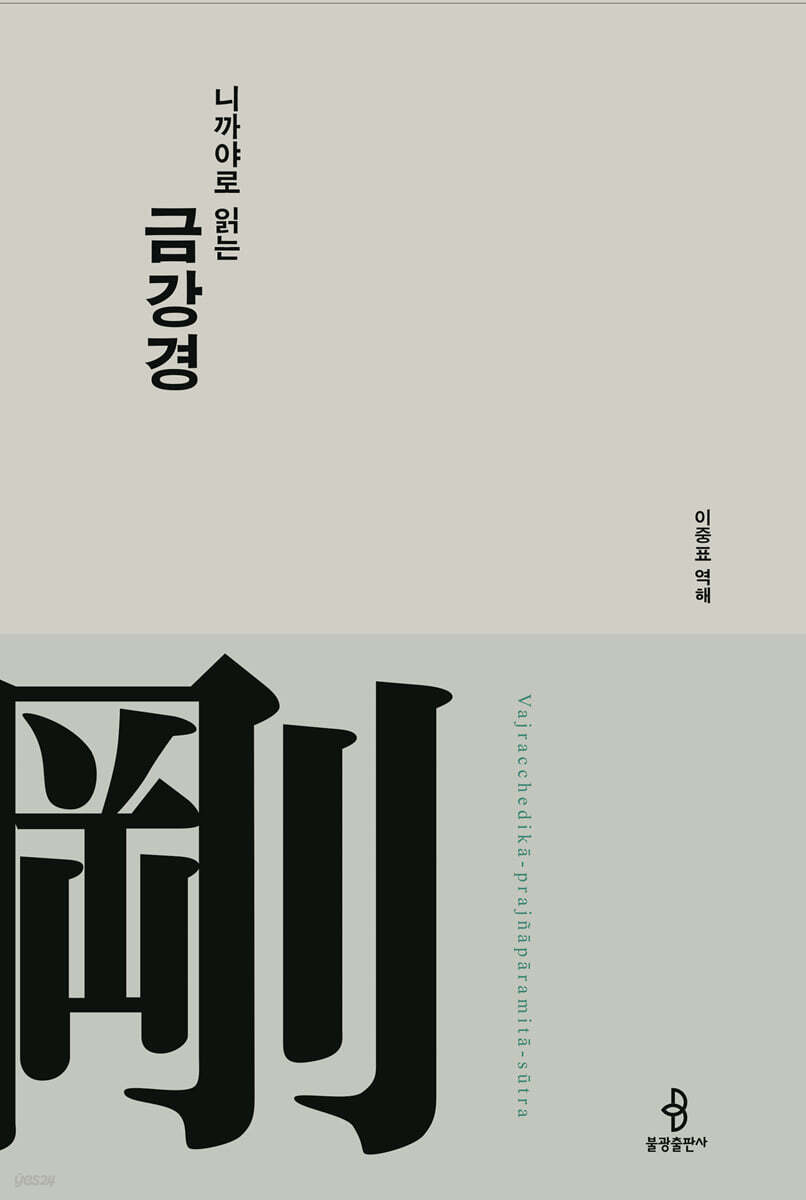
Reading the Diamond Sutra through Nikaya
 |
Description
Book Introduction
Based on the Nikaya, which contains the original voice of Buddha
Interpreting the Sanskrit Original Diamond Sutra
The Diamond Sutra is the most beloved and most recited Buddhist scripture among Korean Buddhists, but it is also considered a difficult scripture.
This is also the reason why various commentaries on the Diamond Sutra have been published in our country.
However, among the numerous commentaries, there are not many books that find the original text and provide an easy-to-understand explanation.
This book presents a method for correctly understanding the world of language and the path of Bodhisattva as described in the Diamond Sutra.
Professor Emeritus Lee Jung-pyo, a leading scholar in Korean Buddhism who has studied the intersection between early Buddhism and Mahayana Buddhism, penetrates the core of the Mahayana sutra, the Diamond Sutra, through the early sutra, the Nikaya.
The background of the birth of the Diamond Sutra and its connection with the Nikaya are explained based on meticulous interpretation of the original Sanskrit, Pali, and Chinese texts.
The contradictions of language, ideas, Bodhisattva, enlightenment, compassion, and wisdom can be understood as one flow.
This is the best book to correctly understand the Diamond Sutra without distortion or misunderstanding.
Interpreting the Sanskrit Original Diamond Sutra
The Diamond Sutra is the most beloved and most recited Buddhist scripture among Korean Buddhists, but it is also considered a difficult scripture.
This is also the reason why various commentaries on the Diamond Sutra have been published in our country.
However, among the numerous commentaries, there are not many books that find the original text and provide an easy-to-understand explanation.
This book presents a method for correctly understanding the world of language and the path of Bodhisattva as described in the Diamond Sutra.
Professor Emeritus Lee Jung-pyo, a leading scholar in Korean Buddhism who has studied the intersection between early Buddhism and Mahayana Buddhism, penetrates the core of the Mahayana sutra, the Diamond Sutra, through the early sutra, the Nikaya.
The background of the birth of the Diamond Sutra and its connection with the Nikaya are explained based on meticulous interpretation of the original Sanskrit, Pali, and Chinese texts.
The contradictions of language, ideas, Bodhisattva, enlightenment, compassion, and wisdom can be understood as one flow.
This is the best book to correctly understand the Diamond Sutra without distortion or misunderstanding.
- You can preview some of the book's contents.
Preview
index
· Preface
· Interpretation of the Diamond Sutra
Chapter 1: The Purpose of the Diamond Sutra
1.
The cause and effect of the Diamond Sutra
The first section on the causes of the Dharma Assembly
The Second Seonhyeon Gicheongbun (Request for the Arising of Good Man)
2.
Bodhisattva's vow
The Third Mahayana Correct Sect
3.
Sudden Enlightenment and Sudden Cultivation of the Sixth Patriarch, Huineng
Chapter 2 The Path of the Bodhisattva
1.
The path of the Bodhisattva without conflict
The Fourth Wonderful Practice of No-Dwelling
2.
All living beings are Tathagata.
The fifth section on the true view of reason
3.
Buddhism is like a raft
The 6th Division of the Rare and Exciting Truth
Chapter 3: There is a way to peace of mind.
1.
The Tathagata has only realized, but has not gained anything through realization.
The 7th Division of No Acquisition and No Speech
2.
All that is truly precious is free.
Article 8: Birth by Law
3.
Buddhism is a non-controversial dharma of great equality.
The 9th Division of Everyday Impermanence
Chapter 4: There is karma, but no author.
1.
There is karma, but no author.
The 10th Magnificent Pure Land
Chapter 11: The Victory of Blessings in Non-Action
Chapter 12: Respect and Correct Teaching
2.
The three realms are created by the minds of living beings.
Chapter 13: The Section on Receiving and Holding the Dharma
3.
The Middle Way puts an end to all struggles.
The 14th Ideal Nirvana
4.
If you spread the Diamond Sutra widely, all karmic obstacles will be eliminated.
Chapter 15: Merit and Virtue of Holding the Sutra
Chapter 16: Obstacles to Pure Karma
Chapter 5: A Happy Life of Insight into the Present Law in the Here and Now
1.
The Tathagata simply saw the truth that 'all are one life and equal'.
The 17th Absolute Selflessness
2.
There is only 'here and now'
Chapter 18: The One Body and the Same View
Chapter 19: Communication in the Dharma Realm
The 20th Distinctive Distinction
Chapter 21: Non-fictional Novel Section
Chapter 22: The Lawless and the Obtainable
Chapter 23: Purity of Mind and Good Conduct
Chapter 24: The Incomparable Part of Welfare and Wisdom
Chapter 25: The Division of Changeless Transformation
Chapter 26: Non-interpersonal division of the Dharmakaya
The 27th Division of Uninterrupted and Unextinctive
The 28th Division of Not Receiving and Not Greed
The 29th division of dignity and tranquility
3.
The world is not a collection of atoms.
The 30th Il-Hap-Ri-Sang-Bi (一合理相分)
4.
Abandoning all theories is the right view.
Chapter 31: The Non-Arising of Knowledge and View
Chapter 32: The Part of Non-Truth in Response to Transformation
· Interpretation of the Diamond Sutra
Chapter 1: The Purpose of the Diamond Sutra
1.
The cause and effect of the Diamond Sutra
The first section on the causes of the Dharma Assembly
The Second Seonhyeon Gicheongbun (Request for the Arising of Good Man)
2.
Bodhisattva's vow
The Third Mahayana Correct Sect
3.
Sudden Enlightenment and Sudden Cultivation of the Sixth Patriarch, Huineng
Chapter 2 The Path of the Bodhisattva
1.
The path of the Bodhisattva without conflict
The Fourth Wonderful Practice of No-Dwelling
2.
All living beings are Tathagata.
The fifth section on the true view of reason
3.
Buddhism is like a raft
The 6th Division of the Rare and Exciting Truth
Chapter 3: There is a way to peace of mind.
1.
The Tathagata has only realized, but has not gained anything through realization.
The 7th Division of No Acquisition and No Speech
2.
All that is truly precious is free.
Article 8: Birth by Law
3.
Buddhism is a non-controversial dharma of great equality.
The 9th Division of Everyday Impermanence
Chapter 4: There is karma, but no author.
1.
There is karma, but no author.
The 10th Magnificent Pure Land
Chapter 11: The Victory of Blessings in Non-Action
Chapter 12: Respect and Correct Teaching
2.
The three realms are created by the minds of living beings.
Chapter 13: The Section on Receiving and Holding the Dharma
3.
The Middle Way puts an end to all struggles.
The 14th Ideal Nirvana
4.
If you spread the Diamond Sutra widely, all karmic obstacles will be eliminated.
Chapter 15: Merit and Virtue of Holding the Sutra
Chapter 16: Obstacles to Pure Karma
Chapter 5: A Happy Life of Insight into the Present Law in the Here and Now
1.
The Tathagata simply saw the truth that 'all are one life and equal'.
The 17th Absolute Selflessness
2.
There is only 'here and now'
Chapter 18: The One Body and the Same View
Chapter 19: Communication in the Dharma Realm
The 20th Distinctive Distinction
Chapter 21: Non-fictional Novel Section
Chapter 22: The Lawless and the Obtainable
Chapter 23: Purity of Mind and Good Conduct
Chapter 24: The Incomparable Part of Welfare and Wisdom
Chapter 25: The Division of Changeless Transformation
Chapter 26: Non-interpersonal division of the Dharmakaya
The 27th Division of Uninterrupted and Unextinctive
The 28th Division of Not Receiving and Not Greed
The 29th division of dignity and tranquility
3.
The world is not a collection of atoms.
The 30th Il-Hap-Ri-Sang-Bi (一合理相分)
4.
Abandoning all theories is the right view.
Chapter 31: The Non-Arising of Knowledge and View
Chapter 32: The Part of Non-Truth in Response to Transformation
Into the book
The truth of Buddhism that Buddha realized and taught is the Four Noble Truths.
Therefore, the truth that we must realize through Buddhism is the Four Noble Truths.
But we are trying to realize a more subtle truth than this.
In this book, we first translated the original Sanskrit text of the Diamond Sutra to help people discard such illusions and seek true enlightenment, and then interpreted it by comparing it with the Nikaya, the fundamental Buddhist scripture.
And I want to show that if you interpret the Diamond Sutra through the Nikaya, its difficult meaning becomes clear.
--- p.5
Why is this sutra called "Vajracchedik?"? Most interpret it as the hardest "diamond" that can shatter anything, following Kumarajiva's translation of "Vajra" as "Vajra."
Some believe it refers to the 'Vajra' or 'thunderbolt' of Indra.
However, 'Vajra' does not mean 'diamond' or 'the diamond of Indra', but 'the diamond of Vajra warrior'.
--- pp.17~18
Among the Mahayana sutras, the Prajna section is the earliest established sutra, and the Diamond Sutra is an early Mahayana sutra belonging to the Prajna section.
The word “Mahaya” (Mahāyāna) does not appear in the Diamond Sutra.
This shows that the Diamond Sutra was established before Mahayana Buddhism criticized Abhidharma Buddhism as Hinayana (small vehicle) and called itself Mahayana.
Therefore, it can be seen that the Diamond Sutra is the sutra that was composed the earliest among the sutras of the Prajna School.
--- p.23
As the temples became wealthy, the monks' begging became a formality, and the monks who became wealthy stayed in the temples, creating theories about Buddhism and engaging in debates.
This is the so-called Abhidharma Buddhism.
As a result of these debates, Buddhism split into about 18 to 20 sects, so Buddhism of this period is called sectarian Buddhism.
The Mahayana Buddhist movement is thought to be a reflection on these sectarian Buddhisms.
We can infer these facts through the Diamond Sutra.
--- pp.36~37
In India, the Diamond Sutra was created to urge the Buddhist community to stop its divisive arguments and to unite and advance together on the path of Bodhisattva.
Therefore, the purpose of the Diamond Sutra was to suggest a path to ‘advancing together as a Bodhisattva.’
--- p.40
The phrase "If you see all forms as non-forms, then you will see the Tathagata" in the "Yeori Silgyeonbun" (four-line verse) of the Diamond Sutra means that there is no difference between sentient beings and Tathagatas, and that all sentient beings have Buddha-nature. In other words, "If you know that there are no characteristics of Tathagatas (若見諸相非相), then you will know that you are Tathagata (則見如來)."
In short, it means that if you do not have delusions, 'all living beings are Buddhas.'
--- p.122
Buddhism is not a religion that follows people with transcendent powers.
Buddha is not a savior who saves us with supernatural powers, but a guide who shows us the way to live happily together without fighting.
--- pp.209~210
But why, when so many beings have entered the world of nirvana, should we assume that not a single one has actually entered nirvana? The Diamond Sutra provides an explanation for this question.
--- p.324
Buddha also calls the moktak moktak, and we also call the moktak moktak.
However, Buddha knew that the moktak was not originally a moktak and called it a moktak, and we know that the moktak was originally a moktak and call it a moktak.
The Buddha saw and realized the truth of the moktak, that is, that the moktak is exactly like that.
--- p.325
We see the world through ideas, as if we were wandering in a dream.
Buddhism teaches us to wake up from this dream.
Therefore, showing Buddhism to others is not showing something called Buddhism.
Therefore, the truth that we must realize through Buddhism is the Four Noble Truths.
But we are trying to realize a more subtle truth than this.
In this book, we first translated the original Sanskrit text of the Diamond Sutra to help people discard such illusions and seek true enlightenment, and then interpreted it by comparing it with the Nikaya, the fundamental Buddhist scripture.
And I want to show that if you interpret the Diamond Sutra through the Nikaya, its difficult meaning becomes clear.
--- p.5
Why is this sutra called "Vajracchedik?"? Most interpret it as the hardest "diamond" that can shatter anything, following Kumarajiva's translation of "Vajra" as "Vajra."
Some believe it refers to the 'Vajra' or 'thunderbolt' of Indra.
However, 'Vajra' does not mean 'diamond' or 'the diamond of Indra', but 'the diamond of Vajra warrior'.
--- pp.17~18
Among the Mahayana sutras, the Prajna section is the earliest established sutra, and the Diamond Sutra is an early Mahayana sutra belonging to the Prajna section.
The word “Mahaya” (Mahāyāna) does not appear in the Diamond Sutra.
This shows that the Diamond Sutra was established before Mahayana Buddhism criticized Abhidharma Buddhism as Hinayana (small vehicle) and called itself Mahayana.
Therefore, it can be seen that the Diamond Sutra is the sutra that was composed the earliest among the sutras of the Prajna School.
--- p.23
As the temples became wealthy, the monks' begging became a formality, and the monks who became wealthy stayed in the temples, creating theories about Buddhism and engaging in debates.
This is the so-called Abhidharma Buddhism.
As a result of these debates, Buddhism split into about 18 to 20 sects, so Buddhism of this period is called sectarian Buddhism.
The Mahayana Buddhist movement is thought to be a reflection on these sectarian Buddhisms.
We can infer these facts through the Diamond Sutra.
--- pp.36~37
In India, the Diamond Sutra was created to urge the Buddhist community to stop its divisive arguments and to unite and advance together on the path of Bodhisattva.
Therefore, the purpose of the Diamond Sutra was to suggest a path to ‘advancing together as a Bodhisattva.’
--- p.40
The phrase "If you see all forms as non-forms, then you will see the Tathagata" in the "Yeori Silgyeonbun" (four-line verse) of the Diamond Sutra means that there is no difference between sentient beings and Tathagatas, and that all sentient beings have Buddha-nature. In other words, "If you know that there are no characteristics of Tathagatas (若見諸相非相), then you will know that you are Tathagata (則見如來)."
In short, it means that if you do not have delusions, 'all living beings are Buddhas.'
--- p.122
Buddhism is not a religion that follows people with transcendent powers.
Buddha is not a savior who saves us with supernatural powers, but a guide who shows us the way to live happily together without fighting.
--- pp.209~210
But why, when so many beings have entered the world of nirvana, should we assume that not a single one has actually entered nirvana? The Diamond Sutra provides an explanation for this question.
--- p.324
Buddha also calls the moktak moktak, and we also call the moktak moktak.
However, Buddha knew that the moktak was not originally a moktak and called it a moktak, and we know that the moktak was originally a moktak and call it a moktak.
The Buddha saw and realized the truth of the moktak, that is, that the moktak is exactly like that.
--- p.325
We see the world through ideas, as if we were wandering in a dream.
Buddhism teaches us to wake up from this dream.
Therefore, showing Buddhism to others is not showing something called Buddhism.
--- p.396
Publisher's Review
Breaking down the false notions created by language
Be wise and advance on the path of Bodhisattva.
The Diamond Sutra is the most beloved Buddhist scripture among Korean Buddhists, but its contents are very difficult to understand.
Perhaps it is because of this difficulty that the Diamond Sutra receives more attention.
There are also those who blindly memorize and follow the Diamond Sutra as if they were searching for a hidden treasure.
However, this obsession is not desirable.
Why is the Diamond Sutra so difficult?
The author, Professor Emeritus Lee Jung-pyo (Chonnam National University), says the reason is that the form of “it is called that because it is not that” that frequently appears in the Diamond Sutra confuses readers.
Because I feel a contradiction in the words.
The author emphasizes that this point must be deeply considered.
The idea that there is contradictory language and logical language is actually a delusion and discrimination that arises from being obsessed with language.
The Diamond Sutra teaches us to break the world of ideas and acquire wisdom to benefit all living beings.
The wisdom that the Diamond Sutra speaks of is ‘the wisdom of not being attached to false ideas created through language.’
This wisdom makes the discriminating mind disappear.
A person who practices compassion and pursues enlightenment with an undiscriminating mind is called a 'Bodhisattva.'
Since there is no discrimination, there is no attachment.
So the Diamond Sutra says:
“A Bodhisattva does not even have the mind of being a Bodhisattva.
“Because in the first place, there is no such thing as a Bodhisattva.”
The Diamond Sutra is a dream of life and death.
It's like an alarm clock that wakes us up.
Among the numerous Mahayana sutras, the earliest form of the sutra is called the Prajnavara.
The Prajnaparamita Sutra explains the Prajna Paramita (般若波羅蜜, prajn?p?ramit?) as its core theme.
The meaning of Prajna Paramita is 'going to that hill with insightful wisdom', where 'insightful wisdom' is Prajna (般若), and 'that hill' refers to Nirvana (涅槃).
In other words, the sutras that explain the method of reaching nirvana through prajna are the Prajna-bu sutras.
The dragon boat that symbolizes this is the Prajnaparamita.
Prajna is like a boat that takes you from this painful hill [birth and death] to that happy hill [nirvana].
Among the vast Prajnaparamita sutras, the Diamond Sutra is relatively short in content.
Because the vast amount of Prajna thought is condensed into a short text, there are many parts that are difficult to understand.
This book summarizes the Diamond Sutra into two major parts.
First, it is the pursuit of a life that awakens everyone together and leads all living beings to nirvana.
A person who strives to live this kind of life is called a bodhisattva.
Second, we must know that even if we save countless sentient beings, none of them will be saved.
That is, we must realize that there is no self.
We are only acting in the 'here and now', and there is no self that reincarnates in time and space.
There is no being that is born, grows old, and dies.
This state of ours is called anatta.
Not knowing these facts is ignorance, and those who live with these thoughts are living beings.
So, living beings cannot escape the illusion of reincarnation.
Life and death are illusions that arise when living beings cling to the delusion of self.
Therefore, if we let go of this attachment, the cycle of birth and death disappears.
It is said that Bodhisattva saves sentient beings from this hill of life and death to that hill of nirvana, but originally, since there is no life and death, there are no sentient beings to save.
However, living beings do not know that they are living a life without birth or death, and are caught up in the delusion of the ego and suffer the pain of birth and death as if they were dreaming.
When a Bodhisattva saves living beings, it is not because there are living beings to be saved, but rather because he awakens from a dream those living beings who originally had nothing to save.
Therefore, although all living beings are saved, there cannot be any living beings who are actually saved.
The Diamond Sutra is like a bell that wakes us from the bubble-like dream of life and death.
'Everything truly precious is free, so why do we live like ogres, fighting over each other?'
The path to a life without conflict is contained in the Diamond Sutra.
Everything truly valuable in our lives is free.
The fruits of the trees, the wild vegetables, the fresh morning air
The dazzling sun, the spring water, and the beautiful natural scenery
All the things that humans need are free.
This is a poem by poet Park No-hae titled ‘Natural Sugar Aren’ (page 175) quoted in this book.
If you think about it carefully, just like the poem says, everything we really need is free.
Yet, we live difficult and tiring lives, fighting with each other to get more.
We are beings who originally live together in harmony without distinction between you and me.
In this life, the truly precious things are free.
Everyone is born empty-handed.
And then you leave this world, enjoying precious things for free.
When I die, I have to throw away everything I've worked my whole life to create.
Even if you don't want to give it for free, you can't help but give it.
Truly, everything is free.
The author says that a life lived for free is a blessed life.
So we all have a blessed life.
Yet, without realizing this fact, we live in misery.
Because there is a sense of distinction between you and me, yours and mine.
A person who has realized non-self does not discriminate or distinguish between self and others, so there can be no conflict.
This is the non-controversy emphasized in the Diamond Sutra.
Just as the free giving of charity without discrimination between you and me is true merit, the practice of Bodhisattva without attachment to the 'I' puts an end to arguments and struggles, and creates a world where all beings live in peace.
This is the path of the Bodhisattva taught in the Diamond Sutra, the path of non-strife.
Be wise and advance on the path of Bodhisattva.
The Diamond Sutra is the most beloved Buddhist scripture among Korean Buddhists, but its contents are very difficult to understand.
Perhaps it is because of this difficulty that the Diamond Sutra receives more attention.
There are also those who blindly memorize and follow the Diamond Sutra as if they were searching for a hidden treasure.
However, this obsession is not desirable.
Why is the Diamond Sutra so difficult?
The author, Professor Emeritus Lee Jung-pyo (Chonnam National University), says the reason is that the form of “it is called that because it is not that” that frequently appears in the Diamond Sutra confuses readers.
Because I feel a contradiction in the words.
The author emphasizes that this point must be deeply considered.
The idea that there is contradictory language and logical language is actually a delusion and discrimination that arises from being obsessed with language.
The Diamond Sutra teaches us to break the world of ideas and acquire wisdom to benefit all living beings.
The wisdom that the Diamond Sutra speaks of is ‘the wisdom of not being attached to false ideas created through language.’
This wisdom makes the discriminating mind disappear.
A person who practices compassion and pursues enlightenment with an undiscriminating mind is called a 'Bodhisattva.'
Since there is no discrimination, there is no attachment.
So the Diamond Sutra says:
“A Bodhisattva does not even have the mind of being a Bodhisattva.
“Because in the first place, there is no such thing as a Bodhisattva.”
The Diamond Sutra is a dream of life and death.
It's like an alarm clock that wakes us up.
Among the numerous Mahayana sutras, the earliest form of the sutra is called the Prajnavara.
The Prajnaparamita Sutra explains the Prajna Paramita (般若波羅蜜, prajn?p?ramit?) as its core theme.
The meaning of Prajna Paramita is 'going to that hill with insightful wisdom', where 'insightful wisdom' is Prajna (般若), and 'that hill' refers to Nirvana (涅槃).
In other words, the sutras that explain the method of reaching nirvana through prajna are the Prajna-bu sutras.
The dragon boat that symbolizes this is the Prajnaparamita.
Prajna is like a boat that takes you from this painful hill [birth and death] to that happy hill [nirvana].
Among the vast Prajnaparamita sutras, the Diamond Sutra is relatively short in content.
Because the vast amount of Prajna thought is condensed into a short text, there are many parts that are difficult to understand.
This book summarizes the Diamond Sutra into two major parts.
First, it is the pursuit of a life that awakens everyone together and leads all living beings to nirvana.
A person who strives to live this kind of life is called a bodhisattva.
Second, we must know that even if we save countless sentient beings, none of them will be saved.
That is, we must realize that there is no self.
We are only acting in the 'here and now', and there is no self that reincarnates in time and space.
There is no being that is born, grows old, and dies.
This state of ours is called anatta.
Not knowing these facts is ignorance, and those who live with these thoughts are living beings.
So, living beings cannot escape the illusion of reincarnation.
Life and death are illusions that arise when living beings cling to the delusion of self.
Therefore, if we let go of this attachment, the cycle of birth and death disappears.
It is said that Bodhisattva saves sentient beings from this hill of life and death to that hill of nirvana, but originally, since there is no life and death, there are no sentient beings to save.
However, living beings do not know that they are living a life without birth or death, and are caught up in the delusion of the ego and suffer the pain of birth and death as if they were dreaming.
When a Bodhisattva saves living beings, it is not because there are living beings to be saved, but rather because he awakens from a dream those living beings who originally had nothing to save.
Therefore, although all living beings are saved, there cannot be any living beings who are actually saved.
The Diamond Sutra is like a bell that wakes us from the bubble-like dream of life and death.
'Everything truly precious is free, so why do we live like ogres, fighting over each other?'
The path to a life without conflict is contained in the Diamond Sutra.
Everything truly valuable in our lives is free.
The fruits of the trees, the wild vegetables, the fresh morning air
The dazzling sun, the spring water, and the beautiful natural scenery
All the things that humans need are free.
This is a poem by poet Park No-hae titled ‘Natural Sugar Aren’ (page 175) quoted in this book.
If you think about it carefully, just like the poem says, everything we really need is free.
Yet, we live difficult and tiring lives, fighting with each other to get more.
We are beings who originally live together in harmony without distinction between you and me.
In this life, the truly precious things are free.
Everyone is born empty-handed.
And then you leave this world, enjoying precious things for free.
When I die, I have to throw away everything I've worked my whole life to create.
Even if you don't want to give it for free, you can't help but give it.
Truly, everything is free.
The author says that a life lived for free is a blessed life.
So we all have a blessed life.
Yet, without realizing this fact, we live in misery.
Because there is a sense of distinction between you and me, yours and mine.
A person who has realized non-self does not discriminate or distinguish between self and others, so there can be no conflict.
This is the non-controversy emphasized in the Diamond Sutra.
Just as the free giving of charity without discrimination between you and me is true merit, the practice of Bodhisattva without attachment to the 'I' puts an end to arguments and struggles, and creates a world where all beings live in peace.
This is the path of the Bodhisattva taught in the Diamond Sutra, the path of non-strife.
GOODS SPECIFICS
- Publication date: August 23, 2022
- Format: Hardcover book binding method guide
- Page count, weight, size: 400 pages | 710g | 152*225*24mm
- ISBN13: 9791192476391
- ISBN10: 1192476395
You may also like
카테고리
korean


korean

![GQ KOREA Mark (Monthly): December [2025]](http://librairie.coreenne.fr/cdn/shop/files/8ef265dbbfbf186523ed75ba7319009d.jpg?v=1765340328&width=3840)


