

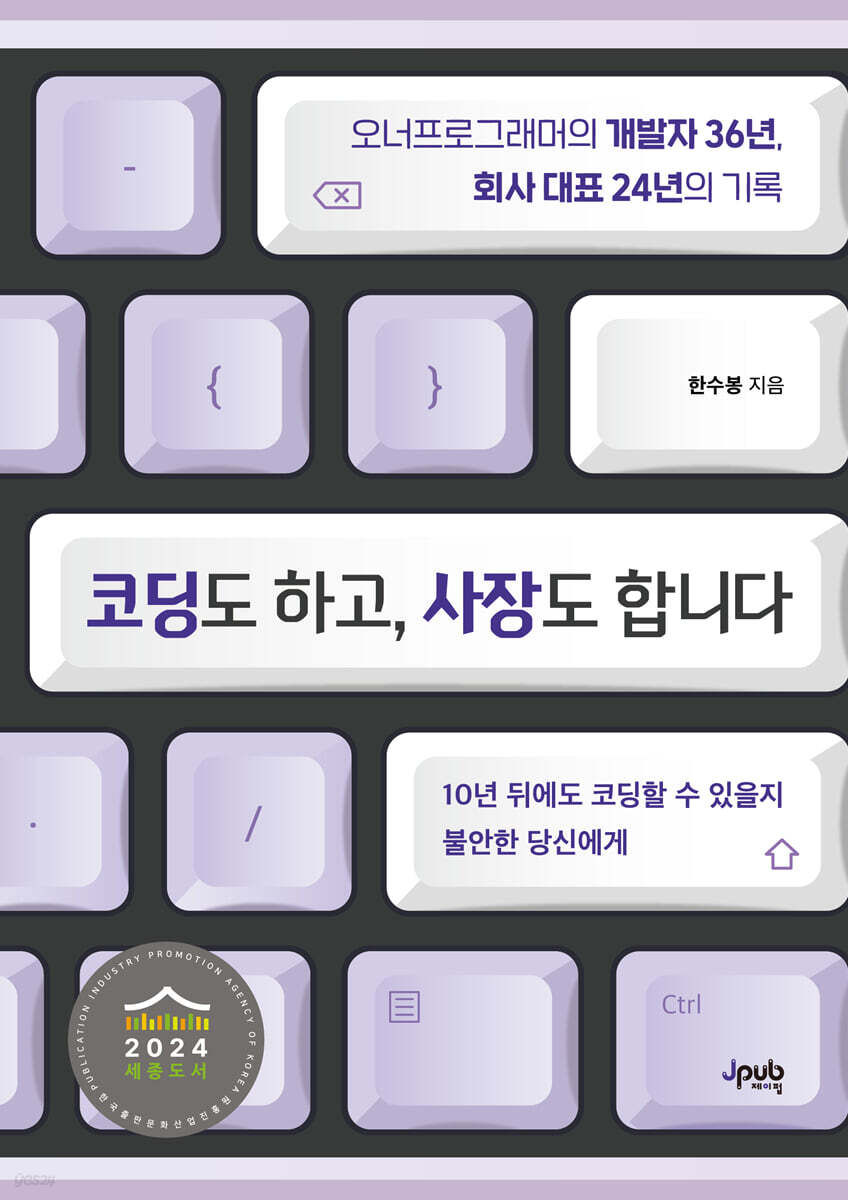
I code and I'm also a CEO.
 |
Description
Book Introduction
If there is an owner chef in the restaurant,
IT companies have owner programmers.
Here's the story of an author who decided to spend his life as a programmer, and how he started and ran his own business.
After working for 12 years at a large corporation, I started my first company with the confidence that I could do anything, but it didn't last long and closed down.
After 24 years of running the second company he founded with great effort, he calls himself an 'owner programmer', doing both coding and serving as the CEO.
It's not a dazzling success story, but as a passionate programmer and a CEO struggling to manage a company, this realistic story will help brighten your future.
IT companies have owner programmers.
Here's the story of an author who decided to spend his life as a programmer, and how he started and ran his own business.
After working for 12 years at a large corporation, I started my first company with the confidence that I could do anything, but it didn't last long and closed down.
After 24 years of running the second company he founded with great effort, he calls himself an 'owner programmer', doing both coding and serving as the CEO.
It's not a dazzling success story, but as a passionate programmer and a CEO struggling to manage a company, this realistic story will help brighten your future.
- You can preview some of the book's contents.
Preview
index
Recommendation 8
Opening Remarks | Who is an Owner Programmer? 13
Chapter 1: Understanding Owner Programmers 18
01 Owner Programmer's Life Story 20
02 Programmers, Developers, and Software Engineers 30
03 36 years as a programmer, 24 years as a software company operator 32
04 I am a ○○ programmer 37
05 Am I an Entrepreneur or a Businessperson? 41
06 Company size 45
07 The Lever that Determines the Size of a Company 50
08 High-Sales Companies vs. High-Profit Companies 61
09 Types of Software Companies 64
10 Solutions and Products 69
11 How a Money-Banking Company Builds Software Products 74
Who are the 12 professional programmers? 77
13 Software Craftsmen and Professional Programmers 82
14 You can't be good at both being an owner and a programmer 88
Chapter 2: Living as a Programmer 92
15 Machine-Chief Becomes a Programmer 94
16 Programmer's Fate 101
17 The Fate of the Programmer 107
18 Programmer Personality 112
19 A Programmer's Life 119
A Day in the Life of Programmer Cheongjo 124
21 The Temptation of Hacking 145
22 Memories of Game Programs 153
23 Programming Language Battle 160
What is Code 24? 171
25 There is no expert who cannot debug 180
26 Great Developers Who Are Difficult to Work With 183
27 Life as a Pro: Hard Life, Life as an Amateur: 186
28 Professional Programmer Training Methods 189
29 Is being a programmer a good job? 196
30 What do programmers live on? 203
31 Career Management 211
32 Large and Small Businesses 217
33 Small Companies and Startups 224
34 SI Companies 231
35 Own Product and Service Companies 236
36 Freelancers 241
37 Change of job 247
38 Big Projects and Small Projects 254
39 Earning money outside of salary 260
40 How old can a programmer be? 265
Chapter 3: Living as a Software Company Founder 270
41 Starting a Software Development Company 272
42 I Start a Business 279
43 Startups that Receive Investment and Borrow Money 285
44 No-Capital Startups Programmers Can Do 290
Finding Items 45 10 Commandments 296
46 10-10 Business 316
47 Cost Control 323
48 Increase Sales 332
49 10 years of experience in software outsourcing development 340
50 10-10 Business Successes and Failures, and the Path Afterward 356
51 Business Development 361
52 Founder's Salary 365
53 Founder's Equity and Lifetime Income 371
54 10-10 Is the business worth doing? 374
55 Expensive Tuition and Real Entrepreneurship 377
A Day in the Life of Software Company President Cheongjo 384
57 Companies that don't delay paychecks, companies that don't stress 391
58 On-Time Leaving and Labor Productivity 393
59 Is it wrong for a CEO to be friendly with his employees? 396
60 Finding Talent in a Small Company 400
61 Job Advertisements 404
62 Are Performance-Based Bonus Promises Motivating? 411
63 The position of president 416
64 Entrepreneur's Passion Pay 419
65 Alcohol, Golf, and Luxury Cars 423
66 Funeral date 426
Closing Remarks | Are Owner Programmers Happy? 428
Opening Remarks | Who is an Owner Programmer? 13
Chapter 1: Understanding Owner Programmers 18
01 Owner Programmer's Life Story 20
02 Programmers, Developers, and Software Engineers 30
03 36 years as a programmer, 24 years as a software company operator 32
04 I am a ○○ programmer 37
05 Am I an Entrepreneur or a Businessperson? 41
06 Company size 45
07 The Lever that Determines the Size of a Company 50
08 High-Sales Companies vs. High-Profit Companies 61
09 Types of Software Companies 64
10 Solutions and Products 69
11 How a Money-Banking Company Builds Software Products 74
Who are the 12 professional programmers? 77
13 Software Craftsmen and Professional Programmers 82
14 You can't be good at both being an owner and a programmer 88
Chapter 2: Living as a Programmer 92
15 Machine-Chief Becomes a Programmer 94
16 Programmer's Fate 101
17 The Fate of the Programmer 107
18 Programmer Personality 112
19 A Programmer's Life 119
A Day in the Life of Programmer Cheongjo 124
21 The Temptation of Hacking 145
22 Memories of Game Programs 153
23 Programming Language Battle 160
What is Code 24? 171
25 There is no expert who cannot debug 180
26 Great Developers Who Are Difficult to Work With 183
27 Life as a Pro: Hard Life, Life as an Amateur: 186
28 Professional Programmer Training Methods 189
29 Is being a programmer a good job? 196
30 What do programmers live on? 203
31 Career Management 211
32 Large and Small Businesses 217
33 Small Companies and Startups 224
34 SI Companies 231
35 Own Product and Service Companies 236
36 Freelancers 241
37 Change of job 247
38 Big Projects and Small Projects 254
39 Earning money outside of salary 260
40 How old can a programmer be? 265
Chapter 3: Living as a Software Company Founder 270
41 Starting a Software Development Company 272
42 I Start a Business 279
43 Startups that Receive Investment and Borrow Money 285
44 No-Capital Startups Programmers Can Do 290
Finding Items 45 10 Commandments 296
46 10-10 Business 316
47 Cost Control 323
48 Increase Sales 332
49 10 years of experience in software outsourcing development 340
50 10-10 Business Successes and Failures, and the Path Afterward 356
51 Business Development 361
52 Founder's Salary 365
53 Founder's Equity and Lifetime Income 371
54 10-10 Is the business worth doing? 374
55 Expensive Tuition and Real Entrepreneurship 377
A Day in the Life of Software Company President Cheongjo 384
57 Companies that don't delay paychecks, companies that don't stress 391
58 On-Time Leaving and Labor Productivity 393
59 Is it wrong for a CEO to be friendly with his employees? 396
60 Finding Talent in a Small Company 400
61 Job Advertisements 404
62 Are Performance-Based Bonus Promises Motivating? 411
63 The position of president 416
64 Entrepreneur's Passion Pay 419
65 Alcohol, Golf, and Luxury Cars 423
66 Funeral date 426
Closing Remarks | Are Owner Programmers Happy? 428
Detailed image

Into the book
This article is based purely on my experience as a professional programmer with over 36 years of experience, having founded and run a software development company for 24 years.
And I'm not a great programmer, and I'm certainly not a highly successful businessman, so I'll make it clear up front that my perspective is narrow and it might be difficult to generalize this article.
However, I have a small hope that this might be helpful to those who dream of starting a business as a programmer.
--- p.20
In our country, it is difficult to make a living as a software developer in a relatively large and stable workplace even after the age of 40.
At some point, you'll move into a management or sales role, and there are few paths to higher-level software engineering positions.
Of course, there is nothing you can't do if you switch to a management or sales position.
The problem is that there is no guaranteed path to this either.
So I had no choice but to take the path of becoming an owner programmer again.
I think it's a matter of choice.
--- p.88
In the computer lab of my first job, there were acrylic nameplates with the word 'THINK' written on them on the desks of my seniors.
It was not a name tag to write down one's position or name, but rather to indicate one's destination when leaving the room.
As I sat working, there was a piece of paper with the word THINK printed on it.
When I first saw it, I had a lot of thoughts.
Why did they say "THINK"? What does it mean to think? Does it mean writing a program? Are programmers thinking people?
--- p.107
Code is the design drawing and material that is the foundation of a program.
All software development is oriented towards code, and all documentation is secondary and auxiliary documentation for the code.
Would Plato have said, "Code is the very essence of software?" So, I believe it's safe to call everyone involved in development, regardless of their role, a "programmer" or "developer (software engineer)."
And it's not at all strange for programmers to act as architects, it's something they should do.
--- p.179
If you can, it is obviously better to join a large company.
However, rather than trying to find a job for several years when it is uncertain whether you will be able to get into a large company, it is better to choose a small or medium-sized company that suits your personality.
Wouldn't the reckless dream of growing a company your own way be fun in its own way? If you don't think so, you can't do it.
Programmers have longer careers and can develop more polished programs at small and medium-sized companies than at large corporations.
If you don't believe, you can't do it.
--- p.305
Each company has its own standards for sharing bread.
Even the CEO, who shares the bread of a small company, will have his own standards.
No matter how quantitative the performance criteria are, the evaluator's feelings are bound to be reflected.
When I started my business, I decided to adopt the attitude of 'sharing bread with a mother's heart.'
Whether a mother gives more to her eldest son or more to her youngest, there is always a good reason for her to share that way.
If you say, “Isn’t that up to the candy seller?” then I have nothing to say.
How can a child know his mother's heart?
And I'm not a great programmer, and I'm certainly not a highly successful businessman, so I'll make it clear up front that my perspective is narrow and it might be difficult to generalize this article.
However, I have a small hope that this might be helpful to those who dream of starting a business as a programmer.
--- p.20
In our country, it is difficult to make a living as a software developer in a relatively large and stable workplace even after the age of 40.
At some point, you'll move into a management or sales role, and there are few paths to higher-level software engineering positions.
Of course, there is nothing you can't do if you switch to a management or sales position.
The problem is that there is no guaranteed path to this either.
So I had no choice but to take the path of becoming an owner programmer again.
I think it's a matter of choice.
--- p.88
In the computer lab of my first job, there were acrylic nameplates with the word 'THINK' written on them on the desks of my seniors.
It was not a name tag to write down one's position or name, but rather to indicate one's destination when leaving the room.
As I sat working, there was a piece of paper with the word THINK printed on it.
When I first saw it, I had a lot of thoughts.
Why did they say "THINK"? What does it mean to think? Does it mean writing a program? Are programmers thinking people?
--- p.107
Code is the design drawing and material that is the foundation of a program.
All software development is oriented towards code, and all documentation is secondary and auxiliary documentation for the code.
Would Plato have said, "Code is the very essence of software?" So, I believe it's safe to call everyone involved in development, regardless of their role, a "programmer" or "developer (software engineer)."
And it's not at all strange for programmers to act as architects, it's something they should do.
--- p.179
If you can, it is obviously better to join a large company.
However, rather than trying to find a job for several years when it is uncertain whether you will be able to get into a large company, it is better to choose a small or medium-sized company that suits your personality.
Wouldn't the reckless dream of growing a company your own way be fun in its own way? If you don't think so, you can't do it.
Programmers have longer careers and can develop more polished programs at small and medium-sized companies than at large corporations.
If you don't believe, you can't do it.
--- p.305
Each company has its own standards for sharing bread.
Even the CEO, who shares the bread of a small company, will have his own standards.
No matter how quantitative the performance criteria are, the evaluator's feelings are bound to be reflected.
When I started my business, I decided to adopt the attitude of 'sharing bread with a mother's heart.'
Whether a mother gives more to her eldest son or more to her youngest, there is always a good reason for her to share that way.
If you say, “Isn’t that up to the candy seller?” then I have nothing to say.
How can a child know his mother's heart?
--- p.418
Publisher's Review
Reading the life of a programmer and company CEO
The author, who became a programmer by chance, spent his entire life writing code.
If you follow his records closely, you can read about a man's passion for the profession of a programmer.
He begins his essay by saying that he is neither a great programmer nor a highly successful businessman, and that his life can be summed up in one word: "an unspectacular story."
But where is there a case where one person's life is not great?
Even though it may be a company whose name is unknown, the experience of running it for over 20 years and working directly on the keyboard for over 30 years without leaving the field is not something that can be easily obtained anywhere.
This book contains my life as a programmer for 36 years and as an operator of a software company for 24 years.
The strength of this book is that it honestly and frankly describes my experiences as a programmer and as a company representative.
This book is divided into three main sections: Chapter 1: The Life of an Owner Programmer, Chapter 2: The Life of a Programmer, and Chapter 3: The Life of an Entrepreneur, and contains 66 captivating stories.
It shows the experiences of an owner-programmer who is the CEO of a small software company and also takes on the roles of CTO and CFO, as well as the struggles between owners and programmers.
This book examines life as a programmer and life as a company owner, respectively, and tells the struggles and choices of someone who has experienced both.
The author's vivid experiences will be a valuable resource for anyone who dreams of becoming a programmer, is currently working as a programmer, or is preparing to start a business or has already started one.
There are countless books that talk about what we commonly call success.
But chasing such success stories doesn't necessarily guarantee success.
Rather, there are times when life becomes daunting because of stories that are so far removed from reality that they are like legends.
Let's be a little more honest and think about what success we can achieve in reality.
I send my encouragement to everyone who comes across this book.
Target audience
* People who want to live as programmers until retirement
* People who want to start a software company as a lifetime job
* A person who wants to run a company as a lifelong career as a programmer
* People who want to get practical information about starting and running a software company.
The author, who became a programmer by chance, spent his entire life writing code.
If you follow his records closely, you can read about a man's passion for the profession of a programmer.
He begins his essay by saying that he is neither a great programmer nor a highly successful businessman, and that his life can be summed up in one word: "an unspectacular story."
But where is there a case where one person's life is not great?
Even though it may be a company whose name is unknown, the experience of running it for over 20 years and working directly on the keyboard for over 30 years without leaving the field is not something that can be easily obtained anywhere.
This book contains my life as a programmer for 36 years and as an operator of a software company for 24 years.
The strength of this book is that it honestly and frankly describes my experiences as a programmer and as a company representative.
This book is divided into three main sections: Chapter 1: The Life of an Owner Programmer, Chapter 2: The Life of a Programmer, and Chapter 3: The Life of an Entrepreneur, and contains 66 captivating stories.
It shows the experiences of an owner-programmer who is the CEO of a small software company and also takes on the roles of CTO and CFO, as well as the struggles between owners and programmers.
This book examines life as a programmer and life as a company owner, respectively, and tells the struggles and choices of someone who has experienced both.
The author's vivid experiences will be a valuable resource for anyone who dreams of becoming a programmer, is currently working as a programmer, or is preparing to start a business or has already started one.
There are countless books that talk about what we commonly call success.
But chasing such success stories doesn't necessarily guarantee success.
Rather, there are times when life becomes daunting because of stories that are so far removed from reality that they are like legends.
Let's be a little more honest and think about what success we can achieve in reality.
I send my encouragement to everyone who comes across this book.
Target audience
* People who want to live as programmers until retirement
* People who want to start a software company as a lifetime job
* A person who wants to run a company as a lifelong career as a programmer
* People who want to get practical information about starting and running a software company.
GOODS SPECIFICS
- Date of issue: February 2, 2024
- Page count, weight, size: 432 pages | 578g | 152*215*20mm
- ISBN13: 9791192987866
You may also like
카테고리
korean


korean

![GQ KOREA Mark (Monthly): December [2025]](http://librairie.coreenne.fr/cdn/shop/files/8ef265dbbfbf186523ed75ba7319009d.jpg?v=1765340328&width=3840)


