

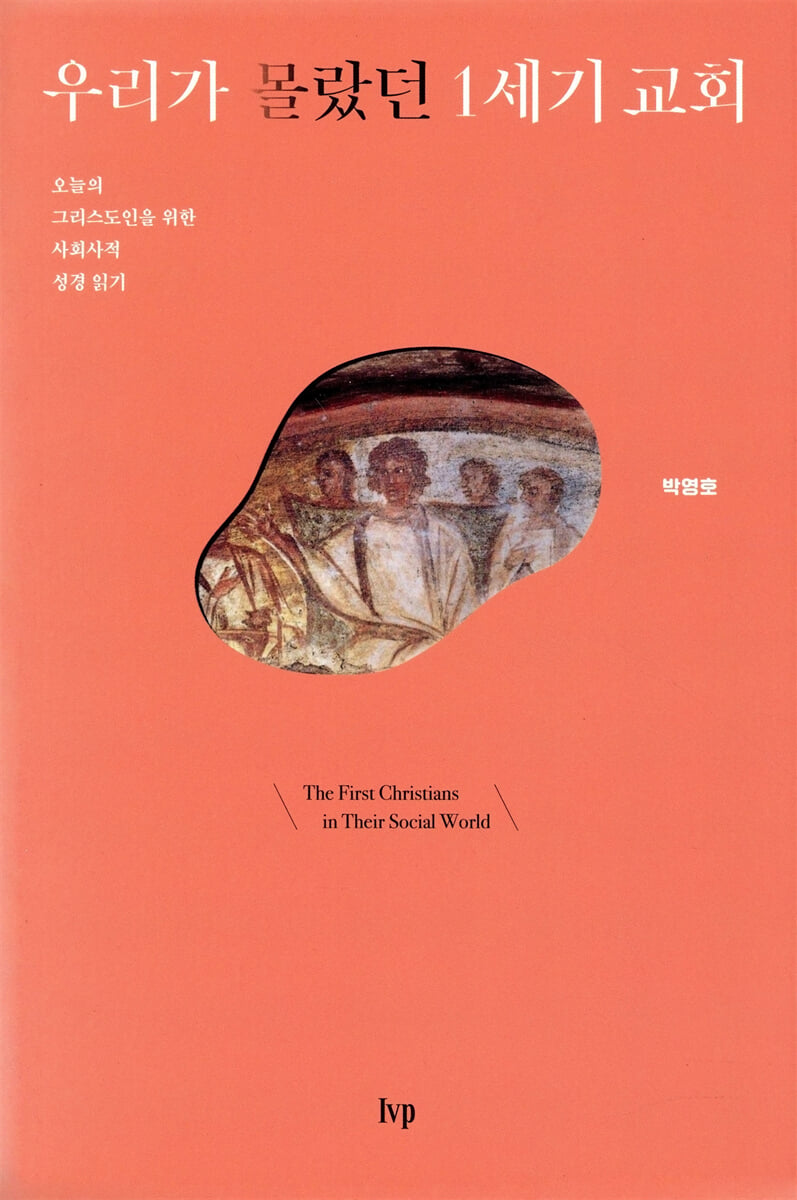
The First Century Church We Didn't Know About
 |
Description
index
Introduction
Introduction: Revisiting the Story of the First-Century Church
Chapter 1: Social Class of the Early Church Members
Chapter 2: Finding Similarities to the Early Church 1: Voluntary Associations
Chapter 3: Finding Similarities to the Early Church 2: Is a House Church a Church?
Chapter 4: Finding Similarities to the Early Church 3: Was the Early Church a Philosophical School?
Chapter 5: Finding Similarities to the Early Church 4: Synagogue
Chapter 6: Institutional Diversity in the Early Church
Chapter 7: Will You and Your Household Be Saved?: The Socio-Economic Context of the Philippian Mission
Chapter 8: The Position of Women in the First-Century Synagogue and Church
Chapter 9: Early Christianity and Slavery
Chapter 10: The Educational Level of the Early Christians
Chapter 11 How did they worship?
Chapter 12 Why were Christians persecuted?
Appendix: Biblical Interpretation and Social History
Outgoing post
main
Introduction: Revisiting the Story of the First-Century Church
Chapter 1: Social Class of the Early Church Members
Chapter 2: Finding Similarities to the Early Church 1: Voluntary Associations
Chapter 3: Finding Similarities to the Early Church 2: Is a House Church a Church?
Chapter 4: Finding Similarities to the Early Church 3: Was the Early Church a Philosophical School?
Chapter 5: Finding Similarities to the Early Church 4: Synagogue
Chapter 6: Institutional Diversity in the Early Church
Chapter 7: Will You and Your Household Be Saved?: The Socio-Economic Context of the Philippian Mission
Chapter 8: The Position of Women in the First-Century Synagogue and Church
Chapter 9: Early Christianity and Slavery
Chapter 10: The Educational Level of the Early Christians
Chapter 11 How did they worship?
Chapter 12 Why were Christians persecuted?
Appendix: Biblical Interpretation and Social History
Outgoing post
main
Detailed image
Into the book
A critical approach to the Bible is necessary.
This is because the impression we get when reading the Bible can be influenced by our cultural and religious preconceptions.
Strictly speaking, we should be critical of our own thinking in order to strip away our preconceived notions, rather than being critical of the biblical text.
Because our knowledge and understanding of the Bible itself is a product of the world and its culture in which we live.
--- p.
11
Rather than interpreting the Bible for the reader and providing conclusions, this book aims to help readers approach the world of the New Testament and read the Bible on their own.
Rather than a teacher explaining the places I have visited, I am closer to a tour guide who guides us through the world we are facing together.
If this book allows readers to read the Bible with a new perspective and vividly imagine the life of the early church, I expect it will be of great help to serious Bible readers, especially Bible teachers and preachers.
--- p.
14
We should consider the possibility of retranslating “Durannoseowon” in the Korean Bible as “Durannoseowon Factory” or “Durannoseowon Workshop.”
Given the negative connotation of the name Duranno, one might speculate that it may have been the factory owner's nickname rather than someone's real name.
There is another reason why I am inclined to translate it as a factory.
It is said that “handkerchiefs” and “aprons” were used as healing tools, but we must ask why these props appear.
--- p.
20
The church is both a spiritual community and a social entity.
The Christian church, as a spiritual entity, is a community called to new life according to the power of resurrection that renews all things.
However, the church as a social entity is placed within the constraints of its environment.
Although the message proclaimed by the early Christians was novel, the actual form of their gatherings must be seen as a continuation of other social groups of the time.
--- p.
50
The church in Corinth was a church that had a good start, with wealthy people who owned large houses and were willing to serve the community with their own material possessions.
But the fact that this church was one that had far more problems than other poor churches and that it was one that received a strong rebuke from Paul presents a strong challenge to us.
--- p.
79
The sense of distance—a one-minute walk between a church and a synagogue—is a valuable physical clue to the relationship between Judaism and the early Jesus movement, which began as a renewal movement within Judaism.
Although Christianity is often considered to have separated from its Jewish parentage and established its own independent identity in the early 2nd century, Judaism remained physically, ideologically, and culturally close to Christianity for several hundred years thereafter.
--- pp.
104-105
On the one hand, the Acts of the Apostles represents the attitude of Christians who respected the Roman system.
But on the other hand, we are also witnessing to God who is above the system, who can shake the system at any time if it does not conform to His will.
He who has ears, let him hear!
--- p.
147
I am amazed at the fact that the power of the gospel, which states that there is no distinction between slave and free in Jesus, has been effective for over two thousand years, even reaching the early Korean church.
The same goes for discrimination between women and men.
When we truly emulate the message of the Gospel and the spirit of Jesus, the Church can point the way to a more harmonious and equal life, a society in which women and men can fully realize their potential.
--- p.
164
While much research is needed to understand the unique charm and power of the worship of the early church, what is clear is that their worship entailed considerable inconvenience.
This discomfort was a discomfort inherent in the very nature of the Christian gospel, which inevitably created considerable tension between the values that worship was striving for and the culture of the time.
--- p.
219
We must set out to connect the daily life of the first-century church with our own, aided on the one hand by Banks's bold imagination and on the other by his training in the rigor of handling historical data.
--- p.
254
I cautiously suggest that Jesus, who lived at a certain point in the past, and Christ, who is still worshipped in the worship community today, can be analogized as the two focal points of our faith and the objects of our love.
It is an awakening to the need for a hermeneutics of love alongside objective interpretation.
‘Humility and love’ are the values I have always tried to keep in mind during my considerable time as a biblical scholar.
--- pp.
263-264
It is my sincere hope that the various approaches discussed in this book will provide a perspective that allows us to relativize our own traditions and open our minds to other expressions of faith.
If a deeper understanding of the lives and confessions of the early Christians deepens your love for God's Word and the Church, the body of Christ, it will be a great reward for the small effort put into this book.
Because without love we are nothing.
This is because the impression we get when reading the Bible can be influenced by our cultural and religious preconceptions.
Strictly speaking, we should be critical of our own thinking in order to strip away our preconceived notions, rather than being critical of the biblical text.
Because our knowledge and understanding of the Bible itself is a product of the world and its culture in which we live.
--- p.
11
Rather than interpreting the Bible for the reader and providing conclusions, this book aims to help readers approach the world of the New Testament and read the Bible on their own.
Rather than a teacher explaining the places I have visited, I am closer to a tour guide who guides us through the world we are facing together.
If this book allows readers to read the Bible with a new perspective and vividly imagine the life of the early church, I expect it will be of great help to serious Bible readers, especially Bible teachers and preachers.
--- p.
14
We should consider the possibility of retranslating “Durannoseowon” in the Korean Bible as “Durannoseowon Factory” or “Durannoseowon Workshop.”
Given the negative connotation of the name Duranno, one might speculate that it may have been the factory owner's nickname rather than someone's real name.
There is another reason why I am inclined to translate it as a factory.
It is said that “handkerchiefs” and “aprons” were used as healing tools, but we must ask why these props appear.
--- p.
20
The church is both a spiritual community and a social entity.
The Christian church, as a spiritual entity, is a community called to new life according to the power of resurrection that renews all things.
However, the church as a social entity is placed within the constraints of its environment.
Although the message proclaimed by the early Christians was novel, the actual form of their gatherings must be seen as a continuation of other social groups of the time.
--- p.
50
The church in Corinth was a church that had a good start, with wealthy people who owned large houses and were willing to serve the community with their own material possessions.
But the fact that this church was one that had far more problems than other poor churches and that it was one that received a strong rebuke from Paul presents a strong challenge to us.
--- p.
79
The sense of distance—a one-minute walk between a church and a synagogue—is a valuable physical clue to the relationship between Judaism and the early Jesus movement, which began as a renewal movement within Judaism.
Although Christianity is often considered to have separated from its Jewish parentage and established its own independent identity in the early 2nd century, Judaism remained physically, ideologically, and culturally close to Christianity for several hundred years thereafter.
--- pp.
104-105
On the one hand, the Acts of the Apostles represents the attitude of Christians who respected the Roman system.
But on the other hand, we are also witnessing to God who is above the system, who can shake the system at any time if it does not conform to His will.
He who has ears, let him hear!
--- p.
147
I am amazed at the fact that the power of the gospel, which states that there is no distinction between slave and free in Jesus, has been effective for over two thousand years, even reaching the early Korean church.
The same goes for discrimination between women and men.
When we truly emulate the message of the Gospel and the spirit of Jesus, the Church can point the way to a more harmonious and equal life, a society in which women and men can fully realize their potential.
--- p.
164
While much research is needed to understand the unique charm and power of the worship of the early church, what is clear is that their worship entailed considerable inconvenience.
This discomfort was a discomfort inherent in the very nature of the Christian gospel, which inevitably created considerable tension between the values that worship was striving for and the culture of the time.
--- p.
219
We must set out to connect the daily life of the first-century church with our own, aided on the one hand by Banks's bold imagination and on the other by his training in the rigor of handling historical data.
--- p.
254
I cautiously suggest that Jesus, who lived at a certain point in the past, and Christ, who is still worshipped in the worship community today, can be analogized as the two focal points of our faith and the objects of our love.
It is an awakening to the need for a hermeneutics of love alongside objective interpretation.
‘Humility and love’ are the values I have always tried to keep in mind during my considerable time as a biblical scholar.
--- pp.
263-264
It is my sincere hope that the various approaches discussed in this book will provide a perspective that allows us to relativize our own traditions and open our minds to other expressions of faith.
If a deeper understanding of the lives and confessions of the early Christians deepens your love for God's Word and the Church, the body of Christ, it will be a great reward for the small effort put into this book.
Because without love we are nothing.
--- p.
264
264
Publisher's Review
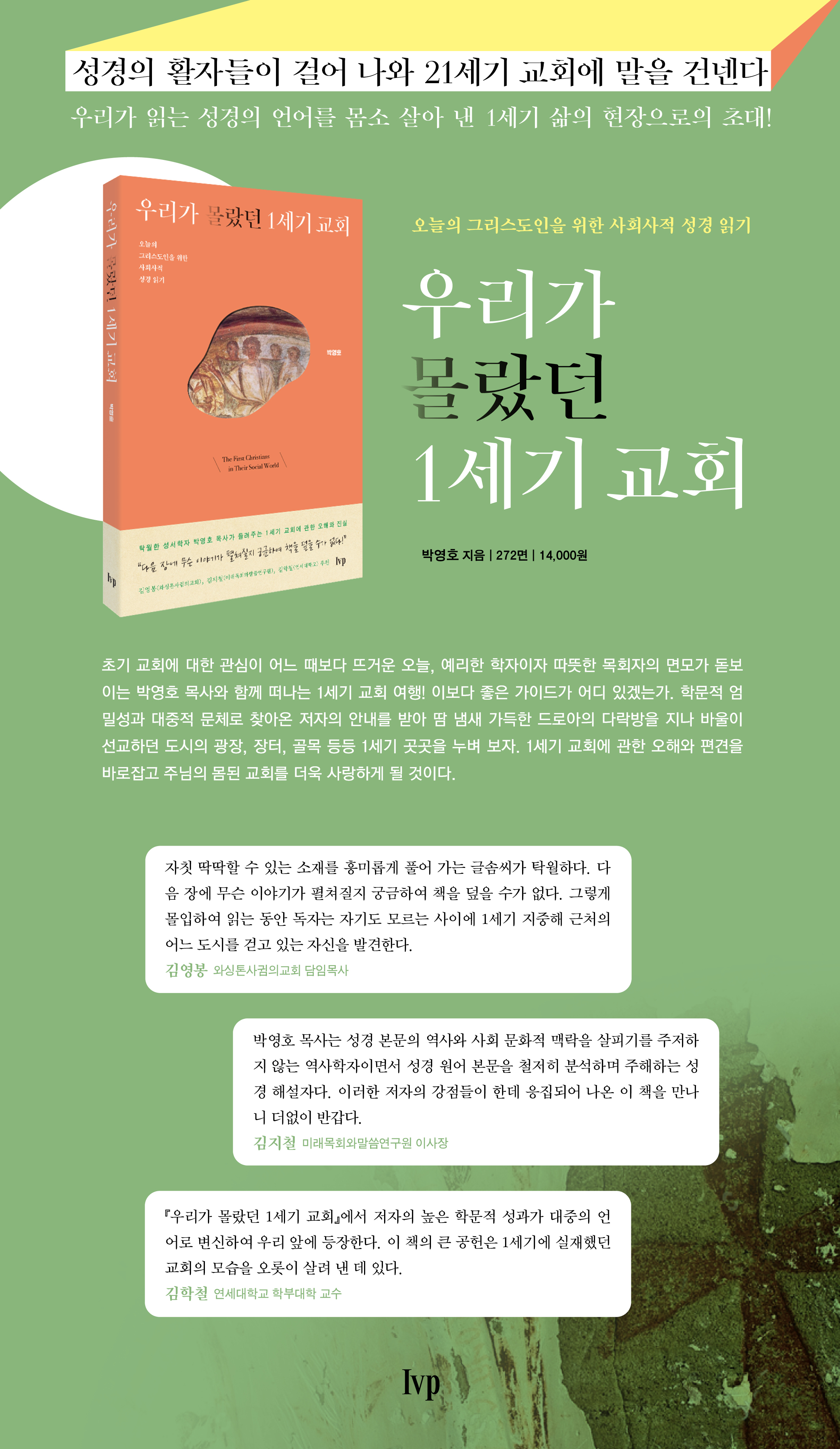
The letters of the Bible come forth and speak to the 21st-century church.
An invitation to the first-century life, where we personally experienced the language of the Bible we read!
The author, a biblical scholar and pastor who believes that the New Testament, a first-century document, still shows the way forward for the 21st century, presents the culmination of a lifetime of research in a book accessible to the general public.
The author, who presented a fresh topic to the global academic community with a thesis on the public nature of the ecclesia, has now presented an accessible explanation of his research for readers who wish to delve deeper into the world of the New Testament.
This is a very welcome development for the Korean church and theological community, which are seriously lacking in research on early church history.
Is the Early Church Our Standard?
People often say, “Let’s go back to the early church!” or “The early church wasn’t like that.”
As the 16th-century Reformation slogan “ad fontes” suggests, the early church was the starting point when the church lost its way.
But the question of what aspects of the early church actually serve as our standard is by no means easy.
Faith arises in concrete life situations and is expressed through language that has social meaning in real relationships.
Therefore, in order to understand the original form of Christianity, we must be able to access the circumstances of the lives of the first Christians.
This book was written for today's Christians, who are prone to the error of interpreting the first century in a way that equates it with modern circumstances, with slogans that are abundant but substantive and vague.
A Model for Reading the Bible in Social History
This book provides an example of a socio-historical reading of the Bible that carefully connects the biblical text to the Greco-Roman social context of the first century, when the Christian gospel was first proclaimed and practiced.
The author points out that existing studies of ancient history have largely focused on literature left behind by the elite, and argues that the field of vision should be broadened to include materials that directly demonstrate the lives of common people at the time.
Based on this clear picture obtained by getting as close as possible to the reality of the early church, it provides a new opportunity for the Korean church, which is suffering from the disease of subjective interpretation, and urges the Korean church to recover the dynamism and transformative power of the gospel that it initially possessed.
Through this, readers will be able to discern that the early church has many implications for the Korean church, which has lost its way for a long time.
Social history, a window into the times
This book on the first-century church is an attempt to understand the social life of Christian communities in the major cities of the Mediterranean world in the mid-first century, when Paul was writing his letters.
This approach will allow us to see how deeply theology has been rooted in life from the beginning and how it helps us read the Bible and understand the uniqueness of a gospel-centered community.
The author, who has devoted himself to objective research focusing on the historical and grammatical aspects of the Bible, addresses the following questions in this book, focusing on social history.
* Was the Jesus movement a movement of the poor?
* Was it a single-stratum movement or a mix of different strata?
* How educated were they?
* Where did they meet?
* Were house churches the dominant form of the early church?
* How did the church ministry develop?
* Did they live together?
* Did Jesus have female disciples?
* How did they worship and how did they give offerings?
* How was the Eucharist administered, and what social significance did baptism have?
* What kind of relationship did they have with the outside society?
* If you were persecuted, what did that have to do with forming your Christian identity?
This book comprehensively covers a variety of important issues related to the first-century church, correcting existing stereotypes and misunderstandings based on more accurate and detailed information, and confronting the true nature of the church.
The appendix includes a study on 'Biblical Interpretation and Social History', and 'Questions to Think About Together' for each chapter is included to help readers utilize it individually or in small groups.
Through this journey through the first-century church with the author, we will not only experience the true nature of the gospel we must live out, but also rediscover the true nature of the community we must restore.
An invitation to the first-century life, where we personally experienced the language of the Bible we read!
The author, a biblical scholar and pastor who believes that the New Testament, a first-century document, still shows the way forward for the 21st century, presents the culmination of a lifetime of research in a book accessible to the general public.
The author, who presented a fresh topic to the global academic community with a thesis on the public nature of the ecclesia, has now presented an accessible explanation of his research for readers who wish to delve deeper into the world of the New Testament.
This is a very welcome development for the Korean church and theological community, which are seriously lacking in research on early church history.
Is the Early Church Our Standard?
People often say, “Let’s go back to the early church!” or “The early church wasn’t like that.”
As the 16th-century Reformation slogan “ad fontes” suggests, the early church was the starting point when the church lost its way.
But the question of what aspects of the early church actually serve as our standard is by no means easy.
Faith arises in concrete life situations and is expressed through language that has social meaning in real relationships.
Therefore, in order to understand the original form of Christianity, we must be able to access the circumstances of the lives of the first Christians.
This book was written for today's Christians, who are prone to the error of interpreting the first century in a way that equates it with modern circumstances, with slogans that are abundant but substantive and vague.
A Model for Reading the Bible in Social History
This book provides an example of a socio-historical reading of the Bible that carefully connects the biblical text to the Greco-Roman social context of the first century, when the Christian gospel was first proclaimed and practiced.
The author points out that existing studies of ancient history have largely focused on literature left behind by the elite, and argues that the field of vision should be broadened to include materials that directly demonstrate the lives of common people at the time.
Based on this clear picture obtained by getting as close as possible to the reality of the early church, it provides a new opportunity for the Korean church, which is suffering from the disease of subjective interpretation, and urges the Korean church to recover the dynamism and transformative power of the gospel that it initially possessed.
Through this, readers will be able to discern that the early church has many implications for the Korean church, which has lost its way for a long time.
Social history, a window into the times
This book on the first-century church is an attempt to understand the social life of Christian communities in the major cities of the Mediterranean world in the mid-first century, when Paul was writing his letters.
This approach will allow us to see how deeply theology has been rooted in life from the beginning and how it helps us read the Bible and understand the uniqueness of a gospel-centered community.
The author, who has devoted himself to objective research focusing on the historical and grammatical aspects of the Bible, addresses the following questions in this book, focusing on social history.
* Was the Jesus movement a movement of the poor?
* Was it a single-stratum movement or a mix of different strata?
* How educated were they?
* Where did they meet?
* Were house churches the dominant form of the early church?
* How did the church ministry develop?
* Did they live together?
* Did Jesus have female disciples?
* How did they worship and how did they give offerings?
* How was the Eucharist administered, and what social significance did baptism have?
* What kind of relationship did they have with the outside society?
* If you were persecuted, what did that have to do with forming your Christian identity?
This book comprehensively covers a variety of important issues related to the first-century church, correcting existing stereotypes and misunderstandings based on more accurate and detailed information, and confronting the true nature of the church.
The appendix includes a study on 'Biblical Interpretation and Social History', and 'Questions to Think About Together' for each chapter is included to help readers utilize it individually or in small groups.
Through this journey through the first-century church with the author, we will not only experience the true nature of the gospel we must live out, but also rediscover the true nature of the community we must restore.
GOODS SPECIFICS
- Date of issue: August 6, 2021
- Page count, weight, size: 272 pages | 354g | 140*210*20mm
- ISBN13: 9788932818429
- ISBN10: 8932818428
You may also like
카테고리
korean


korean

![GQ KOREA Mark (Monthly): December [2025]](http://librairie.coreenne.fr/cdn/shop/files/8ef265dbbfbf186523ed75ba7319009d.jpg?v=1765340328&width=3840)


