

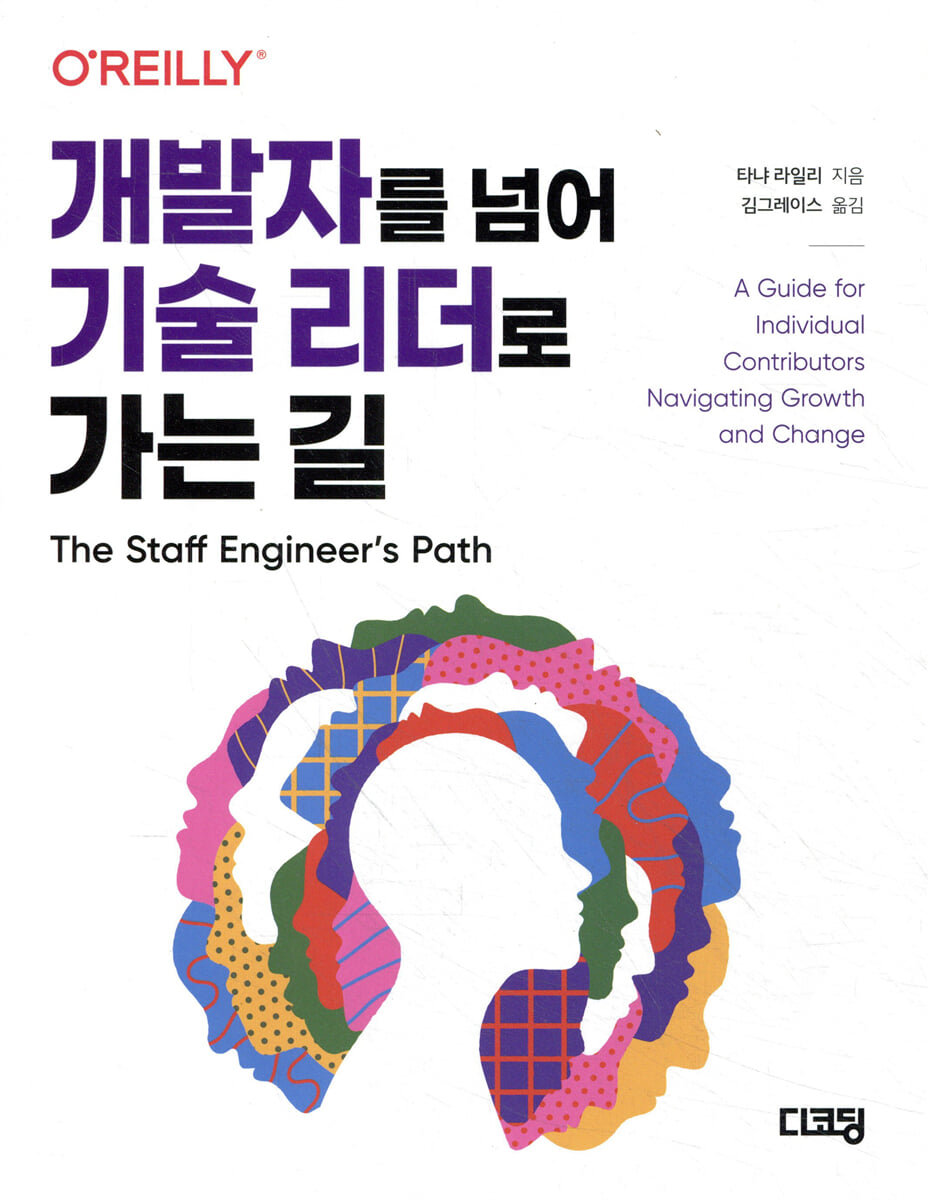
The Path from Developer to Technology Leader
 |
Description
Book Introduction
Developers who want to continue to develop their technical expertise Staff Engineers: The Starting Point for Becoming a Technology Leader Over the past several years, companies have been giving managerial positions to talented developers. However, it is not easy for a developer with technical leadership skills to also possess management skills. In this situation, this book presents a reasonable solution called staff engineer. As a staff engineer, you'll serve as a developer role model, helping determine the company's technical strategy, drive large-scale projects, and help colleagues improve their skills. The book systematically and specifically explains everything from the role of a staff engineer to how to manage work hours, strategic thinking, and how to set standards for technical work. Tanya Riley identifies three pillars that make up the staff engineer role: -Big picture thinking skills -Successful project execution ability -Organizational level-up |
- You can preview some of the book's contents.
Preview
index
Part 1: Big Picture Thinking
Chapter 1 Staff Engineer's Duties
1.1 Why a Staff Engineer?
1.2 What is a Staff Engineer?
1.3 Role of Staff Engineers
1.4 Tailored to scope, type, and focus
1.5 In conclusion
Chapter 2 Three Guidances of Staff Engineers
2.1 Map Creation
2.2 Location-Aware Maps: Providing a Different Perspective
2.3 Terrain Maps: Providing a way to explore terrain
2.4 Treasure Map: Provides destinations
2.5 Personal Journey Stories
2.6 In conclusion
Chapter 3 Establishing a Big Picture Perspective
3.1 Sack Matcher Case
3.2 Concepts of Vision and Strategy
3.3 How to write a document
3.4 Writing the actual document
3.5 release
3.6 Sack Matcher Case Study
3.7 In conclusion
Part 2 Successful Project Execution
Chapter 4 Working Hours Limits
4.1 Work Selection
4.2 Time-related considerations
4.3 Considering Resource Constraints
4.4 Choosing a suitable project
4.5 In conclusion
Chapter 5: Large-scale Project Progress
5.1 Project Progress Process
5.2 Starting the Project
5.3 Project Progress
5.4 In conclusion
Chapter 6 Project Discontinuation
6.1 Situations where the project is not progressing smoothly
6.2 The situation where the project lost its way
6.3 Situations where the project does not reach its true destination
6.4 In conclusion
Part 3: Leveling Up at the Organizational Level
Chapter 7 Role Model Roles
7.1 Standards for Excellent Performance
7.2 Staff Engineer Competency: Competent
7.3 Staff Engineer Competencies: Responsibility
7.4 Staff Engineer Competencies: Identifying Goals
7.5 Staff Engineer Competencies: Future-Ready
Chapter 8 Spreading Good Influence
8.1 What is positive influence?
8.2 Advice
8.3 Education
8.4 Guardrail
8.5 Opportunity
8.6 In conclusion
Chapter 9: Designing a Career Ladder
9.1 Setting the right direction
9.2 Job Suitability
9.3 Paths to take from your current location
9.4 Path to a new path
9.5 The Importance of Choice
9.6 In conclusion
Search
Chapter 1 Staff Engineer's Duties
1.1 Why a Staff Engineer?
1.2 What is a Staff Engineer?
1.3 Role of Staff Engineers
1.4 Tailored to scope, type, and focus
1.5 In conclusion
Chapter 2 Three Guidances of Staff Engineers
2.1 Map Creation
2.2 Location-Aware Maps: Providing a Different Perspective
2.3 Terrain Maps: Providing a way to explore terrain
2.4 Treasure Map: Provides destinations
2.5 Personal Journey Stories
2.6 In conclusion
Chapter 3 Establishing a Big Picture Perspective
3.1 Sack Matcher Case
3.2 Concepts of Vision and Strategy
3.3 How to write a document
3.4 Writing the actual document
3.5 release
3.6 Sack Matcher Case Study
3.7 In conclusion
Part 2 Successful Project Execution
Chapter 4 Working Hours Limits
4.1 Work Selection
4.2 Time-related considerations
4.3 Considering Resource Constraints
4.4 Choosing a suitable project
4.5 In conclusion
Chapter 5: Large-scale Project Progress
5.1 Project Progress Process
5.2 Starting the Project
5.3 Project Progress
5.4 In conclusion
Chapter 6 Project Discontinuation
6.1 Situations where the project is not progressing smoothly
6.2 The situation where the project lost its way
6.3 Situations where the project does not reach its true destination
6.4 In conclusion
Part 3: Leveling Up at the Organizational Level
Chapter 7 Role Model Roles
7.1 Standards for Excellent Performance
7.2 Staff Engineer Competency: Competent
7.3 Staff Engineer Competencies: Responsibility
7.4 Staff Engineer Competencies: Identifying Goals
7.5 Staff Engineer Competencies: Future-Ready
Chapter 8 Spreading Good Influence
8.1 What is positive influence?
8.2 Advice
8.3 Education
8.4 Guardrail
8.5 Opportunity
8.6 In conclusion
Chapter 9: Designing a Career Ladder
9.1 Setting the right direction
9.2 Job Suitability
9.3 Paths to take from your current location
9.4 Path to a new path
9.5 The Importance of Choice
9.6 In conclusion
Search
Detailed image

Publisher's Review
[Key points of this book]
ㆍProviding direction and solutions for developers who want to grow into technology leaders.
ㆍAnalyzing the need for staff engineers in the IT industry, where developers are often promoted to managers, from both the perspectives of companies and developers.
ㆍInstigates action by providing practical examples of how to achieve organizational goals in line with the three roles of staff engineers.
ㆍDescribe what a staff engineer, a position that goes one step further than a developer, should be like in an organization.
[This book's target audience]
ㆍJunior and senior engineers considering their career paths
ㆍSenior engineer working on a project
ㆍCEOs and CTOs concerned about the developer organizational culture
ㆍChief Human Resources Officer (CPO) who focuses on talent management
ㆍManagers who need to hire senior engineers
[Structure of this book]
Part 1: Big Picture Thinking
The first core competency of a great staff engineer is the ability to think from a big picture perspective.
This means taking a step back and thinking with a broader perspective.
That is, put aside the immediate details, first understand the situation fully, and then think from a broader perspective.
Having a big-picture mindset will empower you as a staff engineer to excel, whether you're starting a one-year project, building software, or anticipating what your business will need three years from now.
Part 1 covers big picture thinking.
Part 2: Successful Project Execution
The second core competency of a great staff engineer is the ability to successfully execute projects.
Projects handled by staff engineers are more confusing and ambiguous than typical projects.
To work with more people and successfully lead projects, you need to leverage and exert more political capital and influence, and drive changes in corporate culture.
Part 2 covers successful project execution.
Part 3: Leveling Up at the Organizational Level
The third core competency of a great staff engineer is ‘leveling up at the organizational level.’
Staff engineers are responsible for improving the standards and skill sets of engineers within their teams, their organizations, and within the enterprise or industry.
This includes not only being a role model yourself and exerting influence unconsciously, but also intentionally exerting influence through teaching and mentoring.
Part 3 covers leveling up at the organizational level.
ㆍProviding direction and solutions for developers who want to grow into technology leaders.
ㆍAnalyzing the need for staff engineers in the IT industry, where developers are often promoted to managers, from both the perspectives of companies and developers.
ㆍInstigates action by providing practical examples of how to achieve organizational goals in line with the three roles of staff engineers.
ㆍDescribe what a staff engineer, a position that goes one step further than a developer, should be like in an organization.
[This book's target audience]
ㆍJunior and senior engineers considering their career paths
ㆍSenior engineer working on a project
ㆍCEOs and CTOs concerned about the developer organizational culture
ㆍChief Human Resources Officer (CPO) who focuses on talent management
ㆍManagers who need to hire senior engineers
[Structure of this book]
Part 1: Big Picture Thinking
The first core competency of a great staff engineer is the ability to think from a big picture perspective.
This means taking a step back and thinking with a broader perspective.
That is, put aside the immediate details, first understand the situation fully, and then think from a broader perspective.
Having a big-picture mindset will empower you as a staff engineer to excel, whether you're starting a one-year project, building software, or anticipating what your business will need three years from now.
Part 1 covers big picture thinking.
Part 2: Successful Project Execution
The second core competency of a great staff engineer is the ability to successfully execute projects.
Projects handled by staff engineers are more confusing and ambiguous than typical projects.
To work with more people and successfully lead projects, you need to leverage and exert more political capital and influence, and drive changes in corporate culture.
Part 2 covers successful project execution.
Part 3: Leveling Up at the Organizational Level
The third core competency of a great staff engineer is ‘leveling up at the organizational level.’
Staff engineers are responsible for improving the standards and skill sets of engineers within their teams, their organizations, and within the enterprise or industry.
This includes not only being a role model yourself and exerting influence unconsciously, but also intentionally exerting influence through teaching and mentoring.
Part 3 covers leveling up at the organizational level.
GOODS SPECIFICS
- Date of issue: May 12, 2023
- Page count, weight, size: 424 pages | 760g | 183*235*16mm
- ISBN13: 9791198140821
- ISBN10: 1198140828
You may also like
카테고리
korean


korean

![GQ KOREA Mark (Monthly): December [2025]](http://librairie.coreenne.fr/cdn/shop/files/8ef265dbbfbf186523ed75ba7319009d.jpg?v=1765340328&width=3840)


