

Who are Christians?
 |
Description
Book Introduction
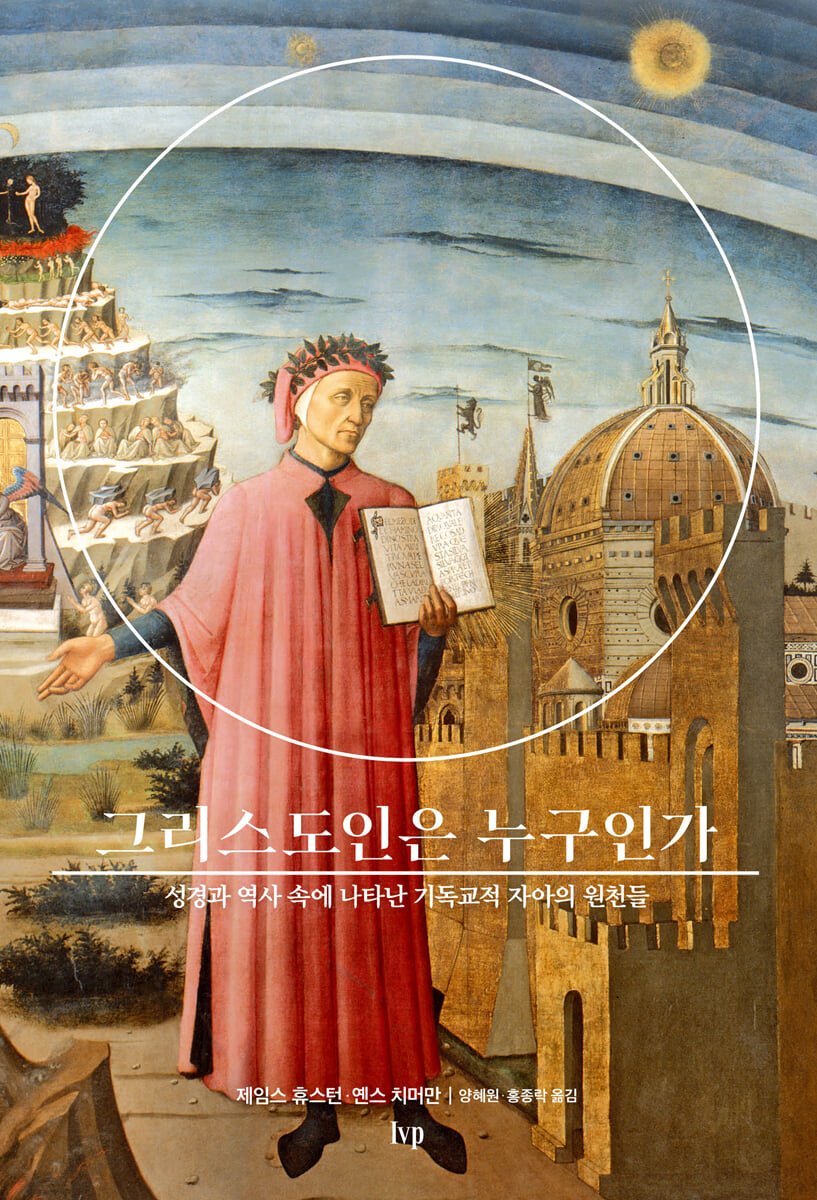
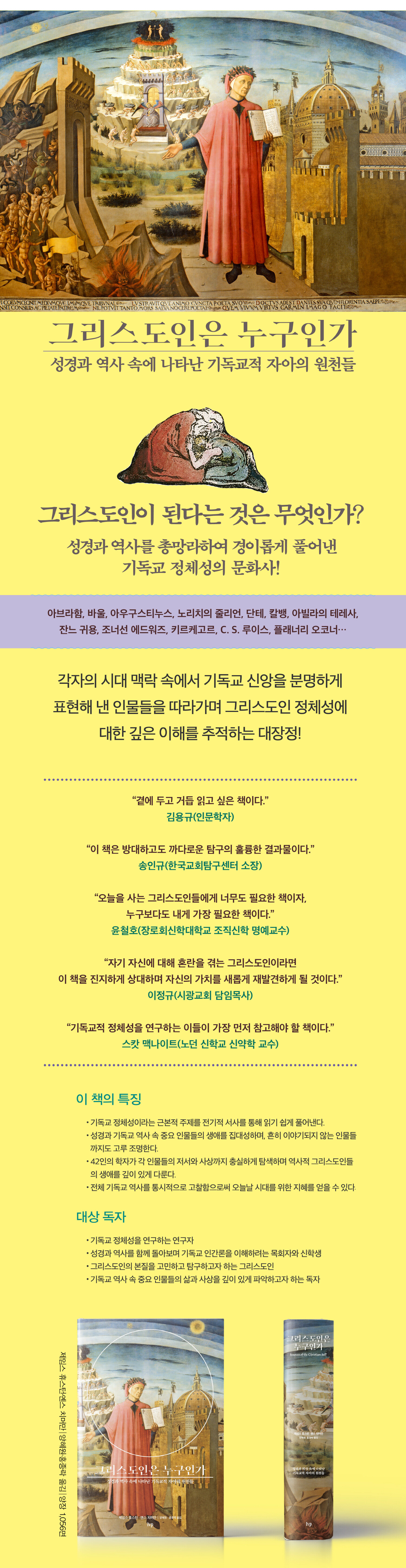
How has the term "Christian" been understood and applied throughout Christian history? What significance does a life lived with a Christian identity have in different times and places? "Who is a Christian?" explores how Christian self-understanding has been shaped and expressed across historical and cultural contexts, examining the lives of prominent Christians from Abraham in the Old Testament through the early church, the Middle Ages, and the modern era.
This book, a culmination of theological anthropology spanning the entire history of Christianity, explores the timeless meaning contained in the Christian confession and poses challenges and questions for Christians today.
This book, a culmination of theological anthropology spanning the entire history of Christianity, explores the timeless meaning contained in the Christian confession and poses challenges and questions for Christians today.
- You can preview some of the book's contents.
Preview
index
abbreviation
Editor's Preface
Acknowledgements
Part 1: The Identity of the Old Testament
1 Abraham: Friend of God, Father of Believers│Phillips Long
2 Moses: The Man of God│Ian Proban
3 David: The Anointed One of Israel│Keith Bodner
4 Jeremiah: How a Prophet Defines His Identity│Bruce Waltke
Part 2: The Identity of the New Testament
5 Simon Peter: The Transformation of an Apostle│Marcus Bockmuhl
6 James and Judas: Jesus' Brothers│Mariam Kamel Kovalishyn
7 Paul: A Christian as One “In Christ”│Sven Söderlund
Part 3: The Identity of the Early Church
8 Justin Martyr: Shaping Christian Identity in the Second Century│Michael Telbe
9 Origen: Exegete, Theologian, and Disciple │ Christopher Hall
10 Gregory of Nyssa: Being Human Before God│Hans Voorsma
11 Ambrose: Baptismal Identity and Human Identity│Gerald Boersma
12 John Chrysostom: A Vision of Angelic Life│Park and Rai
13 Augustine of Hippo: The Christian Life, Then and Now│Paul Burns
14 Gregory I: The Grace of Conversion? The Ideology of Becoming Idem│Ryan Olson
15 Captives in Late Antiquity: Christian Identity under Foreign Rule│Andrea Stirk
16 Timothy I of Baghdad: A Stranger in His Own Land│Robert Kitchen
Part 4: Identity in the Middle Ages
17 Anselm: The Unified Theologian│Stephen Porter
18 Bernard of Clairvaux: Loving God as a Lover of Jesus│James Houston
19 Dominic of Caleruega and Jordan of Saxony: The Making of Dominican Identity│Stephen Watts
20 Aquinas: Participating in Christ's Poverty, Mission, and Life│Yonghwa Ge
21 Julian of Norwich: The Inclusive Christian│Eleanor McCullough
22 Dante: The Pilgrim's Way│Janet Martin Soskis
Part 5: Identity in the Age of Reformation
23 Thomas More: A Man for Our Time│Robert Bok
24 Martin Luther: The Self-Denied Christian│Ronald Rittgers
Chapter 25: Calvin: Knowing Yourself Before God│Julie Canlis
26 Thomas Beacon: Popular Devotional Writer│Jonathan Rymer
27 Teresa of Avila: Christian Mystic│Robin Riglica
28 Investigator Luis de León: “The Imprisoned Self”│Colin Thompson
Part 6: The Emergence of the Modern World and Christian Identity
29 John Amos Comenius: A Life of Loss, A Theologian of Hope│Howard Lausun
30 Anna Maria van Shurmann and Madame Jeanne Guyon: Self-Dedication│Beau Karen Lee
31 John Bunyan: The Personal Life Story and the Bible in Pilgrim's Progress│Stephen Ney
32 Jonathan Edwards: From Him, Through Him, and To Him│Jonathan Sing-chung Lee
33 Charles Wesley: Christian Identity in the Age of Enlightenment | Bruce Hyndmarsh
34 Christina Rossetti: Identity in the Communion of All Saints│Elizabeth Ludlow
35 Blaise Pascal: Always Modern│Richard Horner
Part 7: Christian Identity in the Turbulent 20th Century
36 Søren Kierkegaard: Becoming Oneself│Mary Ray
37 Karl Barth: Human Identity and God's Freedom in Christ│Ross Hastings
38 C.
S. Lewis: From Self-Obsession to Plerosis│Sharon Jeb Smith
39 Flannery O'Connor: Novelist and Believer│Jay Langdale
40 Dietrich Bonhoeffer: The Question of Christian Identity│Jens Zimmermann
41 Jacques Ellul: Christian Identity in a Technological Society│Craig Gay
42 Are You an African Christian or a Christian African? The Identity of African Christianity│Victor Ejigbo
About the Contributor
Search
Editor's Preface
Acknowledgements
Part 1: The Identity of the Old Testament
1 Abraham: Friend of God, Father of Believers│Phillips Long
2 Moses: The Man of God│Ian Proban
3 David: The Anointed One of Israel│Keith Bodner
4 Jeremiah: How a Prophet Defines His Identity│Bruce Waltke
Part 2: The Identity of the New Testament
5 Simon Peter: The Transformation of an Apostle│Marcus Bockmuhl
6 James and Judas: Jesus' Brothers│Mariam Kamel Kovalishyn
7 Paul: A Christian as One “In Christ”│Sven Söderlund
Part 3: The Identity of the Early Church
8 Justin Martyr: Shaping Christian Identity in the Second Century│Michael Telbe
9 Origen: Exegete, Theologian, and Disciple │ Christopher Hall
10 Gregory of Nyssa: Being Human Before God│Hans Voorsma
11 Ambrose: Baptismal Identity and Human Identity│Gerald Boersma
12 John Chrysostom: A Vision of Angelic Life│Park and Rai
13 Augustine of Hippo: The Christian Life, Then and Now│Paul Burns
14 Gregory I: The Grace of Conversion? The Ideology of Becoming Idem│Ryan Olson
15 Captives in Late Antiquity: Christian Identity under Foreign Rule│Andrea Stirk
16 Timothy I of Baghdad: A Stranger in His Own Land│Robert Kitchen
Part 4: Identity in the Middle Ages
17 Anselm: The Unified Theologian│Stephen Porter
18 Bernard of Clairvaux: Loving God as a Lover of Jesus│James Houston
19 Dominic of Caleruega and Jordan of Saxony: The Making of Dominican Identity│Stephen Watts
20 Aquinas: Participating in Christ's Poverty, Mission, and Life│Yonghwa Ge
21 Julian of Norwich: The Inclusive Christian│Eleanor McCullough
22 Dante: The Pilgrim's Way│Janet Martin Soskis
Part 5: Identity in the Age of Reformation
23 Thomas More: A Man for Our Time│Robert Bok
24 Martin Luther: The Self-Denied Christian│Ronald Rittgers
Chapter 25: Calvin: Knowing Yourself Before God│Julie Canlis
26 Thomas Beacon: Popular Devotional Writer│Jonathan Rymer
27 Teresa of Avila: Christian Mystic│Robin Riglica
28 Investigator Luis de León: “The Imprisoned Self”│Colin Thompson
Part 6: The Emergence of the Modern World and Christian Identity
29 John Amos Comenius: A Life of Loss, A Theologian of Hope│Howard Lausun
30 Anna Maria van Shurmann and Madame Jeanne Guyon: Self-Dedication│Beau Karen Lee
31 John Bunyan: The Personal Life Story and the Bible in Pilgrim's Progress│Stephen Ney
32 Jonathan Edwards: From Him, Through Him, and To Him│Jonathan Sing-chung Lee
33 Charles Wesley: Christian Identity in the Age of Enlightenment | Bruce Hyndmarsh
34 Christina Rossetti: Identity in the Communion of All Saints│Elizabeth Ludlow
35 Blaise Pascal: Always Modern│Richard Horner
Part 7: Christian Identity in the Turbulent 20th Century
36 Søren Kierkegaard: Becoming Oneself│Mary Ray
37 Karl Barth: Human Identity and God's Freedom in Christ│Ross Hastings
38 C.
S. Lewis: From Self-Obsession to Plerosis│Sharon Jeb Smith
39 Flannery O'Connor: Novelist and Believer│Jay Langdale
40 Dietrich Bonhoeffer: The Question of Christian Identity│Jens Zimmermann
41 Jacques Ellul: Christian Identity in a Technological Society│Craig Gay
42 Are You an African Christian or a Christian African? The Identity of African Christianity│Victor Ejigbo
About the Contributor
Search
Detailed image
Into the book
The story of Abraham occupies an important place in the origin of Christian self-formation.
Set at the beginning of a long history of salvation that culminates in Jesus, this story provides a foundation for understanding who God is, what humanity is, and how the two can become faithful friends.
This story began with God's initiative.
It began with an invitation to trust in God.
And despite human failures, a relationship was established that continued to exist.
It also shows God's broad mercy and universal intention to bless all peoples of this earth.
This story also shows how God turns human reckless attempts into opportunities for restoration and even blessing.
It shows a God who is unconditionally devoted to his people and whose desire to have a joyful relationship with them is so great that he is willing to sacrifice himself to maintain that relationship.
With its calling, covenant making, righting of wrongs, and culmination, this story is simply amazing and captures the essence of what it means to be a God-fearing person and ultimately a follower of Christ.
---From "Abraham: Friend of God, Father of Believers"
Justin said that a person should be judged by his true actions and deeds, not merely by what he professes (1 Apol.
4.6; 16.8-14).
As I have pointed out before, Justin knew that simply confessing, “I am a Christian,” was enough to get a death sentence from the Roman authorities.
Therefore, he urged the recipients of this writing to look at and judge not only their confessions but also their lives.
He was so convinced that the actions of true Christians would prove their innocence.
“And anyone who does not live according to what he taught is not a Christian.
Even though they confess the teachings of Christ with their lips.
For it is not the one who confesses, but the one who actually does, who will be saved” (1 Apol.
16.8).
But for Justin, the ultimate mark of Christian identity was ultimately to serve Christ and to be willing to die for him.
---From “Justin Martyr: The Formation of Christian Identity in the 2nd Century”
The fundamental problem that Gregory wrestled with amid the vicissitudes of his various public roles was how to maintain a coherent identity or soul rooted in and nourished by Christ, through contemplation of the Triune God of grace.
Although Gregory often strayed from the line of St. Augustine and fell into the synergistic theology that sixteenth-century reformers, notably Martin Luther, would later elucidate, his understanding of the identity integrated into his life stems from habits and positions that have not been adequately appreciated.
To form new habits with like-minded friends in order to serve our neighbors more faithfully, against the backdrop of falling into habits—this is the identity formed in Christ through the Word of God that Gregory himself practiced and urged upon his audience.
---From "Gregor I: The Grace of Conversion? The Entry into the World of Idem"
Aquinas is widely known as a master of theology.
However, his personal life, especially his Christian identity, has been largely overlooked.
But his theology cannot be understood apart from his deep awareness of his desire to follow Christ's calling.
His life and achievements were simply a result of his Christian beliefs.
Like the Christian theologians who preceded him, such as Augustine and Anselm, Thomas was a man of deep faith.
However, unlike Anselm, who lived as a monk in a monastery, Aquinas was an itinerant monk and a theologian who studied at a university.
This difference reflects to some extent the difference between the world in which Aquinas lived and the world in which Anselm lived.
Aquinas shared the same Christian identity as his predecessors, but he implemented it in a new way, that is, in response to new social and cultural circumstances.
(…) For Aquinas, being a Christian meant participating in the poverty and mission of Christ, and as a Dominican monk, he was particularly interested in spreading the word of God to the world through preaching.
---From "Aquinas: Participating in Christ's Poverty, Mission, and Life"
As a hermit and a woman of standing in religious society, Julian stood between clergy and laity.
His language and terminology are egalitarian from beginning to end and include all “fellow Christians.”
In the Christian mystical tradition that begins with Pseudo-Dionysius, the Christian's journey has been a process of conversion and conformity to God's will.
The process consisted of three progressive stages, the final goal of which was union with God in loving contemplation.
While the first two stages of purification and illumination were accessible to all Christians, the third stage of union with God was reserved for the religious elite.
Both Bernard and Anselm saw the higher stages of mystical contemplation of Christ's wounds as attainable only by monks and ordained clergy.
But by the mid-14th century, that hierarchy was breaking down, especially as the number of educated laity and women grew and became more active in the church.
(…) Julian makes no distinction between the various modes of life, whether active, contemplative, or both.
Julian wrote his book for all “fellow Christians” who are living the Christian life faithfully.
In fact, Julian devoted much space to explaining that all who will be “saved” are in the process of being united to God in a bond of love.
---From "Julian of Norwich: The Inclusive Christian"
Some people find it offensive that Dante so quickly dismisses his contemporaries to heaven or hell, but this misunderstands the genre.
This book is a work of fiction, but to achieve its effect, it draws on real places and people, as well as biblical, mythological, and fictional ones.
In any case, Dante puts his enemies (he actually had enemies) not only in Hell, but also in Heaven and Purgatory.
It is this attention to particular things, including specific people, times, and places, that makes the Divine Comedy such a good study of the Christian life, like Augustine's Confessions.
Through the events of real life, we learn what it means to love God, to love our neighbors, and to love ourselves—and we must not forget this.
The reason why it is important to love oneself is because, as Augustine argued, in order to love one's neighbor as one loves oneself, one must first love oneself properly.
---From "Dante: The Pilgrim's Way"
Why did people across Europe listen to the words of this man who confessed to being "awkward and shy"? Calvin, himself a refugee, became a father to refugees in the midst of crisis.
“But for the children of God who know that they are heirs of this world, being expelled is not so difficult.
You could even say it's a good thing for them.
They can train themselves through such experiences to remain as strangers in this land.” Calvin noted Abraham’s literal call to “leave your country” and Moses’ call to “lead my people out of oppression.”
Ultimately, he spent the rest of his life following another famous refugee in the Bible, David, through the shadowy land of his own inner self.
---From "John Calvin: Knowing Yourself Before God"
In Teresa we meet a remarkable woman who gave her entire identity to Christ.
He was “completely captured by Christ” and showed “a whole new identity,” wholeness, and unity that came from a continuous encounter with Him.
He was freed from himself and from the concerns of his background as a converso.
After living as a largely pretentious nun for twenty years, she lived an extraordinary life, experiencing mystical graces, writing works on mystical theology, providing spiritual direction, reforming the Carmelite Order, and founding monasteries throughout Spain.
It is not surprising that he was canonized in 1622 and became the first woman to be named a Doctor of the Church in 1970.
Teresa's humble inner life manifested itself outwardly, giving her enormous public and social influence.
His unique identity as a man in Christ brought about a change from ambition to humility, from self-centeredness to Christ-centeredness, and from self-preservation to acceptance of suffering.
Unlike the pseudo-mystics of her time, Teresa was a truly Christ-centered mystic.
---From "Teresa of Avila: Christian Mystic"
The goal of Van Swurman and Guyon is to achieve a deep level of joy within the highest good.
This joy, which can be obtained only at a high price, leads the individual to an intimate knowledge of God that transcends all “sacrifice” in any sense.
They argue that the path of self-sacrifice, that is, the path of surrendering oneself, is the way to enjoy the highest good most deeply.
Whether it's self-esteem or self-defensiveness, the self-absorption must disappear to create a space for the hidden treasure to fill and satisfy.
The call to deny oneself for the sake of others and to rethink the value of discipleship can lead to a revitalization of Christian theology and practice, even in today's world where individualism and convenience are given special praise.
---From "Anna Maria van Schuermann and Madame Jeanne Guyon: Self-Dedication"
The reason why many misunderstandings arise about the reality of human beings as expressed in Barth's theological approach to human identity is because his approach is in conflict with the self-obsessed modern culture and also with the contemporary Christian theological culture that is obsessed with psychological salvation.
The reason such misunderstandings arise is, above all, because the source of Barth's understanding of humanity is the primary revelation of God in the living Word and the written Scriptures, and the great conciliar tradition of the Christian faith.
Based on such sources, Barth says that humanity is derivative.
But once we acknowledge derivativeness, humanity, properly created for human beings, actually acquires the richest, most dignified, and most genuine reality.
In fact, once a human being accepts the freedom that comes not from within but from the freedom of God in Christ, that is, becomes an analogy of Christ, he becomes truly himself.
---From "Karl Barth: Human Identity and God's Freedom in Christ"
Bonhoeffer presents an understanding of Christian identity formed by a theological intellect honed through deep reflection and tempered in the crucible of extraordinary life experience.
And his insights transcend personal circumstances and lead to theological insights with lasting relevance.
This compatibility is particularly evident in the way Bonhoeffer's hermeneutics of self coincides with Ricoeur's sharp and sophisticated analysis of magnetism.
Bonhoeffer argues that we discover our true self only by surrendering ourselves (and thereby ourselves) to God, whether we seek to establish and maintain our identity in marginal situations or within the complexities of life.
This is a profound truth that Christians must accept.
But self-surrender is willingly putting oneself in a state of submission.
Given the overall direction of Bonhoeffer's thinking, such a conclusion is impossible.
Rather, he surrenders himself to a real personal reality outside himself.
Bonhoeffer already argued this in his early theological writings:
“Man knows God in his knowledge of God [erkennen].
But to be known by God [erkannt sein] means to become a new person.” Bonhoeffer learned in prison that the theology of his youth was existentially correct.
When I feel unable to move freely and even my deepest identity is questioned, what matters is that God knows me.
Set at the beginning of a long history of salvation that culminates in Jesus, this story provides a foundation for understanding who God is, what humanity is, and how the two can become faithful friends.
This story began with God's initiative.
It began with an invitation to trust in God.
And despite human failures, a relationship was established that continued to exist.
It also shows God's broad mercy and universal intention to bless all peoples of this earth.
This story also shows how God turns human reckless attempts into opportunities for restoration and even blessing.
It shows a God who is unconditionally devoted to his people and whose desire to have a joyful relationship with them is so great that he is willing to sacrifice himself to maintain that relationship.
With its calling, covenant making, righting of wrongs, and culmination, this story is simply amazing and captures the essence of what it means to be a God-fearing person and ultimately a follower of Christ.
---From "Abraham: Friend of God, Father of Believers"
Justin said that a person should be judged by his true actions and deeds, not merely by what he professes (1 Apol.
4.6; 16.8-14).
As I have pointed out before, Justin knew that simply confessing, “I am a Christian,” was enough to get a death sentence from the Roman authorities.
Therefore, he urged the recipients of this writing to look at and judge not only their confessions but also their lives.
He was so convinced that the actions of true Christians would prove their innocence.
“And anyone who does not live according to what he taught is not a Christian.
Even though they confess the teachings of Christ with their lips.
For it is not the one who confesses, but the one who actually does, who will be saved” (1 Apol.
16.8).
But for Justin, the ultimate mark of Christian identity was ultimately to serve Christ and to be willing to die for him.
---From “Justin Martyr: The Formation of Christian Identity in the 2nd Century”
The fundamental problem that Gregory wrestled with amid the vicissitudes of his various public roles was how to maintain a coherent identity or soul rooted in and nourished by Christ, through contemplation of the Triune God of grace.
Although Gregory often strayed from the line of St. Augustine and fell into the synergistic theology that sixteenth-century reformers, notably Martin Luther, would later elucidate, his understanding of the identity integrated into his life stems from habits and positions that have not been adequately appreciated.
To form new habits with like-minded friends in order to serve our neighbors more faithfully, against the backdrop of falling into habits—this is the identity formed in Christ through the Word of God that Gregory himself practiced and urged upon his audience.
---From "Gregor I: The Grace of Conversion? The Entry into the World of Idem"
Aquinas is widely known as a master of theology.
However, his personal life, especially his Christian identity, has been largely overlooked.
But his theology cannot be understood apart from his deep awareness of his desire to follow Christ's calling.
His life and achievements were simply a result of his Christian beliefs.
Like the Christian theologians who preceded him, such as Augustine and Anselm, Thomas was a man of deep faith.
However, unlike Anselm, who lived as a monk in a monastery, Aquinas was an itinerant monk and a theologian who studied at a university.
This difference reflects to some extent the difference between the world in which Aquinas lived and the world in which Anselm lived.
Aquinas shared the same Christian identity as his predecessors, but he implemented it in a new way, that is, in response to new social and cultural circumstances.
(…) For Aquinas, being a Christian meant participating in the poverty and mission of Christ, and as a Dominican monk, he was particularly interested in spreading the word of God to the world through preaching.
---From "Aquinas: Participating in Christ's Poverty, Mission, and Life"
As a hermit and a woman of standing in religious society, Julian stood between clergy and laity.
His language and terminology are egalitarian from beginning to end and include all “fellow Christians.”
In the Christian mystical tradition that begins with Pseudo-Dionysius, the Christian's journey has been a process of conversion and conformity to God's will.
The process consisted of three progressive stages, the final goal of which was union with God in loving contemplation.
While the first two stages of purification and illumination were accessible to all Christians, the third stage of union with God was reserved for the religious elite.
Both Bernard and Anselm saw the higher stages of mystical contemplation of Christ's wounds as attainable only by monks and ordained clergy.
But by the mid-14th century, that hierarchy was breaking down, especially as the number of educated laity and women grew and became more active in the church.
(…) Julian makes no distinction between the various modes of life, whether active, contemplative, or both.
Julian wrote his book for all “fellow Christians” who are living the Christian life faithfully.
In fact, Julian devoted much space to explaining that all who will be “saved” are in the process of being united to God in a bond of love.
---From "Julian of Norwich: The Inclusive Christian"
Some people find it offensive that Dante so quickly dismisses his contemporaries to heaven or hell, but this misunderstands the genre.
This book is a work of fiction, but to achieve its effect, it draws on real places and people, as well as biblical, mythological, and fictional ones.
In any case, Dante puts his enemies (he actually had enemies) not only in Hell, but also in Heaven and Purgatory.
It is this attention to particular things, including specific people, times, and places, that makes the Divine Comedy such a good study of the Christian life, like Augustine's Confessions.
Through the events of real life, we learn what it means to love God, to love our neighbors, and to love ourselves—and we must not forget this.
The reason why it is important to love oneself is because, as Augustine argued, in order to love one's neighbor as one loves oneself, one must first love oneself properly.
---From "Dante: The Pilgrim's Way"
Why did people across Europe listen to the words of this man who confessed to being "awkward and shy"? Calvin, himself a refugee, became a father to refugees in the midst of crisis.
“But for the children of God who know that they are heirs of this world, being expelled is not so difficult.
You could even say it's a good thing for them.
They can train themselves through such experiences to remain as strangers in this land.” Calvin noted Abraham’s literal call to “leave your country” and Moses’ call to “lead my people out of oppression.”
Ultimately, he spent the rest of his life following another famous refugee in the Bible, David, through the shadowy land of his own inner self.
---From "John Calvin: Knowing Yourself Before God"
In Teresa we meet a remarkable woman who gave her entire identity to Christ.
He was “completely captured by Christ” and showed “a whole new identity,” wholeness, and unity that came from a continuous encounter with Him.
He was freed from himself and from the concerns of his background as a converso.
After living as a largely pretentious nun for twenty years, she lived an extraordinary life, experiencing mystical graces, writing works on mystical theology, providing spiritual direction, reforming the Carmelite Order, and founding monasteries throughout Spain.
It is not surprising that he was canonized in 1622 and became the first woman to be named a Doctor of the Church in 1970.
Teresa's humble inner life manifested itself outwardly, giving her enormous public and social influence.
His unique identity as a man in Christ brought about a change from ambition to humility, from self-centeredness to Christ-centeredness, and from self-preservation to acceptance of suffering.
Unlike the pseudo-mystics of her time, Teresa was a truly Christ-centered mystic.
---From "Teresa of Avila: Christian Mystic"
The goal of Van Swurman and Guyon is to achieve a deep level of joy within the highest good.
This joy, which can be obtained only at a high price, leads the individual to an intimate knowledge of God that transcends all “sacrifice” in any sense.
They argue that the path of self-sacrifice, that is, the path of surrendering oneself, is the way to enjoy the highest good most deeply.
Whether it's self-esteem or self-defensiveness, the self-absorption must disappear to create a space for the hidden treasure to fill and satisfy.
The call to deny oneself for the sake of others and to rethink the value of discipleship can lead to a revitalization of Christian theology and practice, even in today's world where individualism and convenience are given special praise.
---From "Anna Maria van Schuermann and Madame Jeanne Guyon: Self-Dedication"
The reason why many misunderstandings arise about the reality of human beings as expressed in Barth's theological approach to human identity is because his approach is in conflict with the self-obsessed modern culture and also with the contemporary Christian theological culture that is obsessed with psychological salvation.
The reason such misunderstandings arise is, above all, because the source of Barth's understanding of humanity is the primary revelation of God in the living Word and the written Scriptures, and the great conciliar tradition of the Christian faith.
Based on such sources, Barth says that humanity is derivative.
But once we acknowledge derivativeness, humanity, properly created for human beings, actually acquires the richest, most dignified, and most genuine reality.
In fact, once a human being accepts the freedom that comes not from within but from the freedom of God in Christ, that is, becomes an analogy of Christ, he becomes truly himself.
---From "Karl Barth: Human Identity and God's Freedom in Christ"
Bonhoeffer presents an understanding of Christian identity formed by a theological intellect honed through deep reflection and tempered in the crucible of extraordinary life experience.
And his insights transcend personal circumstances and lead to theological insights with lasting relevance.
This compatibility is particularly evident in the way Bonhoeffer's hermeneutics of self coincides with Ricoeur's sharp and sophisticated analysis of magnetism.
Bonhoeffer argues that we discover our true self only by surrendering ourselves (and thereby ourselves) to God, whether we seek to establish and maintain our identity in marginal situations or within the complexities of life.
This is a profound truth that Christians must accept.
But self-surrender is willingly putting oneself in a state of submission.
Given the overall direction of Bonhoeffer's thinking, such a conclusion is impossible.
Rather, he surrenders himself to a real personal reality outside himself.
Bonhoeffer already argued this in his early theological writings:
“Man knows God in his knowledge of God [erkennen].
But to be known by God [erkannt sein] means to become a new person.” Bonhoeffer learned in prison that the theology of his youth was existentially correct.
When I feel unable to move freely and even my deepest identity is questioned, what matters is that God knows me.
---From "Dietrich Bonhoeffer: The Problem of Christian Identity"
Publisher's Review
What does it mean to be a Christian?
A wonderfully unraveled cultural history of Christian identity, encompassing the Bible and history!
It was in Antioch, where they had endured “fiery suffering,” that followers of the Christian movement were first called “Christians.”
There are many terms used to describe those who follow Jesus: disciples, called-out ones, apostles, believers, saints, people on the way, etc. But the name Christian carries the meaning of being completely identified with Christ, even to the point of enduring persecution and martyrdom.
But what has the word "Christian" meant to believers over the course of Christian history? What has it meant to consider oneself a Christian in different times and places?
This book, "Who is a Christian?", is part of such a cultural and social historical construction, and records the history of Christian self-identity as it appears in specific and changing cultural contexts from the early church to the present day.
As its original title, Sources of the Christian Self, suggests, this book adopts and adapts the pioneering discussion of modern human identity sparked by Charles Taylor's classic Sources of the Self.
However, it is not a general historical overview, but a cultural history of Christian identity written as a biographical narrative that takes into account the specific context of life.
The lives of representative Christians throughout Christian history
Exploring the essence of the 'Metanoia' narrative!
Christian identity begins with a simple and total identification of one's entire life with Christ, and furthermore, identification with Christ extends beyond internal or moral change to encompass one's entire identity.
One important aspect of this identity formation is the fundamental and countercultural paradigm shift in identity that the subject experiences as he discovers what it means to be “in Christ,” or “metanoia.”
However, since this universal transformation is realized in different social situations, the ways in which Christian identity is expressed in life are bound to be distinctly different.
For Peter, 'metanoia' meant becoming a "fisher of men," and for Paul, it meant no longer being "a Pharisee among the Pharisees."
For Justin Martyr, it was a break with the existing Jewish and Roman culture and a recognition of a new society called “Christianity,” while for Teresa of Avila, it was a departure from the dualistic life of fame and reputation to become a mystic who received the living and direct “grace” of God.
For Calvin, it was about escaping the fears and anxieties of the age and finding safety in the hands of God the Father, C.
For S. Lewis, it was about abandoning extreme self-denial and becoming fully and completely oneself.
Following the figures who clearly expressed the Christian faith in the context of their respective times.
An epic journey that traces a deeper understanding of Christian identity!
Augustine, Anselm, Aquinas, Julian of Norwich, Luther, Calvin, Teresa of Avila, Jeanne Guyon, Jonathan Edwards, Kierkegaard, Karl Barth, C.
S. Lewis, Bonhoeffer, etc…
The autobiographical material left behind by these important Christian thinkers provides important aspects that can be referenced in the formation of Christian identity.
This book draws on cultural and practical sources of such identity formation: name changes, special prayer practices, the forms and uses of Scripture, identification with biblical figures, letters, memoirs and diaries, musical forms such as hymns, and forms of worship.
Through this, a grand journey unfolds, revealing the brilliant outline of Christian anthropology, encompassing not only the Bible and history but also theology, philosophy, and literature, as well as a collection of biographies of representative figures throughout Christian history.
In today's world, where the church is often blamed for causing problems rather than responding to the needs of the times, paradoxically, the thirst to explore the true essence of Christianity and what it means to live as a Christian is deepening.
At such a time, exploring the sources of Christian identity by examining the lives of historical Christians diachronically is not only timely, but also a painful question and challenge for Christians living today, prompting self-reflection.
■ Target audience
-A researcher studying Christian identity.
- Pastors and seminarians who seek to understand Christian anthropology by looking back at the Bible and history together.
- A Christian who wants to ponder and explore the essence of Christianity.
- Readers who wish to gain a deeper understanding of the lives and thoughts of important figures in Christian history.
■ Features of this book
-The fundamental theme of Christian identity is presented in an easily readable manner through a biographical narrative.
- It compiles the lives of important figures in the Bible and Christian history, and even sheds light on lesser-known figures.
-42 scholars faithfully explore the writings and thoughts of each figure, deeply exploring the lives of historical Christians.
-By examining the entire history of Christianity diachronically, we can gain wisdom for today's times.
A wonderfully unraveled cultural history of Christian identity, encompassing the Bible and history!
It was in Antioch, where they had endured “fiery suffering,” that followers of the Christian movement were first called “Christians.”
There are many terms used to describe those who follow Jesus: disciples, called-out ones, apostles, believers, saints, people on the way, etc. But the name Christian carries the meaning of being completely identified with Christ, even to the point of enduring persecution and martyrdom.
But what has the word "Christian" meant to believers over the course of Christian history? What has it meant to consider oneself a Christian in different times and places?
This book, "Who is a Christian?", is part of such a cultural and social historical construction, and records the history of Christian self-identity as it appears in specific and changing cultural contexts from the early church to the present day.
As its original title, Sources of the Christian Self, suggests, this book adopts and adapts the pioneering discussion of modern human identity sparked by Charles Taylor's classic Sources of the Self.
However, it is not a general historical overview, but a cultural history of Christian identity written as a biographical narrative that takes into account the specific context of life.
The lives of representative Christians throughout Christian history
Exploring the essence of the 'Metanoia' narrative!
Christian identity begins with a simple and total identification of one's entire life with Christ, and furthermore, identification with Christ extends beyond internal or moral change to encompass one's entire identity.
One important aspect of this identity formation is the fundamental and countercultural paradigm shift in identity that the subject experiences as he discovers what it means to be “in Christ,” or “metanoia.”
However, since this universal transformation is realized in different social situations, the ways in which Christian identity is expressed in life are bound to be distinctly different.
For Peter, 'metanoia' meant becoming a "fisher of men," and for Paul, it meant no longer being "a Pharisee among the Pharisees."
For Justin Martyr, it was a break with the existing Jewish and Roman culture and a recognition of a new society called “Christianity,” while for Teresa of Avila, it was a departure from the dualistic life of fame and reputation to become a mystic who received the living and direct “grace” of God.
For Calvin, it was about escaping the fears and anxieties of the age and finding safety in the hands of God the Father, C.
For S. Lewis, it was about abandoning extreme self-denial and becoming fully and completely oneself.
Following the figures who clearly expressed the Christian faith in the context of their respective times.
An epic journey that traces a deeper understanding of Christian identity!
Augustine, Anselm, Aquinas, Julian of Norwich, Luther, Calvin, Teresa of Avila, Jeanne Guyon, Jonathan Edwards, Kierkegaard, Karl Barth, C.
S. Lewis, Bonhoeffer, etc…
The autobiographical material left behind by these important Christian thinkers provides important aspects that can be referenced in the formation of Christian identity.
This book draws on cultural and practical sources of such identity formation: name changes, special prayer practices, the forms and uses of Scripture, identification with biblical figures, letters, memoirs and diaries, musical forms such as hymns, and forms of worship.
Through this, a grand journey unfolds, revealing the brilliant outline of Christian anthropology, encompassing not only the Bible and history but also theology, philosophy, and literature, as well as a collection of biographies of representative figures throughout Christian history.
In today's world, where the church is often blamed for causing problems rather than responding to the needs of the times, paradoxically, the thirst to explore the true essence of Christianity and what it means to live as a Christian is deepening.
At such a time, exploring the sources of Christian identity by examining the lives of historical Christians diachronically is not only timely, but also a painful question and challenge for Christians living today, prompting self-reflection.
■ Target audience
-A researcher studying Christian identity.
- Pastors and seminarians who seek to understand Christian anthropology by looking back at the Bible and history together.
- A Christian who wants to ponder and explore the essence of Christianity.
- Readers who wish to gain a deeper understanding of the lives and thoughts of important figures in Christian history.
■ Features of this book
-The fundamental theme of Christian identity is presented in an easily readable manner through a biographical narrative.
- It compiles the lives of important figures in the Bible and Christian history, and even sheds light on lesser-known figures.
-42 scholars faithfully explore the writings and thoughts of each figure, deeply exploring the lives of historical Christians.
-By examining the entire history of Christianity diachronically, we can gain wisdom for today's times.
GOODS SPECIFICS
- Publication date: April 19, 2021
- Format: Hardcover book binding method guide
- Page count, weight, size: 1,056 pages | 1,378g | 153*224*60mm
- ISBN13: 9788932818191
- ISBN10: 8932818193
You may also like
카테고리
korean


korean

![GQ KOREA Mark (Monthly): December [2025]](http://librairie.coreenne.fr/cdn/shop/files/8ef265dbbfbf186523ed75ba7319009d.jpg?v=1765340328&width=3840)


