

A Story of Software Craftsmanship
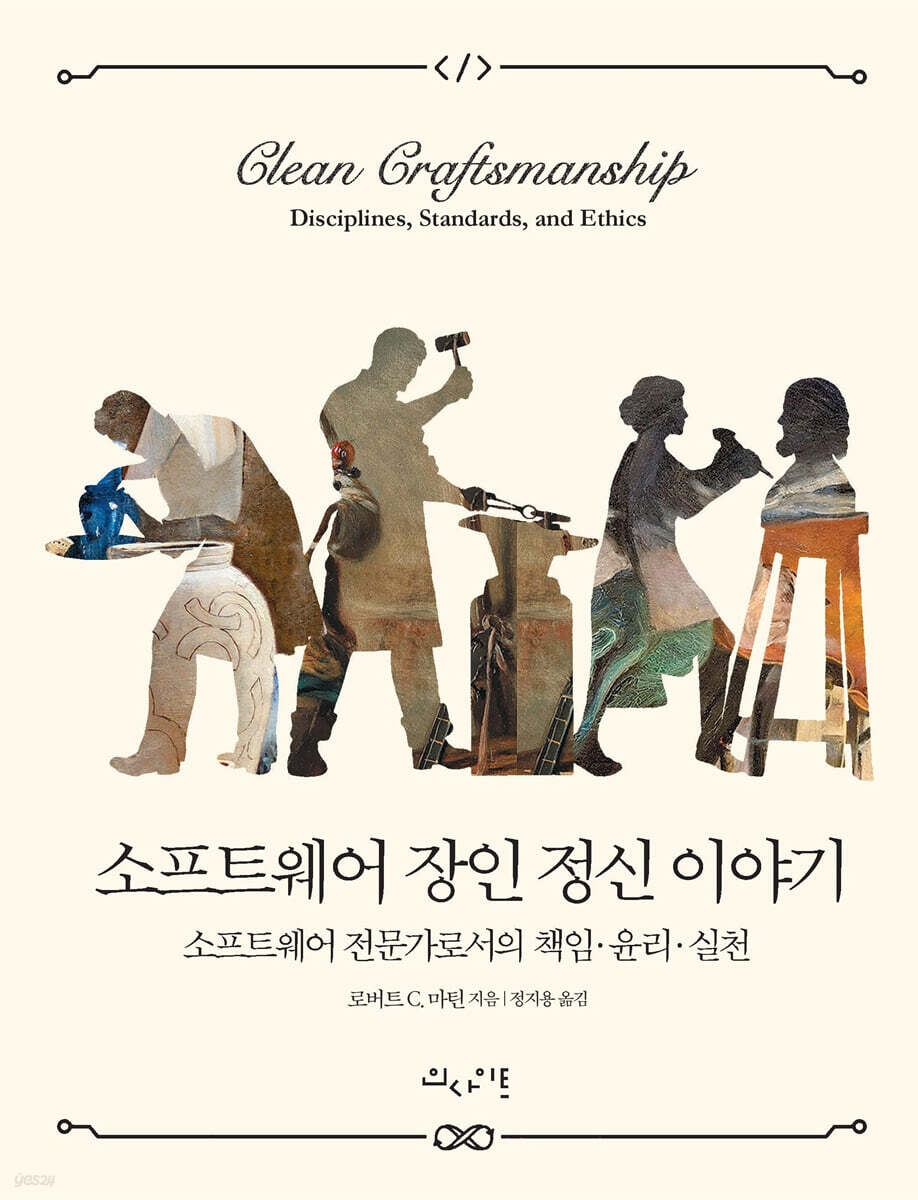 |
Description
Book Introduction
For developers who want to live as craftsmen who support the world.
Contrary to its image as a place brimming with cutting-edge talent, the software industry has often suffered from a shortage of skilled workers.
Several factors, including the relatively short history of the industry, the collapse of the bubble, and educational trial and error, have hindered the continuous and solid accumulation of knowledge and experience.
As society becomes increasingly reliant on software, what alternatives can we use to improve the skills of software developers?
Robert C., author of the best-selling Clean Code and an excellent developer mentor,
Martin proposes 'software craftsmanship' as an alternative.
In this book, "The Story of Software Craftsmanship," the author argues that just as craftsmen practice various skills that form the foundation for reaching a level of expertise in their field, developers too must practice corresponding skills and fulfill their professionalism and responsibility.
The author, a longtime participant in the agile movement, explains how to apply key agile development practices such as test-driven development, refactoring, and simple design to work as a training course for developers to become craftsmen.
It also emphasizes the standards and ethics that software developers should have as craftsmen who have a sense of responsibility and pride in their field, not just as simple functionaries.
Contrary to its image as a place brimming with cutting-edge talent, the software industry has often suffered from a shortage of skilled workers.
Several factors, including the relatively short history of the industry, the collapse of the bubble, and educational trial and error, have hindered the continuous and solid accumulation of knowledge and experience.
As society becomes increasingly reliant on software, what alternatives can we use to improve the skills of software developers?
Robert C., author of the best-selling Clean Code and an excellent developer mentor,
Martin proposes 'software craftsmanship' as an alternative.
In this book, "The Story of Software Craftsmanship," the author argues that just as craftsmen practice various skills that form the foundation for reaching a level of expertise in their field, developers too must practice corresponding skills and fulfill their professionalism and responsibility.
The author, a longtime participant in the agile movement, explains how to apply key agile development practices such as test-driven development, refactoring, and simple design to work as a training course for developers to become craftsmen.
It also emphasizes the standards and ethics that software developers should have as craftsmen who have a sense of responsibility and pride in their field, not just as simple functionaries.
index
Translator's Note
Recommendation
introduction
Acknowledgements
Chapter 1: Craftsmanship
Part 1 Discipline
__Extreme Programming
__Test-Driven Development
__Refactoring
__Simple design
__Co-programming
__ argument test
Chapter 2 Test-Driven Development
__outline
__Test-Driven Development Fundamentals
__conclusion
Chapter 3: Advanced Test-Driven Development
__Sort 1
__Sort 2
__Dead end
__Prepare, act, confirm
__test band
__architecture
__conclusion
Chapter 4 Test Design
__Testing the database
__Testing the GUI
__test pattern
__Test Design
__How should I convert it?
__conclusion
Chapter 5 Refactoring
__What is refactoring?
__Basic Tools
__discipline
__conclusion
Chapter 6 Simple Design
__YAGNI
__Tested with test
__Maximize expressiveness
__Minimize duplication
__Minimize size
__Simple design
Chapter 7: Collaborative Programming
Chapter 8: Acceptance Test
__discipline
__Continuous Build
Based on Part 2
__If I were your new CTO
Chapter 9 Productivity
__We will never release a piece of shit
__low modification costs
__We will always be ready
__Stable productivity
Chapter 10 Quality
__Continuous improvement
__the ability to overcome fear
__Extreme quality
__We won't pass it on to QA
__QA won't find anything
__Test Automation
__Automated Testing and User Interface
__Testing the user interface
Chapter 11 Courage
__We represent each other
__Honest estimate
__You have to say “no”
__Continuous and active learning
__Mentoring
Part 3 Ethics
__The first programmer
__75 years
__The Freak and the Savior
__Role Models and Villains
__We rule the world
__disasters
__Oath
Chapter 12 Damage
__First, do no harm
__Best result
__Iterative proof
Chapter 13: Sincerity
__short cycle
__Relentless improvement
__Maintain high productivity
Chapter 14 Teamwork
Working as a team
__Estimate honestly and fairly
__esteem
__Never stop learning
Search
Recommendation
introduction
Acknowledgements
Chapter 1: Craftsmanship
Part 1 Discipline
__Extreme Programming
__Test-Driven Development
__Refactoring
__Simple design
__Co-programming
__ argument test
Chapter 2 Test-Driven Development
__outline
__Test-Driven Development Fundamentals
__conclusion
Chapter 3: Advanced Test-Driven Development
__Sort 1
__Sort 2
__Dead end
__Prepare, act, confirm
__test band
__architecture
__conclusion
Chapter 4 Test Design
__Testing the database
__Testing the GUI
__test pattern
__Test Design
__How should I convert it?
__conclusion
Chapter 5 Refactoring
__What is refactoring?
__Basic Tools
__discipline
__conclusion
Chapter 6 Simple Design
__YAGNI
__Tested with test
__Maximize expressiveness
__Minimize duplication
__Minimize size
__Simple design
Chapter 7: Collaborative Programming
Chapter 8: Acceptance Test
__discipline
__Continuous Build
Based on Part 2
__If I were your new CTO
Chapter 9 Productivity
__We will never release a piece of shit
__low modification costs
__We will always be ready
__Stable productivity
Chapter 10 Quality
__Continuous improvement
__the ability to overcome fear
__Extreme quality
__We won't pass it on to QA
__QA won't find anything
__Test Automation
__Automated Testing and User Interface
__Testing the user interface
Chapter 11 Courage
__We represent each other
__Honest estimate
__You have to say “no”
__Continuous and active learning
__Mentoring
Part 3 Ethics
__The first programmer
__75 years
__The Freak and the Savior
__Role Models and Villains
__We rule the world
__disasters
__Oath
Chapter 12 Damage
__First, do no harm
__Best result
__Iterative proof
Chapter 13: Sincerity
__short cycle
__Relentless improvement
__Maintain high productivity
Chapter 14 Teamwork
Working as a team
__Estimate honestly and fairly
__esteem
__Never stop learning
Search
Publisher's Review
What you will learn in this book
· The meaning of software craftsmanship
Five core practices for developing a craftsman spirit: test-driven development, refactoring, simple design, co-programming, and acceptance testing.
· How individual developers and teams can improve productivity, quality, and courage.
· The true meaning of sincerity and teamwork
· Ten Oaths Software Professionals Must Follow
· The meaning of software craftsmanship
Five core practices for developing a craftsman spirit: test-driven development, refactoring, simple design, co-programming, and acceptance testing.
· How individual developers and teams can improve productivity, quality, and courage.
· The true meaning of sincerity and teamwork
· Ten Oaths Software Professionals Must Follow
GOODS SPECIFICS
- Date of issue: March 9, 2023
- Page count, weight, size: 436 pages | 720g | 188*240*30mm
- ISBN13: 9788966263912
- ISBN10: 8966263917
You may also like
카테고리
korean


korean

![GQ KOREA Mark (Monthly): December [2025]](http://librairie.coreenne.fr/cdn/shop/files/8ef265dbbfbf186523ed75ba7319009d.jpg?v=1765340328&width=3840)


