

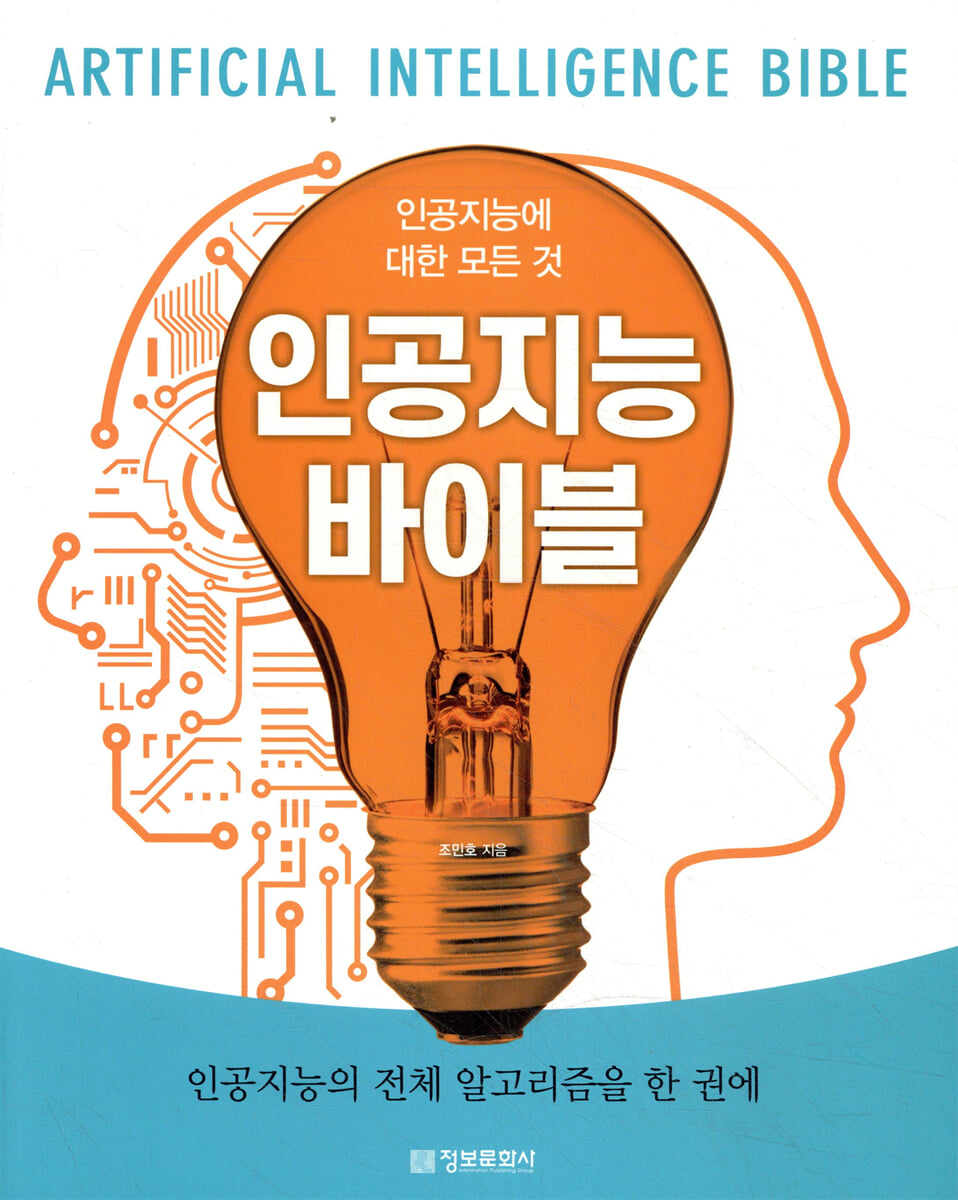
The Artificial Intelligence Bible (Everything About AI)
 |
Description
Book Introduction
The path to becoming a researcher, not just a technician!
The book begins with the feeling of embarking on a journey into the forest of artificial intelligence.
In order to explain the principles of artificial intelligence, which have become an essential process, in the easiest way possible, the roles, functions, and principles are explained through examples so that even beginners can easily understand them.
After explaining the basic principles and core technologies following the concepts and application areas, the structure concludes with the application and utilization of machine learning and technology.
Because it aims to show the overall picture of artificial intelligence and help readers understand how it has developed, it can broaden their understanding when studying various fields such as deep learning-based image processing and natural language recognition.
After reviewing the development of artificial intelligence technology, we will examine in detail the fields of machine learning, including statistical machine learning, supervised learning, unsupervised learning, reinforcement learning, and deep learning.
We will also explore its application in fields such as image and voice pattern recognition, natural language processing, machine learning, and intelligent robots, and conclude with an understanding of related tools such as Jess, Weka, R, and Python.
In particular, by organizing and summarizing reference materials, practice content, and practice problems for each part, you can feel your skills improving as an indicator.
The book begins with the feeling of embarking on a journey into the forest of artificial intelligence.
In order to explain the principles of artificial intelligence, which have become an essential process, in the easiest way possible, the roles, functions, and principles are explained through examples so that even beginners can easily understand them.
After explaining the basic principles and core technologies following the concepts and application areas, the structure concludes with the application and utilization of machine learning and technology.
Because it aims to show the overall picture of artificial intelligence and help readers understand how it has developed, it can broaden their understanding when studying various fields such as deep learning-based image processing and natural language recognition.
After reviewing the development of artificial intelligence technology, we will examine in detail the fields of machine learning, including statistical machine learning, supervised learning, unsupervised learning, reinforcement learning, and deep learning.
We will also explore its application in fields such as image and voice pattern recognition, natural language processing, machine learning, and intelligent robots, and conclude with an understanding of related tools such as Jess, Weka, R, and Python.
In particular, by organizing and summarizing reference materials, practice content, and practice problems for each part, you can feel your skills improving as an indicator.
- You can preview some of the book's contents.
Preview
index
PART 1.
Overview of Artificial Intelligence Technology
1.
Introduction to Artificial Intelligence
1.1 Definition
1.2 History
1.3 Areas of Application
2.
Research fields of artificial intelligence
2.1 Element Technology
2.2 Application areas
3.
Application examples of artificial intelligence
4.
The impact of artificial intelligence
PART 2.
Core technologies of artificial intelligence
1.
Knowledge Representation and Inference
1.1 Definition and representation of knowledge
1.2 Rules
1.3 frames
1.4 Logic
1.5 Semantic Network
1.6 Script
1.7 Ontology
1.8 Knowledge Representation by Functions
1.9 Representing uncertain knowledge
1.10 Rule-based systems
2.
Automaton and Artificial Life Programs
2.1 Artificial life
2.2 Finite Automaton
2.3 Markov model
2.4 State-based agents
3.
Search and optimization techniques
3.1 State Space and Navigation
3.2 Types of navigation
3.3 Blind exploration
3.4 Information Utilization Exploration
3.5 Game Exploration
3.6 Constraint satisfaction problem
3.7 Optimization
4.
Function optimization
4.1 Concept of function optimization
4.2 Regression Analysis
4.3 Important Algorithms and Cases
PART 3.
machine learning
1.
statistics
2.
Bayesian Inference and Applications
2.1 Bayesian statistics
2.2 EM algorithm
2.3 Discriminant Analysis
3.
Markov chain
3.1 Markov chain
3.2 Hidden Markov Chain
4.
Monte Carlo algorithm
4.1 Concept of Monte Carlo Algorithm
4.2 Markov Chain Monte Carlo Method
4.3 Bootstrap
5.
Statistical Machine Learning ① - Supervised Learning
5.1 Classification of statistical machine learning
5.2 Decision Tree
5.3 Random Forest
5.4 Support Vector Machines
6.
Statistical Machine Learning ② - Unsupervised Learning
6.1 Cluster Analysis
6.2 Dimensionality reduction techniques
6.3 Association Rule Analysis
7.
reinforcement learning
7.1 Concept of reinforcement learning
7.2 Concept of reinforcement learning techniques
7.3 Terminology
7.4 Reinforcement Learning Model
7.5 Base Model
7.6 Policy Gradient Model
7.7 Value Iteration Model
7.8 DQN
7.9 Examples of Reinforcement Learning
8.
Deep learning
8.1 Concept and multilayering of neural networks
8.2 Various artificial intelligence models
8.3 Deep Learning Model
8.4 Restricted Boltzmann Machines and Deep Belief Neural Networks
8.5 Autoencoder
8.6 Opposite Pair Generation Network
8.7 Multilayer Perceptron
8.8 Convolutional Neural Networks
8.9 Recurrent Neural Networks
8.10 Memory-Expanded Neural Network Models and Development Environment
9.
Evaluation of artificial intelligence models
9.1 Evaluation Methods for Artificial Intelligence Models
9.2 Terminology to know when evaluating models
9.3 Holdout validation and cross-validation
9.4 How to Investigate the Error Matrix
9.5 PR curve
9.6 ROC curve
9.7 Uses of ROC Curves and PR Curves
PART 4.
Applications of artificial intelligence technology
1.
Image and voice pattern recognition
1.1 Pattern Recognition
1.2 Image Recognition
1.3 Voice Recognition
2.
Natural language processing
2.1 Understanding sentence structure
2.2 Natural language processing techniques
2.3 Count-based embedding
2.4 Prediction-based vector
2.5 Structural Analysis
2.6 Text Generation
2.7 Tools for Natural Language Processing
3.
intelligent robots
3.1 Introduction to Robotics
3.2 Robot control technology and robot control paradigm
3.3 Robot Software Development Framework
3.4 Robot Development Stage
4.
Introduction to AI-related tools
4.1 Rule-based system development tool, Jess
4.2 Data Mining Tool, Weka
4.3 Statistical Analysis Tool, R
4.4 Deep Learning Development Tools
4.5 Artificial Intelligence Language, Python
4.6 Computer Vision Library, OpenCV
4.7 Robot Software Development Framework, ROS
5.
After completing the journey through the artificial intelligence forest
Overview of Artificial Intelligence Technology
1.
Introduction to Artificial Intelligence
1.1 Definition
1.2 History
1.3 Areas of Application
2.
Research fields of artificial intelligence
2.1 Element Technology
2.2 Application areas
3.
Application examples of artificial intelligence
4.
The impact of artificial intelligence
PART 2.
Core technologies of artificial intelligence
1.
Knowledge Representation and Inference
1.1 Definition and representation of knowledge
1.2 Rules
1.3 frames
1.4 Logic
1.5 Semantic Network
1.6 Script
1.7 Ontology
1.8 Knowledge Representation by Functions
1.9 Representing uncertain knowledge
1.10 Rule-based systems
2.
Automaton and Artificial Life Programs
2.1 Artificial life
2.2 Finite Automaton
2.3 Markov model
2.4 State-based agents
3.
Search and optimization techniques
3.1 State Space and Navigation
3.2 Types of navigation
3.3 Blind exploration
3.4 Information Utilization Exploration
3.5 Game Exploration
3.6 Constraint satisfaction problem
3.7 Optimization
4.
Function optimization
4.1 Concept of function optimization
4.2 Regression Analysis
4.3 Important Algorithms and Cases
PART 3.
machine learning
1.
statistics
2.
Bayesian Inference and Applications
2.1 Bayesian statistics
2.2 EM algorithm
2.3 Discriminant Analysis
3.
Markov chain
3.1 Markov chain
3.2 Hidden Markov Chain
4.
Monte Carlo algorithm
4.1 Concept of Monte Carlo Algorithm
4.2 Markov Chain Monte Carlo Method
4.3 Bootstrap
5.
Statistical Machine Learning ① - Supervised Learning
5.1 Classification of statistical machine learning
5.2 Decision Tree
5.3 Random Forest
5.4 Support Vector Machines
6.
Statistical Machine Learning ② - Unsupervised Learning
6.1 Cluster Analysis
6.2 Dimensionality reduction techniques
6.3 Association Rule Analysis
7.
reinforcement learning
7.1 Concept of reinforcement learning
7.2 Concept of reinforcement learning techniques
7.3 Terminology
7.4 Reinforcement Learning Model
7.5 Base Model
7.6 Policy Gradient Model
7.7 Value Iteration Model
7.8 DQN
7.9 Examples of Reinforcement Learning
8.
Deep learning
8.1 Concept and multilayering of neural networks
8.2 Various artificial intelligence models
8.3 Deep Learning Model
8.4 Restricted Boltzmann Machines and Deep Belief Neural Networks
8.5 Autoencoder
8.6 Opposite Pair Generation Network
8.7 Multilayer Perceptron
8.8 Convolutional Neural Networks
8.9 Recurrent Neural Networks
8.10 Memory-Expanded Neural Network Models and Development Environment
9.
Evaluation of artificial intelligence models
9.1 Evaluation Methods for Artificial Intelligence Models
9.2 Terminology to know when evaluating models
9.3 Holdout validation and cross-validation
9.4 How to Investigate the Error Matrix
9.5 PR curve
9.6 ROC curve
9.7 Uses of ROC Curves and PR Curves
PART 4.
Applications of artificial intelligence technology
1.
Image and voice pattern recognition
1.1 Pattern Recognition
1.2 Image Recognition
1.3 Voice Recognition
2.
Natural language processing
2.1 Understanding sentence structure
2.2 Natural language processing techniques
2.3 Count-based embedding
2.4 Prediction-based vector
2.5 Structural Analysis
2.6 Text Generation
2.7 Tools for Natural Language Processing
3.
intelligent robots
3.1 Introduction to Robotics
3.2 Robot control technology and robot control paradigm
3.3 Robot Software Development Framework
3.4 Robot Development Stage
4.
Introduction to AI-related tools
4.1 Rule-based system development tool, Jess
4.2 Data Mining Tool, Weka
4.3 Statistical Analysis Tool, R
4.4 Deep Learning Development Tools
4.5 Artificial Intelligence Language, Python
4.6 Computer Vision Library, OpenCV
4.7 Robot Software Development Framework, ROS
5.
After completing the journey through the artificial intelligence forest
Detailed image
.jpg)
Publisher's Review
Conquer AI without fear of math or programming!
Artificial intelligence originated from the desire to create human intelligence and encompasses diverse fields such as cognitive science, robotics, machine learning, optimization theory, pattern recognition, and natural language processing.
Recently, it has become an essential academic discipline as it is being utilized in various fields such as autonomous driving, advertisement and news recommendations, automatic translation, medical assistance, conversational programs, robot-based production and service, and large-scale data analysis systems.
This book is an introductory book on artificial intelligence that will provide beginners with a wealth of interesting information, while also opening up a new world to experts weary of deep learning.
In particular, since it comprehensively covers almost all fields of artificial intelligence, it systematically explains the connection between related technologies by presenting a roadmap.
Additionally, it minimizes formulas and programming that may be difficult to understand, making it light and easy to read and understand.
And because it clearly defines and uses many unfamiliar terms used in various fields, reading this book in its entirety will be of great help when studying other fields in the future.
Artificial intelligence originated from the desire to create human intelligence and encompasses diverse fields such as cognitive science, robotics, machine learning, optimization theory, pattern recognition, and natural language processing.
Recently, it has become an essential academic discipline as it is being utilized in various fields such as autonomous driving, advertisement and news recommendations, automatic translation, medical assistance, conversational programs, robot-based production and service, and large-scale data analysis systems.
This book is an introductory book on artificial intelligence that will provide beginners with a wealth of interesting information, while also opening up a new world to experts weary of deep learning.
In particular, since it comprehensively covers almost all fields of artificial intelligence, it systematically explains the connection between related technologies by presenting a roadmap.
Additionally, it minimizes formulas and programming that may be difficult to understand, making it light and easy to read and understand.
And because it clearly defines and uses many unfamiliar terms used in various fields, reading this book in its entirety will be of great help when studying other fields in the future.
GOODS SPECIFICS
- Date of issue: June 30, 2022
- Page count, weight, size: 432 pages | 802g | 187*235*20mm
- ISBN13: 9788956749167
- ISBN10: 8956749167
You may also like
카테고리
korean


korean

![GQ KOREA Mark (Monthly): December [2025]](http://librairie.coreenne.fr/cdn/shop/files/8ef265dbbfbf186523ed75ba7319009d.jpg?v=1765340328&width=3840)


