

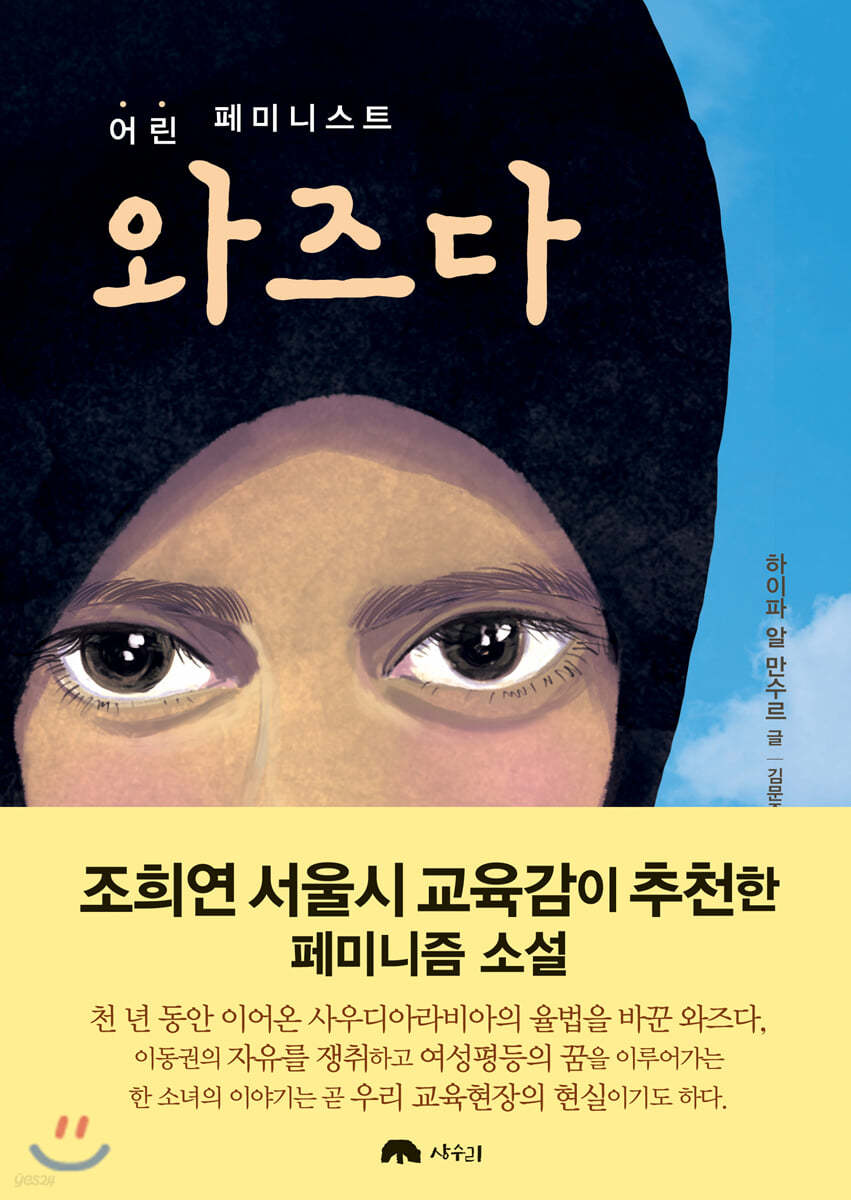
Wadjda, a young feminist
 |
Description
Book Introduction
- A word from MD
- The story of Wadjda, a girl who tries to ride a bicycle in Saudi Arabia, where cycling is banned.
The girl's small act of making her wish come true has become a huge ripple effect, marking the beginning of change for women's rights in Saudi Arabia.
A novel that cheers on the world's Wazdas who challenge taboos with cheerfulness and without discouragement.
- Youth MD Lee Ju-eun
In an era where the whole world is realizing feminism,
One girl's small dream becomes a challenge that changes the world!
In Saudi Arabia, where women are banned from riding bicycles, Wadjda, a young feminist, harbors a dream of riding a bicycle and struggles to achieve it.
Despite being labeled a problem child by her school teachers and scolded by her mother who is afraid of breaking convention, Wadzda is quite the 'warrior', never giving up.
This young warrior finally achieves his wish and wins his freedom amidst the adults who live in helplessness, oppressed by old customs and laws.
It also brings about a ripple of change in the life of a mother who lived with discrimination without even knowing it was discrimination.
My mother, who had lived her life only for her husband and acted according to his wishes, decided to live for herself.
And I support and cheer for Wadzda.
Witnessing the change in her mother, Wadzda knows that 'everything will be different now', while at the same time, readers are assured that Wadzda will 'never lose her freedom again'.
It is a miracle and hope.
The scene where Wadzda rides the green bicycle she so desperately wanted and vows never to let her and her mother's happiness be taken away from her is touching.
Wadzda inspires women around the world, especially girls, to dream of a better future and make it come true.
The story of the girl Wadzda, who dreamed, challenged, and realized a forbidden dream, is not just a story, but creates a miracle in reality.
In fact, as a result of Wadjda, Saudi Arabia changed its thousand-year-old laws and women were allowed to ride bicycles.
Furthermore, women also gained the right to drive.
"Wadjda, the Young Feminist" has created a starting point for change in the reality of women's rights in Saudi Arabia, and will now touch the hearts of our youth.
One girl's small dream becomes a challenge that changes the world!
In Saudi Arabia, where women are banned from riding bicycles, Wadjda, a young feminist, harbors a dream of riding a bicycle and struggles to achieve it.
Despite being labeled a problem child by her school teachers and scolded by her mother who is afraid of breaking convention, Wadzda is quite the 'warrior', never giving up.
This young warrior finally achieves his wish and wins his freedom amidst the adults who live in helplessness, oppressed by old customs and laws.
It also brings about a ripple of change in the life of a mother who lived with discrimination without even knowing it was discrimination.
My mother, who had lived her life only for her husband and acted according to his wishes, decided to live for herself.
And I support and cheer for Wadzda.
Witnessing the change in her mother, Wadzda knows that 'everything will be different now', while at the same time, readers are assured that Wadzda will 'never lose her freedom again'.
It is a miracle and hope.
The scene where Wadzda rides the green bicycle she so desperately wanted and vows never to let her and her mother's happiness be taken away from her is touching.
Wadzda inspires women around the world, especially girls, to dream of a better future and make it come true.
The story of the girl Wadzda, who dreamed, challenged, and realized a forbidden dream, is not just a story, but creates a miracle in reality.
In fact, as a result of Wadjda, Saudi Arabia changed its thousand-year-old laws and women were allowed to ride bicycles.
Furthermore, women also gained the right to drive.
"Wadjda, the Young Feminist" has created a starting point for change in the reality of women's rights in Saudi Arabia, and will now touch the hearts of our youth.
- You can preview some of the book's contents.
Preview
Into the book
Wazda ran.
Over there, I saw boys riding their bicycles freely and wandering around.
The boys flew over Riyadh like birds.
“I’m going to buy a bike too!”
Wadzda shouted loudly.
The sound sounded like a challenge to Wadzda herself.
--- p.36
“Where’s your veil? Did you come to school without it?”
Every word was terrifying.
Even if the teacher asked, "Wazda, did you kill someone?", it wouldn't sound more creepy.
--- p.42
“Hey, how about you come up here and play with us?”
As one man shouted, the man next to him smirked.
Wadzda's heart sank.
I was frozen solid, but I tried to pretend not to hear.
Wadzda felt like a rabbit running across a barren field.
A pack of hungry beasts followed closely behind.
Growling with hunger.
--- p.61
Mom got even more angry in her voice.
"Forget the idea of buying a bike! That's ridiculous! Have you ever seen a girl riding a bike?"
Wadzda slammed the door shut.
'I'm never talking to Mom again! She'll never understand.
'You don't even try to understand!'
Wadzda picked up the half-finished bracelet and began working again.
I will buy a green bike even if I don't get my mom's permission.
Wadzda's resolve grew stronger.
--- p.74
“Come tomorrow wearing an abaya like this picture.
Otherwise you'll just leave it out in the blazing sun again.
“Here, show this to your mother.”
Wadzda accepted the pamphlet.
There was a photo of a model completely covered in black.
There were no eyes, no hands, and no feet.
A person completely covered in an abaya from head to toe looked like a black ghost.
Wadzda knew that the model was a woman.
It was a given.
But you couldn't tell just by looking at the photo.
Wadzda felt a pang in her chest.
The abaya was a garment that covered more than a veil.
It looked much more threatening and much more oppressive than the veil.
--- p.89
The students looked up at the principal with one heart.
His eyes were filled with shock and anger.
A silent solidarity formed among the students, and a spirit of rebellion rose in their hearts.
For a moment, the girls united and resisted the absolute power of their teacher in their hearts.
--- p.284
Wadzda bit her lower lip hard.
And I pedaled with all my might.
To move away from the cruel reality with force.
My mother's words lingered in my ears.
'Dad has made up his mind.'
'I've decided too.'
Wadzda decided to be happy.
Happiness will never be taken away from you, no matter what happens.
It was a decision for her mother and for Wadzda herself.
Over there, I saw boys riding their bicycles freely and wandering around.
The boys flew over Riyadh like birds.
“I’m going to buy a bike too!”
Wadzda shouted loudly.
The sound sounded like a challenge to Wadzda herself.
--- p.36
“Where’s your veil? Did you come to school without it?”
Every word was terrifying.
Even if the teacher asked, "Wazda, did you kill someone?", it wouldn't sound more creepy.
--- p.42
“Hey, how about you come up here and play with us?”
As one man shouted, the man next to him smirked.
Wadzda's heart sank.
I was frozen solid, but I tried to pretend not to hear.
Wadzda felt like a rabbit running across a barren field.
A pack of hungry beasts followed closely behind.
Growling with hunger.
--- p.61
Mom got even more angry in her voice.
"Forget the idea of buying a bike! That's ridiculous! Have you ever seen a girl riding a bike?"
Wadzda slammed the door shut.
'I'm never talking to Mom again! She'll never understand.
'You don't even try to understand!'
Wadzda picked up the half-finished bracelet and began working again.
I will buy a green bike even if I don't get my mom's permission.
Wadzda's resolve grew stronger.
--- p.74
“Come tomorrow wearing an abaya like this picture.
Otherwise you'll just leave it out in the blazing sun again.
“Here, show this to your mother.”
Wadzda accepted the pamphlet.
There was a photo of a model completely covered in black.
There were no eyes, no hands, and no feet.
A person completely covered in an abaya from head to toe looked like a black ghost.
Wadzda knew that the model was a woman.
It was a given.
But you couldn't tell just by looking at the photo.
Wadzda felt a pang in her chest.
The abaya was a garment that covered more than a veil.
It looked much more threatening and much more oppressive than the veil.
--- p.89
The students looked up at the principal with one heart.
His eyes were filled with shock and anger.
A silent solidarity formed among the students, and a spirit of rebellion rose in their hearts.
For a moment, the girls united and resisted the absolute power of their teacher in their hearts.
--- p.284
Wadzda bit her lower lip hard.
And I pedaled with all my might.
To move away from the cruel reality with force.
My mother's words lingered in my ears.
'Dad has made up his mind.'
'I've decided too.'
Wadzda decided to be happy.
Happiness will never be taken away from you, no matter what happens.
It was a decision for her mother and for Wadzda herself.
--- p.302
Publisher's Review
"Wadjda, the Young Feminist" shows the harsh reality of Saudi Arabia through the daily life of a girl.
This film soberly illuminates the long-standing abuses of women's rights in Saudi Arabia, a country where women are required to cover their entire bodies when going out, are prohibited from traveling without a permit, are prohibited from using public spaces alone, and are banned from cultural activities, cycling, and driving.
It also criticizes the complacency of those who discriminate and are discriminated against as if it were natural without even recognizing gender discrimination.
The reality is bleak, but the story that Wadzda tells is not entirely dark and heavy.
The bubbly and lively girl Wadzda's activities make me laugh and gain positive energy.
Wadzda's constant challenges and efforts to change the stifling reality create a miracle in a reality that seems unchangeable.
So, 『Young Feminist Wadzda』 is both challenging and hopeful.
Gender inequality is not a problem that only occurs in Saudi Arabia.
In the 2019 Glass Ceiling Index, which calculates the level of gender equality, Korea ranked last among the 29 OECD member countries.
This is a truly shameful result, considering that the world was amazed by the rapid economic development, and K-pop by BTS and the movie "Parasite" were recognized in the global market, making the country famous.
Gender inequality is also evident in schools.
Expressions that are hateful to women, such as “kolfemi,” “doenjangnyeo,” “mamchung,” and “kimchinyeo,” are rampant among students, and 60% of teachers have encountered misogyny.
Accordingly, in 2018, a national petition was created demanding ‘mandatory feminism education in elementary, middle, and high schools.’
There are growing calls for feminist education, and it will begin soon.
In that respect, 『Young Feminist Wadzda』 has great significance.
By experiencing, thinking, and solving problems together with Wadzda in everyday life, rather than just in theory, young people can naturally learn the true meaning of feminism, understand gender equality, and learn the courage to change their own society into an equal one.
In our current reality, where gender discrimination is unconsciously perpetuated due to old patriarchal customs and traditions, this work allows young people to naturally recognize, empathize with, ponder, and discuss feminism.
[Author's Note]
I grew up with wonderful girls with tremendous potential.
But they were oppressed in a closed society and withered away without even realizing their potential.
Girls couldn't even dream, couldn't even try.
I wanted to show the real daily lives of Saudi Arabian women through 'Wadjda'.
I wanted to find a starting point for change in reality, and I hoped that many people would see, hear, and feel it together.
The purpose was not to criticize the social structure itself.
I wanted to sound an alarm to people who are just living their lives with the feeling of powerlessness that they cannot change the social structure.
In that sense, it was a great joy for me that Saudi Arabian women were able to ride bicycles thanks to Wadjda.
It is a miracle that it changed the minds of people who firmly believed that 'women cannot ride bicycles' and led to social discourse.
"Wadzda" is a story about hope.
It is not just a critique of the negative reality, but a story about a positive future and the direction we should take going forward.
I hope this story will inspire women, especially girls, not only in Saudi Arabia but around the world to dream of and achieve a better future.
It is truly worthwhile to constantly challenge and strive to change the stifling reality.
The new generations that will lead the future will create their own lives more honestly, boldly, and resiliently than they do now.
I believe my generation has the will and power to change difficult situations in ways we could never have imagined.
I applaud and support you as you boldly build your own lives.
-Saudi's first film director, Haifaa Al Mansour
This film soberly illuminates the long-standing abuses of women's rights in Saudi Arabia, a country where women are required to cover their entire bodies when going out, are prohibited from traveling without a permit, are prohibited from using public spaces alone, and are banned from cultural activities, cycling, and driving.
It also criticizes the complacency of those who discriminate and are discriminated against as if it were natural without even recognizing gender discrimination.
The reality is bleak, but the story that Wadzda tells is not entirely dark and heavy.
The bubbly and lively girl Wadzda's activities make me laugh and gain positive energy.
Wadzda's constant challenges and efforts to change the stifling reality create a miracle in a reality that seems unchangeable.
So, 『Young Feminist Wadzda』 is both challenging and hopeful.
Gender inequality is not a problem that only occurs in Saudi Arabia.
In the 2019 Glass Ceiling Index, which calculates the level of gender equality, Korea ranked last among the 29 OECD member countries.
This is a truly shameful result, considering that the world was amazed by the rapid economic development, and K-pop by BTS and the movie "Parasite" were recognized in the global market, making the country famous.
Gender inequality is also evident in schools.
Expressions that are hateful to women, such as “kolfemi,” “doenjangnyeo,” “mamchung,” and “kimchinyeo,” are rampant among students, and 60% of teachers have encountered misogyny.
Accordingly, in 2018, a national petition was created demanding ‘mandatory feminism education in elementary, middle, and high schools.’
There are growing calls for feminist education, and it will begin soon.
In that respect, 『Young Feminist Wadzda』 has great significance.
By experiencing, thinking, and solving problems together with Wadzda in everyday life, rather than just in theory, young people can naturally learn the true meaning of feminism, understand gender equality, and learn the courage to change their own society into an equal one.
In our current reality, where gender discrimination is unconsciously perpetuated due to old patriarchal customs and traditions, this work allows young people to naturally recognize, empathize with, ponder, and discuss feminism.
[Author's Note]
I grew up with wonderful girls with tremendous potential.
But they were oppressed in a closed society and withered away without even realizing their potential.
Girls couldn't even dream, couldn't even try.
I wanted to show the real daily lives of Saudi Arabian women through 'Wadjda'.
I wanted to find a starting point for change in reality, and I hoped that many people would see, hear, and feel it together.
The purpose was not to criticize the social structure itself.
I wanted to sound an alarm to people who are just living their lives with the feeling of powerlessness that they cannot change the social structure.
In that sense, it was a great joy for me that Saudi Arabian women were able to ride bicycles thanks to Wadjda.
It is a miracle that it changed the minds of people who firmly believed that 'women cannot ride bicycles' and led to social discourse.
"Wadzda" is a story about hope.
It is not just a critique of the negative reality, but a story about a positive future and the direction we should take going forward.
I hope this story will inspire women, especially girls, not only in Saudi Arabia but around the world to dream of and achieve a better future.
It is truly worthwhile to constantly challenge and strive to change the stifling reality.
The new generations that will lead the future will create their own lives more honestly, boldly, and resiliently than they do now.
I believe my generation has the will and power to change difficult situations in ways we could never have imagined.
I applaud and support you as you boldly build your own lives.
-Saudi's first film director, Haifaa Al Mansour
GOODS SPECIFICS
- Date of issue: February 25, 2020
- Page count, weight, size: 304 pages | 462g | 142*200*30mm
- ISBN13: 9791155716847
- ISBN10: 1155716841
- KC Certification: Certification Type: Conformity Confirmation
You may also like
카테고리
korean


korean

![GQ KOREA Mark (Monthly): December [2025]](http://librairie.coreenne.fr/cdn/shop/files/8ef265dbbfbf186523ed75ba7319009d.jpg?v=1765340328&width=3840)


