

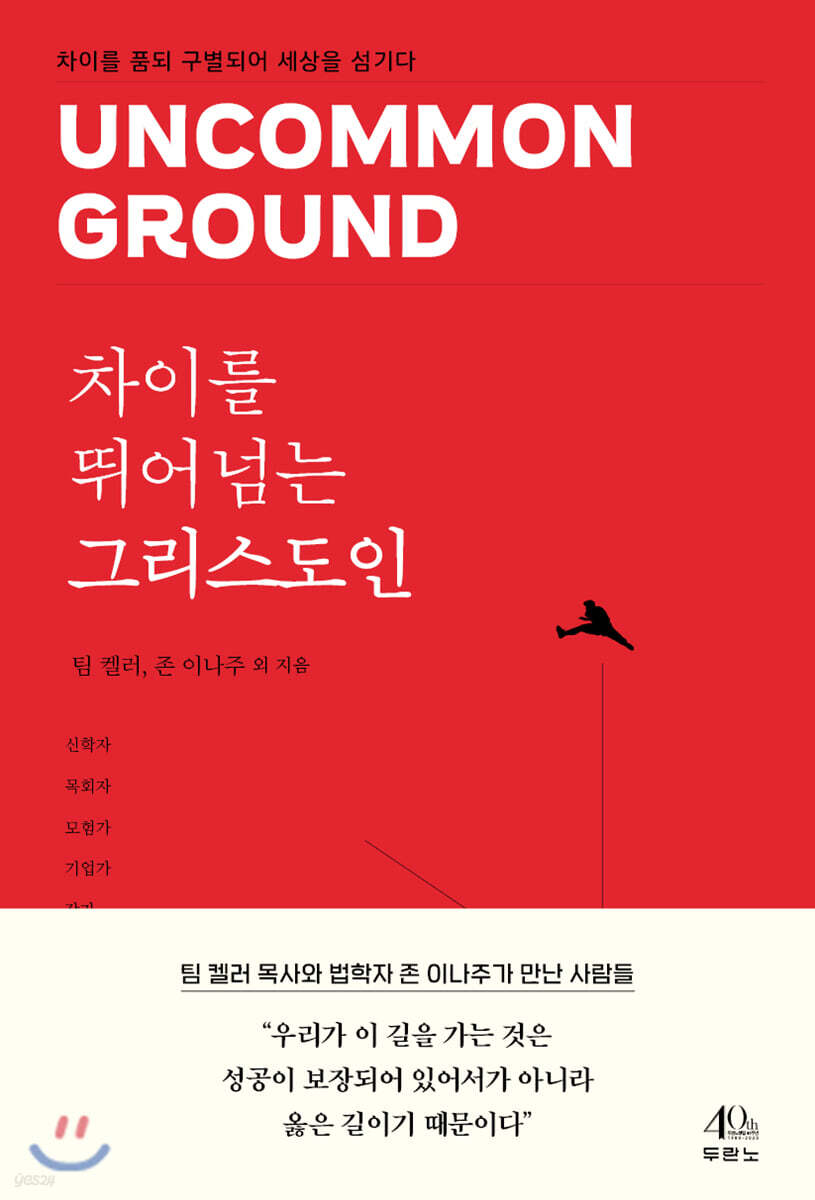
Christians who transcend differences
 |
Description
Book Introduction
Contemplating 'Togetherness' in a world with different grounds
How to live faithfully in the world
A book for Christians who want to live faithfully in the world!
We share our thoughts and concerns with Tim Keller and his friends, whom we love and respect.
How can Christians reach out to the world across differences?
How can we maintain our distinctness without blending in with the world?
How can we serve others without cowering defensively?
Living in an extremely divided and hostile world
We live in an age of extreme division and even hostility.
Americans today disagree about the purpose of our nation, the nature of the common good, or even the meaning of human flourishing.
These differences of opinion affect not only what we think, but also how we think and how we see the world.
In the midst of such profound division, how can Christians remain faithful to the gospel while respecting those who hold fundamentally different beliefs?
How to live faithfully in the world
A book for Christians who want to live faithfully in the world!
We share our thoughts and concerns with Tim Keller and his friends, whom we love and respect.
How can Christians reach out to the world across differences?
How can we maintain our distinctness without blending in with the world?
How can we serve others without cowering defensively?
Living in an extremely divided and hostile world
We live in an age of extreme division and even hostility.
Americans today disagree about the purpose of our nation, the nature of the common good, or even the meaning of human flourishing.
These differences of opinion affect not only what we think, but also how we think and how we see the world.
In the midst of such profound division, how can Christians remain faithful to the gospel while respecting those who hold fundamentally different beliefs?
- You can preview some of the book's contents.
Preview
index
prolog.
A world with a different ground than mine,
Living as a Christian in it
_Tim Keller and John Inaju
PART1.
How to Transcend Differences and Reach Out to the World
1.
Theologian Kristen Deede Johnson
As citizens of the Kingdom of God
Thinking about the world
2.
Pastor Timothy Keller
In the secular city
Let salt be salt
3.
Adventurer Tom Lin
I can't see ahead
To the land that calls
4.
Entrepreneur Rudy Carrasco
Where we walk
Become a road
PART2.
How should I live out my faith from where I stand?
5.
Author, Tish Harrison Warren
Eternal things
Speaking in the language of my time
6.
Songwriter, Sara Groves
In the middle of a bomb-damaged building
Like playing the cello
7.
Storyteller, Lecrae
With our lives, with our stories
He tells us to follow God.
8.
Translator, John Inazu
Translating the church into the world,
Translating the world into the church
PART3.
How to serve others without shrinking
9.
Bridge Builder, Shirley V.
Hoekstra (Shirley V.
Hoogstra)
Do not turn a blind eye to injustice
Washing their feet
10.
Medical professional, Warren Kinghorn
Even treating social injustice
Dreaming of a good influence
11.
The Peacemaker, Trillia Newbell
Jesus Christ is the one who heals both Jews and Gentiles.
As if the wall that divided us was torn down
12.
Claude Richard Alexander Jr., the Peacemaker
Peace within us
Share more in this dizzying world
Epilogue.
Become the light and salt that fully permeates the world
Acknowledgements
main
Contributor's works
A world with a different ground than mine,
Living as a Christian in it
_Tim Keller and John Inaju
PART1.
How to Transcend Differences and Reach Out to the World
1.
Theologian Kristen Deede Johnson
As citizens of the Kingdom of God
Thinking about the world
2.
Pastor Timothy Keller
In the secular city
Let salt be salt
3.
Adventurer Tom Lin
I can't see ahead
To the land that calls
4.
Entrepreneur Rudy Carrasco
Where we walk
Become a road
PART2.
How should I live out my faith from where I stand?
5.
Author, Tish Harrison Warren
Eternal things
Speaking in the language of my time
6.
Songwriter, Sara Groves
In the middle of a bomb-damaged building
Like playing the cello
7.
Storyteller, Lecrae
With our lives, with our stories
He tells us to follow God.
8.
Translator, John Inazu
Translating the church into the world,
Translating the world into the church
PART3.
How to serve others without shrinking
9.
Bridge Builder, Shirley V.
Hoekstra (Shirley V.
Hoogstra)
Do not turn a blind eye to injustice
Washing their feet
10.
Medical professional, Warren Kinghorn
Even treating social injustice
Dreaming of a good influence
11.
The Peacemaker, Trillia Newbell
Jesus Christ is the one who heals both Jews and Gentiles.
As if the wall that divided us was torn down
12.
Claude Richard Alexander Jr., the Peacemaker
Peace within us
Share more in this dizzying world
Epilogue.
Become the light and salt that fully permeates the world
Acknowledgements
main
Contributor's works
Into the book
This is the central question of this book.
“How can Christians relate to people of different faiths while respecting them and maintaining their evangelical convictions?” The two of us have been corresponding for several years, and this book was conceived.
We were all exploring how people transcend deep, painful differences to find common ground.
We wanted to learn how to respond in a Christian way to the reality of our differences, to what scholars call the "hard reality of pluralism."
The reality of pluralism is often obscured, at least in the United States, by the ideals of "one indivisible nation" and the pursuit of a "more perfect union."
But what generally defines our existence is difference and disagreement rather than agreement.
Americans, like most citizens of Western countries today, struggle to find common ground about the purpose of their country, the nature of the common good, and the meaning of human flourishing.
These differences of opinion affect not only what we think, but also how we think and see the world.
Deep and unbridgeable differences on the most important issues – this is the reality of pluralism today.
Understanding pluralism is about understanding our past.
The reason America is not, and never has been, a thoroughly 'Christian nation' is because of the reality of pluralism.
It is clear that white Protestant culture, or Judeo-Christian culture as some call it, influenced our nation's founding fathers and shaped middle-class norms and values for a significant period of American history.
This shared culture—a supposed agreement on the nature of religious practice and public morality—brought about important social benefits, including the construction and maintenance of various institutions and infrastructure.
The vast majority of today's philanthropic sector—private colleges and universities, hospitals, and social service organizations—has its roots in Protestant (and later Catholic and Jewish) communities.
But this shared Protestant culture failed to recognize many serious injustices, and sometimes even allowed them to persist.
Protestants have often been indifferent, and sometimes even hostile, to the various demands for religious freedom made by religious minorities.
White Protestants were largely absent from the civil rights movement, and some even engaged in racial discrimination, which persists today.
Protestant culture has used its social and legal power to suppress diverse views on race, religion, gender, and sexuality.
In this Protestant-dominated culture, many Christians have forgotten the biblical counsel that we have no lasting city on earth (Hebrews 13:14) and that we should not put our trust in earthly rulers (Psalm 146:3).
Over the generations, some Christians have become so caught up in the ostentatious elements of earthly citizenship that they have lost sight of the object of their primary loyalty.
We are called to love our neighbors, but our true citizenship is in heaven (Philippians 3:20).
The consensus once taken for granted in Protestant culture has weakened in recent years, partly due to a growing awareness of the differences between religious (and increasingly non-religious) beliefs.
At the same time, as the social trend toward individualism and autonomy deepened and accelerated, trust in social institutions such as corporations, the media, government, church, and even the family eroded.
But even as Protestant culture declined, no successor culture emerged.
Neither evangelicalism, Roman Catholicism, nor secularism have replaced the previously taken-for-granted consensus.
Against this backdrop, we asked ourselves how we can find common ground in an age where we cannot agree on the common good.
We also wanted to explore how Christians can practice humility, patience, and tolerance—three civic practices that John Inazu suggests in his book Confident Pluralism.
We believe that implementing these practices is fully consistent with witnessing to the Gospel in a time of profound division.
In fact, humility, patience, and tolerance not only make room for the gospel, but also point to the three Christian virtues of faith, hope, and love, respectively.
The first practice, humility, recognizes that in a world where people have vastly different views on fundamental issues, neither Christians nor non-Christians can always prove that they are right and the other is wrong.
Christians can practice humility in public life because they recognize the limitations of human reason, including their own, and because they know that they are saved by faith, not by moral acts or goodness.
This confident faith is the foundation of our relationship with God, but it does not provide unshakable certainty about all matters.
(omission)
“How can Christians relate to people of different faiths while respecting them and maintaining their evangelical convictions?” The two of us have been corresponding for several years, and this book was conceived.
We were all exploring how people transcend deep, painful differences to find common ground.
We wanted to learn how to respond in a Christian way to the reality of our differences, to what scholars call the "hard reality of pluralism."
The reality of pluralism is often obscured, at least in the United States, by the ideals of "one indivisible nation" and the pursuit of a "more perfect union."
But what generally defines our existence is difference and disagreement rather than agreement.
Americans, like most citizens of Western countries today, struggle to find common ground about the purpose of their country, the nature of the common good, and the meaning of human flourishing.
These differences of opinion affect not only what we think, but also how we think and see the world.
Deep and unbridgeable differences on the most important issues – this is the reality of pluralism today.
Understanding pluralism is about understanding our past.
The reason America is not, and never has been, a thoroughly 'Christian nation' is because of the reality of pluralism.
It is clear that white Protestant culture, or Judeo-Christian culture as some call it, influenced our nation's founding fathers and shaped middle-class norms and values for a significant period of American history.
This shared culture—a supposed agreement on the nature of religious practice and public morality—brought about important social benefits, including the construction and maintenance of various institutions and infrastructure.
The vast majority of today's philanthropic sector—private colleges and universities, hospitals, and social service organizations—has its roots in Protestant (and later Catholic and Jewish) communities.
But this shared Protestant culture failed to recognize many serious injustices, and sometimes even allowed them to persist.
Protestants have often been indifferent, and sometimes even hostile, to the various demands for religious freedom made by religious minorities.
White Protestants were largely absent from the civil rights movement, and some even engaged in racial discrimination, which persists today.
Protestant culture has used its social and legal power to suppress diverse views on race, religion, gender, and sexuality.
In this Protestant-dominated culture, many Christians have forgotten the biblical counsel that we have no lasting city on earth (Hebrews 13:14) and that we should not put our trust in earthly rulers (Psalm 146:3).
Over the generations, some Christians have become so caught up in the ostentatious elements of earthly citizenship that they have lost sight of the object of their primary loyalty.
We are called to love our neighbors, but our true citizenship is in heaven (Philippians 3:20).
The consensus once taken for granted in Protestant culture has weakened in recent years, partly due to a growing awareness of the differences between religious (and increasingly non-religious) beliefs.
At the same time, as the social trend toward individualism and autonomy deepened and accelerated, trust in social institutions such as corporations, the media, government, church, and even the family eroded.
But even as Protestant culture declined, no successor culture emerged.
Neither evangelicalism, Roman Catholicism, nor secularism have replaced the previously taken-for-granted consensus.
Against this backdrop, we asked ourselves how we can find common ground in an age where we cannot agree on the common good.
We also wanted to explore how Christians can practice humility, patience, and tolerance—three civic practices that John Inazu suggests in his book Confident Pluralism.
We believe that implementing these practices is fully consistent with witnessing to the Gospel in a time of profound division.
In fact, humility, patience, and tolerance not only make room for the gospel, but also point to the three Christian virtues of faith, hope, and love, respectively.
The first practice, humility, recognizes that in a world where people have vastly different views on fundamental issues, neither Christians nor non-Christians can always prove that they are right and the other is wrong.
Christians can practice humility in public life because they recognize the limitations of human reason, including their own, and because they know that they are saved by faith, not by moral acts or goodness.
This confident faith is the foundation of our relationship with God, but it does not provide unshakable certainty about all matters.
(omission)
---From the "Prologue"
Publisher's Review
The story of Tim Keller and his friends
This book was prepared and written jointly by Tim Keller, John Inaju, and several other authors.
Pastor Tim Keller and legal scholar John Inaju bring together a range of insightful stories—their own and those of others—to answer this crucial question, offering a broad perspective from those who think deeply and strive daily to live with humility, patience, and tolerance.
In the form of contributions from theologians, entrepreneurs, songwriters, pastors, medical professionals, and others, this book explores the struggles of living faithfully as Christians in their own spheres, offering a variety of helpful approaches to building faithful relationships across significant and often painful differences.
Through their stories, we discover how to live with confidence, joy, and hope in a complex and fragmented world, gain wisdom for living life, and find deep empathy and encouragement.
“We are taking this path not because success is guaranteed,
Because it is the right path.”
The many issues that divide us
This book presents several issues that divide us.
Among them, the issue of 'race' is the most prominent issue in the past, present, and future.
We learn that Christians must confront this issue more honestly and find a way forward in a pluralistic society.
Each chapter in this book describes a different part of the body of Christ.
But the chapters also remind us that God relates to us by taking on each of these roles.
God makes himself known to humanity as a theologian, pastor, adventurer, entrepreneur, author, songwriter, storyteller, translator, bridge builder, medical practitioner, reconciler, and peacemaker.
The twelve contributors to this book share the loss, pain, and isolation they have experienced in their own lives, and discuss why and how we, as Christians, must engage with the world and live within Christian community.
As we listen to their stories, we discover that God works in many different ways through many different people.
Engaging with the world can lead you to unfamiliar relationships and dangerous places.
There may be a price to pay.
It is beneficial to understand through this book why we must look to Christ at that time.
This book was prepared and written jointly by Tim Keller, John Inaju, and several other authors.
Pastor Tim Keller and legal scholar John Inaju bring together a range of insightful stories—their own and those of others—to answer this crucial question, offering a broad perspective from those who think deeply and strive daily to live with humility, patience, and tolerance.
In the form of contributions from theologians, entrepreneurs, songwriters, pastors, medical professionals, and others, this book explores the struggles of living faithfully as Christians in their own spheres, offering a variety of helpful approaches to building faithful relationships across significant and often painful differences.
Through their stories, we discover how to live with confidence, joy, and hope in a complex and fragmented world, gain wisdom for living life, and find deep empathy and encouragement.
“We are taking this path not because success is guaranteed,
Because it is the right path.”
The many issues that divide us
This book presents several issues that divide us.
Among them, the issue of 'race' is the most prominent issue in the past, present, and future.
We learn that Christians must confront this issue more honestly and find a way forward in a pluralistic society.
Each chapter in this book describes a different part of the body of Christ.
But the chapters also remind us that God relates to us by taking on each of these roles.
God makes himself known to humanity as a theologian, pastor, adventurer, entrepreneur, author, songwriter, storyteller, translator, bridge builder, medical practitioner, reconciler, and peacemaker.
The twelve contributors to this book share the loss, pain, and isolation they have experienced in their own lives, and discuss why and how we, as Christians, must engage with the world and live within Christian community.
As we listen to their stories, we discover that God works in many different ways through many different people.
Engaging with the world can lead you to unfamiliar relationships and dangerous places.
There may be a price to pay.
It is beneficial to understand through this book why we must look to Christ at that time.
GOODS SPECIFICS
- Date of issue: June 11, 2020
- Page count, weight, size: 320 pages | 400g | 140*206*30mm
- ISBN13: 9788953137769
- ISBN10: 8953137764
You may also like
카테고리
korean


korean

![GQ KOREA Mark (Monthly): December [2025]](http://librairie.coreenne.fr/cdn/shop/files/8ef265dbbfbf186523ed75ba7319009d.jpg?v=1765340328&width=3840)


