

Four Noble Truths
 |
Description
Book Introduction
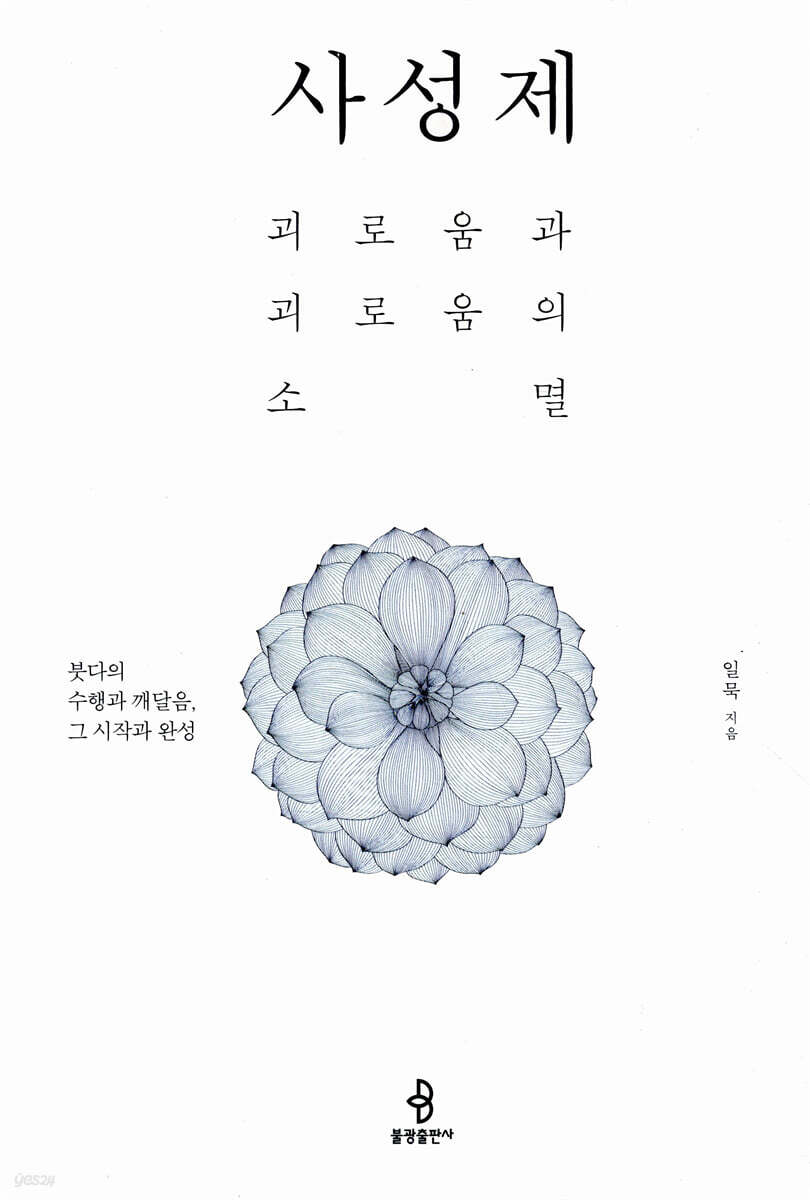
The teachings of the righteous life pursued by all religions, philosophies, and ideologies The Four Noble Truths, which contain all of them, All about the Four Noble Truths, revealed by Monk Ilmok through 25 years of practice and study! 25 years ago, about 10 students and graduates of Seoul National University became monks at the same time, which created a stir. Monk Ilmok was at the center of the conversation. This book is a new publication published after seven years by a monk who became a monk while pursuing a doctorate in mathematics at Seoul National University. The monk, who has been spreading his teachings centered on early Buddhism, has been devoted to research, finding in the Four Noble Truths a perfect method of practice that achieves a balance between teaching and practice, like the two wings of a bird. This book, which contains everything about the Four Noble Truths, is even more meaningful in that it is a popular book that focuses solely on the Four Noble Truths, the core of Buddha's practice and enlightenment. In particular, the logical and systematic organization centered on the early Buddhist scriptures, Nikaya, shows that the Four Noble Truths are not a simple 'theoretical system' or 'ideology', but a 'practical teaching' that suggests the right direction for life and practice. Therefore, by minimizing doctrinal explanations and focusing on how the Four Noble Truths function in our lives and daily lives, we reveal that the Four Noble Truths are the right view, the right practice, and the truth that we must realize. This book will serve as a useful 'Buddhist textbook' for all those who want a living Buddhism that serves as the standard for their lives and practice, rather than a Buddhist law confined to text. |
- You can preview some of the book's contents.
Preview
index
introduction
Introduction _ Buddha's journey of practice and enlightenment
Chapter 1.
Suffering and Happiness
1.
The suffering and happiness of the world
1) Worldly suffering and happiness are feelings.
2) Feeling painful is suffering.
3) Feeling happy is happiness
2.
The Buddha's Suffering and Happiness
1) The Buddha's suffering and happiness are not feelings but characteristics.
2) A painful feeling is suffering.
3) Feeling happy is also suffering
4) Feeling is suffering, and the cessation of feeling is happiness.
3.
A shift in perspective on suffering and happiness
1) Wrong views and right views
2) The teachings of truth about suffering and happiness are the Four Noble Truths.
Chapter 2.
What is law?
1.
What is law?
1) Phenomenon and concept go together.
2) The law is the Buddha's view of phenomena.
3) The reality of existence is the law of matter and spirit.
4) The Four Noble Truths are the structure of suffering and the cessation of suffering that organizes the law.
2.
Correct understanding of the law
1) You can see the law through the law.
2) The law represents both phenomena and concepts.
3) The law emphasizes insight over phenomena.
4) Don't get caught up in concepts; observe the phenomenon.
5) The law can be known by seeing for yourself.
3.
Knowing the law eliminates suffering.
1) Buddha's view is the view of the Four Noble Truths.
2) Seeing the law through the view of the Four Noble Truths
3) You can know the Four Noble Truths by looking at the law.
4) When you know the law, suffering disappears.
Chapter 3.
performance
1.
performance
1) Smoke
2) Postponed law
3) Twelve Links of Dependent Origination
2.
Explanation of the Twelve Links of Dependent Origination
1) Aging and death occur as a result of birth.
2) Birth occurs as a condition of existence.
3) Existence arises under the condition of attachment.
4) Attachment arises as a condition of craving.
5) Craving arises as a condition of feeling.
6) Feeling arises conditioned by contact.
7) Contact occurs conditioned by the six sense sites.
8) The six sense bases arise conditioned by mind and matter.
9) Mind and matter arise under the condition of consciousness.
10) Consciousness arises conditioned by intentional action.
11) Intentional acts occur under the condition of ignorance.
12) The arising and cessation of the twelve links of dependent origination
3.
The meaning of the twelve links of dependent origination
1) The structure of the twelve links of dependent origination
2) What is existence?
3) How is existence born, and where does existence go when it dies?
4.
Acting is a middle ground
1) Firsthand and secondhand views
2) Acting is a teaching in the middle.
3) Smoke and the Four Noble Truths
Chapter 4.
Four Noble Truths
1.
Buddhism is the Four Noble Truths
1) Buddhism is a teaching about suffering and the cessation of suffering.
2) The Four Noble Truths are the teachings of truth.
2.
The Noble Truth of Suffering
1) The reality of existence is five aggregates.
2) The five aggregates are impermanence, suffering, and non-self.
3) Suffering: The five aggregates themselves are suffering.
4) The truth of the Old Testament must be thoroughly known.
3.
The Truth of the Arising of Suffering
1) It's not the object, it's the mind.
2) Suffering arises due to craving.
3) Suffering arises as a result of harmful laws.
4) The truth that must be abandoned is the integration system.
4.
The Truth of the Cessation of Suffering
1) Cessation of suffering: When craving ceases, suffering ceases.
2) When harmful laws cease, suffering ceases.
3) The difference between nirvana and single-mindedness
4) What happens when an Arahant dies?
5) The extinction of nature is a truth that must be realized.
5.
The Noble Truth of the Path: The Truth of the Path that Leads to the Cessation of Suffering
1) The Noble Eightfold Path: The Noble Eightfold Path leads to the cessation of suffering.
① Correct view
② Right reason
③ Correct speech
④ Right conduct
⑤ Right livelihood
⑥ Right diligence
⑦ Correct memory
⑧ Right Samadhi
2) Beneficial Dharma leads to the cessation of suffering.
3) The Taoist truth is the truth that must be developed.
Chapter 5.
Establishing memory of the Four Noble Truths
1.
Buddhist practice is the practice of the Middle Way.
1) The beginning, middle, and end of the Eightfold Path is right view.
2) The Eightfold Path is a practice that cultivates concentration and wisdom based on the precepts.
3) The Eightfold Path is a dual-armed system.
4) The Eightfold Path is the Middle Way
5) Buddhist practice is the practice of the middle path.
2.
Through the practice of the Middle Way, the memory of the Four Noble Truths is established.
1) Through the practice of the middle path, the memory of the Four Noble Truths is established.
2) The process of establishing memory for the Four Noble Truths
3) Establishing memory of the Four Noble Truths is enlightenment.
4) The mind of an arhat
Going Out _ What's Possible and What's Impossible
References
Introduction _ Buddha's journey of practice and enlightenment
Chapter 1.
Suffering and Happiness
1.
The suffering and happiness of the world
1) Worldly suffering and happiness are feelings.
2) Feeling painful is suffering.
3) Feeling happy is happiness
2.
The Buddha's Suffering and Happiness
1) The Buddha's suffering and happiness are not feelings but characteristics.
2) A painful feeling is suffering.
3) Feeling happy is also suffering
4) Feeling is suffering, and the cessation of feeling is happiness.
3.
A shift in perspective on suffering and happiness
1) Wrong views and right views
2) The teachings of truth about suffering and happiness are the Four Noble Truths.
Chapter 2.
What is law?
1.
What is law?
1) Phenomenon and concept go together.
2) The law is the Buddha's view of phenomena.
3) The reality of existence is the law of matter and spirit.
4) The Four Noble Truths are the structure of suffering and the cessation of suffering that organizes the law.
2.
Correct understanding of the law
1) You can see the law through the law.
2) The law represents both phenomena and concepts.
3) The law emphasizes insight over phenomena.
4) Don't get caught up in concepts; observe the phenomenon.
5) The law can be known by seeing for yourself.
3.
Knowing the law eliminates suffering.
1) Buddha's view is the view of the Four Noble Truths.
2) Seeing the law through the view of the Four Noble Truths
3) You can know the Four Noble Truths by looking at the law.
4) When you know the law, suffering disappears.
Chapter 3.
performance
1.
performance
1) Smoke
2) Postponed law
3) Twelve Links of Dependent Origination
2.
Explanation of the Twelve Links of Dependent Origination
1) Aging and death occur as a result of birth.
2) Birth occurs as a condition of existence.
3) Existence arises under the condition of attachment.
4) Attachment arises as a condition of craving.
5) Craving arises as a condition of feeling.
6) Feeling arises conditioned by contact.
7) Contact occurs conditioned by the six sense sites.
8) The six sense bases arise conditioned by mind and matter.
9) Mind and matter arise under the condition of consciousness.
10) Consciousness arises conditioned by intentional action.
11) Intentional acts occur under the condition of ignorance.
12) The arising and cessation of the twelve links of dependent origination
3.
The meaning of the twelve links of dependent origination
1) The structure of the twelve links of dependent origination
2) What is existence?
3) How is existence born, and where does existence go when it dies?
4.
Acting is a middle ground
1) Firsthand and secondhand views
2) Acting is a teaching in the middle.
3) Smoke and the Four Noble Truths
Chapter 4.
Four Noble Truths
1.
Buddhism is the Four Noble Truths
1) Buddhism is a teaching about suffering and the cessation of suffering.
2) The Four Noble Truths are the teachings of truth.
2.
The Noble Truth of Suffering
1) The reality of existence is five aggregates.
2) The five aggregates are impermanence, suffering, and non-self.
3) Suffering: The five aggregates themselves are suffering.
4) The truth of the Old Testament must be thoroughly known.
3.
The Truth of the Arising of Suffering
1) It's not the object, it's the mind.
2) Suffering arises due to craving.
3) Suffering arises as a result of harmful laws.
4) The truth that must be abandoned is the integration system.
4.
The Truth of the Cessation of Suffering
1) Cessation of suffering: When craving ceases, suffering ceases.
2) When harmful laws cease, suffering ceases.
3) The difference between nirvana and single-mindedness
4) What happens when an Arahant dies?
5) The extinction of nature is a truth that must be realized.
5.
The Noble Truth of the Path: The Truth of the Path that Leads to the Cessation of Suffering
1) The Noble Eightfold Path: The Noble Eightfold Path leads to the cessation of suffering.
① Correct view
② Right reason
③ Correct speech
④ Right conduct
⑤ Right livelihood
⑥ Right diligence
⑦ Correct memory
⑧ Right Samadhi
2) Beneficial Dharma leads to the cessation of suffering.
3) The Taoist truth is the truth that must be developed.
Chapter 5.
Establishing memory of the Four Noble Truths
1.
Buddhist practice is the practice of the Middle Way.
1) The beginning, middle, and end of the Eightfold Path is right view.
2) The Eightfold Path is a practice that cultivates concentration and wisdom based on the precepts.
3) The Eightfold Path is a dual-armed system.
4) The Eightfold Path is the Middle Way
5) Buddhist practice is the practice of the middle path.
2.
Through the practice of the Middle Way, the memory of the Four Noble Truths is established.
1) Through the practice of the middle path, the memory of the Four Noble Truths is established.
2) The process of establishing memory for the Four Noble Truths
3) Establishing memory of the Four Noble Truths is enlightenment.
4) The mind of an arhat
Going Out _ What's Possible and What's Impossible
References
Detailed image

Into the book
The Four Noble Truths are not simply a theoretical system or an ideology.
The Four Noble Truths are the truths of suffering and the cessation of suffering that the Buddha personally experienced, and they reveal not only the correct direction for Buddhist practice but also specific methods of practice.
Therefore, correctly understanding the Four Noble Truths is the core of Buddhist practice.
Because Buddhist practice is to develop the wisdom of the Four Noble Truths realized by the Buddha and to establish the right memory of them.
--- p.6
The happiness of sensual desires, though sweet in itself, is merely suffering disguised as happiness, for it is the seed of countless mental sufferings.
…the happiness of sensual desires appears to be happiness, but in reality it has the character of suffering.
--- p.17~18
He saw through it that although the happiness of samadhi is the greatest happiness a being can enjoy, it is imperfect and cannot be called complete happiness because it is not eternal.
In other words, he realized that even the happiness of samadhi has the characteristic of suffering.
--- p.20
Although he underwent the most extreme and extreme ascetic practices that no practitioner of the past or present could imitate, enlightenment did not come to the Buddha.
At this time, the Buddha clearly realized that continuing to practice asceticism would only torment the body and increase mental suffering, and was not the path to enlightenment.
--- p.21
The Buddha understood that practice based on concentration, such as the first jhāna, is the middle way, which is happy in the beginning, in the middle, and in the end, without falling into the extremes of sensual desire or asceticism, and that the middle way is the path to enlightenment.
So, he was convinced that 'selection can be the path to enlightenment.'
--- p.22
The Buddha realized the Four Noble Truths, the four noble truths, not through hearing or inference, but through the wisdom he acquired through his own practice, knowing and seeing the reality of existence, and he abandoned defilements and realized Nirvana, the cessation of suffering.
Like Buddha, in order for beings to eradicate suffering, they must realize the Four Noble Truths and eradicate defilements.
--- p.27
When worldly people experience these three feelings, they feel either suffering or happiness.
For example, when a 'feeling of pain' arises in people, they think 'I am pained.' When a 'feeling of happiness' arises, they think 'I am happy.' When a 'feeling of peace' arises, they think 'I am neither pained nor happy.'
However, since the Buddha also taught that a feeling of peace is a tranquil and excellent joy, it can also be considered a form of happiness from a worldly perspective.
--- p.34
In the Buddha's view, happiness means a perfect state in which suffering has completely ceased and there is absolutely no possibility of suffering arising again.
So, if there is even the slightest possibility that suffering will recur, he considered them all to have the characteristic of suffering.
--- p.48
In the worldly view, suffering is a feeling of suffering, and happiness is a feeling of peace or happiness, that is, a feeling of happiness from sensual desires and a feeling of happiness from freedom from them.
However, not only painful feelings, but even peaceful and happy feelings have the characteristic of suffering, so in the Buddha's view, all feelings themselves are suffering.
So, as long as you have feelings, you cannot completely escape suffering.
On the other hand, if the feeling disappears, the possibility of suffering arising completely disappears.
So, in the Buddha's view, the complete cessation of feeling is happiness and the cessation of suffering.
--- p.61
From the perspective of truth, the worldly view is a perverted view [vipall?sa, 顚倒] that sees suffering as happiness and happiness as suffering.
A person with a distorted view will strive to develop suffering and abandon happiness, so realizing happiness will be impossible from the start.
--- p.67
Even in our daily lives, we must diligently strive not to forget the Buddha's views, even if we follow worldly views.
By practicing this way, it becomes possible to not forget the Buddha's views even when following worldly views when necessary in daily life.
Just as a lotus flower blooms in the mud without leaving it.
--- p.85
In Buddhism, it is very important to understand dependent origination.
Because if we penetrate into the conditions or dependent origination of the laws of matter and mind, the three truths of the Four Noble Truths—the truth of suffering, the truth of arising, and the truth of cessation—become clear.
--- p.148
The question may arise, 'Is there a method of practice that allows one to penetrate and understand smoke?'
Regarding this, the Buddha taught that if one practices the Noble Eightfold Path, namely right view, right thought, right speech, right action, right livelihood, right effort, right memory, and right samadhi, one can penetrate the origination of dependent origination and further lead to the cessation of suffering.
The Four Noble Truths are the truths of suffering and the cessation of suffering that the Buddha personally experienced, and they reveal not only the correct direction for Buddhist practice but also specific methods of practice.
Therefore, correctly understanding the Four Noble Truths is the core of Buddhist practice.
Because Buddhist practice is to develop the wisdom of the Four Noble Truths realized by the Buddha and to establish the right memory of them.
--- p.6
The happiness of sensual desires, though sweet in itself, is merely suffering disguised as happiness, for it is the seed of countless mental sufferings.
…the happiness of sensual desires appears to be happiness, but in reality it has the character of suffering.
--- p.17~18
He saw through it that although the happiness of samadhi is the greatest happiness a being can enjoy, it is imperfect and cannot be called complete happiness because it is not eternal.
In other words, he realized that even the happiness of samadhi has the characteristic of suffering.
--- p.20
Although he underwent the most extreme and extreme ascetic practices that no practitioner of the past or present could imitate, enlightenment did not come to the Buddha.
At this time, the Buddha clearly realized that continuing to practice asceticism would only torment the body and increase mental suffering, and was not the path to enlightenment.
--- p.21
The Buddha understood that practice based on concentration, such as the first jhāna, is the middle way, which is happy in the beginning, in the middle, and in the end, without falling into the extremes of sensual desire or asceticism, and that the middle way is the path to enlightenment.
So, he was convinced that 'selection can be the path to enlightenment.'
--- p.22
The Buddha realized the Four Noble Truths, the four noble truths, not through hearing or inference, but through the wisdom he acquired through his own practice, knowing and seeing the reality of existence, and he abandoned defilements and realized Nirvana, the cessation of suffering.
Like Buddha, in order for beings to eradicate suffering, they must realize the Four Noble Truths and eradicate defilements.
--- p.27
When worldly people experience these three feelings, they feel either suffering or happiness.
For example, when a 'feeling of pain' arises in people, they think 'I am pained.' When a 'feeling of happiness' arises, they think 'I am happy.' When a 'feeling of peace' arises, they think 'I am neither pained nor happy.'
However, since the Buddha also taught that a feeling of peace is a tranquil and excellent joy, it can also be considered a form of happiness from a worldly perspective.
--- p.34
In the Buddha's view, happiness means a perfect state in which suffering has completely ceased and there is absolutely no possibility of suffering arising again.
So, if there is even the slightest possibility that suffering will recur, he considered them all to have the characteristic of suffering.
--- p.48
In the worldly view, suffering is a feeling of suffering, and happiness is a feeling of peace or happiness, that is, a feeling of happiness from sensual desires and a feeling of happiness from freedom from them.
However, not only painful feelings, but even peaceful and happy feelings have the characteristic of suffering, so in the Buddha's view, all feelings themselves are suffering.
So, as long as you have feelings, you cannot completely escape suffering.
On the other hand, if the feeling disappears, the possibility of suffering arising completely disappears.
So, in the Buddha's view, the complete cessation of feeling is happiness and the cessation of suffering.
--- p.61
From the perspective of truth, the worldly view is a perverted view [vipall?sa, 顚倒] that sees suffering as happiness and happiness as suffering.
A person with a distorted view will strive to develop suffering and abandon happiness, so realizing happiness will be impossible from the start.
--- p.67
Even in our daily lives, we must diligently strive not to forget the Buddha's views, even if we follow worldly views.
By practicing this way, it becomes possible to not forget the Buddha's views even when following worldly views when necessary in daily life.
Just as a lotus flower blooms in the mud without leaving it.
--- p.85
In Buddhism, it is very important to understand dependent origination.
Because if we penetrate into the conditions or dependent origination of the laws of matter and mind, the three truths of the Four Noble Truths—the truth of suffering, the truth of arising, and the truth of cessation—become clear.
--- p.148
The question may arise, 'Is there a method of practice that allows one to penetrate and understand smoke?'
Regarding this, the Buddha taught that if one practices the Noble Eightfold Path, namely right view, right thought, right speech, right action, right livelihood, right effort, right memory, and right samadhi, one can penetrate the origination of dependent origination and further lead to the cessation of suffering.
--- p.156
Publisher's Review
“What did Buddha realize and how did he teach?”
『The Four Noble Truths』, for those who wish to achieve the ‘cessation of suffering’
Guide to practicing the early sutras
We have not been familiar with the Four Noble Truths until now.
‘The Four Noble Truths.’ ‘Suffering, the origin, the cessation of suffering, the path.’ Even people who don’t know much about Buddhism have probably heard of these at least once.
The Four Noble Truths are the first sermons that the Buddha gave to five monks after he attained enlightenment.
This book refers to the Four Noble Truths as the Buddha's 'fundamental teachings'.
This is because the Four Noble Truths are a common teaching in many Buddhist traditions today, such as Southern Theravada Buddhism, Northern Mahayana Buddhism, Zen Buddhism, and Tibetan Buddhism.
Many scholars who study the history of Buddhism also acknowledge that although Buddhism has developed and changed in various forms in various regions over a long period of time, the Four Noble Truths are the fundamental teachings and core of the Buddha.
But one question arises.
Why do we memorize such important teachings as mere concepts? Can we truly grasp the Four Noble Truths simply by memorizing a concept summarized in four words or a single line? The answer is no.
The foundation of the Buddha's teachings begins with 'insight into suffering.'
What are the Four Noble Truths? They are the teachings that "this world is suffering [苦], the cause [集] of suffering [集] is desire, and the path [道] for the cessation [滅] of suffering [滅]."
If compressed, it can be called 'the truth of suffering and the cessation of suffering.'
Why is this teaching central to Buddhism? Let's first examine the Buddha's journey of practice, which has been passed down to the present day.
Since Buddha left home to escape the fundamental suffering of birth, aging, illness, and death, he has maintained a view on suffering and the cessation of suffering.
“I have only proclaimed suffering and the cessation of suffering, both in the past and present.” (Anuthara Sutta) These words of the Buddha imply that the various teachings he gave to his disciples were actually variations on the Four Noble Truths.
The constant disciple Sariputta said, 'All the beneficial laws of Buddhism are contained in the Four Noble Truths.' (The Long Sutta on the Parable of the Elephant's Footprints)
As we all know, the ultimate goal pursued by Buddhism is the ‘elimination of suffering (happiness)’.
That is why the Buddha gave us the Dharma, and it is the entirety and ultimate of the teachings the Buddha gave us.
In other words, in order to understand Buddhism correctly, it is most important to have a correct understanding of suffering, the cessation of suffering, and the Four Noble Truths.
Insight into the suffering of life through the Four Noble Truths is the beginning of true practice, and only when proper insight into suffering is achieved can suffering be overcome.
The profound teachings of the Four Noble Truths, the core of understanding Buddhism
However, because the Four Noble Truths are very profound teachings, it is not easy to understand them on your own.
Buddhist scriptures are vast in quantity and content.
If you read the scriptures without a teacher or guide who can point out the essence of the teachings, you will easily get lost in the vast ocean of information.
There are also some problems in understanding the Four Noble Truths through the Abhidhamma, a treatise that systematically organizes the Buddha's teachings.
Abhidhamma is a treatise created by each sect of Buddhism during the sectarian era to assert the legitimacy and superiority of their own interpretation of the Buddhist law, so it is closer to an academic theoretical system that pursues logical completeness than a guide to actual practice.
Therefore, if you become overly attached to Abhidhamma, you will become lost in abstract ideas and become distant from reality, and this may actually hinder your practice to eliminate real suffering.
The Four Noble Truths should not be accepted as a mere theoretical system or ideology.
The truth that the Buddha personally experienced should be viewed as a profound teaching that reveals not only the correct direction for Buddhist practice, but also specific methods of practice, as the truth of suffering and the cessation of suffering.
Until now, it has been difficult to find discussions that approach the Four Noble Truths from the perspective of practice beyond the level of Buddhist doctrine.
The author drew attention to this point.
In order to accurately convey the meaning of the Four Noble Truths, I excluded academic language and organized the meaning of the Four Noble Truths in simple and concise sentences. I also made every effort to ensure that the meaning of the Four Noble Truths could be applied immediately to one's life and practice the moment one reads it.
This is the motivation and purpose for writing this book, and it is the most important writing criterion.
Buddhism is not a religion of faith, but of understanding and practice.
The Four Noble Truths are 'practical teachings'
A common mistake many people who study Buddhism make is separating doctrine from practice.
It is limited to memorizing the Four Noble Truths to a conceptual level.
No matter how hard you try to accumulate Buddhist wisdom, you will not be able to see how the Four Noble Truths are connected to your life, and of course, you will not be able to connect the correct direction indicated by the Four Noble Truths to your life and practice.
The greatest feature of this book is that it approaches it with 'practical teachings' that can never be reached through simple interpretations of the meanings of suffering, home, extinction, and the way.
Buddha realized the Four Noble Truths, abandoned defilements, and achieved the cessation of suffering.
Buddha taught this throughout his life, saying, "You too can attain enlightenment like me."
As Buddha said, anyone can attain enlightenment.
Insight into suffering and extinguish defilements through the Four Noble Truths.
That is the enlightenment that Buddha wanted to teach.
The important thing in this process is to hear and learn the teachings of the Four Noble Truths and then make them the standard for life.
By understanding, thinking, speaking, acting, making a living, practicing, remembering, and developing samadhi in all aspects of life according to the Four Noble Truths, we can abandon defilements and eliminate suffering.
As you read this book, you will feel the earnest desire of the author, Monk Ilmok, to help all readers understand and practice the Buddha's teachings, even if only a little.
Of course, we live in a world where even reading a single page of a book amidst the hustle and bustle is no easy task. However, if there is a path to enlightenment even in this murky world, studying this one book would not be so difficult.
This book will be a very useful 'Buddhist textbook' for those who wish to make Buddhism the standard for their lives and practice.
The sacred truth of suffering must be thoroughly known.
The truth of the arising of suffering must be abandoned.
The truth of the cessation of suffering must be realized.
The truth of the path leading to the cessation of suffering must be practiced.
- "You must know it thoroughly"
Structure of this book
This book first explains what the right view of suffering and happiness is, how suffering arises and how it ceases, as the foundation necessary for a correct understanding of the Four Noble Truths.
Next, we will discuss the true meaning of each of the Four Noble Truths, the laws that must be known at each point for the cessation of suffering, and further, the role that the Four Noble Truths play in life and practice, and how we should live and practice accordingly.
Even though it deals with the sole subject of the Four Holy Spirits, the volume is not small.
This is because it covers the Buddha's teachings centered on the early Buddhist scriptures, which are known to be the most analytical, and is closely connected to discussions on how to put them into practice.
But don't be afraid.
This book stands out because it provides concrete and easy-to-understand content on the Four Noble Truths through a systematic structure that penetrates the core of such links, popular commentary, and appropriate and abundant scripture citations.
The introduction focuses on an event that marked a major turning point in the Buddha's life of practice.
This is a turning point in the Buddha's practice direction and views, and helps to determine the direction of correct practice.
Chapter 1 examines the Buddha's views on suffering and happiness, focusing on 'feeling'.
The Buddha's views on suffering and happiness are called 'right views' in Buddhism.
If we understand this well, we can clearly know the answer to the question, 'I am happy, so why is everything suffering?'
Chapter 2 examines the phenomena of the world from the Buddha's perspective and insight, that is, what is meant by 'Dharma'.
In particular, it explains that the Four Noble Truths are the Buddha's views on classifying all phenomena in the world into 'material and mental', 'five aggregates', etc., and organizing them into 'the structure of suffering and the cessation of suffering'.
Chapter 3 talks about dependent origination, the truth that “if there is a condition, there is a result, and if there is no condition, there is no result.”
Through this, we can learn about 'how suffering arises and how it disappears.'
Furthermore, it explains that insight into smoke is the same as attaining the Four Noble Truths.
Chapter 4 examines in detail the Buddha's teachings contained in the Four Noble Truths, the subject of this book: suffering, origin, cessation, and path.
Furthermore, in light of each teaching, it thoroughly explains the wisdom that we must know correctly in order to eliminate suffering, such as what harmful and beneficial dharmas are, what the difference is between nirvana and severing view, and why right view is important in Buddhist practice.
Chapter 5, based on what we have discussed so far, deals with the practice of the Middle Path and the establishment of remembrance of the Four Noble Truths [sati-pa??h?na, 念處].
The Eightfold Path is a middle path that overcomes the extremes of indulgence in sensual desires and asceticism, and is a practice that is good in the beginning, middle, and end. It explains that it is a path that cultivates both wisdom (vipassana practice) and samadhi (samatha practice) (double practice of concentration and wisdom, double practice of cessation and contemplation).
Furthermore, we will help you gain a correct understanding of enlightenment and examine the process by which the memory of the Four Noble Truths is established through the practice of the Middle Way.
In conclusion, we will learn what kind of life a person who understands the Four Noble Truths and has the right view lives.
Such a person discards harmful laws and diligently practices beneficial laws.
Because we know what is impossible and what is possible.
If we can clearly distinguish between what is possible and what is impossible, the direction of our lives becomes clear.
This is the core message this book is trying to convey.
[Author's Note]
“A wise person sees through the possible as possible and the impossible as impossible, and by giving up the impossible and concentrating his efforts on the possible, he can eliminate suffering.
Therefore, the practitioner's task is simply to remember and never forget that existence itself is impermanent, suffering, and non-self, and to strive at every moment to practice beneficial dharmas and abandon harmful dharmas.
This is the teaching of the Buddha.”
『The Four Noble Truths』, for those who wish to achieve the ‘cessation of suffering’
Guide to practicing the early sutras
We have not been familiar with the Four Noble Truths until now.
‘The Four Noble Truths.’ ‘Suffering, the origin, the cessation of suffering, the path.’ Even people who don’t know much about Buddhism have probably heard of these at least once.
The Four Noble Truths are the first sermons that the Buddha gave to five monks after he attained enlightenment.
This book refers to the Four Noble Truths as the Buddha's 'fundamental teachings'.
This is because the Four Noble Truths are a common teaching in many Buddhist traditions today, such as Southern Theravada Buddhism, Northern Mahayana Buddhism, Zen Buddhism, and Tibetan Buddhism.
Many scholars who study the history of Buddhism also acknowledge that although Buddhism has developed and changed in various forms in various regions over a long period of time, the Four Noble Truths are the fundamental teachings and core of the Buddha.
But one question arises.
Why do we memorize such important teachings as mere concepts? Can we truly grasp the Four Noble Truths simply by memorizing a concept summarized in four words or a single line? The answer is no.
The foundation of the Buddha's teachings begins with 'insight into suffering.'
What are the Four Noble Truths? They are the teachings that "this world is suffering [苦], the cause [集] of suffering [集] is desire, and the path [道] for the cessation [滅] of suffering [滅]."
If compressed, it can be called 'the truth of suffering and the cessation of suffering.'
Why is this teaching central to Buddhism? Let's first examine the Buddha's journey of practice, which has been passed down to the present day.
Since Buddha left home to escape the fundamental suffering of birth, aging, illness, and death, he has maintained a view on suffering and the cessation of suffering.
“I have only proclaimed suffering and the cessation of suffering, both in the past and present.” (Anuthara Sutta) These words of the Buddha imply that the various teachings he gave to his disciples were actually variations on the Four Noble Truths.
The constant disciple Sariputta said, 'All the beneficial laws of Buddhism are contained in the Four Noble Truths.' (The Long Sutta on the Parable of the Elephant's Footprints)
As we all know, the ultimate goal pursued by Buddhism is the ‘elimination of suffering (happiness)’.
That is why the Buddha gave us the Dharma, and it is the entirety and ultimate of the teachings the Buddha gave us.
In other words, in order to understand Buddhism correctly, it is most important to have a correct understanding of suffering, the cessation of suffering, and the Four Noble Truths.
Insight into the suffering of life through the Four Noble Truths is the beginning of true practice, and only when proper insight into suffering is achieved can suffering be overcome.
The profound teachings of the Four Noble Truths, the core of understanding Buddhism
However, because the Four Noble Truths are very profound teachings, it is not easy to understand them on your own.
Buddhist scriptures are vast in quantity and content.
If you read the scriptures without a teacher or guide who can point out the essence of the teachings, you will easily get lost in the vast ocean of information.
There are also some problems in understanding the Four Noble Truths through the Abhidhamma, a treatise that systematically organizes the Buddha's teachings.
Abhidhamma is a treatise created by each sect of Buddhism during the sectarian era to assert the legitimacy and superiority of their own interpretation of the Buddhist law, so it is closer to an academic theoretical system that pursues logical completeness than a guide to actual practice.
Therefore, if you become overly attached to Abhidhamma, you will become lost in abstract ideas and become distant from reality, and this may actually hinder your practice to eliminate real suffering.
The Four Noble Truths should not be accepted as a mere theoretical system or ideology.
The truth that the Buddha personally experienced should be viewed as a profound teaching that reveals not only the correct direction for Buddhist practice, but also specific methods of practice, as the truth of suffering and the cessation of suffering.
Until now, it has been difficult to find discussions that approach the Four Noble Truths from the perspective of practice beyond the level of Buddhist doctrine.
The author drew attention to this point.
In order to accurately convey the meaning of the Four Noble Truths, I excluded academic language and organized the meaning of the Four Noble Truths in simple and concise sentences. I also made every effort to ensure that the meaning of the Four Noble Truths could be applied immediately to one's life and practice the moment one reads it.
This is the motivation and purpose for writing this book, and it is the most important writing criterion.
Buddhism is not a religion of faith, but of understanding and practice.
The Four Noble Truths are 'practical teachings'
A common mistake many people who study Buddhism make is separating doctrine from practice.
It is limited to memorizing the Four Noble Truths to a conceptual level.
No matter how hard you try to accumulate Buddhist wisdom, you will not be able to see how the Four Noble Truths are connected to your life, and of course, you will not be able to connect the correct direction indicated by the Four Noble Truths to your life and practice.
The greatest feature of this book is that it approaches it with 'practical teachings' that can never be reached through simple interpretations of the meanings of suffering, home, extinction, and the way.
Buddha realized the Four Noble Truths, abandoned defilements, and achieved the cessation of suffering.
Buddha taught this throughout his life, saying, "You too can attain enlightenment like me."
As Buddha said, anyone can attain enlightenment.
Insight into suffering and extinguish defilements through the Four Noble Truths.
That is the enlightenment that Buddha wanted to teach.
The important thing in this process is to hear and learn the teachings of the Four Noble Truths and then make them the standard for life.
By understanding, thinking, speaking, acting, making a living, practicing, remembering, and developing samadhi in all aspects of life according to the Four Noble Truths, we can abandon defilements and eliminate suffering.
As you read this book, you will feel the earnest desire of the author, Monk Ilmok, to help all readers understand and practice the Buddha's teachings, even if only a little.
Of course, we live in a world where even reading a single page of a book amidst the hustle and bustle is no easy task. However, if there is a path to enlightenment even in this murky world, studying this one book would not be so difficult.
This book will be a very useful 'Buddhist textbook' for those who wish to make Buddhism the standard for their lives and practice.
The sacred truth of suffering must be thoroughly known.
The truth of the arising of suffering must be abandoned.
The truth of the cessation of suffering must be realized.
The truth of the path leading to the cessation of suffering must be practiced.
- "You must know it thoroughly"
Structure of this book
This book first explains what the right view of suffering and happiness is, how suffering arises and how it ceases, as the foundation necessary for a correct understanding of the Four Noble Truths.
Next, we will discuss the true meaning of each of the Four Noble Truths, the laws that must be known at each point for the cessation of suffering, and further, the role that the Four Noble Truths play in life and practice, and how we should live and practice accordingly.
Even though it deals with the sole subject of the Four Holy Spirits, the volume is not small.
This is because it covers the Buddha's teachings centered on the early Buddhist scriptures, which are known to be the most analytical, and is closely connected to discussions on how to put them into practice.
But don't be afraid.
This book stands out because it provides concrete and easy-to-understand content on the Four Noble Truths through a systematic structure that penetrates the core of such links, popular commentary, and appropriate and abundant scripture citations.
The introduction focuses on an event that marked a major turning point in the Buddha's life of practice.
This is a turning point in the Buddha's practice direction and views, and helps to determine the direction of correct practice.
Chapter 1 examines the Buddha's views on suffering and happiness, focusing on 'feeling'.
The Buddha's views on suffering and happiness are called 'right views' in Buddhism.
If we understand this well, we can clearly know the answer to the question, 'I am happy, so why is everything suffering?'
Chapter 2 examines the phenomena of the world from the Buddha's perspective and insight, that is, what is meant by 'Dharma'.
In particular, it explains that the Four Noble Truths are the Buddha's views on classifying all phenomena in the world into 'material and mental', 'five aggregates', etc., and organizing them into 'the structure of suffering and the cessation of suffering'.
Chapter 3 talks about dependent origination, the truth that “if there is a condition, there is a result, and if there is no condition, there is no result.”
Through this, we can learn about 'how suffering arises and how it disappears.'
Furthermore, it explains that insight into smoke is the same as attaining the Four Noble Truths.
Chapter 4 examines in detail the Buddha's teachings contained in the Four Noble Truths, the subject of this book: suffering, origin, cessation, and path.
Furthermore, in light of each teaching, it thoroughly explains the wisdom that we must know correctly in order to eliminate suffering, such as what harmful and beneficial dharmas are, what the difference is between nirvana and severing view, and why right view is important in Buddhist practice.
Chapter 5, based on what we have discussed so far, deals with the practice of the Middle Path and the establishment of remembrance of the Four Noble Truths [sati-pa??h?na, 念處].
The Eightfold Path is a middle path that overcomes the extremes of indulgence in sensual desires and asceticism, and is a practice that is good in the beginning, middle, and end. It explains that it is a path that cultivates both wisdom (vipassana practice) and samadhi (samatha practice) (double practice of concentration and wisdom, double practice of cessation and contemplation).
Furthermore, we will help you gain a correct understanding of enlightenment and examine the process by which the memory of the Four Noble Truths is established through the practice of the Middle Way.
In conclusion, we will learn what kind of life a person who understands the Four Noble Truths and has the right view lives.
Such a person discards harmful laws and diligently practices beneficial laws.
Because we know what is impossible and what is possible.
If we can clearly distinguish between what is possible and what is impossible, the direction of our lives becomes clear.
This is the core message this book is trying to convey.
[Author's Note]
“A wise person sees through the possible as possible and the impossible as impossible, and by giving up the impossible and concentrating his efforts on the possible, he can eliminate suffering.
Therefore, the practitioner's task is simply to remember and never forget that existence itself is impermanent, suffering, and non-self, and to strive at every moment to practice beneficial dharmas and abandon harmful dharmas.
This is the teaching of the Buddha.”
GOODS SPECIFICS
- Date of publication: March 24, 2020
- Format: Hardcover book binding method guide
- Page count, weight, size: 552 pages | 908g | 152*225*35mm
- ISBN13: 9788974797904
- ISBN10: 8974797909
You may also like
카테고리
korean


korean

![GQ KOREA Mark (Monthly): December [2025]](http://librairie.coreenne.fr/cdn/shop/files/8ef265dbbfbf186523ed75ba7319009d.jpg?v=1765340328&width=3840)


