

Sports Stories for Teens
 |
Description
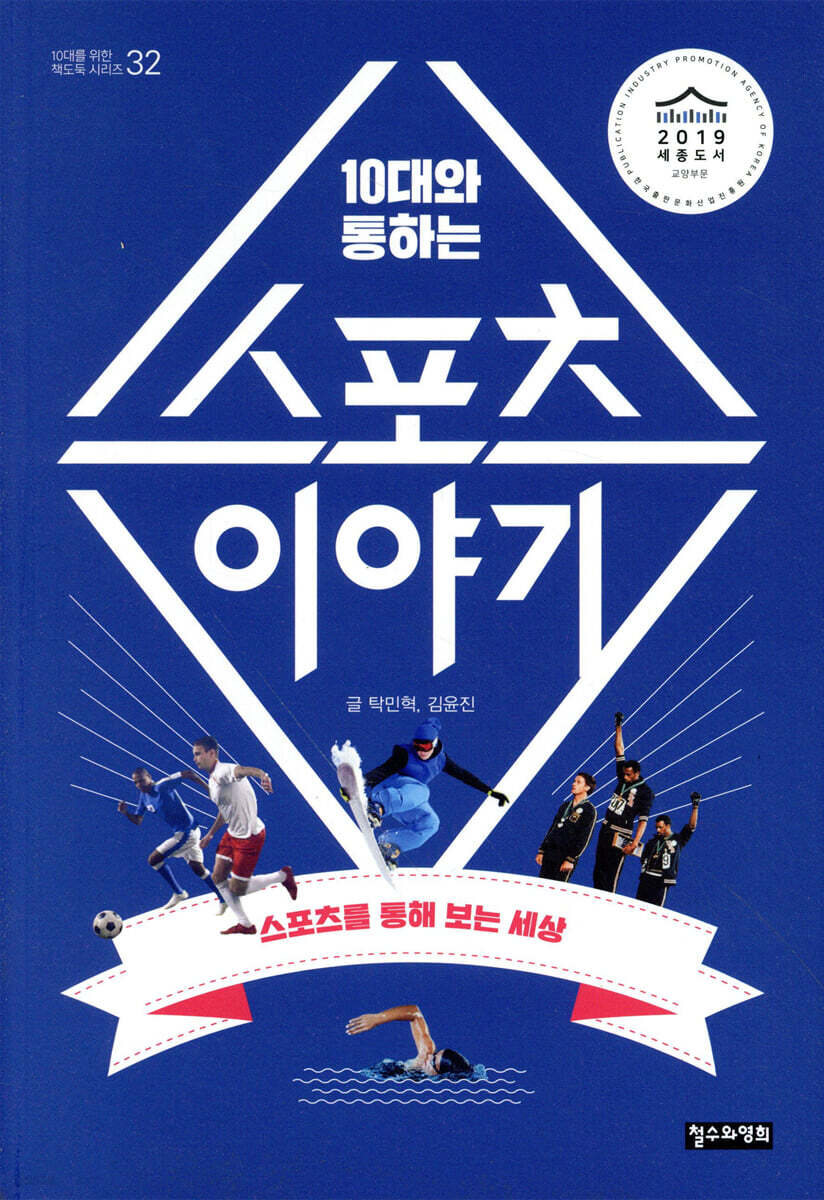
Book Introduction
Sports Stories You Need to Know to Become a "Master of Sports"
Who decides the Olympic standings?
Why are there so many black athletes in track and field?
Why does England have four teams competing in the World Cup?
Why weren't women allowed to participate in the marathon?
Why did boxing hero Muhammad Ali refuse military service?
This book contains a variety of stories that you should think about to enjoy sports and become a master of sports.
Through stories about the history and culture of sports, as well as inequality and resistance within sports, we can learn life wisdom and the right attitude toward society.
Who decides the Olympic standings?
Why are there so many black athletes in track and field?
Why does England have four teams competing in the World Cup?
Why weren't women allowed to participate in the marathon?
Why did boxing hero Muhammad Ali refuse military service?
This book contains a variety of stories that you should think about to enjoy sports and become a master of sports.
Through stories about the history and culture of sports, as well as inequality and resistance within sports, we can learn life wisdom and the right attitude toward society.
- You can preview some of the book's contents.
Preview
index
Preface: Strong body and strong mind
Chapter 1.
The Many Faces of the Olympics
The sports we want to see compete in at the Olympics | Who decides the Olympic standings? | Is snowboarding an unwelcome guest at the Winter Olympics? | The Paralympic Games, the second half of the Olympics | The two faces of the Olympics | Something more precious than a gold medal
Chapter 2.
A sport for everyone on Earth, not just anyone
Why does Korea play baseball and India play cricket? | Two cultures, one rugby | How did the name 'Taekwondo' come about? | Two Taekwondos: WT and ITF | Sports athletes going overseas: Son Heung-min and Cong Phuong are migrant workers
Chapter 3.
Country and Sports
Representing Someone | American Football Players Who Refused to Salute the Flag | 'National Team' Representing Diversity | Why Does England Have Four Teams in the World Cup?
Chapter 4.
Inequality and Resistance in Sports
Why are there so many black athletes in track and field? | Gerrard's dream of crossing the continent | Legendary boxer Muhammad Ali | Banned goal celebrations | "Us" when doing well, "others" when doing poorly? - Immigrant players on the French national soccer team
Chapter 5.
Athletes - People who work, compete, and cooperate
Working Olympic Athletes | Competition and Coexistence - The Inside and Out of Rivalry | Can Stars and Fans Be Friends? | Bench Keepers | Whether I'm Doing Well or Not, I'm Happy!
Chapter 6.
Why does gender matter when it comes to exercising?
Shouldn't we judge by skill? | Women can't exercise? | "Because they're women?!" - The photo that changed marathon history | The most bold ceremony in history | Tennis and chivalry | The rainbow-colored Pride House
Chapter 7.
The ins and outs of modern sports
The Evolving Rules of Sports | I Don't Want to Be Fixed! - A Sports Game Created by Mutants | Is Baduk a Sport? | Potions and Poisons | Professionals and Amateurs | Carriages and Trains, Coaches and Trainers
Chapter 8.
Sports created through broadcasting and advertising
What if you watch a broadcast with the sound off? | The right to watch sports broadcasts, or not | "Mirror, mirror, who's the fairest of them all?" | Sports brands that create and sell images ① - Nike's healthy lifestyle | Sports brands that create and sell images ② - Under Armour's patriotism
Chapter 9.
Secrets and Wisdom of Sports
If Usain Bolt ran barefoot | The allure of long-distance racing | What meets the eye isn't everything | What makes people with good 'athletic nerves' different? | Technological innovation and doping | To become an athlete, you have to be born in spring (?) | You need rest! - Between patience and overexertion
Chapter 10.
Sports for everyone
A Right-Handed World, Left-Handed Action | "You Know Even If I Don't Tell You" - Sports with Animals | A Grandmother's Golf Story | Netball - From a Women's Only Sport to a Sport for Everyone | Wembley and Dongdaemun Stadium | Life is Like a League!
References
Chapter 1.
The Many Faces of the Olympics
The sports we want to see compete in at the Olympics | Who decides the Olympic standings? | Is snowboarding an unwelcome guest at the Winter Olympics? | The Paralympic Games, the second half of the Olympics | The two faces of the Olympics | Something more precious than a gold medal
Chapter 2.
A sport for everyone on Earth, not just anyone
Why does Korea play baseball and India play cricket? | Two cultures, one rugby | How did the name 'Taekwondo' come about? | Two Taekwondos: WT and ITF | Sports athletes going overseas: Son Heung-min and Cong Phuong are migrant workers
Chapter 3.
Country and Sports
Representing Someone | American Football Players Who Refused to Salute the Flag | 'National Team' Representing Diversity | Why Does England Have Four Teams in the World Cup?
Chapter 4.
Inequality and Resistance in Sports
Why are there so many black athletes in track and field? | Gerrard's dream of crossing the continent | Legendary boxer Muhammad Ali | Banned goal celebrations | "Us" when doing well, "others" when doing poorly? - Immigrant players on the French national soccer team
Chapter 5.
Athletes - People who work, compete, and cooperate
Working Olympic Athletes | Competition and Coexistence - The Inside and Out of Rivalry | Can Stars and Fans Be Friends? | Bench Keepers | Whether I'm Doing Well or Not, I'm Happy!
Chapter 6.
Why does gender matter when it comes to exercising?
Shouldn't we judge by skill? | Women can't exercise? | "Because they're women?!" - The photo that changed marathon history | The most bold ceremony in history | Tennis and chivalry | The rainbow-colored Pride House
Chapter 7.
The ins and outs of modern sports
The Evolving Rules of Sports | I Don't Want to Be Fixed! - A Sports Game Created by Mutants | Is Baduk a Sport? | Potions and Poisons | Professionals and Amateurs | Carriages and Trains, Coaches and Trainers
Chapter 8.
Sports created through broadcasting and advertising
What if you watch a broadcast with the sound off? | The right to watch sports broadcasts, or not | "Mirror, mirror, who's the fairest of them all?" | Sports brands that create and sell images ① - Nike's healthy lifestyle | Sports brands that create and sell images ② - Under Armour's patriotism
Chapter 9.
Secrets and Wisdom of Sports
If Usain Bolt ran barefoot | The allure of long-distance racing | What meets the eye isn't everything | What makes people with good 'athletic nerves' different? | Technological innovation and doping | To become an athlete, you have to be born in spring (?) | You need rest! - Between patience and overexertion
Chapter 10.
Sports for everyone
A Right-Handed World, Left-Handed Action | "You Know Even If I Don't Tell You" - Sports with Animals | A Grandmother's Golf Story | Netball - From a Women's Only Sport to a Sport for Everyone | Wembley and Dongdaemun Stadium | Life is Like a League!
References
Detailed image

Into the book
-The Olympics have become an event for ‘money’ and ‘fame’, not for ‘peace’ and ‘coexistence’.
Some cities are going into debt to host the Olympics.
Some people are using the Olympics to speculate, while others are losing their homes.
The construction of stadiums also destroys the environment.
How long can the patriotism fostered by cheering on sports and sharing the thrill of it last? Rather, wouldn't it be more meaningful when we feel like we live in a just and proud nation, and when each and every citizen can fully enjoy sports, and then the desire to cheer on our national team and love for our country naturally spring forth?
-Sports reflect the unequal world.
It's not just a matter of taste that white people play more tennis and golf, while black people play more basketball and track and field.
Some people may do sports as a hobby, while others risk their lives doing them.
-Sports is also a place where stereotypical images of women and men are created.
Let's separate men's sports and women's sports.
So we've created something that only men can do and women can't.
Even when playing the same sport, they set separate roles for men and women, creating prejudices about what is masculine and what is feminine.
-The way the media presents sports today is largely driven by money.
Media companies are also businesses that make money, so they show things that make money in a big way and don't show things that don't make money.
(…) So, rather than just being happy because they show us something interesting, we also need to develop our own discernment to evaluate the media’s glasses.
Some cities are going into debt to host the Olympics.
Some people are using the Olympics to speculate, while others are losing their homes.
The construction of stadiums also destroys the environment.
How long can the patriotism fostered by cheering on sports and sharing the thrill of it last? Rather, wouldn't it be more meaningful when we feel like we live in a just and proud nation, and when each and every citizen can fully enjoy sports, and then the desire to cheer on our national team and love for our country naturally spring forth?
-Sports reflect the unequal world.
It's not just a matter of taste that white people play more tennis and golf, while black people play more basketball and track and field.
Some people may do sports as a hobby, while others risk their lives doing them.
-Sports is also a place where stereotypical images of women and men are created.
Let's separate men's sports and women's sports.
So we've created something that only men can do and women can't.
Even when playing the same sport, they set separate roles for men and women, creating prejudices about what is masculine and what is feminine.
-The way the media presents sports today is largely driven by money.
Media companies are also businesses that make money, so they show things that make money in a big way and don't show things that don't make money.
(…) So, rather than just being happy because they show us something interesting, we also need to develop our own discernment to evaluate the media’s glasses.
--- From the text
Publisher's Review
Sports Stories You Need to Know to Become a "Master of Sports"
Who decides the Olympic standings?
Why are there so many black athletes in track and field?
Why does England have four teams competing in the World Cup?
Why weren't women allowed to participate in the marathon?
Why did boxing hero Muhammad Ali refuse military service?
This book contains a variety of stories that you should think about to enjoy sports and become a master of sports.
Through stories about the history and culture of sports, as well as inequality and resistance within sports, you can learn wisdom about life and the right attitude toward society.
We don't have many opportunities to enjoy sports properly.
Instead, there are so many opportunities to watch sports.
News about sports leagues from around the world is available 24 hours a day, 365 days a year on television and the internet.
The Summer Olympics and Paralympics take place every four years, and in between, the Winter Olympics and Paralympics, the Football World Cup, and the Asian Games are held.
It would not be an exaggeration to say that we live in a world flooded with sports.
In this world, it is difficult for us to become masters of sports.
Rather than enjoying sports as we wish, it is easy to 'consume' sports as the Olympic Games, sports broadcasts, and sports advertisements tell us.
Today, 'spectator sports' are unnecessarily over-the-top and over-the-top, which stimulates people.
Things like which countries are good at sports, what is masculine and what is feminine, and what is a beautiful body.
If we keep watching sports this way, we will start to see the world through those eyes without even realizing it.
A social story seen through the inequality and resistance permeating sports.
In order to properly enjoy sports, you must first develop an eye for sports.
If we think about what sports are, how they developed, and what their relationship is to the society we live in, we can develop a perspective not only on sports but also on society.
This book will make you think, "Wait a minute!" about the aspects of sports you enjoy and might take for granted.
Learn about society through sports, and think critically about the discrimination and prejudice that lie hidden behind the glamour of sports.
In 1967, boxing hero Muhammad Ali refused military service in protest of the Vietnam War.
He refused to enlist in the military, criticizing his country, the United States, for not treating black people with dignity.
In return, he was put on trial and stripped of his championship belt and fighting license.
Women have been officially allowed to compete in the Boston Marathon since 1972.
Previously, women were banned from participating in marathons.
Many people thought that women were not as strong and durable as men and thus could not run the 42.195 kilometer distance.
Not only that, there were strange stereotypes that spread, such as that if women did strenuous exercise like running a marathon, their legs would get thicker and they would not be able to have children.
But the face of sports has continued to change.
Rules, technology, and culture have all changed.
Among them, there are definitely some changes that are good for us.
Unlike in the past, we can now watch games taking place far away, and more people are participating in sports as prejudice and discrimination have largely disappeared.
Depending on how we do it, we can shape the sport into something we enjoy.
Who decides the Olympic standings?
Why are there so many black athletes in track and field?
Why does England have four teams competing in the World Cup?
Why weren't women allowed to participate in the marathon?
Why did boxing hero Muhammad Ali refuse military service?
This book contains a variety of stories that you should think about to enjoy sports and become a master of sports.
Through stories about the history and culture of sports, as well as inequality and resistance within sports, you can learn wisdom about life and the right attitude toward society.
We don't have many opportunities to enjoy sports properly.
Instead, there are so many opportunities to watch sports.
News about sports leagues from around the world is available 24 hours a day, 365 days a year on television and the internet.
The Summer Olympics and Paralympics take place every four years, and in between, the Winter Olympics and Paralympics, the Football World Cup, and the Asian Games are held.
It would not be an exaggeration to say that we live in a world flooded with sports.
In this world, it is difficult for us to become masters of sports.
Rather than enjoying sports as we wish, it is easy to 'consume' sports as the Olympic Games, sports broadcasts, and sports advertisements tell us.
Today, 'spectator sports' are unnecessarily over-the-top and over-the-top, which stimulates people.
Things like which countries are good at sports, what is masculine and what is feminine, and what is a beautiful body.
If we keep watching sports this way, we will start to see the world through those eyes without even realizing it.
A social story seen through the inequality and resistance permeating sports.
In order to properly enjoy sports, you must first develop an eye for sports.
If we think about what sports are, how they developed, and what their relationship is to the society we live in, we can develop a perspective not only on sports but also on society.
This book will make you think, "Wait a minute!" about the aspects of sports you enjoy and might take for granted.
Learn about society through sports, and think critically about the discrimination and prejudice that lie hidden behind the glamour of sports.
In 1967, boxing hero Muhammad Ali refused military service in protest of the Vietnam War.
He refused to enlist in the military, criticizing his country, the United States, for not treating black people with dignity.
In return, he was put on trial and stripped of his championship belt and fighting license.
Women have been officially allowed to compete in the Boston Marathon since 1972.
Previously, women were banned from participating in marathons.
Many people thought that women were not as strong and durable as men and thus could not run the 42.195 kilometer distance.
Not only that, there were strange stereotypes that spread, such as that if women did strenuous exercise like running a marathon, their legs would get thicker and they would not be able to have children.
But the face of sports has continued to change.
Rules, technology, and culture have all changed.
Among them, there are definitely some changes that are good for us.
Unlike in the past, we can now watch games taking place far away, and more people are participating in sports as prejudice and discrimination have largely disappeared.
Depending on how we do it, we can shape the sport into something we enjoy.
GOODS SPECIFICS
- Date of issue: May 31, 2019
- Page count, weight, size: 232 pages | 412g | 154*221*16mm
- ISBN13: 9791188215232
- ISBN10: 118821523X
You may also like
카테고리
korean


korean

![GQ KOREA Mark (Monthly): December [2025]](http://librairie.coreenne.fr/cdn/shop/files/8ef265dbbfbf186523ed75ba7319009d.jpg?v=1765340328&width=3840)


