

Early Buddhist reincarnation stories
 |
Description
Book Introduction
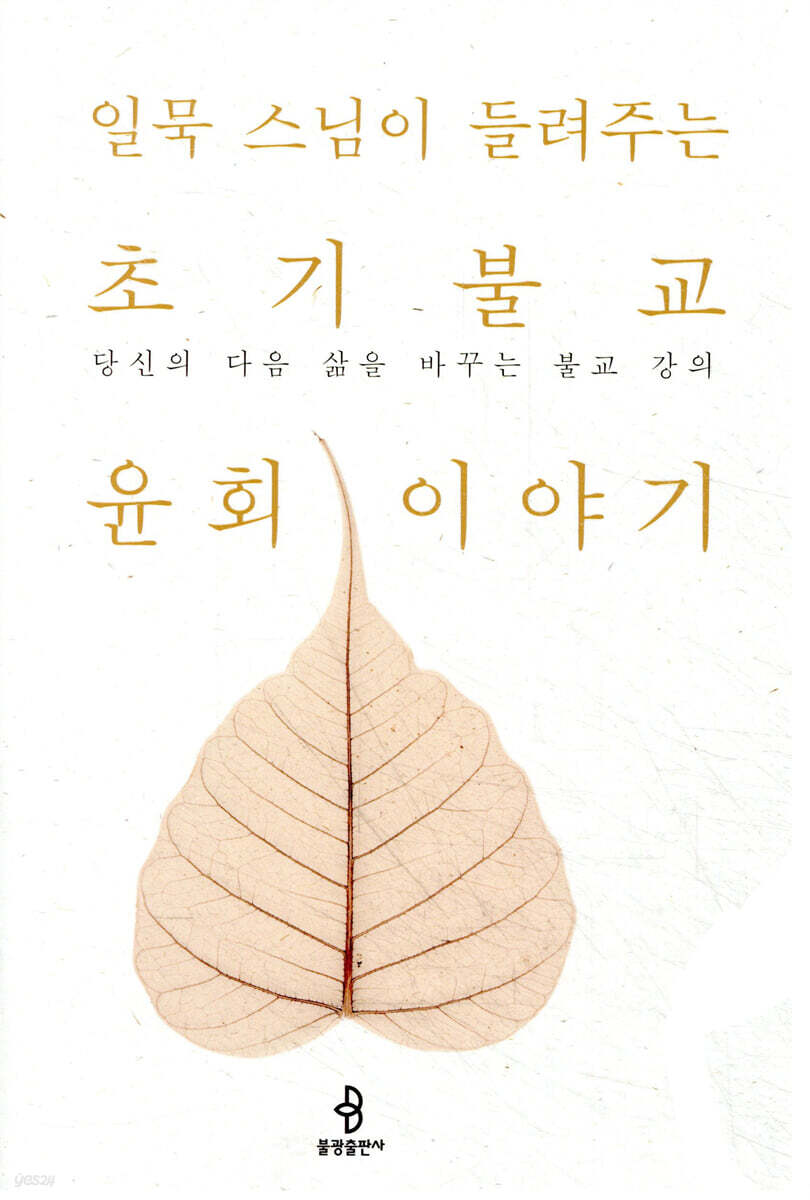
The concept and principles of reincarnation as seen through the teachings of early Buddhism.
For the happiness of this life and the happiness of the next life to come
Buddha's Correct Prescription: Reincarnation
How much do you know about reincarnation?
- What is reincarnation and what is its principle?
- What kind of world is the three realms in which we reincarnate?
How does karma work in the cycle of life?
- What do we need to know and prepare for happiness in this life and the next?
We all want a happy life.
But I can't live a happy life.
The reason is that we live by doing unwholesome things that take us away from a happy life.
Moreover, because we do not know what consequences the karma we create every moment will bring, many people are forced to live a life of suffering, fearing the end of this life.
In Buddhism, one of the causes of all suffering and affliction is said to be ignorance.
It is like wandering in the darkness where you cannot see even an inch ahead, and you end up going down the wrong path without receiving the light of truth.
So, what do we need to know to be happy in this life and the next? How should we live, and how should we end this life? It's all contained within the teachings of reincarnation.
For the happiness of this life and the happiness of the next life to come
Buddha's Correct Prescription: Reincarnation
How much do you know about reincarnation?
- What is reincarnation and what is its principle?
- What kind of world is the three realms in which we reincarnate?
How does karma work in the cycle of life?
- What do we need to know and prepare for happiness in this life and the next?
We all want a happy life.
But I can't live a happy life.
The reason is that we live by doing unwholesome things that take us away from a happy life.
Moreover, because we do not know what consequences the karma we create every moment will bring, many people are forced to live a life of suffering, fearing the end of this life.
In Buddhism, one of the causes of all suffering and affliction is said to be ignorance.
It is like wandering in the darkness where you cannot see even an inch ahead, and you end up going down the wrong path without receiving the light of truth.
So, what do we need to know to be happy in this life and the next? How should we live, and how should we end this life? It's all contained within the teachings of reincarnation.
- You can preview some of the book's contents.
Preview
index
Entering
Chapter 1: The Three Realms, the Worlds We Reincarnate
Three Worlds
world of desire
Color world
Colorless world
Chapter 2: Karma and Reincarnation
The mind that becomes karma, the mind that does not become karma
Characteristics of karma
Classification of karma
Chapter 3: Appearance just before death and the connection to rebirth
Four Causes of Death
Appearance just before death
Object of cognitive process just before death
Things to do before you die for a happy death
The impact of the cognitive process just before death on the next life
Replay connection
Law of Regeneration
Chapter 4: The Twelve Links of Dependent Origination, the Principles and Structure of Reincarnation
Revealing the principles and structure of reincarnation
What is acting?
The structure of the twelve links of dependent origination
The three periods and causality of the twelve links of dependent origination
Chapter 5: How Does Reincarnation Work if There Is No Self?
Views and truths about the origin of existence
Teachings of Acting
There is nothing that can be called 'I'
Acting is a middle ground
All things depend on each other, so they reincarnate without being self.
main
References
Chapter 1: The Three Realms, the Worlds We Reincarnate
Three Worlds
world of desire
Color world
Colorless world
Chapter 2: Karma and Reincarnation
The mind that becomes karma, the mind that does not become karma
Characteristics of karma
Classification of karma
Chapter 3: Appearance just before death and the connection to rebirth
Four Causes of Death
Appearance just before death
Object of cognitive process just before death
Things to do before you die for a happy death
The impact of the cognitive process just before death on the next life
Replay connection
Law of Regeneration
Chapter 4: The Twelve Links of Dependent Origination, the Principles and Structure of Reincarnation
Revealing the principles and structure of reincarnation
What is acting?
The structure of the twelve links of dependent origination
The three periods and causality of the twelve links of dependent origination
Chapter 5: How Does Reincarnation Work if There Is No Self?
Views and truths about the origin of existence
Teachings of Acting
There is nothing that can be called 'I'
Acting is a middle ground
All things depend on each other, so they reincarnate without being self.
main
References
Detailed image
Into the book
When we learn about the three realms, we begin to think, 'That's a place worth going to,' or 'That's a place we should never go.'
And when you realize what it is like to be in a world that is endlessly spinning, unable to escape the cycle of reincarnation, you feel a sense of alarm: 'When I receive a human body, I must practice diligently to avoid going to the lower realms and quickly escape the cycle of reincarnation.'
_ Page 15
In the sutras, there is a saying, “Samgyehwataek (Three Realms Fire House).”
It means 'the three realms are like a house on fire'.
Although there are differences in the amount of pleasure or pain in the world of desire, form, and formless world, they are all similar in that they are worlds inhabited by sentient beings, that is, beings who have not been able to escape the suffering of reincarnation.
Until we become Arhats, we will wander endlessly through these three realms, whether we want to or not.
Sometimes we are born in a good place and enjoy happiness, and sometimes we are born in a bad place and experience extreme pain, and this cycle continues.
The scriptures say that the amount of tears and blood shed by living beings during their reincarnation is greater than the amount of sea water on Earth.
To escape from these three realms, that is the purpose of our practice.
_ Page 18
In the world of desire, there is a heavenly realm where there is much more pleasure than in the human realm.
In many sutras, including the commentary on the Dhammapada, there are many examples of people being born in the heavenly realm of desire by keeping the precepts and practicing charity.
There are six heavenly realms in the world of desire. The lowest heavenly realm is the Heaven of the Four Heavenly Kings, followed by the Heaven of the Thirty-Three, the Heaven of Yama, the Heaven of Tusita, the Heaven of Hwarak, and the Heaven of Other-Transformation-Freedom.
_ Page 35
Venerable Moggallana, one of the Buddha's chief disciples, is called the first in supernatural powers.
Venerable Moggallana would occasionally ascend to the Thirty-Three Heavens to meet the devas and ask them what merits they had earned to come to the heavenly world. Then he would descend to the human world and teach the practitioners.
When the Venerable Moggallana asked a deva what merit he had to bring to the heavenly world, the deva remained silent at first, but eventually answered, “I was born here by giving a piece of radish to a monk.”
When the Venerable Moggallana heard this, he asked the Buddha whether it was possible to be born in the heavenly realm with such a small amount of merit. The Buddha replied, “Haven’t you seen and heard it with your own eyes?”
In fact, even the smallest act of kindness, if performed with right faith and a joyful heart, can lead to rebirth in the heavenly realm of desire.
_ Page 41
The most powerful conditions that lead to birth in the three realms or the thirty-one worlds are craving [ta?ha] and karma [kamma].
Understanding karma greatly helps us understand how reincarnation occurs.
The Buddha said that ‘intention’ is karma.
In the “Piercing Sutta” of the Anguttara Nikaya, it is said, “I call intention karma.
“We create karma with our body, speech, and mind.”
Strictly speaking, karma can be said to be the intention of a good or bad mind.
_ Page 53
Because karma interacts organically with one another, even if you commit the same karma, the results are not necessarily the same.
So, if you think you have committed some evil deeds in your life, you should diligently commit good deeds for the rest of your life.
If you do good deeds as great as a river, your bad deeds will be diluted like the saltiness of salt, and the consequences of those bad deeds will be weakened.
_ Page 65
The basis of good deeds in the world of desire is giving alms and keeping the precepts.
If you live a life of observing and keeping the precepts, you can be born in the human world or the heavenly world.
There are many examples of people being born in the world of desire and heaven through observing the Buddha.
Some people say they were born in heaven by giving a single stalk of sugarcane or a piece of radish, while others say they were born simply by telling the truth and not lying.
By doing such a small act of kindness or keeping even one precept, you can increase your wealth of good deeds and receive the reward of being born in a heavenly realm.
_ Page 71
As we live, there are times when the process of recognizing external objects occurs, and times when the process of recognizing does not occur.
There are times when we are absent-minded, such as when we wake up in the morning, when we are in a deep sleep, or when we faint, and on the contrary, there are times when a series of thoughts arise continuously through the doors of the eyes, ears, nose, tongue, body, and mind, knowing forms, sounds, smells, tastes, touches, and phenomena.
And finally, the last thought in this life arises.
That mind is called 'death mind [cuti-citta]', and the arising of death mind means death.
The last cognitive process that occurs in this life just before the death mind arises is called the 'death-only cognitive process', and the first cognitive process that occurs in the next life just after the death mind arises is called the 'rebirth-linking consciousness'.
The death consciousness is the last consciousness of this life, and the rebirth consciousness is the first consciousness of the next life.
_ Page 95
More important than knowing how to cope with the impending death is accumulating good karma in daily life.
In the “Nugak Sutra” of the “Anguttara Nikaya,” it is written, “If the karma of the body, the karma of speech, and the karma of the mind are rotten, one cannot die a blessed death and cannot have a blessed end.
However, if the karma of the body, the karma of speech, and the karma of the mind are right, then one will die a blessed death and have a blessed end.”
The first condition for a happy death is 'what kind of life did you live?'
_ Page 95
Only by knowing the exact principles of reincarnation can we know the way to escape from reincarnation.
So it is very important to first gain insight into why and how reincarnation occurs.
The teachings that systematically explain the principles and structure of this cycle of reincarnation are the Twelve Links of Dependent Origination.
If you do not know the twelve links of dependent origination, you cannot escape suffering and achieve liberation.
So understanding smoke is very important in Buddhist practice.
_ Page 139
If you understand that things happen according to conditions, you will also understand impermanence.
Because what arises according to conditions is destined to disappear when the conditions disappear, it cannot be eternal and is therefore impermanent.
Also, because impermanence means imperfection, it has the characteristic of suffering.
Since impermanence and suffering cannot be achieved by saying, "O Dharma that has arisen, do not disappear," or "O suffering, do not arise," there is no self that can control phenomena at will.
So, what is impermanent and suffering is anatta (no-self).
Understanding smoke in this way leads to an understanding of not only impermanence but also suffering and non-self.
To properly understand acting in this way is to properly understand Buddhism.
_ Page 143
Because of our ignorance, we mistake what is not happiness for happiness.
So, we do things to achieve what we consider happiness.
The intention at that time is an intentional act.
Ignorance and intentional acts are said to be the two causes of the past.
The present life arises on the condition of ignorance and intentional actions that occurred in the past, and the first mind that arises in this life is called rebirth consciousness.
From the moment the regeneration connection occurs, the six sense places are established as the mind and matter continue to connect.
Contact with external objects arises through the six sense bases, and when a feeling arises, craving for that object arises, and when craving becomes strong, it becomes attachment, and because of that attachment, another existence, that is, karmic existence, arises.
In this way, from consciousness to existence corresponds to the present.
Among these, consciousness to feeling are the present results of past causes, and craving to existence are the present causes.
_ Page 171
Many people ask, when they think of reincarnation, whether there must be a subject of reincarnation.
Some people ask how one can live a life where one can eat and speak without being a self.
This is because anatta was understood to mean ‘nothing’.
Even some scholars understand reincarnation and anatta as contradictory concepts, and have even published papers and books on how reincarnation and anatta can coexist.
_ Page 175
The Buddha taught the doctrine of dependent origination, which states that if there are conditions for birth, one is born, and if there are no conditions for birth, one is not born again.
It doesn't mean that you are never born again or that you are never born again, but that you are born again when conditions exist and are not born again when the conditions disappear.
_ Page 179
And when you realize what it is like to be in a world that is endlessly spinning, unable to escape the cycle of reincarnation, you feel a sense of alarm: 'When I receive a human body, I must practice diligently to avoid going to the lower realms and quickly escape the cycle of reincarnation.'
_ Page 15
In the sutras, there is a saying, “Samgyehwataek (Three Realms Fire House).”
It means 'the three realms are like a house on fire'.
Although there are differences in the amount of pleasure or pain in the world of desire, form, and formless world, they are all similar in that they are worlds inhabited by sentient beings, that is, beings who have not been able to escape the suffering of reincarnation.
Until we become Arhats, we will wander endlessly through these three realms, whether we want to or not.
Sometimes we are born in a good place and enjoy happiness, and sometimes we are born in a bad place and experience extreme pain, and this cycle continues.
The scriptures say that the amount of tears and blood shed by living beings during their reincarnation is greater than the amount of sea water on Earth.
To escape from these three realms, that is the purpose of our practice.
_ Page 18
In the world of desire, there is a heavenly realm where there is much more pleasure than in the human realm.
In many sutras, including the commentary on the Dhammapada, there are many examples of people being born in the heavenly realm of desire by keeping the precepts and practicing charity.
There are six heavenly realms in the world of desire. The lowest heavenly realm is the Heaven of the Four Heavenly Kings, followed by the Heaven of the Thirty-Three, the Heaven of Yama, the Heaven of Tusita, the Heaven of Hwarak, and the Heaven of Other-Transformation-Freedom.
_ Page 35
Venerable Moggallana, one of the Buddha's chief disciples, is called the first in supernatural powers.
Venerable Moggallana would occasionally ascend to the Thirty-Three Heavens to meet the devas and ask them what merits they had earned to come to the heavenly world. Then he would descend to the human world and teach the practitioners.
When the Venerable Moggallana asked a deva what merit he had to bring to the heavenly world, the deva remained silent at first, but eventually answered, “I was born here by giving a piece of radish to a monk.”
When the Venerable Moggallana heard this, he asked the Buddha whether it was possible to be born in the heavenly realm with such a small amount of merit. The Buddha replied, “Haven’t you seen and heard it with your own eyes?”
In fact, even the smallest act of kindness, if performed with right faith and a joyful heart, can lead to rebirth in the heavenly realm of desire.
_ Page 41
The most powerful conditions that lead to birth in the three realms or the thirty-one worlds are craving [ta?ha] and karma [kamma].
Understanding karma greatly helps us understand how reincarnation occurs.
The Buddha said that ‘intention’ is karma.
In the “Piercing Sutta” of the Anguttara Nikaya, it is said, “I call intention karma.
“We create karma with our body, speech, and mind.”
Strictly speaking, karma can be said to be the intention of a good or bad mind.
_ Page 53
Because karma interacts organically with one another, even if you commit the same karma, the results are not necessarily the same.
So, if you think you have committed some evil deeds in your life, you should diligently commit good deeds for the rest of your life.
If you do good deeds as great as a river, your bad deeds will be diluted like the saltiness of salt, and the consequences of those bad deeds will be weakened.
_ Page 65
The basis of good deeds in the world of desire is giving alms and keeping the precepts.
If you live a life of observing and keeping the precepts, you can be born in the human world or the heavenly world.
There are many examples of people being born in the world of desire and heaven through observing the Buddha.
Some people say they were born in heaven by giving a single stalk of sugarcane or a piece of radish, while others say they were born simply by telling the truth and not lying.
By doing such a small act of kindness or keeping even one precept, you can increase your wealth of good deeds and receive the reward of being born in a heavenly realm.
_ Page 71
As we live, there are times when the process of recognizing external objects occurs, and times when the process of recognizing does not occur.
There are times when we are absent-minded, such as when we wake up in the morning, when we are in a deep sleep, or when we faint, and on the contrary, there are times when a series of thoughts arise continuously through the doors of the eyes, ears, nose, tongue, body, and mind, knowing forms, sounds, smells, tastes, touches, and phenomena.
And finally, the last thought in this life arises.
That mind is called 'death mind [cuti-citta]', and the arising of death mind means death.
The last cognitive process that occurs in this life just before the death mind arises is called the 'death-only cognitive process', and the first cognitive process that occurs in the next life just after the death mind arises is called the 'rebirth-linking consciousness'.
The death consciousness is the last consciousness of this life, and the rebirth consciousness is the first consciousness of the next life.
_ Page 95
More important than knowing how to cope with the impending death is accumulating good karma in daily life.
In the “Nugak Sutra” of the “Anguttara Nikaya,” it is written, “If the karma of the body, the karma of speech, and the karma of the mind are rotten, one cannot die a blessed death and cannot have a blessed end.
However, if the karma of the body, the karma of speech, and the karma of the mind are right, then one will die a blessed death and have a blessed end.”
The first condition for a happy death is 'what kind of life did you live?'
_ Page 95
Only by knowing the exact principles of reincarnation can we know the way to escape from reincarnation.
So it is very important to first gain insight into why and how reincarnation occurs.
The teachings that systematically explain the principles and structure of this cycle of reincarnation are the Twelve Links of Dependent Origination.
If you do not know the twelve links of dependent origination, you cannot escape suffering and achieve liberation.
So understanding smoke is very important in Buddhist practice.
_ Page 139
If you understand that things happen according to conditions, you will also understand impermanence.
Because what arises according to conditions is destined to disappear when the conditions disappear, it cannot be eternal and is therefore impermanent.
Also, because impermanence means imperfection, it has the characteristic of suffering.
Since impermanence and suffering cannot be achieved by saying, "O Dharma that has arisen, do not disappear," or "O suffering, do not arise," there is no self that can control phenomena at will.
So, what is impermanent and suffering is anatta (no-self).
Understanding smoke in this way leads to an understanding of not only impermanence but also suffering and non-self.
To properly understand acting in this way is to properly understand Buddhism.
_ Page 143
Because of our ignorance, we mistake what is not happiness for happiness.
So, we do things to achieve what we consider happiness.
The intention at that time is an intentional act.
Ignorance and intentional acts are said to be the two causes of the past.
The present life arises on the condition of ignorance and intentional actions that occurred in the past, and the first mind that arises in this life is called rebirth consciousness.
From the moment the regeneration connection occurs, the six sense places are established as the mind and matter continue to connect.
Contact with external objects arises through the six sense bases, and when a feeling arises, craving for that object arises, and when craving becomes strong, it becomes attachment, and because of that attachment, another existence, that is, karmic existence, arises.
In this way, from consciousness to existence corresponds to the present.
Among these, consciousness to feeling are the present results of past causes, and craving to existence are the present causes.
_ Page 171
Many people ask, when they think of reincarnation, whether there must be a subject of reincarnation.
Some people ask how one can live a life where one can eat and speak without being a self.
This is because anatta was understood to mean ‘nothing’.
Even some scholars understand reincarnation and anatta as contradictory concepts, and have even published papers and books on how reincarnation and anatta can coexist.
_ Page 175
The Buddha taught the doctrine of dependent origination, which states that if there are conditions for birth, one is born, and if there are no conditions for birth, one is not born again.
It doesn't mean that you are never born again or that you are never born again, but that you are born again when conditions exist and are not born again when the conditions disappear.
_ Page 179
--- From the text
Publisher's Review
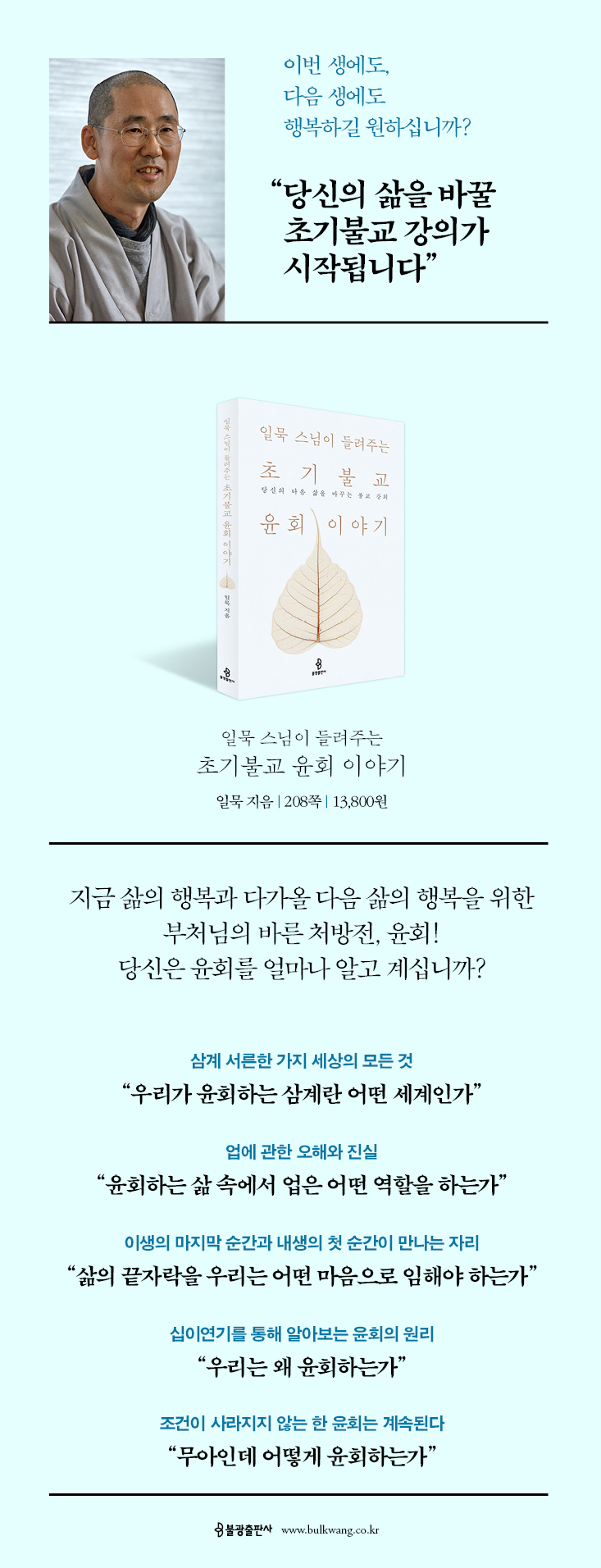
The author of this book, Monk Ilmok, became a monk in 1996 while pursuing a doctorate in mathematics at Seoul National University and took Monk Wontaek, a disciple of Monk Seongcheol, as his teacher.
Since then, anyone interested in Buddhist meditation has visited various training centers at home and abroad and continued to practice.
He is also the head of the Jetavana Zen Center, a meditation community that currently teaches the early Buddhist practice.
The monk's book, "Stories of Early Buddhist Reincarnation Told by Monk Ilmok," explains the concept and principles of reincarnation based on the teachings of early Buddhism.
This book, which is a revised edition of the monk's first book, 『Reincarnation and a Happy Death』, published in 2010 and loved by many readers, is designed with new clothes and a new structure to guide readers to have a clear and correct perspective on the true meaning of reincarnation, which has been dismissed as an absurd view of the afterlife.
What does reincarnation mean to you?
In general, reincarnation is recognized in several ways:
First, there is the aspect that it is a tall tale.
In the preface to this book, the monk says:
“There is one thing I have come to realize after opening Jetavana Zen Center and meeting many people.
“It is surprising that there are many Buddhists who do not believe in reincarnation.”
We tend to believe only what we see.
But even though it is invisible, it is clear that reincarnation plays a significant role in guiding our lives and practices in the right direction.
The message of Monk Ilmok, which runs throughout this book, is that by knowing this and practicing it correctly, we can attain true happiness and ultimately realize nirvana.
It is also important to remember that reincarnation is not a principle that only operates at the end of life.
In other words, it is constantly operating even in our present lives.
We must once again reflect on the teachings of Buddha, who preached “causation” (緣起), the principle of reincarnation, that “because this exists, that exists.”
Second, it is perceived as a heavy or dark concept, often associated with death.
Death is something that will come to everyone someday.
But the obsession with 'me' ultimately causes a fear of death.
They also feel fear about the world after death, a place they have never been to before.
As you read this book line by line, you will come to realize that fear and dread ultimately begin with you and can be overcome through you.
In this way, we can change our attitude towards life and find a way to a better path.
So what should we do to overcome fear and find happiness in our present life and the next life to come?
A lecture on reincarnation for happiness in your present and future lives
First of all, you must know.
What is reincarnation? What kind of space is the world called the Three Realms where reincarnation is repeated? How are reincarnation and the core teachings of Buddha, such as karma and the twelve links of dependent origination, connected?
But it seems like it will only be difficult and stiff.
One of the distinguishing features of this book is its concise and clear narrative, making it easier and clearer to understand than any previous book.
Many books that have dealt with reincarnation have been interdisciplinary in nature or have been somewhat difficult for general readers to access.
However, this book is written in an easy-to-understand manner even for readers who are not well-versed in Buddhist doctrine.
The monk's lecture method, which kindly explains reincarnation and the concepts surrounding reincarnation, is also like that, and by borrowing stories of karma drawn from early Buddhist scriptures and commentaries, or the monk's own personal stories of karma, he helps even novice readers to have the right perspective.
Next, you must practice.
This book goes beyond simply explaining concepts; it tells us why we should practice and how we should live each moment of reincarnation.
For example, as a Buddhist, he does not spare advice on what we should practice to be born in a good place full of joy, what kind of mind we should have at the last moment of life, and how we should act for our dying family.
Everything you've ever wondered about reincarnation
- Monk Ilmok's lecture plan just for you
A summary of each chapter of this book is as follows:
Chapter 1 explains the three realms in which we reincarnate: the realm of desire, the realm of form, and the realm of formlessness.
When we reincarnate, we are born into one of the thirty-one worlds of the Three Realms according to the karma we have created.
By becoming aware of the various aspects of these thirty-one worlds, we will always be alert so that we can be born in a good place rather than an evil place in our next life.
Chapter 2 deals with karma and reincarnation.
Although we know that reincarnation occurs through karma, not many people clearly understand the concept of karma.
Through a broad and accurate understanding of the role of karma, the place where it produces its fruits, and the order and timing of its results, we can discard our misconceptions about karma.
Chapter 3 explains how the first consciousness of the next life, the rebirth consciousness, arises through the karma that appears in the cognitive process just before death.
The most obvious karma we have created in our lives appears in the cognitive process just before death in the form of karma, a representation of karma, or a representation of the place of rebirth.
The world in which one is born in the next life is determined by that karma, and that is where the first rebirth consciousness occurs.
A good understanding of this process will help you understand how important it is to face death with a clear mind.
Chapter 4 explains dependent origination, a core teaching of Buddhism.
This is a section that systematically organizes the principles of reincarnation in Chapter 3 through the teachings of the Twelve Links of Dependent Origination.
If you understand the smoke, you will be able to discard wrong views, acquire right views, and ultimately realize enlightenment.
In Chapter 5, we talked about the fact that there is no self, but the reason for reincarnation is that existence is dependent on conditions, that is, birth.
By understanding the origin of existence and the cause of reincarnation through acting, we can see that all beings depend on each other, and thus view the world with compassion.
The most important and core teachings in Buddhism, such as dependent origination and the Four Noble Truths, are based on reincarnation.
Through this point, we can see how important understanding reincarnation is in understanding Buddhism.
Moreover, as we read each page of Monk Ilmok's lectures on reincarnation, we realize how many wrong ideas we have had and how deeply rooted those wrong ideas are within us.
It also creates a sense of awareness about how to live your future.
By correctly understanding reincarnation through this book by Monk Ilmok, we can accept another prescription for happiness left by the Buddha.
In the end, all we will have left is happiness.
Since then, anyone interested in Buddhist meditation has visited various training centers at home and abroad and continued to practice.
He is also the head of the Jetavana Zen Center, a meditation community that currently teaches the early Buddhist practice.
The monk's book, "Stories of Early Buddhist Reincarnation Told by Monk Ilmok," explains the concept and principles of reincarnation based on the teachings of early Buddhism.
This book, which is a revised edition of the monk's first book, 『Reincarnation and a Happy Death』, published in 2010 and loved by many readers, is designed with new clothes and a new structure to guide readers to have a clear and correct perspective on the true meaning of reincarnation, which has been dismissed as an absurd view of the afterlife.
What does reincarnation mean to you?
In general, reincarnation is recognized in several ways:
First, there is the aspect that it is a tall tale.
In the preface to this book, the monk says:
“There is one thing I have come to realize after opening Jetavana Zen Center and meeting many people.
“It is surprising that there are many Buddhists who do not believe in reincarnation.”
We tend to believe only what we see.
But even though it is invisible, it is clear that reincarnation plays a significant role in guiding our lives and practices in the right direction.
The message of Monk Ilmok, which runs throughout this book, is that by knowing this and practicing it correctly, we can attain true happiness and ultimately realize nirvana.
It is also important to remember that reincarnation is not a principle that only operates at the end of life.
In other words, it is constantly operating even in our present lives.
We must once again reflect on the teachings of Buddha, who preached “causation” (緣起), the principle of reincarnation, that “because this exists, that exists.”
Second, it is perceived as a heavy or dark concept, often associated with death.
Death is something that will come to everyone someday.
But the obsession with 'me' ultimately causes a fear of death.
They also feel fear about the world after death, a place they have never been to before.
As you read this book line by line, you will come to realize that fear and dread ultimately begin with you and can be overcome through you.
In this way, we can change our attitude towards life and find a way to a better path.
So what should we do to overcome fear and find happiness in our present life and the next life to come?
A lecture on reincarnation for happiness in your present and future lives
First of all, you must know.
What is reincarnation? What kind of space is the world called the Three Realms where reincarnation is repeated? How are reincarnation and the core teachings of Buddha, such as karma and the twelve links of dependent origination, connected?
But it seems like it will only be difficult and stiff.
One of the distinguishing features of this book is its concise and clear narrative, making it easier and clearer to understand than any previous book.
Many books that have dealt with reincarnation have been interdisciplinary in nature or have been somewhat difficult for general readers to access.
However, this book is written in an easy-to-understand manner even for readers who are not well-versed in Buddhist doctrine.
The monk's lecture method, which kindly explains reincarnation and the concepts surrounding reincarnation, is also like that, and by borrowing stories of karma drawn from early Buddhist scriptures and commentaries, or the monk's own personal stories of karma, he helps even novice readers to have the right perspective.
Next, you must practice.
This book goes beyond simply explaining concepts; it tells us why we should practice and how we should live each moment of reincarnation.
For example, as a Buddhist, he does not spare advice on what we should practice to be born in a good place full of joy, what kind of mind we should have at the last moment of life, and how we should act for our dying family.
Everything you've ever wondered about reincarnation
- Monk Ilmok's lecture plan just for you
A summary of each chapter of this book is as follows:
Chapter 1 explains the three realms in which we reincarnate: the realm of desire, the realm of form, and the realm of formlessness.
When we reincarnate, we are born into one of the thirty-one worlds of the Three Realms according to the karma we have created.
By becoming aware of the various aspects of these thirty-one worlds, we will always be alert so that we can be born in a good place rather than an evil place in our next life.
Chapter 2 deals with karma and reincarnation.
Although we know that reincarnation occurs through karma, not many people clearly understand the concept of karma.
Through a broad and accurate understanding of the role of karma, the place where it produces its fruits, and the order and timing of its results, we can discard our misconceptions about karma.
Chapter 3 explains how the first consciousness of the next life, the rebirth consciousness, arises through the karma that appears in the cognitive process just before death.
The most obvious karma we have created in our lives appears in the cognitive process just before death in the form of karma, a representation of karma, or a representation of the place of rebirth.
The world in which one is born in the next life is determined by that karma, and that is where the first rebirth consciousness occurs.
A good understanding of this process will help you understand how important it is to face death with a clear mind.
Chapter 4 explains dependent origination, a core teaching of Buddhism.
This is a section that systematically organizes the principles of reincarnation in Chapter 3 through the teachings of the Twelve Links of Dependent Origination.
If you understand the smoke, you will be able to discard wrong views, acquire right views, and ultimately realize enlightenment.
In Chapter 5, we talked about the fact that there is no self, but the reason for reincarnation is that existence is dependent on conditions, that is, birth.
By understanding the origin of existence and the cause of reincarnation through acting, we can see that all beings depend on each other, and thus view the world with compassion.
The most important and core teachings in Buddhism, such as dependent origination and the Four Noble Truths, are based on reincarnation.
Through this point, we can see how important understanding reincarnation is in understanding Buddhism.
Moreover, as we read each page of Monk Ilmok's lectures on reincarnation, we realize how many wrong ideas we have had and how deeply rooted those wrong ideas are within us.
It also creates a sense of awareness about how to live your future.
By correctly understanding reincarnation through this book by Monk Ilmok, we can accept another prescription for happiness left by the Buddha.
In the end, all we will have left is happiness.
GOODS SPECIFICS
- Date of publication: February 28, 2019
- Page count, weight, size: 208 pages | 270g | 145*215*20mm
- ISBN13: 9788974794972
- ISBN10: 8974794977
You may also like
카테고리
korean


korean

![GQ KOREA Mark (Monthly): December [2025]](http://librairie.coreenne.fr/cdn/shop/files/8ef265dbbfbf186523ed75ba7319009d.jpg?v=1765340328&width=3840)


