

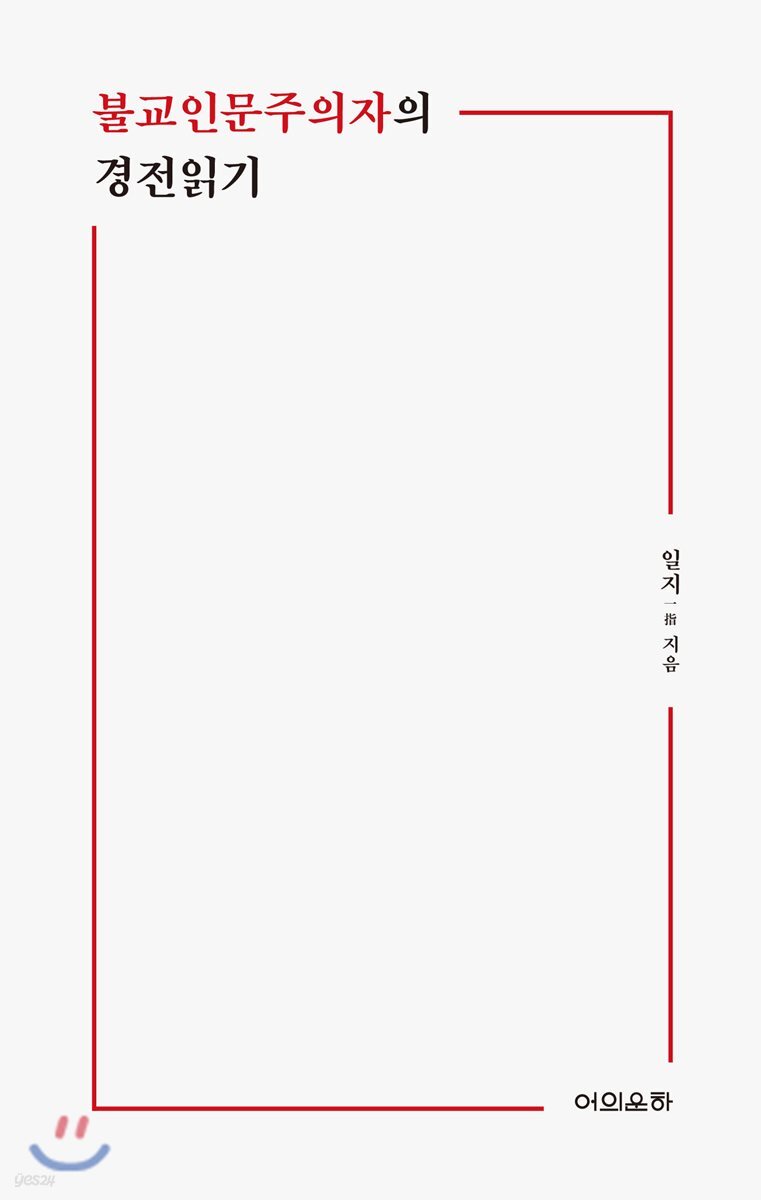
A Buddhist Humanist's Reading of the Scriptures
 |
Description
Book Introduction
The tragic death of a 'genius' monk
“Venerable Ilji (head of the Gyeonghakhoe Society), who had been serializing ‘Hidden Buddhist Stories’ in this newspaper, passed away on the 23rd at Suguksa Temple in Seoul.
Sesu, 44 years old.
Monk Ilji, who pioneered the unique field of 'Buddhist humanism' with an intuitive writing style based on extensive teachings, became a monk at Baekyangsa Temple in 1974 under the tutelage of Monk Seoong (current head of Gobuljongrim), and graduated from Haeinsa Temple Gangwon in 1980.
In 1997, he founded the Buddhist Scripture Research Institute and taught students, translating many scriptures and Zen sayings.
He has written about 20 books, including the Buddha's Seon Buddhism Questions and Answers on his Trip to Samsugapsan.
The monk's acquaintances and disciples are preparing to publish the 'Ilji Mungo' as a project to commemorate the deceased." (Modern Buddhist Newspaper, August 28, 2002)
Deeply exploring the relationship between Buddhist life and modern society
The short obituary in the religious newspaper announcing the death of Monk Ilji introduced him as a pioneer of ‘Buddhist humanism.’
Buddhist humanism.
This field, which has never been introduced anywhere in the humanities or Buddhist studies, encapsulates the path taken by a “genius” (as described by Yoon Chang-hwa, president of Minjok History) monk named Ilji.
He became a monk in 1974 at the age of 15, completed the Haein Gangwon and Yulwon training, and won the first Haein Academic Award in 1988 for his thesis, “Contemporary China’s Perception of Buddhism.”
From then on, he delved deeply into the relationship between Buddhist life and modern society, and explored the scriptures and Zen based on his unique erudition and intuitive writing style.
Beginning with “The Key of Karma” in 1990, he has published over 20 substantial books and translations, including “From Dharma to Imje” (1991), “Buddha, Interpretation, and Practice” (1991), “Madhyamaka Buddhism and Vijñāna Buddhism” (1992), and “Wandering Dunhuang - Today’s Buddhist Humanism Seen Through Buddhist Literature and Zen” (1993), leading up to “Tongyun’s Interpretation of the Vimalakirti Sutra” in 1999.
The monk's sudden death led to the discontinuation of the serial publication of 'Gusan Seonmun' in the Modern Buddhist Newspaper and in the Disaejip magazine, which was edited by Lee Ji-nu.
Exploring the sutras and Zen with a unique, exploratory spirit and intuitive writing style
In November 2018, the editor met Iljisunim's younger brother (Go Hyeon-seop).
According to his younger brother, the place where Monk Ilji left home when he was fourteen was Jinbul-am in Daeheungsa Temple in Haenam.
This life of Jinbul-am is described as follows in the preface to 『100 Questions and Answers on Seon Buddhism』 (1997).
“One autumn, more than 20 years ago, I was sweeping the garden of Jinbul-am Hermitage in Daeheungsa Temple in Haenam, a boy with a scruffy head who had rejected both the prison-like home and school.
… The three years I spent at Jinbul-am, sitting in meditation until the sun broke brightly, with the pale dawn air seeping in through the gaps in the door of the main hall, without any set times for the meditation, remain as a memory that always makes my heart flutter, and I always miss it.” Afterwards, Monk Ilji received the precepts at Baekyangsa Temple.
One time something like this happened.
When Monk Ilji had not yet been a monk for a year, he stopped by a layman's house to spend the night, and the next morning, while writing the sermon, he said to his younger brother:
"Do you know why people live?" The younger brother said he still remembers the words his fourteen-year-old brother asked him. (Two years later, the younger brother followed his older brother into becoming a monk, and ten years later, he returned to secular life.)
Meeting with Monk Seongcheol
Monk Ilji graduated from Haein Gangwon in 1980 and completed his training at Haein Yulwon in 1982. During this time, he met Monk Seongcheol, a great master of modern Korean Buddhism.
In another book of his, 『The Monk Who Remains Like a Big Mountain Even from afar』, Monk Ilji records the influence he received from Monk Seongcheol as follows:
“I stayed at Haeinsa Temple from my late teens to my mid-twenties and received teachings from the great monk Seongcheol.
I cannot forget the monk who taught us, sometimes harshly and sometimes gently, when we were still young.
Moreover, he deeply moved the living beings of this era with his earnest and thorough spirit of seeking the truth and his practice of compassion, which required him to sacrifice everything and abandon personal interests in order to seek the Buddha's teachings for the sake of truth.
In particular, the monk's teaching, "Realize your own mind and serve your neighbors," seems simple, but it is a difficult path to put into practice."
Buddhist Humanism, embodied in over 20 works
After leaving Haeinsa Temple, Monk Iljis began to study sutras and Zen.
His sutras and Zen journeys go through Abhidharma, sects, Mahayana, Madhyamaka, Yogacara, and Zen in early Buddhism.
For him, the scriptures and Zen are not simply academic interests, but are deeply imbued with the question, “What does the coming 21st century hold for Buddhism?”
For example, he constantly asks, “What will Zen do in the field of historical formation?” and calls for Buddhism to be “examined broadly from a humanistic perspective” “to establish Zen’s reflective modernity and public nature.”
This spirit of inquiry brings him into his own ideological realm called 'Buddhist Humanism'.
Maybe that's why.
His 20 or so works are his own answers to these questions.
“Venerable Ilji (head of the Gyeonghakhoe Society), who had been serializing ‘Hidden Buddhist Stories’ in this newspaper, passed away on the 23rd at Suguksa Temple in Seoul.
Sesu, 44 years old.
Monk Ilji, who pioneered the unique field of 'Buddhist humanism' with an intuitive writing style based on extensive teachings, became a monk at Baekyangsa Temple in 1974 under the tutelage of Monk Seoong (current head of Gobuljongrim), and graduated from Haeinsa Temple Gangwon in 1980.
In 1997, he founded the Buddhist Scripture Research Institute and taught students, translating many scriptures and Zen sayings.
He has written about 20 books, including the Buddha's Seon Buddhism Questions and Answers on his Trip to Samsugapsan.
The monk's acquaintances and disciples are preparing to publish the 'Ilji Mungo' as a project to commemorate the deceased." (Modern Buddhist Newspaper, August 28, 2002)
Deeply exploring the relationship between Buddhist life and modern society
The short obituary in the religious newspaper announcing the death of Monk Ilji introduced him as a pioneer of ‘Buddhist humanism.’
Buddhist humanism.
This field, which has never been introduced anywhere in the humanities or Buddhist studies, encapsulates the path taken by a “genius” (as described by Yoon Chang-hwa, president of Minjok History) monk named Ilji.
He became a monk in 1974 at the age of 15, completed the Haein Gangwon and Yulwon training, and won the first Haein Academic Award in 1988 for his thesis, “Contemporary China’s Perception of Buddhism.”
From then on, he delved deeply into the relationship between Buddhist life and modern society, and explored the scriptures and Zen based on his unique erudition and intuitive writing style.
Beginning with “The Key of Karma” in 1990, he has published over 20 substantial books and translations, including “From Dharma to Imje” (1991), “Buddha, Interpretation, and Practice” (1991), “Madhyamaka Buddhism and Vijñāna Buddhism” (1992), and “Wandering Dunhuang - Today’s Buddhist Humanism Seen Through Buddhist Literature and Zen” (1993), leading up to “Tongyun’s Interpretation of the Vimalakirti Sutra” in 1999.
The monk's sudden death led to the discontinuation of the serial publication of 'Gusan Seonmun' in the Modern Buddhist Newspaper and in the Disaejip magazine, which was edited by Lee Ji-nu.
Exploring the sutras and Zen with a unique, exploratory spirit and intuitive writing style
In November 2018, the editor met Iljisunim's younger brother (Go Hyeon-seop).
According to his younger brother, the place where Monk Ilji left home when he was fourteen was Jinbul-am in Daeheungsa Temple in Haenam.
This life of Jinbul-am is described as follows in the preface to 『100 Questions and Answers on Seon Buddhism』 (1997).
“One autumn, more than 20 years ago, I was sweeping the garden of Jinbul-am Hermitage in Daeheungsa Temple in Haenam, a boy with a scruffy head who had rejected both the prison-like home and school.
… The three years I spent at Jinbul-am, sitting in meditation until the sun broke brightly, with the pale dawn air seeping in through the gaps in the door of the main hall, without any set times for the meditation, remain as a memory that always makes my heart flutter, and I always miss it.” Afterwards, Monk Ilji received the precepts at Baekyangsa Temple.
One time something like this happened.
When Monk Ilji had not yet been a monk for a year, he stopped by a layman's house to spend the night, and the next morning, while writing the sermon, he said to his younger brother:
"Do you know why people live?" The younger brother said he still remembers the words his fourteen-year-old brother asked him. (Two years later, the younger brother followed his older brother into becoming a monk, and ten years later, he returned to secular life.)
Meeting with Monk Seongcheol
Monk Ilji graduated from Haein Gangwon in 1980 and completed his training at Haein Yulwon in 1982. During this time, he met Monk Seongcheol, a great master of modern Korean Buddhism.
In another book of his, 『The Monk Who Remains Like a Big Mountain Even from afar』, Monk Ilji records the influence he received from Monk Seongcheol as follows:
“I stayed at Haeinsa Temple from my late teens to my mid-twenties and received teachings from the great monk Seongcheol.
I cannot forget the monk who taught us, sometimes harshly and sometimes gently, when we were still young.
Moreover, he deeply moved the living beings of this era with his earnest and thorough spirit of seeking the truth and his practice of compassion, which required him to sacrifice everything and abandon personal interests in order to seek the Buddha's teachings for the sake of truth.
In particular, the monk's teaching, "Realize your own mind and serve your neighbors," seems simple, but it is a difficult path to put into practice."
Buddhist Humanism, embodied in over 20 works
After leaving Haeinsa Temple, Monk Iljis began to study sutras and Zen.
His sutras and Zen journeys go through Abhidharma, sects, Mahayana, Madhyamaka, Yogacara, and Zen in early Buddhism.
For him, the scriptures and Zen are not simply academic interests, but are deeply imbued with the question, “What does the coming 21st century hold for Buddhism?”
For example, he constantly asks, “What will Zen do in the field of historical formation?” and calls for Buddhism to be “examined broadly from a humanistic perspective” “to establish Zen’s reflective modernity and public nature.”
This spirit of inquiry brings him into his own ideological realm called 'Buddhist Humanism'.
Maybe that's why.
His 20 or so works are his own answers to these questions.
- You can preview some of the book's contents.
Preview
index
The Ultimate Hwadu: Buddha 006
Asking for Directions in Buddhism 016
Business 026
Human 036
Faith 046
Disease and Health 056
Sutra 066
Zen 076
Destiny 086
Liberation 096
Selflessness 106
The Five Great Evils of the Infinite Life Sutra 116
Conversion 126
Bodhicitta 136
Patience 146
The Reality of All Dharmas 156
Diligence 166
Bodhisattva 176
Transmission of the Law 186
The Three Karmas of the Old and New 196
Body 206
Peace of Mind 216
Ashoka's Law 226
Pure Land 236
Asking for Directions in Buddhism 016
Business 026
Human 036
Faith 046
Disease and Health 056
Sutra 066
Zen 076
Destiny 086
Liberation 096
Selflessness 106
The Five Great Evils of the Infinite Life Sutra 116
Conversion 126
Bodhicitta 136
Patience 146
The Reality of All Dharmas 156
Diligence 166
Bodhisattva 176
Transmission of the Law 186
The Three Karmas of the Old and New 196
Body 206
Peace of Mind 216
Ashoka's Law 226
Pure Land 236
Into the book
How should we read the scriptures and apply them to our lives?
A book that provides insight into the humanistic interpretation and practice of Buddhism.
This book is a series of articles published in the monthly magazine “Bulkwang” for two years from January 2000 to December 2001, before the monk’s death.
Therefore, it is almost the only text that allows us to see the Buddhist humanistic thoughts of the monk before his death.
This book presents 24 topics that not only Buddhists but also those who understand Buddhism should consider in their lives, and examines how each topic is conveyed in the scriptures.
What is noteworthy in this book is the humanistic interpretation of the message contained in the scriptures.
It is to convey the message of human existence, life, society, history, and civilization through scriptures.
This is connected to the question of 'How should we read, interpret, and practice the scriptures after becoming a monk?', and that question is in line with the author's insight of 'the humanistic interpretation and practice of Buddhism.'
In particular, the author's interpretation of "Buddha", which was the first to be uploaded, insightfully shows where the message of Buddhism is headed.
“I was born with a human body,
I grew up as a human being
“As a human being, I have achieved Buddhahood.”
『Zeng-il Agama Sutra』 Volume 28, "Chapter on Clearing the Dharma"
Perhaps many of the readers of this article will be encountering this scripture for the first time.
The content and interpretations of the scriptures appearing here shake our Buddhist conceptual system considerably.
How will the monk portray the message contained in this sutra?
“Buddha declares himself to be human.
Buddhism does not assume the existence of God or make it its philosophical goal to prove the existence of God.
Generally, Buddhism is said to be atheistic, denying the existence of God, but this definition is merely a product of the Christian perspective that contrasts it with theism, which acknowledges the existence of God. The very statement that "Buddhism is atheistic" is a rather ambiguous definition.
Of course, Buddhism says, 'People cross the strong currents with faith and the sea with diligence.
He places great importance on faith and takes refuge in the three refuges of Buddha, the teachings, and the Sangha as his basic religious ritual, to the extent that he says, 'Through diligence, one can transcend suffering, and through wisdom, one can reach the state of complete purity.'
What we must note here is that, at least for Buddhists, the meaning of religion does not mean subordination as a created being to an absolute being who passes judgment, but rather a higher system of faith and practice that focuses on the ultimate problems of human life through the teachings of the Buddha and resolves various conflicts and problems in life.
“For Buddhists, the meaning of faith is not simply ‘faith,’ but a virtue necessary for the increase of ‘wisdom,’ and a basic prerequisite for attaining purity of mind.” (p. 11)
Also, in the topic of “Asking for Directions in Buddhism,” the monk said, “Buddhism does not choose only dry, instrumental knowledge.
The essence of Buddhist practice, those who study Buddhism must have deep insight into the essence of body and mind cultivation.
The practice of physical and mental discipline, imbued with the insight of compassion and wisdom, is the standard of life that all Buddhists must choose.
Therefore, the deeper and more sophisticated one's Buddhist practice becomes, the more faithfully one cultivates the Buddha's teachings.
“At the core of the question young people always ask, ‘How should we live?’ is the issue of conduct and mental cultivation” (p. 19), clearly pointing out the essence of Buddhism.
In the section on “Seon,” the problem of modern Korean Seon is diagnosed as “Seon in crisis,” and Seon is warned against being treated as if it were an instant food.
“Goodness is not a panacea.
Zen that forgets the original wisdom and compassion of Mahayana Buddhism is not Buddhism, but Taoism.
“If the Korean Buddhist Sangha truly believes that the identity of Korean Buddhism continues to be Seon, it must restore the true practice of Seon and its Buddhist values.” (p. 79)
“No matter how much information about Zen Buddhism is distributed through computers, and no matter how many introductory books on Zen are published, if the main theme of Zen, ‘self-realization of the inner mind and self-awakening holy wisdom,’ which originated from the strong humanism of Mahayana Buddhism, is not put into practice in daily life, Zen will be reduced to a derivative of Eastern thought, and will only engage in the vain monologue of ‘enlightenment.’” (p. 83)
In "Liberation," we are called to break free from the mystery and abstractness of liberation.
“We have thought of the word ‘liberation’ as a Buddhist term with too easy, abstract, and mystical connotations, and as a result, ‘liberation’ has become a dead word meaning transcendence or escape from reality.
However, liberation is not something that can be achieved only through such mystical or intensive practice, and it is modern people who are bound by tens of thousands of yoke that are in need of liberation.
“If you reflect on your state of mind and desires right here and now, and clear away the impure energy and bubbles that are contaminated with greed, anger, and ignorance, you will realize that liberation is not so abstract or mysterious.” (p. 99)
In "Bodhicitta," it is emphasized that Bodhicitta is the practice of Mahayana Bodhisattva, in which the spirit of Buddhism blossoms.
“Sometimes we find ourselves reflecting on our lives from within, realizing the ugly side of human helplessness, selfishness, and desire, and resolving to seek the true path of life.
Even though the countless resolutions we made in our youth may become dull as we age, this resolution is still an important realization that cannot be easily abandoned.
That is, no matter how easily we succumb to the temptations of desire and selfishness, on the other hand, we desperately desire to be free from the obsession with desire and selfishness.
“Buddhism begins right where that decision is made.”
In "Bodhisattva," it is said that Bodhisattva is a practitioner of Mahayana Buddhism.
“The people of this land are now unable to find any standard for living, and the world is increasingly heading towards the extreme of indiscriminate chaos.
Today, advanced theories and academic language used to talk about life and society are already outdated.
It is the language of selfishness, the language of pride, the language of greed.
When young people, unable to find any sense of purpose in life even in school or religion, are immersed in suicide and bomb-making websites, is the solitary attainment of Buddhahood or enlightenment truly so profound and elegant? While there is much discussion about Buddhist practice, the crucial question is: What does practice truly mean?
Any action that is put into practice without discussing what that action actually is is nothing more than a one-time campaign.
If Buddhism truly embodies humanity's undying dream of the happiest life and brightest society, and if it wishes to be reborn as a religion representing Eastern religious and cultural identity, it must look with the eyes and heart of a bodhisattva at how our neighbors are surviving on this earth today.” (p. 181)
In "Pure Land," it is shown where Pure Land faith begins.
“The essence of Pure Land faith is salvation.
Pure Land faith reflects on the pollution of the Pure Land and honestly acknowledges one's own weaknesses.
As a finite being that will eventually perish, Ami
I take refuge in the great compassion and original vows of other Buddhas and aspire to the Pure Land.
Is Pure Land faith a weak faith in which weak humans borrow the power of the absolute?
no.
It is a faith that seeks to realize the Pure Land in this finite realm, where weak humans are bound by the shackles of karma, and where humans gaze deeply into the dark abyss of desire, repenting for their sins and always shrouded in the shadow of greed, ignorance, and death.
There is absolutely no shame in honestly acknowledging one's own weakness and limitations.
“This small realization is the starting point of Pure Land faith.”
A book that provides insight into the humanistic interpretation and practice of Buddhism.
This book is a series of articles published in the monthly magazine “Bulkwang” for two years from January 2000 to December 2001, before the monk’s death.
Therefore, it is almost the only text that allows us to see the Buddhist humanistic thoughts of the monk before his death.
This book presents 24 topics that not only Buddhists but also those who understand Buddhism should consider in their lives, and examines how each topic is conveyed in the scriptures.
What is noteworthy in this book is the humanistic interpretation of the message contained in the scriptures.
It is to convey the message of human existence, life, society, history, and civilization through scriptures.
This is connected to the question of 'How should we read, interpret, and practice the scriptures after becoming a monk?', and that question is in line with the author's insight of 'the humanistic interpretation and practice of Buddhism.'
In particular, the author's interpretation of "Buddha", which was the first to be uploaded, insightfully shows where the message of Buddhism is headed.
“I was born with a human body,
I grew up as a human being
“As a human being, I have achieved Buddhahood.”
『Zeng-il Agama Sutra』 Volume 28, "Chapter on Clearing the Dharma"
Perhaps many of the readers of this article will be encountering this scripture for the first time.
The content and interpretations of the scriptures appearing here shake our Buddhist conceptual system considerably.
How will the monk portray the message contained in this sutra?
“Buddha declares himself to be human.
Buddhism does not assume the existence of God or make it its philosophical goal to prove the existence of God.
Generally, Buddhism is said to be atheistic, denying the existence of God, but this definition is merely a product of the Christian perspective that contrasts it with theism, which acknowledges the existence of God. The very statement that "Buddhism is atheistic" is a rather ambiguous definition.
Of course, Buddhism says, 'People cross the strong currents with faith and the sea with diligence.
He places great importance on faith and takes refuge in the three refuges of Buddha, the teachings, and the Sangha as his basic religious ritual, to the extent that he says, 'Through diligence, one can transcend suffering, and through wisdom, one can reach the state of complete purity.'
What we must note here is that, at least for Buddhists, the meaning of religion does not mean subordination as a created being to an absolute being who passes judgment, but rather a higher system of faith and practice that focuses on the ultimate problems of human life through the teachings of the Buddha and resolves various conflicts and problems in life.
“For Buddhists, the meaning of faith is not simply ‘faith,’ but a virtue necessary for the increase of ‘wisdom,’ and a basic prerequisite for attaining purity of mind.” (p. 11)
Also, in the topic of “Asking for Directions in Buddhism,” the monk said, “Buddhism does not choose only dry, instrumental knowledge.
The essence of Buddhist practice, those who study Buddhism must have deep insight into the essence of body and mind cultivation.
The practice of physical and mental discipline, imbued with the insight of compassion and wisdom, is the standard of life that all Buddhists must choose.
Therefore, the deeper and more sophisticated one's Buddhist practice becomes, the more faithfully one cultivates the Buddha's teachings.
“At the core of the question young people always ask, ‘How should we live?’ is the issue of conduct and mental cultivation” (p. 19), clearly pointing out the essence of Buddhism.
In the section on “Seon,” the problem of modern Korean Seon is diagnosed as “Seon in crisis,” and Seon is warned against being treated as if it were an instant food.
“Goodness is not a panacea.
Zen that forgets the original wisdom and compassion of Mahayana Buddhism is not Buddhism, but Taoism.
“If the Korean Buddhist Sangha truly believes that the identity of Korean Buddhism continues to be Seon, it must restore the true practice of Seon and its Buddhist values.” (p. 79)
“No matter how much information about Zen Buddhism is distributed through computers, and no matter how many introductory books on Zen are published, if the main theme of Zen, ‘self-realization of the inner mind and self-awakening holy wisdom,’ which originated from the strong humanism of Mahayana Buddhism, is not put into practice in daily life, Zen will be reduced to a derivative of Eastern thought, and will only engage in the vain monologue of ‘enlightenment.’” (p. 83)
In "Liberation," we are called to break free from the mystery and abstractness of liberation.
“We have thought of the word ‘liberation’ as a Buddhist term with too easy, abstract, and mystical connotations, and as a result, ‘liberation’ has become a dead word meaning transcendence or escape from reality.
However, liberation is not something that can be achieved only through such mystical or intensive practice, and it is modern people who are bound by tens of thousands of yoke that are in need of liberation.
“If you reflect on your state of mind and desires right here and now, and clear away the impure energy and bubbles that are contaminated with greed, anger, and ignorance, you will realize that liberation is not so abstract or mysterious.” (p. 99)
In "Bodhicitta," it is emphasized that Bodhicitta is the practice of Mahayana Bodhisattva, in which the spirit of Buddhism blossoms.
“Sometimes we find ourselves reflecting on our lives from within, realizing the ugly side of human helplessness, selfishness, and desire, and resolving to seek the true path of life.
Even though the countless resolutions we made in our youth may become dull as we age, this resolution is still an important realization that cannot be easily abandoned.
That is, no matter how easily we succumb to the temptations of desire and selfishness, on the other hand, we desperately desire to be free from the obsession with desire and selfishness.
“Buddhism begins right where that decision is made.”
In "Bodhisattva," it is said that Bodhisattva is a practitioner of Mahayana Buddhism.
“The people of this land are now unable to find any standard for living, and the world is increasingly heading towards the extreme of indiscriminate chaos.
Today, advanced theories and academic language used to talk about life and society are already outdated.
It is the language of selfishness, the language of pride, the language of greed.
When young people, unable to find any sense of purpose in life even in school or religion, are immersed in suicide and bomb-making websites, is the solitary attainment of Buddhahood or enlightenment truly so profound and elegant? While there is much discussion about Buddhist practice, the crucial question is: What does practice truly mean?
Any action that is put into practice without discussing what that action actually is is nothing more than a one-time campaign.
If Buddhism truly embodies humanity's undying dream of the happiest life and brightest society, and if it wishes to be reborn as a religion representing Eastern religious and cultural identity, it must look with the eyes and heart of a bodhisattva at how our neighbors are surviving on this earth today.” (p. 181)
In "Pure Land," it is shown where Pure Land faith begins.
“The essence of Pure Land faith is salvation.
Pure Land faith reflects on the pollution of the Pure Land and honestly acknowledges one's own weaknesses.
As a finite being that will eventually perish, Ami
I take refuge in the great compassion and original vows of other Buddhas and aspire to the Pure Land.
Is Pure Land faith a weak faith in which weak humans borrow the power of the absolute?
no.
It is a faith that seeks to realize the Pure Land in this finite realm, where weak humans are bound by the shackles of karma, and where humans gaze deeply into the dark abyss of desire, repenting for their sins and always shrouded in the shadow of greed, ignorance, and death.
There is absolutely no shame in honestly acknowledging one's own weakness and limitations.
“This small realization is the starting point of Pure Land faith.”
--- From the text
Publisher's Review
“Monk Ilji has passed away.”
The voice of an acquaintance on the phone sounded like an obituary in a newspaper.
Shaking my head, I came to my senses again and saw that it was the person who had taught me the Pure Land Sutra in a container placed in a corner of Sukguksa Temple.
There was a ringing in my ears.
I headed to the temple alone in a daze.
On August 23, 2002, the body of Monk Ilji was discovered by the head monk of Suguksa Temple, two to three days after he had passed away.
The humid air of the summer monsoon season filled the container.
The monk's room, which was about 10 pyeong in size, was filled with about 4,000 books, excluding the space of about 2 pyeong for sleeping and writing.
In this space, the monk read sutras with young master's and doctoral students once a week.
The monk gave me, a bachelor's degree holder, a seat at the bottom of the group because of our relationship since my days as a reporter for a religious monthly magazine.
Reading the scriptures, in which each person reads the original text and interprets it, was a difficult task for me.
As someone who read Chinese characters sporadically, the monk filled in my shortcomings and led me along the path of scripture.
Compared to the brilliant disciples, I was a dull disciple, so the frustration must have been indescribable.
He must have felt so bad that he sent me a short letter (which I lost after moving several times) titled, “How should I study the scriptures?”
Despite the monk's interest and consideration, I neglected my study of the scriptures.
Rather, I was fascinated by the monk's interpretations of the sutras.
When I think about it, I think I was more fascinated by the monk's writing and his intricate way of interpreting the sutras than by learning them from him.
For example, while reading the Infinite Life Sutra, I filled three A4 pages with 'A Brief Essay on Faith' or wrote 'On Anatta' on one A4 page.
It was while reading the Infinite Life Sutra that I came across the original text, ‘On Humanity and Karma as a Solitary Person.’
Once a week, the monk would hand out 4 to 13 sheets of A4 paper filled with 10-point font.
A long time has passed.
Late one night in late August this year, I couldn't sleep for a long time while reading the monk's faded books and writings.
Yoon Chang-hwa, the president of Minjok Publishing, who was a senior at Haein University, lamented the monk's early death, saying, "Is there another Buddhist genius like him today?"
The monk called himself a 'Buddhist humanist' and lived a non-monk, non-secular life, exploring numerous scriptures.
Where did the monk want to go?
In the monk's notes on the reading of the Sutra of the Three Sutras of the Pure Land (November 4, 2000), he mentions "the Buddha who sees through human loneliness and the fatality of karma and preaches liberation," and quotes a sentence from the sutra at the very top: "I did not associate with people, and I had no friends." (Sang-eung-bu-gyeong-jeon 1)
This book is a collection of articles serialized in the monthly magazine 『Bulkwang』 for two years starting in 2000.
It would be ideal if the perspective of the now-disappeared 'Buddhist humanist' who read the scriptures could be conveyed to the public.
(Editor Kim Seong-dong)
The voice of an acquaintance on the phone sounded like an obituary in a newspaper.
Shaking my head, I came to my senses again and saw that it was the person who had taught me the Pure Land Sutra in a container placed in a corner of Sukguksa Temple.
There was a ringing in my ears.
I headed to the temple alone in a daze.
On August 23, 2002, the body of Monk Ilji was discovered by the head monk of Suguksa Temple, two to three days after he had passed away.
The humid air of the summer monsoon season filled the container.
The monk's room, which was about 10 pyeong in size, was filled with about 4,000 books, excluding the space of about 2 pyeong for sleeping and writing.
In this space, the monk read sutras with young master's and doctoral students once a week.
The monk gave me, a bachelor's degree holder, a seat at the bottom of the group because of our relationship since my days as a reporter for a religious monthly magazine.
Reading the scriptures, in which each person reads the original text and interprets it, was a difficult task for me.
As someone who read Chinese characters sporadically, the monk filled in my shortcomings and led me along the path of scripture.
Compared to the brilliant disciples, I was a dull disciple, so the frustration must have been indescribable.
He must have felt so bad that he sent me a short letter (which I lost after moving several times) titled, “How should I study the scriptures?”
Despite the monk's interest and consideration, I neglected my study of the scriptures.
Rather, I was fascinated by the monk's interpretations of the sutras.
When I think about it, I think I was more fascinated by the monk's writing and his intricate way of interpreting the sutras than by learning them from him.
For example, while reading the Infinite Life Sutra, I filled three A4 pages with 'A Brief Essay on Faith' or wrote 'On Anatta' on one A4 page.
It was while reading the Infinite Life Sutra that I came across the original text, ‘On Humanity and Karma as a Solitary Person.’
Once a week, the monk would hand out 4 to 13 sheets of A4 paper filled with 10-point font.
A long time has passed.
Late one night in late August this year, I couldn't sleep for a long time while reading the monk's faded books and writings.
Yoon Chang-hwa, the president of Minjok Publishing, who was a senior at Haein University, lamented the monk's early death, saying, "Is there another Buddhist genius like him today?"
The monk called himself a 'Buddhist humanist' and lived a non-monk, non-secular life, exploring numerous scriptures.
Where did the monk want to go?
In the monk's notes on the reading of the Sutra of the Three Sutras of the Pure Land (November 4, 2000), he mentions "the Buddha who sees through human loneliness and the fatality of karma and preaches liberation," and quotes a sentence from the sutra at the very top: "I did not associate with people, and I had no friends." (Sang-eung-bu-gyeong-jeon 1)
This book is a collection of articles serialized in the monthly magazine 『Bulkwang』 for two years starting in 2000.
It would be ideal if the perspective of the now-disappeared 'Buddhist humanist' who read the scriptures could be conveyed to the public.
(Editor Kim Seong-dong)
GOODS SPECIFICS
- Date of publication: December 21, 2018
- Page count, weight, size: 252 pages | 328g | 127*197*20mm
- ISBN13: 9791196560904
- ISBN10: 1196560900
You may also like
카테고리
korean


korean

![GQ KOREA Mark (Monthly): December [2025]](http://librairie.coreenne.fr/cdn/shop/files/8ef265dbbfbf186523ed75ba7319009d.jpg?v=1765340328&width=3840)


