

Catholicism
 |
Description
Book Introduction
Catholicism through seeing, hearing, and feeling 『Catholicism』 “The beginning of a journey toward the core of the Catholic faith!” What if someone called you God? What would you think if a man came up to you and called you a god while you were walking down the street, stopping to buy something at the market, or sitting on the subway a little later than everyone else on your way home from work and looking at your smartphone? About two thousand years ago, a man born in a small village in Palestine was captured and executed by the Roman Empire while preaching that he was the son of God, that he was God himself, and that through his words and actions we too could become like God. Some of his disciples, who inherited his teachings, betrayed him and left him, while others, like their teacher, were captured, executed, or persecuted. But surprisingly, his teachings spread throughout the world and continue to this day. In the name of 'Catholicism'. |
- You can preview some of the book's contents.
Preview
index
Recommendation 04
To our Korean readers 08
Acknowledgments 13
Preface - Being Catholic 18
Chapter 1: The Amazing and Awesome Mystery: God Becomes Man 35
Chapter 2: Be Happy: Jesus' Teachings 89
Chapter 3: "Something Greater Than Which Nothing Can Be Conceived" The Ineffable Mystery of God 135
Chapter 4 Mary, Mother of God, the only one of whom our defiled nature can boast 186
Chapter 5: Key Figures: Peter, Paul, and the Missionary Journeys 234
Chapter 6: The Mysterious Union of Christ and the Church: The Body of Suffering and Glory 286
Chapter 7: The Word Became Man, the True Heavenly Bread, the Mysterious Sacraments, and Worship 336
Chapter 8: The Massive Testimony of Adults 379
Chapter 9: His Burning Love: Prayer and Spiritual Life 428
Chapter 10: The End and the Eternal World 474
Conclusion - It's All About God 524
Index 529
Week 535
To our Korean readers 08
Acknowledgments 13
Preface - Being Catholic 18
Chapter 1: The Amazing and Awesome Mystery: God Becomes Man 35
Chapter 2: Be Happy: Jesus' Teachings 89
Chapter 3: "Something Greater Than Which Nothing Can Be Conceived" The Ineffable Mystery of God 135
Chapter 4 Mary, Mother of God, the only one of whom our defiled nature can boast 186
Chapter 5: Key Figures: Peter, Paul, and the Missionary Journeys 234
Chapter 6: The Mysterious Union of Christ and the Church: The Body of Suffering and Glory 286
Chapter 7: The Word Became Man, the True Heavenly Bread, the Mysterious Sacraments, and Worship 336
Chapter 8: The Massive Testimony of Adults 379
Chapter 9: His Burning Love: Prayer and Spiritual Life 428
Chapter 10: The End and the Eternal World 474
Conclusion - It's All About God 524
Index 529
Week 535
Detailed image

Into the book
One of the most important things to understand about Christianity is that it is not a philosophy, an ethical system, or a religious ideology.
Christianity is a relationship with one person, Jesus Christ, who is both God and man, and who shakes us up.
At the center of Christianity's attention is one person.
Chapter 1: A Surprising and Terrible Mystery, p.38
Paradoxically, Jesus, who was crucified, was a person who achieved true happiness.
If we remember the discussion we had about freedom, we can say that Jesus crucified is the icon of freedom.
Because he was free from all attachments that prevented him from doing the true good, that is, the will of God the Father.
Chapter 2: Be Happy p.109
We seek to escape fear by accumulating pleasure, wealth, power, or fame.
But soon we discover that all these worldly entities are as contingent as we ourselves, and therefore ultimately cannot reassure us.
The moment we realize this, we hear the expression, “My soul finds rest in God alone” (Psalm 62:1, New International Version) resonate from the depths of our being.
Chapter 3 Something Greater Than Which Nothing Can Be Thought p.147
In traditional mythological stories, when gods intervene in human affairs, they often do so in violent ways, such as rape, against human will.
But the gentle invitation of the angel announcing the Lord's birth reveals entirely different elements.
Maria's freedom and dignity are respected, and her curiosity is encouraged.
So to speak, Mary is being courted by a heavenly messenger.
Chapter 4 Mary, Mother of God p.189
Of course, it is not that the history of the church is without a single blemish.
There are countless examples over the years of churches forcing unity on believers in violent or disrespectful ways, thereby undermining the very body of Christ they were meant to build.
However, the Church has done its best to find creative ways to deal with this problem of unity and diversity.
It is a method based on the uniqueness of Jesus.
Chapter 6: The Body of Pain and Glory, p.312
Those who participated in the Mass gathered together as one family, listening to the word of God, confessing their faith, praying for one another, offering offerings to God, and receiving the body and blood of Jesus.
Now, at least in principle, believers are more properly formed and ready to go out and change the world.
The image of Noah's Ark we looked at earlier fits very well here.
Because liturgy preserves the form of life that God desires for his people.
Just as Noah opened the windows and entrance of the ark to let life out, so too do priests scatter the faithful as if sowing seeds into this fallen world.
Chapter 7: The Word Became Man, the True Bread of Heaven, pp. 376-377
Christianity is a relationship with one person, Jesus Christ, who is both God and man, and who shakes us up.
At the center of Christianity's attention is one person.
Chapter 1: A Surprising and Terrible Mystery, p.38
Paradoxically, Jesus, who was crucified, was a person who achieved true happiness.
If we remember the discussion we had about freedom, we can say that Jesus crucified is the icon of freedom.
Because he was free from all attachments that prevented him from doing the true good, that is, the will of God the Father.
Chapter 2: Be Happy p.109
We seek to escape fear by accumulating pleasure, wealth, power, or fame.
But soon we discover that all these worldly entities are as contingent as we ourselves, and therefore ultimately cannot reassure us.
The moment we realize this, we hear the expression, “My soul finds rest in God alone” (Psalm 62:1, New International Version) resonate from the depths of our being.
Chapter 3 Something Greater Than Which Nothing Can Be Thought p.147
In traditional mythological stories, when gods intervene in human affairs, they often do so in violent ways, such as rape, against human will.
But the gentle invitation of the angel announcing the Lord's birth reveals entirely different elements.
Maria's freedom and dignity are respected, and her curiosity is encouraged.
So to speak, Mary is being courted by a heavenly messenger.
Chapter 4 Mary, Mother of God p.189
Of course, it is not that the history of the church is without a single blemish.
There are countless examples over the years of churches forcing unity on believers in violent or disrespectful ways, thereby undermining the very body of Christ they were meant to build.
However, the Church has done its best to find creative ways to deal with this problem of unity and diversity.
It is a method based on the uniqueness of Jesus.
Chapter 6: The Body of Pain and Glory, p.312
Those who participated in the Mass gathered together as one family, listening to the word of God, confessing their faith, praying for one another, offering offerings to God, and receiving the body and blood of Jesus.
Now, at least in principle, believers are more properly formed and ready to go out and change the world.
The image of Noah's Ark we looked at earlier fits very well here.
Because liturgy preserves the form of life that God desires for his people.
Just as Noah opened the windows and entrance of the ark to let life out, so too do priests scatter the faithful as if sowing seeds into this fallen world.
Chapter 7: The Word Became Man, the True Bread of Heaven, pp. 376-377
--- From the text
Publisher's Review
The question begins, what is Catholicism?
What is Catholicism? How does it differ from other religions, whether extinct or still existing? How should Catholics understand these differences, what should they believe, and how should they accept them? While these questions are often the first step in studying a specific subject, many make exceptions when it comes to faith.
Because I believe that faith must be upright and solid, without the slightest doubt or wavering.
But if you were to ask what that upright and solid thing is, how many people would be able to readily answer?
Bishop Robert Barron, auxiliary bishop of the Archdiocese of Los Angeles, felt a pressing need for content that could serve as a guidepost for Catholics to maintain a firm and unwavering faith as they walk the path of faith.
This book, "Catholicism," is based on the manuscript of the documentary of the same name, "Catholicism," which Bishop Barron prepared for three years and produced. It introduces to readers the colorful and beautiful journey of Catholicism, which is never negligent in revealing the truth, so that more people can easily encounter it.
More seriously, what is Catholicism?
Bishop Barron says that the greatest principle that distinguishes Catholicism from other religions is the 'Incarnation.'
The 'incarnation', meaning that God, the Word, became human, means that God was not in a distant, separate place in the universe, but came among us in the flesh.
The Evangelist John said of this, “The Word became flesh and made his dwelling among us” (1:14).
If we look at the myths of ancient civilizations, gods and humans were strictly separated.
The gods of ancient Greece lived in their own space on top of Mount Olympus, strictly separating themselves from humans and receiving their worship.
In ancient Chinese mythology, humans were lowly beings who were transformed into flying droplets by splashing muddy water on a string made of rags.
The Aztec god Tezcatlipoca's nicknames are 'the creator of man' and 'the one who enslaves us.'
But the Catholic 'Incarnation' speaks not only of God but also of the truth about humanity.
God, who became man, shares his life with man, so that man can participate in the love that is in perfect unity with the Father, the Son, and the Holy Spirit.
Through that love, people are called to be ‘deified’, that is, to become like God.
No religion has ever preached such abundant love.
A Catholic journey of truth, presented through various evidences
Bishop Barron presents various evidences of 'incarnation' and 'deification' to help readers easily understand the meaning of God becoming human and thus human beings becoming like God.
The author presents a comprehensive and accessible resource covering a wide range of topics, including the various sacraments and liturgies of Catholicism, the architecture and literature of the cathedral, the stories of the saints, and works of art. He aims to guide readers through the Catholic world, ensuring they do not get lost, and to lead them to change and improve their lives.
“Through this book, I hope to guide readers in exploring the Catholic world.
…to lead readers deeper into the mystery of the incarnation.
“I hope that you, the readers, will be transformed through the power of the incarnation.” (Page 25, Preface)
Quoting Chesterton, who likened the church to a "house with a thousand doors," the author hopes that this book will become a door that allows readers to enter that "house."
See, hear, and encounter the cultural heritage of Catholicism
Throughout Europe, there are cultural heritage sites boasting a long history of Christian culture.
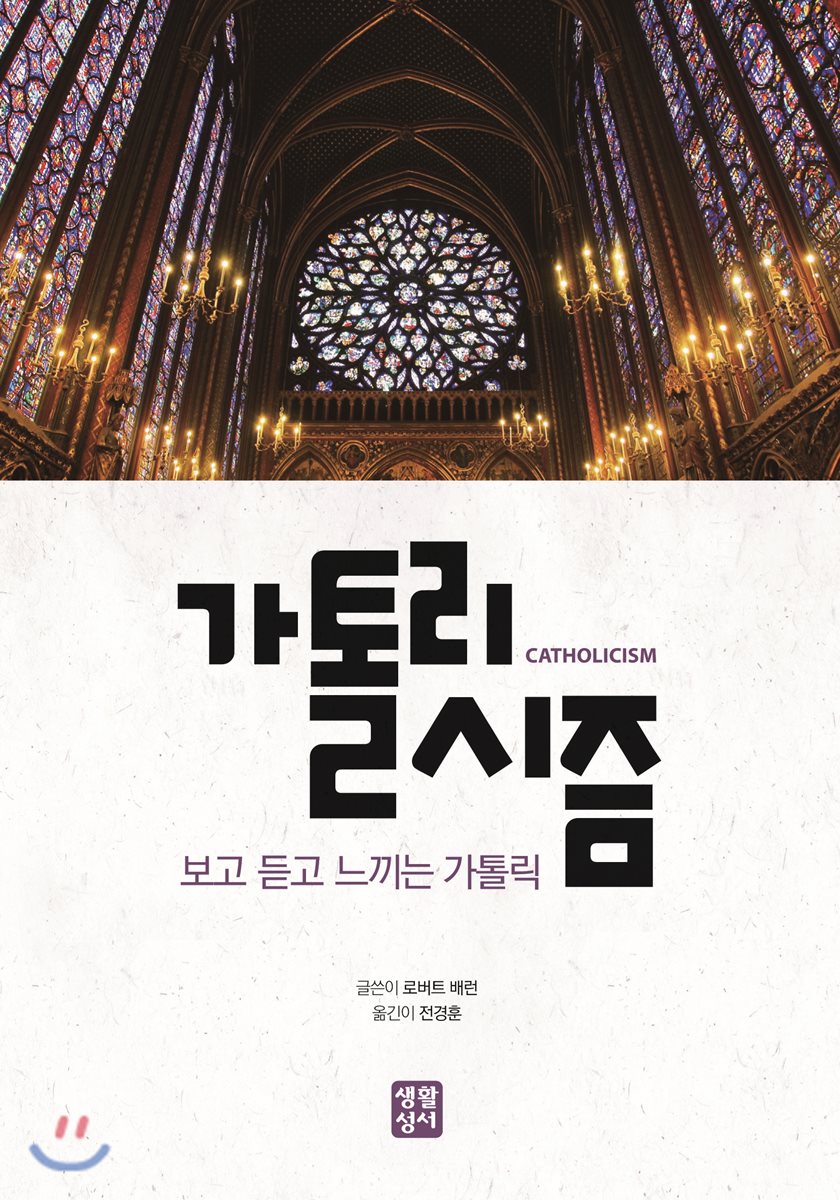
In addition to familiar cathedrals such as Sainte-Chapelle and Notre-Dame Cathedral in Paris, the Pantheon and Lateran Basilica in Rome, and Cologne Cathedral in Germany, there are also countless photos and paintings of people who left important marks in Catholic history, as well as their achievements.
Of course, in today's technologically advanced world, these materials can be easily found.
However, due to the overflow of data, it has become more difficult to find the data you really need, or to find the content that the data symbolizes or the information hidden behind it.
“I agree with the theologian Hans Urs von Balthasar:
He argued that Catholic truth could best be recognized and appreciated within the confines of the church.
This is like saying that stained glass seen from outside a cathedral is no different from just a dull window.
I would like to lead readers deeper into the Catholic Church.
Because I am confident that readers’ lives will change and improve through this experience.” (Page 25, Preface)
The various and valuable illustrations included in the text are valuable resources in themselves that will greatly enhance the reader's experience, but Bishop Barron also provides a detailed yet accessible explanation of the meaning they contain.
For example, when explaining the rose window of Sainte-Chapelle and Notre Dame Cathedral, we introduce not only the visible structural features of the original buildings, but also their theological significance, which is compared to the ark, the castle, and the body of the Virgin Mary.
Testimony from adults who see, hear, and meet
Stories about adults always seem to be a common topic that grabs people's attention.
Compared to the dramatic lives and miracles of adults, we often find ourselves ignoring the meaning these lives give us, or dismissing them as something separate and unrelated to life.
However, Bishop Barron defines a saint as “one who allows Jesus to come into his boat” through the story of Jesus getting into Peter’s boat and leading them to a catch so large that their nets began to break.
Jesus, the Son of God, does not use his divine authority as a weapon to rule or invade someone's life, but rather guides their life with his permission.
The author introduces the stories of four saints (Catherine Drexel, St. Thérèse of Lisieux, Edith Stein, and Mother Teresa) and shows how their inherent virtues are transformed when they invite Jesus.
“The stories of these four adults will show you how the dazzling and diverse changes led by God are revealed through their lives.
“I hope that readers will find it easy to discover a form of holiness that suits them best.” (Page 384, Extensive Testimonies)
Bishop Barron says that the lives of these saints reveal God's infinite and intense goodness toward the world.
The most useful answer today on what Catholicism is!
In our secular society, the technologically advanced society we live in today, we emphasize constant communication and relationships.
But paradoxically, the life of an atomized individual feels rather at peace with its disconnection and isolation.
This gap between modern society and the individual cannot be resolved just because it is religion.
European societies, which grew up within the Christian tradition, are already rapidly de-religiousizing.
So why should we learn about Catholicism? In our country, a nation of individuals more industrialized and atomized than any other on earth, what distinguishes those who believe in Jesus and follow his example from those who don't?
“We are not called simply to attain perfection, to master artistic self-expression, or to achieve economic liberation.
“We are called to be transformed into God, which the Eastern Fathers called deification.” (pp. 21-22, Being Catholic)
The reasons we have faith may be different for each of us, but the most important thing is to never forget that we are called to faith.
Starting from the premise of such thinking, the question, “What is Catholicism?” gains strength again.
“Ultimately, the Church, the councils, theological and pastoral programs, and the liturgy are all about God.
Catholicism speaks of God.
Otherwise, it is nothing more than a “noisy gong or a clanging cymbal.” (Page 525, Conclusion)
As Pope Benedict XVI later recalled from the message of an old bishop, “It was like the voice of the Holy Spirit,” everything in the Church is about God.
And this book, "Catholicism," will serve as a good guide, a commentary on knowledge, and the closest guide for readers to explore the special charm of the Catholic world toward God.
What is Catholicism? How does it differ from other religions, whether extinct or still existing? How should Catholics understand these differences, what should they believe, and how should they accept them? While these questions are often the first step in studying a specific subject, many make exceptions when it comes to faith.
Because I believe that faith must be upright and solid, without the slightest doubt or wavering.
But if you were to ask what that upright and solid thing is, how many people would be able to readily answer?
Bishop Robert Barron, auxiliary bishop of the Archdiocese of Los Angeles, felt a pressing need for content that could serve as a guidepost for Catholics to maintain a firm and unwavering faith as they walk the path of faith.
This book, "Catholicism," is based on the manuscript of the documentary of the same name, "Catholicism," which Bishop Barron prepared for three years and produced. It introduces to readers the colorful and beautiful journey of Catholicism, which is never negligent in revealing the truth, so that more people can easily encounter it.
More seriously, what is Catholicism?
Bishop Barron says that the greatest principle that distinguishes Catholicism from other religions is the 'Incarnation.'
The 'incarnation', meaning that God, the Word, became human, means that God was not in a distant, separate place in the universe, but came among us in the flesh.
The Evangelist John said of this, “The Word became flesh and made his dwelling among us” (1:14).
If we look at the myths of ancient civilizations, gods and humans were strictly separated.
The gods of ancient Greece lived in their own space on top of Mount Olympus, strictly separating themselves from humans and receiving their worship.
In ancient Chinese mythology, humans were lowly beings who were transformed into flying droplets by splashing muddy water on a string made of rags.
The Aztec god Tezcatlipoca's nicknames are 'the creator of man' and 'the one who enslaves us.'
But the Catholic 'Incarnation' speaks not only of God but also of the truth about humanity.
God, who became man, shares his life with man, so that man can participate in the love that is in perfect unity with the Father, the Son, and the Holy Spirit.
Through that love, people are called to be ‘deified’, that is, to become like God.
No religion has ever preached such abundant love.
A Catholic journey of truth, presented through various evidences
Bishop Barron presents various evidences of 'incarnation' and 'deification' to help readers easily understand the meaning of God becoming human and thus human beings becoming like God.
The author presents a comprehensive and accessible resource covering a wide range of topics, including the various sacraments and liturgies of Catholicism, the architecture and literature of the cathedral, the stories of the saints, and works of art. He aims to guide readers through the Catholic world, ensuring they do not get lost, and to lead them to change and improve their lives.
“Through this book, I hope to guide readers in exploring the Catholic world.
…to lead readers deeper into the mystery of the incarnation.
“I hope that you, the readers, will be transformed through the power of the incarnation.” (Page 25, Preface)
Quoting Chesterton, who likened the church to a "house with a thousand doors," the author hopes that this book will become a door that allows readers to enter that "house."
See, hear, and encounter the cultural heritage of Catholicism
Throughout Europe, there are cultural heritage sites boasting a long history of Christian culture.
In addition to familiar cathedrals such as Sainte-Chapelle and Notre-Dame Cathedral in Paris, the Pantheon and Lateran Basilica in Rome, and Cologne Cathedral in Germany, there are also countless photos and paintings of people who left important marks in Catholic history, as well as their achievements.
Of course, in today's technologically advanced world, these materials can be easily found.
However, due to the overflow of data, it has become more difficult to find the data you really need, or to find the content that the data symbolizes or the information hidden behind it.
“I agree with the theologian Hans Urs von Balthasar:
He argued that Catholic truth could best be recognized and appreciated within the confines of the church.
This is like saying that stained glass seen from outside a cathedral is no different from just a dull window.
I would like to lead readers deeper into the Catholic Church.
Because I am confident that readers’ lives will change and improve through this experience.” (Page 25, Preface)
The various and valuable illustrations included in the text are valuable resources in themselves that will greatly enhance the reader's experience, but Bishop Barron also provides a detailed yet accessible explanation of the meaning they contain.
For example, when explaining the rose window of Sainte-Chapelle and Notre Dame Cathedral, we introduce not only the visible structural features of the original buildings, but also their theological significance, which is compared to the ark, the castle, and the body of the Virgin Mary.
Testimony from adults who see, hear, and meet
Stories about adults always seem to be a common topic that grabs people's attention.
Compared to the dramatic lives and miracles of adults, we often find ourselves ignoring the meaning these lives give us, or dismissing them as something separate and unrelated to life.
However, Bishop Barron defines a saint as “one who allows Jesus to come into his boat” through the story of Jesus getting into Peter’s boat and leading them to a catch so large that their nets began to break.
Jesus, the Son of God, does not use his divine authority as a weapon to rule or invade someone's life, but rather guides their life with his permission.
The author introduces the stories of four saints (Catherine Drexel, St. Thérèse of Lisieux, Edith Stein, and Mother Teresa) and shows how their inherent virtues are transformed when they invite Jesus.
“The stories of these four adults will show you how the dazzling and diverse changes led by God are revealed through their lives.
“I hope that readers will find it easy to discover a form of holiness that suits them best.” (Page 384, Extensive Testimonies)
Bishop Barron says that the lives of these saints reveal God's infinite and intense goodness toward the world.
The most useful answer today on what Catholicism is!
In our secular society, the technologically advanced society we live in today, we emphasize constant communication and relationships.
But paradoxically, the life of an atomized individual feels rather at peace with its disconnection and isolation.
This gap between modern society and the individual cannot be resolved just because it is religion.
European societies, which grew up within the Christian tradition, are already rapidly de-religiousizing.
So why should we learn about Catholicism? In our country, a nation of individuals more industrialized and atomized than any other on earth, what distinguishes those who believe in Jesus and follow his example from those who don't?
“We are not called simply to attain perfection, to master artistic self-expression, or to achieve economic liberation.
“We are called to be transformed into God, which the Eastern Fathers called deification.” (pp. 21-22, Being Catholic)
The reasons we have faith may be different for each of us, but the most important thing is to never forget that we are called to faith.
Starting from the premise of such thinking, the question, “What is Catholicism?” gains strength again.
“Ultimately, the Church, the councils, theological and pastoral programs, and the liturgy are all about God.
Catholicism speaks of God.
Otherwise, it is nothing more than a “noisy gong or a clanging cymbal.” (Page 525, Conclusion)
As Pope Benedict XVI later recalled from the message of an old bishop, “It was like the voice of the Holy Spirit,” everything in the Church is about God.
And this book, "Catholicism," will serve as a good guide, a commentary on knowledge, and the closest guide for readers to explore the special charm of the Catholic world toward God.
GOODS SPECIFICS
- Date of publication: December 17, 2018
- Page count, weight, size: 544 pages | 636g | 140*200*35mm
- ISBN13: 9788984815384
- ISBN10: 8984815381
You may also like
카테고리
korean


korean

![GQ KOREA Mark (Monthly): December [2025]](http://librairie.coreenne.fr/cdn/shop/files/8ef265dbbfbf186523ed75ba7319009d.jpg?v=1765340328&width=3840)


