

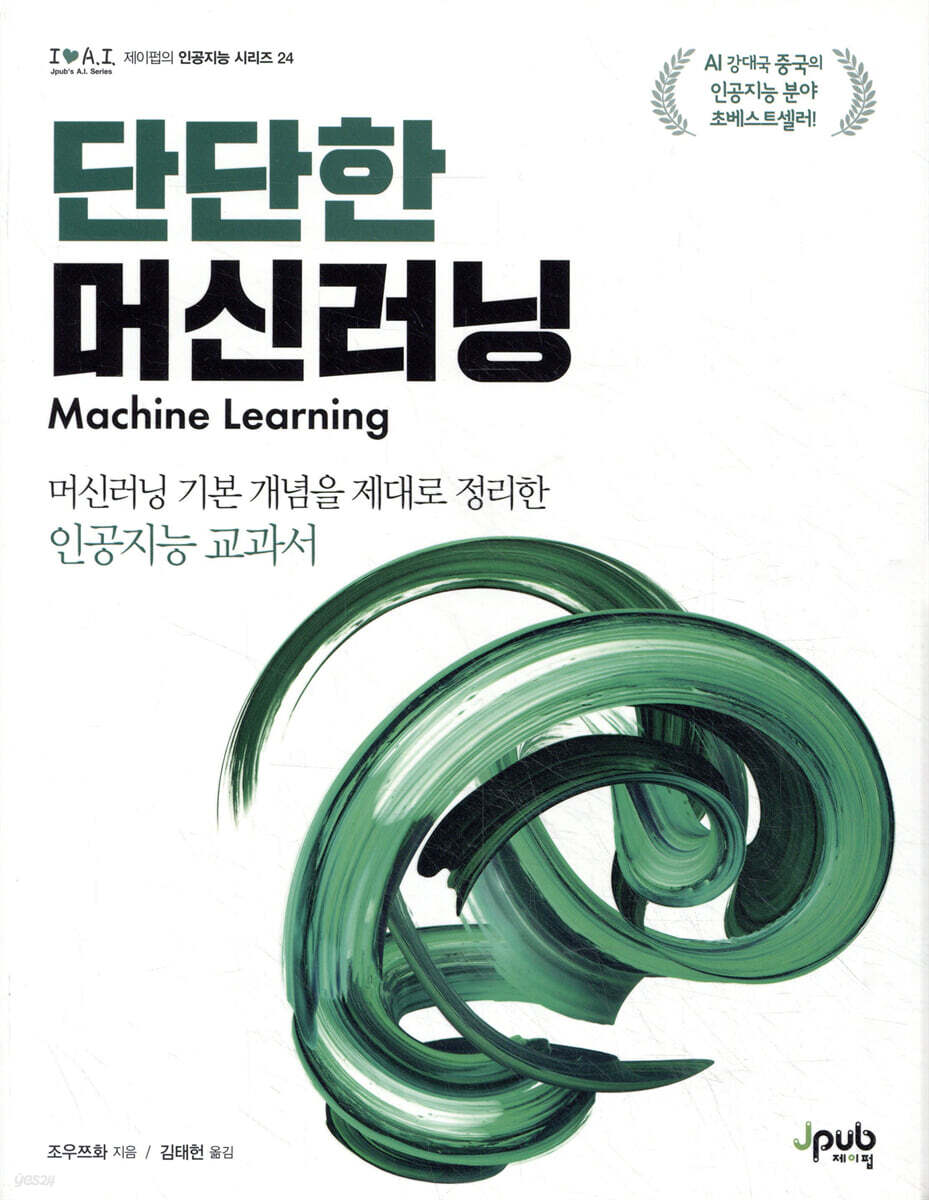
Robust machine learning
 |
Description
Book Introduction
A systematic introduction to machine learning, with concise explanations and minimal mathematical knowledge!
"Robust Machine Learning" is a book written over two years by the author, a fellow of the AAAI, the hall of fame in the field of artificial intelligence, for readers new to machine learning.
It consists of 16 chapters, each no longer than 30 pages, and includes high-quality practice problems to fit a 16-week machine learning course for upperclassmen and graduate students in science and engineering. It uses only the minimum mathematical knowledge to introduce machine learning to the widest possible audience.
"Robust Machine Learning" is a book written over two years by the author, a fellow of the AAAI, the hall of fame in the field of artificial intelligence, for readers new to machine learning.
It consists of 16 chapters, each no longer than 30 pages, and includes high-quality practice problems to fit a 16-week machine learning course for upperclassmen and graduate students in science and engineering. It uses only the minimum mathematical knowledge to introduce machine learning to the widest possible audience.
- You can preview some of the book's contents.
Preview
index
CHAPTER 01 Introduction 1
1.1 Introduction 1
1.2 Basic Machine Learning Terminology 2
1.3 Hypothesis Space 5
1.4 Inductive Bias 8
1.5 Development Process 13
1.6 Application Status 18
1.7 Further Reading 22
Practice Problem 25
Reference 26
Machine Learning Shelter 28
CHAPTER 02 Model Evaluation and Selection 29
2.1 Empirical Error and Overfitting 29
2.2 Evaluation Method 31
2.3 Model Performance Measurement 37
2.4 Comparative Verification 47
2.5 Bias and Variance 57
2.6 Further Reading 59
Practice Problem 61
Reference 62
Machine Learning Shelter 64
CHAPTER 03 Linear Models 65
3.1 Basic Format 65
3.2 Linear Regression 66
3.3 Logistic Regression 70
3.4 Linear Discriminant Analysis 73
3.5 Multi-Class Learning 77
3.6 Class Imbalance Problem 80
3.7 Further Reading 83
Practice Problem 85
Reference 86
Machine Learning Shelter 88
CHAPTER 04 Decision Trees 89
4.1 Basic Process 89
4.2 Split Selection 92
4.3 Pruning 98
4.4 Continuous Values and Missing Values 103
4.5 Multivariate Decision Trees 110
4.6 Further Reading 113
Practice Problem 115
Reference 117
Machine Learning Shelter 118
CHAPTER 05 Neural Networks 119
5.1 Neuron Model 119
5.2 Perceptrons and Multilayer Networks 121
5.3 Error Backpropagation Algorithm 124
5.4 Global Minimums and Local Minimums 130
5.5 Other Neural Networks 133
5.6 Deep Learning 139
5.7 Further Reading 142
Practice Problem 144
Reference 145
Machine Learning Shelter 148
CHAPTER 06 Support Vector Machines 149
6.1 Margins and Support Vectors 149
6.2 Dual Problem 151
6.3 Kernel Function 155
6.4 Soft Margins and Normalization 158
6.5 Support Vector Regression 163
6.6 Kernel Techniques 167
6.7 Further Reading 170
Practice Problem 172
Reference 173
Machine Learning Shelter 175
CHAPTER 07 Bayesian Classifiers 177
7.1 Bayesian Decision Theory 177
7.2 Maximum Likelihood Estimation 179
7.3 Naive Bayes Classifier 181
7.4 Semi-Naive Bayes Classifier 186
7.5 Bayesian Networks 188
7.6 EM Algorithm 195
7.7 Further Reading 197
Practice Problem 199
References 200
Machine Learning Shelter 202
CHAPTER 08 Ensemble Learning 203
8.1 Objects and Ensembles 203
8.2 Boosting 206
8.3 Bagging and Random Forests 211
8.4 Combination Strategy 215
8.5 Diversity 221
8.6 Further Reading 227
Practice Problem 229
Reference 231
Machine Learning Shelter 234
CHAPTER 09 Clustering 235
9.1 Clustering Learning Problem 235
9.2 Performance Measures 236
9.3 Distance Calculation Method 238
9.4 Prototype Clustering 241
9.5 Density Clustering 252
9.6 Hierarchical Clustering 255
9.7 Further Reading 259
Practice Problem 262
Reference 264
Machine Learning Shelter 266
CHAPTER 10 Dimensionality Reduction and Scale Learning 267
10.1 k-nearest neighbor technique 267
10.2 Embedding 269
10.3 Principal Component Analysis 273
10.4 Kernel Linear Dimensionality Reduction 275
10.5 Manifold Learning 278
10.6 Scale Learning 282
10.7 Further Reading 285
Practice Problem 287
Reference 288
Machine Learning Shelter 290
CHAPTER 11 Feature Selection and Sparse Learning 291
11.1 Subset Exploration and Evaluation 291
11.2 Filter Selection 294
11.3 Comprehensive Selection 296
11.4 Embedding Selection and L1 Regularization 298
11.5 Sparse Representations and Dictionary Learning 301
11.6 Compressed Sensing 304
11.7 Further Reading 308
Practice Problem 310
Reference 311
Machine Learning Shelter 314
CHAPTER 12 Computational Learning Theory 315
12.1 Basic Knowledge 315
12.2 PAC Learning 317
12.3 Finite Hypothesis Spaces 319
12.4 VC dimension 323
12.5 Rademacher complexity 329
12.6 Stability 335
12.7 Further Reading 339
Practice Problem 341
Reference 342
Machine Learning Shelter 343
CHAPTER 13 Semi-Supervised Learning 345
13.1 Unlabeled Data 345
13.2 Generative Methods 348
13.3 Semi-supervised SVM 352
13.4 Graph Semi-Supervised Learning 355
13.5 Mismatch-Based Methods 359
13.6 Semi-supervised clustering 363
13.7 Further Reading 368
Practice Problem 370
Reference 372
Machine Learning Shelter 374
CHAPTER 14 Probabilistic Graphical Models 375
14.1 Hidden Markov Models 375
14.2 Markov Random Fields 379
14.3 Conditional Random Field 383
14.4 Learning and Inference 386
14.5 Approximate Inference 390
14.6 Topic Model 397
14.7 Further Reading 400
Practice Problem 403
Reference 404
Machine Learning Shelter 406
CHAPTER 15 Learning Rules 407
15.1 Basic Concepts 407
15.2 Sequential Covering 410
15.3 Pruning Optimization 414
15.4 Learning Primary Rules 416
15.5 Inductive Logic Programming 420
15.6 Further Reading 428
Practice Problem 431
Reference 432
Machine Learning Shelter 434
CHAPTER 16: REINFORCEMENT LEARNING 435
16.1 Tasks and Rewards 435
16.2 K-Armed Bandit 438
16.3 Model-Based Learning 443
16.4 Model-Free Learning 450
16.5 Value Function Approximation 457
16.6 Imitation Running 460
16.7 Further Reading 462
Practice Problem 464
Reference 465
Machine Learning Shelter 467
APPENDIX A Matrix 469
A.1 Basic Operations 469
A.2 Derivatives 470
A.3 Singular Value Decomposition 472
APPENDIX B Optimization 474
B.1 Lagrange multiplier method 474
B.2 Quadratic Programming 477
B.3 Semi-Formal Programming 478
B.4 Gradient Descent 479
B.5 Coordinate Descent 480
APPENDIX C Probability Distributions 482
C.1 Frequently Used Probability Distributions 482
C.2 Conjugate distribution 487
C.3 KL divergence 488
Epilogue 489
Search 494
1.1 Introduction 1
1.2 Basic Machine Learning Terminology 2
1.3 Hypothesis Space 5
1.4 Inductive Bias 8
1.5 Development Process 13
1.6 Application Status 18
1.7 Further Reading 22
Practice Problem 25
Reference 26
Machine Learning Shelter 28
CHAPTER 02 Model Evaluation and Selection 29
2.1 Empirical Error and Overfitting 29
2.2 Evaluation Method 31
2.3 Model Performance Measurement 37
2.4 Comparative Verification 47
2.5 Bias and Variance 57
2.6 Further Reading 59
Practice Problem 61
Reference 62
Machine Learning Shelter 64
CHAPTER 03 Linear Models 65
3.1 Basic Format 65
3.2 Linear Regression 66
3.3 Logistic Regression 70
3.4 Linear Discriminant Analysis 73
3.5 Multi-Class Learning 77
3.6 Class Imbalance Problem 80
3.7 Further Reading 83
Practice Problem 85
Reference 86
Machine Learning Shelter 88
CHAPTER 04 Decision Trees 89
4.1 Basic Process 89
4.2 Split Selection 92
4.3 Pruning 98
4.4 Continuous Values and Missing Values 103
4.5 Multivariate Decision Trees 110
4.6 Further Reading 113
Practice Problem 115
Reference 117
Machine Learning Shelter 118
CHAPTER 05 Neural Networks 119
5.1 Neuron Model 119
5.2 Perceptrons and Multilayer Networks 121
5.3 Error Backpropagation Algorithm 124
5.4 Global Minimums and Local Minimums 130
5.5 Other Neural Networks 133
5.6 Deep Learning 139
5.7 Further Reading 142
Practice Problem 144
Reference 145
Machine Learning Shelter 148
CHAPTER 06 Support Vector Machines 149
6.1 Margins and Support Vectors 149
6.2 Dual Problem 151
6.3 Kernel Function 155
6.4 Soft Margins and Normalization 158
6.5 Support Vector Regression 163
6.6 Kernel Techniques 167
6.7 Further Reading 170
Practice Problem 172
Reference 173
Machine Learning Shelter 175
CHAPTER 07 Bayesian Classifiers 177
7.1 Bayesian Decision Theory 177
7.2 Maximum Likelihood Estimation 179
7.3 Naive Bayes Classifier 181
7.4 Semi-Naive Bayes Classifier 186
7.5 Bayesian Networks 188
7.6 EM Algorithm 195
7.7 Further Reading 197
Practice Problem 199
References 200
Machine Learning Shelter 202
CHAPTER 08 Ensemble Learning 203
8.1 Objects and Ensembles 203
8.2 Boosting 206
8.3 Bagging and Random Forests 211
8.4 Combination Strategy 215
8.5 Diversity 221
8.6 Further Reading 227
Practice Problem 229
Reference 231
Machine Learning Shelter 234
CHAPTER 09 Clustering 235
9.1 Clustering Learning Problem 235
9.2 Performance Measures 236
9.3 Distance Calculation Method 238
9.4 Prototype Clustering 241
9.5 Density Clustering 252
9.6 Hierarchical Clustering 255
9.7 Further Reading 259
Practice Problem 262
Reference 264
Machine Learning Shelter 266
CHAPTER 10 Dimensionality Reduction and Scale Learning 267
10.1 k-nearest neighbor technique 267
10.2 Embedding 269
10.3 Principal Component Analysis 273
10.4 Kernel Linear Dimensionality Reduction 275
10.5 Manifold Learning 278
10.6 Scale Learning 282
10.7 Further Reading 285
Practice Problem 287
Reference 288
Machine Learning Shelter 290
CHAPTER 11 Feature Selection and Sparse Learning 291
11.1 Subset Exploration and Evaluation 291
11.2 Filter Selection 294
11.3 Comprehensive Selection 296
11.4 Embedding Selection and L1 Regularization 298
11.5 Sparse Representations and Dictionary Learning 301
11.6 Compressed Sensing 304
11.7 Further Reading 308
Practice Problem 310
Reference 311
Machine Learning Shelter 314
CHAPTER 12 Computational Learning Theory 315
12.1 Basic Knowledge 315
12.2 PAC Learning 317
12.3 Finite Hypothesis Spaces 319
12.4 VC dimension 323
12.5 Rademacher complexity 329
12.6 Stability 335
12.7 Further Reading 339
Practice Problem 341
Reference 342
Machine Learning Shelter 343
CHAPTER 13 Semi-Supervised Learning 345
13.1 Unlabeled Data 345
13.2 Generative Methods 348
13.3 Semi-supervised SVM 352
13.4 Graph Semi-Supervised Learning 355
13.5 Mismatch-Based Methods 359
13.6 Semi-supervised clustering 363
13.7 Further Reading 368
Practice Problem 370
Reference 372
Machine Learning Shelter 374
CHAPTER 14 Probabilistic Graphical Models 375
14.1 Hidden Markov Models 375
14.2 Markov Random Fields 379
14.3 Conditional Random Field 383
14.4 Learning and Inference 386
14.5 Approximate Inference 390
14.6 Topic Model 397
14.7 Further Reading 400
Practice Problem 403
Reference 404
Machine Learning Shelter 406
CHAPTER 15 Learning Rules 407
15.1 Basic Concepts 407
15.2 Sequential Covering 410
15.3 Pruning Optimization 414
15.4 Learning Primary Rules 416
15.5 Inductive Logic Programming 420
15.6 Further Reading 428
Practice Problem 431
Reference 432
Machine Learning Shelter 434
CHAPTER 16: REINFORCEMENT LEARNING 435
16.1 Tasks and Rewards 435
16.2 K-Armed Bandit 438
16.3 Model-Based Learning 443
16.4 Model-Free Learning 450
16.5 Value Function Approximation 457
16.6 Imitation Running 460
16.7 Further Reading 462
Practice Problem 464
Reference 465
Machine Learning Shelter 467
APPENDIX A Matrix 469
A.1 Basic Operations 469
A.2 Derivatives 470
A.3 Singular Value Decomposition 472
APPENDIX B Optimization 474
B.1 Lagrange multiplier method 474
B.2 Quadratic Programming 477
B.3 Semi-Formal Programming 478
B.4 Gradient Descent 479
B.5 Coordinate Descent 480
APPENDIX C Probability Distributions 482
C.1 Frequently Used Probability Distributions 482
C.2 Conjugate distribution 487
C.3 KL divergence 488
Epilogue 489
Search 494
Detailed image

Into the book
This book is a machine learning textbook.
I wanted to introduce machine learning to as many readers as possible, so I tried to avoid using mathematical knowledge as much as possible.
However, it does include at least some mathematical theory related to probability, statistics, algebra, optimization, and logic.
Therefore, it seems suitable for students in their fourth year or higher in science and engineering, graduate students, and readers with similar backgrounds who are interested in machine learning.
For the convenience of readers, a brief introduction to basic mathematical knowledge is also included at the end of the book.
--- p.xvii
There are many causes of overfitting.
Among these, the most common cause is when the learning ability is so excellent that it learns even the unusual characteristics of the training data.
Conversely, underfitting is often due to poor learning ability.
Underfitting is easy to overcome.
--- p.30
In practice, the information gain rule favors attributes that have a relatively large number of possible values.
Such biases can have a negative impact on the model.
So, the famous C4.5 decision tree method [Quinlan, 1993] used a method called gain ratio instead of information gain to select the optimal splitting attribute.
If expressed with the same sign as Equation 4.2, the gain rate can be defined as follows.
--- p.96
The kernel function directly determines the final performance of the support vector machine and kernel techniques.
One unfortunate thing is that the problem of selecting a kernel function is still a difficult one to solve.
Multiple kernel learning uses multiple kernel functions and sets the optimal convex combination obtained through learning as the final kernel function [Lanckriet et al., 2004; Bach et al., 2004].
This is essentially borrowing the ensemble learning mechanism.
--- p.171
Clustering is a typical example of unsupervised learning.
However, in reality, we often obtain supervised learning information while performing clustering.
Therefore, we can obtain better clustering results by utilizing supervised information using the semi-supervised clustering method.
I wanted to introduce machine learning to as many readers as possible, so I tried to avoid using mathematical knowledge as much as possible.
However, it does include at least some mathematical theory related to probability, statistics, algebra, optimization, and logic.
Therefore, it seems suitable for students in their fourth year or higher in science and engineering, graduate students, and readers with similar backgrounds who are interested in machine learning.
For the convenience of readers, a brief introduction to basic mathematical knowledge is also included at the end of the book.
--- p.xvii
There are many causes of overfitting.
Among these, the most common cause is when the learning ability is so excellent that it learns even the unusual characteristics of the training data.
Conversely, underfitting is often due to poor learning ability.
Underfitting is easy to overcome.
--- p.30
In practice, the information gain rule favors attributes that have a relatively large number of possible values.
Such biases can have a negative impact on the model.
So, the famous C4.5 decision tree method [Quinlan, 1993] used a method called gain ratio instead of information gain to select the optimal splitting attribute.
If expressed with the same sign as Equation 4.2, the gain rate can be defined as follows.
--- p.96
The kernel function directly determines the final performance of the support vector machine and kernel techniques.
One unfortunate thing is that the problem of selecting a kernel function is still a difficult one to solve.
Multiple kernel learning uses multiple kernel functions and sets the optimal convex combination obtained through learning as the final kernel function [Lanckriet et al., 2004; Bach et al., 2004].
This is essentially borrowing the ensemble learning mechanism.
--- p.171
Clustering is a typical example of unsupervised learning.
However, in reality, we often obtain supervised learning information while performing clustering.
Therefore, we can obtain better clustering results by utilizing supervised information using the semi-supervised clustering method.
--- p.363
Publisher's Review
This book was written with dedication over two years by the author, who was selected as a fellow of AAAI, the AI Hall of Fame, for readers new to machine learning.
It consists of 16 chapters, each no longer than 30 pages, and includes high-quality practice problems tailored to a 16-week machine learning course for upper-year students in science and engineering and graduate school. It also uses minimal mathematical knowledge to introduce machine learning to the widest possible audience.
The main goal of this book is to provide readers with a "beginner's guide" to see both the trees and the forest, helping machine learning beginners get started in the right direction.
It explains not only the theory but also the internal processing logic of various machine learning algorithms, making it easy to understand, so you can gain a solid understanding of the concepts and principles of actual machine learning techniques.
Moreover, the systematic and concise development of the content makes it suitable not only as a textbook for undergraduate or graduate school students, but also as a self-study book or research reference book.
It consists of 16 chapters, each no longer than 30 pages, and includes high-quality practice problems tailored to a 16-week machine learning course for upper-year students in science and engineering and graduate school. It also uses minimal mathematical knowledge to introduce machine learning to the widest possible audience.
The main goal of this book is to provide readers with a "beginner's guide" to see both the trees and the forest, helping machine learning beginners get started in the right direction.
It explains not only the theory but also the internal processing logic of various machine learning algorithms, making it easy to understand, so you can gain a solid understanding of the concepts and principles of actual machine learning techniques.
Moreover, the systematic and concise development of the content makes it suitable not only as a textbook for undergraduate or graduate school students, but also as a self-study book or research reference book.
GOODS SPECIFICS
- Date of publication: February 28, 2020
- Page count, weight, size: 536 pages | 1,018g | 188*245*26mm
- ISBN13: 9791188621989
- ISBN10: 118862198X
You may also like
카테고리
korean


korean

![GQ KOREA Mark (Monthly): December [2025]](http://librairie.coreenne.fr/cdn/shop/files/8ef265dbbfbf186523ed75ba7319009d.jpg?v=1765340328&width=3840)


