

Oscar Romero
 |
Description
Book Introduction
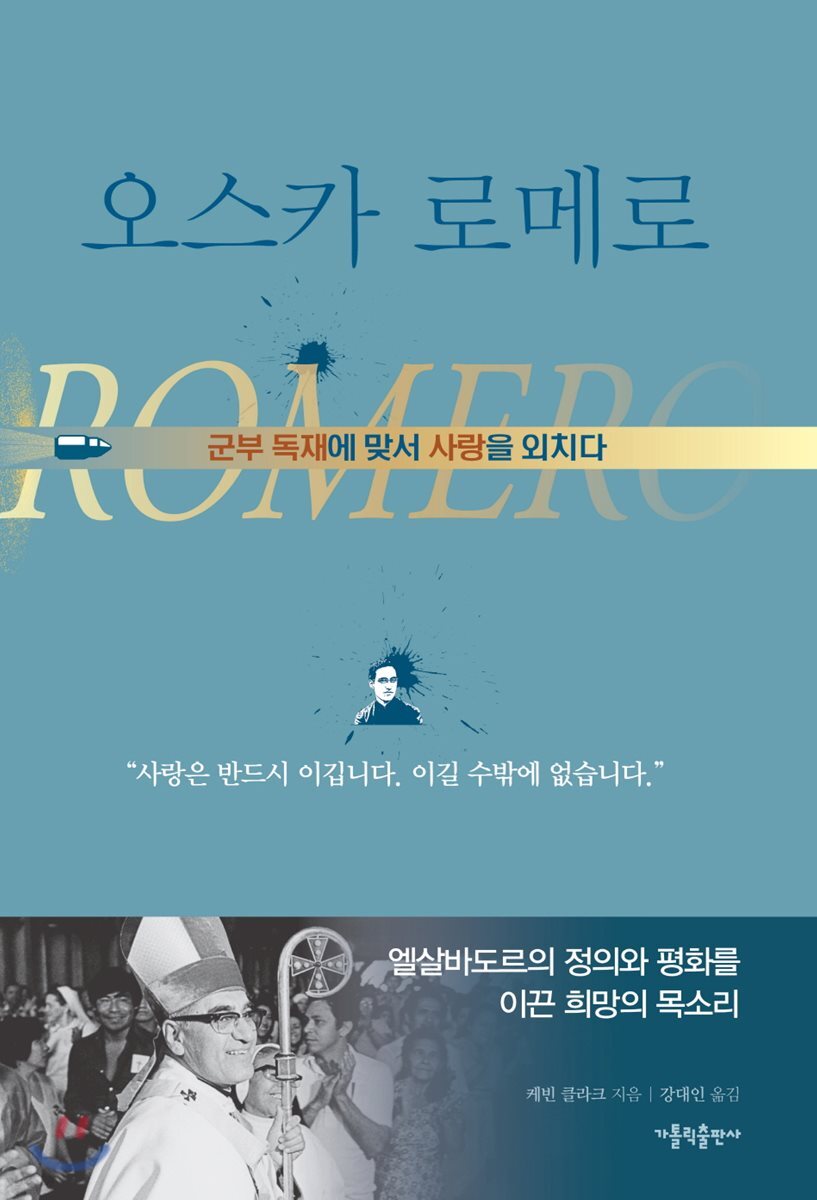
Oscar Romero, the "Man of God" as Testified by Pope Francis
In 2013, shortly after being elected Pope Francis reopened the process of beatification and canonization of Oscar Romero, the former Archbishop of El Salvador.
It was truly welcome news for those who had long awaited the canonization of Archbishop Romero.
The archbishop's canonization has been controversial for over 30 years.
So why was Pope Francis so convinced that Archbishop Romero was a “man of God” and why did he want to canonize him?
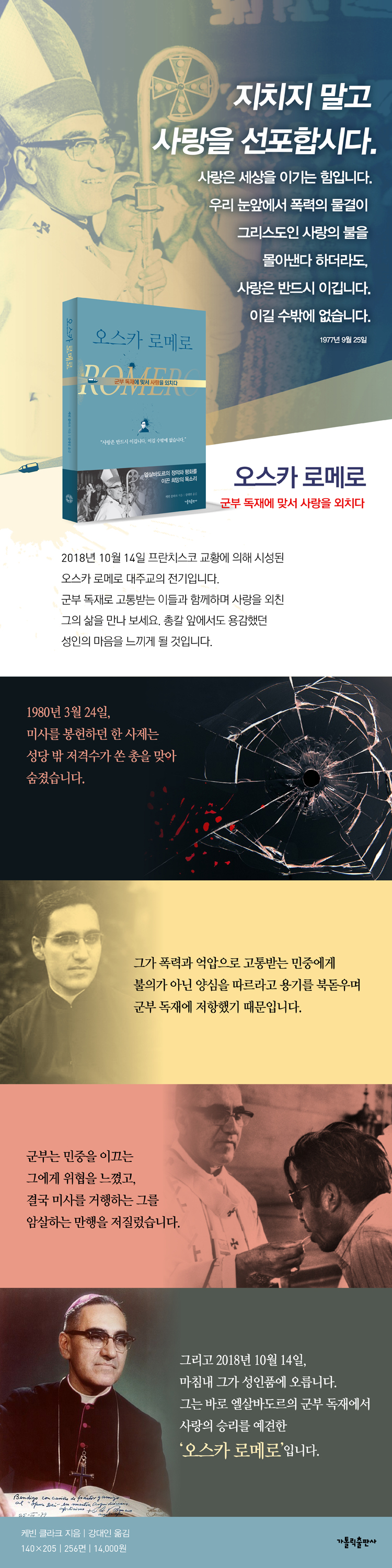
Archbishop Romero's canonization will take place on October 14, 2018.
Ahead of this special day, Catholic Publishing House (President: Father Dae-Young Kim Didaco) published a book titled “Oscar Romero,” which contains the story of Archbishop Romero, who cried out for love in the face of military dictatorship.
This book examines the dire circumstances of El Salvador and vividly shows how Archbishop Romero testified to the Gospel through his life in such circumstances.
Shortly after being elected pope in March 2013, Pope Francis entered the dark corridors of the Vatican, a conflict of opinion that seems incomprehensible to outsiders.
It would become a model for how he would work directly and empathetically in the future.
Pope Francis has resumed the blocked process of beatification and canonization of Oscar Romero, who was declared a Servant of God by Pope John Paul II in 1997.
Romero was not only a servant of God, but also a servant of the Salvadoran people.
In 2013, shortly after being elected Pope Francis reopened the process of beatification and canonization of Oscar Romero, the former Archbishop of El Salvador.
It was truly welcome news for those who had long awaited the canonization of Archbishop Romero.
The archbishop's canonization has been controversial for over 30 years.
So why was Pope Francis so convinced that Archbishop Romero was a “man of God” and why did he want to canonize him?
Archbishop Romero's canonization will take place on October 14, 2018.
Ahead of this special day, Catholic Publishing House (President: Father Dae-Young Kim Didaco) published a book titled “Oscar Romero,” which contains the story of Archbishop Romero, who cried out for love in the face of military dictatorship.
This book examines the dire circumstances of El Salvador and vividly shows how Archbishop Romero testified to the Gospel through his life in such circumstances.
Shortly after being elected pope in March 2013, Pope Francis entered the dark corridors of the Vatican, a conflict of opinion that seems incomprehensible to outsiders.
It would become a model for how he would work directly and empathetically in the future.
Pope Francis has resumed the blocked process of beatification and canonization of Oscar Romero, who was declared a Servant of God by Pope John Paul II in 1997.
Romero was not only a servant of God, but also a servant of the Salvadoran people.
- You can preview some of the book's contents.
Preview
index
preface
Fighter or Adult 11
On the Beatification and Canonization of Oscar Romero 36
Chapter 1: Death Approaches the Archbishop 41
Chapter 2: El Salvador, Where Romero Lived 63
Chapter 3: The Tireless Young Priest 81
Chapter 4: The Enlightenment of a Prudent Priest 114
Chapter 5: The Shepherd of the People 130
Chapter 6: Crying Out with the Voice of the People 163
Chapter 7: Love, the Christian's Revenge 180
Chapter 8: In the Heart of Madness 211
Conclusion: The Resurrection of the Saint in the Lives of the People 236
Week 249
Fighter or Adult 11
On the Beatification and Canonization of Oscar Romero 36
Chapter 1: Death Approaches the Archbishop 41
Chapter 2: El Salvador, Where Romero Lived 63
Chapter 3: The Tireless Young Priest 81
Chapter 4: The Enlightenment of a Prudent Priest 114
Chapter 5: The Shepherd of the People 130
Chapter 6: Crying Out with the Voice of the People 163
Chapter 7: Love, the Christian's Revenge 180
Chapter 8: In the Heart of Madness 211
Conclusion: The Resurrection of the Saint in the Lives of the People 236
Week 249
Detailed image
Into the book
The peasants were astonished that their revered Bishop Romero was learning about the nature of God and faith from the despised and oppressed.
Indeed, he listened to the desperate cries of the poor people of El Salvador for justice.
He heard wisdom from the poor, from unlikely prophets, that many people simply would not listen to.
― From the ‘Preface’ on page 15
Confirmation of Romero's martyrdom is a key step in the process of his beatification and canonization.
Next, the cardinals and bishops of the Congregation for the Causes of Saints must vote and recommend to the Pope his beatification.
On February 3, 2015, Pope Francis met with Cardinal Angelo Amato, Prefect of the Congregation for the Causes of Saints, in a private audience and authorized him to issue a decree on the martyrdom of Archbishop Romero.
Romero's beatification took place on May 23 of that year in San Salvador's Plaza de la Salvador, with approximately 250,000 faithful in attendance, presided over by Cardinal Amato, Prefect of the Congregation for the Causes of Saints.
― From the ‘Preface’ on page 39
A single gunshot that broke the silence of the courtroom is recorded on tape.
The assassin spotted his target, and Romero fell mortally wounded under the altar.
The nuns and others who attended the Mass quickly rushed to Romero's side, disregarding their own lives amid the chaos that erupted inside the chapel.
But Romero was already dead.
And the red Passat carrying the sniper disappeared into the streets of San Salvador.
― From ‘Chapter 1 Death Approaches the Archbishop’ on pages 61-62
“Let no one prevent the church from telling people to put their hope in the church.
Let's not allow anyone to abuse our language.
Before the Archdiocese, in the light of the unity that has brought us together in this single Mass, let us not allow anyone to justify as the Gospel any doctrine other than that of Christ."
― From ‘Chapter 5, Shepherd of the People’ on pages 158-159
“Let us firmly protect our rights.
Let us do so with all our heart and with love.
If we act in love, we can show that we seek the repentance of sinners.
Love is the Christian's revenge.”
― From Chapter 7, Love, the Revenge of Christians, on page 205
“But if God accepts the sacrifice of my life, my blood will soon become the seed of freedom and a sign of hope.
May my death be a death for the liberation of my people and a testimony to the hope to come.
If I were to be killed, would you please tell those who did it that I forgive them and bless them? But I hope they realize they're wasting their time.
“A bishop may die, but the Church of God and the people of God will never die.”
― From Chapter 8, In the Middle of Madness, page 231
Even after the civil war, El Salvador remains one of the most violent societies in the global South, and poverty persists.
And while the death squads that haunted San Salvador's nightlife may not be politically repressive today, they are heavily involved in drug trafficking.
El Salvador still grapples with many unresolved political and economic conflicts from the Romero era, but it strives to practice the spirit of solidarity and sharing taught by the martyred archbishop.
― From the ‘Conclusion’ on page 246
Indeed, he listened to the desperate cries of the poor people of El Salvador for justice.
He heard wisdom from the poor, from unlikely prophets, that many people simply would not listen to.
― From the ‘Preface’ on page 15
Confirmation of Romero's martyrdom is a key step in the process of his beatification and canonization.
Next, the cardinals and bishops of the Congregation for the Causes of Saints must vote and recommend to the Pope his beatification.
On February 3, 2015, Pope Francis met with Cardinal Angelo Amato, Prefect of the Congregation for the Causes of Saints, in a private audience and authorized him to issue a decree on the martyrdom of Archbishop Romero.
Romero's beatification took place on May 23 of that year in San Salvador's Plaza de la Salvador, with approximately 250,000 faithful in attendance, presided over by Cardinal Amato, Prefect of the Congregation for the Causes of Saints.
― From the ‘Preface’ on page 39
A single gunshot that broke the silence of the courtroom is recorded on tape.
The assassin spotted his target, and Romero fell mortally wounded under the altar.
The nuns and others who attended the Mass quickly rushed to Romero's side, disregarding their own lives amid the chaos that erupted inside the chapel.
But Romero was already dead.
And the red Passat carrying the sniper disappeared into the streets of San Salvador.
― From ‘Chapter 1 Death Approaches the Archbishop’ on pages 61-62
“Let no one prevent the church from telling people to put their hope in the church.
Let's not allow anyone to abuse our language.
Before the Archdiocese, in the light of the unity that has brought us together in this single Mass, let us not allow anyone to justify as the Gospel any doctrine other than that of Christ."
― From ‘Chapter 5, Shepherd of the People’ on pages 158-159
“Let us firmly protect our rights.
Let us do so with all our heart and with love.
If we act in love, we can show that we seek the repentance of sinners.
Love is the Christian's revenge.”
― From Chapter 7, Love, the Revenge of Christians, on page 205
“But if God accepts the sacrifice of my life, my blood will soon become the seed of freedom and a sign of hope.
May my death be a death for the liberation of my people and a testimony to the hope to come.
If I were to be killed, would you please tell those who did it that I forgive them and bless them? But I hope they realize they're wasting their time.
“A bishop may die, but the Church of God and the people of God will never die.”
― From Chapter 8, In the Middle of Madness, page 231
Even after the civil war, El Salvador remains one of the most violent societies in the global South, and poverty persists.
And while the death squads that haunted San Salvador's nightlife may not be politically repressive today, they are heavily involved in drug trafficking.
El Salvador still grapples with many unresolved political and economic conflicts from the Romero era, but it strives to practice the spirit of solidarity and sharing taught by the martyred archbishop.
― From the ‘Conclusion’ on page 246
--- From the text
Publisher's Review
A saint who put the gospel and the teachings of the church into practice in his life
There is a stark contrast between Romero's early days as a conservative priest, wary of the progressive priests of the time, and his efforts to preserve the church's culture, and his later years as an archbishop, when he took the lead in resisting social injustice.
His repentance is all the more moving because he once closed down an educational center run by progressive priests and criticized priests who talked politics.
Romero did not give in to death threats, slander, and criticism from fellow bishops in his effort to establish faith and justice in El Salvador.
Through Romero's way of holding on to his beliefs, readers will be able to ponder the true path to practicing the gospel and the church's teachings.
“We share the anguish and hope of the people of this era.
We stand in solidarity with the suffering and hopes of the poor and the suffering people.
When we say this, we are not doing politics.”
― From Chapter 7, Love, the Revenge of Christians
There is a stark contrast between Romero's early days as a conservative priest, wary of the progressive priests of the time, and his efforts to preserve the church's culture, and his later years as an archbishop, when he took the lead in resisting social injustice.
His repentance is all the more moving because he once closed down an educational center run by progressive priests and criticized priests who talked politics.
Romero did not give in to death threats, slander, and criticism from fellow bishops in his effort to establish faith and justice in El Salvador.
Through Romero's way of holding on to his beliefs, readers will be able to ponder the true path to practicing the gospel and the church's teachings.
“We share the anguish and hope of the people of this era.
We stand in solidarity with the suffering and hopes of the poor and the suffering people.
When we say this, we are not doing politics.”
― From Chapter 7, Love, the Revenge of Christians
GOODS SPECIFICS
- Date of publication: October 11, 2018
- Page count, weight, size: 256 pages | 333g | 140*205*14mm
- ISBN13: 9788932115306
- ISBN10: 8932115303
You may also like
카테고리
korean


korean

![GQ KOREA Mark (Monthly): December [2025]](http://librairie.coreenne.fr/cdn/shop/files/8ef265dbbfbf186523ed75ba7319009d.jpg?v=1765340328&width=3840)


