

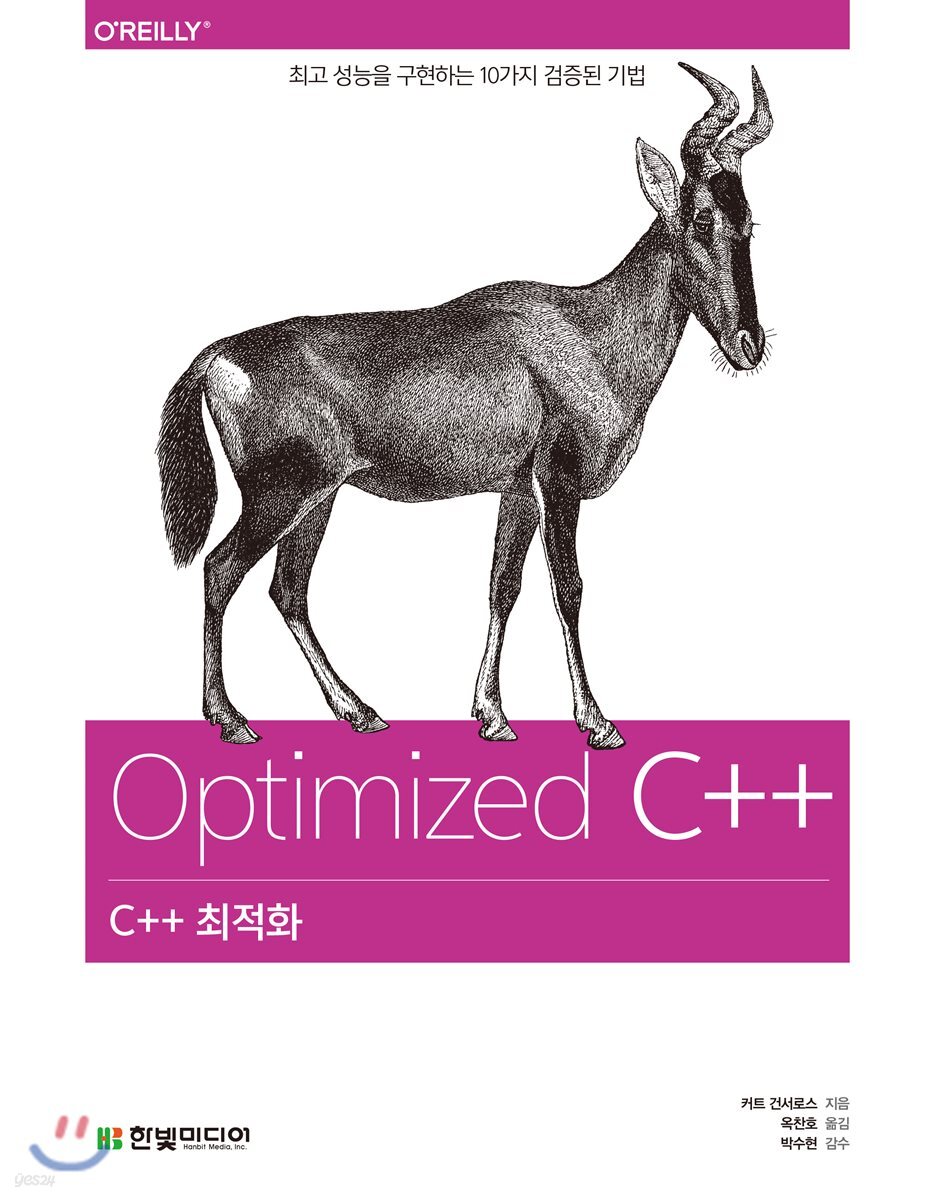
C++ optimization
 |
Description
Book Introduction
For fast and concise C++
Optimization tips from the pros!
It never takes longer to write fast code than it does to write slow code.
This book introduces optimization methods for creating fast C++ programs while still implementing correct code.
If you want to check the C++ syntax you habitually use, start with these 10 techniques introduced by an author with 35 years of experience.
As you identify and improve the parts that are consuming resources and running time, you might hear, "Wow, that's really fast! Who fixed that?!"
Become a true pro with practical tips based on real-world examples.
Optimization tips from the pros!
It never takes longer to write fast code than it does to write slow code.
This book introduces optimization methods for creating fast C++ programs while still implementing correct code.
If you want to check the C++ syntax you habitually use, start with these 10 techniques introduced by an author with 35 years of experience.
As you identify and improve the parts that are consuming resources and running time, you might hear, "Wow, that's really fast! Who fixed that?!"
Become a true pro with practical tips based on real-world examples.
- You can preview some of the book's contents.
Preview
index
CHAPTER 1: Optimization
__1.1 Optimization is part of software development
__1.2 Optimization is effective
__1.3 It's okay to optimize
__1.4 Nanoseconds here, nanoseconds there
__1.5 Summary of C++ Code Optimization Strategies
__1.6 In conclusion
CHAPTER 2 COMPUTER HARDWARE AND OPTIMIZATION
__2.1 C++ believes the computer's lies
__2.2 The Truth About Computers
__2.3 C++ also lies
__2.4 In conclusion
CHAPTER 3 PERFORMANCE MEASUREMENT
__3.1 Optimizing your mindset
__3.2 Conducting the experiment
__3.3 Program Execution Profile
__3.4 Time-consuming code
__3.5 Estimating Code Costs
__3.6 Another way to find code to optimize
__3.7 In conclusion
CHAPTER 4 STRING OPTIMIZATION
__4.1 Why are strings a problem?
__4.2 First attempt at string optimization
__4.3 Second attempt at string optimization
__4.4 Removing string conversion operations
__4.5 In conclusion
CHAPTER 5: Algorithm Optimization
__5.1 Time Cost of the Algorithm
__5.2 Toolkit for optimizing search and sorting
__5.3 Efficient search algorithm
__5.4 Efficient sorting algorithms
__5.5 Optimization Patterns
__5.6 In conclusion
CHAPTER 6: Optimizing Dynamically Allocated Variables
__6.1 C++ variables
__6.2 C++ Dynamic Variable API
__6.3 Reducing the use of dynamic variables
__6.4 Reducing reallocation of dynamic variables
__6.5 Removing unnecessary copies
__6.6 Implementing movement grammar
__6.7 Flat data structures
__6.8 In conclusion
CHAPTER 7 Sentence Optimization
__7.1 Removing code from loops
__7.2 Removing code from functions
__7.3 Expression Optimization
__7.4 Control Flow Optimization
__7.5 In conclusion
CHAPTER 8 Library Optimization
__8.1 Standard Library Optimization
__8.2 Optimizing existing libraries
__8.3 Optimized Library Design
__8.4 In conclusion
CHAPTER 9 Search and Sorting Optimization
__9.1 Key/value tables using std::map and std::string
__9.2 Toolkit for Improving Search Performance
__9.3 Optimizing search using std::map
__9.4 [algorithm] Search optimization using headers
__9.5 Optimizing Hash Key/Value Table Lookups
__9.6 Stepanov's abstraction penalty
__9.7 Sorting Optimization with the C++ Standard Library
__9.8 In conclusion
CHAPTER 10 Data Structure Optimization
__10.1 Understanding the Standard Library Container
__10.2 std::vector and std::string
__10.3 std::deque
__10.4 std::list
__10.5 std::forward_list
__10.6 std::map and std::multimap
__10.7 std::set and std::multiset
__10.8 std::unordered_map and std::unordered_multimap
__10.9 Other data structures
__10.10 In closing
CHAPTER 11 I/O Optimization
__11.1 How to read a file
__11.2 Writing a file
__11.3 Read with std::cin and write with std::cout
__11.4 In conclusion
CHAPTER 12 Concurrency Optimization
__12.1 Concurrency
__12.2 C++ Concurrency Features
__12.3 C++ Program Thread Optimization
__12.4 Creating More Efficient Synchronization
__12.5 Concurrency Library
__12.6 In conclusion
CHAPTER 13 Memory Management Optimization
__13.1 C++ Memory Management API
__13.2 High-Performance Memory Manager
__13.3 Providing a class-specific memory manager
__13.4 Providing a Custom Standard Library Allocator
__13.5 In conclusion
__1.1 Optimization is part of software development
__1.2 Optimization is effective
__1.3 It's okay to optimize
__1.4 Nanoseconds here, nanoseconds there
__1.5 Summary of C++ Code Optimization Strategies
__1.6 In conclusion
CHAPTER 2 COMPUTER HARDWARE AND OPTIMIZATION
__2.1 C++ believes the computer's lies
__2.2 The Truth About Computers
__2.3 C++ also lies
__2.4 In conclusion
CHAPTER 3 PERFORMANCE MEASUREMENT
__3.1 Optimizing your mindset
__3.2 Conducting the experiment
__3.3 Program Execution Profile
__3.4 Time-consuming code
__3.5 Estimating Code Costs
__3.6 Another way to find code to optimize
__3.7 In conclusion
CHAPTER 4 STRING OPTIMIZATION
__4.1 Why are strings a problem?
__4.2 First attempt at string optimization
__4.3 Second attempt at string optimization
__4.4 Removing string conversion operations
__4.5 In conclusion
CHAPTER 5: Algorithm Optimization
__5.1 Time Cost of the Algorithm
__5.2 Toolkit for optimizing search and sorting
__5.3 Efficient search algorithm
__5.4 Efficient sorting algorithms
__5.5 Optimization Patterns
__5.6 In conclusion
CHAPTER 6: Optimizing Dynamically Allocated Variables
__6.1 C++ variables
__6.2 C++ Dynamic Variable API
__6.3 Reducing the use of dynamic variables
__6.4 Reducing reallocation of dynamic variables
__6.5 Removing unnecessary copies
__6.6 Implementing movement grammar
__6.7 Flat data structures
__6.8 In conclusion
CHAPTER 7 Sentence Optimization
__7.1 Removing code from loops
__7.2 Removing code from functions
__7.3 Expression Optimization
__7.4 Control Flow Optimization
__7.5 In conclusion
CHAPTER 8 Library Optimization
__8.1 Standard Library Optimization
__8.2 Optimizing existing libraries
__8.3 Optimized Library Design
__8.4 In conclusion
CHAPTER 9 Search and Sorting Optimization
__9.1 Key/value tables using std::map and std::string
__9.2 Toolkit for Improving Search Performance
__9.3 Optimizing search using std::map
__9.4 [algorithm] Search optimization using headers
__9.5 Optimizing Hash Key/Value Table Lookups
__9.6 Stepanov's abstraction penalty
__9.7 Sorting Optimization with the C++ Standard Library
__9.8 In conclusion
CHAPTER 10 Data Structure Optimization
__10.1 Understanding the Standard Library Container
__10.2 std::vector and std::string
__10.3 std::deque
__10.4 std::list
__10.5 std::forward_list
__10.6 std::map and std::multimap
__10.7 std::set and std::multiset
__10.8 std::unordered_map and std::unordered_multimap
__10.9 Other data structures
__10.10 In closing
CHAPTER 11 I/O Optimization
__11.1 How to read a file
__11.2 Writing a file
__11.3 Read with std::cin and write with std::cout
__11.4 In conclusion
CHAPTER 12 Concurrency Optimization
__12.1 Concurrency
__12.2 C++ Concurrency Features
__12.3 C++ Program Thread Optimization
__12.4 Creating More Efficient Synchronization
__12.5 Concurrency Library
__12.6 In conclusion
CHAPTER 13 Memory Management Optimization
__13.1 C++ Memory Management API
__13.2 High-Performance Memory Manager
__13.3 Providing a class-specific memory manager
__13.4 Providing a Custom Standard Library Allocator
__13.5 In conclusion
Publisher's Review
C++ offers a wide range of options, from automation and expressiveness to fine-grained control that improves performance.
So, there are many opportunities for optimization hidden in programs written in C++.
If you're wondering, "Am I writing my code correctly?", start optimizing now.
The method for identifying the "prime suspect" who is slowing down your program is surprisingly simple and straightforward.
By practicing with the author's wealth of tips and examples, you'll quickly be able to write code that delivers outstanding performance and high readability.
So, there are many opportunities for optimization hidden in programs written in C++.
If you're wondering, "Am I writing my code correctly?", start optimizing now.
The method for identifying the "prime suspect" who is slowing down your program is surprisingly simple and straightforward.
By practicing with the author's wealth of tips and examples, you'll quickly be able to write code that delivers outstanding performance and high readability.
GOODS SPECIFICS
- Date of issue: July 5, 2019
- Page count, weight, size: 474 pages | 901g | 183*235*30mm
- ISBN13: 9791162241981
- ISBN10: 1162241985
You may also like
카테고리
korean


korean

![ELLE 엘르 A형 (여성월간) : 1월 [2026]](http://librairie.coreenne.fr/cdn/shop/files/3b70e1cf77cf67d6da56e0eb041901e8.jpg?v=1767265322&width=3840)


